What you’ll learn:
- Bananas contain tryptophan and other nutrients connected to sleep, but there’s not enough evidence that eating one before bed will meaningfully improve sleep.
- Eating a banana before bed won’t burn fat or boost weight loss, though it can help if it replaces a higher-calorie nighttime snack.
- If you enjoy a banana at night, it can be a nutritious bedtime snack—but there’s nothing special about eating it right before bed.
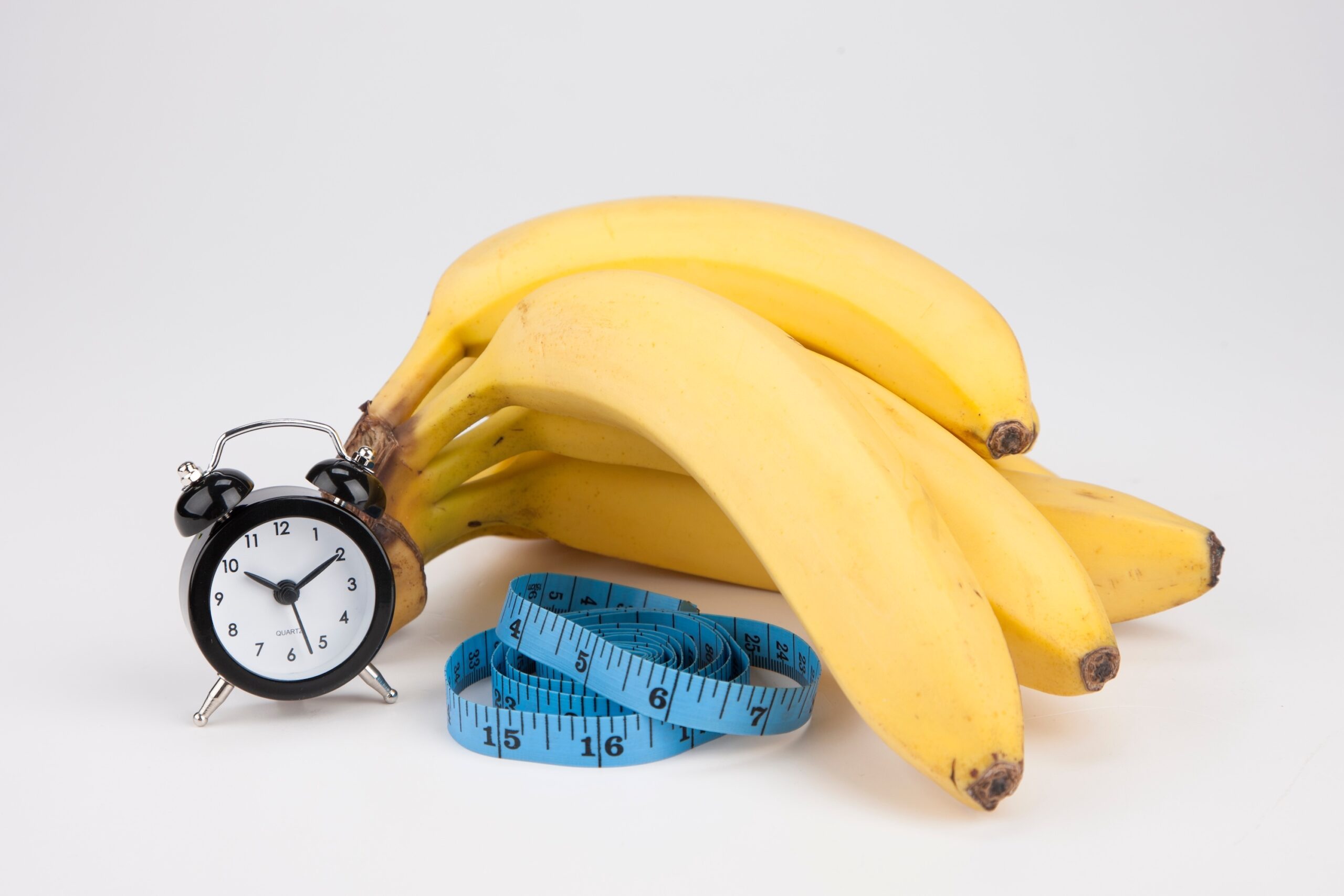
Eating a banana before bed is trending as a simple fix for two things a lot of people want: better sleep and easier weight loss. The sleep claim usually comes down to tryptophan, an amino acid your body uses to make serotonin and melatonin. The weight-loss claim is a little fuzzier, with promises ranging from curbing late-night cravings to somehow helping your body burn more fat overnight.
Bananas aren’t the first food to get the “bedtime treatment.” We’ve looked at similar claims about honey and cinnamon, protein shakes, and even drinking olive oil before bed. The pitch tends to be similar: eat or drink one familiar thing at night and get a surprisingly big payoff while you sleep.
There’s some real nutrition science behind the banana-sleep connection, but that doesn’t necessarily mean eating one before bed will help you sleep better—and there’s even less evidence that the timing has any special effect on weight loss.
So, what can a banana before bed actually do? We looked at the research on bananas, tryptophan, sleep, and appetite to separate what makes biological sense from what the trend gets wrong.
Why is everyone eating a banana before bed right now?
Bananas have a few things going for them that make the trend sound convincing. They contain tryptophan, which your body can use to make serotonin and melatonin, along with magnesium and potassium—nutrients that are often associated with relaxation and sleep. Add in the fact that bananas are an easy, inexpensive bedtime snack, and it’s not hard to see why the idea caught on.

The Easy Way
to lose weight and get healthy.
See if you qualify
The question is whether those nutrients are present in large enough amounts to actually improve sleep—and whether eating a banana at night has anything to do with weight loss. That’s where the evidence gets a lot less straightforward.
The connection between bananas and sleep
A medium banana has nutrients and compounds that can connect it to sleep, at least on paper. Here’s what’s actually in one, and how each piece plays into the sleep claim:
- Tryptophan. This is the same amino acid people credit for making everyone sleepy after Thanksgiving dinner—turkey has it, and so do bananas. Your body uses tryptophan to make serotonin, which can then be converted into melatonin, the hormone that helps regulate your sleep-wake cycle. But a medium banana has only about 10 milligrams of tryptophan. That’s a small amount compared with the roughly 250 to 425 milligrams most adults need each day.
- Vitamin B6. Think of this as one of the behind-the-scenes helpers. Vitamin B6 is involved in the processes your body uses to convert tryptophan into serotonin. A medium banana has about 0.4 milligrams, roughly a third of what most adults need in a day.
- Magnesium and potassium. These minerals play important roles in normal nerve and muscle function, which helps explain why they often get pulled into conversations about relaxation, sleep, and nighttime leg cramps. A medium banana has about 32 milligrams of magnesium and 450 milligrams of potassium. But that doesn’t mean eating one before bed will noticeably relax your muscles or prevent cramps.
- Fiber and natural sugar. A medium banana has about 3 grams of fiber and 15 grams of naturally occurring sugar. The fiber slows digestion, making a banana a more satisfying choice than many sugary nighttime snacks. Pairing it with some protein or healthy fat can make it more filling, too.
So, there are legitimate reasons bananas get connected to sleep. The bigger question is whether the amounts you get from one banana are enough to make a noticeable difference once your head hits the pillow.
Why do people say a banana before bed can help with weight loss?
The weight-loss claims around bananas before bed vary. Some suggest that eating one at night can somehow boost weight loss, while others frame it more simply—as a way to curb late-night snacking. But the idea generally comes down to one of two theories.
The swap effect. If a banana at 9 p.m. replaces a bag of chips or a bowl of ice cream, that can mean fewer calories overall. Higher fiber intake has also been linked to greater weight loss in people following calorie-controlled diets. But in that case, it’s the swap—and potentially the fiber—that matters, not anything special about eating a banana at night.
The sleep-and-appetite theory. This connection is more indirect. Poor sleep has been linked in some research to changes in ghrelin, a hormone involved in hunger, and leptin, which helps signal fullness.
That leads to the theory that if eating a banana helps you sleep better, better sleep could potentially help with appetite regulation. But that requires a couple of assumptions—starting with whether a banana meaningfully improves sleep in the first place. And a more recent review found that the effects of sleep on ghrelin and leptin haven’t been consistent across studies.
So, there’s a plausible connection between sleep, appetite, and weight management, but there’s no good evidence that eating a banana before bed sets off that chain of events.
What happens when you eat a banana before bed?
Here’s where the trend meets the research. We looked at what studies actually show about bananas and sleep, how the tryptophan connection works, and whether any of it translates to weight loss.
Does a banana before bed help you sleep?
This is where the trend outruns the evidence. Much of the research linking tryptophan or magnesium to better sleep has used larger amounts than you’d get from a single banana, often in supplement form rather than as food.
There is one small study worth mentioning. In a two-week study of adults ages 50 to 70 with insomnia, eating a banana before bed improved some measures of sleep compared with no intervention. It’s an interesting finding, but the study was small and short, so it’s not enough to say that bananas reliably improve sleep.
In other words, a banana can be part of a calming bedtime routine, but there isn’t enough evidence to consider it a sleep aid.
Does a banana before bed really raise tryptophan?
The tryptophan pathway behind the trend is real, but the effect of one banana is easy to overstate. Tryptophan competes with other amino acids to cross into the brain. Once there, your body can use it to make serotonin and, eventually, melatonin, which helps regulate your sleep-wake cycle. Research suggests that diet can influence this pathway, although exactly how much that translates into better sleep is still being studied.
But a banana contains only a modest amount of tryptophan, and we don’t have evidence showing that eating one before bed raises brain tryptophan or melatonin enough to meaningfully improve sleep. The mechanism makes sense; the banana-specific effect hasn’t been established.
In fact, bananas aren’t an especially rich source of tryptophan. Because tryptophan is an amino acid, protein-rich foods like milk, yogurt, eggs, turkey, chicken, fish, nuts, seeds, and legumes generally provide much more. Some research has found that tryptophan-rich foods may support sleep, but simply eating more tryptophan doesn’t guarantee that more of it will reach your brain or that you’ll sleep better.
You may also hear that eating carbohydrates with tryptophan helps more of it reach the brain. There is a biological basis for that idea: carbohydrates trigger insulin, which can change the ratio of tryptophan to other amino acids competing to cross the blood-brain barrier. But the effect appears to depend on the composition of the meal and isn’t a reason to expect the carbohydrates in one banana to noticeably improve sleep.
So, while a banana gives you some tryptophan, there’s no evidence that it has a special advantage over other foods when it comes to sleep. Think of it as one small piece of your overall diet, rather than a way to boost melatonin before bed.
Is a banana before bed good for weight loss?
There’s no research showing that eating a banana specifically before bed leads to greater weight loss, and there’s no reason to think it burns fat while you sleep.
So if a banana replaces a higher-calorie nighttime snack and helps you stick with your overall eating goals, it can certainly fit into a weight-loss plan. But there’s nothing special about eating it before bed that appears to make weight loss happen faster.
Benefits and drawbacks of eating a banana before bed
Putting the sleep and weight-loss claims aside, a banana can be a perfectly reasonable nighttime snack. But whether it’s a good choice for you can depend on what you’re replacing, how ripe it is, and whether eating close to bedtime bothers your stomach.
Benefits
- A lighter snack option. A medium banana has around 100 calories, so if it replaces something more calorie-dense—like cookies, chips, or ice cream—it can be an easy way to lighten up your nighttime snack.
- Some fiber and nutrients. Along with about 3 grams of fiber, bananas provide potassium, magnesium, and vitamin B6. These nutrients support normal muscle and nerve function, although there’s no good evidence that eating a banana before bed will relax your muscles or prevent nighttime leg cramps.
- Easy to pair with something more filling. If a banana alone doesn’t keep you satisfied, adding a source of protein or healthy fat, such as Greek yogurt or nut butter, can turn it into a more substantial snack.
Drawbacks
- Riper bananas can raise blood sugar more quickly. As bananas ripen, some of their starch is converted into sugar. In one small study of people with type 2 diabetes, overripe bananas produced a higher blood sugar response than underripe bananas. That doesn’t mean you need to avoid ripe bananas, but ripeness can affect how quickly their carbohydrates are digested.
- It can aggravate reflux if you eat right before lying down. This isn’t specific to bananas. Eating close to bedtime can worsen symptoms for people prone to nighttime reflux; guidelines generally recommend leaving two to three hours between eating and bedtime.
- It’s still not a sleep aid or fat-burner. A banana can be a nutritious bedtime snack, but eating one at night hasn’t been shown to produce meaningful weight loss or reliably improve sleep.
When’s the best time to eat a banana before bed?
There’s no research-backed best time to eat a banana before bed. If eating close to bedtime doesn’t bother you, having one as an evening snack is fine. If you’re prone to nighttime reflux, try to finish eating about three hours before lying down.
A few other details can help you decide what works best for you:
- Consider ripeness if you’re watching your blood sugar. As a banana ripens, some of its starch is converted into sugar. Less-ripe bananas also contain more resistant starch, a type of carbohydrate that resists digestion and behaves somewhat like fiber. In a small study of people with type 2 diabetes, underripe bananas produced a lower blood sugar response than overripe bananas. So, if blood sugar is a concern, you might prefer a banana that’s less ripe rather than one that’s very soft and spotty.
- Pair it with protein or healthy fat if you want a more filling snack. A little peanut butter or Greek yogurt can add protein and fat, which can help keep you satisfied longer. You don’t need to do this to make a banana “healthy”—it’s simply an option if a banana by itself doesn’t hold you.
- Pay attention to how you feel. If eating a banana close to bedtime leaves you feeling comfortable and satisfied, there’s no reason to avoid it. If you notice reflux, digestive discomfort, or that eating late interferes with your sleep, move your snack earlier.
There’s no magic timing here. The best time to eat a banana is when it fits comfortably into your evening routine—not at a specific number of minutes before your head hits the pillow.
FAQs about eating a banana before bed
Is a banana before bed good for weight loss?
Not directly. Eating a banana before bed won’t burn fat or boost your metabolism overnight. But if it replaces a higher-calorie snack, like cookies, chips, or ice cream, that swap could support your overall weight-loss goals over time.
What should I eat at night to avoid gaining weight?
There’s no single nighttime food that prevents weight gain. If you’re genuinely hungry, aim for a snack that’s satisfying without turning into another full meal. A banana with Greek yogurt or nut butter, plain yogurt with fruit, or another combination of fiber and protein can help keep you full. What matters most for weight management is your overall eating pattern, not one specific food or eating after a certain hour.
Can a banana disrupt my sleep instead of helping it?
It can for some people, although there’s nothing about bananas specifically that’s known to disrupt sleep. Eating close to bedtime can cause reflux or digestive discomfort in some people, which may make it harder to sleep. If that happens to you, try moving your evening snack earlier.
How many bananas can I eat before bed?
One medium banana is a reasonable serving for a bedtime snack. There’s no need to eat more to get a bigger sleep benefit—we don’t have evidence that more banana means more tryptophan reaches your brain or that you’ll sleep better.
Are bananas too heavy to eat at night?
For most people, a banana is a relatively light nighttime snack. But digestion is individual, so if bananas leave you feeling bloated, overly full, or uncomfortable before bed, another snack may work better for you.
Are green or ripe bananas better before bed?
Neither is inherently better for sleep. A slightly underripe banana has more resistant starch and tends to produce a slower rise in blood sugar than a very ripe, spotty banana. That might make a less-ripe banana appealing if you’re watching your blood sugar. Otherwise, choose whichever ripeness you prefer—there’s no evidence that one will help you sleep better than the other.
Access GLP-1 Weight Loss with Noom
Explore a wide range of prescription medications supported by Noom’s program.Microdose GLP-1rx
Noom GLP-1rx
Noom GLP-1rx Plus
Wegovy®
Ozempic®

Metformin
Zepbound®
Mounjaro®
Liraglutide
The Easy Way
to lose weight and get healthy.
See if you qualifyThe bottom line: A banana before bed is a healthy snack, not a sleep or weight loss hack
There’s enough science behind the banana-before-bed trend to make it sound convincing. Bananas contain tryptophan, vitamin B6, magnesium, and potassium, all of which play roles in processes related to sleep. But the amounts in one banana are relatively modest, and the research doesn’t show that eating one before bed will reliably help you fall asleep or sleep better.
There’s even less reason to expect a special weight-loss effect. A banana won’t burn fat or boost your metabolism overnight. Where it can help is much simpler: if you’re hungry at night and a banana replaces a more calorie-dense snack, that can be a useful habit for weight management.
That’s really the takeaway: If you like a banana before bed, eat one. It’s nutritious, convenient, and can fit easily into a healthy evening routine. Just don’t expect it to do something at night that it wouldn’t do at any other time of day.
If you want to start building better habits that make change last, download Noom for free on iOS or Android.
Editorial standards
At Noom, we’re committed to providing health information that’s grounded in reliable science and expert review. Our content is created with the support of qualified professionals and based on well-established research from trusted medical and scientific organizations. Learn more about the experts behind our content on our Health Expert Team page.