

What you’ll learn:
- Muscle loss on GLP-1 medicines is common because reduced appetite and slower digestion make it easy to eat less protein.
- Increasing protein intake can help preserve the muscle you’d otherwise lose.
- Hitting a daily protein target is important for everyone on a GLP-1.
You’re probably hearing a lot about protein these days. It’s become the nutrient people seem to fixate on: Am I getting enough? Is it the right kind? Restaurants are highlighting high-protein menu items, and food companies are adding it to everything from coffee and cereal to sparkling water and snack bars.
Part of what’s driving that conversation is the growing use of GLP-1 medications for weight loss. Drugs like Wegovy®, Zepbound®, and Foundayo® make it easier to eat less. That’s part of why they’re so effective—but it also creates a new nutrition challenge.
When your appetite shrinks, it’s surprisingly easy to fall short on protein simply because you’re eating less of everything. That matters because protein helps preserve lean muscle during weight loss while also supporting strength, recovery, immune function, and satiety. And while some muscle loss is a normal part of losing weight, getting enough protein—along with regular resistance exercise—helps shift the balance toward losing more fat and less muscle.
“One of the biggest changes people notice on a GLP-1 is that they’re simply not thinking about food the same way anymore,” says Maggie Hudspeth, RDN, Senior Manager of Coaching at Noom. “That’s why being a little more intentional about protein can help. When you’re eating fewer meals or smaller portions, you want to make sure those meals are still working hard for you nutritionally.”
So how much protein is enough?
“There’s no single protein number that works for everyone,” says Dr. Ameen Masoodi, MD, MPH, DABOM, a Noom physician board-certified in obesity medicine. “Your needs depend on factors like your age, activity level, and how much weight you’re losing. But the goal is the same for most people: protect muscle while you lose fat.”
Here’s what the research says about how much protein you need on a GLP-1, who’s most likely to fall short, and practical ways to reach your target—even if nausea or early fullness make eating more difficult.
Why protein matters so much while taking a GLP-1 to lose weight
“One of the biggest misconceptions about GLP-1 medications is that they somehow ’cause’ muscle loss,” notes Dr. Masoodi. “That’s not really what’s happening.”
The bigger issue is that these medications make it much easier to eat less. While that’s exactly what helps drive weight loss, it also means it’s easier to fall short on protein without realizing it. And when your body isn’t getting enough protein, it has fewer building blocks to help maintain muscle as you lose weight.
That’s why protein gets so much attention with GLP-1s. While you’re losing weight, you’ll naturally lose some lean tissue alongside fat. But research consistently shows that eating enough protein—especially when it’s paired with resistance exercise—helps preserve more muscle while your body burns fat.
The reassuring news is that the medication itself doesn’t appear to be working against your muscles. In fact, some research suggests GLP-1s may support pathways involved in muscle health. The challenge isn’t the drug—it’s making sure your nutrition keeps pace with your changing appetite.
That’s consistent with decades of weight-loss research. Studies show that people who eat more protein while losing weight generally preserve more lean muscle than people who eat less, even when they lose a similar amount of weight overall.
Researchers are now seeing the same pattern in people taking GLP-1 medications. In analyses of the semaglutide trials, participants lost substantially more fat than lean tissue—but lean body mass still declined by nearly 10%. Other early research may suggest that people who prioritize protein and resistance exercise may maintain—or even gain—lean tissue while others lose it, highlighting that the medication isn’t the only factor shaping body composition.
Ongoing studies are now testing whether aiming for higher protein intakes—around 1.6 grams per kilogram of body weight per day—alongside resistance exercise can preserve even more muscle during GLP-1 treatment.
The encouraging part is that this is one area where your daily habits can make a real difference. Prioritizing protein, staying active, and doing regular strength training can all help support the kind of weight loss most people are hoping for: more fat loss, less muscle loss.
Access GLP-1 Weight Loss with Noom
Explore a wide range of prescription medications supported by Noom’s program.Microdose GLP-1rx
Noom GLP-1rx
Noom GLP-1rx Plus
Wegovy®
Ozempic®
Metformin
Zepbound®
Mounjaro®
Liraglutide
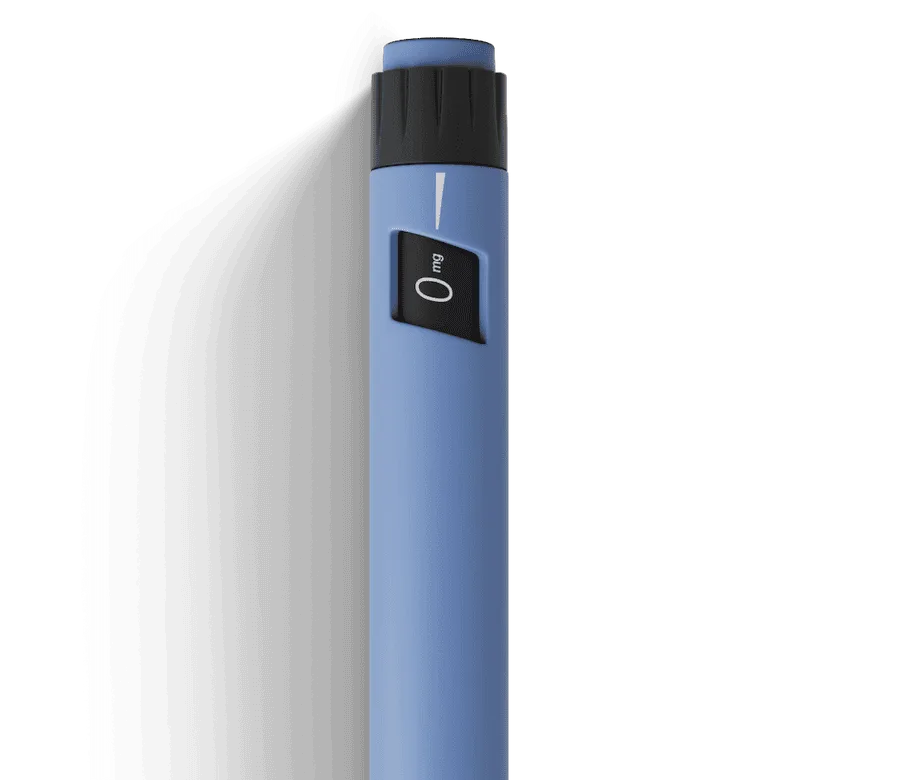
How much protein should you eat on a GLP-1?
Most experts generally recommend aiming for about 1.2 to 1.6 grams of protein per kilogram of body weight per day while actively losing weight on a GLP-1.
That’s more than the amount needed just to avoid a deficiency—and there’s a reason for it. When you’re eating less overall, your body has fewer opportunities to get the protein it needs to help maintain muscle. Making protein a priority helps stack the odds in favor of losing more fat and less lean tissue.
The exact number isn’t the same for everyone. Older adults, people who already have lower muscle mass, or anyone doing regular strength training may benefit from aiming closer to 1.6 to 2 g/kg. If you’re losing weight quickly—especially during the first few months of treatment—you may also want to aim toward the higher end of the range, since that’s when lean-mass losses tend to be greatest.
Also, spread your protein intake throughout the day—about 25 to 30 grams at meals or split it into several snacks. This may help your body use it more effectively, especially if nausea or early fullness are making larger meals difficult.
One important thing to know: the 1.2 to 1.6 g/kg target isn’t a magic GLP-1 number. It comes from decades of research on weight loss, healthy aging, and muscle preservation rather than one definitive GLP-1 trial. Even so, it’s one of the most consistently recommended targets clinicians use today.
People with kidney disease or other medical considerations should receive an individualized recommendation on their daily protein numbers.
What does that look like in real life?
Here’s what that protein range adds up to:
- 130 pounds (59 kg): about 71 to 94 grams per day
- 160 pounds (73 kg): about 87 to 116 grams per day
- 200 pounds (91 kg): about 109 to 145 grams per day
If those numbers feel higher than you expected, that’s okay. You don’t have to hit your target perfectly every day to benefit from eating more protein. Adding a serving at breakfast, choosing a higher-protein snack, or making sure you eat the protein on your plate first are all small changes that can add up over time.
One thing to keep in mind is that this calculation may not be appropriate for everyone, particularly people with severe obesity or certain kidney conditions. A clinician or dietitian may instead recommend using ideal, goal, or adjusted body weight.
Why eating enough protein can be difficult on GLP-1 medications
Knowing your protein goal is one thing. Actually eating that much protein when you’re on a GLP-1 can be another story.
The challenge isn’t a lack of willpower—it’s how these medications work.
GLP-1s lower appetite, slow digestion, and help regulate blood sugar. Together, those effects make it easier to eat less, which is exactly why they’re effective for weight loss. The catch is that when you’re eating less overall, it’s easy to fall short on protein without realizing it.
“It’s not necessarily the medicine itself that’s causing muscle loss. It’s the slower digestion and decreased hunger cues,” says Dr. Masoodi. “The evidence points to appetite suppression working against your ability to maintain your protein intake when overall calories are lower.”
That matters because protein isn’t just another nutrient on your plate. Research suggests that when protein intake drops too low during weight loss, your muscles don’t get the same metabolic benefits they otherwise would. Reviews also suggest that appetite suppression on a GLP-1 can shift people away from higher-protein foods, making it even easier to miss the mark.
Some researchers think slowed digestion may play a role, too. Even when a diet looks balanced on paper, the way GLP-1s change digestion may affect how efficiently nutrients are delivered throughout the body. That may be especially important for older adults and people who already have lower muscle mass.
GLP-1 side effects can make protein harder to eat
Even if you know the best things to eat, nausea, diarrhea, vomiting, and other side effects can make it harder to do it.
Gastrointestinal side effects are common with semaglutide and tirzepatide, especially during the first few weeks of treatment or after a dose increase. Nausea is the most common complaint with both, but diarrhea, constipation, and vomiting can also make eating feel less appealing. In the major clinical trials, roughly 3 out of 4 to 4 out of 5 people reported at least one gastrointestinal side effect during treatment.
Here’s a comparison of the side effects between tirzepatide vs. semaglutide:
| Side Effect | Wegovy 2.4 mg | Zepbound 15 mg |
|---|---|---|
| Nausea | 44% | 28% |
| Diarrhea | 30% | 23% |
| Vomiting | 25% | 13% |
| Constipation | 24% | 11% |
These side effects usually improve as your body adjusts but can return when the dose increases. During those early weeks—when appetite is often at its lowest—people can undereat protein.
The best protein sources when your appetite is lower
Hitting your protein goal doesn’t have to mean eating huge portions at every meal. In fact, when you’re taking a GLP-1, smaller portions are often easier to tolerate.
Because these medications slow stomach emptying, heavier, higher-fat meals can sometimes make nausea or fullness worse. That’s why guidelines for people taking GLP-1s generally recommend choosing leaner proteins, especially during the first few weeks of treatment or after a dose increase.
Some good options include:
- Eggs: A lot of protein in a relatively small package—about 6 grams per egg.
- Chicken, turkey, and lean fish: Filling without being overly heavy—roughly 25 to 30 grams per 4-ounce cooked serving.
- Greek yogurt or cottage cheese: Soft, easy to prepare, and naturally high in protein—about 15 to 20 grams per 3/4-cup serving.
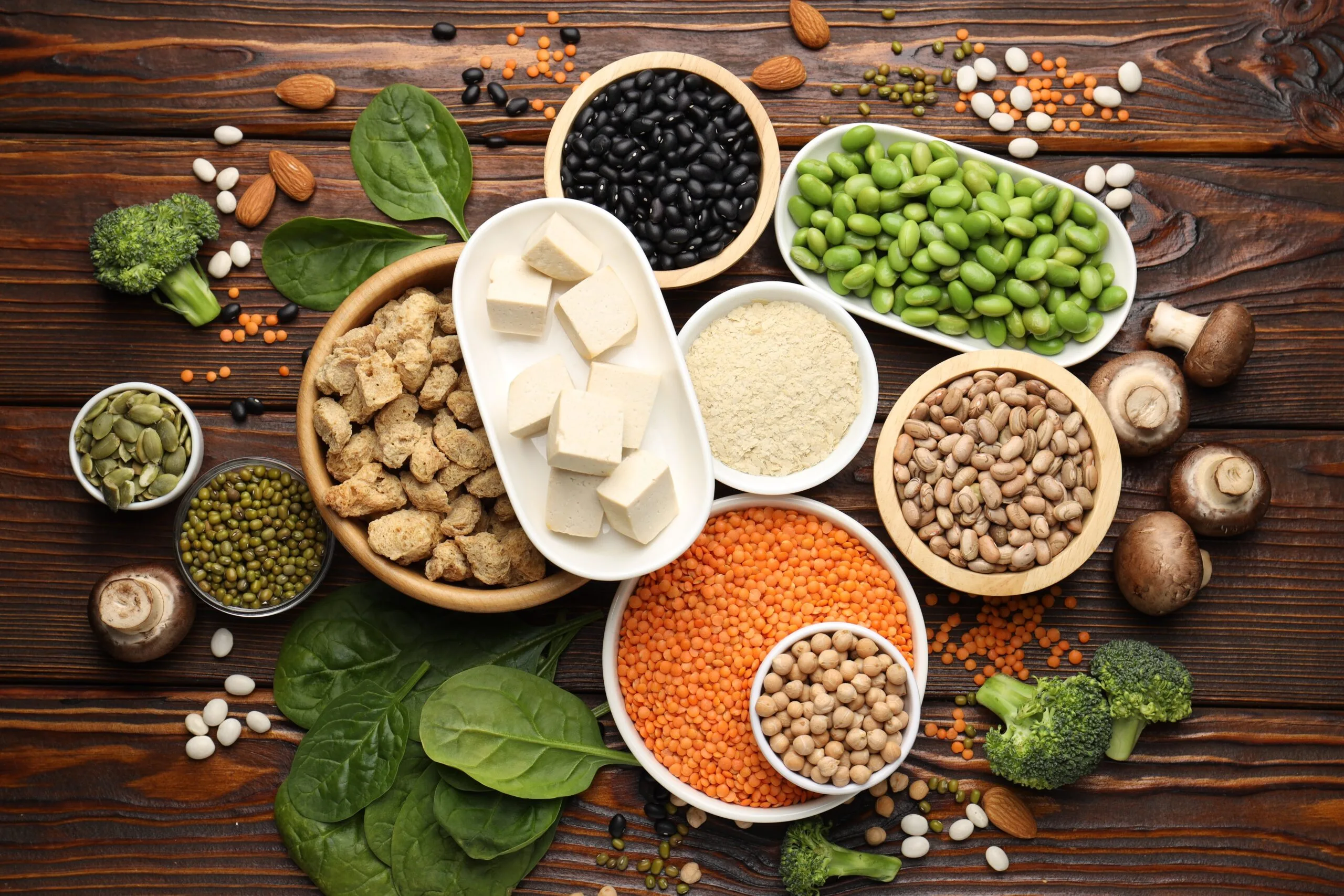
- Tofu, edamame, lentils, and beans: Great plant-based choices, especially if meat isn’t appealing—roughly 10 to 18 grams per cooked cup, depending on the source.
- Protein shakes or powders: If solid food sounds unappealing, a shake—or even a clear protein drink—can be an easy way to fill the gap, typically providing 20 to 25 grams per scoop or serving.
“The “best’ protein isn’t necessarily the one with the highest number on the label. It’s the one you can comfortably eat and come back to consistently,” says Hudspeth.
Getting enough protein on a GLP-1: What a day of eating might look like
For a 200-pound person, that 1.2–1.6 g/kg range works out to roughly 109 to 145 grams of protein a day. A day built around lighter protein sources might look like this:
- Breakfast: 2 eggs + 3/4 cup Greek yogurt — about 32 grams
- Lunch: 4 oz grilled chicken or turkey — about 28 grams
- Snack: 1 protein shake — about 25 grams
- Dinner: 4 oz lean fish + 1/2 cup lentils — about 33 grams
That adds up to roughly 118 grams for the day—within the recommended range, and spread out in a way that’s easier to manage than trying to eat it all at once. Your own mix will look different depending on what you tolerate and enjoy, but this gives a sense of how the numbers can come together in practice.
A simple trick: Eat your protein first
When your appetite is limited, you may be full long before you’ve finished your meal.
Starting with the protein on your plate gives you the best chance of eating it before early fullness kicks in. If you’re still hungry afterward, you can move on to everything else.
Pairing protein with foods that feel gentle on your stomach can help, too. Many people find bland, lower-fat foods easier to tolerate while they’re adjusting to a GLP-1, while fried or greasy meals are more likely to make nausea worse.
Protein works best with movement
Protein gives your muscles the building blocks they need. Strength training tells your body to keep them.
Research consistently finds the best results come from combining adequate protein with resistance exercise—not relying on either one alone. A review of nutrition and exercise strategies for GLP-1 users found that the most defensible approach combines food-first nutrition counseling, adequate protein intake, and structured resistance exercise.
You don’t have to hit the gym either. Bodyweight exercises, resistance bands, or lifting weights a few times a week can all help signal your body to hold onto muscle as you lose fat.
Research into the best protein and workout combinations for building muscle after 50 found something similar: protein paired consistently with resistance training outperformed either strategy alone.
“Sustainable muscle health isn’t about a single supplement or a single workout,” says Hudspeth. “Eating more protein on its own doesn’t guarantee results—it needs to be part of an overall pattern that supports your goals.”
When should you talk to your healthcare provider?
Missing your protein goal once in a while isn’t something to stress about. But if eating enough is becoming difficult—or you’re losing weight much faster than expected—it’s worth checking in with your healthcare team.
GLP-1 medications can reduce calorie intake by roughly 16% to 39%. That’s part of how they work. But eating substantially less can also make it harder to get enough protein, vitamins, and minerals, particularly during periods of rapid weight loss. Rapid weight loss itself also carries known risks: a comparison of GLP-1-driven weight loss to bariatric surgery outcomes found that fast, large weight loss raises the risk of gallstones and micronutrient deficiencies in iron, vitamin B12, vitamin D, calcium, and thiamine.
“That doesn’t mean these outcomes are common or inevitable,” says Dr. Masoodi. “It means nutrition deserves attention during any period of significant weight loss.”
Reach out to your provider if:
- You just don’t feel like yourself. Persistent fatigue, weakness, or other changes are worth discussing.
- You’re losing weight very quickly. Your provider may want to adjust your nutrition plan, medication dose, or rate of weight loss.
- Nausea or vomiting is making it hard to eat. If you’re regularly unable to keep food—or protein—down, don’t try to push through it alone.
- You have kidney disease or another condition that affects protein needs. Your protein goal may need to be personalized rather than based on a general guideline.
Regular check-ins give your care team a chance to review your progress, manage side effects, and make sure you’re losing weight in a way that also supports your long-term health.
Who’s most at risk of losing muscle on a GLP-1?
Not everyone loses the same amount of muscle during weight loss. Factors like your age, starting muscle mass, how quickly you’re losing weight, what you eat, and how much resistance exercise you do all play a role.
The good news is that GLP-1 medications appear to help people lose more fat than lean tissue, and losing some lean mass doesn’t automatically mean losing strength or physical function. Still, some people may benefit from paying a little closer attention to protein and muscle-preserving habits throughout their weight-loss journey.
That includes:
- People losing weight quickly. Studies show the largest reductions in lean mass tend to happen during the first few months of GLP-1 treatment, when weight loss is often fastest. During this phase, aiming for enough protein and incorporating resistance exercise may help preserve more muscle.
- People with a history of repeated weight loss and regain. Research suggests that cycling through periods of weight loss and regain over time—which can happen for many reasons, including stopping and restarting a GLP-1 medication—may gradually reduce muscle mass. That’s another reason to think of protein and strength training as long-term habits rather than temporary strategies.
- Older adults. Muscle naturally declines with age, so preserving it becomes more important. That’s one reason experts often encourage older adults to prioritize protein and resistance exercise while losing weight.
- People with lower muscle reserves (including sarcopenic obesity). If you begin treatment with less muscle to spare, preserving the muscle you have becomes an even bigger priority.
- Women in menopause. Declining estrogen is linked to gradual changes in body composition, including a loss of muscle and an increase in body fat. Paying attention to protein can help support muscle health during this stage of life.
One more reassuring point: a change in lean body mass on a body composition scan isn’t necessarily the same thing as losing strength. Research has found that people can lose some lean tissue while maintaining physical function, particularly when they’re staying active and eating enough protein.
Frequently asked questions about protein on GLP-1 medications
How much protein do I need per day on a GLP-1?
For a 160-pound person, the general 1.2–1.6 g/kg range works out to about 87 to 116 grams of protein per day. Your individual needs may be higher or lower. This range comes from decades of general weight-loss and healthy-aging research, since no large trial has tested it specifically in people on a GLP-1.
What is the best protein for GLP-1?
There’s no single “best” protein—the best choice is one you can eat consistently without discomfort. Dietary guidelines for GLP-1 users generally recommend leaner options like poultry, fish, eggs, and plant-based proteins, since heavier, fattier proteins can be harder to tolerate.
What’s the best protein shake for GLP-1 users?
The best option is one you tolerate well and will actually drink consistently. If creamy shakes feel too heavy, clear or lighter protein drinks may be easier on your stomach.
How much protein do I need to lose weight on GLP-1?
Most experts recommend aiming for about 1.2 to 1.6 grams of protein per kilogram of body weight per day while actively losing weight on a GLP-1. Research shows that people who eat more protein while losing weight tend to preserve more muscle than those who eat less, even when total weight loss is similar.
What if I don’t get enough protein some days on a GLP-1?
One lower day here and there isn’t something to stress about—what matters most is your intake over time, not daily perfection. Consistently falling short for weeks at a time is more likely to affect muscle preservation than the occasional off day.
Can you get too much protein on a GLP-1?
For many healthy adults, staying within the 1.2–1.6 g/kg range is unlikely to be a concern. But people with kidney disease or another condition that affects protein metabolism should talk with their healthcare provider before significantly increasing their intake.
Does protein timing matter on a GLP-1?
Your total daily protein intake matters most. That said, spreading protein across three or four meals or snacks can be easier than trying to eat most of it at once—especially when your appetite is lower.
Reviews from real Noom users
Desirea N. — Real Noom user
“My favorite parts of Noom are the care team and other Noomers. Sharing and getting help made me feel like I wasn’t doing it alone. That support made all the difference.”
Desirea N. — Real Noom user
Matthew M. — Real Noom user
“Noom has taught me that every day is a new chance to make better, healthier choices. It's taught me how to stop overeating.’’
Matthew M. — Real Noom user
Lila M. — Real Noom user
“Clinicians who understand how supportive medication can be is one of the best parts of Noom! I was convinced I wouldn’t have success but I’m down 11 pounds in two months.’’
Lila M. — Real Noom user
Steve M. — Real Noom user
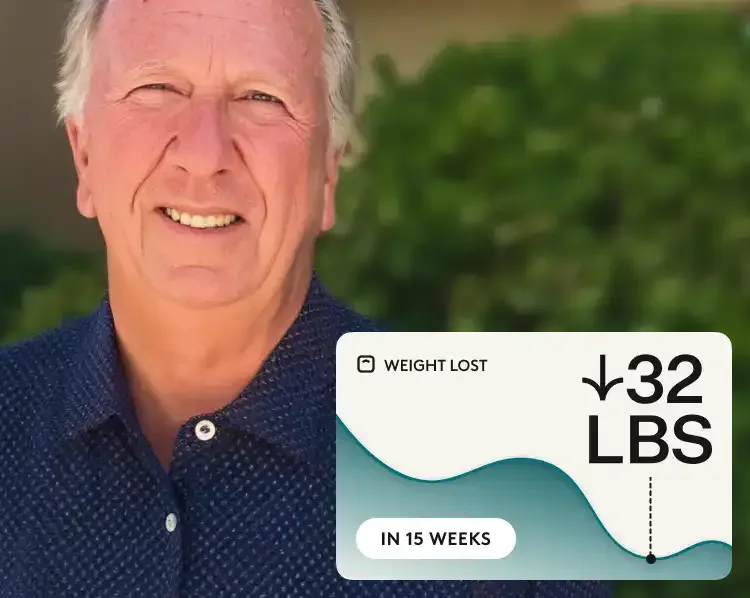
“Noom provided me with the medication which I could not get through Medicare. I have learned the tricks to better eating and life in general.”
Steve M. – Real Noom user
Daisy R. — Real Noom user
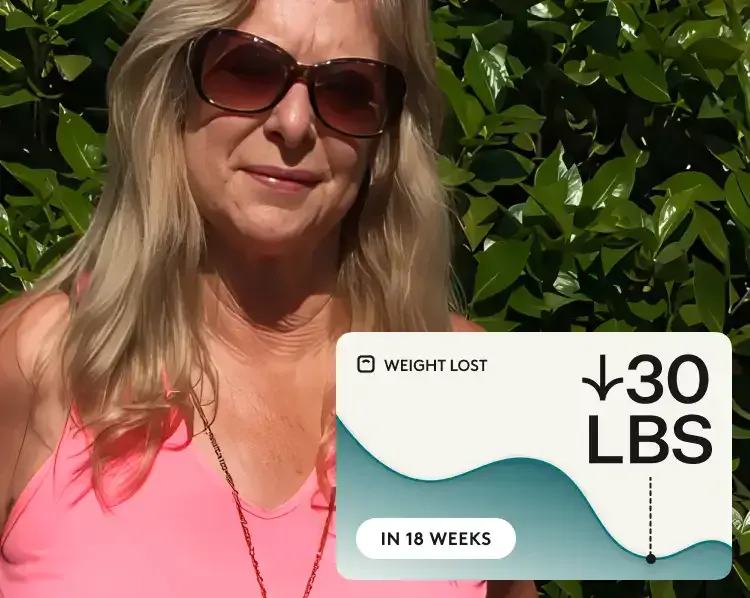
‘’Noom has changed my life and I’m so thankful, I feel great, have more energy and am no longer prediabetic.”
Daisy R. – Real Noom user
Sarah R. — Real Noom user
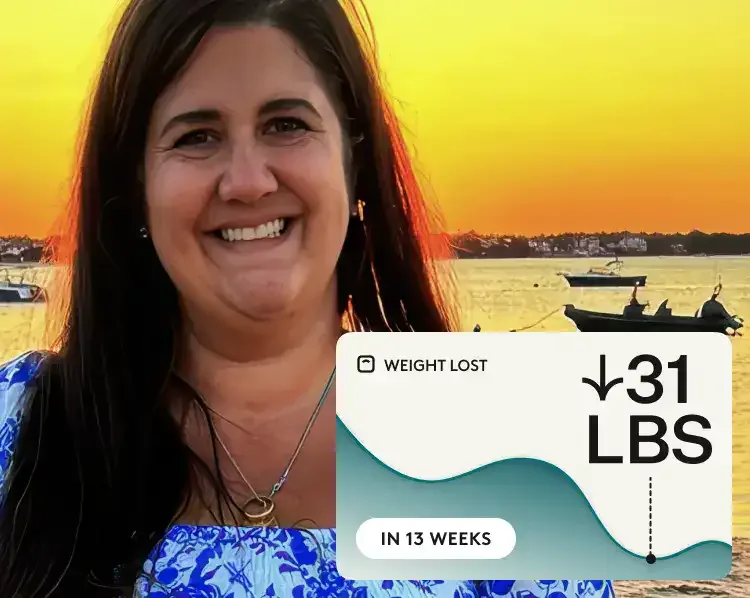
“All of the Noom providers that I’ve met with have been exceptional and prescribed medications that are appropriate for my situation and health.”
Sarah R. – Real Noom user
Madison S. — Real Noom user
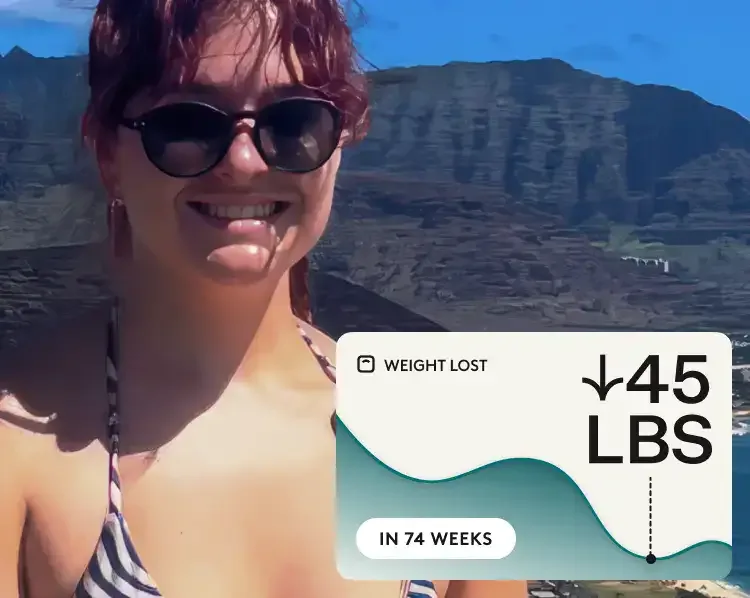
“Noom made the process so simple and now I feel full, free from diet obsession, and at ease in my body again.”
Madison S. – Real Noom user
Sonday K. — Real Noom user
“My doctor recommended Noom after I was frustrated trying to lose weight. The lessons helped change my relationship with food. My body feels lighter & energized.”
Sonday K. – Real Noom user
Cam K. — Real Noom user
“I built healthy habits with coaching and lessons that make me confident I can maintain my weight loss long term.”
Cam K. – Real Noom user
Laura TR. — Real Noom user
“With the right medication through Noom, hunger and sugar cravings finally quieted and I have the tools to break the cycle.”
Laura TR. – Real Noom user
Jessica S. — Real Noom user
“Cravings and food noise are gone, I finally feel confident in the healthy habits I’ve built to last with Noom.”
Jessica S. – Real Noom user
The bottom line: Prioritizing protein intake is important when taking GLP-1 medications
Taking a GLP-1 often means eating less, which makes every meal count a little more.
Prioritizing protein can help support muscle, strength, and healthy weight loss—especially when it’s paired with resistance training and an overall eating pattern you can stick with. The 1.2 to 1.6 g/kg range is a solid starting point for most people, with the right number for you depending on your age, activity level, rate of weight loss, and health history.
Getting there may take some trial and error, especially if nausea or a low appetite makes eating difficult. Choosing lighter protein sources, starting meals with protein, and spreading intake throughout the day can make the goal feel more manageable. You don’t have to get it perfect every day.
If you’re starting or already taking a GLP-1 and want more support tying this together, Noom Med’s GLP-1 Companion is designed for this reason. The companion app’s features pair individualized protein and macro targets with easy photo-based meal logging to help stay on track. Noom also offers Muscle Defense™, which has tailored workouts designed to help preserve and build lean muscle.
Editorial standards
At Noom, we’re committed to providing health information that’s grounded in reliable science and expert review. Our content is created with the support of qualified professionals and based on well-established research from trusted medical and scientific organizations. Learn more about the experts behind our content on our Health Expert Team page.