
What you’ll learn:
- Drinking olive oil before bed is popular because people believe it helps with weight loss.
- Olive oil has real health benefits, especially when it replaces saturated fats in your diet—but bedtime timing isn’t the important part.
- A small amount is likely safe for many people, but drinking oil at night can cause reflux or other digestive issues for sensitive people.
The latest wellness trend has a simple pitch: drinking olive oil before bed will help you wake up with better digestion, less inflammation, and maybe even some weight loss.
If that glowing praise for a single ingredient sounds familiar, it’s because you’ve seen it before. It follows the same “one-ingredient-fixes-everything” formula as the pink Himalayan salt drink, the gelatin trick, and the turmeric hack. The ingredients change, but the promise stays the same: quick results with minimal effort.
What makes olive oil a more convincing case is that it has some of the most well-documented evidence of any single food ingredient. It’s a staple of the Mediterranean diet, and decades of research link regular olive oil consumption to better heart health, lower inflammation, and a healthier weight over time.
But there’s a meaningful difference between “olive oil is good for you” and “drinking it right before bed does something special.” The first is well-supported. The second isn’t. Most of the research on olive oil comes from people who consume it as part of balanced meals—not as a nightly supplement taken on its own.
Here’s what the evidence actually shows, with guidance from Maggie Hudspeth, RDN, Senior Manager of Coaching at Noom.

The Easy Way
to lose weight and get healthy.
See if you qualify
How are people using olive oil before bed?
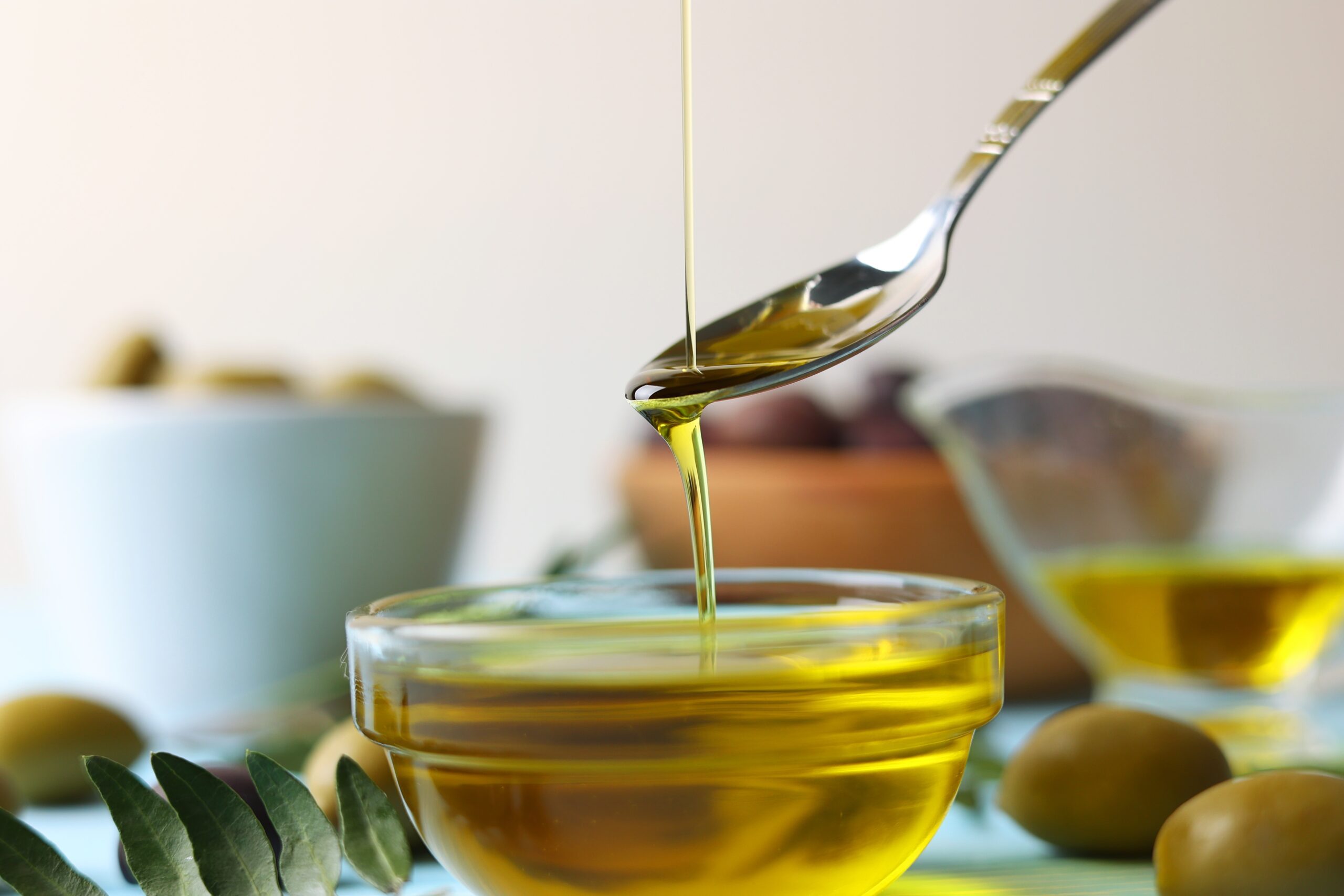
The olive oil before bed trend is surprisingly simple: take a tablespoon of extra-virgin olive oil—plain or mixed with lemon juice—shortly before going to sleep.
Videos of people doing this in their pajamas have racked up millions of views on TikTok, with followers claiming it helps with everything from digestion and inflammation to weight loss and better sleep. Some people do it nightly as a dedicated wellness ritual, though it’s also becoming popular to do in the morning.
The method itself is pretty straightforward:
- Choose a high-quality extra-virgin olive oil
- Pour about one tablespoon into a spoon or shot glass
- Take it in one sip
- Optional: mix in lemon juice or a pinch of spices for flavor
The most important part of the habit is the type of olive oil. Most people doing this specifically reach for extra-virgin olive oil (EVOO) rather than regular or “light” olive oil. EVOO is cold-pressed and minimally processed, which preserves its natural plant compounds. Regular olive oil goes through heat and chemical refining, which removes most of those compounds and leaves behind a more neutral-tasting oil associated with fewer health benefits.
Why is drinking olive oil before bed popular?
Part of the appeal is how simple the ritual feels. A tablespoon of olive oil before bed sounds manageable, intentional, and easier to fit into daily life than making broader changes to your eating habits. Social media also loves habits that feel both natural and scientific at the same time—and olive oil checks both boxes.
But the trend has also grown because it blends a few real concepts with some assumptions that haven’t actually been proven. Here’s where the idea comes from, what the science does support, and where the claims start stretching beyond the evidence.
Olive oil is connected to lower inflammation—just not this way.
Extra-virgin olive oil is the highest quality grade of olive oil. It’s commonly used in wellness practices because it’s old-pressed and unrefined, so it retains more of the natural compounds linked to its health benefits. Research shows that one of those compounds can help reduce inflammation in the body—working along some of the same pathways as pain relievers like ibuprofen, though at a much lower level.
But the research behind it comes from people who use olive oil regularly as part of their diet—in cooking, on salads, with meals. There’s no evidence that taking it as a nightly shot concentrates or amplifies those benefits. The trend is borrowing olive oil’s legitimate reputation and attaching it to a delivery method that hasn’t been studied.
The “your body repairs itself overnight” pitch is compelling—but incomplete.
Your body does do meaningful work while you sleep: regulating blood sugar, managing inflammation, and repairing cells. That part is true. The leap is assuming that a tablespoon of olive oil right before bed plugs into that process in some special way. It doesn’t. Research on olive oil doesn’t distinguish between a shot taken at 10 pm and the same amount drizzled over your dinner two hours earlier. Timing hasn’t been shown to matter.
The Easy Way
to lose weight and get healthy.
See if you qualifyA one-step bedtime ritual feels sustainable.
There’s nothing wrong with wanting a simple, repeatable health habit. The problem is when a low-effort ritual substitutes for the bigger picture—overall food quality, portion sizes, movement, and sleep. A tablespoon of olive oil before bed adds roughly 120 calories and, if it’s high quality, some genuine nutritional value. What it won’t do is make up for what’s happening across the rest of your day.
Drinking olive oil before bed: Separating the hopes from the facts
The claims behind drinking olive oil before bed are anchored in real research. Olive oil has real connections to lower inflammation, better heart health, and weight management. But those benefits come from regular dietary use—not from the timing. Here’s a closer look at the most common claims and what the science really says.
Claim 1: Drinking olive oil before bed helps with weight loss
Regular use of extra-virgin olive oil is linked to a healthier weight over time. A study of more than 16,000 people found that those who used it regularly had significantly lower BMI and smaller waist circumference than those who consumed it rarely. But that’s consistent daily use as part of a balanced diet, not a nightly shot on top of everything else.
Adding a nightly tablespoon without changing anything else could actually work against your goals. At about 120 calories per tablespoon, that’s more than 800 extra calories a week.
“For weight loss, olive oil works best as a swap—use it instead of butter, creamy dressings, or higher-calorie sauces, not as an extra on top of everything else,” says Hudspeth.
Claim 2: Timing olive oil around bedtime makes a difference.
Verdict: No.
Sleep really does do meaningful repair work. Research shows that while you’re asleep, your body repairs muscle, grows tissue, synthesizes protein, and releases hormones that regulate metabolism. So the idea that you could give your body something useful right before that window makes a certain kind of sense.
But olive oil isn’t a sleep-activated ingredient—your body processes it the same way whether you have it at bedtime or with lunch.
“Your body doesn’t treat olive oil as more heart-healthy, more anti-inflammatory, or more weight-loss-friendly at 10 pm. than at noon,” says Hudspeth. “What matters more is your overall pattern: how much olive oil you use, what it replaces, what else you eat, and whether your routine supports your goals over time.”
So if you enjoy the habit and it fits your day, that’s fine. But if you’re doing it because you think bedtime unlocks something special, the evidence doesn’t support that.
Claim 3: Olive oil supports heart health
Verdict: True—but not specifically at bedtime
Of all the claims behind this trend, the heart health claim has the most science behind it. Olive oil is high in monounsaturated fat—the kind that can help lower LDL, or “bad” cholesterol, when it replaces saturated fats like butter. A large review of studies found that people who used olive oil had better cholesterol levels than those who used other plant oils. A 2025 review found that regular virgin olive oil consumption was linked to lower blood pressure and reduced markers of inflammation in the blood.
But none of that research has anything to do with drinking it at bedtime. Again, the studies look at olive oil as part of an overall balanced diet—eaten alongside vegetables, legumes, whole grains, fish, nuts, and fruit. The heart-healthy benefit comes from the ingredient itself, not from when you have it.
Claim 4: Olive oil helps with inflammation
Verdict: Possible, but not without other healthy habits
Extra-virgin olive oil contains natural plant compounds, including one called oleocanthal, that research suggests can help dial down inflammation in the body. A review found that regular consumption of extra virgin olive oil was linked to lower inflammation markers.
But that’s not the same as saying a spoonful before bed will reduce inflammation overnight.
“Inflammation is influenced by your overall lifestyle—diet quality, sleep, stress, movement, alcohol intake, and underlying health conditions. Olive oil may help support a less inflammatory eating pattern, especially when paired with other nutrient-dense foods. But one bedtime shot can’t carry the whole load,” says Hudspeth.
What about olive oil and lemon juice shots in the morning?
The bedtime version isn’t the only way people are using olive oil shots for wellness purposes. A morning variation—olive oil mixed with lemon juice, taken on an empty stomach—has its own following. The idea is that taking it first thing in the morning coats the gut before food, supports digestion, and acts as a gentle morning detox.
Hailey Bieber, who frequently shares wellness routines on social media, is one of the people who has helped popularize the trend. But she describes it more as a gut health ritual and part of starting the day intentionally—not as a hack for weight loss.
Access GLP-1 Weight Loss with Noom
Explore a wide range of prescription medications supported by Noom’s program.Microdose GLP-1rx
Noom GLP-1rx
Noom GLP-1rx Plus
Wegovy®
Ozempic®
Metformin
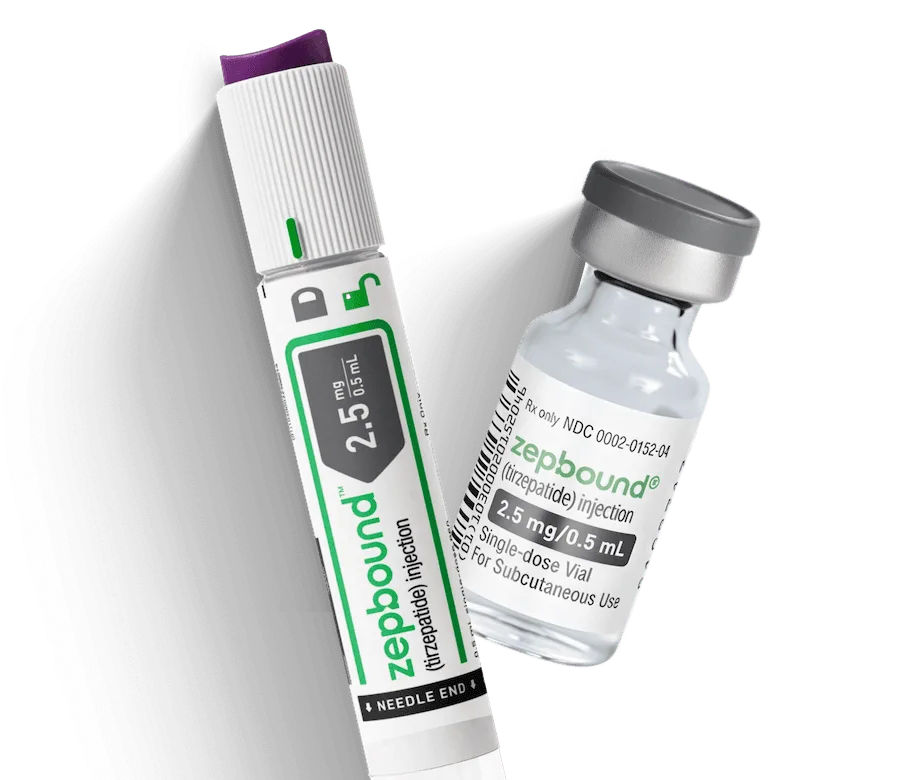
Zepbound®
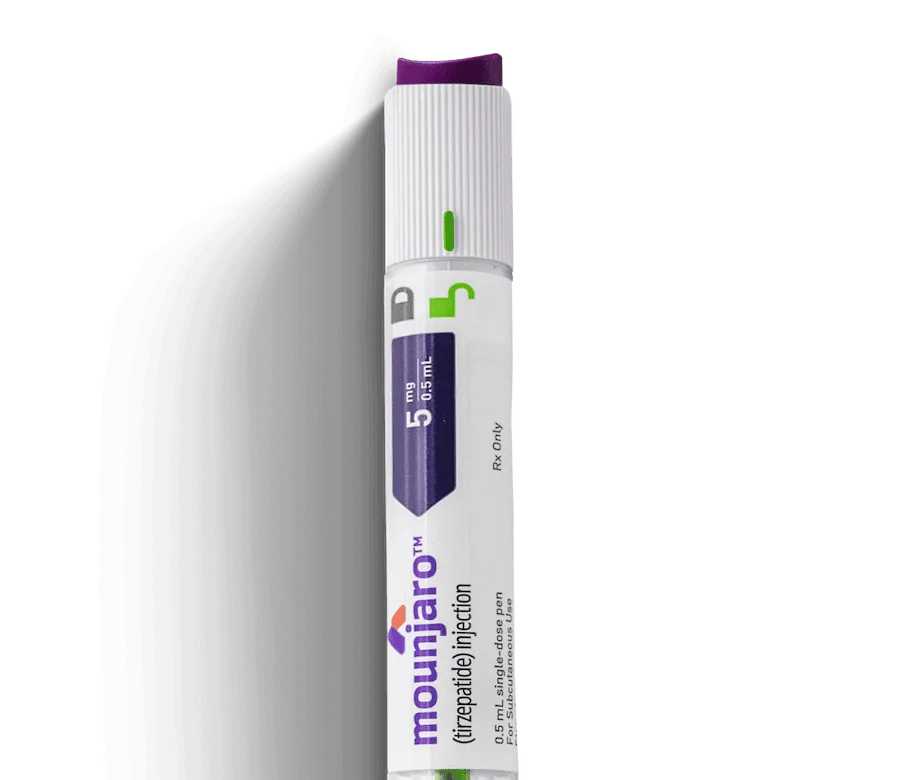
Mounjaro®
Liraglutide
Again, the timing probably isn’t the important part here. The benefits are likely the same ones you’d get from using olive oil regularly throughout the day. Having it first thing in the morning probably doesn’t dramatically change what the ingredient itself does.
The taste can also be a barrier to sticking with it. Bieber has admitted it basically tastes like salad dressing, though taking it as a quick shot may make it easier to get down. And honestly, if you’d rather have olive oil and lemon juice with actual lettuce and vegetables, you’re likely getting the same overall benefits anyway.
Is drinking olive oil before bed safe?
For most healthy adults, a small amount of olive oil before bed is likely fine—but it’s not for everyone.
“Drinking oil right before lying down may cause nausea, burping, a heavy feeling, diarrhea, or acid reflux,” says Hudspeth. “People who already have GERD or frequent heartburn may be more likely to feel worse, especially if they drink olive oil right before getting into bed.”
You may want to skip this trend or check with a healthcare provider first if you:
- Have reflux, GERD, or frequent heartburn
- Have gallbladder disease or chronic digestive symptoms
- Have a condition that affects fat absorption
- Have a medical reason to follow a lower-fat diet
Other ways to use olive oil
If you’re interested in olive oil for weight loss, heart health, or lowering inflammation, the most evidence-backed way to use it is as part of balanced meals—not as a nightly shot on its own. That’s how olive oil has been studied in research, particularly in Mediterranean-style eating patterns linked to better long-term health outcomes.
Olive oil works best when it’s paired with foods that also provide protein and fiber, since those nutrients help slow digestion, support steadier blood sugar levels, and make meals more satisfying overall. In other words, olive oil isn’t really a magic ingredient by itself—it’s part of the bigger picture of how meals are built.
Another thing to keep in mind: olive oil is calorie-dense, with about 120 calories per tablespoon. That doesn’t make it unhealthy, but it does mean portions still matter, especially if your goal is weight loss. Using it strategically in meals can help add flavor and satisfaction without feeling restrictive.
A few easy ways to work it in:
- Drizzle 1 to 2 teaspoons over roasted vegetables, greens, or soup before serving
- Whisk 1 tablespoon with lemon juice or vinegar for a quick homemade salad dressing
- Stir 1 to 2 teaspoons into beans, lentils, or grain bowls to add richness and help meals feel more filling
- Use 1 tablespoon to cook a batch of vegetables, eggs, seafood, or chicken
- Finish pasta, fish, or roasted vegetables with 1 teaspoon instead of heavier creamy sauces
- Dip raw vegetables or whole-grain bread into 1 teaspoon to 1 tablespoon of olive oil alongside meals or snacks
Frequently asked questions (FAQ) about olive oil before bed
Is having olive oil before bed good for you?
It depends on your goals and how your body responds. Olive oil itself is a healthy fat with real research behind it. For most healthy adults, a small amount before bed is probably fine. But it’s not necessary, and it won’t deliver results that you wouldn’t get from simply using olive oil in your meals. If you have reflux, gallbladder issues, or are watching your calories, it’s worth skipping or asking a doctor first.
How do you use olive oil to reduce belly fat?
Olive oil isn’t a targeted fat burner, and no food can spot-reduce fat from a specific area. But research does link regular use of extra virgin olive oil to a healthier weight over time—the benefit comes from using it consistently as part of a balanced diet, not as a nightly supplement.
It works best when it replaces higher-saturated-fat options like butter or processed dressings, and when it makes balanced meals more enjoyable and easier to stick with. Fat loss overall comes from a consistent calorie deficit over time.
Should I take a shot of olive oil in the morning or at night?
There’s no need to take it as a shot at all. The research on olive oil’s benefits comes from people who use it as part of their meals—not as a standalone drink. What matters is how olive oil fits into your overall diet: what it replaces, how much you use, and whether it helps you eat in a way you can maintain.
What are the benefits of drinking olive oil before bed?
The benefits people associate with drinking olive oil before bed—better heart health, less inflammation, improved digestion—are real benefits of olive oil in general, not specifically of taking it at night. Extra-virgin olive oil contains healthy fats and natural plant compounds that have been studied for their effects on cholesterol, inflammation, and heart health. But those benefits come from olive oil as part of an overall diet, not from the bedtime timing.

See if your insurance
covers GLP-1s.
The form only takes 2 minutes to answer. We’ll handle the rest.
GET STARTEDThe bottom line: Olive oil doesn’t need to be consumed before bed to be healthy
Olive oil is a healthy fat, and extra-virgin olive oil has solid research behind it. It may support heart health, contribute to a less inflammatory eating pattern, help you manage your weight, and make balanced meals more satisfying.
But there’s no strong evidence that drinking olive oil before bed is more effective for weight loss, heart health, or inflammation. If you enjoy the ritual and tolerate it well, a small amount is probably fine. But if your goal is better health or sustainable weight loss, you don’t need a nighttime shot.
Use olive oil where it makes the most sense: in meals you enjoy, in portions that fit your goals, and as part of a pattern you can actually keep up. If you’re looking for more healthy habit strategies, explore the Noom app on iOS & Android. Instead of rigid rules or food guilt, Noom focuses on building awareness. When you understand how different foods affect your hunger, satisfaction, and habits, you can make choices that feel balanced—and build changes that last.
Editorial standards
At Noom, we’re committed to providing health information that’s grounded in reliable science and expert review. Our content is created with the support of qualified professionals and based on well-established research from trusted medical and scientific organizations. Learn more about the experts behind our content on our Health Expert Team page.