
What you’ll learn:
- Celery juice is a low-calorie, hydrating drink that provides nutrients like potassium and vitamin K, but it’s not a miracle health cure.
- Most claims that celery juice “detoxes” the body or heals chronic disease aren’t supported by scientific evidence.
- If you enjoy celery juice, it can fit into a healthy diet—just don’t expect it to replace balanced meals or healthy habits.
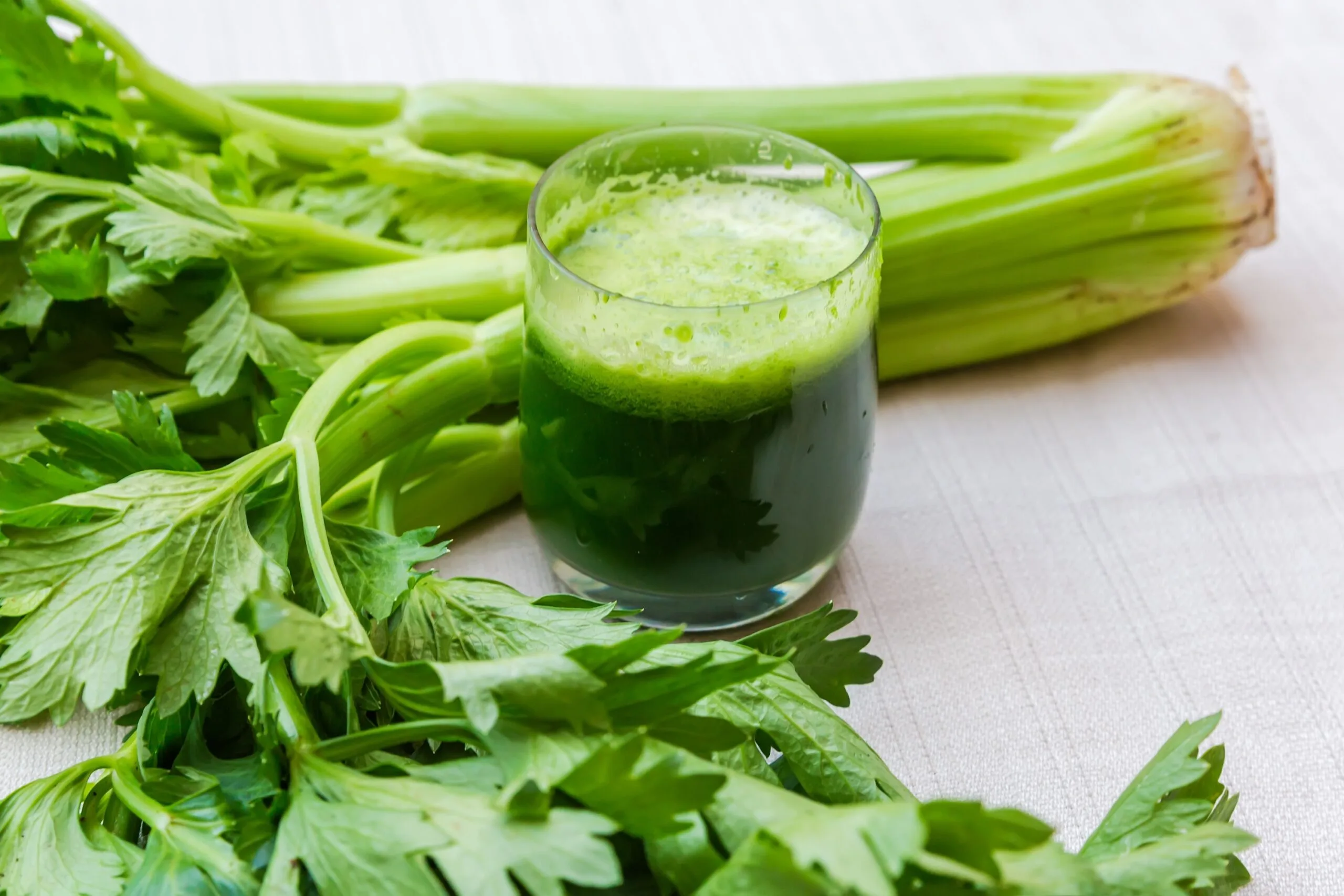
Celery juice has become one of the most talked-about wellness drinks online, with claims that it can detox the body, heal the gut, reduce inflammation, boost energy, and even promote weight loss. For some people, it’s a daily ritual. For others, it feels like another health trend that sounds too good to be true. The reality lands somewhere in the middle.
Celery juice does contain real nutrients, including potassium and vitamin K, and it can absolutely be a refreshing, hydrating, low-calorie drink. It also contains beneficial plant compounds, including flavonoids, phenolic acids, and phthalides—a compound naturally found in celery that has been studied for potential antioxidant and anti-inflammatory effects. But many of the boldest claims surrounding celery juice go well beyond what current research actually supports.
Part of the confusion comes from the fact that most studies look at whole celery or concentrated celery extracts—not the strained juice people drink first thing in the morning. And while celery itself is very low in sugar and calories, juicing changes how the body processes it by removing most of the fiber that normally slows digestion and helps with fullness.
One thing that does carry through into the juice is mannitol, a naturally occurring sugar alcohol in celery. Because it’s poorly absorbed, mannitol can draw water into the colon and have a mild laxative effect, which may explain the “clearing out” feeling some people report after drinking celery juice.
So is celery juice good for you? For most people, it can fit into a balanced diet without much downside. But it’s not a miracle drink, and it doesn’t “detox” the body or replace healthy habits. Here’s what celery juice may actually help with, what the science says about popular claims, the possible side effects to know about, and whether drinking celery juice in the morning really makes a difference.
What happens when you drink celery juice?
When you drink juice, your body handles it differently than if you were eating the whole vegetable. The biggest reason is fiber. Juicing removes most of the fiber that normally slows digestion, helps you feel full, and moderates how quickly nutrients and natural sugars enter your bloodstream.
That said, celery is so low in sugar that the absorption difference is unlikely to matter much in practice—a whole bunch contains only around 7 to 8 grams of sugar, and an 8-ounce glass of juice uses about half that. Where the fiber loss is more relevant is satiety: eating celery gives you something to chew, which takes longer and adds volume to your meal. Drinking the juice skips that process entirely, so it’s less filling even if the calorie count is similar.
One thing that does carry through into the juice is mannitol, a naturally occurring sugar alcohol in celery. Because it’s poorly absorbed, mannitol can draw water into the colon and have a mild laxative effect, which explains both the “clearing out” feeling some people report and the bloating others experience, particularly those sensitive to FODMAPs.
As for the “energized” feeling some people report after their morning celery juice, hydration is the more likely explanation. If you’re drinking 16 ounces of anything first thing in the morning, you’re going to feel more alert—celery doesn’t deserve special credit there.
Celery juice benefits: What people claim vs. what evidence supports
Celery juice has real nutrients in it—but many of the boldest claims go well beyond what the science shows. Most research looks at whole celery or concentrated extracts, not the strained juice most people are actually drinking.
What celery juice is good for
- Hydration: Celery juice is mostly water, which counts toward your daily fluid intake and supports normal body functions like temperature regulation and kidney health. It’s not uniquely hydrating compared to other low-calorie drinks, but it’s a reasonable way to start the day.
- Potassium and electrolytes: Celery juice provides potassium, an essential electrolyte that helps regulate fluid balance and supports normal muscle and nerve function.
What it might help—but evidence is limited
- Reducing inflammation: Celery contains phytonutrients like flavonoids and phenolic acids that show antioxidant and anti-inflammatory activity in lab studies—but direct human evidence from celery juice specifically is limited.
- Blood pressure: Some small studies on celery extracts suggest possible effects on blood pressure, possibly due to phthalides and potassium. These findings can’t be directly applied to homemade juice without more research.
What it probably doesn’t do
- “Detox” the body: Your liver and kidneys handle detoxification naturally—there’s no scientific basis for the idea that any juice can enhance or replace those processes.
- Heal the gut or reverse disease: There’s no clinical evidence that celery juice repairs the gut lining or cures chronic disease. Claims about disease reversal aren’t supported by human trials.
Is celery juice good for you?
For most people, yes—it can fit into a healthy diet without much downside. A typical 8-ounce glass, made from roughly 4 to 5 stalks, contains around 30 to 40 calories and 6 to 8 grams of carbohydrates, making it one of the lighter juice options out there. It’s also lower in sugar than most fruit juices.
Where celery juice stands out nutritionally is vitamin K—one serving can provide a meaningful portion of your daily needs, which matters for blood clotting and bone health. Potassium and folate are present too, though in more modest amounts.
The honest answer is that celery juice isn’t a superfood, but it’s not a bad choice either—it’s low-calorie, hydrating, and provides some real nutrients, particularly vitamin K.
Benefits of celery juice in the morning: Does timing matter?
What morning routines might offer is a psychological edge. Starting the day with a deliberate healthy choice can create momentum—you’re more likely to keep making good choices as the day goes on. And for people who don’t drink much water, a morning glass of celery juice is a way to hydrate early, which can produce a noticeable lift in how you feel.
If celery juice works for you as part of a balanced eating pattern, great. If it makes you feel bloated or unsettled on an empty stomach, it’s completely fine to drink it with food—or skip it altogether.
Does celery juice make you poop?
Some people do notice a laxative effect after drinking celery juice—and there’s a plausible reason for it. Celery contains mannitol, a naturally occurring sugar alcohol that’s poorly absorbed in the small intestine and can draw water into the colon, producing a mild laxative effect in some people. So the effect is real for some—it’s just not the gut health benefit it’s often framed as.
Most celery juice is strained, which means it contains very little fiber—the nutrient most directly linked to consistent, healthy bowel movements. What some people experience is a temporary clearing effect from mannitol, not improved long-term gut function. Others feel no change at all, and some find it causes bloating or gas, particularly those sensitive to FODMAPs.
Celery juice cleanse: What happens during a cleanse
When people talk about a celery juice cleanse, they usually mean a short-term plan where they drink celery juice (often multiple servings a day) and either replace some meals or eat very little for one to several days. It’s often marketed as a quick way to “reset” the body, improve digestion, and drop weight fast. But what’s happening isn’t sustainable weight loss, and we don’t recommend it.
During a cleanse, a few things tend to happen:
- You may eat fewer calories: Celery juice is low in calories, so if it replaces your normal meals, your total intake drops quickly.
- You’ll lose water weight: That’s why many people see the scale go down fast. When you eat fewer calories and fewer carbs, your body uses stored glycogen, and glycogen holds water, so weight can shift quickly even before any meaningful fat loss happens.
- Your blood sugar fluctuations: You can also get blood sugar swings, especially if you’re drinking large amounts of juice without fiber, protein, or fat to slow digestion. That can leave some people feeling tired, shaky, irritable, or extra hungry—not because the cleanse is “working,” but because the body is missing balanced fuel.
Again, a celery juice cleanse doesn’t detox your body. It also doesn’t “reset” your gut. Research suggests that juice-only diets can shift gut bacteria in ways that may not be beneficial, likely because of the lack of fiber.
Because of that, cleanses aren’t necessary for health, and for some people, they can increase cravings, disrupt energy, and set up an unhealthy restrict-and-rebound cycle. If you like celery juice, it’s generally better used as a supportive habit alongside real meals—not as a replacement for them.
Side effects of drinking celery juice
Most people can eat celery or drink celery juice without major issues, but some side effects do show up—especially in large amounts or if you’re new to it. Celery juice tends to amplify these effects since juicing concentrates the active compounds while stripping out most of the fiber.
Here are the most common side effects people report:
- Bloating: Some people feel gassy or bloated, especially after a large serving or if they have a sensitive gut. Celery juice can make this more likely since the compounds hit your digestive system faster and in higher amounts than whole celery would.
- Diarrhea or loose stools: Celery’s natural sugar alcohols can soften stools in some people, particularly on an empty stomach, and more so with juice than whole celery.
- More frequent urination: Celery is naturally high in water and has a mild diuretic effect for some people.
- Electrolyte imbalance (if consumed excessively): Drinking extreme amounts of celery juice can contribute to electrolyte shifts, especially if it’s replacing balanced meals or you’re not getting enough sodium, protein, and calories overall.
Some people also need to be extra cautious:
- People with IBS: Celery is high in mannitol, a fermentable sugar alcohol that can trigger bloating and diarrhea—and juicing concentrates it significantly. Even people who tolerate a stalk or two of whole celery may find juice causes problems.
- People with kidney disease: Celery contains potassium, and potassium limits are important for many kidney conditions.
- Sodium-sensitive conditions: Celery naturally contains sodium, so if you’re strictly limiting salt, it’s worth keeping an eye on your total intake.
Finally, while uncommon, celery can cause allergic reactions, and it contains natural compounds called psoralens that can contribute to photosensitivity (increased sun sensitivity) in rare cases.
How much celery juice per day is safe?
There’s no established recommended amount for celery juice—research hasn’t pinned down an optimal daily dose. Most people who drink it regularly tend to start small (around 4 to 8 ounces) and adjust based on how their body responds, which is a reasonable approach given how differently people tolerate it.
Starting low matters because celery juice is strained, so it’s low in fiber—and without fiber, it’s easy to drink far more than you’d naturally eat. Fiber is one of the key nutrients that support fullness and digestion, which is why whole vegetables tend to be more satisfying than juice.
The bigger misconception is that more celery juice automatically means better results. It doesn’t. Drinking large amounts can increase your risk of side effects like bloating or loose stools, and it can crowd out real meals. Celery juice should add to your day, not replace it. If you notice you’re skipping breakfast to “make room” for juice—or you’re too full for protein, healthy fats, and other vegetables—that’s a sign to scale back.
How to make celery juice at home
Learning how to make celery juice is pretty simple, and you don’t need anything fancy to do it.
Here’s an easy celery juice recipe you can make at home:
Celery juice recipe
- Wash the celery well under running water (especially the inner stalks where dirt can hide).
- Trim the base and leafy tops, then roughly chop the stalks into smaller pieces.
- If using a juicer: Feed the celery through slowly and collect the juice.
- If using a blender: Add celery to the blender with about ½ cup of water, blend until smooth, then strain through a fine mesh sieve or cheesecloth into a bowl.
- Pour and serve immediately, or chill it first if you prefer it cold.
As a general rule, one bunch of celery makes about 12 to 16 ounces of juice, depending on size. Store leftovers in a clean, sealed container in the fridge and try to drink them within 24 to 48 hours.
Celery juice nutrition (1 full bunch of celery)
One cup of celery juice is mostly water, but it delivers a solid hit of vitamin K—about 74% of your daily needs—along with meaningful amounts of folate, potassium, and vitamin C, all for around 40 calories. Strained juice contains little to no fiber, since that gets left behind in the pulp.
Access GLP-1 Weight Loss with Noom
Explore a wide range of prescription medications supported by Noom’s program.Microdose GLP-1rx
Noom GLP-1rx
Noom GLP-1rx Plus
Wegovy®

Ozempic®

Metformin

Zepbound®

Mounjaro®
Liraglutide

Celery juice nutrition
One cup of celery juice is mostly water, with a modest calorie count and a handful of key nutrients that carry through from the whole vegetable.
| Nutrient | Per 1 cup (8 oz) |
|---|---|
| Calories | 42 |
| Carbohydrates | 9g |
| Fiber | 0g (if removed when strained) |
| Sugars | 6g |
| Protein | 2g |
| Fat | 0g |
| Sodium | 215mg (9% RDA*) |
| Potassium | 670mg (20–26% RDA) |
| Vitamin K | 89mcg (74–99% RDA) |
| Folate | 78mcg (19% RDA) |
| Vitamin C | 14mg (16–22% RDA) |
| Vitamin B6 | 0.2mg (12–15% RDA) |
*Recommended dietary allowance (RDA) is defined as the average daily amount of nutrients needed to meet the requirements of nearly all healthy people in a specific group.
Celery juice recipes and flavor variations
If plain celery juice isn’t your thing, you can keep it light and still make it taste better. Some easy celery juice recipes include:
- Celery + lemon (bright and fresh) – Lemon adds a boost of vitamin C, which may support immune health and help your body absorb nutrients more efficiently. It also gives your juice a clean, refreshing zing.
- Celery + cucumber (milder and more refreshing) – Cucumber is hydrating and has antioxidants that may support skin health and reduce inflammation, making this combo extra refreshing and soothing.
- Celery + ginger (adds a little kick) – Ginger is known for its anti-inflammatory and digestive benefits. It may help ease bloating, support gut health, and add a warm, slightly spicy flavor.
Cold-pressed celery juice vs. homemade
Cold-pressed celery juice sounds fancy (and it kind of is), but the differences come down more to equipment, cost, and convenience than any guaranteed health upgrade.
Cold-pressed celery juice
Cold-pressed celery juice is made using specialized equipment that slowly squeezes celery to extract the liquid. Because it’s a gentler process, it usually creates less heat and air exposure than high-speed blending, which is why it’s often marketed as better for nutrient retention.
In reality, cold-pressed isn’t automatically “healthier”—it’s mostly a convenience option. One study comparing cold-pressed and regular (centrifugal) juicing methods found no significant difference in antioxidant levels or key bioactive compounds between the two, directly challenging the idea that cold-pressed juice is nutritionally superior. The same research also noted that storage can actually reduce the quality of cold-pressed juice over time, meaning any perceived advantage doesn’t necessarily hold up once it’s bottled and sitting in the fridge.
Homemade celery juice
Homemade celery juice is cheaper and often fresher, since you can drink it right after making it. You can use a juicer, or blend celery with a small amount of water and strain it through a fine mesh sieve or cheesecloth. The main advantage is control—you decide how fresh it is, what ingredients go in, and whether you want to keep a little pulp for texture. It also makes it easier to customize the flavor with lemon or ginger without paying extra for pre-made blends.
Both can fit into a healthy routine, and the “better” option is the one you can realistically stick with without it crowding out balanced meals.
Organic celery juice: Does it matter?
Choosing organic celery can reduce your exposure to certain pesticide residues, but it’s not the only way to lower risk, and it doesn’t automatically make the juice more nutritious.
In general, research shows organic produce is less likely to have detectable pesticide residues compared with conventional produce, mainly because synthetic pesticides aren’t used in organic farming. Celery is also one of the vegetables that tends to show up in pesticide residue testing more often than others, which is why people commonly single it out when deciding whether to buy organic.
That said, organic isn’t an all-or-nothing guarantee. Organic farming can still involve approved pesticides, and trace residues can still be present. The bigger question is often practical: what fits your budget and what you can buy consistently. If organic celery is affordable and available, it’s a reasonable choice for peace of mind. If it isn’t, conventional celery can still be a perfectly good option.
Washing is also a helpful middle ground. The USDA recommends rinsing produce under running water and using friction (like rubbing the stalks) to reduce dirt and residues on the surface. Since celery juice is made from a lot of celery at once, taking an extra minute to wash it well is one of the simplest ways to lower exposure—whether you buy organic or not.
The bottom line: Celery juice is a healthy drink, but not a cure-all
Celery juice probably falls into the category of “fine, but overhyped.” It’s low in calories, hydrating, and provides nutrients like vitamin K and potassium, along with plant compounds naturally found in celery. For some people, drinking it in the morning can feel refreshing or help encourage healthier routines overall. But the science doesn’t support the idea that celery juice detoxes the body, heals the gut, melts fat, or reverses chronic disease.
The bigger picture matters more than any single drink. A balanced eating pattern with enough protein, fiber, fruits, vegetables, sleep, movement, and hydration will have a much larger impact on long-term health than adding celery juice alone. If you genuinely enjoy it, there’s no reason most people can’t include it as part of a healthy routine. Just think of it as a beverage—not a cure-all.
If you want support building realistic habits that you can stick with, Noom is designed to help you create lasting change using psychology-based tools that make healthy routines feel more doable.
Editorial standards
At Noom, we’re committed to providing health information that’s grounded in reliable science and expert review. Our content is created with the support of qualified professionals and based on well-established research from trusted medical and scientific organizations. Learn more about the experts behind our content on our Health Expert Team page.