
What you’ll learn:
- GLP-1 injections can be safely given in three areas—your abdomen, thigh, or upper arm.
- No single site is more effective than the others, so the right choice comes down to what’s comfortable and practical for you.
- Rotating your injection site each week is one of the simplest things you can do to avoid injection site reactions and make sure your medication absorbs the way it should.
If you’ve recently been prescribed an injectable GLP-1 medication, you’re probably wondering a common question people have when starting: What’s the best injection site?
Self-injection is new territory for many people, and the idea of doing it weekly can feel overwhelming before you’ve actually tried it. But here’s what nearly everyone discovers after the first couple of rounds: It’s quicker, easier, and far less painful than you imagined.
The specifics of each pen vary from one medication to another—different button placements, different hold times, different click patterns. But the injection site guidance stays remarkably consistent across all GLP-1 medications. The same three body areas work for all of them, the same rotation principles apply, and the same preparation steps make the experience smoother.
This guide covers all of it: Which sites are approved, how to prepare, what the injection process actually feels like, and how to handle the minor issues that sometimes come up.
What type of injection is a GLP-1?
Before you pick up a pen for the first time, it helps to understand what kind of injection you’re actually giving yourself—because it’s probably simpler than whatever you’re picturing.

The Easy Way
to lose weight and get healthy.
See if you qualify
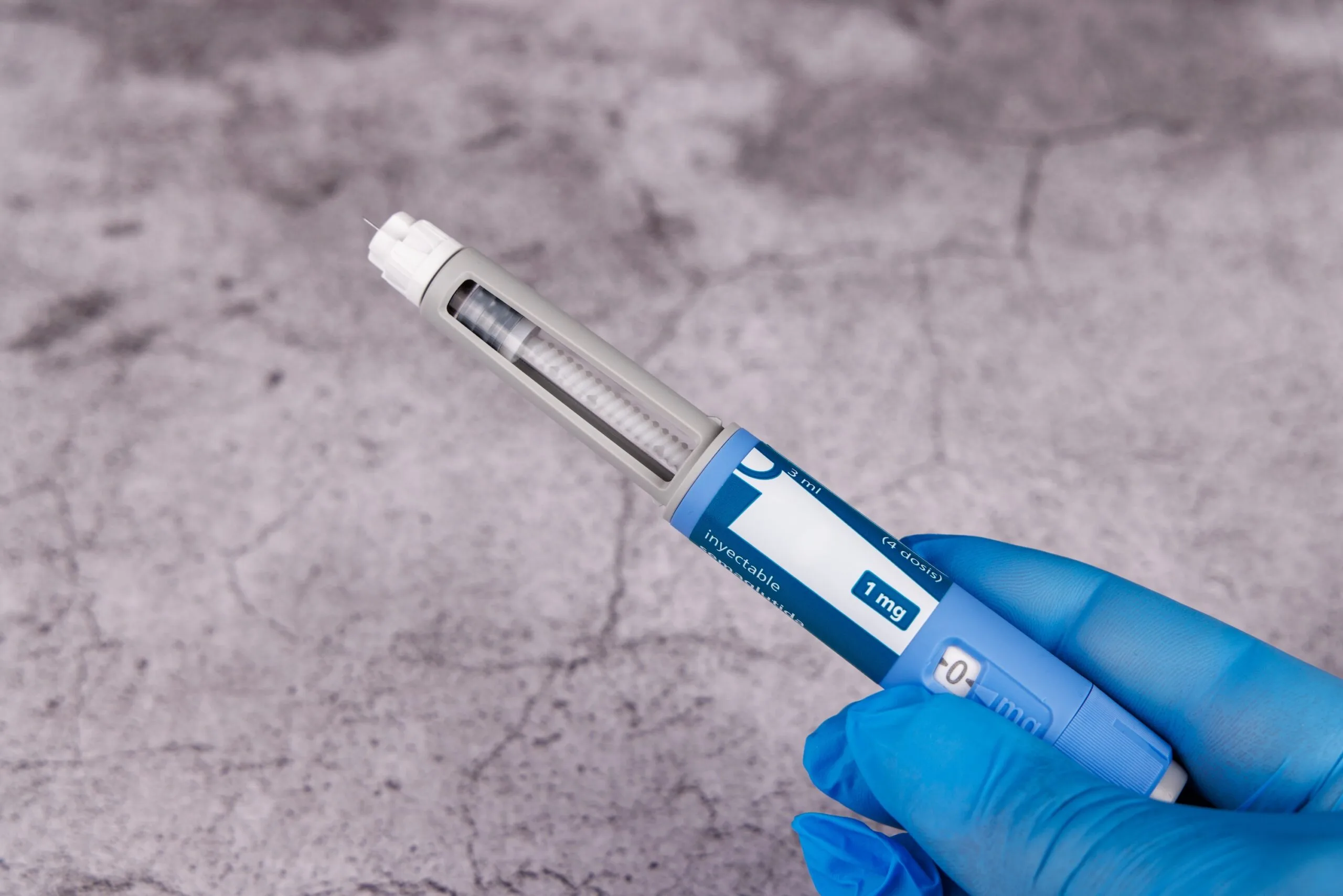
GLP-1s are subcutaneous injections
If a GLP-1 comes as an injection, it’s what’s called a subcutaneous injection. That just means the medication goes into the layer of fatty tissue sitting right beneath your skin, not into a muscle or a vein.
Some shots, like the flu shot, go into muscle; with a deep shot like that, people are often more sore afterward. Subcutaneous injections are shallower, use thinner needles, and generally cause less discomfort. The fatty tissue absorbs the medication slowly and steadily, which is what allows some of these drugs to work over the course of a full week from a single dose.
What this means for you in practice
You don’t need to find a vein. You don’t need to worry about injecting too deep. You’re simply targeting the soft, pinchable layer of fat that most people have in their abdomen, thighs, or upper arms. That’s it. The needle is short and thin—designed specifically for this type of tissue—and the whole process takes seconds.
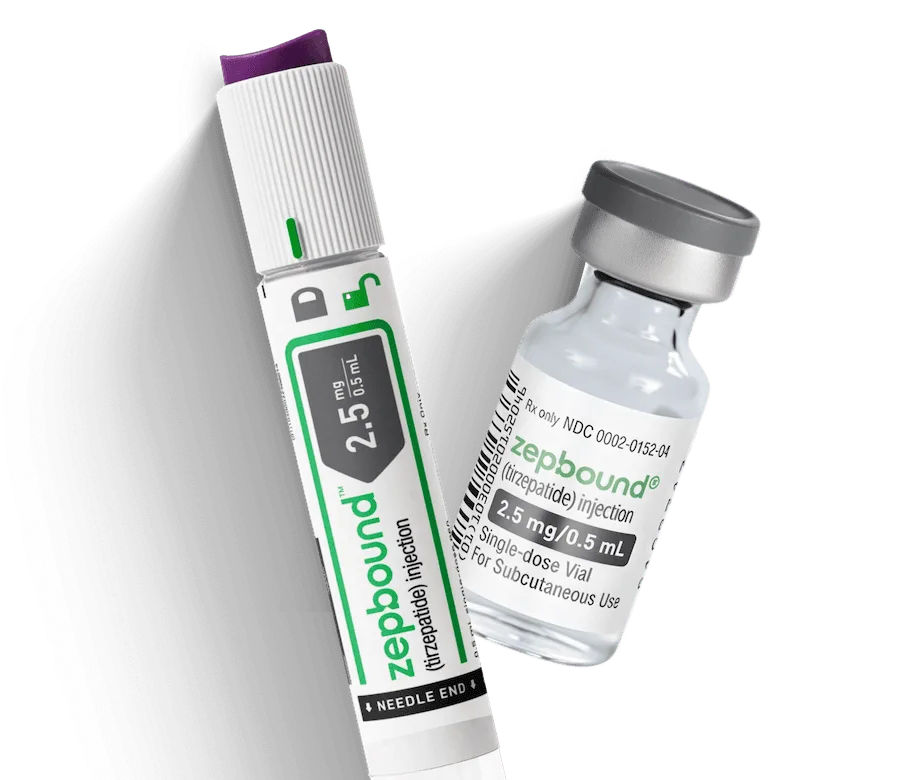
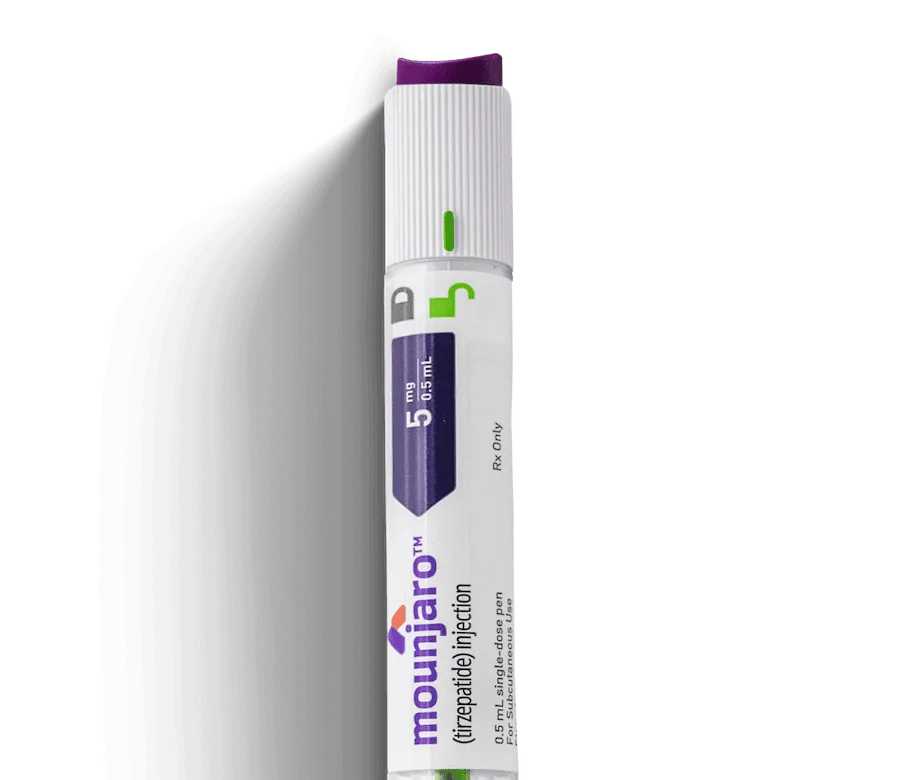
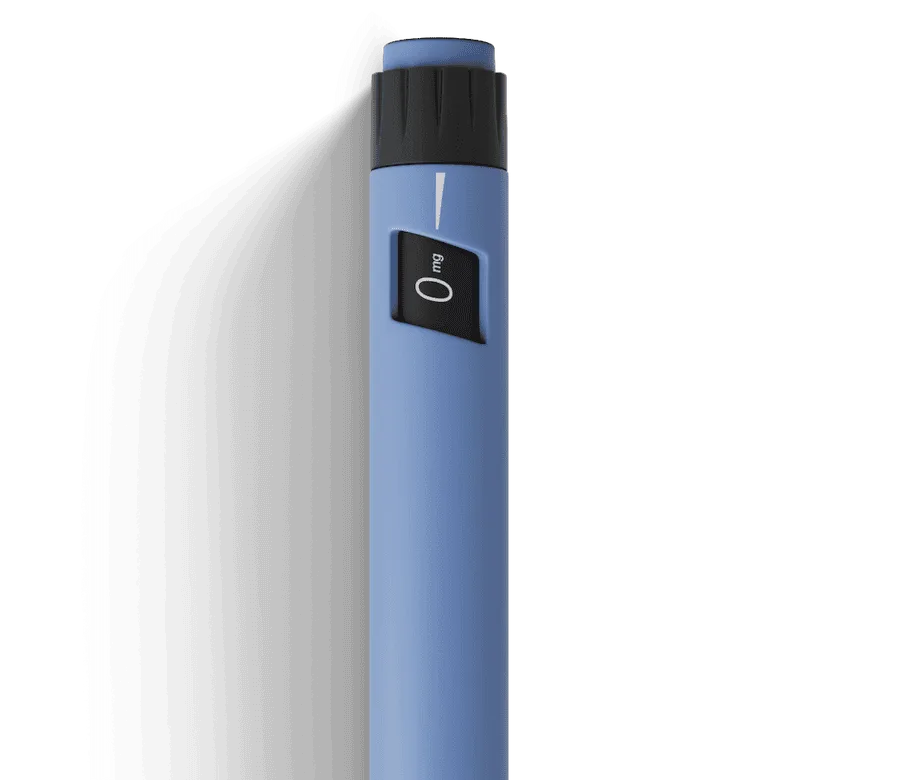
Pen and delivery device designs vary depending on the brand—some use a dial-a-dose mechanism; you will see single-dose and multi-dose pens, and Zepbound® offers a single-dose vial, if purchased through LillyDirect.
Whichever form your injection comes in, the fundamentals stay the same: You’re delivering medication into subcutaneous fat at one of three approved body sites. The specific site you choose doesn’t change how well the medication works—what matters is proper technique and consistent rotation.
GLP-1 injection sites: Where can you inject?
Across GLP-1 medications, the same three injection sites are recommended: your abdomen, the front or outer part of your thigh, and the back of your upper arm. These areas were selected because they have enough subcutaneous fat for safe, effective medication absorption while being relatively accessible and comfortable.
All three sites deliver the medication into your bloodstream at comparable rates. There’s no advantage to choosing one over the others from an effectiveness standpoint. The decision is purely practical: which area can you reach easily, inject comfortably, and rotate through consistently?
Regardless of which site you prefer, rotation is essential. Injecting into the same exact spot every week can cause lipohypertrophy—thickened, lumpy tissue that not only feels uncomfortable but can actually interfere with how well your medication is absorbed. A simple weekly rotation habit prevents this entirely.
Let’s go through all 3 and the benefits:
Access GLP-1 Weight Loss with Noom
Explore a wide range of prescription medications supported by Noom’s program.Microdose GLP-1rx
Noom GLP-1rx
Noom GLP-1rx Plus
Wegovy®
Ozempic®
Metformin
Zepbound®
Mounjaro®
Liraglutide
GLP-1 injection site: Stomach (abdomen)
The abdomen is where most people start, and for many, it stays the go-to choice long-term. It’s easy to see, easy to reach, and typically has plenty of soft tissue for a comfortable injection.
- Where to inject: Choose any spot at least two inches from your belly button. Avoid areas with scars, stretch marks, moles, or skin that looks red or irritated. The lower abdomen and sides generally offer the most fatty tissue.
- Why it’s popular: Visibility is the main draw—you can watch the entire process, which helps build confidence during those first few injections. The abdomen also offers a generous surface area for rotation, making it easy to find a fresh spot each week.
- A note on body composition: If you carry less fat around your midsection, gently pinching a fold of skin before injecting helps ensure the needle reaches fatty tissue rather than muscle. This is a standard technique that works well regardless of body type.
GLP-1 injection site: Thigh
The front and outer part of the thigh is a reliable second option, and some people actually prefer it to the abdomen once they’ve tried both.
- Where to inject: Target the upper half of your thigh—roughly midway between your knee and hip—on the front or outer surface. This is where you’ll find the most subcutaneous fat. Stay away from the inner thigh, which has more nerve endings and blood vessels.
- What makes it work: The thigh is easy to access whether you’re sitting or standing, and alternating between left and right legs gives each side a full two weeks to recover between injections.
- What to keep in mind: Some people find the thigh slightly more sensitive than the abdomen, especially in the beginning. Occasional bruising is also a bit more common here. Both tend to improve after the first few weeks as your body adjusts to the routine.
GLP-1 injection site: Upper arm
The upper arm is an approved option, but it comes with a significant practical limitation: reaching the correct spot on your own is extremely difficult.
- Where to inject: The back or outer portion of the upper arm, in the fatty area between your shoulder and elbow. This needs to be fatty tissue—not the muscular front or side of the arm.
- When it makes sense: If you have a partner, family member, or caregiver who can assist, the upper arm provides a useful third rotation site. It’s also helpful when you need to give your abdomen or thighs a temporary break due to soreness or irritation.
- The practical reality: For solo self-injection, the upper arm is awkward at best. Positioning the pen, maintaining the right angle, and holding steady pressure while you can’t see what you’re doing isn’t something most people want to manage weekly. Sticking to the abdomen and thigh for regular rotation is perfectly fine—there’s no requirement to use all three sites.
How to give yourself a GLP-1 injection: Step by step
The specific buttons, clicks, and hold times vary from one GLP-1 pen to another, so always follow the instructions that come with your particular medication. But the overall sequence is consistent across brands, and building a reliable routine around it makes every injection smoother than the last.
How to prepare before you inject
Preparation takes just a few minutes and has a real impact on how comfortable the experience is.
- Let refrigerated medication warm up. Take the pen (or vial) out of the fridge 15 to 30 minutes before you plan to inject. Cold medication stings more going in—this is one of the easiest comfort improvements you can make.
- Wash your hands. Soap and water, thoroughly. Every time. This is basic infection prevention.
- Inspect the pen or vial. Check the expiration date and look through the viewing window (or vial). The liquid should be clear and colorless to slightly yellow. If it’s cloudy, discolored, or has particles, don’t use it.
- If you’re using a syringe, draw up your dose now. Wipe the vial’s rubber stopper with an alcohol swab. Draw air into the syringe equal to your dose volume, inject that air into the vial to ease withdrawal, then invert the vial and slowly draw the medication. Remove the syringe from the vial and tap out any air bubbles.
- Check the skin. Look for cuts, bruises, redness, or irritation. If the area doesn’t look healthy, choose a different spot.
- Clean the injection site. Swab the area with alcohol and let it air dry completely—about 10 seconds. Injecting into wet skin can cause stinging.
These steps become automatic quickly. Each one contributes to a safer, more comfortable injection.
The injection itself
- Position the pen or needle correctly. Hold it at a 90-degree angle—straight into the skin, not at a slant.
- Begin the injection. Depending on your device, you’ll push a button, press the pen against your skin, or—if you’re using a syringe—push down on the plunger. Follow your specific device’s instructions for starting the injection.
- Hold steady. Keep the pen or needle firmly in place for the full recommended time—typically 5 to 10 seconds depending on the medication and device. This is the step most people rush, and rushing it is the most common cause of leakage or an incomplete dose.
- Remove the pen or needle straight up. Pull it away in one smooth motion. Don’t twist or angle it.
What to do after the injection
- If you are using a single-dose pen, needle, or syringe, dispose of them safely. Place it directly into a sharps container. Never throw used needles or syringes in regular trash.
- If you are using a multi-dose pen, store it properly for the next dose.
- Don’t rub the injection site. If there’s a small drop of blood, apply gentle pressure with a clean
How do I know if I injected correctly?
This is one of the most common worries for people new to self-injection.
A successful injection typically feels like brief pressure or a quick pinch—not sharp or prolonged pain. You should see little to no bleeding at the site, and the medication should stay under your skin rather than leaking back out. If your pen has audio or visual confirmation signals (clicks, dose windows, plunger indicators), those are your most reliable guides.
If you notice significant bleeding that won’t stop with light pressure, medication visibly leaking from the site, or pain that feels markedly different from previous injections, review your injection technique or reach out to your healthcare provider. But for most people, once the first couple of injections go smoothly, confidence builds fast.
How to track and rotate GLP-1 injection sites
Rotation is one of the most important habits you can build around your injections. When the same spot gets used repeatedly, fatty tissue can thicken and form lumps (lipohypertrophy), which makes future injections uncomfortable and can reduce how effectively your medication is absorbed.
Tracking doesn’t need to be complicated.
- Use whatever system you’ll actually stick with. A notes app on your phone, a paper calendar near your supplies, a medication tracking app, or even a simple sticky note rotation chart—all work. The Noom GLP-1 Companion can help you stay organized alongside your broader health goals.
- Follow a rotation pattern. Alternate between your abdomen and thigh each week, or rotate through different zones within one area (upper left abdomen, lower right abdomen, left thigh, right thigh). Either approach works.
- Space injections at least an inch apart. Even within the same general area, shifting a couple of inches from your last injection spot makes a meaningful difference.
- Check your skin regularly. Run your fingers over areas you’ve been using. If you feel any lumps, hard spots, or persistent tenderness, avoid that zone for a while and let it recover.
Perfection isn’t the goal—consistency is. Even a basic rotation habit is dramatically better than hitting the same spot every week.
Best injection site for GLP-1: Is there one?
Is one injection site better than the other? No, clinical research shows that the abdomen, thigh, and upper arm all provide similar absorption rates and medication performance for GLP-1 treatments. Your body processes the medication at a steady rate from any of these locations.
That means the “best” site is whichever one meets three practical criteria for you:
The Easy Way
to lose weight and get healthy.
See if you qualify- Comfort. Does one area feel noticeably less sensitive than the others? Many people find the abdomen most comfortable, but individual experience varies.
- Access. Can you reach the site easily, see what you’re doing, and maintain a steady hand throughout the injection?
- Sustainability. Will this site remain practical for weekly use over months or years? Is there enough surface area for rotation?
For most people who self-inject, the abdomen and thigh check all three boxes. The upper arm works just as well but typically requires help from another person.
What actually matters more than which site you pick is that you don’t pick the same exact spot every single time. Consistent rotation—not site selection—is what keeps your skin healthy and your medication working as intended over the long term.
Common GLP-1 injection issues: Troubleshooting
Most injection site reactions are mild and temporary. Knowing the difference between normal and not-normal helps you skip the anxiety and handle things calmly.
- What’s typical: Slight redness, minor swelling, or mild tenderness at the injection site that appears within a few hours and fades within a day or two. Small, temporary lumps can also form where medication was deposited—these usually resolve on their own within a few days. Occasional light bruising, especially in the early weeks or if you happen to nick a small blood vessel, is also normal.
- When to contact your provider: Redness that spreads beyond the injection area or worsens after 24 hours. Pain that intensifies instead of fading. Signs of infection—warmth, pus, red streaking, or fever. Persistent lumps or hard areas that don’t resolve within a week. Any signs of a severe allergic reaction, including widespread rash, hives, difficulty breathing, or facial swelling—these require immediate medical attention.
Learn more: GLP-1 side effects: What to expect and how to manage them
What to do if medication leaked out of the injection site
A small drop of liquid at the injection site after pulling the pen away happens, and it’s almost always harmless and doesn’t mean you didn’t get your full dose. Here’s what to do and not do:
- Don’t re-inject. Even if you suspect the dose was incomplete, giving yourself a second injection risks overdosing and increased side effects.
- Think about what caused it. The most common reason is pulling the pen away too quickly. Most GLP-1 pens need to stay in place for 5 to 10 seconds after the dose completes. Rushing this step is the number one cause of leakage.
- Continue your regular schedule. Take your next dose at the usual time. Don’t try to compensate by increasing the next dose.
- Contact your provider if it happens repeatedly. Occasional small leakage isn’t concerning, but a pattern suggests a technique issue worth discussing.
What if I accidentally inject into muscle?
If the needle goes deeper than the fatty layer and hits muscle, it’s not dangerous—but it’s not ideal either.
- Expect more soreness. Intramuscular injection typically causes more pain and tenderness at the site compared to a subcutaneous injection.
- Absorption may be affected. Medication absorbed through muscle tissue may enter the bloodstream at a different rate, though a single accidental intramuscular injection is unlikely to significantly impact your treatment.
- People with less body fat are more at risk. If you’re leaner, always pinch a fold of skin before injecting to create a clear fatty layer for the needle to enter.
- Don’t re-inject. The medication was still delivered—just not optimally. Focus on technique improvement for next time rather than trying to correct it now.
If you notice persistent pain or unusual swelling after an injection, reach out to your healthcare team. Otherwise, adjust your technique and move on—this happens occasionally, and it gets easier to avoid with practice.
FAQs: Common questions about GLP-1 injection sites
Starting a GLP-1 injection can feel unfamiliar at first. It’s normal to have questions about what it feels like, where to inject, and how to make the process easier. These quick answers cover the most common concerns so you know what to expect before and during your routine.
Does a GLP-1 injection hurt?
Most people describe it as a brief pinch or slight pressure, and it’s over in seconds. The needles used for subcutaneous injection are thin and short, designed to minimize discomfort. Letting your medication warm to room temperature before injecting and rotating sites regularly both help reduce any stinging. Individual sensitivity varies, but the overwhelming consensus is that it’s much less unpleasant than expected.
Is any injection site best for weight loss?
No. All three approved sites—abdomen, thigh, and upper arm—deliver the medication with equal effectiveness. Once absorbed, GLP-1 medications circulate throughout your entire body. Injecting near your stomach doesn’t target abdominal fat, and no site produces better weight loss outcomes than another.
What time of day should I inject?
Any time that works for your schedule. There’s no clinical evidence that morning or evening injections produce different results. The key is consistency—pick a day and time that’s easy to remember and stick with it each week.
Can I use the same injection site every week?
You can use the same general area (like the abdomen) every week, but you need to shift the exact spot by at least an inch each time. Repeated injection into the exact same location can cause tissue changes that affect both comfort and medication absorption.
What if I inject my GLP-1 incorrectly?
Don’t try to correct it with a second injection. Note what happened and continue your regular schedule. If you’re unsure whether you received a full dose—for example, if the pen didn’t complete its cycle or medication leaked significantly—contact your healthcare provider for guidance.
Does injection site affect side effects like nausea?
No. GLP-1 side effects like nausea, reduced appetite, or digestive changes are caused by how the medication works throughout your body after absorption, not by where you inject it. Switching injection sites won’t reduce these effects. If side effects don’t lessen after a few weeks, talk to your provider about dose adjustments.
Can I inject in the same spot as insulin?
If you also take insulin, don’t inject both medications into the exact same spot. You can use the same general body area—both in the abdomen, for example—but space the injections at least an inch apart to ensure proper absorption of each medication and prevent tissue irritation.
What if I see bruising or redness?
Mild bruising or slight redness at the injection site is common and typically resolves within a few days. It often happens when a small blood vessel is nicked during injection. If redness spreads, worsens, or is accompanied by warmth, pus, or fever, contact your healthcare provider.
Can I inject in my lower back or flank?
No. The lower back, flank, and buttocks are not approved injection sites for GLP-1 medications. Stick to the three recommended areas: abdomen, thigh, and upper arm. These were specifically evaluated for safe, consistent absorption during clinical development.
Reviews from real Noom users
Desirea N. — Real Noom user
“My favorite parts of Noom are the care team and other Noomers. Sharing and getting help made me feel like I wasn’t doing it alone. That support made all the difference.”
Desirea N. — Real Noom user
Matthew M. — Real Noom user
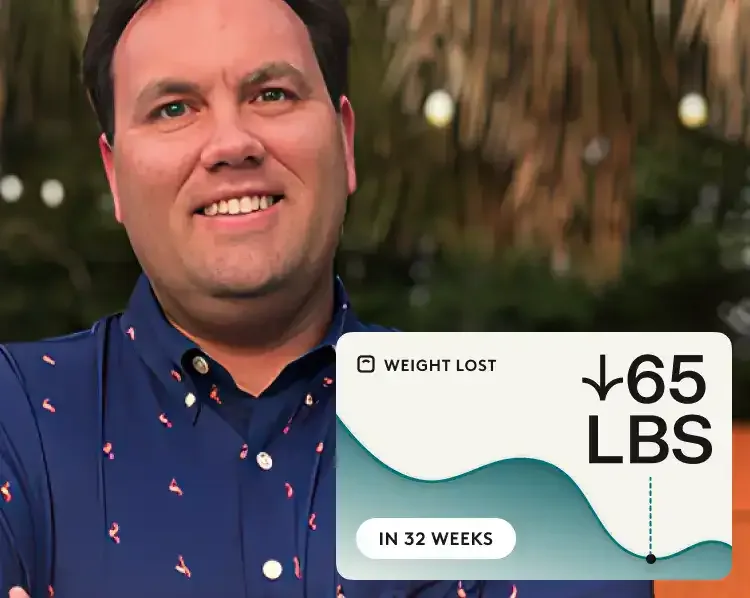
“Noom has taught me that every day is a new chance to make better, healthier choices. It's taught me how to stop overeating.’’
Matthew M. — Real Noom user
Lila M. — Real Noom user
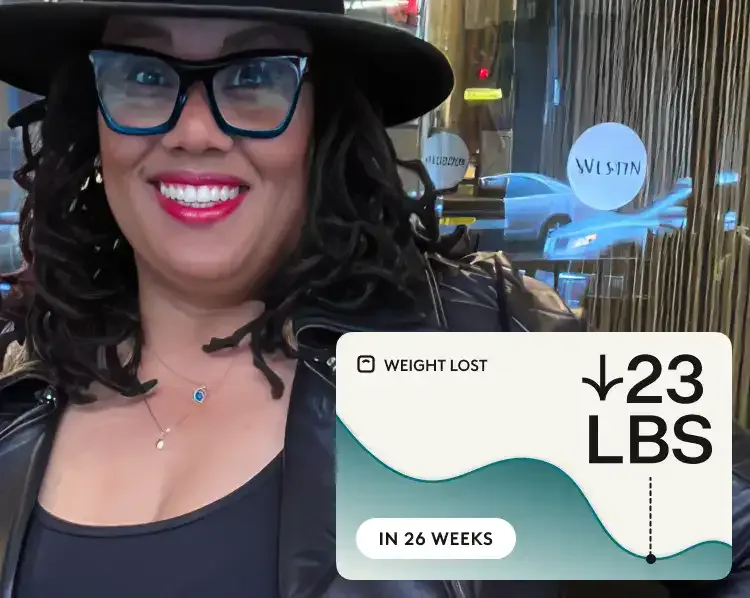
“Clinicians who understand how supportive medication can be is one of the best parts of Noom! I was convinced I wouldn’t have success but I’m down 11 pounds in two months.’’
Lila M. — Real Noom user
Steve M. — Real Noom user
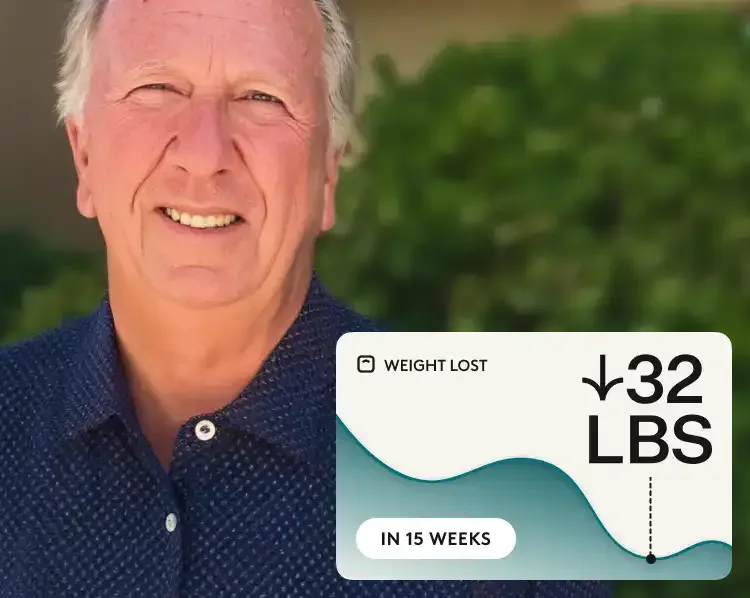
“Noom provided me with the medication which I could not get through Medicare. I have learned the tricks to better eating and life in general.”
Steve M. – Real Noom user
Daisy R. — Real Noom user
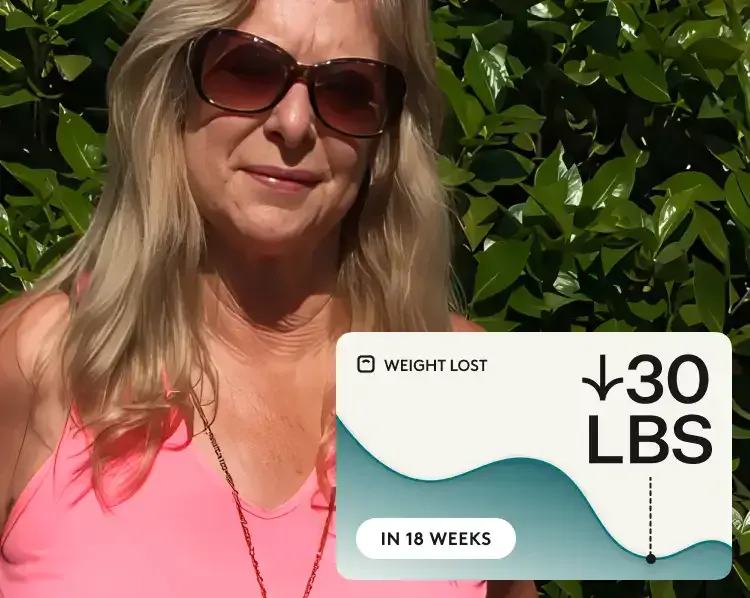
‘’Noom has changed my life and I’m so thankful, I feel great, have more energy and am no longer prediabetic.”
Daisy R. – Real Noom user
Sarah R. — Real Noom user
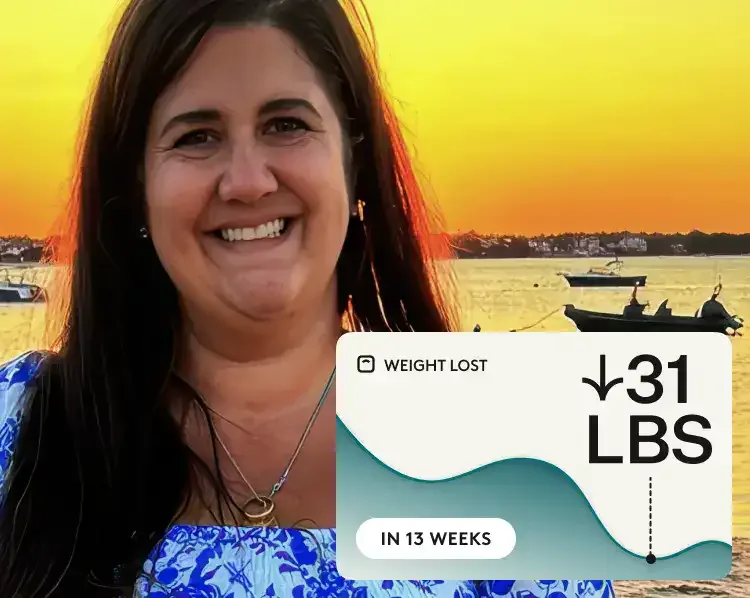
“All of the Noom providers that I’ve met with have been exceptional and prescribed medications that are appropriate for my situation and health.”
Sarah R. – Real Noom user
Madison S. — Real Noom user
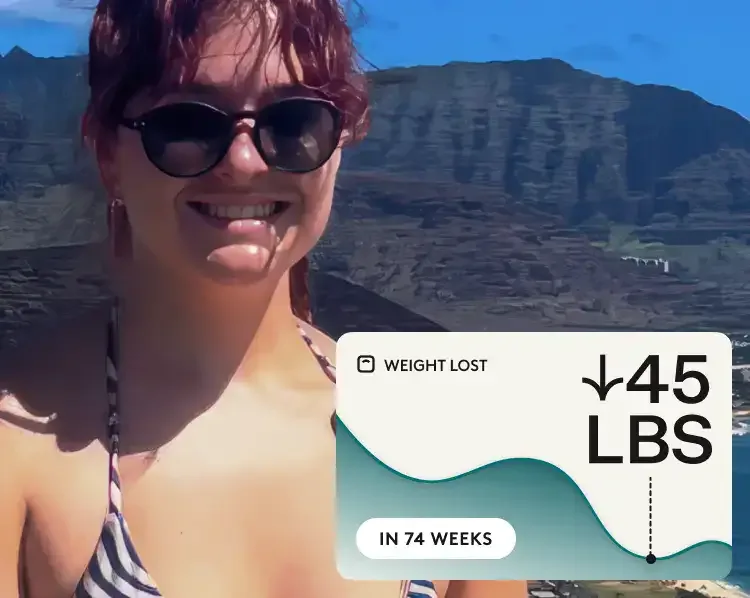
“Noom made the process so simple and now I feel full, free from diet obsession, and at ease in my body again.”
Madison S. – Real Noom user
Sonday K. — Real Noom user
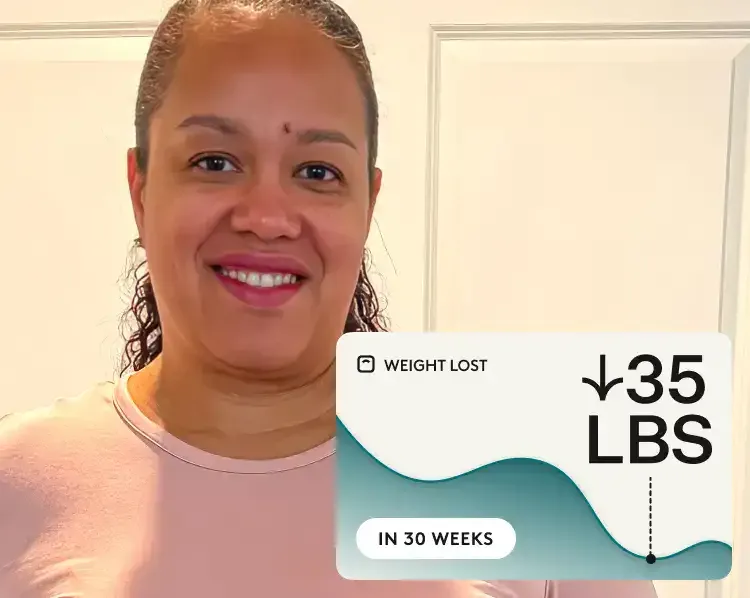
“My doctor recommended Noom after I was frustrated trying to lose weight. The lessons helped change my relationship with food. My body feels lighter & energized.”
Sonday K. – Real Noom user
Cam K. — Real Noom user
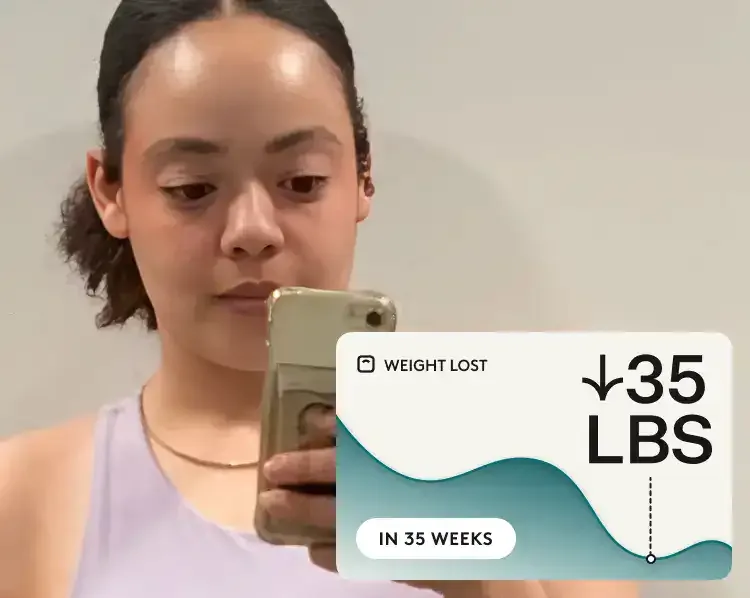
“I built healthy habits with coaching and lessons that make me confident I can maintain my weight loss long term.”
Cam K. – Real Noom user
Laura TR. — Real Noom user
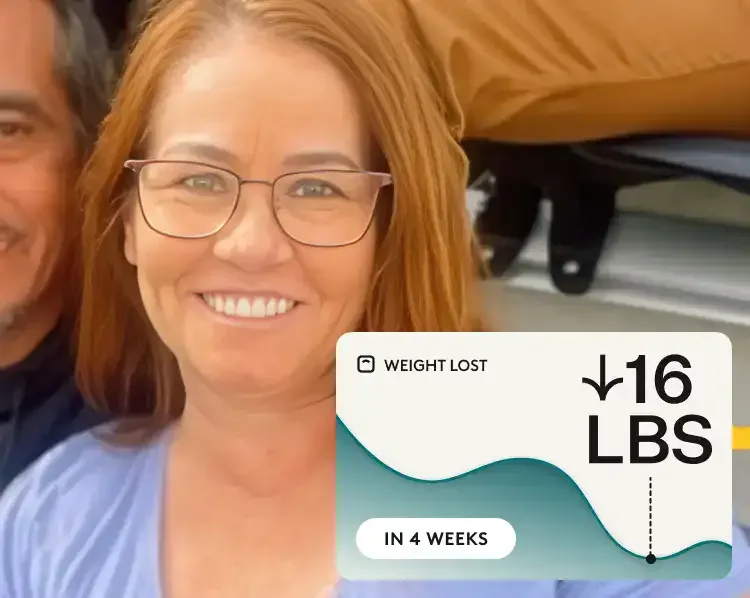
“With the right medication through Noom, hunger and sugar cravings finally quieted and I have the tools to break the cycle.”
Laura TR. – Real Noom user
Jessica S. — Real Noom user
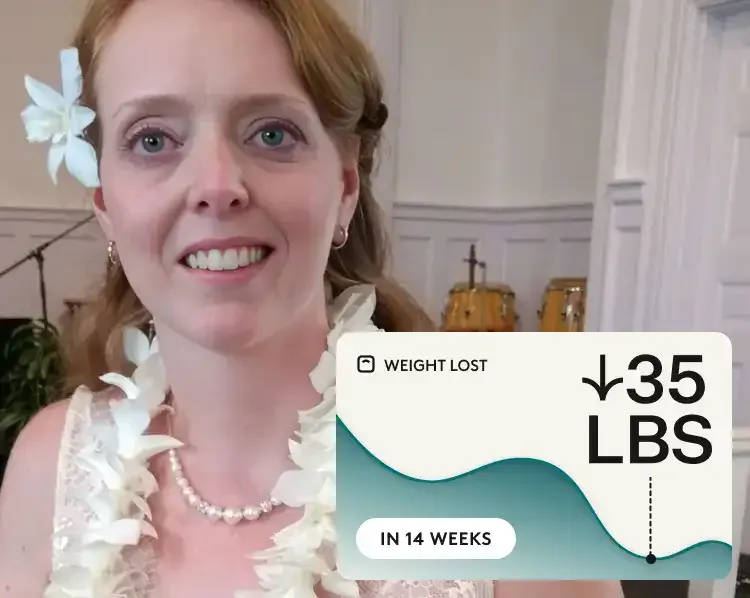
“Cravings and food noise are gone, I finally feel confident in the healthy habits I’ve built to last with Noom.”
Jessica S. – Real Noom user
The bottom line: Choose one of the 3 approved locations and rotate for every injection
Self-injection can feel intimidating at first. After a few doses, it becomes part of your routine—quick, manageable, and far less dramatic than expected. Across all GLP-1 medications, the basics stay the same: choose from three approved sites (abdomen, thigh, or upper arm), rotate weekly, and follow a consistent technique.
No single injection site works better than another. What makes the difference is consistency—showing up each week, using proper technique, and building small habits that make the process feel easy. That includes letting the pen come to room temperature, cleaning the site, holding steady for the full dose, and keeping track of where you injected.
If you get your medication through Noom Med, the program combines medical guidance with practical tools to help you stay consistent, manage your routine, and build habits that support long-term results. You can also use the Noom GLP-1 Companion by downloading the Noom app on iOS or Android to track injection sites, monitor side effects, and get nutrition tips for a seamless GLP-1 experience.
Editorial standards
At Noom, we’re committed to providing health information that’s grounded in reliable science and expert review. Our content is created with the support of qualified professionals and based on well-established research from trusted medical and scientific organizations. Learn more about the experts behind our content on our Health Expert Team page.