
What you’ll learn:
- Bone broth fasts have gained popularity as a gentler alternative to water fasting, but research on the approach is still limited.
- There’s no strong evidence that fasting on bone broth leads to greater weight loss than other very low-calorie eating plans.
- If you enjoy bone broth, adding it to a balanced eating pattern is a more evidence-based approach than replacing meals with it.
Bone broth has gone from a soup base to the centerpiece of a wellness trend. Search #bonebroth on social media and you’ll find claims that it helps with everything from weight loss and gut health to slowing aging and “detoxing” the body. What was once a simple pantry staple now has dedicated fasting plans, supplement lines, and even a bestselling book built around it.
The bone broth fast takes the trend a step further. Instead of simply adding bone broth to your meals, it involves replacing most or all solid food with bone broth for one to five days. Supporters say it’s easier than a water fast because you’re still consuming something warm, savory, and satisfying while getting some protein.
But do the claims hold up?
This guide covers what the research says about bone broth fasts for weight loss and gut health, whether they’re safe, and how bone broth can fit into a balanced eating pattern — with insights from Maggie Hudspeth, RDN, Senior Manager of Coaching at Noom, on where the evidence ends and the hype begins.
What is a bone broth fast?
A bone broth fast is a short-term plan in which people replace all or most solid food with bone broth for a set period, typically one to five days. In the most extreme version, they drink several cups of broth throughout the day alongside water, herbal tea, and sometimes black coffee. Some versions alternate days with more food and days of mainly bone broth.

The Easy Way
to lose weight and get healthy.
See if you qualify
What’s special about bone broth?
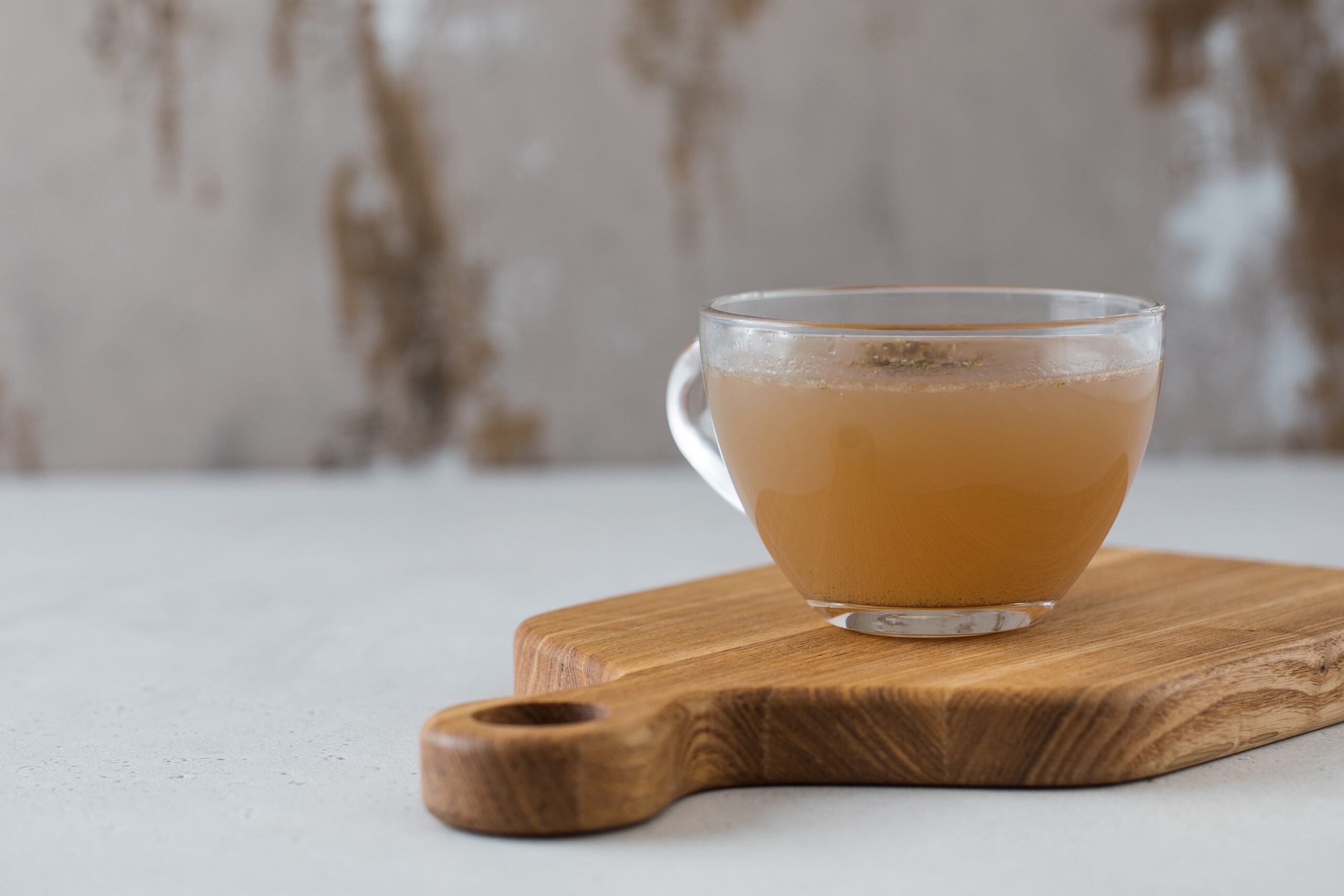
It’s like stock or broth, but the meat — typically beef or chicken — is simmered for longer, from 12 to 24 hours, to extract more collagen, amino acids, and trace minerals. Bone broth also has more protein: typically 10 grams per cup, compared to 1 to 2 grams in regular stock.
Important things to know about the bone broth fast
The bone broth fast isn’t actually a fast. True fasting means no calories, and bone broth has calories — typically 30 to 50 per cup, so three to six cups a day adds up to about 100 to 300 calories. That makes it a very low-calorie diet (VLCD), not a fast in the strict sense. It has more in common with single-food diets like the watermelon fast or the sardine fast than with true fasting.
It’s also effectively ketogenic. With almost no carbohydrates coming in, your body shifts to burning fat and producing ketones for fuel within a day or two.
The bigger source of confusion is that “bone broth fast” describes several different approaches. Some people drink nothing but broth for one to five days. Others follow a 21-day plan that alternates low-carb eating days with broth-only fasting days. Some swap one meal a day for bone broth and eat normally otherwise. And some just sip it during intermittent fasting windows without changing anything else.
These are distinct approaches with different calorie levels and different demands on your body, but they all get grouped under the same name. Before deciding whether a bone broth fast is worth trying, it’s worth knowing which version you’re actually looking at — social media tends to spotlight the most extreme one: days of broth and nothing else.
Why is the bone broth fast trending?
The bone broth fast sits at the intersection of several trends at once — an easier alternative to water fasting, the current obsession with protein, and the popularity of keto and intermittent fasting. That combination has helped push it into the spotlight:
- It’s a softer entry point than water fasting — drinking bone broth throughout the day provides protein, and that makes the fast feel more satisfying than consuming nothing at all
- Protein has become a bigger priority for people trying to lose weight — bone broth has more protein than regular broth or stock, so it’s often framed as a smarter choice than fasting without any protein at all. There’s no evidence, though, that a short-term bone broth fast preserves muscle any better than other approaches
- It pairs naturally with keto — a broth-only fast is essentially carb-free, so it appeals to people already following keto, even though the calorie levels involved are much lower than a typical keto diet
- Intermittent fasting and social media have amplified it — “gut reset” challenges and bone broth fasts have racked up millions of views online
- Structured programs gave it staying power — The Bone Broth Diet and the research built around it turned a loose idea into a defined eating plan, and its ties to trends like keto and intermittent fasting kept it in the conversation
Bone broth has picked up a reputation for everything from weight loss to gut health, but how popular it is says nothing about how strong the evidence actually is.
“Short-term plans like a bone broth fast can feel motivating because they’re structured and time-limited,” says Hudspeth. “But the structure itself isn’t the same as building habits you can actually carry forward.”
Bone broth fast: Common variations
Most bone broth fasts come from popular online plans rather than medical guidelines, so most of what you see on social media hasn’t actually been tested. The exception is a study that tested a structured 21-day program, giving researchers actual data to work with instead of anecdotes. The main variations look like this:
Broth-only fast (1 to 5 days)
The strictest version replaces all solid food with bone broth.

See if your insurance
covers GLP-1s.
The form only takes 2 minutes to answer. We’ll handle the rest.
GET STARTEDA typical day includes:
- 3 to 6 cups of bone broth, spaced every 2 to 3 hours
- Water, black coffee, and herbal tea
- Some versions also allow small amounts of fat or non-starchy vegetables
The 3-day version is the most common on social media and is often promoted as a “gut reset.” The 5-day version stretches the same approach out longer, and the extra days raise the risk of nutritional deficiencies. Neither version has been studied in clinical trials, so claims like detox, inflammation relief, or a “reset” for your gut are running ahead of the evidence.
The Dr. Kellyann Bone Broth Diet (21 days)
This is the only version that’s actually been studied, while most of this trend runs on word of mouth. The trial followed 100 people through two 3-week rounds of the diet. Participants lost about 5% of their body weight in the first round and another 2.7% in the second. There was no control group, though, so it’s not possible to say how much of that came from the bone broth itself versus the calorie restriction and fasting structure built into the plan.
It follows a 5:2 schedule:
- Five days: Regular meals centered on lean protein and vegetables, with bone broth between meals.
- Two days: About 1 cup of bone broth every 2 hours (up to 7 cups), with an optional 4-ounce serving of lean protein if you need it.
Each cup of broth in the study contained about 70 calories and 16 grams of protein.
Bone broth as part of your regular diet
Some people skip the fasting altogether and just drink 1 to 2 cups a day alongside their normal meals. Others take a hybrid approach, using bone broth to replace a single meal a few times a week instead of fasting on it entirely. Neither version has been studied on its own, but both are simple ways to work bone broth into your routine without giving up other nutritious foods or cutting your calories dramatically.
Can a bone broth fast help you lose weight?
Weight loss can happen, but understanding why the scale moves matters more than the number itself.
No strong studies test a broth-only fast for weight loss specifically. The closest evidence comes from the 21-day program trial. Participants lost an average of about 15 pounds, but the program also included intermittent fasting, portion-controlled meals, and exercise, so it’s impossible to know how much of that loss came from the bone broth itself.
For a strict broth-only fast, the closer comparison is research on very low-calorie diets (VLCDs), since both involve very few calories. Early weight loss with VLCDs has little to do with bone broth specifically — see below for what’s actually driving it.
Since a broth-only fast is also carb-free, the ketosis it produces adds to the early scale drop. That’s a water-weight effect tied to glycogen depletion, not faster fat loss — the same thing that happens when people first start keto, just compressed into a day or two instead of a week.
Many people report quick scale movement or feeling less bloated during a bone broth fast. Here’s what those experiences typically look like.
Bone broth fast: Weight loss results people report
Search online for bone broth fast experiences, and you’ll find people describing changes within a few days. Some of these effects line up with what you’d expect from a very low-calorie eating pattern. Others are harder to measure.
- Quick scale movement, often 2 to 5 pounds over a few days (mostly water weight)
- Less bloating and a lighter feeling
- Improved digestion
- A sense of mental reset or renewed motivation
“Quick results can be motivating,” says Hudspeth. “But when it comes to weight loss, we want to look beyond what happens over a few days and focus on the habits that lead to lasting changes in body composition and overall health.”
Why the scale might move quickly
Three factors drive rapid weight loss in the first few days of a broth-only fast:
- Water weight. When carbohydrate intake drops sharply, your body uses stored glycogen for energy. Each gram of glycogen is stored with roughly 3 grams of water, so as glycogen depletes, water weight falls quickly.
- Less food in your digestive tract. Eating far less means there’s simply less food and waste moving through your system, which can temporarily lower your weight.
- A steep calorie deficit. Most broth-only fasts provide only a few hundred calories a day. Any eating pattern that creates that large a deficit will produce short-term weight loss.
Is the weight loss from a bone broth fast sustainable?
Usually not.
Once normal eating resumes, glycogen stores are replenished, bringing water back with them. Lasting weight loss depends on maintaining a calorie deficit over time, not a few days of severe restriction. Research on low-calorie diets consistently finds that keeping weight off is difficult without sustainable eating habits and long-term behavioral support.
“The bone broth fast can move the scale, but that’s mostly because it restricts calories so dramatically — not because it’s doing something unique metabolically,” says Hudspeth. “The bigger question is whether it helps you develop habits that support lasting results. For most people, it doesn’t.”
Is the bone broth fast healthy?
Bone broth can have a place in a healthy eating pattern. But drinking only bone broth for days isn’t recommended.
“The biggest concern with something like a bone broth fast isn’t just what you’re eating — it’s what you’re not eating,” says Hudspeth. “Fiber, vitamins, complex carbohydrates — these matter for how your body functions day to day. Missing them for a day is very different from missing them for five.”
The longer a bone broth fast lasts, the more nutrients you’re likely to miss. Bone broth provides protein and some minerals, but it’s naturally low in fiber, carbohydrates, and many of the vitamins and minerals that support digestion, energy levels, and overall health.
Access GLP-1 Weight Loss with Noom
Explore a wide range of prescription medications supported by Noom’s program.Microdose GLP-1rx
Noom GLP-1rx
Noom GLP-1rx Plus
Wegovy®
Ozempic®

Metformin
Zepbound®
Mounjaro®
Liraglutide
That doesn’t mean bone broth itself is a problem. It’s just not built to replace a balanced diet. Drink only bone broth for several days, and you’re missing fiber-rich foods that support gut health, carbohydrates that provide steady energy, and the range of nutrients a varied diet covers.
A one-day bone broth fast is generally less concerning than a three- or five-day version, simply because there’s less time for nutritional gaps to add up. But for lasting weight loss or better health, eating a variety of protein-rich foods, fruits, vegetables, whole grains, and healthy fats gets you further than a few days of broth alone.
“Short-term plans can feel motivating because they’re simple and have a clear finish line,” says Hudspeth. “But lasting health usually comes from habits you can repeat week after week — not from a few days of restriction.”
Is the bone broth fast safe? Potential risks to know
Here’s the edited version — a few tightening passes for specificity and rhythm:
Is the bone broth fast safe? Potential risks to know
For generally healthy adults, a 1-day bone broth fast is unlikely to cause harm. Beyond that, the risks depend on how long you do it and your individual health situation. If you have a chronic condition, talk to your provider before trying any version of this.
- Duration matters most. At 300 to 500 calories per day, a bone broth fast puts you in very low-calorie diet territory. One day is manageable for most healthy people. By day three, expect a real energy dip, possible electrolyte imbalance, and a climbing risk of muscle breakdown from inadequate protein. At five days, nutrient deficits become serious enough that medical supervision isn’t optional.
- The nutritional gaps add up. There’s no fiber, almost no carbohydrates, and very little vitamin C, folate, or fat-soluble vitamins like A, D, E, and K. Cutting carbs this sharply also means your brain briefly runs low on its preferred fuel before ketones ramp up to cover the gap — which is why fatigue and brain fog are commonly reported in the first day or two, similar to “keto flu.”
It’s not right for everyone. Some people should skip it altogether or check with their provider first:
- Kidney disease: Bone broth is relatively high in protein and minerals like sodium and potassium, which may need to be limited depending on kidney function.
- Diabetes: Near-zero carbohydrate intake can cause unpredictable blood sugar swings, especially on insulin or glucose-lowering medications.
- Pregnancy or breastfeeding: Caloric restriction isn’t appropriate during either.
- History of eating disorders: Highly restrictive plans can reinforce all-or-nothing thinking around food.
- Anyone on medications that require food: Many need food for proper absorption or to avoid side effects.
Frequently asked questions about the bone broth fast
Does it matter whether I use homemade or store-bought bone broth?
Either can work, but check the nutrition label. Protein content varies widely between brands, and some products labeled “bone broth” are nutritionally similar to regular broth or stock. If you’re buying bone broth for its protein, look for one with at least 6 to 10 grams of protein per cup. Homemade bone broth may contain more collagen and gelatin depending on how it’s prepared, but the exact nutrition is difficult to know.
Can you lose weight on a bone broth fast?
Yes, but much of the weight you lose at first is likely to be water weight, not body fat. Eating very few carbohydrates causes your body to use stored glycogen, which releases water. At the same time, you’re consuming very few calories. Neither of those effects is unique to bone broth, and much of the weight typically returns once you resume your usual eating pattern.
How long should you do a bone broth fast?
Most bone broth fasts last 1 to 5 days. The longer you rely on bone broth alone, the more likely you are to miss important nutrients like fiber, vitamins, and minerals. If you’re thinking about doing a multi-day fast—especially if you have a medical condition or take medications—it’s a good idea to talk with your healthcare provider first.
If you simply enjoy bone broth, drinking a cup alongside an otherwise balanced diet is a much more sustainable approach.
Is a bone broth fast the same as intermittent fasting?
No. Intermittent fasting limits when you eat, while a bone broth fast changes what you eat by replacing most or all solid food with bone broth. Intermittent fasting has been studied much more extensively, while research on bone broth fasting is still very limited.
Does bone broth actually heal the gut?
There’s no strong evidence that drinking bone broth alone can “heal the gut.” Bone broth contains amino acids involved in maintaining the intestinal lining, but most of the research has looked at isolated amino acids—not bone broth itself. Bone broth can be part of a balanced diet, but it shouldn’t be viewed as a treatment for digestive conditions.
Is bone broth fasting safe for people with autoimmune conditions?
Bone broth is sometimes promoted as part of gut health or autoimmune eating plans, but there’s very little research supporting bone broth fasting for autoimmune diseases. Because multi-day fasts can make it harder to meet your nutritional needs, it’s best to talk with your healthcare provider before trying one if you have an autoimmune condition or another chronic health condition.
What’s the difference between the bone broth diet and a bone broth fast?
A bone broth fast typically replaces all solid food with bone broth for one to five days.
The Bone Broth Diet is a structured 21-day program that alternates five days of eating whole foods with two broth-only fasting days each week. Because it includes regular meals most days, it’s less restrictive than a continuous broth-only fast.
The bottom line: A bone broth fast is hard to sustain, and results don’t last
Bone broth can be a nutritious addition to your routine. It provides protein, is easy to sip, and can be a satisfying snack or light meal alongside an otherwise balanced diet.
But the evidence doesn’t support the idea that a bone broth fast has unique weight-loss benefits. Like other very low-calorie eating plans, it can lead to quick changes on the scale—mostly from water loss. Those changes are often temporary and don’t typically translate to lasting fat loss.
The longer a broth-only fast lasts, the harder it becomes to meet your body’s needs for fiber, vitamins, minerals, and other nutrients that support your health. That’s why most nutrition experts recommend focusing on sustainable eating habits instead of short-term resets.
“It’s easy to get excited by quick results,” says Hudspeth. “But the habits that lead to lasting weight loss are usually much less dramatic. They’re the small choices you can keep making long after a fast is over.”
If you enjoy bone broth, there’s no reason it can’t be part of a healthy eating pattern. Just think of it as one nutritious food—not a standalone solution. Lasting weight loss comes from the habits you can maintain over time, not from a few days of restriction. If you’re looking for a practical, sustainable approach, Noom can help you build habits that lead to lasting weight loss.
Editorial standards
At Noom, we’re committed to providing health information that’s grounded in reliable science and expert review. Our content is created with the support of qualified professionals and based on well-established research from trusted medical and scientific organizations. Learn more about the experts behind our content on our Health Expert Team page.