What you’ll learn:
- The watermelon fast is a viral trend where people eat only watermelon for several days, framed as a detox or reset.
- Watermelon itself is nutritious, but eating only watermelon creates real nutritional gaps.
- Any weight lost is mostly water, tends to return quickly, and isn’t sustainable.
Every summer, the watermelon fast makes its rounds again—on social media videos and in wellness blogs—framed as a refreshing way to “reset” your body, drop some weight fast, and detox. In 2025, it went viral, with creators documenting multi-day watermelon-only challenges and reporting several pounds lost by the end.
The appeal is easy to understand. Watermelon is sweet, hydrating, low in calories, and packed with antioxidants—and you’re eating something you actually enjoy. That’s a rare feeling in the world of restrictive diets, and it’s a big part of why this one keeps coming back.
But there’s a real question: Does the watermelon fast do anything that eating more watermelon as part of your normal diet wouldn’t already do? Or is the “diet” just a restrictive eating plan? And what are the dangers of eating just watermelon for an extended period of time?
Here’s what you should know, with guidance from Maggie Hudspeth, RDN, Senior Manager of Coaching at Noom.
What is the watermelon fast?
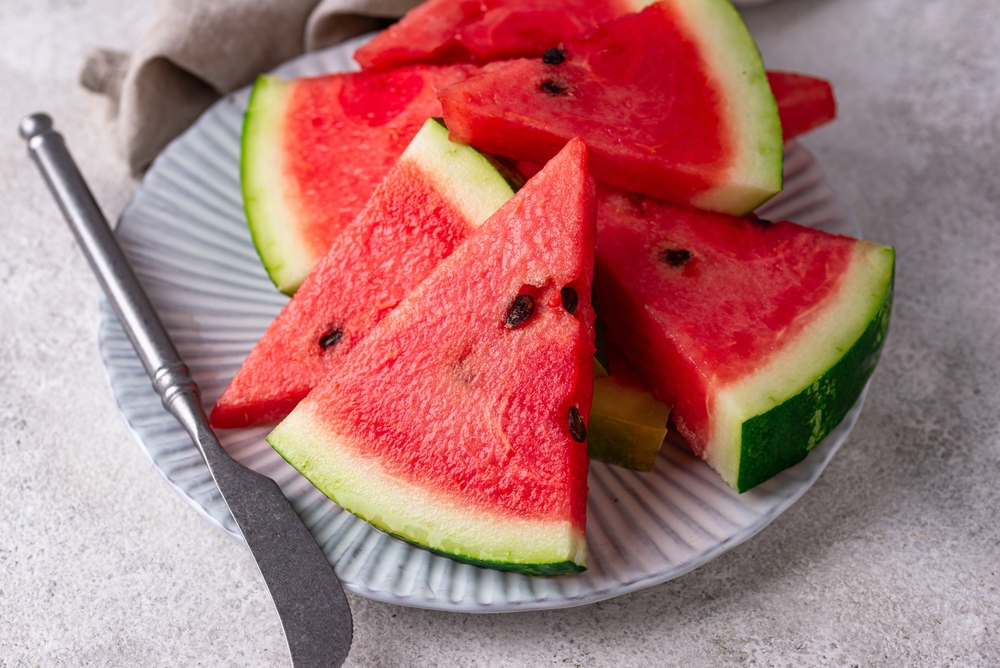
The watermelon fast is a short-term eating plan where watermelon becomes either the only food or the dominant food for a set number of days, usually 3, though some versions extend to 5 or even 7 days.
Noom’s Most Powerful Program
A dual-pathway GLP-1 and behavior change for lasting results.
Despite the name, it is not actually a fast. You’re still eating food, just a very limited selection of it. It’s also sometimes called a watermelon cleanse or detox, but no food truly detoxes the body. Your liver and kidneys already do that work continuously.
The watermelon fast falls into a category of restrictive single-food trends, similar to approaches like the sardine fast or egg fast, where one food becomes the main focus for a short period in hopes of quick results.
“There can be an appeal to simple food rules because they feel easy to follow,” says Hudspeth. “But relying heavily on one food can create nutritional gaps and usually isn’t something people can maintain long term.”
There’s no single standardized version. Most formats online fall into two camps:
- Strict version: Only watermelon for a few days. Nothing else to eat.
- Modified version: Watermelon as the main food, with small amounts of other foods, usually lean protein or vegetables, included at some meals.
The 3-day version is the most common. Some people do it as a one-time reset, while others repeat it regularly. Common rules include:
- Eating only watermelon or mostly watermelon
- Drinking water, black coffee, or plain tea
- Avoiding most or all other foods during the protocol
Why is the watermelon fast popular?
A lot of the appeal of the watermelon fast is that, for many, it doesn’t feel like a traditional diet. People get to eat a lot of a sweet fruit that is healthy. Watermelon’s genuine nutritional credibility gives the diet a feel of legitimacy. That’s exactly what makes the leap to eating only watermelon feel more reasonable than it actually is. Here are some others:
- It’s presented as a detox and cleanse. The detox and cleanse framing that surrounds it adds another layer of appeal. The idea that eating one pure, natural food for a few days will “flush out toxins” and give your body a clean slate is compelling—even though it’s not how human physiology works. Your liver and kidneys handle detoxification continuously, and no single food accelerates that process.
- Before and after photos show progress. Social media also plays a role. Before-and-after posts showing several pounds lost in a few days generate engagement and curiosity—even when the weight loss is primarily water and glycogen depletion rather than fat loss.
What do people eat on the watermelon fast?
There’s no single official “watermelon fast.” Most versions circulating online fall into a few broad categories that vary in intensity and timeframe. Some are essentially days-long watermelon fasts, while others use watermelon more as a low-calorie, high-volume food within a more balanced eating pattern. Here’s how the most common versions typically work:
- Strict version: Watermelon only. Most people consume one large watermelon per day, which works out to roughly six to ten cups of flesh depending on the fruit’s size. Beverages are limited to water, black coffee, and plain tea.
- Modified version: Watermelon as the main food, typically eaten as snacks and as meal additions, with two lighter meals per day that include lean protein, vegetables, or other whole foods.
- 3-day version: The most commonly discussed. Three consecutive days of watermelon-dominant eating, sometimes followed by a gradual reintroduction of other foods.
- 7-day version: Less common but documented online. At seven days, nutritional inadequacy becomes a serious concern. Most nutrition professionals would not recommend this format under any circumstances without medical supervision.
What are the benefits of eating watermelon?
Part of the reason the watermelon fast is popular is that watermelon is a healthy food—low in calories, hydrating, and rich in beneficial plant compounds. Here’s what the research actually shows it offers:
- It’s low calorie density: At 46 calories per cup and 92% water, watermelon is one of the more filling low-calorie foods. Research on low-energy-density foods consistently shows that people feel satisfied eating a physically larger portion for fewer calories—a meaningful advantage for anyone managing their weight.
- It’s strong in antioxidants that may lower blood pressure: Watermelon is the richest whole-food source of lycopene among fresh fruits and vegetables—even more so than raw tomatoes. Lycopene is an antioxidant consistently associated with reduced cardiovascular disease risk and lower blood pressure in research. It’s also got good levels of L-citrulline. Citrulline is an amino acid that converts to nitric oxide in the body, which may help regulate blood pressure. A study associated L-citrulline and watermelon intake with reduced systolic and diastolic blood pressure in middle-aged and older adults.
- It may help immunity and skin: One cup of watermelon delivers roughly 12% of your daily vitamin C needs, supporting immune function and collagen production. Watermelon provides beta-carotene that converts to vitamin A, supporting vision, skin integrity, and immune defense.
“Watermelon is one of those foods that gets attention because it’s low in calories, but its benefits go beyond that,” says Hudspeth. “It contributes hydration, antioxidants, and nutrients like vitamin C in a food people truly enjoy eating, which matters when building habits that last.
Is the watermelon fast healthy?
Not really—at least not in the way social media often frames it.
Noom’s Most Powerful Program
A dual-pathway GLP-1 and behavior change for lasting results.
Watermelon itself is a healthy food. It’s hydrating, low in calories, and provides nutrients like lycopene, citrulline, vitamin C, and potassium. But eating only watermelon is a very different thing from including watermelon in a balanced diet.
For most otherwise healthy adults, doing a watermelon fast for a day or two is unlikely to cause lasting harm. The body has short-term energy and nutrient reserves, and watermelon does provide carbohydrates, fluid, and some micronutrients.
But it’s still an extremely unbalanced way to eat. Watermelon contains very little protein or fat and relatively little fiber, which means the longer the fast continues, the more nutritional gaps start to matter.
“Watermelon is a healthy food—that part is true. But healthy food and a healthy diet are different things,” says Hudspeth. “For a day or two, most healthy adults will probably be okay, though they may not feel great.”
After several days, the concerns can become more serious. Protein intake becomes too low to support muscle maintenance, electrolyte balance can become harder to maintain, and broader nutrient deficiencies begin to develop.
That’s where the real risks begin.
What are the dangers of the watermelon fast?
A day or two is more likely to cause discomfort than serious harm for most healthy adults. But because watermelon is so low in protein and fat, the longer the fast continues, the more the nutritional gaps start to affect how the body functions.
Some effects show up quickly—like hunger, digestive issues, and energy crashes—while others become more concerning after several days, when muscle breakdown, electrolyte imbalance, and broader nutrient deficiencies start to develop. Here’s what to expect:
What most people notice on day one of a watermelon fast
The first day of eating only watermelon tends to feel manageable—even pleasant—for a few hours. Watermelon is high in water and natural sugar, so initial energy is usually fine. But the gaps show up quickly:
- Blood sugar fluctuations. Without protein or fat to slow absorption, the natural sugars in watermelon digest rapidly, causing energy spikes followed by crashes. Most people notice shakiness, difficulty concentrating, or fatigue within the first several hours.
- Digestive discomfort. Consuming large quantities of any single food—especially one high in water and fructose—commonly causes bloating, gas, and diarrhea. This tends to be one of the more uncomfortable parts of the plan.
- Hunger that doesn’t quit. Watermelon has very little protein or fat, both of which drive satiety. Most people find themselves hungry again quickly after eating, which makes the protocol difficult to sustain even over a single day.
- Frequent urination. The high water content combined with no other food means the kidneys are processing a significant fluid load, which can begin to flush electrolytes alongside excess water.
“When you eat only one food for an extended period, the concern isn’t usually the food itself. It’s everything you’re missing,” says Hudspeth. “Protein, healthy fats, and a variety of nutrients work together to support energy, fullness, and normal body function. Restrictive approaches make it harder to get that balance.”
Beyond three days: Where the real risks begin
This is where dietitians and researchers draw a clearer line. Short-term discomfort is one thing; the risks that accumulate past the three-day mark are more clinically meaningful.
- Protein and muscle loss are the primary concerns. Fruit contains almost no protein, and without it, the body begins breaking down muscle tissue for energy. Research shows that muscle loss during energy restriction is directly proportional to how low protein intake is. The lower the protein, the more lean mass is lost.
- Broader nutritional gaps compound quickly. Most healthcare professionals won’t recommend fruit-only eating beyond the short term because it doesn’t supply vitamin B12, calcium, iron, or omega-3 fatty acids—none of which fruit provides in meaningful amounts.
“Watermelon is hydrating, low in calories, and full of antioxidants. The problem isn’t the watermelon. It’s the idea that eating only one food for days at a time is somehow better than just eating more of it as part of a normal, varied diet,” says Hudspeth. - Electrolyte imbalance becomes a genuine concern with extended use. High fluid intake from watermelon, eaten without sodium or other minerals, can flush electrolytes rather than replenish them. Sodium balance is tightly tied to food intake—when food disappears, so does a major source of mineral replenishment. You could add a pinch of salt to watermelon, but that won’t fix all the issues.
- Fatigue and cognitive fog tend to become pronounced by day three or four as glycogen stores deplete and the body struggles to find stable fuel in the absence of fat or protein.
Who shouldn’t try the watermelon fast?
The watermelon fast isn’t safe for anyone when extended, but a few groups of people should definitely skip this trendy diet:
- People with diabetes. The high natural sugar content, combined with very low protein and fat will cause blood sugar to fluctuate erratically. Fruit-only eating can cause significant glucose spikes and crashes even in people without diabetes—in people with diabetes, the risk is compounded.
- People with kidney disease. Watermelon is high in potassium. For healthy kidneys, that’s fine. For compromised ones, it isn’t.
- People pregnant or breastfeeding. Nutritionally inadequate across nearly every macro and micronutrient category.
- People with a history of disordered eating. Highly restrictive single-food protocols carry meaningful risk.
Can you lose weight with a watermelon fast?
People who try the watermelon fast often report feeling lighter and less bloated at the end. Some report that it helps them reset their appetite or break a period of heavy eating. But are they losing weight?
In the short term, yes—the number on the scale can go down during a watermelon fast. But it’s worth understanding what’s actually happening.
- It’s mostly water weight: Most of the weight loss in the first few days is water weight and glycogen depletion. People report losing several pounds in just a few days, and it’s real weight on the scale, but it’s not fat.
- The weight will likely come back: Research on very low calorie diets or fasting tends to show that while they can produce rapid initial weight loss, the weight often returns after normal eating resumes. Clinical guidelines suggest VLCDs should only be used when rapid weight loss is medically indicated, precisely because of concerns about rapid weight regain.
A better way to lose weight with watermelon is to incorporate it regularly as part of a healthy, balanced diet. Eating more watermelon is useful for weight loss. Eating only watermelon is where the problems start.
Frequently asked questions about the watermelon fast
Can you lose weight on a watermelon fast?
In the short term, yes—mostly from water weight and glycogen depletion rather than fat loss. The scale typically drops quickly because of how dramatically calorie and carbohydrate intake fall. Most of that weight tends to return when normal eating resumes. Long-term fat loss requires a sustained calorie deficit with adequate nutrition—something a watermelon-only diet doesn’t support.
What can you drink on the watermelon fast?
Water, black coffee, and plain unsweetened tea are the most commonly permitted beverages across versions. Watermelon itself contributes significantly to fluid intake, given its roughly 92% water content, so hydration is generally not a concern on this diet in the short term.
What are the main rules of the watermelon fast?
The most common version involves eating only watermelon for three days, with water, black coffee, and plain tea as the only permitted beverages. There’s no official or standardized protocol, and versions vary significantly in terms of duration and whether other foods are allowed.
How long should you follow the watermelon fast?
Nutrition professionals don’t recommend the watermelon fast at any duration. If someone chooses to try a modified version (with protein and other whole foods included), keeping it to one to three days significantly reduces the nutritional risk compared to extended versions.
What happens if I only eat watermelon for 7 days?
Eating only watermelon for 7 days would result in significant muscle loss, nutritional deficiency, and electrolyte imbalance. Most of the weight lost is water weight that returns quickly when normal eating resumes. Watermelon has no protein, no fat, and very few of the vitamins and minerals your body needs daily — seven days is long enough for those gaps to cause real problems. No nutrition professional recommends it at this duration.
Access GLP-1 Weight Loss with Noom
Explore a wide range of prescription medications supported by Noom’s program.
Microdose GLP-1rx
Noom GLP-1rx
Noom GLP-1rx Plus
Wegovy®

Ozempic®

Metformin

Zepbound®
Mounjaro®
Liraglutide
Is the watermelon fast the same as a cleanse or detox?
It’s often framed that way on social media, but no. The body’s detoxification happens continuously through the liver and kidneys — not through eating specific foods. There’s no scientific evidence that the watermelon fast removes toxins, cleanses the body, or provides any detox benefit beyond what normal physiology delivers every day. The detox framing is marketing language, not science.
Can you drink coffee on the watermelon fast?
Many people do. Black coffee is generally compatible with most versions of the watermelon fast. Sweetened, flavored, or milk-based coffee falls outside the strict format.
Is eating a lot of watermelon healthy?
In normal amounts, yes—watermelon is low in calories, hydrating, and a good source of lycopene, citrulline, vitamin C, and vitamin A. But the quantities involved in a watermelon fast are a different story. Eating several pounds of watermelon a day—with nothing else—means consuming large amounts of fructose without the protein, fat, or fiber to balance it, which can cause digestive discomfort, blood sugar swings, and electrolyte issues even in the short term.
What happens to your body when you eat only watermelon?
In the short term, you’ll likely see the scale drop (primarily water weight), feel well-hydrated, and potentially experience reduced bloating. You may also feel fatigued, lightheaded, or hungry, especially past day one or two. Over multiple days, your body will begin breaking down muscle tissue for energy in the absence of adequate protein. Electrolyte imbalance, digestive discomfort, and nutrient deficiency become increasingly likely with extended duration.
Noom’s Most Powerful Program
A dual-pathway GLP-1 and behavior change for lasting results.
The bottom line: The watermelon fast isn’t balanced or sustainable
Watermelon is one of the more hydrating, antioxidant-rich, low-calorie fruits available—and the research behind its lycopene and citrulline content is real and meaningful. The problem isn’t watermelon. The problem is the fasting format, which layers restriction on top of a food that was already doing good work on its own.
The smarter takeaway from this trend is buried inside it: eat more watermelon, just not only watermelon. Add it to your meals, pair it with a protein source to extend satiety and moderate its blood sugar impact, and let it do what it actually does well—contribute to hydration, deliver antioxidants, and satisfy a sweet craving at very low caloric cost. That’s useful for weight loss and long-term health.
“What I’d take from this trend is actually pretty useful: watermelon is worth eating more of. Add it to meals, pair it with a protein source, and, of course, enjoy it as a snack or dessert. That’s where the real benefit is,” says Hudspeth.
Sustainable eating is built on variety, adequate nutrition, and approaches you can maintain beyond three days. Watermelon earns a regular spot in that kind of eating plan—just not as the only thing on it. If you’re looking for support building habits that actually hold up over time, Noom’s approach is built around exactly that kind of practical, varied thinking.
Editorial standards
At Noom, we’re committed to providing health information that’s grounded in reliable science and expert review. Our content is created with the support of qualified professionals and based on well-established research from trusted medical and scientific organizations. Learn more about the experts behind our content on our Health Expert Team page.