

What you’ll learn:
- Tirzepatide can be injected into the abdomen, thigh, and upper arm—and research shows they all work equally well.
- Rotating your injection site each week may help reduce irritation and keep injections as comfortable as possible.
- Zepbound® and Mounjaro® contain the same active ingredient, but the injection devices may differ slightly depending on your prescription.
You probably know that tirzepatide is taken once a week as an injection that is prescribed to help manage type 2 diabetes, obstructive sleep apnea (OSA), or weight. It’s the active ingredient in the medications Zepbound® and Mounjaro®.
But if you’re considering tirzepatide—or getting ready for your first dose—you probably have a few questions. What is this actually going to feel like? Will I know what I’m doing? Is there a “best” place to inject it?
Part of the confusion is that tirzepatide doesn’t always come in the same type of injection device. The one you use depends on which medication you’re taking, whether insurance covers it, and where your prescription is filled. Mounjaro is available as a single-dose pen. Zepbound may come as a single-dose pen through insurance or as a multi-dose KwikPen or vial through the manufacturer’s self-pay program. The Zepbound KwikPen is also the version available through Medicare’s Bridge Program.
While the devices work a little differently, the fundamentals stay the same. The best injection sites, how to rotate them, and the techniques that make injections more comfortable are consistent across versions.
This guide walks through the different injection devices, where to inject tirzepatide, how to rotate injection sites, what to expect during and after an injection, and what to do if you run into common issues along the way.
New from Noom
Microdose GLP-1Rx Plus
An affordable way to start your GLP-1 journey with Compounded Tirzepatide.

*Initial 3 week subscription and 4 weeks of medication from $99 plus tax and $199 per month plus tax for 12 week subscription thereafter. Final pricing depends on program selection. Noom GLP-1Rx Plus Microdose Program involves medication (when appropriate), healthy diet, exercise and support. Individual results vary. Meds & personalization based on need as determined by a third-party clinician. Medications are not reviewed by FDA for safety, efficacy, or quality. No affiliation with Eli Lilly and Company, the only US source of FDA-approved tirzepatide. Not available in all 50 US states.
Zepbound® vs. Mounjaro®: What’s the difference?
Zepbound® and Mounjaro® both contain the same active ingredient, tirzepatide, in the same doses. The difference is what they’re approved for:
- Mounjaro® is approved to manage type 2 diabetes, but is sometimes prescribed off-label for weight loss.
- Zepbound® is approved for weight loss and obstructive sleep apnea (OSA).
Because the medication itself is the same, everything in this guide—including where to inject, how to rotate injection sites, and tips for reducing discomfort—applies whether you’re taking either Zepbound® or Mounjaro®.
Read more: Zepbound® vs. Mounjaro® for weight loss
Injection forms for Zepbound® and Mounjaro®
Depending on your prescription, insurance coverage, and where you fill your medication, tirzepatide may come in one of three delivery devices. Although the devices look different, they’re all designed to deliver the medication into the fatty tissue just beneath your skin.
1. Single-dose pen
The prefilled single-dose pen is the version many people are familiar with. It’s ready to use right out of the box, and the needle stays hidden inside the device. After you inject, the entire pen is thrown away.
Both Zepbound® and Mounjaro® are available in single-dose pens through retail pharmacies when going through insurance or paying full price.
2. Vial
Zepbound is available in single-dose vials through LillyDirect for people paying without insurance. Zepbound through LillyDirect costs less than purchasing the prefilled pen without insurance coverage. Prices vary by dose.
3. KwikPen®
Access GLP-1 Weight Loss with Noom
Explore a wide range of prescription medications supported by Noom’s program.Microdose GLP-1rx
Noom GLP-1rx
Noom GLP-1rx Plus
Wegovy®
Ozempic®
Metformin
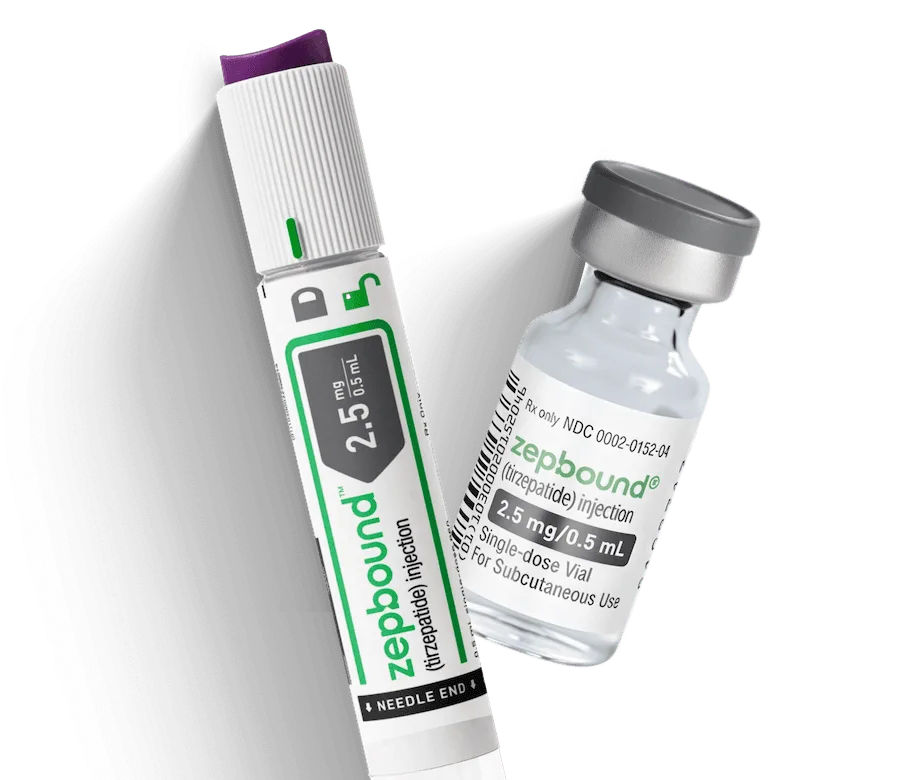
Zepbound®
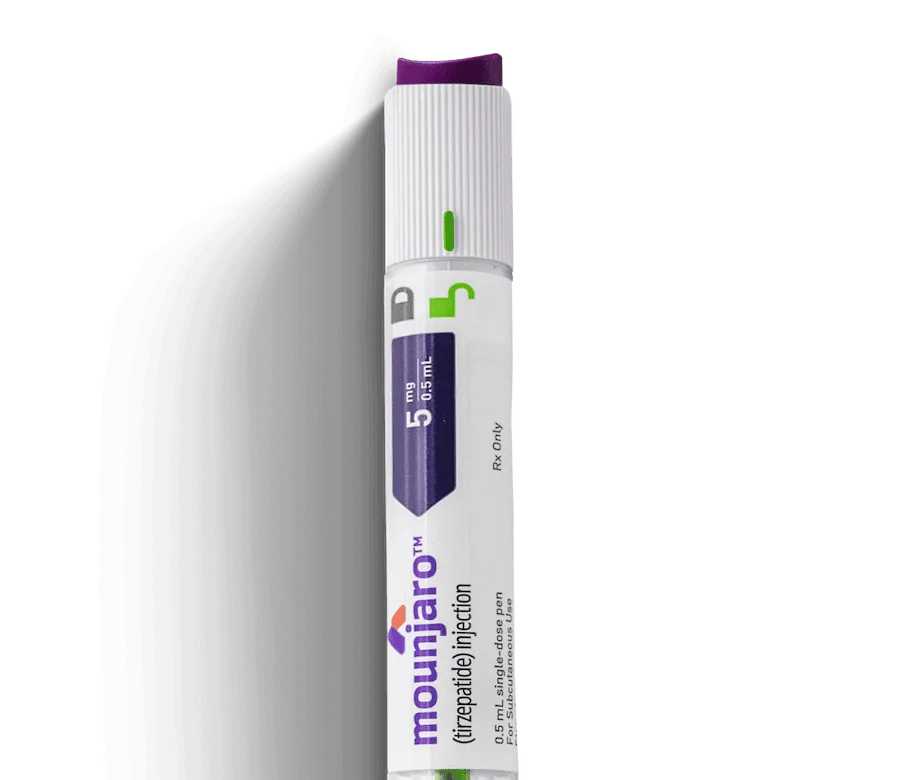
Mounjaro®
Liraglutide
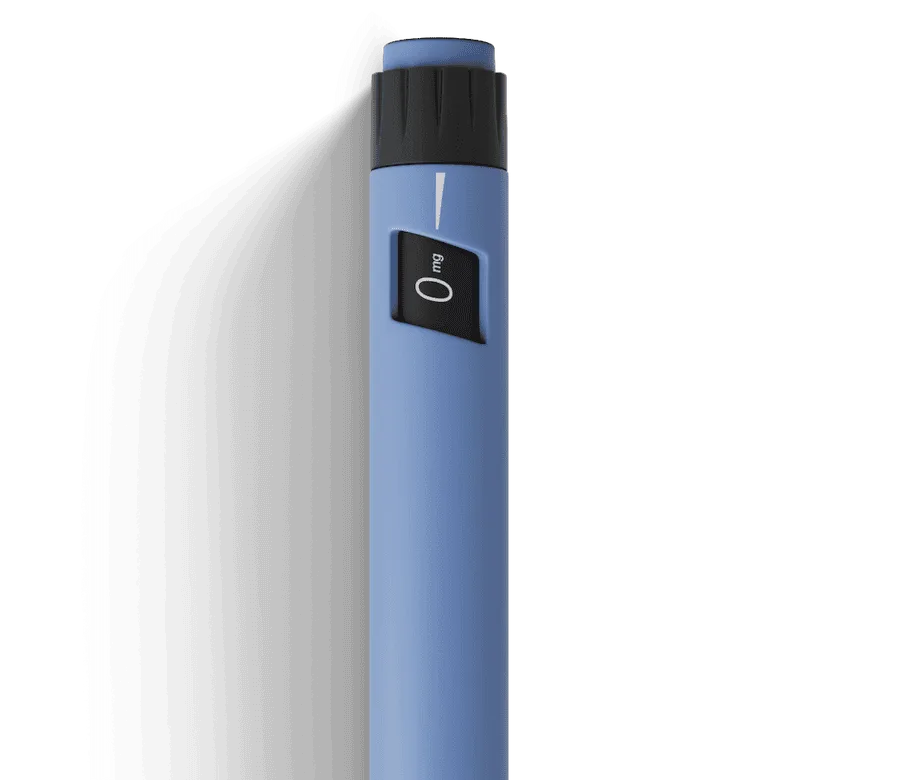
The KwikPen® is a reusable device that contains four weekly doses of tirzepatide in a single pen. Instead of throwing away the entire device after each injection, you’ll attach a new pen needle before every dose and use it for the month.
If you’re paying without insurance, the Zepbound KwikPen is another lower-cost option through LillyDirect’s cash-pay program.
The Zepbound KwikPen® is also the form available in the GLP-1 Medicare Bridge Program.
Read more: Zepbound KwikPen®: How it works and how it compares with the pen and vial
How to take tirzepatide: Injection sites, safety and planning
To take tirzepatide, you give yourself a once-weekly subcutaneous injection, which means it’s injected into the layer of fat just beneath your skin—not into a muscle or vein. This is important because these needles are much smaller than the ones you may be familiar with for vaccinations. Because of this, most people report very little pain, and some only feel some pressure.
You choose the day that works best for you. You don’t need to plan around food or drink and can give yourself the injection on the day that works best for you.
Read more: Zepbound® KwikPen®: How to use it and what makes it different
Where is the best spot to inject tirzepatide? The three approved spots
There’s no single “perfect” injection site, and each of the three approved spots works the same, and the medication is absorbed the same. The three approved spots are your abdomen, thigh, and upper arm. Research comparing all three sites shows they absorb the medication at similar rates, so choosing the “best” spot is less about effectiveness and more about finding a location that’s comfortable and easy for you to use consistently.
These areas all have enough fatty tissue for the medication to be absorbed properly. A study comparing injections into the abdomen, thigh, and upper arm found that tirzepatide reaches the bloodstream at similar rates regardless of which site is used—one location doesn’t work better than another.
Instead of looking for the “best” injection site, focus on choosing a location that’s comfortable, easy to reach, and simple to rotate from week to week. Here are some things to keep in mind when choosing a spot, then we’ll break them all down further:
| Where to inject | Where to inject | Why people choose it | Keep in mind |
|---|---|---|---|
| Abdomen | At least 2 inches away from your belly button | Easy to see while injecting and offers plenty of room to rotate sites | Avoid scars, bruises, irritated skin, and the belly button itself |
| Thigh | Front or outer upper thigh, midway between your hip and knee | Easy to reach on your own and a good alternative if your abdomen feels sensitive | Skip the inner thigh, where there are more nerves and blood vessels |
| Upper arm | Back of the upper arm, between your shoulder and elbow | Gives you another rotation option | Most people need someone else to help inject this area since it’s hard to reach on your own |
Read more: Zepbound® injection sites: Locations, tips, and what to avoid
Where to inject tirzepatide: Stomach
The abdomen is one of the most popular injection sites because it’s easy to reach and provides plenty of space to rotate between injections. Choose a spot that’s at least two inches away from your belly button, and avoid any areas with scars, stretch marks, bruises, rashes, or irritated skin.
If you have less fat around your midsection, gently pinching a fold of skin before injecting can help ensure the medication reaches the fatty tissue beneath your skin rather than the muscle underneath.
Some people wonder whether injecting into their stomach helps target belly fat or improves weight loss. It doesn’t. Once tirzepatide is absorbed into subcutaneous tissue, it works throughout your body, regardless of where you injected it. That means your results depend on factors like taking the medication consistently, reaching the right dose with your healthcare provider, and maintaining healthy lifestyle habits—not on whether you chose your stomach instead of your thigh.
Where to inject tirzepatide: Thigh
If injecting into your abdomen doesn’t feel comfortable—or you simply want another option—the thigh is a great alternative. Most people find it’s easy to reach on their own, whether they’re sitting or standing.
Inject into the front or outer part of your upper thigh, roughly halfway between your hip and knee. Avoid the inner thigh, where there are more nerves and blood vessels, as well as any skin that’s bruised, scarred, irritated, or otherwise unhealthy.
One advantage of using your thighs is that they’re naturally easy to rotate. For example, you might use your left thigh one week and your right thigh the next, then move to slightly different spots the following weeks. Giving each area time to recover can help reduce soreness and irritation over time.
Where to inject tirzepatide: Upper arm
The third FDA-approved injection site is the back of the upper arm, between your shoulder and elbow.
This area works just as well as the abdomen and thigh, but it’s often the least practical option because it can be difficult to reach and see while giving yourself an injection. Eli Lilly specifically recommends that another person give the injection in this area. Many people need a family member, friend, or caregiver to help since it’s hard to reach on your own.
If someone else is administering your injection, the upper arm can be a convenient addition to your rotation. If you’re injecting on your own, however, the abdomen or thigh may simply be easier to use consistently.
Where you shouldn’t inject tirzepatide
Just as important as knowing where to inject is knowing where not to.
Tirzepatide should only be injected into the three approved areas: the abdomen, thigh, or back of the upper arm. Even if another area seems to have enough body fat, those locations haven’t been evaluated for this medication, including:
- Buttocks
- Lower back
- Flank (love handles)
- Inner thigh
- Calves or lower legs
- Chest
- Anywhere with visible veins
Within the approved injection sites, the instructions for use advise avoiding skin that’s:
- Bruised
- Red or irritated
- Scarred
- Hard or lumpy
- Thickened
- Tender
- Covered by a rash or infection
Choosing healthy skin each week helps reduce discomfort and gives the medication the best chance to absorb as intended.
Why should you rotate your injection site?
Once you’ve chosen an injection site, don’t use the exact same spot every week.
Repeatedly injecting into the same location can irritate the tissue beneath your skin and may eventually lead to lipohypertrophy, a buildup of thickened or lumpy fatty tissue.
Here’s a common way to make rotation work for you:
- Switch injection sites each week. For example, use your abdomen one week and your thigh the next. Many people find it helpful to keep a note in their phone or calendar so they remember where they injected last.
- Move within the same area. If you prefer injecting into your abdomen every week, choose a different spot at least an inch or two away from your previous injection.
- Pay attention to your skin. If an area feels sore, looks irritated, or has developed a lump, give it extra time to recover before using it again.
How to safely inject tirzepatide
Before you start, it’s important to follow a process that ensures your safety. The exact steps vary slightly by whether you use a pen or vial, but the overall guidance is the same whether you’re using a pen or a vial:
- Wash your hands and gather your supplies. You’ll need your pen or vial; if you’re using a vial, you’ll also need a syringe and needle (sold separately). Either way, have an alcohol swab, gauze or a cotton ball, and a sharps disposal container ready.
- Check your medication. Inspect the label, dose strength, and expiration date on your pen or vial. The medicine should be clear and colorless to slightly yellow—don’t use it if it looks cloudy or discolored, or contains particles.
- Prepare your device.
- Single-dose pen: Pull off the cap. The needle is built into the pen and hidden from view, so you don’t need to load a new needle
- Kwikpen®: If you’re using a multi-dose KwikPen®, attach a new pen needle for every injection. Then, prime the pen by turning the dose knob until you hear two clicks, tapping out any air bubbles, and pushing the dose knob until you see a drop of medicine at the needle tip.
- Vial: Wipe the rubber stopper with an alcohol swab. Draw air into your syringe equal to your dose, inject that air into the vial, then invert the vial and slowly draw your dose into the syringe. After removing the needle from the vial, tap out any air bubbles in the syringe.
- Choose where to inject. Pick a spot on your stomach, thigh, or the back of your upper arm—no site works better than another, so go with whatever’s easiest to reach. Rotate between spots week to week, even within the same general area, to lower the chance of injection-site reactions.
- Clean the injection site. Wipe the area with an alcohol swab and let it air-dry completely before injecting.
- Inject. The way you inject your tirzepatide will depend on the type you’re using:
- Single-dose pen: Place the pen flat against your skin at a 90-degree angle, press the injection button, and hold it in place for the amount of time specified in the instructions (typically about 10 seconds) before removing it. Dispose of the entire pen in a sharps container after your injection.
- KwikPen®: Check again that your needle is brand new. Press and hold the injection button until the dose has been delivered, then remove and discard the pen needle before storing the pen for your next weekly injection.
- Vial: Draw your prescribed dose into a syringe. Insert the needle at a 90-degree angle, slowly press the plunger until all the medication has been injected, then remove the needle and safely dispose of both the syringe and vial.
- Dispose of sharps right away. Place used single-dose pens, syringes, and needles directly into a sharps container. If you’re using a multi-dose KwikPen®, remove and discard just the needle, replace the outer shield, and store the pen for next week.
Read more: Zepbound® KwikPen®: How to use it and what makes it different
Managing tirzepatide injection site issues
A small amount of redness, itching, bruising, or soreness after an injection is fairly common with tirzepatide. These mild reactions usually go away within a day or two and don’t mean the medication isn’t working.
In studies of Zepbound®, injection site reactions were reported in 6% of people on the 5 mg dose, 8% on the 10 mg dose, and 8% on the 15 mg dose.
In studies of Mounjaro®, reactions were reported in about 3% of people. No severe injection site reactions were reported in either trial program, and there’s nothing that suggests there’s a difference in reaction rates between the single-dose pen and the single-dose vial, since both use the same drug formulation. This wasn’t tested in the multi-dose pens, but that’s unlikely to make a difference since they’re similar to single-dose pens.
Rotating your injection sites, choosing healthy skin, and avoiding the exact same spot week after week can help lower the risk of irritation.
Contact your healthcare provider if you notice:
- Redness or swelling that continues to spread
- Warmth, pus, or other signs of infection
- A lump that doesn’t improve after about a week
- Pain that’s severe or continues to get worse
Read more: How to manage injection site reactions
What to do if medication leaks out of the injection site
A small drop of medication on your skin after an injection is usually not a cause for concern. It doesn’t necessarily mean you missed your dose.
Common reasons this can happen include:
- Removing the needle too soon. Next time, hold the pen or syringe in place for the amount of time recommended in the instructions before removing it.
- A small amount of medication tracking back through the needle path. This can happen occasionally and is usually minimal.
If you notice only a tiny drop of liquid, your full dose was likely delivered. If a large amount of medication leaks out or you think you didn’t receive your full dose, contact your healthcare provider or pharmacist for guidance before taking another dose.
Read more: Zepbound® injection sites: How to inject correctly and minimize discomfort
FAQs about where to inject tirzepatide
Does a tirzepatide injection hurt?
Most people describe tirzepatide injections as causing little to no pain. The needle is short and thin—designed for subcutaneous delivery—and because the medication goes into the fatty tissue just beneath the skin, many people say they feel only a quick pinch or slight pressure. Rotating your injection site, letting the alcohol swab dry completely before injecting, and avoiding skin that’s bruised or tender can all help reduce stinging. If injections are consistently painful or become more uncomfortable over time, let your healthcare provider know so they can check your technique.
Which tirzepatide injection site hurts the least?
There’s no single injection site that’s least painful for everyone. Some people prefer the abdomen, while others find the thigh more comfortable. Rotating injection sites, using healthy skin, and following the instructions for your medication can help make injections more comfortable over time.
Where should I inject tirzepatide for the best results?
You can inject tirzepatide into your abdomen, thigh, or the back of your upper arm. Research shows these three FDA-approved sites absorb the medication similarly, so there’s no evidence that one produces greater weight loss or better blood sugar control than another. The best site is the one that’s easiest for you to use consistently while rotating your injection locations each week.
Does tirzepatide work better in the arm or stomach?
No. Tirzepatide is absorbed similarly whether it’s injected into the abdomen, thigh, or upper arm. Your results are much more likely to be influenced by taking the medication consistently, reaching the appropriate dose with your healthcare provider, and maintaining healthy lifestyle habits than by which approved injection site you choose.
Where should you not inject tirzepatide?
Avoid injecting tirzepatide anywhere other than the three approved sites: the abdomen, thigh, and back of the upper arm. Within those areas, don’t inject into skin that’s bruised, scarred, irritated, infected, or otherwise damaged, per the instructions for use. Tirzepatide should also never be injected into a muscle or vein.
What happens if I inject tirzepatide in the wrong place?
If you accidentally inject into an area outside the recommended sites or aren’t sure your injection was given correctly, contact your healthcare provider or pharmacist for guidance. For future doses, stick to one of the three approved injection sites and follow the instructions that came with your medication.
Can you inject tirzepatide through clothing?
No. Tirzepatide should always be injected directly into clean, exposed skin. Injecting through clothing can increase the risk of contamination and may make it harder to see whether you’re using the correct injection site. Before each injection, wash your hands, clean the skin, and allow the area to dry before injecting.
Reviews from real Noom users
Desirea N. — Real Noom user

“My favorite parts of Noom are the care team and other Noomers. Sharing and getting help made me feel like I wasn’t doing it alone. That support made all the difference.”
Desirea N. — Real Noom user
Matthew M. — Real Noom user

“Noom has taught me that every day is a new chance to make better, healthier choices. It's taught me how to stop overeating.’’
Matthew M. — Real Noom user
Lila M. — Real Noom user
“Clinicians who understand how supportive medication can be is one of the best parts of Noom! I was convinced I wouldn’t have success but I’m down 11 pounds in two months.’’
Lila M. — Real Noom user
Steve M. — Real Noom user

“Noom provided me with the medication which I could not get through Medicare. I have learned the tricks to better eating and life in general.”
Steve M. – Real Noom user
Daisy R. — Real Noom user
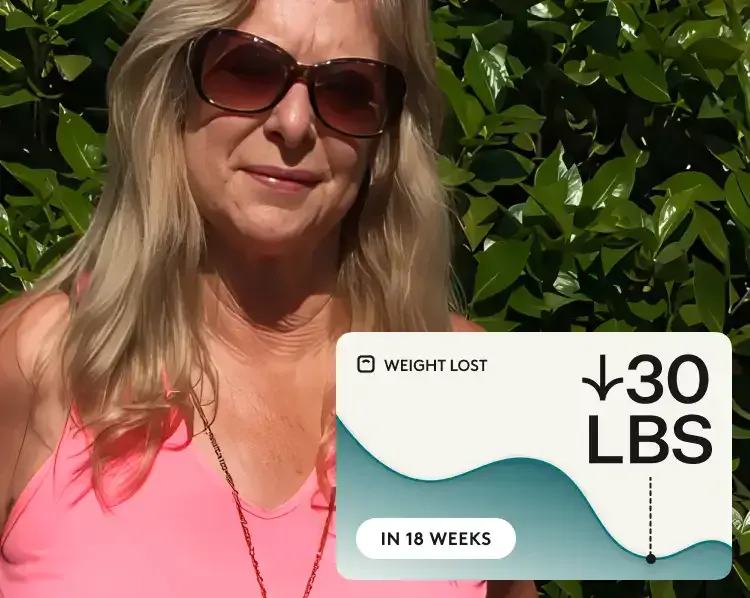
‘’Noom has changed my life and I’m so thankful, I feel great, have more energy and am no longer prediabetic.”
Daisy R. – Real Noom user
Sarah R. — Real Noom user

“All of the Noom providers that I’ve met with have been exceptional and prescribed medications that are appropriate for my situation and health.”
Sarah R. – Real Noom user
Madison S. — Real Noom user
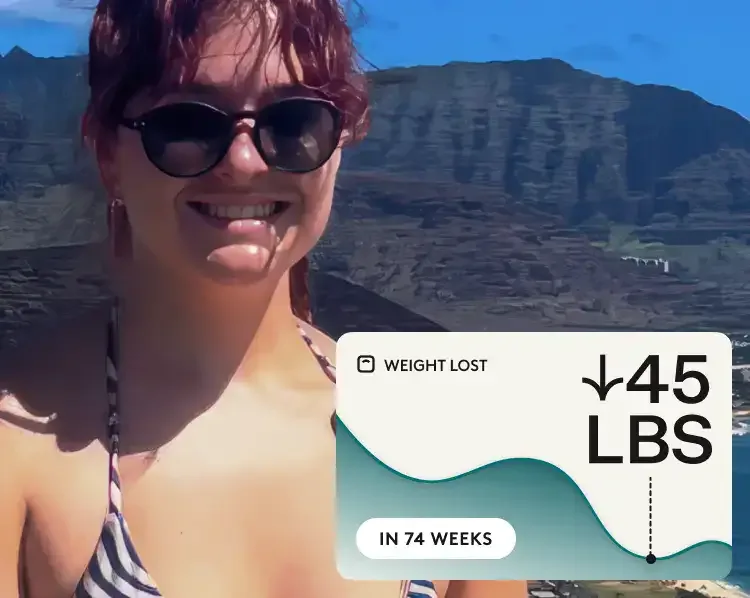
“Noom made the process so simple and now I feel full, free from diet obsession, and at ease in my body again.”
Madison S. – Real Noom user
Sonday K. — Real Noom user
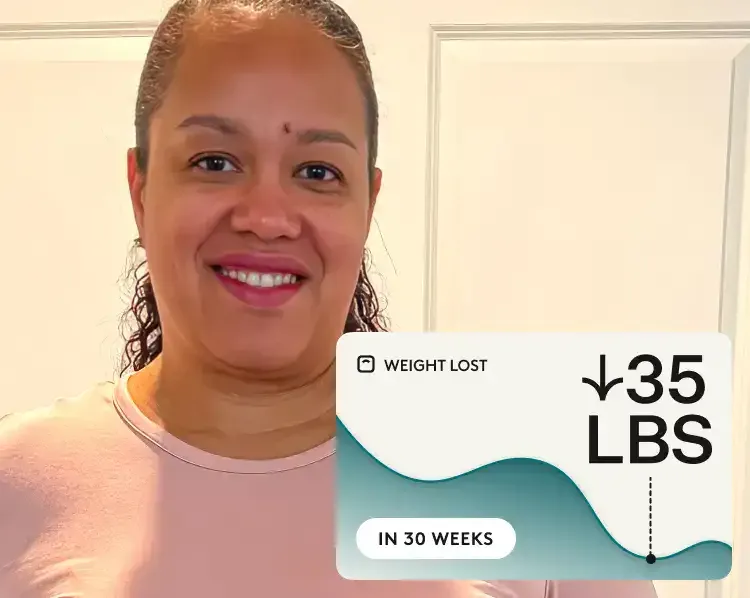
“My doctor recommended Noom after I was frustrated trying to lose weight. The lessons helped change my relationship with food. My body feels lighter & energized.”
Sonday K. – Real Noom user
Cam K. — Real Noom user
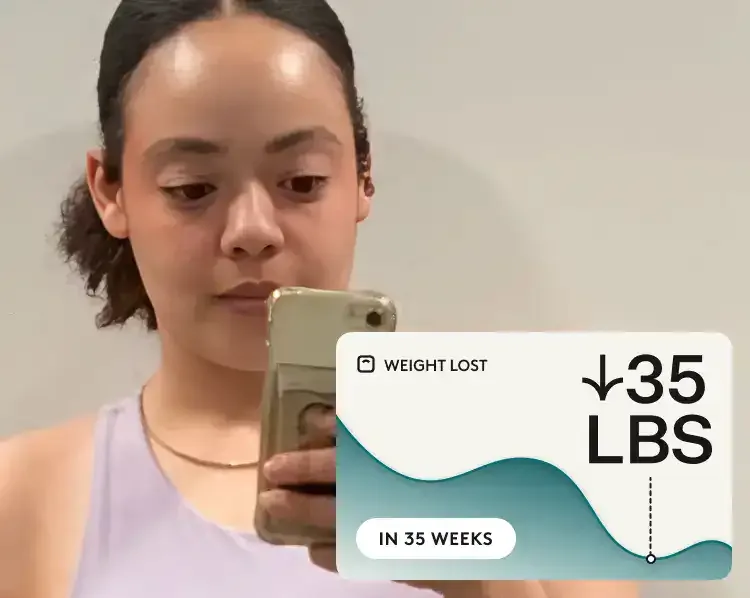
“I built healthy habits with coaching and lessons that make me confident I can maintain my weight loss long term.”
Cam K. – Real Noom user
Laura TR. — Real Noom user
“With the right medication through Noom, hunger and sugar cravings finally quieted and I have the tools to break the cycle.”
Laura TR. – Real Noom user
Jessica S. — Real Noom user

“Cravings and food noise are gone, I finally feel confident in the healthy habits I’ve built to last with Noom.”
Jessica S. – Real Noom user
The bottom line: Tirzepatide injections should rotate between your stomach, thigh, or upper arm
When you’re prescribed Zepbound or Mounjaro, tirzepatide is designed to be injected into one of three FDA-approved areas: your abdomen, thigh, or the back of your upper arm. The injection device might differ; the three sites are the same. Research shows these sites work equally well, so the most important thing is to prepare using the safety steps, rotate consistently, and choose the spot that’s most comfortable for you.
Most people find the process becomes much easier after the first few doses. Building a simple routine—choosing a consistent injection day, rotating sites, and following your medication’s instructions—can help.
If you get your medication through Noom Med, your care team will provide ongoing support throughout treatment and help you work through any issues. If you’re considering weight loss medication, see if you qualify. Our clinicians can find the right medication for you, prescribe it if needed, and help you reach your goals.
Editorial standards
At Noom, we’re committed to providing health information that’s grounded in reliable science and expert review. Our content is created with the support of qualified professionals and based on well-established research from trusted medical and scientific organizations. Learn more about the experts behind our content on our Health Expert Team page.