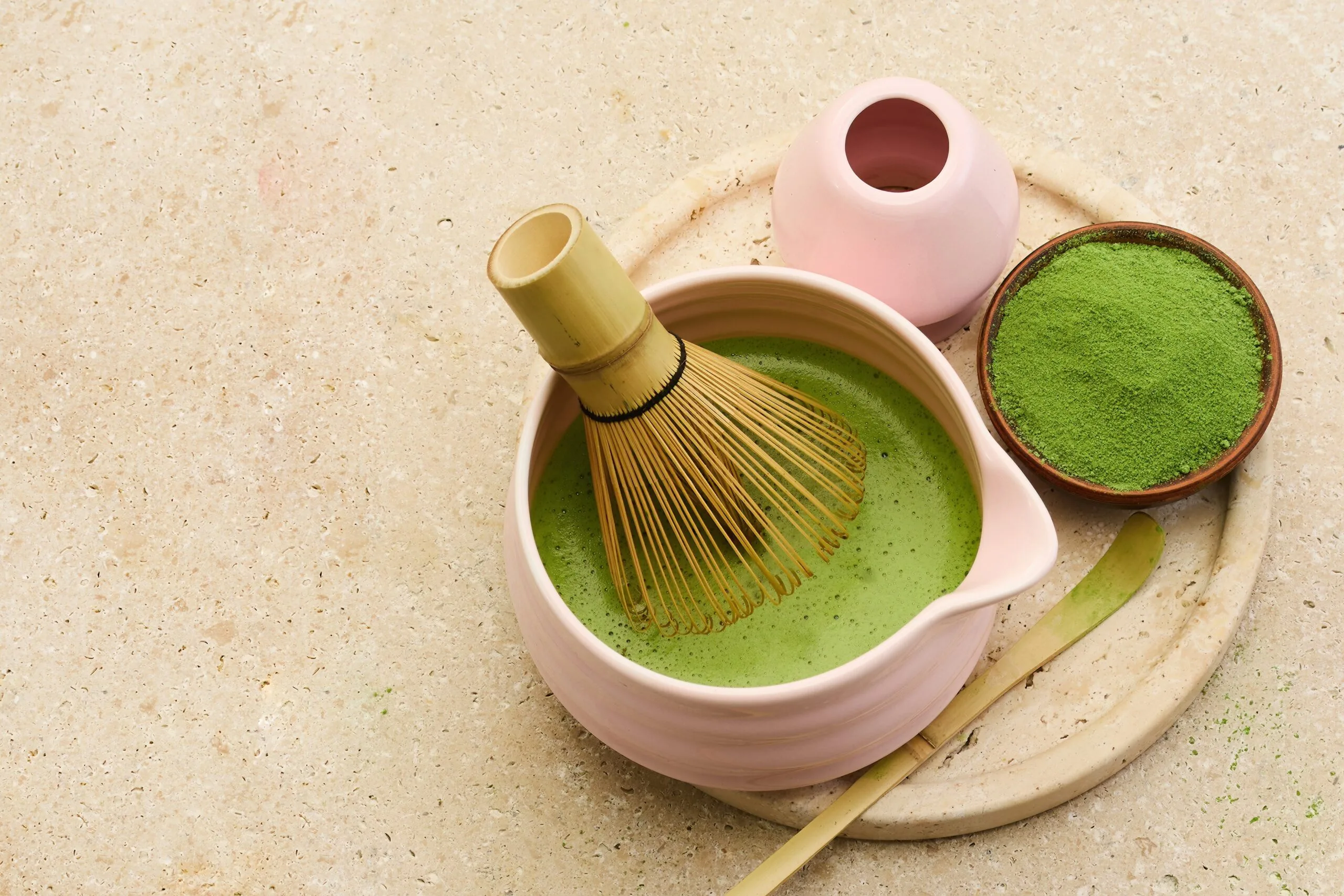
Matcha has gone from a traditional Japanese tea ceremony staple to something you’ll find almost everywhere: lattes, smoothies, ice cream, chips, protein bars, and more. It’s also picked up a reputation as a weight loss tool—but does the evidence actually back that up?
The answer is yes, but only to a point. Matcha contains compounds like EGCG, an antioxidant in green tea, and L-theanine, an amino acid that may support calm, focused energy. Some research has linked green tea compounds to modest effects on metabolism, fat oxidation, and appetite, but matcha isn’t a magic shortcut for weight loss. It’s also nearly calorie-free when prepared simply, while sugary or ultra-processed versions won’t offer the same benefits.
The biggest caveat is how you prepare it. Plain matcha whisked with hot water is very different from a sweetened café latte made with syrup and whole milk—or a matcha-flavored snack food. Let’s walk through the potential health benefits of matcha, what to be realistic about, and the simplest ways to make it work for your weight loss goals.
✅ Quick answer
Yes—matcha can support weight loss when prepared simply. A standard 1-teaspoon (2g) serving whisked with hot water has around 5 calories, meaningful antioxidants and a gentle caffeine boost.
🚀 Weight-loss benefits
- Nearly calorie-free when prepared simply – A 2-gram serving of matcha whisked with hot water contains roughly 5 calories, making it an easy swap for higher-calorie drinks.
- Green tea compounds may support fat burning and steady energy – Matcha provides a combination of catechins (including EGCG) and L-theanine, along with caffeine. Together, these have been linked to modest increases in fat oxidation during exercise and a calmer, more sustained energy that may help reduce stress-driven eating.
- Adds flavor without many calories—if you keep it simple – Matcha can enhance smoothies, yogurt, or baked goods without adding much energy, but the benefit depends on what comes with it. Sweetened powders, syrups, and ultra-processed matcha foods can quickly outweigh any potential upside.
⚠️ Things to be mindful of:
- Sweetened versions can shift the calorie balance – Matcha itself is low in calories, but café drinks often aren’t. A typical matcha latte can reach 250 to 350 calories with 30 to 45g of sugar. Having it unsweetened or making it at home keeps it more in line with your goals.
- Caffeine can affect sleep (and appetite) – Matcha has about 35 to 70mg of caffeine per serving. If it interferes with sleep, it can indirectly increase hunger. Earlier in the day usually works better, or consider lower-caffeine options if needed.
- The benefits are real—but modest – Research links green tea compounds to small increases in fat burning, but the effects are gradual. Matcha can support your routine, but it works best alongside overall eating patterns and movement.
🥗 Nutrients in matcha (per 1 tsp / 2g serving)
| Nutrient | Amount | % RDA* |
|---|---|---|
| Calories | 5 calories | <1% |
| Protein | 0.5 g | 1% |
| Total carbs | 0.9 g | <1% |
| Fiber | 0.8 g | 3% |
| Sugars | 0 g | — |
| Total fat | 0.1 g | <1% |
| – Saturated fat | 0 g | 0% |
| – Monounsaturated fat | 0 g | — |
| – Polyunsaturated fat | 0.1 g | — |
| Omega-3 | 0.01 g | — |
| Omega-6 | 0.06 g | — |
*Recommended dietary allowance (RDA) is defined as the average daily amount of nutrients needed to meet the requirements of nearly all healthy people in a specific group.
At a standard 2-gram serving, matcha is essentially calorie-free—about 5 calories, under 1 gram of net carbs, and negligible fat. On paper, it doesn’t look like much.
But that’s kind of the point.
Matcha’s value isn’t in its macros—it’s in its bioactive compounds. Compounds like EGCG, caffeine, and L-theanine are thought to drive many of matcha’s potential effects and have been associated with things like fat oxidation and steady energy—but they don’t show up on a standard nutrition label.
One small detail that does stand out: fiber. You’ll get about 0.8 grams per serving, which is modest but meaningful. Because matcha uses the whole ground tea leaf (instead of steeping and discarding it), you’re actually consuming the plant—not just the infused water. Over time, that can contribute to your overall fiber intake in a way regular green tea doesn’t.
💊 Vitamins & minerals in matcha (per 1 tsp / 2g serving)
| Vitamin/Mineral | Amount | % RDA* |
|---|---|---|
| Vitamin K | 58 µg | 48% |
| Vitamin C | 1.2 mg | 1% |
| Iron | 0.17 mg | 1% |
| Magnesium | 2.3 mg | 1% |
| Potassium | 27 mg | 1% |
| Zinc | 0.06 mg | 1% |
| Vitamin A | 5.4 µg RAE | 1% |
| Vitamin E | 0.6 mg | <1% |
| Calcium | 4.2 mg | <1% |
| Phosphorus | 3.5 mg | <1% |
| Copper | 0.006 mg | <1% |
The clear standout here is vitamin K—you’ll get about 48% of your daily needs in a single teaspoon. Vitamin K plays a key role in blood clotting and bone health, and it’s one of the nutrients many people don’t get enough of. One important note: if you take blood thinners like warfarin, it’s worth checking with your doctor before making matcha a daily habit, since vitamin K can affect how these medications work.
Beyond that, the micronutrients are more modest—small amounts of vitamin C, iron, magnesium, and potassium, typically around 1% of your daily needs per serving.
Still, it adds up in a useful way. Because matcha is made from the whole tea leaf, you’re getting a steady, low-effort contribution of these nutrients in a drink that’s almost calorie-free. And when you’re eating less overall, those small, consistent additions can carry a bit more weight.
🔍 Nutrient breakdown
Glycemic index (GI) of matcha
Glycemic index: ~0 (Extremely Low)
💡 Tip: Plain matcha has a negligible glycemic impact—no sugars, no digestible starch—which means it won’t spike blood sugar or trigger the insulin response that can drive fat storage and hunger rebounds. This makes it a practical choice for anyone managing blood sugar or following a low-carb eating pattern.
Is matcha high in protein?
❌ No – matcha contains 0.5g of protein per 2g serving. Not a meaningful protein source.

The Easy Way
to lose weight and get healthy.
See if you qualify
Better protein alternatives: Greek yogurt | Eggs | Edamame | Cottage cheese
Is matcha high in fiber?
✔️ Yes, relative to its size – matcha provides 0.8g of fiber per 2g serving. Modest in absolute terms, but notable for a beverage. Because matcha is ground whole leaf, you’re consuming the leaf’s fiber rather than discarding it as you would with brewed tea.
💡 Tip: Pair your matcha with a high-fiber breakfast—oats, berries, chia seeds—to amplify both gut health and satiety in the morning.
Is matcha low in carbs?
✔️ Yes – matcha has 0.9g of total carbs per 2g serving, with 0.8g of that being fiber. Net carbs are essentially zero, making it fully compatible with ketogenic and other low-carb approaches.
💡 Tip: Keep it low-carb by preparing matcha with unsweetened plant milk. Even small amounts of sweetener or flavored syrups can add 10–20g of sugar to an otherwise near-zero-carb drink.
Is matcha gluten-free?
✔️ Yes – pure matcha powder is made entirely from ground green tea leaves and contains no gluten. It’s safe for people with celiac disease or gluten sensitivity. Always check the label on flavored or blended matcha products, as some are processed in facilities that also handle wheat.
Is matcha good for fat loss?
✔️ Yes, with realistic expectations – matcha’s combination of EGCG and caffeine has been studied for its effects on fat oxidation, particularly during moderate exercise. It’s also virtually calorie-free, making it easy to incorporate into a calorie deficit. That said, the fat-burning effect is incremental—useful as part of a consistent approach, not dramatic on its own.
🍽️ Diet compatibility: Which diets include matcha?
| Diet | ✅/❌ | Why |
|---|---|---|
| Keto | ✅ | With under 0.1g net carbs per serving, matcha is fully keto-compatible. Prepare it with hot water or unsweetened nut milk, and skip sweeteners and syrups. |
| Paleo | ✅ | Pure matcha is a minimally processed whole-leaf powder with no additives—exactly the kind of plant-based food the paleo framework embraces. Green tea has been consumed for over a thousand years. |
| Mediterranean | ✅ | The Mediterranean diet prioritizes plant foods, antioxidants, and anti-inflammatory ingredients, all of which matcha delivers. While traditional Mediterranean drinking culture leans toward coffee and herbal tea, matcha fits the nutritional philosophy comfortably. |
| Vegan | ✅ | Pure matcha is entirely plant-based. Vegan matcha lattes work well with oat, almond, soy, or coconut milk. Watch for non-vegan additions like honey in some café preparations. |
| Gluten-free | ✅ | Pure matcha is naturally gluten-free. For people with celiac disease, look for a certified gluten-free label to ensure no cross-contamination during processing. |
Matcha fits cleanly into nearly every major eating pattern when prepared in its simplest form—which is genuinely useful when you’re navigating dietary restrictions while managing your weight. The preparation method is the deciding factor. Plain matcha with hot water is universally compatible. Sweetened café versions with flavored syrups and whole milk are a different food entirely. Making matcha at home is the most reliable way to stay on track regardless of which eating pattern you follow.
🌟 Is matcha healthy? What are the health benefits?
Metabolic health: Is matcha good for your metabolism?
- Boosts metabolism? ✔️ Modestly – Matcha contains a mix of caffeine and green tea catechins like EGCG, which have been associated with small increases in thermogenesis. In practice, this tends to translate to a minor bump in daily energy expenditure, not a dramatic shift. The effect is more noticeable when combined with regular movement, especially exercise
- Improves insulin sensitivity? ✔️ Possibly – A review of randomized controlled trials found that green tea catechins were associated with lower fasting blood glucose, pointing to possible improvements in insulin sensitivity. Catechins appear to influence glucose absorption in the gut, which may help keep blood sugar more stable.
- Effect on fat storage? Positive – EGCG has been studied for its potential to reduce fat accumulation, particularly visceral (belly) fat. Human research is more limited than animal studies, but regular catechin consumption over 12-week periods has been associated with modest reductions in body fat percentage in some trials.
Cholesterol impact: Does matcha affect cholesterol levels?
- Does it lower LDL (bad) cholesterol? ✔️ Possibly – Multiple studies have found associations between EGCG and other green tea catechins and reduced LDL cholesterol. The reductions observed are modest, and individual results vary.
- Does it raise HDL (good) cholesterol? ⚠️ Limited evidence – Animal research has shown matcha is associated with increases in HDL alongside reductions in LDL and triglycerides. Human evidence here is limited and inconsistent.
- Overall impact on heart health? Generally favorable – Green tea consumption is consistently associated with lower cardiovascular disease risk in large population studies. Matcha, as a concentrated whole-leaf form of green tea, may offer similar benefits, though more research specifically on matcha is still needed.
💡 Tip: Pair matcha with omega-3-rich foods like salmon, walnuts, or flaxseed for complementary anti-inflammatory effects.
Can I use matcha in a calorie deficit?
✔️ Yes, with confidence: At 5 calories per serving, plain matcha is one of the most calorie-deficit-friendly drinks available. The caffeine and L-theanine combination may also help manage the fatigue and brain fog that sometimes accompany calorie restriction, making it easier to stay consistent.
💡 Tip: Use matcha as your afternoon energy bridge during a calorie deficit—it provides mental clarity and a mild appetite-moderating effect without using any of your calorie budget.
Is matcha rich in antioxidants?
✔️ Yes: Matcha is one of the most antioxidant-dense foods by weight. Its primary antioxidants are catechins (especially EGCG), chlorophyll, and vitamins C and E. Research from the University of Colorado found matcha contains roughly 137 times more EGCG than a standard brewed cup of green tea—a direct result of consuming the whole ground leaf rather than a steeped infusion.
Does matcha support gut health?
✔️ Possibly: Animal research found that matcha supplementation restored beneficial gut bacteria populations disrupted by a high-fat diet, particularly increasing species associated with healthy metabolism. Research in humans is still limited, but the early findings are encouraging.
Does matcha support digestion?
Positive for most people: The fiber in whole-leaf matcha powder can support digestive regularity in a way that brewed tea can’t, since you’re consuming the ground leaf itself. One caveat: the caffeine in matcha can aggravate acid reflux or gastric sensitivity in some people, particularly on an empty stomach. Having something light to eat first helps if that’s a concern.
Does matcha help you feel satiated and less hungry?
Moderate: Matcha won’t fill you up the way a meal does, but its caffeine content provides a short-term appetite-moderating effect, and some research suggests EGCG may influence ghrelin, the hunger hormone. The L-theanine may also support steady mental energy, which may reduce the kind of fatigue-driven snacking that contributes to a lot of unplanned eating.
Satiety level: Moderate (as a beverage)
💡 Tip: Drink a cup of plain matcha 20 to 30 minutes before a meal. It’s might be a way to naturally eat a slightly smaller portion.
Does matcha help with nighttime cravings?
✔️ Possibly, if timed well: Matcha’s mild appetite-moderating effect can help manage afternoon and early-evening cravings. The key is timing—for caffeine-sensitive people, drinking matcha after 2 or 3 pm can disrupt sleep, which ultimately worsens cravings and appetite the next day.
💡 Tip: If you’re prone to evening snacking, have your last matcha in the early afternoon. Better sleep quality is one of the most underrated tools for managing cravings.
Does matcha help reduce inflammation?
✔️ Yes: EGCG and other polyphenols in matcha have been shown to suppress pro-inflammatory markers in research. Chronic low-grade inflammation is closely tied to obesity and metabolic syndrome, so matcha’s anti-inflammatory properties have relevance to weight management beyond just general health.
Access GLP-1 Weight Loss with Noom
Explore a wide range of prescription medications supported by Noom’s program.Microdose GLP-1rx
Noom GLP-1rx
Noom GLP-1rx Plus
Wegovy®
Ozempic®

Metformin
Zepbound®
Mounjaro®
Liraglutide
Is matcha beneficial for brain health?
✔️ Yes: The combination of caffeine and L-theanine has been shown in human trials to improve attention, working memory, and reaction time more effectively than either compound alone. L-theanine promotes alpha brain wave activity associated with calm focus—alert without being anxious. A small study found that matcha consumers showed measurably better cognitive performance compared to a control group.
Can matcha improve skin and hair health?
✔️ Minor benefits: Matcha’s antioxidant content—particularly EGCG and vitamin E—may help protect skin cells from UV-related oxidative damage. The anti-inflammatory effects could also reduce skin redness. Most of the evidence here is indirect, drawn from topical green tea studies rather than matcha consumption trials specifically.
Can matcha help balance hormones?
⚠️ Limited evidence: Some research suggests EGCG may help regulate cortisol, and matcha’s L-theanine directly moderates the cortisol-raising effect of its own caffeine. Chronically elevated cortisol promotes visceral fat storage and drives cravings, so matcha’s ability to moderate that response has some relevance to weight and hormonal health—though the direct evidence in humans is limited.
💡 Tip: For broader hormonal balance, prioritize sleep quality, stress management, and regular exercise alongside matcha—no single food will move the needle on hormones the way lifestyle factors do.
🍽️ Best ways to use matcha for weight loss
- Drinking it (keep it simple) – How you prepare matcha matters more than the matcha itself. Plain matcha whisked with hot water is the lowest-calorie option and keeps everything intact. If you prefer something creamier, an unsweetened latte with almond, oat, or coconut milk can still stay in a reasonable calorie range. The main thing to watch is added sugar—sweetened versions can quickly shift it from a low-calorie drink to more of a dessert.
- Pre-workout timing – Having matcha about 20–30 minutes before exercise is one of the more practical ways to use it. The combination of caffeine and catechins has been associated with slightly higher fat oxidation during activity, and many people find the energy feels steadier than coffee.
- Using it in foods – Matcha can add flavor to things like Greek yogurt, smoothies, or even baked goods without adding many calories. The benefit depends on what else is in the recipe—keeping added sugars and high-calorie mix-ins in check makes the difference.
May 2 is National Matcha Day. Try these healthy matcha recipes:
- Matcha Latte—Love & Lemons
- Matcha Green Smoothie Bowl—Minimalist Baker
- Iced Matcha Latte—Love & Lemons
🍏 Best alternatives & comparisons (per standard serving)
| Food/Drink | Calories | Carbs | Fiber | Protein | Fat |
|---|---|---|---|---|---|
| Matcha (1 tsp / 2g, plain) | 5 | 0.9 g | 0.8 g | 0.5 g | 0.1 g |
| Brewed green tea (8 fl oz) | 2 | 0.5 g | 0 g | 0.5 g | 0 g |
| Black coffee (8 fl oz) | 2 | 0 g | 0 g | 0.3 g | 0 g |
| Brewed black tea (8 fl oz) | 2 | 0.5 g | 0 g | 0 g | 0 g |
| Yerba mate (8 fl oz) | 15 | 1 g | 0 g | 1 g | 0.5 g |
Plain matcha stands out from every brewed alternative for one key reason: you’re consuming the whole leaf, not an infusion. That means you get substantially more EGCG, fiber, and fat-soluble micronutrients—like vitamin K and vitamin E—per serving than brewed green tea or black tea can deliver, even at comparable calorie counts.
Coffee and black tea match matcha on calories and carbs, and coffee delivers more caffeine per cup. But neither provides EGCG, L-theanine, or the fiber that comes from whole-leaf consumption. If the specific combination of EGCG, caffeine, and L-theanine is what you’re after, plain matcha delivers it in the highest concentration of anything on
Frequently asked questions about matcha and weight loss
How much matcha should I drink per day?
Most research points to 1 to 3 cups (2 to 6g of powder) per day as the range where it might be connected with metabolic benefits. Start with one cup per day to assess your tolerance, and keep in mind that more isn’t always better—beyond 3 cups, you’re adding caffeine without proportionally more benefit, and you may start running into sleep disruption.
Is a matcha latte good for weight loss?
It depends entirely on how it’s made. A matcha latte prepared with unsweetened plant milk and no added syrups can be a reasonable 50 to 80 calorie option. A café matcha latte made with sweetened syrups and whole milk is a different drink, often 250 to 350 calories with 30 to 45g of sugar. That doesn’t make it bad for weight loss, just something to choose occasionally.
Does matcha speed up metabolism?
It might, to a small degree. The combination of EGCG and caffeine in matcha has been studied for its effects on thermogenesis—the rate at which your body burns calories. Some research on green tea extracts has found modest increases in daily energy expenditure along with a shift toward burning more fat for fuel, rather than a large jump in total calories burned. The effect is most noticeable when you’re physically active. Think of it as a gentle nudge rather than a significant shift, and individual results will vary.
When is the best time to drink matcha?
The most evidence-backed use is around exercise. Research on green tea catechins has found higher fat oxidation during moderate-intensity activity, so having matcha before a workout may help support that effect. Morning is also a practical choice—it can replace higher-calorie drinks and is less likely to interfere with sleep later in the day.
Is ceremonial-grade matcha better for weight loss than culinary-grade?
Not in any meaningful way. Ceremonial-grade matcha is made from younger leaves and tends to be smoother and less bitter, while culinary-grade matcha uses more mature leaves and has a stronger flavor that holds up in lattes and recipes.
Both contain similar core compounds—like EGCG and caffeine—so their effects on metabolism or fat oxidation are expected to be comparable. The bigger difference comes down to how you use it: ceremonial-grade is easier to drink plain, while culinary-grade works well in smoothies or lattes where other ingredients are involved.
Can matcha replace coffee?
It can—and for many people, it’s a practical swap. Matcha provides about 35 to 70 mg of caffeine per serving, compared to roughly 95 to 150 mg in a typical cup of coffee. Because it also contains L-theanine, some people find the energy feels steadier and less jittery than coffee, though that experience can vary.
If you’re mainly using coffee for energy, matcha can be a gentler option. The biggest difference often comes down to how each one fits into your routine—especially what you add to it and how it affects your appetite, focus, and sleep.
Is matcha useful for people on GLP-1 medications?
It can be a helpful addition. On GLP-1 medications, appetite is often reduced, so drinks that provide energy without adding many calories can fit more easily into your day. Plain matcha is very low in calories and provides a small amount of caffeine along with L-theanine, which some people find feels steadier than coffee.
The main thing to watch is how you prepare it. Sweetened lattes or packaged matcha drinks can add up quickly and may not sit well if you’re already dealing with nausea or reduced appetite. Keeping it simple—and paying attention to how caffeine affects your sleep and tolerance—tends to work best.
🧠 The bottom line: Matcha can be a good choice for weight loss
Matcha can be a tasty addition as a low-calorie drink or flavor boost in foods. In terms of driving fat loss on its own, the promises are likely overhyped. While compounds like EGCG have been studied in relation to fat oxidation, the effects are small at best. The combination of caffeine and L-theanine may offer a steadier energy boost for some people, which can make it easier to stay consistent with your routine.
What matters most is how you prepare it. Keeping matcha simple—plain with hot water or with a small amount of unsweetened milk—keeps calories low. Sweetened café versions, sugary powders, or ultra-processed matcha foods can quickly shift it into a higher-calorie option.
On its own, matcha won’t drive weight loss—but as part of a broader routine that includes balanced eating, movement, and sleep, it can be a practical addition that supports overall health.
📖 Scientific evidence
1.Some evidence suggests that drinking matcha regularly may support fat oxidation. (Human Kinetics Journal, 2017) In one small study, women who consumed matcha daily for three weeks burned a higher percentage of fat during a single 30-minute brisk walking test compared to a placebo group. This reflects how the body used fuel during that specific session—not a sustained increase in calorie burn or overall fat loss.
2. Matcha may influence weight and gut health—but this evidence comes from animal research. (Frontiers in Nutrition, 2022) In an animal study, matcha was linked to less weight gain, lower liver fat, and shifts toward a healthier gut bacteria profile on a high-fat diet.
3. Daily green tea intake has been linked to small reductions in body fat in some studies. (Obesity, 2012) In one randomized trial, participants who consumed catechin-rich green tea daily for 12 weeks saw modest reductions in waist circumference and body fat compared to a control group. These results are tied to green tea—not matcha specifically—and the changes were relatively small.
4. Matcha’s key compounds have been linked to weight and metabolic changes in research—but evidence is still developing. (Current Research in Food Science, 2023) A review of human and animal studies found associations between catechins, caffeine, and changes in body fat, weight, and blood sugar. Results vary, and more robust human research is still needed.
5. Caffeine intake has been linked to small reductions in weight and body fat. (Critical Reviews in Food Science and Nutrition, 2018) Across multiple studies, people who consumed caffeine saw small reductions in weight, BMI, and body fat. Matcha contains caffeine along with other compounds, so it may contribute in a similar way—but we’re talking about subtle shifts, not dramatic results, and it won’t work the same for everyone.
Editorial standards
At Noom, we’re committed to providing health information that’s grounded in reliable science and expert review. Our content is created with the support of qualified professionals and based on well-established research from trusted medical and scientific organizations. Learn more about the experts behind our content on our Health Expert Team page.