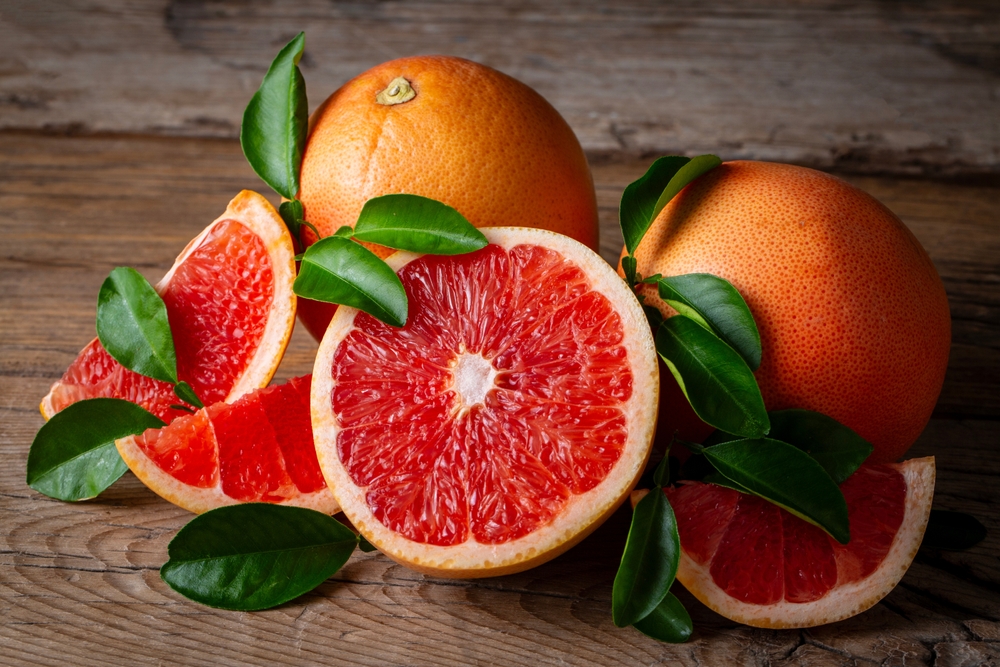
Grapefruit has had a long association with weight loss—it was the centerpiece of the “grapefruit diet” back in the 1930s, and somehow that connection never quite faded. But unlike a lot of diet trends that fall apart when the research catches up, grapefruit actually has solid science behind it.
It’s low in calories, high in water content, packed with antioxidants, and contains a unique compound called naringenin that early research suggests may support insulin sensitivity and metabolic health.
That doesn’t make it a fat-burning solution—no single food is. But grapefruit is genuinely one of the more weight-loss-friendly fruits you can add to your routine. A medium grapefruit has around 103 calories, has a glycemic index of just 25, and is nearly 91% water—meaning it delivers a lot of volume and satisfaction for very little caloric investment.
One important thing to know upfront: if you take prescription medications, grapefruit can interact with certain drugs in a meaningful way. We’ll cover that clearly below. For everyone else, here’s what you need to know about grapefruit and weight loss.
✅ Quick answer
Yes—grapefruit is a genuinely good food for weight loss. Its combination of very low calorie density and research-backed effects on insulin sensitivity makes it one of the more useful fruits for anyone managing their weight.
Noom’s Most Powerful Program
A dual-pathway GLP-1 and behavior change for lasting results.
🚀 Weight-loss benefits
- A high-volume, fiber-containing fruit that helps you feel full – A medium grapefruit has around 100 calories, but it’s very filling for that amount. It’s about 90% water and also provides a couple of grams of fiber, especially if you eat the whole segments instead of just the juice. That combination of water and fiber helps slow digestion and makes it more likely you’ll feel satisfied after eating.
- May support insulin sensitivity – Grapefruit contains a compound called naringenin that’s been linked in some research to better insulin response. That matters because insulin influences how your body uses and stores energy. When your body handles blood sugar more smoothly, it can feel easier to manage hunger and avoid energy dips.
- Keeps blood sugar steady – Grapefruit has a low glycemic index (around 25), meaning its natural sugars are absorbed gradually. Instead of a quick spike and crash, you get a more steady release of energy, which can help with cravings and make it easier to stay consistent throughout the day.
⚠️ Things to be mindful of:
- It can interact with certain prescription medications – This is the most important thing to know about grapefruit. It contains compounds called furanocoumarins that block a key enzyme responsible for metabolizing roughly 50% of prescription drugs. This can cause certain medications—including some statins, blood pressure drugs, and immunosuppressants—to build up to unsafe levels in your bloodstream. If you take any prescription medications, check with your doctor before making grapefruit a regular part of your diet.
- Can aggravate acid reflux in some people – Grapefruit is naturally acidic, and for people prone to heartburn or GERD, eating it on an empty stomach can trigger discomfort. If you notice it bothers your digestion, try eating it alongside other food rather than solo, or opt for a sweeter variety.
🥗 Nutrients in grapefruit (per 1 medium grapefruit, about 246g)
| Nutrient | Amount | % RDA* |
|---|---|---|
| Calories | 103 calories | 5% |
| Protein | 2 g | 4% |
| Total carbs | 26 g | 9% |
| Fiber | 4 g | 14% |
| Sugars | 17 g | — |
| Total fat | 0.3 g | <1% |
| – Saturated fat | 0 g | 0% |
| – Monounsaturated fat | 0 g | — |
| – Polyunsaturated fat | 0.05 g | — |
| Omega-3 | 0.02 g | — |
| Omega-6 | 0.02 g | — |
*Recommended dietary allowance (RDA) is defined as the average daily amount of nutrients needed to meet the requirements of nearly all healthy people in a specific group.
At around 100 calories, a whole medium grapefruit is a solid, satisfying portion of food. Most of those calories come from carbohydrates, but they’re paired with 4 grams of fiber and a high water content, which helps slow digestion and makes the fruit feel more filling than you might expect.
The 26 grams of carbs are worth putting in context. Because grapefruit has a low glycemic index (around 25) and includes fiber, those carbs are absorbed gradually rather than all at once. That means you’re less likely to get a sharp spike and crash in blood sugar. And while 17 grams of sugar might look high on paper, it’s naturally occurring and comes packaged with fiber and water, which changes how your body processes it.
Overall, grapefruit is less about any single macro and more about the combination: carbs for energy, fiber for fullness, and a high-volume serving that can help you feel satisfied without needing much else alongside it.
💊 Vitamins & minerals in grapefruit (per 1 medium grapefruit, about 246g)
| Vitamin/Mineral | Amount | % RDA* |
|---|---|---|
| Vitamin C | 77 mg | 86% |
| Vitamin A | 143 µg | 16% |
| Pantothenic acid (B5) | 0.65 mg | 13% |
| Vitamin B6 | 0.1 mg | 10% |
| Thiamine (B1) | 0.1 mg | 9% |
| Folate (B9) | 32 µg | 8% |
| Copper | 0.07 mg | 8% |
| Potassium | 332 mg | 7% |
| Phosphorus | 44 mg | 6% |
| Riboflavin (B2) | 0.07 mg | 6% |
| Calcium | 54 mg | 5% |
| Magnesium | 22 mg | 5% |
| Zinc | 0.2 mg | 2% |
| Iron | 0.2 mg | 1% |
The standout here is vitamin C—nearly a full day’s worth in one grapefruit. That’s a meaningful amount from a single food, and it plays a role in immune function, skin health, and helping your body absorb iron from plant-based foods.
You’re also getting a mix of vitamin A and several B vitamins, which support things like energy use, cell repair, and overall day-to-day function. The amounts aren’t huge on their own, but they add up—especially when you’re eating fewer calories and trying to get more nutrition out of each meal.
If you’re choosing pink or red grapefruit, there’s an added bonus. These varieties contain carotenoids like lycopene and beta-carotene, which are linked to heart health and help give the fruit its color.
Overall, grapefruit isn’t just refreshing—it brings a wide range of vitamins and minerals in a simple, easy-to-eat form, which can make a difference when you’re trying to build meals that feel both satisfying and nutrient-dense.
🔍 Nutrient breakdown
Glycemic index (GI) of grapefruit
Glycemic index: 25 (Low)
💡 Tip: A GI of 25 puts grapefruit at the very low end of the fruit spectrum—lower than oranges (43), bananas (51), and grapes (59). That means the natural sugars in grapefruit are digested slowly, producing a gradual rise in blood sugar rather than a sharp spike. This translates to more stable energy, fewer hunger swings, and less likelihood of cravings hitting you an hour after eating.

The Easy Way
to lose weight and get healthy.
Is grapefruit high in protein?
❌ No – grapefruit contains 2g of protein per medium fruit. That’s typical for a fruit, but far too low to drive satiety on its own.
Better protein alternatives: Greek yogurt | Eggs | Cottage cheese
Is grapefruit high in fiber?
✔️ Moderately – grapefruit has 4g of fiber per medium fruit, contributing 14% of your daily fiber needs.
💡 Tip: Eating the whole fruit—rather than juicing it—is important here. Most of grapefruit’s fiber is found in the pulp and white pith, including pectin, a soluble fiber that feeds beneficial gut bacteria and slows glucose absorption. Juice removes almost all of it.
Is grapefruit low in carbs?
❌ Not exactly – a medium grapefruit has 26g of total carbs.
💡 Tip: Context matters: grapefruit’s very low GI of 25 means those carbs are absorbed slowly and don’t drive the kind of blood sugar spikes that make weight management harder. If you’re on a strict ketogenic diet, a whole grapefruit may be too carb-heavy, but for most lower-carb approaches, half a grapefruit can fit.
Is grapefruit gluten-free?
✔️ Yes – grapefruit is naturally and completely gluten-free. It’s safe for people with celiac disease or non-celiac gluten sensitivity without any special preparation—just stick to the whole fruit rather than processed grapefruit products, which may contain additives.
Is grapefruit good for fat loss?
✔️ Yes – grapefruit’s very low calorie density, high water content, blood-sugar-stabilizing GI, and naringenin content all point in the same direction. Research backs eating it before meals as a practical strategy for reducing overall calorie intake, which is the actual mechanism of fat loss. It’s not burning fat directly, but it’s making it meaningfully easier to eat less.
🍽️ Diet compatibility: Which diets include grapefruit?
| Diet | ✅/❌ | Why |
|---|---|---|
| Keto | ❌ | A medium grapefruit has about 22g of net carbs, which would use most or all of a strict keto dieter’s daily carb budget. Half a small grapefruit is more workable for flexible low-carb approaches, but as a keto staple, grapefruit is a stretch. |
| Paleo | ✅ | Grapefruit is a whole, unprocessed fruit that fits paleo principles perfectly. It contains no grains, dairy, legumes, or processed ingredients, and its natural fiber, vitamins, and antioxidants align well with what the paleo framework prioritizes. |
| Mediterranean | ✅ | The Mediterranean diet puts fresh, whole fruits front and center, and grapefruit is a natural fit. Its flavonoids, vitamin C, and potassium all support the cardiovascular health emphasis that makes this one of the most well-researched eating patterns in the world. |
| Vegan | ✅ | Grapefruit is 100% plant-based. Its vitamin C content is a particular benefit for vegan eaters, since it significantly boosts absorption of non-heme iron from plant foods like lentils, spinach, and tofu—a nutrient combination plant-based eaters benefit from regularly. |
| Gluten-free | ✅ | Grapefruit is naturally gluten-free and safe for anyone with celiac disease or gluten intolerance. No special preparation needed—just choose whole fruit over processed grapefruit products that may contain hidden additives. |
Grapefruit is one of the more diet-flexible fruits around—it slots comfortably into paleo, Mediterranean, vegan, and gluten-free approaches without any friction. The only real exception is strict keto, where the net carb count makes a whole grapefruit difficult to fit. For anyone eating a plant-based or Mediterranean diet, grapefruit is more than just compatible—its vitamin C content works alongside the iron-rich plant foods those diets center on.
🌟 Is grapefruit healthy? What are the health benefits?
Metabolic health: Is grapefruit good for your metabolism?
- Boosts metabolism? ✔️ Modestly – Grapefruit’s naringenin content has been shown in human research to increase resting metabolic rate by approximately 3.5% above baseline through activation of receptors that regulate how the body burns fat and uses energy. It’s not a dramatic effect, but for something that requires no effort beyond eating a piece of fruit, it’s meaningful.
- Improves insulin sensitivity? ✔️ Yes – This is one of grapefruit’s most consistently supported benefits. Naringenin has been shown to reduce insulin resistance and help cells respond more effectively to insulin. Since insulin resistance is closely tied to fat accumulation—particularly around the abdomen—improving it has real downstream effects on body composition.
- Effect on fat storage? Positive – By improving insulin sensitivity and stabilizing blood sugar through its low GI, grapefruit reduces the hormonal signaling that tells your body to store excess calories as fat. Lower baseline insulin levels mean less fat-storage signaling, particularly after meals.
Cholesterol impact: Does grapefruit affect cholesterol levels?
- Does it lower LDL (bad) cholesterol? ✔️ Possibly – Some research suggests that regular grapefruit consumption, particularly of red varieties, may modestly lower LDL cholesterol. This is thought to be driven by grapefruit’s pectin content and antioxidant compounds, both of which have independent evidence for cardiovascular benefit.
- Does it raise HDL (good) cholesterol? ✔️ Possibly – One clinical study in adults found a modest increase in HDL cholesterol among grapefruit consumers compared to controls, though this finding hasn’t been consistently replicated. The overall lipid picture appears neutral to favorable.
- Overall impact on heart health? Supportive – Research has found that grapefruit consumption is associated with a reduction in systolic blood pressure. Combined with its vitamin C, lycopene, potassium, and antioxidant content, grapefruit supports a heart-healthy nutritional profile—as long as it doesn’t interact with any medications you’re taking.
💡 Tip: If you take cholesterol-lowering statins like simvastatin or atorvastatin, grapefruit can significantly amplify drug levels in your bloodstream. Always check with your doctor before adding grapefruit regularly to your diet if you’re on any prescription medications.
Can I eat grapefruit in a calorie deficit?
✔️ Yes, with confidence: At 103 calories for a full medium fruit and nearly 91% water content, grapefruit is one of the easiest foods to work into a calorie deficit. You get high volume, meaningful hydration, and a satisfying amount of food for a very small caloric cost—exactly what you want when you’re eating less overall.
💡 Tip: Use grapefruit as a meal starter: eating half before lunch or dinner fills stomach space, and research suggests it can meaningfully reduce how much you eat at the meal that follows.
Is grapefruit rich in antioxidants?
✔️ Yes: Grapefruit contains vitamin C, naringenin, naringin, lycopene (in pink and red varieties), and beta-carotene—a broad lineup of antioxidants that work together to neutralize free radicals, reduce chronic inflammation, and protect cells from oxidative damage. Pink and red varieties deliver the widest antioxidant range.
Does grapefruit support gut health?
✔️ Yes: Grapefruit’s pectin—a soluble fiber concentrated in the white pith—acts as a prebiotic, feeding the beneficial bacteria in your gut microbiome. A healthy gut microbiome is increasingly linked to better weight regulation, immune function, and reduced systemic inflammation. The key is eating the whole fruit, not juicing it, since that’s where the pectin lives.
Does grapefruit support digestion?
✔️ Positive: Grapefruit’s bitter compounds have been traditionally used to support digestive function, and modern research supports the idea that bitter compounds stimulate digestive enzyme production. The fruit’s high water content also supports healthy bowel regularity. That said, the acidity can aggravate symptoms for people prone to acid reflux, so eating grapefruit alongside other food is a good habit if you’re sensitive.
Does grapefruit help you feel satiated and less hungry?
Moderate: Grapefruit’s high water content and low calorie density make it one of the better fruits for occupying stomach space and reducing hunger before a meal. It won’t anchor satiety the way a protein-rich food does, but as a strategic addition eaten before or during a meal, it consistently shows an ability to reduce overall intake.
Satiety level: Moderate
💡 Tip: Pair grapefruit with a protein source—eggs, Greek yogurt, or cottage cheese—for a breakfast combination that keeps you genuinely full well past mid-morning.
Does grapefruit help with nighttime cravings?
✔️ Possibly: Half a grapefruit is a low-calorie, hydrating option if you want something with flavor in the evening without a significant caloric cost. Its natural tartness and sweetness can satisfy a craving for something with taste, and at around 52 calories for half a medium fruit, it’s a reasonable choice.
💡 Tip: If nighttime hunger is a recurring issue, combine half a grapefruit with a small amount of protein—a tablespoon of nut butter or a few bites of cottage cheese—to make the snack more sustaining.
Access GLP-1 Weight Loss with Noom
Explore a wide range of prescription medications supported by Noom’s program.
Microdose GLP-1rx
Noom GLP-1rx
Noom GLP-1rx Plus
Wegovy®

Ozempic®

Metformin

Zepbound®
Mounjaro®
Liraglutide

Does grapefruit help reduce inflammation?
✔️ Yes: Naringenin, naringin, vitamin C, and lycopene all have documented anti-inflammatory activity. Chronic low-grade inflammation is closely tied to obesity, metabolic syndrome, and cardiovascular disease, so regularly eating anti-inflammatory whole foods like grapefruit supports long-term metabolic health.
Is grapefruit beneficial for brain health?
✔️ Limited but promising: Compounds like naringenin have shown brain-protective properties in early research, and vitamin C plays a role in neurotransmitter production. The evidence specifically connecting grapefruit to improved cognitive outcomes is still emerging, but its antioxidant and anti-inflammatory profile aligns with what we know about dietary patterns that support brain health over time.
Can grapefruit improve skin and hair health?
✔️ Yes: Vitamin C is essential for collagen production, which keeps skin firm, elastic, and resilient. At 86% of your daily vitamin C per medium fruit, grapefruit is one of the better whole-food sources available. Its antioxidants also help reduce free radical damage from UV exposure, supporting skin health from the inside out.
Can grapefruit help balance hormones?
✔️ Limited evidence: By improving insulin sensitivity and reducing oxidative stress, grapefruit may indirectly support healthier hormonal balance, particularly around insulin and cortisol. There’s no strong evidence that grapefruit directly regulates sex hormones, but its metabolic effects are relevant to the broader hormonal picture.
💡 Tip: Hormonal health is complex and individual. Grapefruit can be one useful piece of an overall approach that includes adequate sleep, stress management, regular movement, and balanced nutrition—but no single food moves the needle alone.
February is National Grapefruit Month. Try these healthy grapefruit recipes:
- Beet, Avocado & Grapefruit Salad—Love & Lemons
- Quinoa Salad with Spinach, Grapefruit & Avocado—Skinnytaste
- Grapefruit Green Smoothie—Minimalist Baker
🍽️ Best ways to eat grapefruit for weight loss
- Eat half before your main meals – This is the method that clinical research has actually tested and found effective. Eating half a grapefruit about 30 minutes before lunch or dinner has been associated with reduced calorie intake at that meal and meaningful weight loss over 12 weeks. Halve it, loosen the segments, and eat it as-is. A small sprinkle of cinnamon adds a nice touch if straight grapefruit is too tart.
- Add segments to salads and grain bowls – Grapefruit segments work well in savory recipes. Try them with arugula, avocado, and grilled protein, or toss them into a quinoa bowl with feta and mint. The bitter-sweet-tangy flavor pairs well against rich or salty components, and you’re getting grapefruit’s benefits as part of a complete, balanced meal.
- Keep it whole – Juicing grapefruit removes most of the fiber, concentrates the sugar, and eliminates most of what makes the whole fruit useful for weight loss. A glass of commercial grapefruit juice can run 90+ calories with minimal fiber. If you love the flavor, squeeze it fresh and drink it alongside a fiber-rich food, or just eat the whole fruit instead.
🍏 Best alternatives & comparisons
| Food | Calories | Carbs | Fiber | Protein | Fat |
|---|---|---|---|---|---|
| Grapefruit (1 medium, 246g) | 103 | 26 g | 4 g | 2 g | 0.3 g |
| Orange (1 medium, 131g) | 62 | 15 g | 3 g | 1 g | 0.2 g |
| Strawberries (1 cup, 152g) | 49 | 12 g | 3 g | 1 g | 0.5 g |
| Raspberries (1 cup, 123g) | 65 | 15 g | 8 g | 1.5 g | 0.8 g |
| Watermelon (2 cups, 280g) | 84 | 21 g | 1 g | 1.7 g | 0.4 g |
| Blueberries (1 cup, 148g) | 84 | 21 g | 3.5 g | 1 g | 0.5 g |
Grapefruit is the highest-calorie option on this list, but it’s also the largest serving—and volume matters when you’re managing hunger on fewer calories. On a per-calorie basis, grapefruit delivers competitive amounts of fiber, far more vitamin C than any fruit here, and a GI lower than all of them.
If fiber is your primary goal, raspberries are the standout—8 grams per cup is exceptional. Strawberries are the lowest-calorie option and a great choice for high-volume eating. But grapefruit’s real edge is its unique naringenin content and the research-backed practice of eating it before meals to reduce overall intake—no other fruit on this list has that specific evidence behind it.
Frequently asked questions about grapefruit and weight loss
Does grapefruit actually burn fat?
Not directly. What the research shows is that eating it before meals can help you consume fewer calories overall, and its naringenin content may improve insulin sensitivity in ways that make the hormonal environment less favorable to fat storage. The net effect can support fat loss, but the mechanism is about eating less and metabolizing better—not about fat-burning in any direct sense.
How much grapefruit should I eat per day for weight loss?
Half a medium grapefruit before one or two main meals is the amount used in the most frequently cited clinical research. That gives you roughly 52 calories, 2 grams of fiber, and a meaningful dose of naringenin and vitamin C without overloading on natural sugars. Consistency over time matters more than quantity.
Is it better to eat grapefruit in the morning or before meals?
The research specifically supports eating it before meals rather than at a specific time of day. The pre-meal timing works because it occupies stomach space, supports blood sugar stability going into a meal, and may help reduce how much you eat. Morning works well practically—especially alongside eggs or yogurt—but before lunch or dinner is equally valid.
Can grapefruit interfere with my medications?
Yes—and this is something to take seriously. Grapefruit contains compounds that block a digestive enzyme responsible for metabolizing roughly 50% of prescription drugs. This can cause certain medications—including some statins, blood pressure drugs, and immunosuppressants—to reach unsafe levels in the bloodstream. Even one whole grapefruit or 200ml of juice is enough to trigger the interaction. If you take any prescription medications, ask your doctor or pharmacist before adding grapefruit to your regular diet.
Is grapefruit juice as good as the whole fruit for weight loss?
No, the whole fruit is significantly better. Juicing removes most of the fiber, concentrates the sugar, and eliminates the satiety benefit that comes with eating something solid. Commercial grapefruit juice can run 90+ calories per glass with minimal fiber. If you love grapefruit juice, freshly squeezed is better than commercial, and drinking it alongside a high-fiber food helps slow sugar absorption.
Can I eat grapefruit on a keto diet?
A medium grapefruit has about 22g of net carbs, which would use most or all of a strict keto dieter’s daily budget. If you follow strict keto (under 20g net carbs), grapefruit is too carb-heavy to be a regular staple. If you follow a more flexible low-carb approach (50g+ net carbs), half a small grapefruit can fit if you account for it.
What’s the difference between pink, red, and white grapefruit for weight loss?
The core macronutrient and calorie profile is similar across varieties. The meaningful difference is antioxidants—pink and red varieties contain lycopene and beta-carotene, which white grapefruit doesn’t. For weight loss specifically, any variety works. For the broadest antioxidant range, go pink or red.
🧠 The bottom line: Grapefruit is a good choice for weight loss.
Yes—grapefruit earns its place in a weight loss diet because it gives you a high-volume, nutrient-dense, low-calorie food that genuinely supports the conditions that make losing weight easier: stable blood sugar, reduced hunger, improved insulin sensitivity, and better overall diet quality. A medium grapefruit is just 103 calories with 4g of fiber, 86% of your daily vitamin C, and a glycemic index of 25—a lot of nutritional value for a small caloric investment.
The most practical approach is to use it as a pre-meal strategy: eating half before lunch or dinner is the method that clinical trials have tested and found effective for reducing overall calorie intake. Pair it with a protein source—eggs, Greek yogurt, cottage cheese—and you have a combination that supports real satiety. Rotate it with other high-fiber, low-calorie fruits like raspberries and strawberries for variety.
One thing to keep in mind: if you take prescription medications, especially certain statins, blood pressure drugs, or immunosuppressants, have a conversation with your doctor before making grapefruit a daily fixture. For everyone else, this tangy citrus fruit is a legitimate, research-backed addition to a weight-conscious eating plan. If you’re looking for sustainable habits that make it easier to eat well every day, Noom’s program is built around exactly that kind of practical, evidence-backed approach.
Noom’s Most Powerful Program
A dual-pathway GLP-1 and behavior change for lasting results.
📖 Scientific evidence
- Eating half a grapefruit before meals may support weight loss. (Journal of Medicinal Food, 2006) In a 12-week study, participants who ate half a fresh grapefruit before each meal lost more weight and showed improvements in insulin sensitivity compared to those who didn’t. Results varied among participants, but the findings suggest grapefruit may be a practical pre-meal addition for some people.
- Naringenin, a compound in grapefruit, may support insulin sensitivity and metabolic rate. (Journal of Medicinal Food, 2020) This study found that naringenin was associated with reductions in body weight and insulin resistance, and a modest increase in resting metabolic rate in some participants. It offers a possible explanation for why grapefruit may support metabolic health, though more research is needed.
- People who eat grapefruit regularly tend to have better diet quality overall. (Food & Nutrition Research, 2014) An analysis of data from over 12,000 adults found that regular grapefruit eaters tended to have higher intakes of key nutrients, better overall diet quality, and more favorable body composition measurements. This was an observational study, so it shows an association rather than a direct cause.
- Grapefruit can interact with many common prescription medications. (CMAJ, 2013) This review confirmed that even one whole grapefruit or a small glass of juice can affect how more than 85 medications are processed in the body, potentially leading to higher drug levels than intended. Anyone taking prescription medications should check with their doctor before eating grapefruit regularly.
Editorial standards
At Noom, we’re committed to providing health information that’s grounded in reliable science and expert review. Our content is created with the support of qualified professionals and based on well-established research from trusted medical and scientific organizations. Learn more about the experts behind our content on our Health Expert Team page.