What you’ll learn:
- McDonald’s is adding new protein badges in its app and kiosks to make higher-protein choices easier to spot.
- Some badged items offer a solid protein boost, but saturated fat, sodium, calories, and fiber still matter when deciding what fits your day.
- Use the badge as a shortcut—not a health label—and check the full nutrition panel before ordering.
Protein has become one of the most talked-about nutrients. Part of that comes from the growing number of people taking GLP-1 medications like Zepbound® and Wegovy®, which can significantly reduce appetite and make getting enough protein more intentional. A recent poll found that about 1 in 8 adults are currently taking a GLP-1 medication, while about 18% have taken one at some point.
But the protein push goes beyond GLP-1s. People following keto, intermittent fasting, strength-training plans, or simply trying to feel fuller on fewer calories are also paying closer attention. Fast food and quick-stop brands have noticed: Starbucks and Dunkin’ have both introduced protein-focused drinks, while brands like Subway, Smoothie King, and Shake Shack have leaned into higher-protein options or messaging.
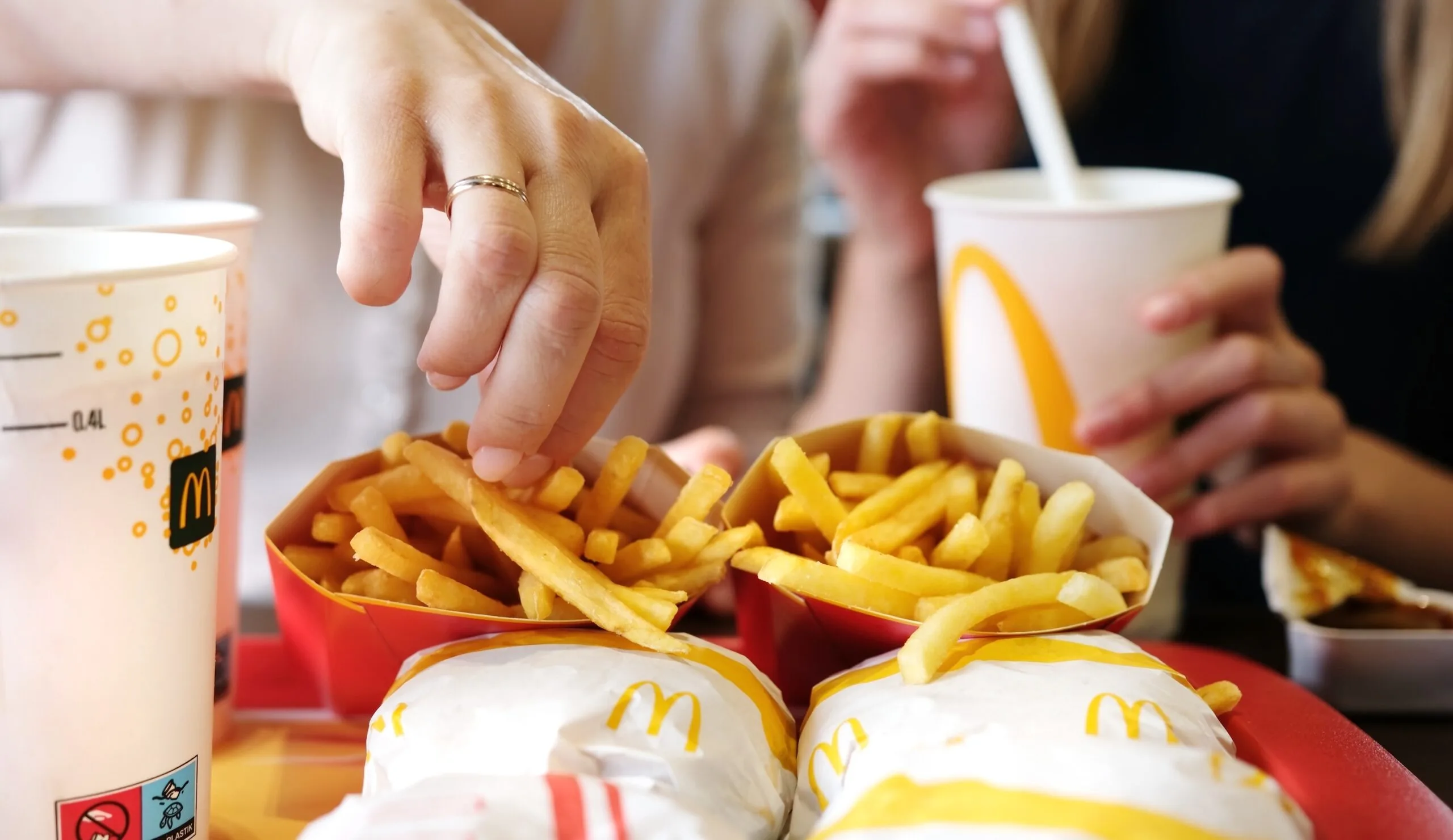
Now McDonald’s is making protein easier to spot, too. Its new “protein callout” badges—currently rolling out across the menu—reflect how many people are trying to make protein a more intentional part of everyday eating.
The research backs up why protein is worth paying attention to: Higher-protein meals can support fullness, help preserve muscle during weight loss, and may make it easier to manage overall calorie intake.
So the spirit of what McDonald’s is doing makes sense. But does a protein badge tell you everything you need to know? Not quite. Here’s the full nutrition picture for every currently badged item—saturated fat, sodium, calories, and all.
What are McDonald’s protein badges?
Starting in April 2026, McDonald’s began rolling out yellow badges labeled with a protein gram count in its app and on in-store kiosks. The rollout is still underway: 11 items are currently badged on the McDonald’s website and app, with the company stating that the program will ultimately cover 17 menu items.
There aren’t any new menu items; the badges are meant to make protein amounts more visible where many people order.
McDonald’s emphasizes that it already has more than 30 menu items with 15 grams or more of protein. Below are the items currently showing protein callouts on the public menu, along with key nutrition numbers to help put the badges in context. Because the rollout is still in progress, the McDonald’s app may have the most up-to-date list.
Which McDonald’s items have a protein badge?
Here are the 11 items currently displaying protein badges on the McDonald’s website, along with a glance at their nutrition info. As the rollout continues, additional items may be added.
Breakfast Menu
| Menu item | Calories | Protein | Total fat | Sat. fat | Sodium |
|---|---|---|---|---|---|
| Egg McMuffin | 310 | 17g | 13g | 5g | 790mg |
| Sausage Burrito | 310 | 13g | 17g | 7g | 800mg |
Lunch and dinner menu
| Menu item | Calories | Protein | Total fat | Sat. fat | Sodium |
|---|---|---|---|---|---|
| 3-pc McCrispy Strips | 350 | 30g | 17g | 3g | 1,060mg |
| 10-pc Chicken McNuggets | 410 | 23g | 24g | 4g | 790mg |
| McDouble | 390 | 22g | 20g | 8g | 920mg |
| Spicy Snack Wrap | 380 | 17g | 21g | 6g | 920mg |
| Ranch Snack Wrap | 390 | 17g | 22g | 6g | 900mg |
| Filet-O-Fish | 380 | 16g | 18g | 4g | 580mg |
| Cheeseburger | 300 | 15g | 13g | 6g | 750mg |
| 6-pc Chicken McNuggets | 250 | 14g | 15g | 2.5g | 470mg |
| 4-pc Chicken McNuggets* | 170 | 9g | 10g | 1.5g | 340mg |
*Shown on the Happy Meal menu; nutrition reflects the nuggets portion only, not the full Happy Meal.
McDonald’s protein menu: Calories, saturated fat, and sodium
A badge showing 17 grams or 30 grams of protein is helpful, but it’s still only one number. Protein can tell you whether a meal may be more filling, but it doesn’t tell you the full story on calories, saturated fat, sodium, or how that order fits into the rest of your day.
Here’s how to look at the bigger picture.
Is the protein count meaningful?
Yes—but the number works best when you read it alongside the rest of the nutrition facts.
For many adults, 15 to 30 grams of protein at a meal can help support fullness and muscle maintenance, especially if you’re trying to lose weight or avoid grazing later. Several of the items McDonald’s highlights fall in that range, including:
- Egg McMuffin: 17 grams of protein
- 10-piece Chicken McNuggets: 23 grams of protein
- McDouble: 22 grams of protein,
- Filet-O-Fish: 16 grams of protein
- 3-piece McCrispy Strips: 30 grams of protein
What matters next is what other nutrients come along with it. Some deliver solid protein, but also come with more saturated fat, sodium, or more calories than you might expect. That’s why leaner protein choices—or items with a better protein-to-calorie balance—tend to stand out.
What about saturated fat?
Saturated fat is where the bigger picture matters. The American Heart Association recommends keeping saturated fat to about 6% of daily calories, which works out to roughly 13 grams per day on a 2,000-calorie diet.
A few protein-forward McDonald’s items can use up a meaningful share of that daily amount in one meal. Here are some of the higher ones on the list:
- McDouble: 8 grams
- Sausage Burrito: 7 grams
- Ranch Snack Wrap: 6 grams
- Spicy Snack Wrap: 6 grams
- Cheeseburger: 6 grams
That doesn’t make any of these items off-limits. It just means they’re worth factoring into your day.
What about sodium?
Sodium is another place where fast food can add up quickly. The FDA recommends keeping sodium under 2,300 milligrams per day for most adults.
Several of the higher-protein items provide a large portion of that amount in one order:
- 3-piece McCrispy Strips: 1,060 milligrams of sodium
- Spicy Snack Wrap: 920 milligrams of sodium
- McDouble: 920 milligrams of sodium
- Ranch Snack Wrap: 870 to 900 milligrams of sodium
These numbers aren’t unusual for fast food, but worth considering if you’re watching your sodium level.
McDonald’s protein items: More balanced options
A few items stand out when you look beyond protein and also factor in saturated fat, sodium, and calories. One thing to keep in mind: Most McDonald’s menu items are low in fiber, which means they may not keep you full as long as a meal built around vegetables, beans, fruit, or whole grains. But that doesn’t mean they’re off-limits. As an occasional option, a higher-protein McDonald’s order can fit into a balanced eating pattern—especially if you pair it with more fiber-rich foods later in the day.
Egg McMuffin
Nutrition: 310 calories | 17 grams protein | 5 grams saturated fat | 790 milligrams sodium
This is one of the more balanced breakfast picks. The egg, Canadian bacon, and cheese provide protein from a few different sources, and the English muffin keeps it more moderate than many fast-food breakfast sandwiches. The sodium isn’t low, but the overall package is reasonable.
Filet-O-Fish
Nutrition: 380 calories | 16 grams protein | 4 grams saturated fat | 580 milligrams sodium
This is one of the lower-sodium, lower-saturated-fat options among the highlighted items. It also brings fish into the mix, which can offer some omega-3 fats—something you won’t get from beef or chicken options. It’s not the highest-protein item, but it’s one of the more balanced choices.
3-piece McCrispy Strips
Nutrition: 350 calories | 30 grams protein | 3 grams saturated fat | 1,060 milligrams sodium
This is the strongest protein-per-calorie option on the list. The tradeoff is sodium: 1,060 milligrams is a significant amount for one order. If protein is your main priority and the rest of your day is lower in sodium, this can still be a practical choice.
What swaps can make these items a little lighter?
Across the current list of McDonald’s protein-badged items, the easiest way to lighten things up is to keep the protein source the same and adjust what comes with it—cheese, sauce, dipping sauce, drinks, or sides. That way, you’re not giving up the part that helps make the meal more filling, but you can still reduce calories, saturated fat, sodium, or added sugar.
Small adjustments can make a difference without taking away the protein.
- For the McCrispy Strips, choose a lighter dipping sauce when you can. Mustard or Buffalo sauce will usually add fewer calories than creamy sauces like ranch or honey mustard.
- For the Egg McMuffin, ordering it without cheese can reduce saturated fat by about 2 grams and save roughly 50 calories, while still leaving you with a solid protein base from the egg and Canadian bacon.
- For options like the Cheeseburger or Filet-O-Fish, pair the meal with water, unsweetened iced tea, or black coffee instead of a sweetened drink. Drinks can add calories and sugar quickly without making the meal much more filling.
- Between the two Snack Wraps, the Ranch Snack Wrap is slightly lower in sodium than the Spicy Snack Wrap, depending on current nutrition listings. But both are still relatively high in sodium, so the difference is modest. To make either one a little lighter, ask for extra lettuce and tomato to add more volume and freshness, and skip the sauce if you want to cut back on calories, sodium, and saturated fat. It won’t turn the wrap into a high-fiber meal, but it can make it feel a little more balanced.
Is the protein badge a useful health signal?
Yes and no—and both parts are worth saying clearly.
On the useful side, the badges make it easier for people who are actively trying to get enough protein. If you’re at McDonald’s and trying to choose something more filling without opening a separate nutrition calculator, a visual cue in the app can help. That can be especially useful for people who have a harder time getting enough protein during the day, including some people taking GLP-1 medications, since reduced appetite can make it harder to meet protein needs during weight loss.
On the incomplete side, a protein badge is not the same thing as a full nutrition check. It doesn’t tell you how much saturated fat, sodium, or total calories an item has, and it doesn’t speak to overall ingredient quality.
An item can be high in protein and still be high in sodium or saturated fat. So, treating the badge as a broad “healthy choice” label would be reading more into it than the badge actually says.
The most practical approach: Use the badge as a shortcut, not the final answer. Let it narrow your options, then check the full nutrition panel in the McDonald’s app or on mcdonalds.com for the item you’re considering. That extra 30 seconds gives you the bigger picture.
Access GLP-1 Weight Loss with Noom
Explore a wide range of prescription medications supported by Noom’s program.Microdose GLP-1rx
Noom GLP-1rx
Noom GLP-1rx Plus
Wegovy®
Ozempic®
Metformin
Zepbound®
Mounjaro®
Liraglutide
Why are some high-protein items missing a badge?
This is where it gets a little confusing. McDonald’s says the new protein callouts appear on 17 select menu items, but it also says more than 30 menu items have at least 15 grams of protein. That means the badge list is not the same thing as a complete list of every high-protein item on the menu.
For example, some burgers may have plenty of protein but also come with more calories, saturated fat, or sodium. The Double Quarter Pounder with Cheese has far more protein than many badged items, but it also has much higher saturated fat and calories than most of the items McDonald’s chose to highlight.
McDonald’s hasn’t publicly shared the exact criteria for which items received badges. So the safest read is this: The badges are a helpful shortcut, not an independent nutrition standard. They can point you toward higher-protein choices, but it’s still worth checking the full nutrition facts—especially saturated fat, sodium, and calories—before deciding what fits your goals.
Frequently asked questions about McDonald’s protein badges
Why doesn’t the Quarter Pounder have a protein badge if it has 30 grams of protein?
McDonald’s hasn’t published its exact badge selection criteria, so there isn’t an official answer. But protein may not be the only factor.
The Quarter Pounder with Cheese has about 30 grams of protein, but it also has 26 grams of total fat, 12 grams of saturated fat, and 1,140 milligrams of sodium. The Double Quarter Pounder with Cheese has even more protein—48 grams—but also has 42 grams of total fat, 20 grams of saturated fat, and 1,360 milligrams of sodium. The saturated fat and sodium amounts in both are more than most people need in a day.
So, it’s possible McDonald’s chose to badge items that look more balanced across several nutrition categories—not just the highest-protein items. But since McDonald’s hasn’t shared the criteria, that’s still an educated guess.
Are McDonald’s protein badge items good for weight loss?
They can be, depending on the item and the rest of your day.
Protein is useful for weight management because it helps with fullness and can make it easier to eat fewer calories overall. But a protein badge doesn’t automatically make something a “weight-loss food.” Some badged items are also high in sodium, saturated fat, or calories.
The item itself usually isn’t the issue—context is. An Egg McMuffin as part of a balanced breakfast or a 3-piece McCrispy Strips order with water can fit into a weight-loss plan. A higher-protein item paired with large fries and a sweetened drink may be harder to work into your goals. The smartest move is to use the badge as a starting point, then check the full nutrition panel.
How much protein do you actually need per meal?
For many adults, a good target is roughly 20 to 40 grams of protein per meal, though your needs depend on body weight, age, activity level, and goals.
Many McDonald’s protein-badged items fall within or close to that range. For example, the Egg McMuffin has 17 grams of protein, the Filet-O-Fish has 16 grams of protein, the McDouble has 22 grams of protein, and the 3-piece McCrispy Strips have 30 grams of protein.
If you’re trying to lose weight, preserve muscle, or you’re eating smaller portions because of a GLP-1 medication, getting enough protein may matter even more. That doesn’t mean every meal needs to be perfect, but it does make protein a helpful number to pay attention to.
Are these items good for people on GLP-1 medications?
They can be useful in the right context. People taking GLP-1 medications often feel full sooner and may eat smaller portions, which can make it harder to get enough protein. Since protein helps support muscle maintenance during weight loss, a clear protein callout can make ordering easier.
That said, fast-food protein often comes with trade-offs, especially sodium and saturated fat. Among the badged items, options like the Egg McMuffin, Filet-O-Fish, and 3-piece McCrispy Strips offer a solid protein amount without being the highest-saturated-fat choices on the list.
If you’re on a GLP-1 and struggling to meet protein goals, it’s worth talking with a healthcare provider or registered dietitian about what target makes sense for you.
What McDonald’s item has the most protein?
The Double Quarter Pounder with Cheese has the most protein on the McDonald’s menu, with 48 grams of protein. But it does not appear to be one of the protein-badged items.
It’s also a heavier nutrition package overall: 740 calories, 42 grams of total fat, and 20 grams of saturated fat. If your goal is protein efficiency, the 3-piece McCrispy Strips are a stronger pick among the badged items, with 30 grams of protein, 350 calories, and 3 grams of saturated fat.
The bottom line: McDonald’s protein badges are helpful—but they’re not a “healthy” label
McDonald’s protein badges are a useful step toward nutrition transparency. Making protein content visible in the app and at the kiosk gives people a faster way to make intentional choices, especially if they’re actively trying to get more protein.
But protein is one number, not a full nutrition label. Some badged items are more balanced than others, while some come with saturated fat and sodium levels worth checking before you order. And because the rollout is still new, it’s smart to check the McDonald’s app directly for the most current list and full nutrition details.
Protein matters—for fullness, muscle support, and weight management—but building balanced meals is the bigger habit that can move someone toward a healthier lifestyle over time. If you’re looking for more healthy habit strategies, explore the Noom app on iOS & Android. Noom focuses on building awareness around your habits and food choices. When you understand how different foods affect your hunger, satisfaction, and habits, you can make choices that feel balanced—and build changes that last.
Editorial standards
At Noom, we’re committed to providing health information that’s grounded in reliable science and expert review. Our content is created with the support of qualified professionals and based on well-established research from trusted medical and scientific organizations. Learn more about the experts behind our content on our Health Expert Team page.