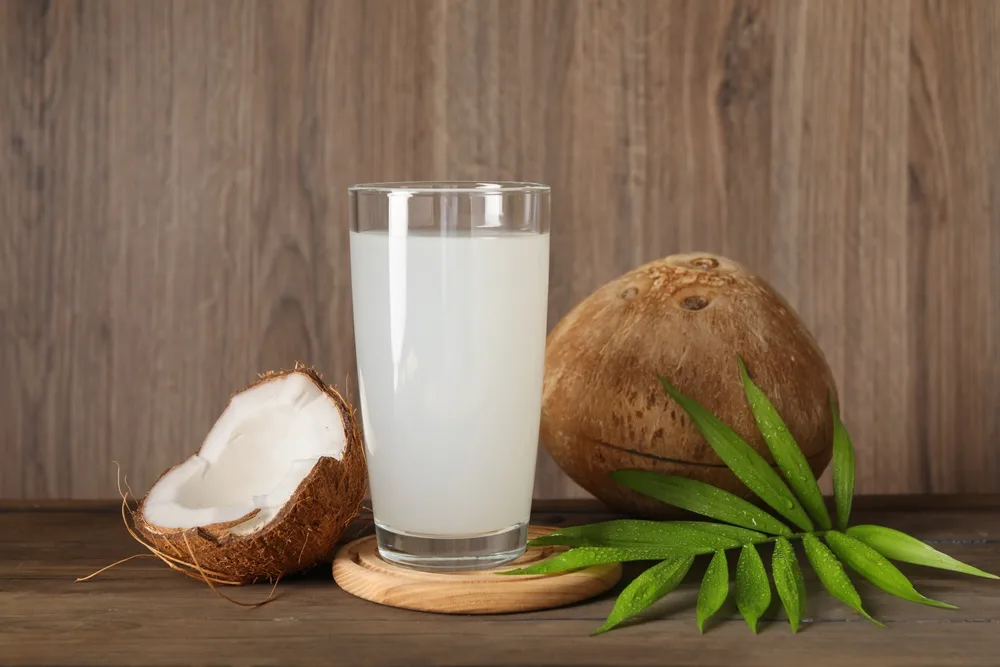
Coconut water has developed a bit of a health halo over the years. You’ll find it everywhere from gym bags to smoothie recipes, often promoted as a natural alternative to sports drinks because it contains naturally occurring electrolytes like potassium and magnesium.
But when it comes to weight loss, does coconut water actually deserve the hype? Some of it. It can be a helpful choice because it can help you stay hydrated and replenish electrolytes like potassium and magnesium after exercise. And its mild sweetness may satisfy the desire for something flavorful without a lot of calories.
Before you stock up, it’s worth taking a quick look at the label. The amount of sugar and calories can vary from one brand to another, and flavored versions often contain added sugars that change the nutrition profile considerably.
Here’s what the nutrition says, how coconut water fits into a weight-loss plan, and what to look for when choosing a coconut water.
✅ Quick answer
Yes. Coconut water is low in calories, naturally fat-free, and packed with electrolytes that support hydration. It’s can be a smart swap for higher-calorie drinks.

The Easy Way
to lose weight and get healthy.
See if you qualify
🚀 Weight-loss benefits
- Coconut water is very low in calories – At about 60 calories per standard 11-ounce bottle, coconut water is one of the lighter flavored beverages on the shelf. Swapping a soda, juice, or sports drink for coconut water can save 100 to 200 calories per serving, depending on what you’re replacing.
- Coconut water has electrolytes that can help keep you hydrated – Coconut water provides potassium, magnesium, and other electrolytes that help replace fluids and minerals lost through sweat. That’s one reason it’s often used as a natural alternative to traditional sports drinks.
- Can help make healthy habits feel easier – The best weight-loss habits are the ones you can stick with. If you like the taste and reach for coconut water instead of a higher-calorie beverage, it can support your overall efforts without feeling restrictive.
⚠️ Things to be mindful of
- Contains natural sugars – A standard 11-ounce bottle of coconut water contains about 9 grams of naturally occurring sugar. That’s considerably less than many juices and sports drinks, but it’s still worth considering if you’re monitoring your carbohydrate intake or blood sugar. Flavored varieties may contain added sugars, so it’s always a good idea to check the label.
- Won’t keep you full – Coconut water contains little protein and no fiber, two nutrients that help support satiety. While it can be a refreshing beverage, it’s unlikely to curb hunger the way a balanced snack or meal would.
- Calories can add up – Coconut water is relatively low in calories, but those calories still count. Drinking multiple bottles throughout the day can contribute a meaningful amount of sugar and calories, especially if you’re also consuming other caloric beverages. Treat it as a hydration option rather than a replacement for water.
🥗 Nutrients in coconut water (per standard 11-ounce bottle)
| Nutrient | Amount | % RDA* |
|---|---|---|
| Calories | 63 calories | 3% |
| Protein | 2.3 g | 5% |
| Total carbs | 12.2 g | 4% |
| Fiber | 0 g | 0% |
| Sugars | 8.6 g | — |
| Total fat | 0.7 g | 1% |
| – Saturated fat | 0.1 g | <1% |
| – Monounsaturated fat | 0.0 g | — |
| – Polyunsaturated fat | 0.3 g | — |
| Omega-3 | 0.0 g | — |
| Omega-6 | 0.3 g | — |
At about 60 calories per standard 11-ounce bottle, coconut water contains fewer calories than most juices and sports drinks while still providing a naturally sweet taste. The 12.2 grams of carbohydrates come primarily from naturally occurring sugars, and because coconut water contains no fiber, those sugars are absorbed more quickly than they would be in a whole fruit.
What makes coconut water stand out isn’t its macronutrient profile—it’s the electrolytes. A single bottle provides meaningful amounts of potassium, magnesium, and other minerals that support hydration and fluid balance.
*Recommended dietary allowance (RDA) is defined as the average daily amount of nutrients needed to meet the requirements of nearly all healthy people in a specific group.
💊 Vitamins & minerals in coconut water (per standard 11-ounce bottle)
| Vitamin/Mineral | Amount | % RDA* |
|---|---|---|
| Manganese | 0.46 mg | 20% |
| Magnesium | 82.5 mg | 20% |
| Potassium | 825 mg | 18% |
| Riboflavin (B2) | 0.19 mg | 15% |
| Sodium | 346 mg | 15% |
| Vitamin C | 7.9 mg | 9% |
| Thiamin (B1) | 0.10 mg | 8% |
| Calcium | 79 mg | 6% |
| Vitamin B6 | 0.11 mg | 6% |
| Phosphorus | 66 mg | 5% |
| Iron | 0.96 mg | 5% |
| Zinc | 0.33 mg | 3% |
| Folate | 9.9 µg | 2% |
A standard 11-ounce bottle provides meaningful amounts of several minerals, including about 20% of the average adult’s daily needs for manganese and magnesium and nearly 20% of daily potassium needs. Potassium is especially noteworthy because most Americans don’t get enough of it. Coconut water also contributes smaller amounts of riboflavin, vitamin C, calcium, and other micronutrients, making it more than just flavored water.
🔍 Nutrient breakdown
Glycemic index (GI) of coconut water
Glycemic index: 54 (Moderate)
💡 Tip: Coconut water raises blood sugar at a moderate pace—faster than fiber-rich whole foods, but slower than soda or juice. Pairing it with a protein or fat source helps blunt the blood sugar response. See Noom’s article on insulin sensitivity and weight loss to learn more.
Is coconut water high in protein?
❌ No – 2.3 g per 10-ounce bottle. That’s a small contribution to your daily protein goal and won’t meaningfully support muscle maintenance or satiety on its own.
Is coconut water high in fiber?
❌ No – 0 g of fiber per serving. It offers no digestive fiber benefits and won’t drive fullness or buffer blood sugar the way fiber-rich foods do.
💡 Tip: If you’re drinking coconut water as a snack, pair it with a high-fiber food—like an apple, a small handful of almonds, or some raw veggies—to get the satiety coconut water can’t provide on its own.
Is coconut water low in carbs?
No – 12.2 g of carbs, 10-ounce bottle, mostly from natural sugars. That’s low compared to juice or soda, but not low enough for strict keto approaches where daily carbs are capped at 20 to 50 g.
The Easy Way
to lose weight and get healthy.
See if you qualifyIs coconut water gluten-free?
✔️ Yes – coconut water is naturally gluten-free. It’s simply the liquid from inside young green coconuts, with no grains involved. Check labels on packaged or flavored versions for potential cross-contamination.
Is coconut water good for fat loss?
✔️ Yes, as part of a broader strategy – its low calorie count makes it a smart swap for higher-calorie drinks, one of the easiest levers in a fat-loss plan. Its electrolytes support the kind of active, well-hydrated lifestyle that drives fat loss over time. It’s not a fat burner, but it’s a useful tool in the right routine.
🍽️ Diet compatibility: Which diets include coconut water?
| Diet | ✅/❌ | Why |
|---|---|---|
| Keto | ❌ | At about 12 grams of carbs per standard 11-ounce bottle, coconut water can take up a significant portion of the 20–50 grams of carbs many keto plans allow per day. Some people may be able to fit a small serving into a more liberal low-carb approach, but it is generally not considered keto-friendly. |
| Paleo | ✅ | Coconut water is naturally derived from young coconuts and fits well within Paleo principles that emphasize minimally processed foods. Choose plain varieties without added sugars, flavors, or preservatives when possible. |
| Mediterranean | ✅ | While water remains the primary beverage in the Mediterranean diet, coconut water can fit as an occasional, minimally processed drink. Its potassium and magnesium content may complement an eating pattern rich in fruits, vegetables, legumes, and other nutrient-dense foods. |
| Vegan | ✅ | Coconut water is naturally plant-based and free from animal products. It can be a convenient source of hydration and electrolytes for people following vegan or vegetarian eating patterns. |
| Gluten-free | ✅ | Pure coconut water is naturally gluten-free and suitable for people with celiac disease or gluten sensitivity. If you choose flavored or enhanced varieties, check the label for ingredients and allergen statements. |
Coconut water fits easily into most eating patterns because it’s naturally plant-based, minimally processed, and relatively low in calories. The main exception is strict keto, where the carbohydrate content can use up a substantial portion of the daily carb budget. For most other diets, plain, unsweetened coconut water can be an occasional alternative to juice, soda, or sports drinks.
🌟 Is coconut water healthy? What are the health benefits?
Metabolic health: Is coconut water good for your metabolism?
- Boosts metabolism?
❌ Not directly – Coconut water does not contain compounds known to significantly increase calorie burning or metabolic rate. Its primary benefits are hydration and electrolyte replacement rather than metabolism enhancement. - Improves insulin sensitivity?
⚠️ Limited evidence – Some preliminary studies have explored whether coconut water may influence blood sugar regulation, but the research is still limited. Coconut water contains naturally occurring sugars, so it should not be considered a tool for improving insulin sensitivity. - Effect on fat storage
⚠️ Indirectly supportive – No evidence suggests that coconut water directly affects fat storage or fat burning. However, its relatively low calorie content may make it a useful substitute for higher-calorie beverages, which can support an overall calorie deficit
Cholesterol impact: Does coconut water affect cholesterol levels?
- Does it lower LDL (bad) cholesterol?
⚠️ Not enough evidence – A few animal studies have found reductions in LDL cholesterol and triglycerides with coconut water consumption, but there is very little high-quality research in humans. At this point, there’s not enough evidence to conclude that coconut water meaningfully lowers LDL cholesterol. - Does it raise HDL (good) cholesterol?
⚠️ Not enough evidence – Some early research has suggested potential benefits, but the findings are limited and haven’t been consistently demonstrated in human studies. - Overall impact on heart health
✔️ Potentially beneficial – Coconut water’s strongest cardiovascular benefit is its potassium content. Potassium helps support healthy blood pressure and fluid balance, and most Americans consume less than recommended. While coconut water shouldn’t be viewed as a treatment for heart disease or high cholesterol, it can be part of an overall heart-healthy eating pattern.
💡 Tip: Swapping one sodium-heavy sports drink for coconut water per day can support blood pressure management over time, especially if you’re sodium-sensitive.
Can I have coconut water in a calorie deficit?
✔️ Yes, with confidence – At about 60 calories per standard 11-ounce bottle, coconut water can fit into a calorie deficit for most people. While it does contain naturally occurring sugars and calories, it’s often a lower-calorie choice than juice, soda, specialty coffee drinks, or many sports drinks.
💡 Tip: If you’re looking to reduce calories from beverages, try swapping a daily juice, soda, or sports drink for plain coconut water. Depending on what you’re replacing, that simple change could save 100–200 calories per serving.
Is coconut water rich in antioxidants?
✔️ Yes, modestly – Coconut water contains small amounts of antioxidant compounds, including vitamin C, polyphenols, and plant compounds called cytokinins. These substances help protect cells from oxidative stress, but coconut water is not considered a major source of antioxidants compared with foods such as berries, cocoa, or leafy greens. Fresh coconut water may contain higher levels of these compounds than some processed varieties.
Does coconut water support gut health?
✔️ Modestly – Coconut water doesn’t contain probiotics or significant prebiotic fiber, so it’s not a major gut health driver. That said, staying well-hydrated is foundational to gut function. Think of it as supporting the conditions for good gut health rather than directly promoting it.
Does coconut water support digestion?
✔️ Yes, as part of good hydration – Coconut water’s electrolytes help maintain fluid balance in the intestines, supporting normal bowel function. Some people find it easier on the stomach than plain water or sports drinks, particularly after intense exercise.
Does coconut water help you feel satiated and less hungry?
Satiety level: Low – Coconut water is unlikely to keep you full for long. It contains very little protein and no fiber—two nutrients that play an important role in satiety. While the fluid volume may provide a temporary sense of fullness, it won’t satisfy hunger the way a balanced snack or meal can.
💡 Tip: If you’re drinking coconut water between meals and are hungry, consider pairing it with a source of protein or fiber, such as Greek yogurt, nuts, or fruit, for a more satisfying snack.
Does coconut water help with nighttime cravings?
✔️ Maybe – Coconut water isn’t a proven tool for reducing cravings, but some people may find that its naturally sweet taste makes it a satisfying alternative to higher-calorie evening beverages or desserts. Because it contains calories and sugar, it’s best enjoyed as part of your overall eating plan rather than as a strategy to suppress hunger.
💡 Tip: If you regularly feel hungry at night, a snack that contains protein and fiber is likely to be more satisfying than coconut water alone.
Does coconut water help reduce inflammation?
✔️ Modestly – Coconut water contains compounds with antioxidant and anti-inflammatory properties, including polyphenols and cytokinins. However, most of the research has been conducted in laboratory or animal studies, and it’s unclear whether coconut water has a meaningful effect on inflammation in humans.
Is coconut water beneficial for brain health?
✔️ Indirectly – Coconut water contains electrolytes such as potassium and magnesium that play important roles in nerve function. Its primary brain-health benefit is likely through supporting hydration, since even mild dehydration can affect concentration, alertness, and cognitive performance. However, there is no evidence that coconut water offers unique brain-health benefits beyond those associated with staying hydrated.
Can coconut water improve skin and hair health?
Limited benefits – Coconut water is not a major source of nutrients associated with skin or hair health. But staying hydrated supports overall skin function, and coconut water can contribute to your daily fluid intake. Any potential benefits for skin or hair are likely related to hydration rather than unique properties of coconut water itself
Can coconut water help balance hormones?
❌ No evidence of a direct effect – There is no evidence that coconut water balances hormones or directly affects hormone levels. While coconut water contains vitamins, minerals, and electrolytes that support overall health, it should not be considered a tool for hormone regulation.
💡 Tip: When it comes to hormonal health, factors such as adequate sleep, regular physical activity, stress management, and an overall nutrient-rich eating pattern are likely to have a much greater impact than any single food or beverage.
🍽️ Best ways to drink coconut water for weight loss
- Post-workout hydration – This is where coconut water shines. After moderate exercise, an 11-ounce bottle can help replace fluids and electrolytes lost through sweat, particularly potassium. It can be a lower-calorie alternative to many traditional sports drinks.
- As a replacement for higher-calorie beverages – One of the easiest ways to reduce calories is to rethink what you’re drinking. Swapping juice, soda, sweet tea, or some specialty coffee drinks for plain coconut water can reduce calorie intake while still providing flavor and hydration.
- As a smoothie base – Coconut water can add natural sweetness and electrolytes to smoothies without the calories of fruit juice. Pair it with ingredients that provide protein and fiber—such as Greek yogurt, cottage cheese, fruit, or chia seeds—to create a more balanced and satisfying snack or meal.
Try these coconut water recipes:
- Sunshine Smoothie with Coconut, Clementine and Turmeric – The Kitchn
- Kale, Cucumber and Coconut Water Smoothie – Food52
- Tropical Fruit Breakfast Smoothie – Half Baked Harvest
🥥 Popular coconut water brands reviewed: Nutrition and ingredients
While most coconut waters contain similar amounts of calories and sugar, there can be meaningful differences between brands. Some products contain only coconut water, while others include added vitamin C, flavorings, sweeteners, or coconut water from concentrate. Processing methods can also vary. For example, Harmless Harvest is known for its minimally processed organic coconut water, while products such as Bai Molokai Coconut are coconut-water beverages rather than pure coconut water.
The brands below—including Vita Coco, Harmless Harvest, ZICO, Kirkland Signature, Trader Joe’s, Goya, MOJO, C2O, and Bai—represent some of the most widely available coconut water products in the United States. Comparing calories, sugar, protein, and ingredients side by side can help you identify the option that best fits your goals.
Access GLP-1 Weight Loss with Noom
Explore a wide range of prescription medications supported by Noom’s program.Microdose GLP-1rx
Noom GLP-1rx
Noom GLP-1rx Plus
Wegovy®

Ozempic®

Metformin
Zepbound®
Mounjaro®
Liraglutide

| Brand | Est. calories (per 11 oz*) | Sugar | Key ingredients |
|---|---|---|---|
| Vita Coco Original | 60 | 13 g | Coconut water, less than 1% sugar, vitamin C |
| Harmless Harvest Organic | 70 | 15 g | Organic coconut water |
| ZICO Original | 50 | 11 g | Coconut water |
| Kirkland Signature Organic | 45 | 10 g | Organic coconut water |
| Trader Joe’s Organic Coconut Water | 50 | 11 g | Organic coconut water |
| Goya Coconut Water | 60 | 13 g | Coconut water |
| MOJO Pure Coconut Water | 50 | 11 g | Coconut water |
| C2O Pure Coconut Water | 55 | 12 g | Coconut water |
| Bai Molokai Coconut | 10 | 1 g | Filtered water, erythritol, coconut water concentrate, flavoring |
What stands out? Most plain coconut waters fall within a relatively narrow range for calories and sugar. The biggest differences are often found in the ingredient list. If you’re looking for the least processed option, choose a product with coconut water as the only ingredient. If you’re comparing Vita Coco, Harmless Harvest, ZICO, Kirkland, Trader Joe’s, Goya, MOJO, or C2O, you’ll likely find that serving size, ingredient sourcing, and processing methods vary more than the overall nutrition profile.
Note: Nutrition information has been standardized to approximately 11 ounces to make comparisons easier. Actual calories, sugar, protein, and ingredients may vary slightly by bottle size, flavor, and product formulation.
❓ Frequently asked questions about coconut water and weight loss
How many calories does coconut water have?
A standard 11-ounce bottle of plain coconut water contains about 60 calories. That’s fewer calories than many juices, sodas, and sports drinks, though more than plain water, sparkling water, or unsweetened tea. Flavored or sweetened versions may contain significantly more calories and sugar, so it’s worth checking the nutrition label.
Is coconut water good for losing belly fat?
Coconut water won’t target belly fat specifically—no food or beverage can. However, it may support overall weight-loss efforts when used in place of higher-calorie drinks such as soda, juice, or some sports drinks. Over time, reducing calories from beverages can help support the calorie deficit needed for fat loss.
Can you drink coconut water every day?
Yes. For most people, enjoying a standard 11-ounce bottle of plain coconut water as part of a balanced diet is perfectly reasonable. Because coconut water contains a significant amount of potassium, people with kidney disease or those taking medications that affect potassium levels should check with their healthcare provider before drinking it regularly.
Does coconut water have more sugar than sports drinks?
It depends on the version. Plain coconut water has about 8.6 g of natural sugar per 330 ml. Many sports drinks have more—Gatorade has around 21 g per 330 ml—but low-sugar sports drink versions can be comparable. The key difference is that coconut water’s sugar is naturally occurring and paired with real electrolytes.
Is coconut water better than plain water for weight loss?
It depends on the product. A standard 11-ounce bottle of plain coconut water contains about 9 grams of naturally occurring sugar. Many traditional sports drinks contain more sugar than that, though lower-sugar and zero-sugar versions are also widely available. Comparing nutrition labels is the best way to see how a particular coconut water stacks up against a specific sports drink.
Does coconut water help with bloating?
Possibly. Coconut water is a source of potassium, a mineral that helps regulate fluid balance in the body. For some people, especially those who consume a high-sodium diet, getting enough potassium may help support healthy fluid balance. However, bloating can have many causes, and coconut water is not a guaranteed remedy.
🧠 The bottom line: Coconut water can be part of a weight-loss-friendly eating pattern
A standard 11-ounce bottle of coconut water contains about 60 calories, making it a lower-calorie option than many juices, sodas, and some sports drinks. It also provides electrolytes such as potassium and magnesium, which can be helpful for hydration, especially after exercise.
That said, coconut water isn’t a weight-loss food, metabolism booster, or fat burner. Its biggest advantage is often what it replaces. Choosing plain coconut water instead of higher-calorie beverages can help reduce overall calorie intake while still providing flavor and hydration.
For the best nutritional value, choose plain, unsweetened varieties and pay attention to serving sizes and added sugars. When combined with an overall healthy eating pattern, regular physical activity, and other sustainable habits, coconut water can be a reasonable addition to a weight-loss plan.
📖 Scientific evidence
- Coconut water performed similarly to a sports drink for rehydration after exercise. (Journal of the International Society of Sports Nutrition, 2012) In a small study of exercise-trained men, coconut water was as effective as a carbohydrate-electrolyte sports drink for rehydration after exercise. Some participants also reported less nausea and stomach discomfort when drinking coconut water, though larger studies are needed to confirm these findings.
- Coconut water consumption was associated with lower blood pressure in a small study of people with hypertension. (West Indian Medical Journal, 2005) In a small study of adults with high blood pressure, participants who consumed coconut water experienced reductions in blood pressure over the study period. Researchers suggested the effect may be related to coconut water’s potassium content, though larger studies are needed to confirm these findings.
- Coconut water contains antioxidant compounds, including cytokinins and polyphenols. (Molecules, 2009) A review of coconut water’s composition identified several naturally occurring compounds with antioxidant properties, including cytokinins, polyphenols, and vitamin C. However, coconut water isn’t considered a major source of antioxidants compared with foods like berries, cocoa, or leafy greens.
- A recent review highlighted coconut water’s potential role in metabolic and cardiovascular health. (Foods, 2025) Researchers reviewed the available evidence on coconut water’s nutritional composition and biological activities. The review identified potential antioxidant, anti-inflammatory, blood-pressure-supporting, and cardioprotective effects, while noting that more human research is needed to better understand these benefits.
Editorial standards
At Noom, we’re committed to providing health information that’s grounded in reliable science and expert review. Our content is created with the support of qualified professionals and based on well-established research from trusted medical and scientific organizations. Learn more about the experts behind our content on our Health Expert Team page.