What you’ll learn:
- Brami Protein Pasta uses lupini beans as the base to deliver about 21 grams of protein and 9 grams of fiber per serving.
- Brami has roughly 70% more protein, three times more fiber, and about 25% fewer carbs than traditional pasta.
- It’s not a weight loss food, but it can be used to help increase satiety and fullness.
Pasta is one of those food that always seems to be getting a healthier makeover. Grocery shelves are now packed with high-protein, high-fiber, and lower-carb options made from everything from chickpeas and lentils to edamame and konjac root. Some deliver on their nutrition claims but don’t taste much like traditional pasta. Others rely on protein powders or long ingredient lists to boost their numbers.
Brami’s approach is different from many other protein pasta brands. Rather than replacing wheat entirely or relying on protein isolates, the company combines traditional durum wheat semolina with lupini beans, a Mediterranean legume that’s naturally rich in protein and fiber.
So does that actually make it healthier? Is it a good option if you’re trying to eat more protein or lose weight? And is it worth paying more than traditional pasta?
We’ll break down what’s in Brami Protein Pasta, how its nutrition compares with regular pasta and other high-protein pastas, and whether it’s a smart addition to your grocery cart.
What is Brami Protein Pasta?
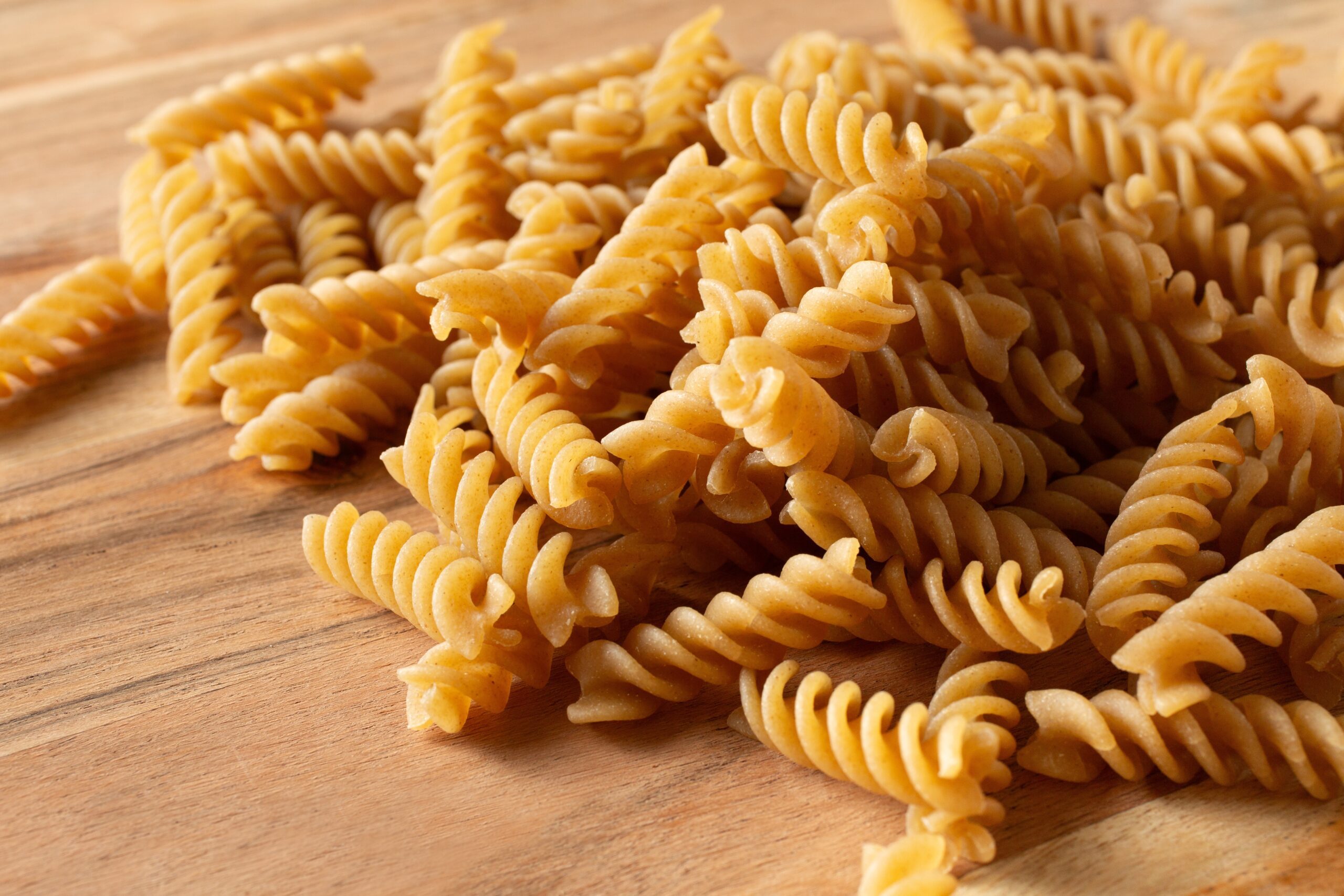
Brami Protein Pasta is a high-protein pasta made from just two ingredients: Italian durum wheat semolina and lupini beans. It’s made in Italy by Brami, a U.S.-based company that first became known for its packaged lupini bean snacks before expanding into pasta.
Durum wheat is the traditional wheat used to make dried Italian pasta. It’s milled into semolina, a coarse flour that gives pasta its firm texture and chewy bite after cooking. In Italy, dried pasta must be made from durum wheat semolina, making it the standard ingredient in classic Italian pasta.
Instead of replacing wheat entirely—as many bean-based pastas do—Brami combines semolina with lupini beans, a Mediterranean legume that’s naturally high in protein and fiber. The pasta is available in several familiar shapes, including spaghetti, penne, fusilli, radiatori, curly mac, and cubetti, so it can be used much like traditional pasta.
But what exactly are lupini beans, and why are they showing up in more high-protein foods? Let’s take a closer look.
What are lupini beans—and why are they making headlines?
Lupini beans are a type of legume that have been eaten throughout the Mediterranean for thousands of years. They’re related to chickpeas, lentils, peanuts, and soybeans, but until recently were relatively uncommon in the U.S.
Interest in lupini beans has grown because they have an unusual nutrition profile. Compared with many other legumes, they’re naturally high in protein and fiber while being relatively low in digestible carbohydrates. Much of the carbohydrate in lupini beans comes from fiber rather than starch, which is why whole lupini beans are sometimes marketed as having very low—or even zero—net carbs.
Those same qualities have made lupini beans an increasingly popular ingredient in higher-protein foods, including snacks, flours, and pasta. Research suggests that lupini beans and foods made from them may help increase fullness and support heart and metabolic health, although much of the research has focused on whole lupini beans or lupini bean flour rather than protein pasta specifically.
In Brami Protein Pasta, lupini beans are blended with durum wheat semolina rather than replacing wheat entirely. That means the finished pasta still contains carbohydrates from the wheat, even though it provides substantially more protein and fiber than traditional pasta.
How does Brami Protein Pasta compare to traditional wheat flour pasta?
At first glance, Brami Protein Pasta looks a lot like traditional pasta, and that’s probably the point. The biggest differences aren’t the calories—they’re the protein, fiber, and carbohydrate content. By replacing some of the semolina with lupini beans, Brami shifts the nutritional profile without completely changing what the pasta is.
Here’s how the two compare per 3.5-ounce (100-gram) dry serving:
| Nutrient | Brami Protein Pasta | Regular Durum Pasta |
|---|---|---|
| Calories | 360 | 370 |
| Protein | 21 g | 13 g |
| Dietary Fiber | 9 g | 3 g |
| Total Carbohydrates | 56 g | 75 g |
| Net Carbohydrates | 47 g | 72 g |
Three differences stand out.
Brami contains considerably more protein than standard pasta
Traditional durum wheat pasta naturally contains protein from wheat gluten, providing about 13 grams per 100-gram dry serving. Brami increases that to 21 grams by incorporating lupini beans, boosting the protein content by more than 50%.
While most people think of pasta primarily as a source of carbohydrates, the additional protein may make it easier to reach daily protein goals, particularly for people trying to preserve muscle during weight loss.
Brami has much more fiber
The biggest nutritional difference may actually be the fiber.
Traditional pasta is made from semolina, a refined flour produced after much of the wheat’s bran and germ have been removed. That process creates the firm texture people expect from pasta, but it also lowers the fiber content.
Because lupini beans are naturally rich in fiber, Brami provides about three times as much fiber as traditional pasta. Since most adults don’t meet the recommended daily fiber intake, that can be a meaningful nutritional advantage.
It’s not lower in calories—just different
One of the biggest misconceptions about protein pasta is that it’s significantly lower in calories. That’s not the case here.
A serving of Brami contains about the same number of calories as traditional pasta. Instead, it changes where those calories come from by replacing some of the refined starch with protein and fiber. It also contains fewer total and net carbohydrates than traditional pasta, though it’s still a carbohydrate-containing food because it’s made with durum wheat semolina.
That shift in nutrients may help some people feel fuller after eating, since both protein and fiber are associated with greater satiety than refined carbohydrates alone.
How does Brami Protein Pasta compare with other high-protein pastas?
Brami isn’t the only pasta that boosts protein and fiber. Over the past decade, brands have taken several different approaches to creating higher-protein pasta. Some replace wheat entirely with legumes like chickpeas, lentils, or edamame, while others combine wheat with naturally protein-rich ingredients, as Brami does with lupini beans.
Those different approaches lead to meaningful differences in nutrition, ingredients, and how closely the finished product resembles traditional pasta.
Here’s how Brami compares with several widely available protein pasta brands per 3.5-ounce (100-gram) dry serving:
| Pasta | Calories | Protein | Fiber | Net Carbs | Ingredients |
|---|---|---|---|---|---|
| Brami Protein Pasta | 360 | 21 g | 9 g | 47 g | Durum wheat semolina, lupini beans, water |
| Banza (chickpea) | 340 | 23 g | 8 g | 48 g | Chickpeas, tapioca, pea protein, xanthan gum |
| Tolerant (red lentil) | 300 | 25 g | 11 g | 42 g | Organic red lentil flour |
| Explore Cuisine (edamame) | 330 | 42 g | 23 g | 12 g | Organic edamame bean flour (green soybeans) |
| Durum pasta | 370 | 13 g | 3 g | 72 g | Durum wheat semolina |
The bean-only pastas—made from chickpeas, lentils, or edamame—generally provide the most protein and fiber because they’re made almost entirely from legumes. Edamame pasta stands out in particular, with about twice as much protein and considerably more fiber than Brami.
The ingredient lists also vary. Red lentil and edamame pastas are typically made from a single ingredient, while chickpea pastas often include ingredients like tapioca, pea protein, or xanthan gum to improve texture and help the pasta hold together during cooking.
Rather than replacing wheat entirely, Brami blends durum wheat semolina with lupini beans. Compared with traditional pasta, that increases the protein and fiber while reducing the amount of refined starch. Compared with bean-only pastas, it provides more moderate amounts of protein and fiber while retaining wheat as the primary ingredient.
Which pasta is the healthiest depends on what you’re looking for. If your goal is maximizing protein or fiber, a bean-only pasta may be the better choice. If you prefer a pasta that’s made with wheat but still provides more protein and fiber than traditional noodles, Brami offers another option.
Is Brami Protein Pasta good for weight loss?
Yes, it can be. But it’s not because it’s dramatically lower in calories or carbohydrates than traditional pasta.
A serving of Brami contains about the same number of calories as regular pasta, so simply swapping one for the other isn’t likely to lead to weight loss on its own. Regardless of where those calories come from, maintaining a calorie deficit is still what drives weight loss.
Where Brami may have an advantage is in its higher protein and fiber content. Compared with traditional pasta, it provides substantially more of both nutrients, which can help increase fullness and make meals more satisfying. For some people, that can make it easier to stick to a calorie deficit over time.
Protein also supports weight loss in another important way. Eating enough protein while you’re in a calorie deficit helps preserve lean muscle mass, which is important for maintaining strength, physical function, and a healthy metabolism as you lose weight.
Portion size still matters, though. Even a higher-protein pasta can make it harder to maintain a calorie deficit if you’re eating more than your body needs.
Access GLP-1 Weight Loss with Noom
Explore a wide range of prescription medications supported by Noom’s program.Microdose GLP-1rx
Noom GLP-1rx
Noom GLP-1rx Plus
Wegovy®
Ozempic®

Metformin
Zepbound®

Mounjaro®
Liraglutide
It’s also worth remembering that pasta is rarely eaten by itself. The nutritional value of the meal depends just as much on what you pair it with. Serving Brami with vegetables, beans, seafood, or another lean protein creates a more balanced meal that’s higher in protein, fiber, and overall nutrition.
Brami Protein Pasta isn’t a weight-loss food, but it can be a nutritious swap if you’re looking for an easy way to eat more protein and fiber while still enjoying pasta. As part of an overall healthy eating pattern and calorie deficit, it can fit well into a weight-loss plan.
Brami Protein Pasta: Allergens and who should be cautious
Brami Protein Pasta has a short ingredient list, but it isn’t the right choice for everyone.
- People with celiac disease or a wheat allergy: Brami contains durum wheat semolina, so it isn’t gluten-free and should be avoided by anyone with celiac disease or a wheat allergy. People with non-celiac gluten sensitivity may also find that it triggers symptoms.
- People with peanut or other legume allergies: Lupini beans are legumes, and allergic reactions have been reported in some people with peanut allergies because the proteins can be similar enough to cause cross-reactivity. Although not everyone with a peanut or legume allergy will react to lupini beans, it’s best to talk with your healthcare provider or allergist before trying foods that contain them.
- People increasing their fiber intake: A serving of Brami provides 9 grams of fiber, which is considerably more than traditional pasta. If you’re used to eating a low-fiber diet, adding a large amount of fiber all at once may cause bloating, gas, or other digestive discomfort. Increasing your fiber intake gradually and drinking plenty of water can help your digestive system adjust.
FAQs about Brami Protein Pasta
Is Brami Protein Pasta healthy?
It can be. Compared with traditional pasta, Brami provides more protein and fiber while containing fewer refined carbohydrates. It’s also made with a short ingredient list that includes durum wheat semolina and lupini beans rather than protein isolates.
Whether it’s a healthy choice depends on your overall eating pattern. Pairing it with vegetables, lean protein, and a balanced sauce is likely to have a bigger impact on the nutritional quality of your meal than the pasta alone.
What does Brami Protein Pasta cost?
Brami Protein Pasta is priced similarly to many premium boxed pastas and is generally less expensive than some other high-protein options. A single 12-ounce box typically costs about $3 to $3.50, although prices vary by retailer and sales.
Larger multipacks can bring the per-box cost down even further. For example, Costco has sold Brami in multi-box packages, while warehouse clubs and online retailers occasionally offer bulk discounts.
Compared with other protein pastas, Brami falls on the more affordable end of the spectrum. Many brands made from chickpeas, lentils, or other legumes typically cost $4 to $6 per box, though prices vary depending on the retailer and package size.
If you’re trying to decide whether it’s worth the price, the biggest difference isn’t the calorie count—it’s the nutritional profile. Compared with traditional pasta, Brami provides more protein and fiber in a similar serving size, so whether it’s a good value depends on whether those benefits are important to you.
Does Brami Protein Pasta taste like regular pasta?
Because Brami contains both durum wheat semolina and lupini beans, many people find it closer in texture to traditional pasta than bean-only pastas, although taste and texture preferences are subjective.
What is the healthiest brand of protein pasta?
There’s no single healthiest protein pasta. The best choice depends on your dietary needs and preferences.
Some brands are made entirely from legumes, making them gluten-free and very high in protein and fiber. Others combine wheat with legumes, as Brami does, to provide more protein and fiber than traditional pasta while retaining characteristics of conventional wheat pasta.
Rather than focusing on the brand name, compare the nutrition facts and ingredient list to find a product that fits your goals.
Does Costco carry Brami Protein Pasta?
Yes. Brami Protein Pasta is available at Costco, along with many other major retailers and online stores. Availability may vary by location.
Is protein pasta actually healthy?
It depends on the product. Protein pastas vary widely in their ingredients and nutrition.
Some are made from whole-food ingredients such as beans or lentils, while others use protein concentrates or isolates to increase the protein content. Looking beyond the protein claim on the front of the package and reviewing the full nutrition facts and ingredient list can give you a better picture of how one product compares with another.
Is Brami Protein Pasta gluten-free?
No. Brami Protein Pasta contains durum wheat semolina, so it isn’t suitable for people with celiac disease or a wheat allergy.

The Easy Way
to lose weight and get healthy.
See if you qualify
The bottom line: Brami Protein Pasta adds more than just protein
If you’re looking for a pasta that’s just lower in calories, Brami probably isn’t the answer. A serving contains about the same number of calories as traditional pasta.
Where it differs is in its nutritional profile. By combining durum wheat semolina with lupini beans, Brami provides more protein and fiber than traditional pasta while containing fewer refined carbohydrates. Compared with bean-only pastas made from lentils or edamame, it offers more moderate amounts of protein and fiber but remains a wheat-based pasta.
Whether it’s the right choice depends on what you’re looking for. If your goal is to maximize protein or fiber, a bean-only pasta may be a better fit. If you enjoy traditional pasta and want an option with more protein and fiber without completely replacing wheat, Brami is one option worth considering.
At Noom, that’s exactly the philosophy we encourage. Rather than labeling foods as “good” or “bad,” Noom helps you understand how different foods affect hunger, fullness, and overall nutrition so you can make informed decisions that fit your goals. Whether you’re trying to lose weight, improve your eating habits, or simply build more satisfying meals, sustainable progress comes from the choices you can keep making.
Editorial standards
At Noom, we’re committed to providing health information that’s grounded in reliable science and expert review. Our content is created with the support of qualified professionals and based on well-established research from trusted medical and scientific organizations. Learn more about the experts behind our content on our Health Expert Team page.