What you’ll learn:
- Most people in a calorie deficit can expect to lose around 1/2 to 2 pounds per week, but your starting point, habits, and biology all influence where you fall in that range.
- Weight loss isn’t linear—early weeks often look dramatically different from month three or month six, and that’s completely normal.
- The biggest factor in how long it takes isn’t your diet, plan, or workout routine—it’s whether you can sustain the changes you’re making.
People make the decision to lose weight for different reasons, such as health, how they look, and to feel better overall. For many, the process comes with a lot of questions. One of the most important is: How long is losing weight going to take?
It’s a fair question—and one that almost everyone asks. Whether you’re looking to lose 5 or 10 pounds or working toward a bigger health goal like 20, 50, or even 100 pounds, knowing what to expect makes the process feel more manageable.
Here’s the answer: it depends. Your starting weight, your daily habits, how your body responds to changes in diet and movement—all of these shape your timeline. But the good news is that there are realistic ranges you can plan around, and understanding them can help you stay motivated instead of frustrated. Whether you’re losing weight with diet and exercise or adding a GLP-1 medication, losing weight that can stay off will take time.
“Weight loss is rarely a straight line,” says Maggie Hudspeth, RDN, Coach Program Manager at Noom. “When people understand that upfront, they’re much better equipped to stick with it through the ups and downs.”
In this article, we’ll break it down by specific goals—from 5 pounds to 50 and beyond—so you can set expectations that actually match reality. Here’s a clear look at what the evidence says and how to make it work for you.

The Easy Way
to lose weight and get healthy.

How long does it take to lose weight: A realistic rate of weight loss
If you’ve searched for answers online, you’ve probably seen the standard guideline: aim to lose about 1 to 2 pounds per week. That recommendation comes from the National Institutes of Health (NIH) and the Centers for Disease Control and Prevention (CDC), and it’s based on creating a daily calorie deficit of roughly 500 to 1,000 calories.
But here’s what that guideline doesn’t always capture: your rate of loss will vary depending on where you’re starting, how much you have to lose, and how your body adapts over time. Someone with more weight to lose may see faster early progress, while someone closer to their ideal body weight may experience a slower pace.
The key isn’t hitting an exact number every week. It’s about maintaining a sustainable pattern over time.
Why the first few pounds come off faster
If you’ve ever started a new eating plan and watched the scale drop several pounds in the first week, you’re not imagining things—but it’s also not primarily fat loss.
When you reduce your calorie intake (especially from carbohydrates), your body taps into its glycogen stores for energy. Glycogen is a form of stored carbohydrate found primarily in your muscles and liver, and here’s the important detail: each gram of glycogen is stored alongside roughly 3 grams of water. When glycogen gets used up, that water gets released too.
The early phase of weight loss—lasting several days to a couple of weeks—is characterized by relatively rapid loss that includes glycogen, water, and a smaller proportion of fat. This is why the scale can move dramatically at first and then slow down. It doesn’t mean your plan stopped working. It means your body is shifting from water loss into the steadier, more meaningful phase of fat loss.
What affects how fast you lose weight?
No two people lose weight at exactly the same rate. Several factors influence your personal timeline:
- Starting weight. People with higher BMIs tend to see faster initial results. As your body gets smaller, your calorie needs decrease, which naturally slows the rate of loss.
- Calorie intake and quality. A moderate calorie deficit—around 500 calories per day—is generally enough to produce about one pound of loss per week. And while, theoretically, a higher deficit can cause more weight loss, going too low can increase fatigue and hunger, which can be hard to maintain.
- Activity level. Regular movement, especially a mix of cardio and strength training, supports fat loss while helping preserve muscle mass.
- Sleep. Sleep plays an important role in appetite regulation and metabolism. Poor sleep has been linked to weight management challenges, while getting 7 to 9 hours per night can support your overall health and weight-loss efforts.
- Stress. Chronic stress elevates cortisol, which can promote fat storage—particularly around the midsection—and make it harder to stick with healthy habits.
- Medications. Some medications can affect appetite, metabolism, or water retention, which may influence how quickly you lose weight. Others may make weight loss more challenging by promoting weight gain or increasing hunger. If you’re concerned that a medication may be affecting your progress, talk with your healthcare provider before making any changes.
How fast can you lose weight safely?
It’s tempting to push for the fastest results possible, but going too fast comes with real downsides. Losing more than about 2 pounds per week consistently can lead to muscle loss, nutrient deficiencies, fatigue, and a higher likelihood of regaining the weight.
A rate of 1 to 2 pounds per week through a calorie deficit of about 500 to 1,000 calories per day, paired with physical activity and behavior changes, is typically recommended. That pace might feel slow, but it’s the range most strongly associated with long-term success.
The real question isn’t how fast can I lose it? It’s how can I lose it in a way I can actually maintain?
Access GLP-1 Weight Loss with Noom
Explore a wide range of prescription medications supported by Noom’s program.
Microdose GLP-1rx

Noom GLP-1rx

Noom GLP-1rx Plus
Wegovy®
Ozempic®

Metformin

Zepbound®
Mounjaro®
Liraglutide
How to stay on track when progress feels slow
When the scale isn’t moving as quickly as you’d like, it’s easy to feel discouraged. But staying motivated during slower periods is where real, lasting change happens.
The key to staying on track with weight loss lies in shifting your focus from daily weigh-ins to the habits you’re building. Research suggests that habits become more automatic through consistent repetition, but the timeline varies widely from person to person. In one study, participants took an average of about 66 days to form a habit, though some habits developed more quickly and others took several months. That’s why patience with the process is such an important part of long-term success.
- Track trends, not daily numbers. Your weight can fluctuate 2 to 5 pounds in a single day due to water retention, sodium intake, digestion, and more. Weekly averages tell a more accurate story.
- Celebrate non-scale wins. Clothes fitting differently, sleeping better, having more energy—these are real signs of progress.
- Focus on what you can control today rather than worrying about long-term timelines.
- Revisit your “why.” As Hudspeth puts it, “When we shift the goal from a specific number to a specific why, we create space for meaningful change.”
- Lean on support. Whether it’s a coach, a friend, or a community like Noom, having someone in your corner makes a difference, especially during plateaus.
Remember that people who maintain weight loss long-term often define success in ways that go beyond the scale. In a study exploring how adults with obesity define success, participants frequently pointed to improved daily functioning, greater freedom to participate in activities, and other non-scale victories as meaningful measures of progress. These habit-focused strategies help you build the foundation for lasting change, even when progress feels slow.
Here’s what realistic timelines look like for losing 5, 10, 20, 30, 50 pounds, and beyond.
How long does it take to lose 5 pounds?
Realistic timeline: 2 to 6 weeks
Five pounds is often the first milestone people aim for, and it’s the one where expectations need the most recalibrating. You might see 5 pounds disappear within the first week or two—but a meaningful portion of that early drop is water, not fat.
A study from the CALERIE trial helps explain why this happens. Early in a calorie-restriction phase, the weight people lose isn’t made up entirely of body fat. A portion comes from glycogen and the water stored alongside it, which can cause the scale to drop more quickly. As those stores are depleted, fat becomes a larger contributor to ongoing weight loss. In other words, the fast results some people see at the beginning don’t necessarily continue at the same pace, but that doesn’t mean fat loss has stopped. It may simply reflect the body moving into a steadier pattern of fat loss.
Here’s a rough breakdown of what’s happening over those first weeks:
| Timeframe | What’s happening |
|---|---|
| Week 1–2 | Glycogen depletion and water loss account for most of the scale drop. You may lose several pounds, but only a fraction is fat. |
| Week 3–4 | Your body transitions to burning more stored fat. The pace slows, but the loss becomes more meaningful. |
| Week 5–6 | In a moderate calorie deficit, you’re likely losing around .5 to 1 pound of fat per week. |
This doesn’t mean early progress isn’t real—but understanding that the initial drop is driven largely by fluid shifts helps you avoid disappointment when the rate naturally slows. That slowdown isn’t a sign something’s wrong. It’s a sign your body has moved past the water-weight phase and is now doing the slower, steadier work of burning fat.
If you set your expectations around sustainable fat loss rather than dramatic early drops, you’ll be much less likely to feel discouraged when the pace normalizes.
How long does it take to lose 10 pounds?
Realistic timeline: 5 to 12 weeks
At the 10-pound mark, you’re moving into territory where fat loss makes up a much larger share of total weight lost. The water weight from the first couple of weeks has passed, and what you’re seeing on the scale now more closely reflects actual changes in body composition. This is where consistency starts to matter more than intensity.
At a rate of 1 to 2 pounds per week, 10 pounds could take as little as 5 weeks. But for many people, especially those with less weight to lose, 8 to 12 weeks is more realistic.
Research on short-term lifestyle programs found that participants generally lost about 6 more pounds over a few months than people who didn’t take part, which shows that steady progress can add up faster than many people expect. For many adults, losing 10 pounds within two to three months is a reasonable timeline when healthy habits are maintained consistently.
The tricky part at this stage is the perception of progress. The transition from early rapid loss to steady fat loss can feel like hitting a wall, even when you’re still making real headway.
The Easy Way
to lose weight and get healthy.
A review of more than 100 studies on weight-loss programs built around behavior changes—healthier eating, increased physical activity, and ongoing support—found that participants consistently lost more weight than those who didn’t take part. The takeaway: meaningful progress often happens gradually, and the habits that produce lasting results aren’t always the ones that generate the fastest changes on the scale.
What helps at this stage:
- Keep logging your food. Research shows a strong positive relationship between diet monitoring and weight loss. Even imperfect tracking keeps you aware.
- Don’t overhaul your entire life. Small, sustainable changes—like swapping chips for air-popped popcorn or choosing grapes instead of cookies for an afternoon snack—compound over time.
- Recalculate your needs. As your body gets smaller, your calorie needs shift. Tools like Noom’s calorie deficit calculator can help you stay in an appropriate range.
Losing 10 pounds is a common, achievable milestone—and one that often comes with noticeable improvements in how you feel, how your clothes fit, and how much energy you have throughout the day.
How long does it take to lose 20 to 40 pounds?
Realistic timeline: 3 to 8+ months
At the 20-to-40-pound mark, weight loss timelines become genuinely individual. Getting here requires sustained effort over several months, and the pace will almost certainly fluctuate along the way.
The research helps set realistic expectations. The Diabetes Prevention Program, one of the largest weight-loss studies ever conducted, set a goal of losing 7% of starting body weight in six months — for many participants, that came out to roughly 14 to 20 pounds. About half of the participants hit that target. What this tells you: losing 20 pounds in roughly six months is achievable, but it’s not guaranteed, and it requires consistency.
A review of 34 studies on behavioral weight management programs found that people following a program consistently lost more weight than those who didn’t — and that those results held up over time. Progress tends to happen gradually, and the window for active loss is often longer than people expect. A plateau along the way doesn’t necessarily mean you’ve hit a wall.
Here’s what a realistic trajectory might look like:
| Goal | Estimated range | Key considerations |
|---|---|---|
| 20 lbs | 3-5 months | Plateaus are common and expected—they’re usually a sign your body is adapting, not that progress has stopped. Reassessing your calorie needs as you lose weight helps keep things moving. |
| 30 lbs | 4-7 months | Adherence becomes the biggest factor. The habits that stick are usually the ones that don’t feel like punishment. |
| 40 lbs | 5-8+ months | Expect phases, not a straight line. Rate of loss often slows, but that’s normal—not a sign something’s wrong. |
At this level, the process is less about any single diet or workout program and more about changing the everyday behaviors that shape your weight. How you eat on a regular Tuesday matters more than what you do during a motivated January.
How long does it take to lose 50 to 100 pounds?
Realistic timeline: 6 to 18+ months
Losing 50 pounds or more is a long-term commitment—and it helps to think of it as a multi-phase process rather than one continuous push. Progress typically comes in stages: a faster early phase, a gradual slowing, and eventual plateaus along the way. That’s not a sign that something is wrong. It’s how the body responds to sustained calorie restriction.
One of the best sources of data on this comes from the Look AHEAD trial, a large, long-term study of adults with obesity that tracked weight loss over several years. Participants in the intensive lifestyle intervention lost an average of around 24 pounds in the first year—roughly 9% of their starting body weight. By year four, they were maintaining about 5% of that initial loss. The pace slowed significantly after year one, but meaningful weight loss was still being maintained years later.
What’s worth noting: participants with a BMI of 40 or higher showed similar adherence and percentage of weight lost as those with lower starting BMIs. A larger goal doesn’t mean a harder time sticking with the process—it just means a longer one.
For anyone aiming to lose 50 pounds or more, the research points in the same direction: significant, lasting weight loss happens over many months. Expecting a straight line will set you up for frustration. Expecting phases—including slower ones—sets you up to keep going.
Why weight loss slows down over time: Hitting a plateau
If you’ve been losing steadily and then hit a slower period—or a few weeks at the same weight—you may be experiencing a plateau. Weight loss plateaus are a common part of the process, and they’re not a sign your plan has stopped working.
Here’s what’s happening: as you lose weight, your body requires fewer calories to function. Your resting metabolic rate decreases, and your body may become more efficient at using energy than your weight loss alone would predict—a process called metabolic adaptation. A study found that the larger the weight loss, the more significant this adaptation tends to become. That gap between expected and actual calorie burn is one of the main reasons progress slows, even when nothing about your habits has changed.
On top of biology, there’s the behavioral side. After months of tracking meals and staying active, motivation can dip. The habits that felt fresh in week one may feel monotonous by month four. That’s normal—and it’s a signal to adjust your approach, not abandon it.
“Plateaus aren’t a sign you’re doing anything wrong,” says Hudspeth. “They’re often a sign that your body is adjusting. It’s a good time to reassess your calorie needs, mix up your routine, or just give yourself grace.”
Staying consistent is usually the right move—and having structured support makes a real difference. Research shows that people with guided support are significantly more likely to maintain weight loss than those going it alone. That’s true whether you’re losing weight through lifestyle changes or with a GLP-1 medication—plateaus are commonly reported by people taking Wegovy® and Zepbound® too. Having ongoing support—like the coaching and daily lessons offered through Noom—can be the difference between pushing through a plateau and giving up on it.
What to keep in mind as you lose weight
No matter where you are in the process — just starting out or deep into a longer journey — a few things tend to hold true across the board.
- Health improvements happen long before you hit your goal weight. Losing even 5% of your body weight can meaningfully reduce your risk of conditions like heart disease and type 2 diabetes. The CDC’s National DPP suggests that a 5 to 7% weight loss reduces diabetes risk by 58%.
- Progress often comes in waves. You may lose steadily for a few months, hit a plateau, break through it, and then hit another. Each wave is part of the process.
- Breaks aren’t setbacks. Planned maintenance periods—where you eat at maintenance calories for a week or two—can actually help reduce metabolic adaptation and support longer-term fat loss.
- Behavior change is the foundation. At this scale, the habits you build matter far more than any specific food plan. Learning to manage stress, get better sleep, and understand your emotional relationship with food is what makes the difference between temporary weight loss and lasting change.
- Protect your muscles. Some muscle loss is a normal part of weight loss, whether you’re losing weight through lifestyle changes, a GLP-1 medication, or both. Strength training and getting enough protein can help you hold on to more muscle while losing fat. That’s important because muscle helps support strength, mobility, and overall health as you lose weight.
This kind of transformation isn’t about perfection. It’s about consistency, self-compassion, and trusting the process even when it’s slow.
How GLP-1s can help with weight loss
Medications like GLP-1 receptor agonists work by reducing appetite, slowing digestion, and helping regulate blood sugar — which makes it easier to eat less, feel satisfied with smaller portions, and stay consistent with healthy habits. For many people, that’s the missing piece: not a lack of willpower, but biological support that makes long-term behavior change more manageable.
That said, GLP-1s don’t produce overnight results. Just like lifestyle-based weight loss, progress happens gradually over months. In clinical trials, people taking semaglutide lost an average of 18% of their body weight over roughly 68 weeks, while those taking tirzepatide lost an average of 21% over 72 weeks. Weight loss is typically fastest in the early months before slowing over time, and plateaus can happen with medication just as they do without it.
Let’s take someone who is 250 pounds as an example and see how long it would take on average:
| Weight loss goal | % of starting weight | Estimated timeline with Wegovy (injectable semaglutide) | Estimated timeline with Zepbound (tirzepatide) |
|---|---|---|---|
| 20 pounds | 8% | About 7 months | About 6 months |
| 40 pounds | 16% | About 14 months | About 13 months |
| 50 pounds | 20% | May take longer than the average trial period | About 16 months |
A few things worth keeping in mind:
- Medication works best alongside healthy habits. Participants in major GLP-1 trials weren’t relying on medication alone—they were also making changes to their eating patterns, activity levels, and daily routines.
- Weight loss isn’t always linear. Most people lose weight more quickly in the beginning and then see progress slow over time. Plateaus are common and don’t necessarily mean treatment has stopped working.
- Individual results vary. Some people lose more weight than the average reported in clinical trials, while others lose less. Factors such as starting weight, dose, health status, and adherence all play a role.
- Long-term habits still matter. Research suggests that many people regain weight after stopping semaglutide. That’s one reason experts recommend using the time on medication to build sustainable habits that can support weight management over the long term.
Does your insurance pay for GLP-1 treatment? Use Noom’s Insurance Checker to find out if you qualify.
Frequently asked questions about how long it take to lose weight
How long does it take to lose weight on average?
Most people following a moderate calorie deficit can expect to lose about 1 to 2 pounds per week. That means noticeable changes typically show up within 4 to 8 weeks—though it varies based on your starting point, activity level, and how consistently you stick with your plan.
Can I lose 10 pounds in a month?
It’s possible, especially if you have a higher starting weight—but losing 10 pounds in 4 weeks requires a deficit of about 1,000 calories per day, which is aggressive and may not be sustainable or appropriate for everyone. A more gradual timeline of 6 to 10 weeks sets you up for longer-lasting results.
Why did I lose weight quickly at first and then stop?
Early weight loss includes a significant amount of water released from glycogen stores. Once those stores are depleted, your body shifts to burning fat—a slower but more meaningful process. The change in pace is completely normal and doesn’t mean your plan has stopped working.
How long does it take to lose water weight?
Most water weight is lost within the first 1 to 2 weeks of a calorie deficit, particularly if you’ve reduced carbohydrate intake. This can amount to several pounds, but it’s temporary and will fluctuate based on your diet, hydration, and sodium intake.
Is faster weight loss better?
No. Faster loss often means more muscle loss, more metabolic adaptation, and a higher chance of regaining the weight. Aim for 1 to 2 pounds per week for results that last and focus on behavior change like adding more lean protein, eating healthy fats, including fruits and vegetables, and prioritizing high-fiber carbs.
Reviews from real Noom users
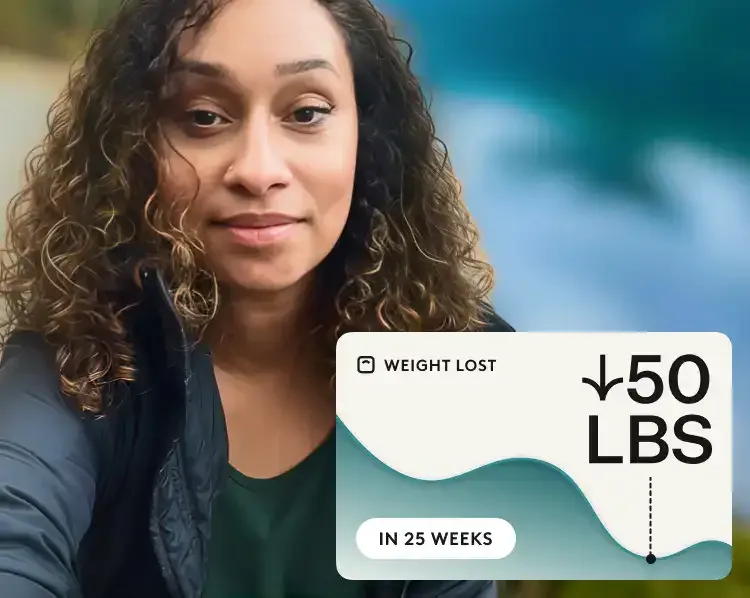
“My favorite parts of Noom are the care team and other Noomers. Sharing and getting help made me feel like I wasn’t doing it alone. That support made all the difference.”
Desirea N. — Real Noom user
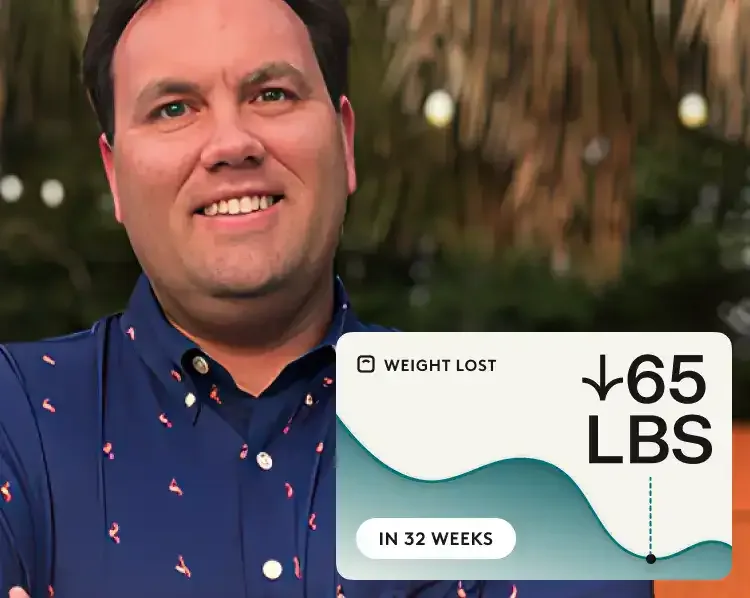
“Noom has taught me that every day is a new chance to make better, healthier choices. It’s taught me how to stop overeating.”
Matthew M. — Real Noom user
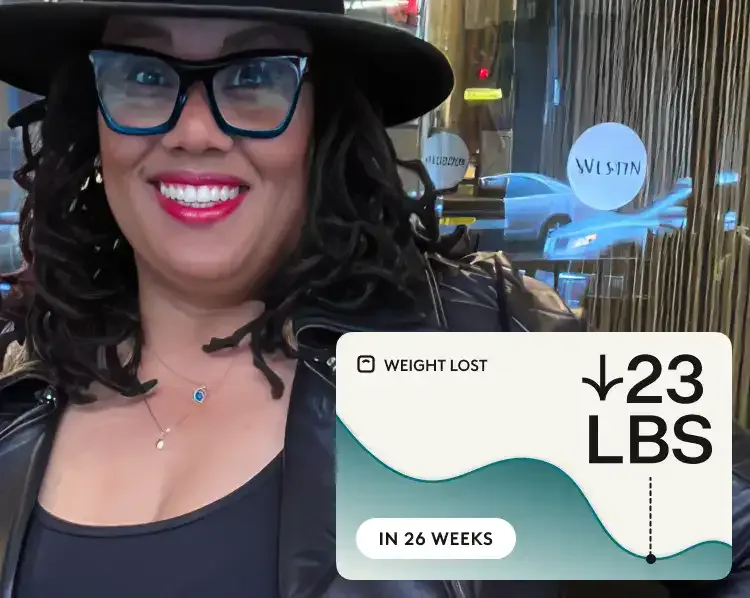
“Clinicians who understand how supportive medication can be is one of the best parts of Noom! I was convinced I wouldn’t have success but I’m down 11 pounds in two months.”
Lila M. — Real Noom user
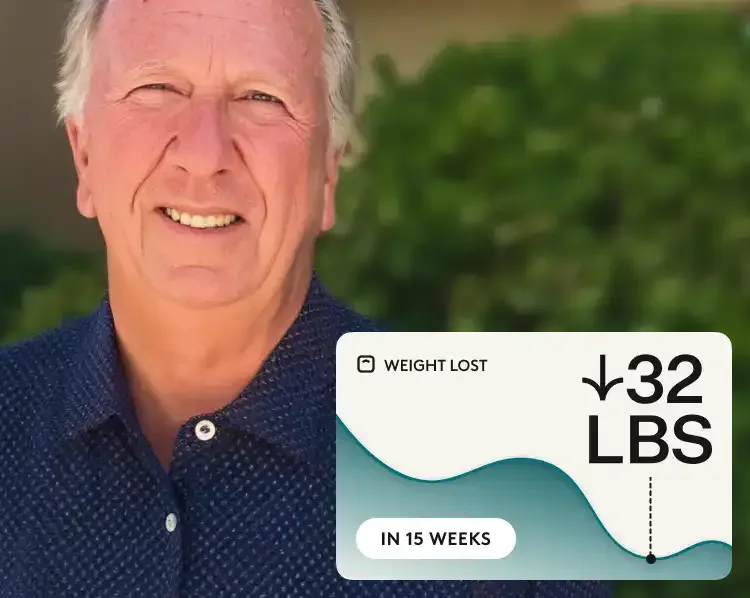
“Noom provided me with the medication which I could not get through Medicare. I have learned the tricks to better eating and life in general.”
Steve M. – Real Noom user
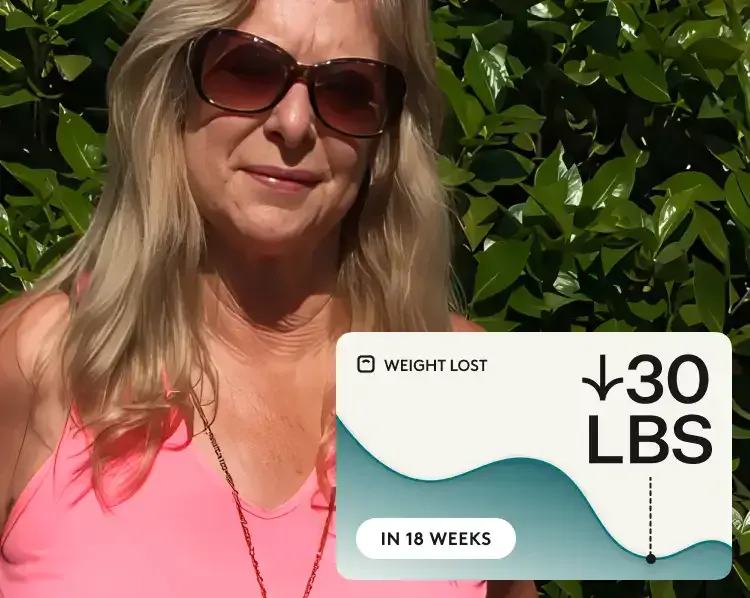
“Noom has changed my life and I’m so thankful, I feel great, have more energy and am no longer prediabetic.”
Daisy R. – Real Noom user
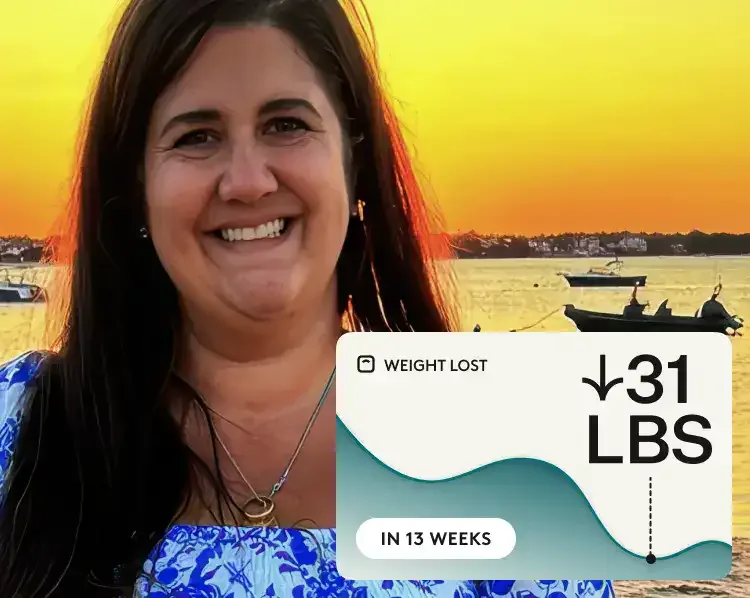
“All of the Noom providers that I’ve met with have been exceptional and prescribed medications that are appropriate for my situation and health.”
Sarah R. – Real Noom user
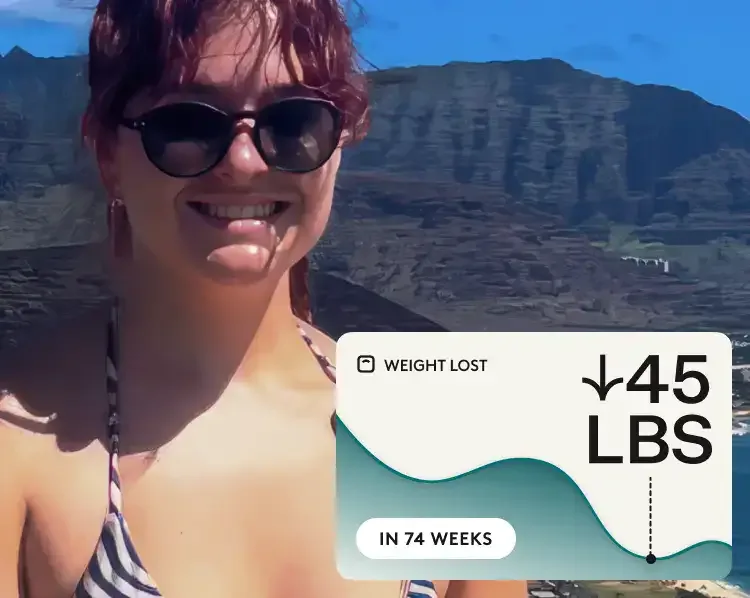
“Noom made the process so simple and now I feel full, free from diet obsession, and at ease in my body again.”
Madison S. – Real Noom user
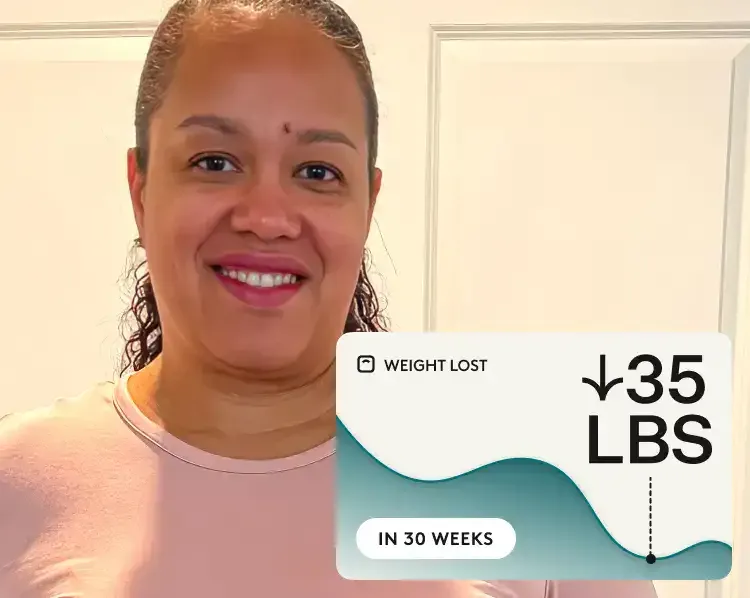
“My doctor recommended Noom after I was frustrated trying to lose weight. The lessons helped change my relationship with food. My body feels lighter & energized.”
Sonday K. – Real Noom user
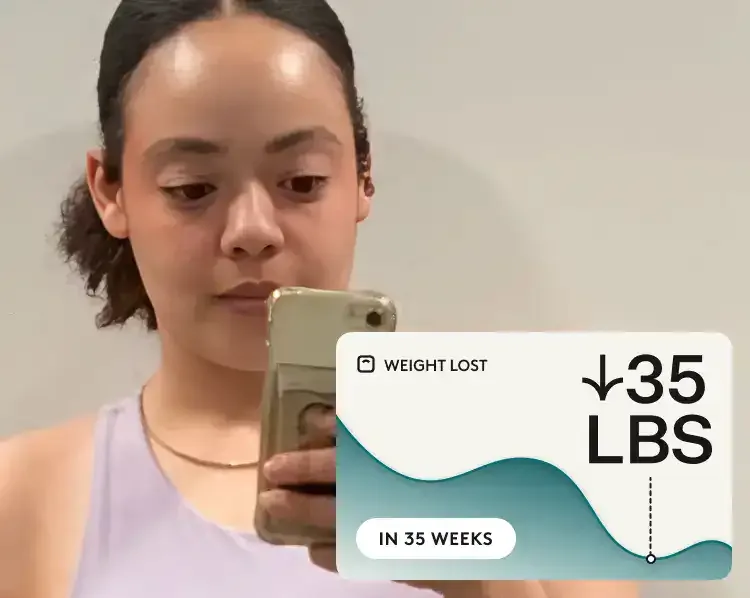
“I built healthy habits with coaching and lessons that make me confident I can maintain my weight loss long term.”
Cam K. – Real Noom user
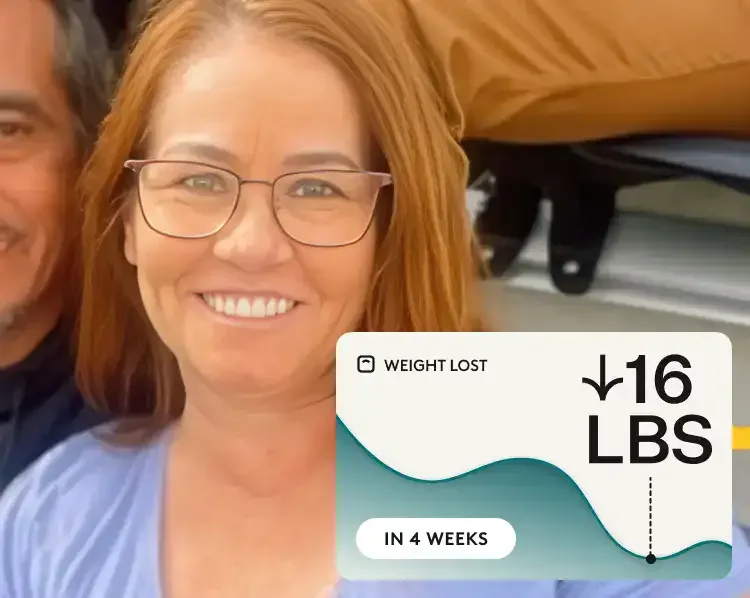
“With the right medication through Noom, hunger and sugar cravings finally quieted and I have the tools to break the cycle.”
Laura TR. – Real Noom user
“Cravings and food noise are gone, I finally feel confident in the healthy habits I’ve built to last with Noom.”
Jessica S. – Real Noom user
The bottom line: Losing 5, 10, 20, 50, or 100 pounds takes time
Weight loss takes time, and the timeline is different for everyone. The early weeks may feel exciting as the scale moves quickly, but that pace reflects water shifts, not a sustainable rate you should expect to continue.
What matters most isn’t how fast you reach your goal. It’s whether the changes you’re making are ones you can maintain for months and years to come. Focus on the overall trend rather than any single weigh-in, and remember that plateaus, slow weeks, and fluctuations are all part of the process—not signs that something is wrong.
“The most successful people I’ve worked with are the ones who stopped chasing a deadline and started building habits they genuinely enjoyed,” says Hudspeth. “That shift in mindset is everything.”
If you’re looking for a structured, psychology-based approach to support your journey, Noom combines daily lessons rooted in behavioral science with personalized coaching, food logging, and a community of people working toward similar goals. It’s designed to help you build the kind of lasting habits that keep the weight off—long after you’ve stepped off the scale.
Editorial standards
At Noom, we’re committed to providing health information that’s grounded in reliable science and expert review. Our content is created with the support of qualified professionals and based on well-established research from trusted medical and scientific organizations. Learn more about the experts behind our content on our Health Expert Team page.