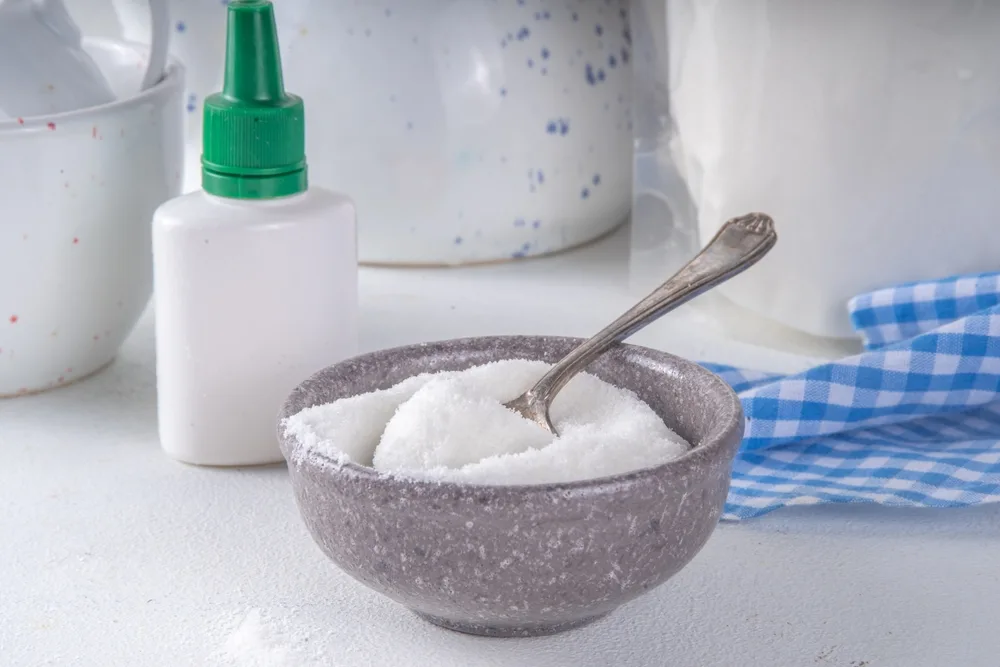
You’ve probably seen allulose on the ingredient list of your favorite keto bars, sugar-free sauces, or low-calorie ice creams — and maybe wondered what exactly it is. Allulose is a simple sugar that occurs naturally in small amounts in figs, raisins, and wheat, but the version you find in packaged foods isn’t harvested from those sources. Commercially, manufacturers use an enzymatic process to convert fructose — usually from corn — into allulose.
Think of it less like extracting something from nature and more like using natural starting materials to build something new through a lab process. The result is chemically identical to the allulose found in food, but it gets there through manufacturing, not a field. It tastes remarkably close to regular sugar (about 70% as sweet), caramelizes and browns beautifully in the oven, and has zero bitter aftertaste.
What makes allulose especially interesting for weight loss is how your body handles it. Your small intestine absorbs it like a regular sugar, but then your body can’t actually use it for energy — instead, it gets excreted through urine before it’s metabolized. That’s why it delivers roughly one-tenth of sugar’s calories and has a glycemic index of zero, meaning it doesn’t raise blood glucose or trigger an insulin response. And because most of it never reaches the colon, it also tends to be better tolerated digestively than many other low-calorie sweeteners.
While allulose is good for weight loss in terms of calorie count, which is effectively zero there are some things to keep in mind. Let’s look at the research, the nutrition numbers, and how it fits into a sustainable approach to eating less sugar and managing your weight.
✅ Quick answer
Yes—allulose is good for weight loss because it has no calories, but how well it works for you depends on how your body responds to it. Allulose is a naturally occurring rare sugar (not an artificial sweetener) with almost zero calories that won’t spike your blood sugar or insulin. That said, some people find that rare sugars and sugar substitutes in general are hard on their stomachs—causing bloating, gas, or digestive discomfort—while others have no issues at all.

The Easy Way
to lose weight and get healthy.
See if you qualify
🚀 Weight-loss benefits
- Using allulose can lower calories while still having something that tastes sweet – Allulose provides about 0.4 calories per gram, compared to 4 calories per gram for table sugar. That means every tablespoon you swap saves you roughly 44 calories, with virtually no difference in taste. For people who use sweetener daily in coffee, smoothies, or baking, that’s a meaningful calorie cut that adds up quickly.
- Allulose keeps blood sugar and insulin stable – Unlike regular sugar, allulose doesn’t cause the blood sugar spikes and crashes that can drive cravings. Multiple human studies suggest that it might also help blunt post-meal glucose rises when eaten alongside other carbohydrates. Steadier blood sugar throughout the day can make it easier to stick to your eating goals.
- Early research suggests it may support fat burning – A few animal studies and small human trials suggest allulose may influence factors related to body fat and metabolism. However, the evidence is still preliminary, and more research is needed to determine whether allulose has meaningful effects beyond serving as a low-calorie alternative to sugar.
⚠️ Things to be mindful of
- Human research is still limited – Most of the exciting research on allulose and fat loss has been done in animal models. Short-term human trials are encouraging, but large-scale, long-term randomized controlled trials proving sustained weight loss specifically from allulose aren’t yet available. It’s a promising ingredient, but it’s not a solution on its own.
- It can cause stomach issues for some people – Because allulose passes through your gut largely undigested, it can cause bloating, gas, or loose stools in some people—even at moderate amounts. This is similar to how some people react to sugar alcohols like erythritol or xylitol. Everyone’s digestive system is different, and there’s no shame in finding that allulose isn’t for you.
- It’s pricier and less widely available than other sweeteners – Allulose costs more than stevia, erythritol, or monk fruit, and you won’t find it at every grocery store.
🥗 Nutrients in allulose (per 1 teaspoon / 4 g)
| Nutrients | Amount | % RDA* |
|---|---|---|
| Calories | 2 calories | <1% |
| Protein | 0 g | 0% |
| Total carbohydrates | 4 g | 1% |
| Allulose | 4 g | — |
| Total sugars | 0 g | — |
| Total fat | 0 g | 0% |
| – Saturated fat | 0 g | 0% |
| – Monounsaturated fat | 0 g | — |
| – Polyunsaturated fat | 0 g | — |
| Omega-3 | 0 g | — |
| Omega-6 | 0 g | — |
Allulose’s nutrition label can look a little unusual at first glance. Although it’s technically a carbohydrate, it is listed separately from Total Sugars and Added Sugars on Nutrition Facts panels because your body processes it differently than regular sugar. Because allulose isn’t metabolized for energy the way conventional sugar is, the FDA allows it to be excluded from both calorie and total sugar counts on Nutrition Facts labels. That means a teaspoon clocks in at under 2 calories, compared to around 16 calories for the same amount of table sugar. For something that tastes nearly identical, that’s a significant difference.
Beyond the calories, there’s not much to see here nutritionally—no protein, no fat, no fiber, no vitamins or minerals. Allulose isn’t trying to be a nutrient-dense food. Its value is purely in what it doesn’t do: it adds sweetness with minimal calories and little effect on blood sugar levels. Think of it as a simple tool for making food taste better without many of the downsides associated with regular sugar.
*Recommended dietary allowance (RDA) is defined as the average daily amount of nutrients needed to meet the requirements of nearly all healthy people in a specific group.
💊 Vitamins & minerals in allulose (per 1 teaspoon / 4 g)
Allulose contains no meaningful amounts of vitamins or minerals. As a purified sweetener, it’s not intended to be a source of micronutrients, which is similar to other sugar and sugar-substitute products.
That doesn’t make allulose unusual—it simply means its role in foods is to provide sweetness rather than nutrition. If you’re using allulose, the nutritional value of the foods around it matters far more than the sweetener itself. For example, allulose may be used in products that also contain protein, fiber, healthy fats, vitamins, and minerals, but those nutrients come from the other ingredients, not the allulose.
🔍 Nutrient breakdown
Glycemic index (GI) of allulose
Glycemic index: ~0 (Low)
💡 Tip: Because allulose has a glycemic index of essentially zero, it won’t cause the blood sugar spike-and-crash cycle that triggers hunger and cravings after eating something sweet. This makes it a particularly good choice for people who notice they feel hungry again shortly after eating sugary foods.
Is allulose high in protein?
❌ No – Allulose contains 0 g of protein per serving. It’s a sweetener, not a protein source, so it won’t contribute to muscle maintenance, satiety from protein, or recovery after exercise.
Better protein alternatives: Greek yogurt | Chicken breast | Eggs | Lentils | Cottage cheese
Is allulose high in fiber?
❌ No – Allulose has 0 g of fiber per serving. While it does pass through your digestive system largely unabsorbed, it doesn’t count toward your daily fiber intake and doesn’t provide the gut health benefits that fiber does.
💡 Tip: To boost the fiber content of allulose-sweetened recipes, try adding chia seeds, oats, or ground flaxseed. Pairing sweetness with fiber is one of the best ways to slow digestion, extend fullness, and keep your blood sugar even more stable.
Is allulose low in carbs?
✔️ Yes – Allulose has 4 g of listed carbs per teaspoon, but since those carbs aren’t absorbed or used for energy, it’s treated as having zero net carbs. The FDA allows it to be excluded from carbohydrate and sugar totals on nutrition labels for exactly this reason.
💡 Tip: If you’re tracking net carbs on a keto or low-carb diet, you can subtract allulose from your carb count—just double-check whether the product label has already done this for you, since labeling practices vary by brand.
Is allulose gluten-free?
✔️ Yes – Allulose is naturally gluten-free. It’s a pure sugar molecule with no gluten-containing proteins. If you have celiac disease or a gluten sensitivity, just verify that the specific product you’re buying is manufactured in a gluten-free certified facility, as cross-contamination during processing is always a possibility with packaged ingredients.
Is allulose good for fat loss?
✔️ Yes – Allulose supports fat loss primarily by cutting calories from your diet in a painless way. Every tablespoon you use instead of sugar saves about 44 calories, and that adds up fast for people who sweeten food regularly. Beyond that, its ability to keep blood sugar and insulin stable reduces the hormonal signals that promote fat storage after meals. Early research also suggests possible direct fat-burning effects, though larger human studies are still needed to confirm those findings.
💡 Tip: The best swap is the one you’ll actually stick to. If allulose works well for your digestion, substituting it for sugar in things you already eat—coffee, oatmeal, yogurt, baked goods—is a great low-effort calorie cut. If it doesn’t sit well with you, simply using less regular sugar achieves the same goal and may feel a lot more comfortable.
🍽️ Diet compatibility: Which diets include allulose?
| Diet | ✅ / ❌ | Why |
|---|---|---|
| Keto | ✅ | Allulose has zero net carbs and no glycemic impact, making it one of the most keto-friendly sweeteners on the market. It doesn’t raise blood glucose or insulin, so it won’t knock you out of ketosis. It’s widely used in keto baking because it actually browns and caramelizes the way sugar does. |
| Paleo | ❌ | Strict paleo focuses on whole, unprocessed foods, and commercially produced allulose—made through enzymatic conversion—doesn’t fit that framework, even though allulose does occur naturally in some foods like figs and raisins. Most paleo practitioners prefer sweeteners like raw honey or dates that come directly from whole food sources. |
| Mediterranean | ✅ | The Mediterranean diet encourages reducing added sugars, and allulose supports that goal well when used as a substitute in cooking and baking. It isn’t a traditional ingredient in Mediterranean cuisine, but using it to cut sugar in recipes is fully in line with the diet’s principles of eating less processed sugar. |
| Vegan | ✅ | Allulose is plant-derived—made from fructose found in corn or other plant sources—and contains no animal products. It’s completely vegan and a practical alternative to regular white sugar, which is sometimes refined using bone char filtration in non-vegan-certified facilities. |
| Gluten-free | ✅ | Allulose is naturally free of gluten and safe for people with celiac disease or gluten sensitivity. As always, check that the specific product is made in a certified gluten-free facility if you have a severe sensitivity, since manufacturing environments vary. |
Allulose is one of the most broadly compatible sweeteners across popular diets. It checks the box for keto, vegan, Mediterranean, and gluten-free eating with no workarounds needed—which is unusual in the sweetener world, where most options require at least some compromise. Its zero-net-carb, zero-glycemic profile makes it especially practical for people managing blood sugar or following a low-carb lifestyle.
The main exception is strict paleo, where the emphasis on whole, minimally processed foods makes any refined or enzymatically produced ingredient a poor fit—regardless of its health profile. If you follow a more flexible approach to clean eating and just want to reduce your sugar intake without giving up sweetness, allulose is hard to beat for versatility.
🌟 Is allulose healthy? What are the health benefits
Metabolic health: Is allulose good for your metabolism?
- Boosts metabolism? Possibly – Some animal studies suggest that allulose may increase energy expenditure by promoting a process called mitochondrial uncoupling in fat tissue, which can increase calorie burning. That’s an intriguing finding, but human research is still limited. For now, it’s best to think of this as a promising area of research rather than a proven metabolic benefit.
- Improves insulin sensitivity? Yes – This is one of the more encouraging areas of allulose research. Several human studies and a meta-analysis found that allulose improved blood sugar and insulin responses after meals, particularly in people with type 2 diabetes. While that doesn’t necessarily translate to weight loss, better blood sugar control may support overall metabolic health.
- Effect on fat storage? Positive – Because allulose has little effect on blood sugar and insulin levels, it may be less likely than regular sugar to promote fat storage. Animal studies have also found reductions in liver fat and abdominal fat when allulose replaced traditional sugars. However, researchers are still working to determine whether these effects translate to meaningful changes in body fat in humans.
Cholesterol impact: Does allulose affect cholesterol levels?
- Does it lower LDL (bad) cholesterol? Neutral – A 12-week trial found no significant changes in LDL cholesterol in either allulose group. Animal studies show more promising results, particularly around reducing liver fat, which can indirectly improve lipid profiles, but this hasn’t been firmly established in humans yet.
- Does it raise HDL (good) cholesterol? Data limited – There isn’t enough evidence from human trials to confirm that allulose directly raises HDL. That said, reducing overall sugar intake—which allulose helps you do—has consistently been linked to better HDL levels over time.
- Overall impact on heart health? Favorable. By reducing blood sugar spikes, lowering insulin responses, and supporting reductions in liver fat, allulose addresses several of the metabolic drivers of cardiovascular disease risk. It’s not a heart health supplement, but using it to replace sugar in your diet is a positive step for your heart over the long term.
💡 Tip: For a heart-smart approach, use allulose to sweeten foods that are already heart-healthy—think oatmeal, berry compotes, homemade dark chocolate bark, or whole-grain baked goods—rather than just making less-nutritious desserts slightly less harmful.
Can I eat allulose for a calorie deficit?
✔️ Yes, with caution– Because allulose provides sweetness with very few calories, it may help lower the calorie content of foods and drinks when it replaces sugar. For some people, that can make it easier to maintain a calorie deficit without feeling like they’re giving up foods they enjoy.
At the same time, allulose isn’t a weight-loss shortcut. Research on low- and no-calorie sweeteners is mixed, and people respond to them differently. Some find that sweetened foods help them stay on track, while others notice that highly sweet flavors leave them wanting more. Paying attention to your own hunger, cravings, and eating patterns is often more helpful than focusing on any one ingredient.
💡 Tip: If you regularly sweeten coffee, tea, yogurt, or oatmeal with sugar, experimenting with allulose may be one way to reduce calories without dramatically changing the taste. The key is whether the swap helps you build habits that feel sustainable over time.
Is allulose rich in antioxidants?
❌ No – Allulose doesn’t contain antioxidants. As a purified sugar molecule, it has no plant compounds, polyphenols, or protective nutrients of any kind. If antioxidant intake is a priority for you, focus on the foods you pair with allulose—berries, dark chocolate, cinnamon, and green tea are all great options that pair naturally with a sweetener.
Does allulose support gut health?
Possibly – Because allulose reaches the colon partially undigested, some researchers believe it may act as a mild prebiotic, feeding beneficial bacteria in the gut. Animal studies have shown positive shifts in gut microbiome composition with regular allulose intake. That said, dedicated human studies on allulose’s prebiotic effects are still early, so it’s too soon to count on this as a gut health benefit.
Does allulose support digestion?
Neutral to positive at moderate doses – At typical serving sizes (up to about 30 g per day), allulose is well-tolerated by most people and doesn’t cause the digestive issues associated with many sugar alcohols. At higher doses, it can cause bloating and loose stools in sensitive individuals, so if your stomach is easily upset, start small and build up gradually.
Does allulose help you feel satiated and less hungry?
Effect on satiety? Unclear. Allulose doesn’t provide the protein, fiber, or volume that are most strongly linked to feeling full after a meal. Some early research suggests it may influence hormones involved in appetite regulation, including GLP-1, and animal studies have found reductions in food intake when allulose replaced other sweeteners. However, researchers are still studying whether these effects translate into meaningful changes in hunger or fullness in humans. For now, any impact on satiety is likely modest compared to factors like protein intake, fiber, and overall meal composition.
Satiety Level: Moderate
💡 Tip: To maximize the satiety benefits of allulose, use it to sweeten meals and snacks that already contain protein and fiber—like allulose-sweetened low-fat Greek yogurt with berries, or an allulose-glazed chicken dish with roasted vegetables. The combination of blood sugar stability from allulose plus filling nutrients from real food is a powerful hunger-management duo.
Does allulose help with nighttime cravings?
✔️ Maybe, for some people. Allulose doesn’t appear to have a direct appetite-suppressing effect, but it may make it easier to enjoy sweet-tasting foods and beverages with very few calories. For some people, that can help satisfy a desire for something sweet in the evening without adding much energy to the day.
That said, nighttime cravings can stem from many factors, including habit, stress, fatigue, emotions, or simply not eating enough earlier in the day. If you’re consistently hungry at night, looking at your overall eating pattern—including protein, fiber, and meal timing—may be more helpful than focusing on any single ingredient.
Access GLP-1 Weight Loss with Noom
Explore a wide range of prescription medications supported by Noom’s program.Microdose GLP-1rx
Noom GLP-1rx
Noom GLP-1rx Plus
Wegovy®

Ozempic®

Metformin
Zepbound®
Mounjaro®
Liraglutide

💡 Tip: If you enjoy something sweet after dinner, consider using allulose in a beverage or recipe you already like. The goal isn’t to “trick” cravings away, but to find satisfying choices that fit your eating pattern and goals.
Does allulose help reduce inflammation?
✔️ The evidence is still emerging. Some animal studies have found that allulose may reduce markers of inflammation and improve aspects of metabolic health, but researchers are still working to determine whether those effects occur in humans.
What’s better established is that regularly consuming large amounts of added sugar has been linked to poorer metabolic health. If allulose helps someone reduce their intake of added sugars, that could be beneficial. However, there isn’t enough evidence to conclude that allulose itself has meaningful anti-inflammatory effects in people.
Is allulose beneficial for brain health?
✔️ There’s no strong evidence that allulose directly benefits brain health. Allulose doesn’t provide nutrients that are known to support cognitive function, such as omega-3 fats, B vitamins, or antioxidants.
That said, researchers are increasingly interested in the connections between metabolic health, blood sugar regulation, and long-term brain health. Because allulose has a minimal effect on blood sugar compared with regular sugar, it may be a useful substitute for some people looking to reduce added sugar intake. However, there isn’t enough evidence to conclude that allulose itself improves cognitive function or helps protect against cognitive decline.
Can allulose improve skin and hair health?
✔️ There’s no strong evidence that allulose directly benefits skin or hair health. Allulose doesn’t provide nutrients that support healthy skin and hair, such as protein, vitamin C, zinc, iron, or essential fatty acids.
Researchers do know that excess sugar can contribute to glycation, a process in which sugar molecules bind to proteins like collagen and elastin. Over time, glycation may affect skin structure and elasticity. Because allulose has a minimal effect on blood sugar compared with regular sugar, some researchers have suggested it may be a preferable alternative to sugar in this regard. However, there isn’t enough evidence to conclude that consuming allulose leads to noticeable improvements in skin or hair health.
Can allulose help balance hormones?
✔️ There’s limited evidence. Because insulin is a hormone, researchers have studied how allulose affects blood sugar and insulin responses after meals. Some studies suggest that allulose may help blunt post-meal rises in blood sugar and insulin compared with regular sugar.
Beyond insulin, however, there is little evidence that allulose directly affects hormones such as estrogen, progesterone, testosterone, cortisol, or thyroid hormones. While reducing added sugar intake may be part of an overall healthy eating pattern, it’s important not to overstate the role of any single ingredient in hormonal health.
💡 Tip: If you’re focused on supporting overall hormonal health, factors such as adequate sleep, regular physical activity, stress management, and a balanced diet are likely to have a much greater impact than whether you choose one sweetener over another.
🍽️ Best ways to eat allulose for weight loss
Before you stock your pantry, it’s worth remembering that allulose is optional. Many people successfully lose weight while enjoying small amounts of regular sugar, honey, or maple syrup as part of an overall balanced eating pattern. If you enjoy allulose and tolerate it well, it can be a useful lower-calorie alternative. If you don’t, there’s no need to force it—portion size and overall eating habits matter far more than any single sweetener.
- Swap it into your daily drinks – Coffee, tea, and other beverages are one of the easiest places to experiment with allulose. If you typically add sugar to several drinks throughout the day, replacing some or all of it with allulose can reduce calories without dramatically changing the flavor. Whether that feels worthwhile depends on your preferences and how often you sweeten your drinks.
- Use it in baking – Allulose behaves more like sugar than many alternative sweeteners. It browns, caramelizes, and helps retain moisture, making it a popular option for baked goods and desserts. If you’re looking to reduce the sugar content of recipes you already enjoy, it may be worth experimenting with. That said, there’s nothing wrong with using a smaller amount of regular sugar or maple syrup if you prefer the taste.
- Stir it into protein- and fiber-rich foods – If you enjoy sweeter foods, allulose can be added to foods like Greek yogurt, oatmeal, smoothies, or berries. The protein and fiber in those foods are doing most of the heavy lifting when it comes to fullness and nutrition; allulose simply adds sweetness with very few calories.
🍏 Best alternatives & comparisons (per 1 teaspoon / about 4–5 g)
| Food | Calories | Carbs | Fiber | Protein | Fat |
|---|---|---|---|---|---|
| Allulose | ~2 | 4 g* | 0 g | 0 g | 0 g |
| Stevia (pure) | 0 | 0 g | 0 g | 0 g | 0 g |
| Monk fruit extract | 0 | 0 g | 0 g | 0 g | 0 g |
| Erythritol | ~1 | 4 g* | 0 g | 0 g | 0 g |
| Table sugar | 16 | 4 g | 0 g | 0 g | 0 g |
| Coconut sugar | 15 | 4 g | 0 g | 0 g | 0 g |
| Honey | 21 | 6 g | 0 g | 0 g | 0 g |
*Allulose and erythritol are counted as carbohydrates chemically, but they are metabolized differently than regular sugars and contribute few or no usable calories.
There isn’t a single “best” sweetener. Some people prefer low- or no-calorie options like allulose, stevia, or monk fruit, while others would rather use small amounts of traditional sweeteners such as sugar, honey, or maple syrup. The right choice depends on your taste preferences, health goals, budget, and how a sweetener fits into your overall eating pattern.
❓ Frequently asked questions about allulose and weight loss
Does allulose cause weight gain?
Allulose itself is unlikely to contribute meaningfully to weight gain because it contains very few calories. However, no single ingredient determines whether someone gains or loses weight. Overall eating patterns, activity levels, and total calorie intake matter far more than any individual sweetener.
Is allulose better than stevia for weight loss?
Not necessarily. Both can help reduce added sugar and calories, but they have different strengths. Stevia contains virtually no calories, while allulose behaves more like sugar in recipes and tends to have a more sugar-like taste. The best choice is often the one that fits your preferences and eating habits.
How much allulose can I have per day?
There isn’t an official daily limit for healthy adults. Most studies suggest that allulose is well-tolerated in moderate amounts, though some people experience bloating, gas, or loose stools when they consume larger quantities. If you’re new to allulose, starting with a small amount and seeing how your body responds is a reasonable approach.
Can people with diabetes use allulose?
Potentially, yes. Research suggests that allulose has little effect on blood sugar levels and may improve blood sugar responses after meals compared with regular sugar. That said, diabetes management is highly individual, so it’s a good idea to discuss any major dietary changes with your healthcare provider.
Is allulose safe?
Current evidence suggests that allulose is safe for most people when consumed as part of a normal diet. In the United States, it has been designated as Generally Recognized as Safe (GRAS) by the FDA. The most commonly reported side effects are digestive, particularly when large amounts are consumed.
Does allulose taste like sugar?
Many people think so. Allulose is less sweet than table sugar—about 70% as sweet—but it has a clean taste and performs similarly to sugar in many recipes. Taste is subjective, though, and some people prefer other sweeteners or find that allulose works better in certain foods than others.
Why isn’t allulose available in Canada or Europe?
Regulatory approval varies around the world. While allulose is permitted in the United States and some other countries, regulators in Canada and the European Union have taken different approaches and have not approved it for widespread use. This doesn’t necessarily mean it has been found unsafe; regulatory agencies often review evidence on different timelines and under different standards.
🧠 The bottom line: Allulose can be good for weight loss
Allulose can be a useful tool for some people who are trying to lose weight. It provides sweetness with very few calories and has little effect on blood sugar levels, making it an appealing alternative to sugar in coffee, baked goods, desserts, and other foods. If you enjoy the taste and tolerate it well, allulose may help you reduce added sugar and lower the calorie content of some meals and snacks without feeling like you’re giving up sweetness altogether.
At the same time, allulose isn’t necessary for weight loss, and it’s not the right fit for everyone. Some people experience digestive side effects, while others simply prefer using small amounts of regular sugar, honey, or maple syrup. That’s perfectly okay. The most effective approach is usually the one you can stick with long term. Whether you choose allulose, another sweetener, or occasional sugar, the bigger picture matters most: a balanced eating pattern built around nutritious foods, appropriate portions, regular movement, and habits that feel sustainable for your lifestyle..
The Easy Way
to lose weight and get healthy.
See if you qualify📖 Scientific evidence
- Using allulose didn’t reduce body fat percentage, blood sugar levels, or blood pressure in people with type 2 diabetes. (European Journal of Nutrition, 2023) In a study of 16 people with type 2 diabetes, taking 7 grams of allulose twice a day for 12 weeks did not lead to meaningful improvements in blood sugar control, hunger and digestion hormones, or body composition compared with the control period. Researchers also found an increase in a marker linked to inflammation.
- Allulose significantly reduced postprandial blood glucose in people with type 2 diabetes across multiple trials. (Metabolism Open, 2024) A meta-analysis of several trials found that allulose reduced glucose after meals in people with type 2 diabetes.
- Adding allulose to a sugary beverage lowered both the glucose and insulin response compared to sugar alone. (Journal of Functional Foods, 2023) A trial found that people without diabetes who used allulose alongside sugar saw a reduced rise in blood sugar and insulin compared to having sugar alone.
- A 12-week allulose-rich diet improved metabolic markers and reduced weight gain in animals. (Nutrients, 2024) Rats fed a high-fat, high-sugar diet, with allulose supplementation, had reduced body weight gain and improved insulin resistance compared to control animals.
- Allulose was linked to better insulin sensitivity and improved endurance in animal studies. (Innovation in Aging, 2024) Researchers found that animals fed allulose showed some of the same metabolic changes typically seen with regular exercise. These findings came from animal research and haven’t yet been confirmed in people.
Editorial standards
At Noom, we’re committed to providing health information that’s grounded in reliable science and expert review. Our content is created with the support of qualified professionals and based on well-established research from trusted medical and scientific organizations. Learn more about the experts behind our content on our Health Expert Team page.