
What you’ll learn:
- Sardines and anchovies are both nutrient-dense, low-mercury fish rich in omega-3s and protein—but sardines are more of a meal, while anchovies are more of a flavor booster.
- Sardines provide more protein, calcium, vitamin D, and omega-3s, while anchovies stand out for their umami flavor and surprisingly high omega-3 level.
- Anchovies shine in cooking, while sardines are the better choice for a filling, affordable, high-protein snack or meal.
Anchovies and sardines have had a major resurgence recently, fueled by the popularity of tinned fish, high-protein eating, and affordable pantry staples that actually deliver meaningful nutrition. These small oily fish are among the most nutritionally efficient foods you can keep on hand: rich in omega-3 fatty acids, high-quality protein, and important minerals like selenium and iron.
They’re also naturally low in mercury compared to larger fish like tuna because of their small size and short lifespan. And unlike many trendy “superfoods,” they’re relatively inexpensive, shelf-stable, and ready to eat within minutes.
But despite being grouped together nutritionally, anchovies and sardines serve very different purposes in the kitchen. Sardines are meatier, milder, and substantial enough to anchor a full meal. Anchovies are intensely salty and savory, usually used in smaller amounts to add deep umami flavor to sauces, dressings, pasta, and vegetables.
Nutritionally, the differences become more noticeable when you compare the portions people actually eat. Most people eat an entire can of sardines in one sitting, while anchovies are typically used a few fillets at a time. That means sardines usually deliver much more protein, omega-3s, calcium, and overall satiety per serving, while anchovies shine more as a flavor-building ingredient.
Whether you’re new to tinned fish or trying to figure out which option fits best into your weight loss routine, here’s what to know about anchovies vs. sardines—with expert insight from Maggie Hudspeth, RDN, Senior Manager of Coaching at Noom.


Anchovies vs. sardines: The basics
Both anchovies and sardines are small oily fish most people encounter in canned form, and both have been staples in Mediterranean coastal cuisines for centuries. They’re affordable, shelf-stable, naturally rich in omega-3 fats, and lower in mercury than larger fish like tuna because of their short lifespans and smaller size.
But despite often being grouped together nutritionally, they’re very different foods in practice. Anchovies are intensely salty and concentrated, usually used in small amounts to build flavor. Sardines are milder, meatier, and substantial enough to function as an actual meal or protein source on their own.
What are anchovies? Nutrition and uses
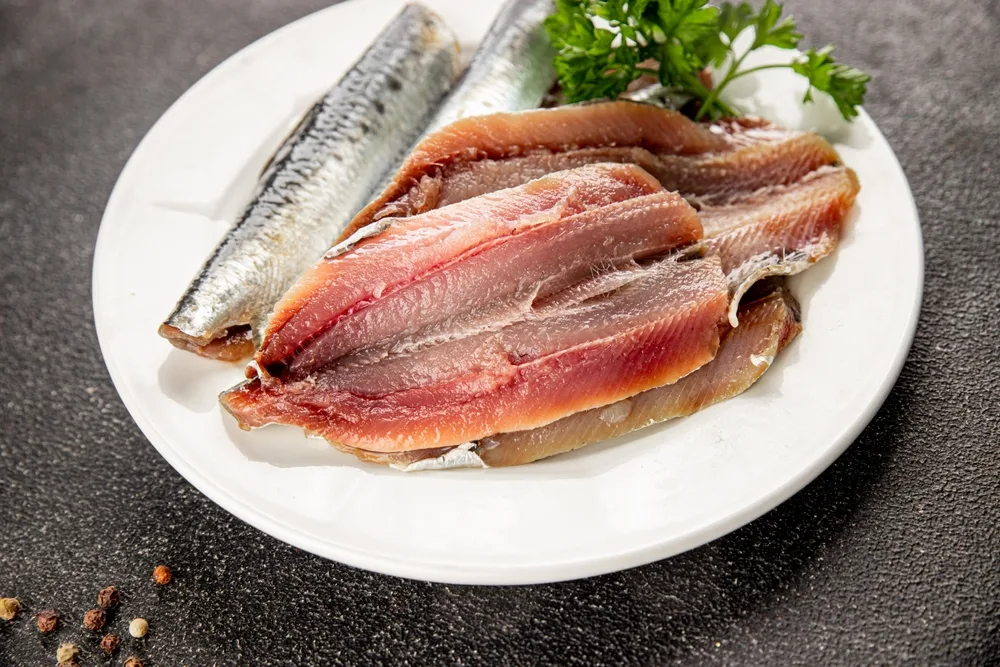
Anchovies are tiny saltwater fish found in the Atlantic, Pacific, and Mediterranean. They’re small and young, which helps keep mercury and other environmental contaminants relatively low compared to larger fish.
In most U.S. grocery stores, anchovies are sold canned in oil, packed in salt, or occasionally as a paste. Fresh anchovies are common in parts of Italy and Spain, but the salt-cured canned versions are what most Americans are familiar with.
Anchovies: What’s special nutritionally?
Anchovies pack a surprising amount of nutrition into a very small serving. Just 1 ounce of canned anchovies provides about 8 grams of protein along with omega-3 fats that may support heart and brain health.
The biggest thing to know is the sodium content. Because anchovies are salt-cured, they’re naturally very high in sodium—especially compared to other canned fish. That doesn’t mean you need to avoid them, but they usually work best as a flavorful accent rather than a main protein source eaten in large amounts.
Anchovies: How to cook and eat them
Anchovies are less of a “sit down and eat a whole tin” food and more of a cooking ingredient. They’re often melted into olive oil, stirred into pasta sauces, blended into Caesar dressing, or added to soups, braises, and roasted vegetables.
When cooked this way, anchovies add deep savory richness and umami without necessarily making a dish taste obviously fishy.

See if your insurance
covers GLP-1s.
The form only takes 2 minutes to answer. We’ll handle the rest.
GET STARTED“People are often surprised to hear that anchovies aren’t really a protein source—they’re a seasoning,” says Hudspeth. “A few fillets melted into a pasta sauce, or dressing won’t move the needle on your protein intake, but they will make the whole dish taste significantly better. And making healthy food taste good is genuinely one of the most useful things you can do for long-term weight management.”
What are sardines? Nutrition and uses
Sardines are also small oily fish, though the term “sardine” actually refers to several related species, including pilchards, sprats, and small herring, depending on the region.
In the U.S., canned sardines are commonly packed in water, olive oil, mustard, tomato sauce, or hot sauce, and are often sold with or without bones.
What’s special nutritionally?
Sardines are one of the most nutrient-dense canned proteins you can buy. A typical 3.75-ounce can of sardines in water provides around 190 calories, 23 grams of protein, and about 1.5 grams of omega-3 fats.
They’re also naturally rich in nutrients many people struggle to get enough of, including vitamin B12, selenium, calcium, and iron. Sardines with the soft edible bones still intact are especially valuable because the bones dramatically increase the calcium content.
Between the protein, healthy fats, and micronutrients, sardines tend to feel much more substantial and satisfying than their small size suggests.
“Sardines are one of the most underrated proteins in the grocery store,” Hudspeth explains. “A single can gives you more than 20 grams of protein, a meaningful dose of omega-3s, and calcium—all for under $4. That’s a hard combination to beat.”
How to cook and eat them
Sardines have a milder, more neutral flavor than anchovies—especially when packed in water—which makes them easier to eat as a standalone protein.
They work well on toast, crackers, salads, rice bowls, pasta, or mixed with mustard, lemon juice, herbs, or hot sauce. Unlike anchovies, sardines are commonly eaten straight from the can as a quick meal or snack rather than primarily used to flavor other dishes.
Anchovies vs. sardines: Nutrition comparison
Both fish are excellent sources of protein, omega-3s, and key micronutrients. The most meaningful differences come down to sodium, calcium, and how they’re typically used—which affects how much of each you’re actually eating in a sitting.
Anchovies vs. sardines: Nutritional information
These comparisons reflect the amounts people typically eat in real life: a full small can of sardines versus a few anchovy fillets used in cooking or as a topping. That distinction matters because sardines are usually eaten as a meal or major protein source, while anchovies are generally used more sparingly for flavor.
| Nutrient | Sardines (1 can / 3.75 ounces in water) | Anchovies (5 fillets in oil) |
|---|---|---|
| Calories | 191 | 42 |
| Protein | 23 g | 6 g |
| Total fat | 11 g | 2 g |
| Saturated fat | 1 g | Less than 1 g |
| Omega-3 fats | About 1.5 g | About 0.5 g |
| Sodium | About 280–400 mg | About 500–700 mg |
In practical terms, sardines deliver almost four times more protein per typical serving than anchovies and about three times more omega-3 fats. They’re also much more filling because you’re usually eating an entire can at once rather than a few small fillets.
Anchovies, meanwhile, contribute relatively few calories and grams of fat in the portions most people use, but they pack a concentrated savory flavor that can completely change a dish. They function more like a seasoning ingredient than a primary protein source.
The sodium difference is also important. Anchovies are salt-cured and dramatically saltier ounce-for-ounce than sardines, which is part of why smaller servings are the norm. Sardines still contain sodium, especially canned varieties, but they’re generally mild enough to eat straight from the can as a snack or meal component.
Vitamins and minerals
| Nutrient | Sardines (1 can / 3.75 ounces) | Anchovies (5 fillets) |
|---|---|---|
| Vitamin B12 | 8.9 mcg (370%*) | 0.3 mcg (13%) |
| Selenium | 53 mcg (96%) | 12 mcg (22%) |
| Calcium | 351 mg (35%) | 28 mg (3%) |
| Iron | 2.9 mg (16%) | 0.9 mg (5%) |
| Sodium | 282 mg (12%) | 470 mg (20%) |
| Vitamin D | 2 mcg (10%) | Trace amounts |
| Potassium | 365 mg (8%) | 77 mg (2%) |
Sardines are the clear leader in vitamin B12, vitamin D, and calcium—particularly when eaten with bones. Anchovies are not a meaningful source of these nutrients at typical serving sizes. Where anchovies can be comparable is omega-3 density per gram of fish—they’re not nutritionally hollow, they’re just typically eaten in smaller amounts.
The sodium contrast is stark. A full can of sardines in water has roughly 282 mg of sodium. Five anchovy fillets already deliver around 470 mg.
“The sodium in canned anchovies is something I always flag. Most people don’t realize they can hit 500 milligrams or more from just a few fillets—before anything else on the plate. If you’re watching your blood pressure or trying to reduce sodium, sardines are the more practical everyday choice,” says Hudspeth.
Anchovies vs. sardines: Omega-3s and bioavailability
Both anchovies and sardines are great sources of EPA and DHA—the two omega-3 fatty acids your body can actually use directly. That’s worth noting because the omega-3s in flaxseed and walnuts (ALA) have to be converted first, and that conversion isn’t very efficient. Getting EPA and DHA straight from food is the more reliable route. Eating these fish regularly is linked to less inflammation, lower cardiovascular disease risk, and better brain health over time.
Access GLP-1 Weight Loss with Noom
Explore a wide range of prescription medications supported by Noom’s program.Microdose GLP-1rx

Noom GLP-1rx
Noom GLP-1rx Plus
Wegovy®

Ozempic®

Metformin

Zepbound®

Mounjaro®

Liraglutide

Good news on the canned front: the omega-3s in both fish hold up pretty well through the canning process. If you’re buying sardines, olive oil-packed versions retain slightly more omega-3s than water-packed—though the difference isn’t dramatic. With anchovies, fresh or lightly preserved varieties tend to be higher in omega-3s than the salt-cured, shelf-stable kind, so they’re worth grabbing when you can find them.
Health benefits: Anchovies vs. sardines
Both fish bring meaningful health benefits to the table. The differences are mostly about degree and context—which one you choose and how you eat it matters more than a simple head-to-head winner.
Digestive health and satiety
Neither anchovies nor sardines has fiber, so don’t count on them for digestive regularity. What they do offer is solid staying power—protein and fat both slow down digestion, which means you’re not hungry again an hour later.
Sardines have the edge here. A full can gives you 22–23g of protein and around 10g of healthy fat, which is a genuinely filling combination. And that’s not just anecdotal—research backs protein as the most satiating macronutrient, with studies linking high-protein eating to eating less at the next meal and better appetite control across the day. Anchovies do their part for satiety, but more as a flavor boost than a meal foundation.
Want to cover your bases on both fronts? Pair either fish with high-fiber foods like leafy greens, legumes, whole grains, or roasted vegetables. Protein plus fiber is one of the best fullness combos out there—and it’s an easy win to build into a meal.
Heart health and metabolic effects
Both fish are good for your heart, mostly because of those omega-3s. EPA and DHA have been linked to lower triglycerides, better blood pressure, and less chronic inflammation—the stuff that quietly drives cardiovascular risk over time. It’s a big part of why fish is such a staple of the Mediterranean diet. But the two aren’t interchangeable here—there are a couple of differences worth knowing.
- Sardines get bonus points for the bones. Sounds odd, but the soft, edible bones are a real source of calcium and vitamin D, both of which are tied to healthier blood pressure. They’re also much lower in sodium than anchovies, which matters if that’s something you’re managing.
- Anchovies are higher in sodium—that’s the main thing to know. The FDA’s daily cap is 2,300mg, and an anchovy-heavy meal can use up a big chunk of that in one sitting. If you cook with them regularly, rinsing salt-packed anchovies before using them or reaching for a low-sodium version is a simple habit that adds up.
Anchovies vs. sardines: Weight loss potential
Both fish earn a place in a weight loss plan, but one you build a meal around and one you cook with to make healthy foods taste better.
- Sardines are the more filling option. A water-packed can delivers 22 grams of protein for around 191 calories—a protein-to-calorie ratio that’s hard to beat. That protein keeps you full and helps preserve muscle during a calorie deficit. Research has also found that including fatty fish in a calorie-restricted diet is linked to modestly greater weight loss than similar diets without fish, likely through a combination of protein quality, omega-3s, and their effect on hunger hormones.
- Anchovies are more of a healthy seasoning, not a protein source. A few fillets make vegetables, legumes, and lean proteins taste better, which makes it easier to eat those foods consistently. That’s a real weight management advantage.
How to use anchovies and sardines: Healthy cooking tips
Both fish have had a major resurgence recently, thanks in part to the popularity of tinned fish and the growing interest in affordable, shelf-stable sources of protein and omega-3 fats. But while they’re often grouped together nutritionally, they have different uses the kitchen.
Anchovies: Flavor profile
- Deeply salty, savory, and concentrated with a strong umami flavor
- Tend to dissolve into sauces, dressings, olive oil, or braises rather than stay intact
- Often used in small amounts to add depth rather than as the main protein
- Common in Caesar dressing, pasta sauces, pizza, roasted vegetables, and Mediterranean dishes
- If substituting sardines for anchovies, you’ll usually need more fish plus extra salt or acid to get a similar flavor impact
The best way to use anchovies
Anchovies are best thought of as a seasoning. Their salt-cured intensity dissolves into fat, creating layers of savory depth in dishes where you’d never identify them as the source.
- Pasta sauces: Melt 2 to 4 anchovy fillets into olive oil at the start of a tomato sauce, puttanesca, or broccoli pasta. They’ll dissolve completely, and the sauce will taste richer without tasting fishy.
- Salad dressings: Anchovies are the traditional ingredient in Caesar dressing for good reason—their briny intensity works beautifully with lemon and fat.
- Roasted vegetables: Drape 1 to 2 fillets over cauliflower, broccoli, or potatoes before roasting. They melt into the oil and coat the vegetables with savory flavor.
- Compound butters and sauces: A small amount of anchovy paste stirred into butter or aioli creates an umami-forward condiment for fish, grilled meats, or toast.
Sardines: Flavor profile
- Milder, less salty, and more distinctly “fresh ocean” tasting
- Hold their shape and texture, making them easier to eat straight from the can
- Work well as the main protein in a meal or snack
- Pair especially well with bright, acidic, or herb-heavy flavors like lemon, vinegar, parsley, capers, mustard, or hot sauce
- Not a practical substitute for anchovies in most recipes because they lack the same concentrated salty intensity
The best ways to use sardines
Sardines work as a main protein—substantial enough to anchor a meal rather than flavor one.
- On toast or crackers: Sardines on whole-grain toast with mustard, lemon, and fresh herbs is one of the fastest high-protein lunches available. It’s the format that drove the recent tinned fish trend.
- In salads and grain bowls: Flake a can of sardines over a white bean salad, a quinoa bowl, or a green salad dressed with olive oil and vinegar. They add protein and healthy fat in a format that’s genuinely satisfying.
- In pasta: Sardines work beautifully in pasta dishes—their meatier texture holds up where anchovies would dissolve. Traditional Sicilian pasta con le sarde pairs them with fennel, pine nuts, and raisins.
- As a dip: Mash sardines with lemon, olive oil, shallots, and herbs for a quick protein-packed spread served with vegetables or pita.
Anchovies vs. sardines: Potential downsides and considerations
Even genuinely healthy foods have things worth knowing. Both anchovies and sardines are excellent choices, but they’re not without considerations.
Digestive discomfort
Neither fish is particularly hard to digest for most people. The main concern is histamine: canned fish that is old, improperly stored, or from lower-quality sources can be high in histamine, which some people are sensitive to. If you regularly experience flushing, headaches, or digestive discomfort after eating canned fish, histamine sensitivity may be a factor. Choosing fresh, high-quality canned products from reputable brands and eating them soon after opening reduces this risk significantly.
Allergy and safety notes
Anchovies and sardines are generally considered some of the healthiest seafood choices you can make. They’re rich in protein and omega-3 fats, relatively affordable, shelf-stable, and naturally low in mercury compared to larger fish like tuna or swordfish. But there are still a few practical things worth knowing before making them a regular part of your routine—especially around allergies, sodium, and how often you eat them.
Allergies: Fish allergies are among the most common food allergies in adults, and anyone with a diagnosed fish allergy should avoid both anchovies and sardines.
Mercury: The good news is fish are naturally low in mercury due to their small size and short lifespan—making them among the safest fish for frequent consumption.
Sodium: The main safety note is anchovy sodium content—it’s high enough to warrant awareness, particularly for anyone with hypertension or cardiovascular risk factors.
Anchovies vs. sardines Cost and availability
One reason both sardines and anchovies have become more popular recently is that they’re still relatively affordable sources of protein and omega-3 fats—even as grocery prices have climbed. Both are widely available in regular supermarkets, though quality can vary a lot depending on the brand, packing oil, and sourcing.
Sardines
- Typically cost about $2 to $5 per can, depending on brand and quality
- Widely available in most grocery stores
- Often sold packed in water, olive oil, mustard, tomato sauce, or hot sauce
- Wild-caught options from brands like Wild Planet and King Oscar are popular for quality and sustainability
- Usually easier for beginners because the flavor is milder and the fish are commonly eaten straight from the can
Anchovies
- Typically cost about $3 to $7 per tin
- Available in most grocery stores, especially near canned tomatoes, tuna, or Italian ingredients
- Higher-end options are often found at specialty markets, Mediterranean grocers, and online
- Ortiz is especially well known for high-quality anchovies packed in olive oil
- More of a “cooking ingredient” purchase than a snack food, because anchovies are usually used in small amounts for flavor
Anchovies vs. sardines: Which is best for you?
Anchovies and sardines are often grouped together nutritionally, but they play very different roles in real-life eating. Sardines tend to function more like a standalone protein source or small meal, while anchovies are usually used in smaller amounts to add salty, savory depth to recipes.
For most people, the “better” option depends less on nutrition labels and more on how you actually plan to use them in your kitchen.
| Goal | Better choice | Why |
|---|---|---|
| Weight loss/satiety | Sardines | Higher protein and healthy fat per serving make them much more filling |
| Heart health | Sardines | More omega-3s per serving and significantly lower sodium |
| Flavor-building in recipes | Anchovies | Dissolve into dishes and add deep savory flavor |
| Calcium intake | Sardines with bones | One can has about 35% of daily calcium needs |
| Sodium sensitivity | Sardines | Dramatically lower sodium than anchovies |
| Beginner-friendly | Sardines | Milder flavor and easier to eat straight from the can |
| Pasta sauces, dressings, and Mediterranean cooking | Anchovies | Their concentrated umami flavor transforms dishes in small amounts |
| Quick protein snack or mini meal | Sardines | More substantial nutritionally and commonly eaten by the full can |
If your goal is building a more filling, nutrient-dense meal, sardines are usually the stronger everyday choice. They provide substantially more protein, omega-3 fats, calcium, selenium, and vitamin B12 in the portions people actually eat.
Anchovies shine more as a cooking ingredient. A few fillets can completely change the flavor of pasta sauce, roasted vegetables, salad dressing, or beans without making the dish taste overtly fishy.
“I recommend rotating between sardines, anchovies, and other small oily fish like mackerel throughout the week rather than relying on just one,” Hudspeth says. “Each one has a slightly different nutrient profile, and variety is one of the most consistently supported principles in long-term healthy eating.”
Frequently asked questions about anchovies vs. sardines
Sardines vs. anchovies: Is one healthier than the other?
Neither is definitively healthier overall—they have different nutritional profiles that suit different goals. Sardines are the stronger choice for most people as a main protein source: they’re higher in vitamin D, calcium, and omega-3s per meal, and significantly lower in sodium than canned anchovies. Anchovies are the better choice as a flavor-building ingredient. For the broadest nutritional benefit, eating both regularly makes more sense than picking one.
Sardines vs. anchovies: Which has more omega-3s?
Per gram of fish, anchovies are slightly higher in omega-3s. Per realistic serving, sardines deliver more total omega-3s because people eat significantly more of them. A full can of sardines provides around 1.6g of EPA and DHA; five anchovy fillets provide around 0.4g.
Can I use sardines instead of anchovies in a recipe?
In some cases, yes—but expect a different result. Anchovies have a much more intense, salty flavor and dissolve completely into hot fat. Sardines are milder and hold their texture when cooked. If you’re substituting, reduce other salt in the dish and know going in that the flavor will be less briny and more neutral. In recipes where anchovies are the backbone—Caesar dressing, puttanesca, bagna cauda—the swap won’t really work.
Sardines vs. anchovies: Which is better for weight loss?
Sardines have the edge for weight loss. A full can delivers 22 to 23g of protein and around 191 calories—an excellent protein-to-calorie ratio that supports fullness and muscle preservation during a calorie deficit. Anchovies contribute to weight loss indirectly by making healthy foods more delicious and therefore easier to eat consistently.
Are anchovies and sardines the same fish?
No, they’re different species from different fish families. Anchovies are from the family Engraulidae; sardines are from Clupeidae. They’re both small and share some nutritional qualities, but they taste very different and are used differently in cooking. The main confusion comes from their similar shelf placement in grocery stores and their shared reputation as small, oily, tinned fish.
Are both safe to eat during pregnancy?
Yes—both sardines and anchovies are considered low-mercury fish and are safe to eat during pregnancy within the FDA’s recommended limits of 2 to 3 servings of low-mercury fish per week. Sardines’ vitamin D and calcium actually make them a particularly useful food during pregnancy. The main caveat with anchovies is sodium—stick to smaller amounts and rinse salt-packed varieties before eating.
Are fresh anchovies and sardines better than canned?
Fresh fish are higher in certain nutrients, particularly omega-3s, and don’t have the sodium concerns of canned anchovies. That said, the canning process preserves most of the omega-3 and protein content, and canned fish from quality brands is a genuinely nutritious choice. For most people, the convenience and affordability of canned makes them the realistic everyday option. If you have access to fresh anchovies or sardines—common at Mediterranean or specialty fish markets—they’re worth trying pan-fried with olive oil, lemon, and herbs.
The bottom line: Both sardines and anchovies are healthy ingredients, depending on your goals
Both anchovies and sardines deliver omega-3 fatty acids, high-quality protein, and essential micronutrients in a shelf-stable format that requires no preparation. If the main reason you’re not eating more fish is cost or convenience, these two have no real competitor.
The practical distinction: sardines are a meal. Anchovies are a seasoning. Sardines anchor a plate and deliver substantial protein, vitamin D, calcium, and omega-3s in one can. Anchovies make other healthy foods—vegetables, legumes, whole grains—taste richer and more satisfying, which is its own kind of value.
For sustainable eating, variety matters more than picking a single winner. Both fish fit cleanly into a Mediterranean-style eating pattern, one of the most well-researched approaches to long-term health. Rotate between them, experiment with different preparations, and think of them as everyday staples rather than specialty ingredients. Your pantry—and your health—will be better for it.
If you’re looking for more healthy habit strategies, explore the Noom app on iOS & Android. Noom focuses on building awareness around your habits and food choices. When you understand how different foods affect your hunger, satisfaction, and habits, you can make choices that feel balanced—and build changes that last.
Try these healthy recipes:
Editorial standards
At Noom, we’re committed to providing health information that’s grounded in reliable science and expert review. Our content is created with the support of qualified professionals and based on well-established research from trusted medical and scientific organizations. Learn more about the experts behind our content on our Health Expert Team page.