If you’ve walked through the supplement aisle lately, you’ve probably noticed that pea protein has taken over a big chunk of the shelf space once dominated by whey. It’s showing up in protein powders, plant-based shakes, meal bars, and even pasta—and it’s earned a reputation as one of the more effective plant-based protein options available. But if you’re trying to lose weight, the question isn’t just whether pea protein is popular. It’s whether it actually works.
The case for pea protein in a weight loss context is real. It’s high in protein, low in calories, and research suggests it can be surprisingly effective at reducing hunger—in some studies, outperforming whey when it comes to appetite suppression. It’s also dairy-free, easy to digest for most people, and versatile enough to blend into just about anything.
Like any protein source, pea protein works best as part of a balanced, calorie-aware approach to eating. Here’s everything you need to know to decide if it belongs in your routine.
✅ Quick answer
Yes—pea protein is a practical option for weight loss. It delivers a high dose of protein for relatively few calories, helps you feel fuller for longer, and can reduce overall food intake throughout the day. Research shows it competes well with dairy-based proteins like whey and casein when it comes to satiety. It won’t produce results on its own, but paired with a calorie-conscious diet, it’s a genuinely useful tool—especially for anyone avoiding dairy or following a plant-based eating pattern.
🚀 Weight-loss benefits
- High protein, low calories – Pea protein isolate delivers around 20 to 25 grams of protein for roughly 100 to 120 calories per scoop—with very little fat and almost no sugar. That’s an efficient protein-to-calorie ratio that helps you hit your daily protein targets without eating into your calorie budget. Higher protein intake is consistently linked to reduced overall calorie consumption, making this a foundational benefit for weight loss.
- Strong satiety effect – Pea protein helps you feel full. In one study, people who had a pea protein drink before a meal ate less afterward, similar to casein and more than whey or egg protein. Feeling full can make it easier to eat less without feeling deprived.
- Helps preserve muscle during a calorie deficit – When you cut calories to lose weight, your body can start breaking down muscle as well as fat—especially if protein intake is too low. Maintaining adequate protein helps protect your lean muscle mass, which keeps your metabolism more active and supports better long-term outcomes. Pea protein is an accessible, plant-based way to keep protein intake up during a deficit.
⚠️ Things to be mindful of:
- Sodium can be surprisingly high – Many pea protein powders contain between 110 and 390 mg of sodium per serving, which can add up quickly if you’re having multiple servings a day. If you’re watching your sodium intake, check the label before committing to a brand.
- It’s not a complete protein on its own – Pea protein contains all nine essential amino acids, but is lower in methionine than animal-based proteins like whey. For people relying on it as a primary protein source, pairing it with other foods or using a pea-and-rice protein blend throughout the day fills that gap.
- It’s a supplement, not a meal replacement – A scoop of pea protein powder doesn’t provide enough calories, fat, fiber, or micronutrients to replace a full meal. It works best as a way to boost the protein content of an existing meal or snack.
🥗 Nutrients in pea protein powder (per 1 scoop / ~30g)
| Nutrient | Amount | % RDA* |
|---|---|---|
| Calories | 110 calories | 5.5% |
| Protein | 22 g | 44% |
| Total carbs | 2 g | 1% |
| Fiber | 1 g | 4% |
| Sugars | 0 g | — |
| Total fat | 2 g | 3% |
| – Saturated fat | 0.5 g | 3% |
| – Monounsaturated fat | 0.5 g | — |
| – Polyunsaturated fat | 0.8 g | — |
| Omega-3 | 0.1 g | — |
| Omega-6 | 0.6 g | — |
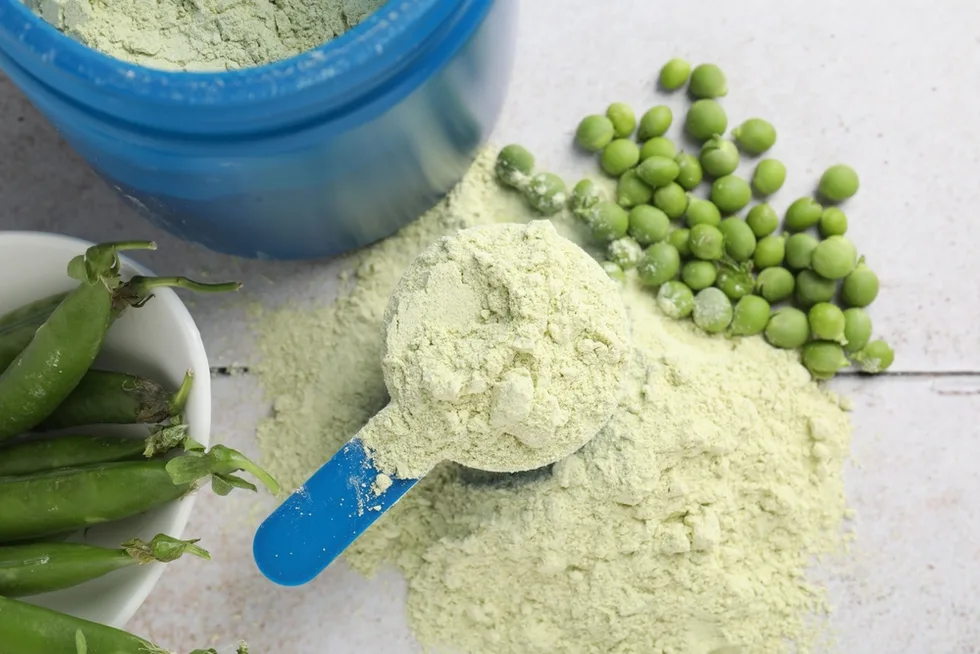
Pea protein isolate is basically a super-concentrated form of protein made from yellow split peas. Most of the starch and fiber are removed during processing, leaving behind a powder that’s packed with protein—usually around 80% protein by weight. In practical terms, one scoop can give you close to half the protein many adults need in a day for about the calories of a small snack.

The Easy Way
to lose weight and get healthy.
See if you qualify
It’s also naturally low in fat and very low in carbs, which is why it works well in everything from smoothies to higher-protein meal plans. One thing to know, though: because most of the fiber gets stripped out during processing, pea protein powder doesn’t offer the same fiber benefits as eating whole peas. So it’s still important to get fiber from foods like vegetables, beans, fruit, nuts, seeds, or whole grains if you eat them.
*Recommended dietary allowance (RDA) is defined as the average daily amount of nutrients needed to meet the requirements of nearly all healthy people in a specific group. Values based on a 2,000-calorie diet. Numbers vary by brand.
💊 Vitamins & minerals in pea protein powder (per 1 scoop / 30g)
| Vitamin/Mineral | Amount | % RDA* |
|---|---|---|
| Iron | 5 mg | 28% |
| Phosphorus | 75 mg | 6% |
| Calcium | 50 mg | 4% |
| Magnesium | 15 mg | 4% |
| Potassium | 130 mg | 3% |
*Values are approximate and vary by brand and processing method.
Iron is really the standout nutrient here. One scoop of pea protein powder can provide close to 30% of your daily iron needs, which is one reason it’s popular in plant-based diets. That can be especially helpful for vegans and vegetarians, since the iron in plant foods isn’t absorbed as efficiently as the iron found in meat. Pairing pea protein with a vitamin C source, like strawberries, mango, or citrus, can help your body absorb more of it.
The rest of the mineral profile is more of a small bonus than a major selling point. Pea protein does contain some calcium, magnesium, potassium, and phosphorus, but not in especially high amounts. It’s best thought of as a convenient protein source first, with a few extra nutrients coming along with it.
🔍 Nutrient breakdown
Glycemic index (GI) of pea protein
Glycemic index: 14 (Low)
💡 Tip: Pea protein has a very low glycemic index, meaning it has minimal impact on blood sugar levels on its own. Research suggests that consuming pea protein alongside carbohydrates can help moderate the blood glucose response compared to eating carbohydrates alone—a useful consideration for blood sugar management and sustained energy.
Is pea protein high in protein?
✔️ Yes – pea protein contains approximately 22g of protein per scoop (30g).
Better protein alternatives: Whey protein isolate | Casein | Egg white protein
Is pea protein high in fiber?
❌ No – pea protein powder has approximately 1g of fiber per scoop.
💡 Tip: The processing required to isolate pea protein removes most of the natural fiber found in whole peas. If fiber is a priority—and it should be for weight management—make sure you’re eating plenty of whole vegetables, legumes, and whole grains alongside your protein powder.
Is pea protein low in carbs?
✔️ Yes – pea protein has approximately 2g of carbs per scoop.
💡 Tip: The near-absence of carbohydrates makes pea protein a flexible option for a wide range of eating patterns, from standard calorie-counting approaches to lower-carb diets. Just note that flavored varieties may contain added sugars that raise the carb count.
Is pea protein gluten-free?
✔️ Yes – pea protein is naturally gluten-free. Cross-contamination during manufacturing is possible, so if you have celiac disease or a serious gluten sensitivity, look for products with a certified gluten-free label.
Is pea protein good for fat loss?
✔️ Yes – pea protein supports fat loss as part of a calorie-controlled diet by helping you eat less overall and preserve the lean muscle that keeps your metabolism active. It doesn’t target fat directly—no single food does—but it’s a genuinely useful tool for the conditions that make fat loss possible.
🍽️ Diet compatibility: Which diets include pea protein?
| Diet | ✅/❌ | Why |
|---|---|---|
| Keto | ✅ | With around 2g of carbs per scoop, pea protein fits comfortably within keto macros. Check flavored varieties for added sugars. |
| Paleo | ❌ | Paleo excludes legumes, so pea protein—derived from yellow split peas—generally doesn’t fit this framework. |
| Mediterranean | ✅ | Plant-based protein sources are a cornerstone of the Mediterranean diet, and pea protein aligns well with its emphasis on whole, minimally processed foods. |
| Vegan | ✅ | Pea protein is entirely plant-derived and free from animal products, making it a go-to protein source for vegans. |
| Gluten-free | ✅ | Pea protein is naturally gluten-free. Those with celiac disease should look for certified gluten-free products to ensure no cross-contamination. |
Pea protein is one of the more universally compatible protein sources—it works across vegan, keto, Mediterranean, and gluten-free eating patterns without much modification. The main exception is paleo, which avoids legumes by definition. For everyone else, it’s a flexible addition that can be incorporated without restructuring your overall approach to eating.
🌟 Is pea protein healthy? What are the health benefits?
Metabolic health: Is pea protein good for your metabolism?
- Boosts metabolism? ✔️ Modestly – Protein has a higher thermic effect than carbohydrates or fat, meaning your body burns more calories digesting it. Pea protein benefits from this like any high-quality protein source, though the effect is modest rather than dramatic.
- Improves insulin sensitivity? ✔️ Possibly – Research shows that consuming pea protein alongside carbohydrates significantly reduces the blood glucose response compared to carbohydrates alone, suggesting it may help support more stable insulin levels over time.
- Effect on fat storage? Positive – By supporting satiety and helping you maintain a calorie deficit more comfortably, pea protein indirectly supports conditions that reduce fat storage.
Cholesterol impact: Does pea protein affect cholesterol levels?
- Does it lower LDL (bad) cholesterol? ✔️ Possibly – Research indicates that combined with dietary fiber, pea protein can produce meaningful reductions in total cholesterol. Human trial data is still limited, so this is a promising but not fully established benefit.
- Does it raise HDL (good) cholesterol? ❌ No strong evidence – There isn’t robust data suggesting pea protein specifically raises HDL in humans.
- Overall impact on heart health? Positive, with caveats – Pea protein has been found to have antioxidant, anti-hypertensive, and anti-inflammatory properties along with cholesterol-lowering potential. Most of the cardiovascular research has been done in animal models, and more large-scale human trials are needed.
💡 Tip: If heart health is a priority, pea protein works best as part of a broader plant-forward diet—not as a standalone intervention.
Can I eat pea protein in a calorie deficit?
✔️ Yes, with confidence: At around 110 calories per scoop with 22g of protein, pea protein is one of the more calorie-efficient ways to hit your protein targets. It fits easily into a deficit without using up significant calorie room.
💡 Tip: Use pea protein to replace higher-calorie protein sources rather than adding it on top of your usual intake. Swapping a high-calorie snack for a pea protein smoothie is a practical way to reduce calories while keeping protein up.
Is pea protein rich in antioxidants?
✔️ Limited, but present: Peas contain bioactive compounds including phenolic acids, flavonoids, and saponins that contribute to antioxidant and anti-inflammatory activity. Some of these are preserved in protein powder form, though the concentration is lower than in whole peas or fruits and vegetables.
Does pea protein support gut health?
✔️ Modestly: Research on pea protein suggests it increases production of short-chain fatty acids in the gut, which are associated with a healthier gut microbiome. The effect is less pronounced than what you’d get from high-fiber foods, but it’s a positive signal.
Does pea protein support digestion?
Positive: Pea protein isolate is generally well-tolerated and easier on digestion than whole peas, which can cause gas and bloating due to their fiber and starch content. The isolation process removes most of the components responsible for digestive discomfort, making it one of the more stomach-friendly plant proteins available.
Does pea protein help you feel satiated and less hungry?
High: This is pea protein’s clearest strength in the weight loss context. In randomized research, pea protein produced among the highest levels of satiety of all protein sources tested—comparable to casein and significantly better than whey and egg albumin when consumed as a preload before a meal.
Satiety level: High
💡 Tip: To maximize the satiety benefit, consume pea protein 20–30 minutes before your largest meal of the day, or pair it with a small amount of healthy fat (like nut butter) to slow digestion further.
Does pea protein help with nighttime cravings?
✔️ Possibly: A high-protein diet in general is associated with reduced late-night hunger, and a pea protein shake in the early evening can help keep hunger hormones more stable through the night.
💡 Tip: If nighttime cravings are a consistent issue, try a small pea protein smoothie with unsweetened almond milk about an hour after dinner rather than reaching for higher-calorie options.
Does pea protein help reduce inflammation?
✔️ Modestly: Pea proteins have demonstrated anti-inflammatory properties in research, attributed in part to their bioactive peptide content. This is a secondary benefit rather than a primary reason to use it, and most of the supporting evidence comes from lab and animal studies.
Is pea protein beneficial for brain health?
⚠️ Limited benefits: There’s no robust direct evidence linking pea protein specifically to cognitive benefits. However, adequate protein intake in general supports neurotransmitter production and overall brain function, so maintaining protein sufficiency through pea protein indirectly supports brain health.
Access GLP-1 Weight Loss with Noom
Explore a wide range of prescription medications supported by Noom’s program.Microdose GLP-1rx
Noom GLP-1rx
Noom GLP-1rx Plus
Wegovy®
Ozempic®

Metformin
Zepbound®
Mounjaro®
Liraglutide
Can pea protein improve skin and hair health?
✔️ Minor benefits: Protein is essential for collagen production, which supports skin structure, and for the structural proteins that make up hair. Getting enough protein overall—including from pea protein—contributes to skin and hair health, though pea protein isn’t uniquely superior to other protein sources in this area.
Can pea protein help balance hormones?
⚠️ Limited evidence: Unlike soy protein, pea protein does not contain phytoestrogens, so it doesn’t carry the hormonal considerations that make some people cautious about soy. There’s no strong evidence it specifically regulates hormones, but its arginine content supports the production of nitric oxide, which plays a role in blood vessel and metabolic health.
💡 Tip: If you’re mindful of hormonal health, pea protein is one of the more neutral protein powder options available—free from both dairy hormones and phytoestrogen activity.
🍽️ Best ways to eat pea protein for weight loss
- In a morning smoothie – Blend one scoop with frozen berries, spinach, and unsweetened almond milk for a high-protein breakfast that’s filling and fast. Adding a tablespoon of nut butter or a few ounces of avocado boosts satiety even further.
- As a pre-meal protein drink – Research supports consuming pea protein 30 minutes before your main meal to reduce how much you eat during that meal. A simple shake with water or almond milk is all you need.
- Stirred into oatmeal or yogurt – Unflavored pea protein can be mixed directly into oatmeal, overnight oats, or plant-based yogurt to increase protein without meaningfully changing the texture or flavor. It’s an easy way to make a healthy breakfast more filling.
- Baked into high-protein snacks – Pea protein works well in homemade protein balls, pancakes, and muffins, where it blends with other ingredients and the slightly earthy flavor is masked by cocoa, banana, or nut butter.
Try adding pea protein to these 40 healthy and delicious smoothies.
🍏 Best alternatives & comparisons (per 30g scoop)
| Food | Calories | Carbs | Fiber | Protein | Fat |
|---|---|---|---|---|---|
| Pea protein isolate | 110 | 2 g | 1 g | 22 g | 2 g |
| Whey protein isolate | 115 | 1 g | 0 g | 25 g | 0.5 g |
| Casein protein | 120 | 3 g | 0 g | 24 g | 1 g |
| Brown rice protein | 110 | 3 g | 1 g | 22 g | 2 g |
| Hemp protein | 120 | 7 g | 4 g | 15 g | 4 g |
In terms of protein content and calorie efficiency, pea protein is tightly competitive with whey and casein—the main difference is source, not effectiveness. Whey has a slight edge for post-workout muscle synthesis due to its higher leucine content, but for general weight management and satiety, pea protein is on equal footing.
Brown rice protein is the closest plant-based comparison. Combining pea protein with brown rice protein is a popular strategy because the two proteins complement each other’s amino acid profiles, resulting in a more complete plant-based protein than either alone. Hemp protein is lower in protein per scoop but higher in fiber and omega-3 fatty acids—a reasonable choice if those nutrients are a priority.
Frequently asked questions about pea protein and weight loss
How much pea protein should I take per day to lose weight?
Technically, you don’t need pea protein powder to lose weight. Weight loss ultimately comes down to maintaining a calorie deficit over time. But many nutrition experts recommend increasing protein intake during weight loss because protein helps preserve muscle mass and tends to be more filling than carbs or fat. That combination can make it easier to stay satisfied while eating fewer calories.
How much pea protein makes sense depends on how much protein you’re already getting from food. For many people, 1 to 2 scoops per day is enough to help fill gaps—especially if meals are light on protein or appetite is low.
A common target for weight loss is somewhere around 20–30 grams of protein per meal, though exact needs vary based on body size, age, activity level, and whether you’re exercising regularly. Pea protein can make hitting those numbers easier, particularly in smoothies, oatmeal, yogurt bowls, or higher-protein snacks.
That said, more protein isn’t always better. Adding protein powder on top of an already protein-heavy diet can unintentionally increase calories enough to slow weight loss. It works best as a tool to help balance meals and manage hunger—not as a magic ingredient.
Is pea protein better than whey for weight loss?
For weight loss specifically, pea protein and whey protein are pretty comparable. Research suggests pea protein can be just as filling as whey—and in some studies may even help support fullness slightly longer. Whey seems to have a small edge when it comes to maximizing muscle protein synthesis after exercise, largely because it’s especially high in the amino acid leucine.
But for everyday weight loss goals—like staying satisfied, managing hunger, and maintaining a calorie deficit—pea protein holds up very well. And for anyone who’s vegan, dairy-free, lactose intolerant, or simply prefers plant-based options, pea protein is often the more practical choice.
Can pea protein replace meals for weight loss?
Not really on its own. A scoop of pea protein powder gives you plenty of protein, but it doesn’t provide enough fiber, healthy fat, or overall nutrition to function as a balanced meal by itself. Most plain protein powders are relatively low in calories too, which can leave you hungry again pretty quickly.
That said, pea protein can absolutely be part of a meal replacement. The key is building a more complete meal around it. For example, blending pea protein with fruit, greens, Greek yogurt or nut butter, chia seeds, and a milk or dairy-free base can create a filling, higher-protein meal that’s still relatively moderate in calories.
For some people, especially those trying to simplify meals or manage appetite, a protein-based smoothie can make sticking to a calorie deficit easier. The biggest thing is making sure the meal has enough staying power—not just protein, but also some fiber and fat to help keep you satisfied.
Does pea protein cause bloating?
For many people, pea protein is actually easier on digestion than eating whole peas or beans. Most of the fiber and starch that tend to cause gas and bloating are removed during processing, leaving behind a more concentrated protein powder.
That said, digestive side effects can still happen—especially if you’re not used to higher-protein supplements or if you suddenly start using large amounts. Some people notice bloating, gas, or stomach discomfort, particularly with certain brands that contain added gums, sugar alcohols, or fiber blends.
Starting with a smaller serving, like half a scoop, and gradually increasing can help your digestive system adjust. Mixing it with plenty of liquid and paying attention to ingredient labels can help too. If a product consistently upsets your stomach, it may be the additives rather than the pea protein itself.
Is pea protein a good choice for people on GLP-1 medications like Wegovy or Zepbound?
Yes—pea protein can actually be a very practical option for people taking GLP-1 medications like Wegovy or Zepbound. These medications often reduce appetite quite dramatically, which can make it harder to eat enough protein consistently. When protein intake drops too low during weight loss, the body is more likely to lose muscle along with fat.
That’s where protein powders can help. Pea protein provides a relatively high amount of protein in a small volume of food, which can be easier to tolerate when you’re feeling full quickly or struggling to finish meals. A scoop blended into a smoothie, yogurt, or even coffee can add meaningful protein without requiring a large meal.
Some people on GLP-1 medications also find that heavier or very rich foods become less appealing, especially early in treatment. A lighter protein option like pea protein may feel easier on the stomach than a large portion of meat or a rich shake. The biggest goal is simply making it easier to hit protein needs consistently while maintaining muscle mass during weight loss.
Is flavored pea protein fine, or should I use unflavored for weight loss?
Flavored pea protein is completely fine for weight loss. The biggest thing is checking the nutrition label, since some flavored versions contain enough added sugar and calories to make them feel more like a dessert mix than a protein supplement.
In general, it’s worth looking for options with minimal added sugar—something around 2 grams or less per serving is a reasonable guideline for many people. Many brands use sweeteners to keep calories lower, but how you respond to these alternative sweeteners is important.
Unflavored pea protein does have a few advantages. It’s usually more versatile, easier to add to soups, oatmeal, pancakes, or savory recipes, and it lets you control the sweetness yourself. But if a flavored version makes it easier for you to consistently eat enough protein or enjoy your smoothie, that matters too. The best protein powder for weight loss is usually the one you’ll actually use regularly.
When is the best time to take pea protein for weight loss?
The timing probably matters less than your overall protein intake across the day, but there are a few times when pea protein may be especially helpful for weight loss and appetite control.
One option is having it before a meal. Some research suggests that consuming protein about 30 minutes before eating may help reduce hunger and naturally lower calorie intake at that meal. Even something simple like a small protein shake in the afternoon can help take the edge off intense hunger later on.
Morning is another useful window. Starting the day with more protein tends to help people stay fuller longer and may reduce mindless snacking later in the day. For people who struggle with evening cravings, shifting more protein earlier can sometimes make a noticeable difference.
And if you exercise, post-workout is a practical time too. After workouts, your muscles are more responsive to protein intake, so adding pea protein to a smoothie or meal can help support muscle maintenance while you’re losing weight.
🧠 The bottom line: Pea protein can be good for weight loss if you have trouble meeting protein requirements
Pea protein can be a helpful tool for weight loss, especially if you struggle to get enough protein through food alone. It provides a relatively large amount of protein for fairly few calories, which can help with fullness and make it easier to maintain muscle while eating in a calorie deficit. It’s also dairy-free, generally easy to digest, and works with many different eating styles.
That said, it’s best viewed as a supplement to an overall balanced diet—not a replacement for one. Protein powder alone won’t cause weight loss, but it can make it easier to stay satisfied, hit protein goals, and stick with healthier eating habits consistently. For many people, starting with one scoop a day in a smoothie or meal is plenty. The most sustainable approach is usually combining it with whole-food protein sources and meals you actually enjoy eating.

See if your insurance
covers GLP-1s.
The form only takes 2 minutes to answer. We’ll handle the rest.
GET STARTED📖 Scientific evidence
- Pea protein may help you eat less at your next meal. (Nutrition Journal, 2011) In a small study of 32 healthy men, drinking a pea protein shake 30 minutes before eating significantly reduced how much they ate, with satiety scores comparable to casein.
- Pea protein may help keep hunger at bay better than some other plant proteins. (Journal of Nutrition, 2023) In a trial of 32 healthy adults, pea protein and casein both produced significantly greater reductions in appetite and higher satiety hormone levels over four hours compared to soy, though actual food intake didn’t differ between groups.
- Pea protein hydrolysate may help keep you feeling full through more than one pathway. (Molecular Nutrition & Food Research, 2025) In a small trial of men with slightly elevated BMIs, two different pea protein hydrolysate formulations each affected satiety differently—one reduced the hunger hormone ghrelin, while the other delayed gastric emptying and led to eating fewer calories at breakfast. Note that hydrolysates are a processed form of pea protein and may behave differently from standard pea protein powder.
- Adding pea protein to a carb-heavy drink or meal may help blunt the blood sugar spike that follows. (PLOS ONE, 2026) A trial in 30 healthy adults found that consuming 20g of pea protein alongside glucose significantly reduced the blood glucose response compared to glucose alone.
- Pea protein contains bioactive compounds with potential antioxidant, anti-inflammatory, and cholesterol-lowering properties. (Molecules, 2022) A review of pea protein’s nutritional profile found that its bioactive compounds have demonstrated these effects, though most evidence to date comes from lab and animal studies rather than large human trials.
Editorial standards
At Noom, we’re committed to providing health information that’s grounded in reliable science and expert review. Our content is created with the support of qualified professionals and based on well-established research from trusted medical and scientific organizations. Learn more about the experts behind our content on our Health Expert Team page.