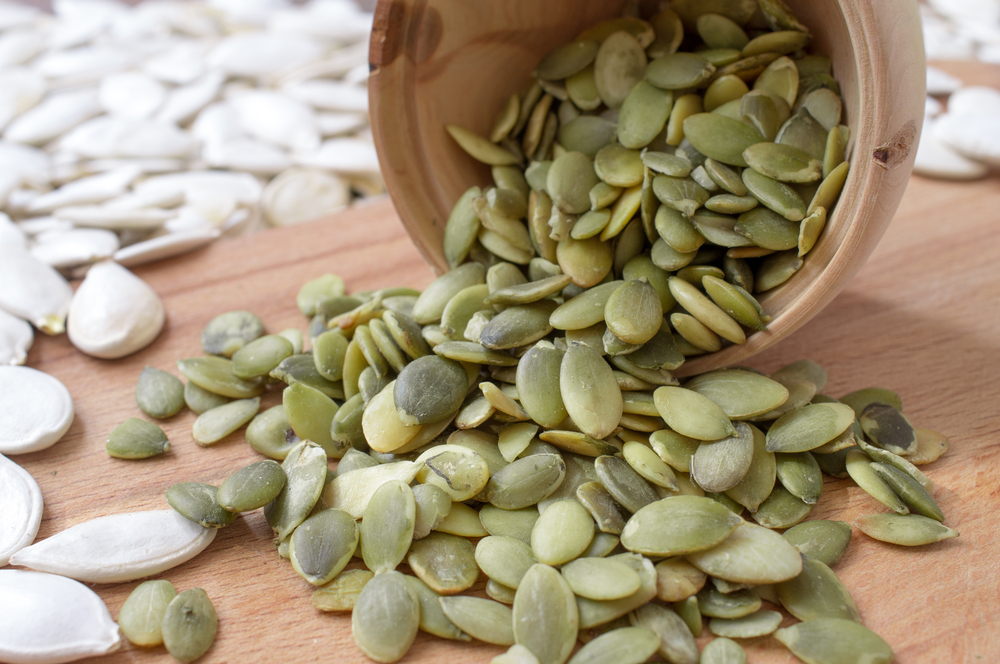
Pumpkin seeds don’t usually get the same attention as almonds or chia seeds—but they quietly check a lot of the boxes people are looking for when trying to lose weight. At about 9 grams of protein per ounce, plus fiber and mostly unsaturated fats, they’re built for staying power.
They also deliver meaningful amounts of magnesium and zinc—two minerals involved in blood sugar regulation and appetite signaling. In practical terms, that combination helps you feel full longer and keeps energy steadier, instead of the quick spike-and-crash you might get from a lower-protein snack.
At the same time, like most nuts and seeds, pumpkin seeds are relatively calorie-dense (about 151 calories per ounce), which means how you use them matters just as much as whether you eat them. A measured portion—around 1 ounce or ¼ cup—can add staying power to meals like salads, yogurt, or oatmeal without tipping your calorie intake too high. A few handfuls straight from the bag, though, can quickly double or triple that. The advantage isn’t in eating more—it’s in using them strategically, where a small amount goes a long way.
Let’s take a look at how pumpkin seeds stack up nutritionally—and how you can use them in a way that supports both weight loss and overall health.
✅ Quick answer
Yes—pumpkin seeds can support weight loss when eaten in measured portions. Their protein, fiber, and healthy fats help keep you full, but at 151 calories per ounce, they’re best used as a topping or snack.

The Easy Way
to lose weight and get healthy.
🚀 Weight-loss benefits
- High-protein for a seed – With 9g of protein per ounce, pumpkin seeds help you stay full longer and support muscle while you’re in a calorie deficit—especially helpful if you don’t eat a lot of animal protein.
- Fiber for steady energy – About 1.8g of fiber per ounce (more if you eat the shells) helps slow digestion and keep blood sugar stable, which can reduce cravings later.
- Magnesium + zinc for appetite control – Pumpkin seeds are rich in magnesium (37 to 40% of your daily needs) and a solid source of zinc, both of which play a role in blood sugar balance and fullness signals.
⚠️ Things to be mindful of:
- They’re calorie-dense – Pumpkin seeds are calorie-dense (about 151 calories per ounce). A few handfuls can quickly turn into 300+ calories without much volume, so measuring a 1 oz (¼ cup) portion helps keep things in check.
- Sodium can add up with packaged varieties – Many packaged, roasted varieties are heavily salted. High sodium intake can contribute to water retention and bloating, so unsalted or lightly salted options are usually a better everyday choice.
- Phytic acid may slightly reduce mineral absorption – Pumpkin seeds contain phytic acid, which can slightly reduce absorption of minerals like zinc and magnesium. Roasting or soaking can lower it, but for most people, this isn’t a meaningful concern in the context of a balanced diet.
🥗 Nutrients in pumpkin seeds (per 1 oz / 28g hulled seeds)
| Nutrient | Amount | % RDA* |
|---|---|---|
| Calories | 151 calories | 8% |
| Protein | 9 g | 16% |
| Total carbs | 5 g | 2% |
| Fiber | 1.8 g | 6% |
| Sugars | 0.4 g | — |
| Total fat | 13 g | 17% |
| – Saturated fat | 2.5 g | 13% |
| – Monounsaturated fat | 4.0 g | — |
| – Polyunsaturated fat | 5.9 g | — |
| Omega-3 (ALA) | 0.02 g | — |
| Omega-6 | 2.5 g | — |
*Recommended dietary allowance (RDA) is defined as the average daily amount of nutrients needed to meet the requirements of nearly all healthy people in a specific group.
Pumpkin seeds stand out for their protein and healthy fat combo. Most of the fat is unsaturated—the kind linked to heart health and better insulin sensitivity—while saturated fat stays relatively low.
They’re also naturally low in carbs (about 3 grams of net carbs per ounce), which helps support steady blood sugar and makes them an easy fit for lower-carb eating styles. One thing to keep in mind: they’re higher in omega-6 fats, so it helps to balance them with omega-3-rich foods like salmon, walnuts, or flaxseed over the course of your day.
💊 Vitamins & minerals in pumpkin seeds (per 1 oz / 28g hulled seeds)
| Vitamin/Mineral | Amount | % RDA* |
|---|---|---|
| Manganese | 1.3 mg | 57% |
| Copper | 0.38 mg | 42% |
| Magnesium | 168 mg | 37–40% |
| Phosphorus | 349 mg | 28% |
| Zinc | 2.2 mg | 20% |
| Iron | 2.5 mg | 14% |
| Niacin (B3) | 1.4 mg | 9% |
| Potassium | 229 mg | 5% |
| Folate (B9) | 16 mcg | 4% |
| Vitamin E | 0.6 mg | 4% |
| Vitamin K | 2.1 mcg | 2% |
If this looks like an impressive nutrition profile, you’re right. Just one ounce of pumpkin seeds gives you nearly 40% of your daily magnesium, 20% of zinc, 57% of manganese, and 42% of copper. What does that actually mean?
- Magnesium – Helps regulate blood sugar and energy, which can reduce energy dips and cravings
- Zinc – Supports appetite signaling (your body’s ability to recognize when you’re full)
- Manganese – Helps your body process carbs and fats more efficiently
- Copper – Supports iron use and steady energy levels
You’ll also get about 14% of your daily iron needs and smaller amounts of B vitamins—both important for maintaining energy, especially in a calorie deficit. If you eat mostly plant-based foods, pairing pumpkin seeds with vitamin C-rich foods like berries or peppers can help your body absorb that iron more efficiently.
🔍 Nutrient breakdown
Glycemic index (GI) of pumpkin seeds
Glycemic index: 10 (Low)
💡 Tip: The very low glycemic index means pumpkin seeds produce minimal blood sugar spikes. This is largely due to their fiber, fat, and protein slowing glucose absorption—all of which support steadier energy levels and reduced cravings between meals.
Are pumpkin seeds high in protein?
✔️ Yes – pumpkin seeds contain 9g of protein per 1 oz serving, making them one of the highest-protein seeds available.
Better protein alternatives: Greek yogurt | Chicken breast | Edamame
Are pumpkin seeds high in fiber?
⚠️ Moderate – pumpkin seeds have 1.8g of fiber per 1 oz serving (hulled/pepitas). Whole seeds with shells deliver more.
Noom’s Most Powerful Program
A dual-pathway GLP-1 and behavior change for lasting results.
💡 Tip: Pairing pumpkin seeds with other high-fiber foods like oats, leafy greens, or legumes significantly raises the fiber contribution of a meal and amplifies the fullness benefit.
Are pumpkin seeds low in carbs?
✔️ Yes – pumpkin seeds have 5g of total carbs per 1 oz serving, with 1.8g as fiber, yielding about 3g net carbs.
💡 Tip: Low net carbs make pumpkin seeds compatible with keto, low-carb, and blood-sugar-conscious eating plans. They won’t cause meaningful blood sugar spikes, which supports better insulin regulation over time.
Are pumpkin seeds gluten-free?
✔️ Yes – pumpkin seeds are naturally gluten-free. If you have celiac disease or a gluten sensitivity, look for a certified gluten-free label on packaged varieties to rule out cross-contamination during processing.
Are pumpkin seeds good for fat loss?
✔️ Yes, with appropriate portions – pumpkin seeds support fat loss as part of an overall calorie deficit by keeping hunger in check and supporting the metabolic functions that influence fat storage. The key is keeping servings measured—their calorie density can work against a deficit if portions are uncontrolled.
🍽️ Diet compatibility: Which diets include pumpkin seeds?
| Diet | ✅/❌ | Why |
|---|---|---|
| Keto | ✅ | At just 3g net carbs per oz, pumpkin seeds are a keto staple. Their fat and protein content support ketosis without disrupting macros. |
| Paleo | ✅ | Pumpkin seeds are a whole, unprocessed food—a natural fit for paleo. Opt for raw or minimally processed varieties. |
| Mediterranean | ✅ | The Mediterranean diet emphasizes nuts, seeds, and healthy fats. Pumpkin seeds check all three boxes and fit naturally as a snack or salad topping. |
| Vegan | ✅ | Pumpkin seeds are fully plant-based and are one of the better vegan sources of protein and zinc—two nutrients that require more planning on vegan diets. |
| Gluten-free | ✅ | Naturally gluten-free. Look for certified gluten-free packaging if you’re highly sensitive or have celiac disease. |
Pumpkin seeds are one of the more universally compatible foods across major dietary patterns. Whether you’re eating keto, vegan, Mediterranean, or simply trying to eat more whole foods, pumpkin seeds fit without modifications and add real nutritional value. The one consistent note across all dietary frameworks: portion awareness matters, since their calorie density means they can add up in any eating plan.
🌟 Are pumpkin seeds healthy? What are the health benefits?
Metabolic health: Are pumpkin seeds good for your metabolism?
- Boosts metabolism? ⚠️ Neutral – Pumpkin seeds don’t boost metabolism directly. What they do is supply magnesium and zinc, two minerals that support the enzymatic reactions underlying normal metabolic function. If you’re deficient in either—which is common—getting adequate amounts through diet may support how efficiently your body processes energy.
- Improves insulin sensitivity? ✔️ Possibly – The magnesium in pumpkin seeds is associated with improved insulin sensitivity in research. A 2018 review found that higher magnesium intake was linked to reduced risk of type 2 diabetes and improved glucose metabolism, particularly in people with lower baseline magnesium levels.
- Effect on fat storage? Positive – Improved insulin sensitivity from magnesium, better appetite regulation from protein and zinc’s role in leptin signaling, and a low glycemic index all contribute to reducing the hormonal conditions that favor fat storage—particularly visceral fat.
Cholesterol impact: Do pumpkin seeds affect cholesterol levels?
- Do they lower LDL (bad) cholesterol? ✔️ Possibly – The polyunsaturated fats and phytosterols in pumpkin seeds can help reduce LDL cholesterol absorption. Dietary phytosterols compete with cholesterol for intestinal absorption, which can help lower circulating LDL levels over time.
- Do they raise HDL (good) cholesterol? ✔️ Possibly – The monounsaturated fat content in pumpkin seeds is associated with modest HDL increases, consistent with findings across nuts and seeds rich in healthy fats.
- Overall impact on heart health? Positive – Pumpkin seeds offer a multi-pathway benefit for cardiovascular health: potential LDL reduction via phytosterols, blood pressure support via magnesium and potassium, and anti-inflammatory effects from their antioxidant profile.
💡 Tip: Choose unsalted pumpkin seeds for the best cardiovascular benefit. High sodium intake can counteract the blood pressure benefits of magnesium and potassium, so keeping sodium in check preserves the full picture.
Can I eat pumpkin seeds in a calorie deficit?
✔️ Yes, with a measuring spoon: Pumpkin seeds support a calorie deficit by keeping hunger down between meals, but at 151 calories per ounce they contribute meaningfully to daily intake. One serving (¼ cup) fits into most calorie budgets. Two servings eaten casually from a bag can add 300 calories before you’ve noticed.
💡 Tip: Pre-portioning pumpkin seeds into 1 oz snack bags at the start of the week is one of the most practical ways to get their benefits without calorie creep. Pair with a piece of fruit for a snack that combines fiber, protein, and carbohydrate.
Are pumpkin seeds rich in antioxidants?
✔️ Yes: Pumpkin seeds contain multiple antioxidant compounds including vitamin E (particularly gamma-tocopherol), carotenoids, and lutein. They also provide selenium and zinc, which support the body’s own antioxidant enzyme systems. This antioxidant profile contributes to reduced oxidative stress, which is associated with metabolic dysfunction over time.
Do pumpkin seeds support gut health?
✔️ Yes: The fiber in pumpkin seeds acts as a prebiotic, feeding beneficial bacteria in the colon. Healthy gut microbiota composition is increasingly linked to weight regulation, metabolic health, and appetite hormone signaling. While the fiber content per ounce is modest, it contributes to overall daily fiber intake when used regularly.
Do pumpkin seeds support digestion?
Positive: Pumpkin seeds support normal digestion through their fiber content, which promotes regular bowel movements. Their magnesium also relaxes smooth muscle in the digestive tract. If you’re not accustomed to high-fiber foods, introducing large amounts of pumpkin seeds too quickly can cause temporary bloating—start with a smaller serving and build up gradually.
Do pumpkin seeds help you feel satiated and less hungry?
High satiety: The combination of protein, fat, and fiber in pumpkin seeds makes them one of the more filling snack foods per calorie. Protein and fat slow gastric emptying, while fiber adds bulk and signals fullness. Research on high-protein snacks consistently shows reduced subsequent calorie intake compared to lower-protein alternatives.
Satiety level: High
💡 Tip: For the most complete fullness signal, eat pumpkin seeds as part of a mixed snack rather than alone—pairing them with fruit, yogurt, or vegetables adds volume and carbohydrates that complement the protein and fat.
Do pumpkin seeds help with nighttime cravings?
✔️ Possibly: Pumpkin seeds contain tryptophan, an amino acid the body converts into serotonin and melatonin, both of which support relaxation and sleep quality. Better sleep is directly associated with reduced appetite-stimulating hormones the following day. A small evening serving may help reduce late-night cravings through both the direct fullness effect and the downstream effect of supporting better sleep.
💡 Tip: Keep any nighttime serving measured at 1 oz or less. Evening eating is often where portion control breaks down—pre-portioning before you settle in for the night removes the temptation to keep reaching into the bag.
Do pumpkin seeds help reduce inflammation?
✔️ Yes: Pumpkin seeds are anti-inflammatory through multiple pathways—their polyunsaturated fats reduce pro-inflammatory signaling, vitamin E and other antioxidants neutralize free radicals, and zinc supports immune regulation. Chronic low-grade inflammation is increasingly recognized as a driver of obesity and metabolic disease, making anti-inflammatory foods a meaningful part of a weight management approach.
Are pumpkin seeds beneficial for brain health?
✔️ Yes: Several nutrients in pumpkin seeds support cognitive function. Zinc is involved in neurotransmitter regulation and has been associated with better memory and mood stability. Magnesium supports nerve transmission and has been studied for its role in reducing stress and anxiety. Tryptophan converts to serotonin, a neurotransmitter that regulates mood and appetite.
Can pumpkin seeds improve skin and hair health?
✔️ Yes, modest benefits: Zinc is one of the most important minerals for skin health—it’s involved in wound healing, sebum regulation, and collagen production. The vitamin E in pumpkin seeds acts as a fat-soluble antioxidant that protects cell membranes. For hair, zinc supports the integrity of hair follicles, and adequate zinc intake is associated with reduced hair shedding.
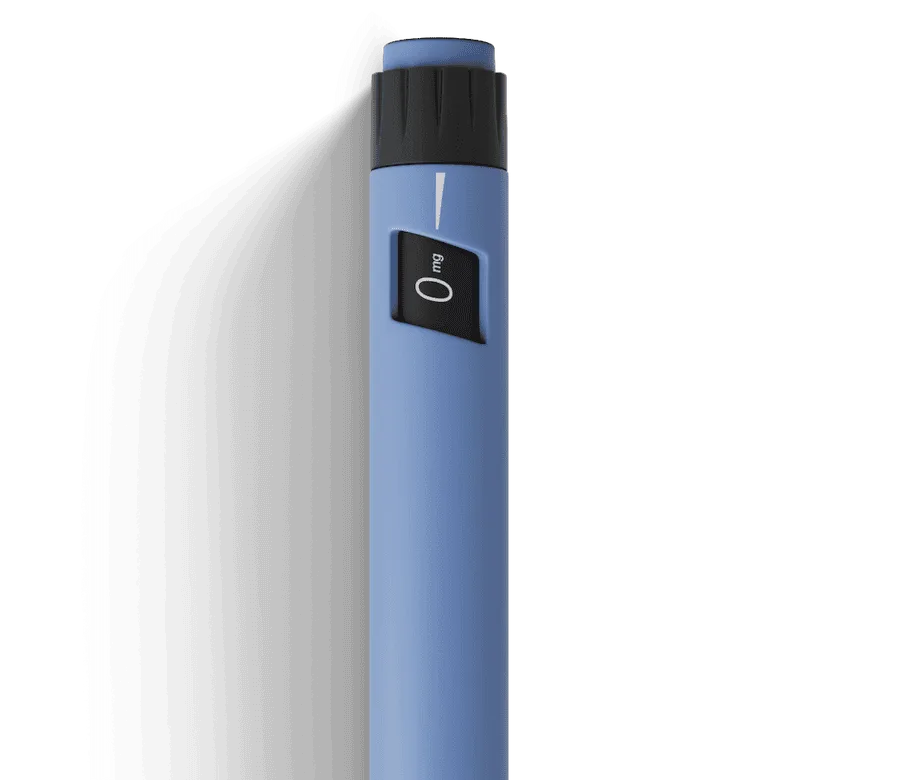
Access GLP-1 Weight Loss with Noom
Explore a wide range of prescription medications supported by Noom’s program.
Microdose GLP-1rx
Noom GLP-1rx
Noom GLP-1rx Plus
Wegovy®
Ozempic®
Metformin
Zepbound®
Mounjaro®
Liraglutide
Can pumpkin seeds help balance hormones?
✔️ Yes, with some evidence: Zinc supports testosterone production and thyroid function. Magnesium has been associated with reduced cortisol response to stress—and chronically elevated cortisol is one of the key hormonal drivers of abdominal fat storage. Some early research also suggests pumpkin seed oil may have mild phytoestrogenic effects relevant to menopause, though more human research is still needed.
💡 Tip: Hormonal balance is individual and context-dependent. Pumpkin seeds support the nutritional foundations of hormone health—adequate zinc, magnesium, and healthy fats—but they’re a contribution to a dietary pattern, not a standalone solution. Focus on overall diet quality, sleep, and stress management for the broadest benefit.
🍽️ Best ways to eat pumpkin seeds for weight loss
- As a salad topper – A tablespoon or two of pumpkin seeds adds crunch, protein, and staying power to any salad.
- Stirred into oatmeal or yogurt – Mixing pumpkin seeds into morning oats or Greek yogurt adds protein and healthy fat that slows the digestion of carbohydrates, keeping blood sugar steadier and pushing back hunger later in the morning.
- Pre-portioned as a snack – A measured 1-oz serving of pumpkin seeds paired with a piece of fruit makes a filling afternoon snack. The key is pre-portioning: measuring into a small container before you’re hungry prevents the handful-by-handful eating that pushes servings well beyond one ounce.
National Pumpkin Seed Day is celebrated each year on the first Wednesday in October. Try these healthy pumpkin seed recipes:
- Toasted Pumpkin Muesli — Minimalist Baker
- Pumpkin Seed Hummus — Half Baked Harvest
- Healthy Granola — Love & Lemons
🍏 Best alternatives & comparisons (per 1 oz serving)
| Food (1 oz) | Calories | Carbs | Fiber | Protein | Fat |
|---|---|---|---|---|---|
| Pumpkin seeds (pepitas) | 151 | 5 g | 1.8 g | 9 g | 13 g |
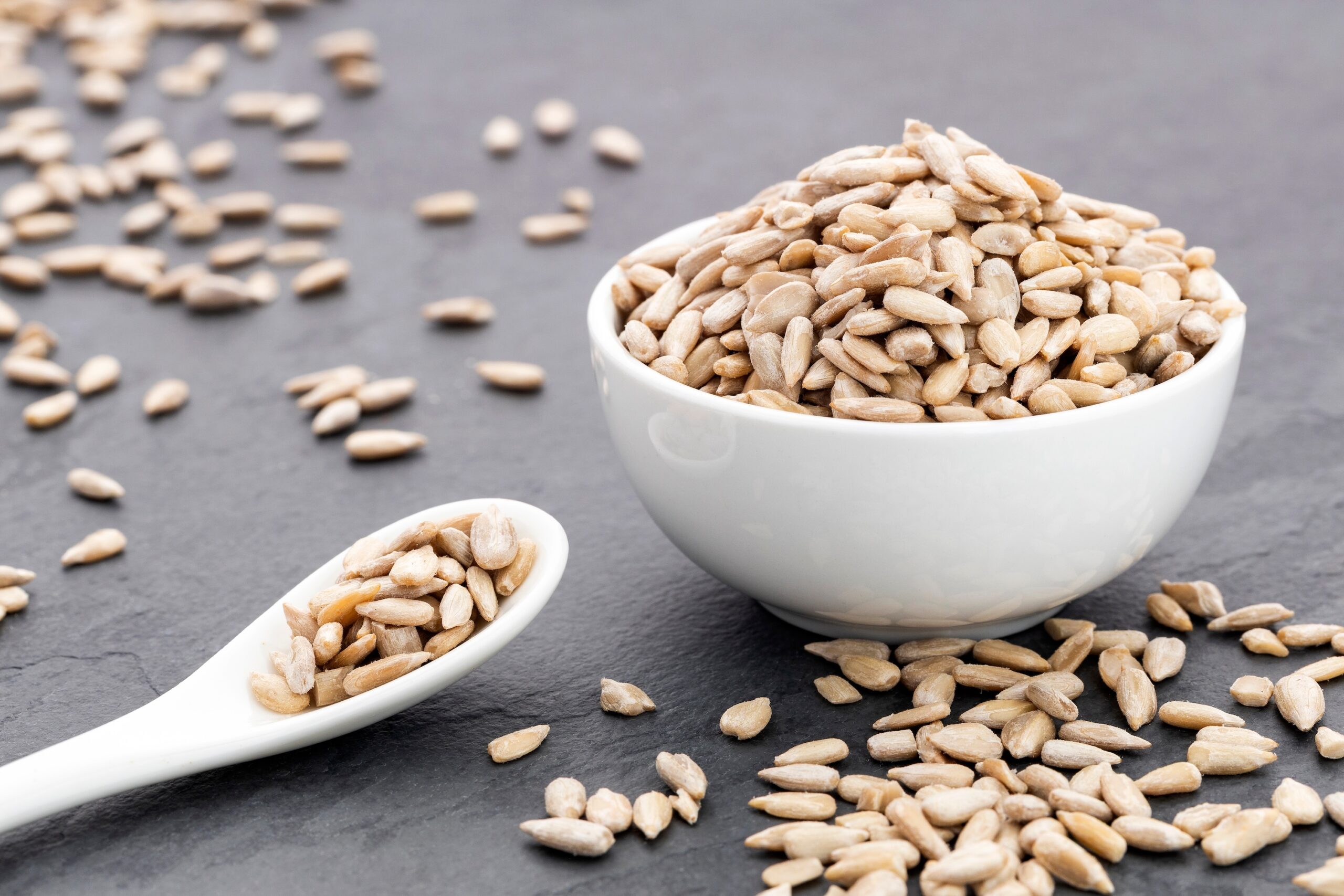
| Sunflower seeds | 165 | 7 g | 2.4 g | 5.5 g | 14 g |
| Hemp seeds | 166 | 2.6 g | 1.2 g | 9.5 g | 14.6 g |
| Almonds | 164 | 6 g | 3.5 g | 6 g | 14 g |
| Chia seeds | 138 | 12 g | 9.8 g | 4.7 g | 8.7 g |
Pumpkin seeds hold their own here—and depending on your goal, they can actually be the better choice.
- For protein: Pumpkin seeds are near the top (9g), right alongside hemp and ahead of almonds, sunflower, and chia—helpful if staying full is the priority
- For fiber: Chia seeds win by a lot, so they’re a strong add-in if you’re focused on digestion and appetite control
- For overall balance: Pumpkin seeds hit a middle ground—solid protein, moderate fiber, and a strong mineral profile (especially magnesium and zinc)
Almonds have a bit more fiber and are well-studied for weight management, while hemp seeds edge slightly higher in protein. But pumpkin seeds stand out for their nutrient density in a small serving.
But this isn’t about picking one “best” seed. Rotating between them—or combining them—gives you a wider mix of nutrients while keeping meals interesting and satisfying.
Frequently asked questions about pumpkin seeds and weight loss
How many pumpkin seeds should I eat per day for weight loss?
About 1 oz (roughly ¼ cup) per day is a practical daily target for most people. That delivers the protein, fiber, and minerals without adding an outsized calorie load to your day. If you’re more active or have higher calorie needs, two servings is reasonable—just measure rather than estimate.
Are pumpkin seeds or sunflower seeds better for weight loss?
Both are useful, but pumpkin seeds have a slight edge for weight management. They’re higher in protein (9g vs. 5.5g per oz), slightly lower in calories, and significantly higher in zinc and magnesium—two minerals with direct relevance to appetite regulation and metabolic health. Sunflower seeds are rich in vitamin E and selenium, so they’re not a lesser choice—they just have a different micronutrient emphasis.
Can I eat pumpkin seeds every day?
Yes. A daily serving of about 1ounce is safe and beneficial for most healthy adults. If you’re on blood thinners or diuretics, check with your doctor first—pumpkin seeds are high in vitamin K and have mild diuretic properties that could interact with certain medications.
Are roasted or raw pumpkin seeds better for weight loss?
Both work. Raw seeds preserve slightly more heat-sensitive antioxidants. Lightly roasted seeds are nutritionally comparable and more palatable for many people. Avoid heavily roasted or flavored varieties that add significant sodium, oil, or sugar—those additions change the nutritional math. If you buy raw seeds, you can roast them at home with minimal oil and no added salt.
Do pumpkin seeds reduce belly fat?
No single food reduces belly fat in isolation—that’s not how fat loss works. What pumpkin seeds do is support the conditions that lead to overall body fat loss over time: better satiety through protein and fiber, improved insulin sensitivity through magnesium, and reduced inflammation through their antioxidant profile. All of these contribute to reduced fat accumulation as part of a consistent dietary pattern.
Are pumpkin seeds useful for people on GLP-1 medications?
Pumpkin seeds can be a practical option for people on GLP-1 medications, since appetite is often reduced, and getting concentrated nutrition in a small amount of food matters more. A tablespoon or two added to a meal or snack delivers protein, magnesium, and zinc without requiring a large volume of food. Keeping portions measured is still important given their calorie density.
Are pumpkin seeds keto-friendly?
Yes. With just 3g of net carbs per ounce, pumpkin seeds fit comfortably within keto macros. Their fat and protein content also supports sustained energy without disrupting ketosis—they’re one of the better seed options on a keto eating plan for exactly this reason.
🧠 The bottom line: Pumpkin seeds can be a good choice for weight loss
Pumpkin seeds are a genuinely useful food for weight loss. The mix of protein, fiber, and healthy fats helps you stay full, while nutrients like magnesium and zinc support blood sugar balance and appetite regulation. They’re also low on the glycemic index, so they help keep energy steady instead of setting you up for a crash.
The catch is portion size. At about 151 calories per ounce, it’s easy to overdo it without realizing. A measured ¼ cup added to a salad, yogurt, or eaten as a snack works in your favor. Eating straight from the bag? That’s where things can quietly add up. Think of pumpkin seeds as a small but strategic add-on—used intentionally, they can make your meals more satisfying without tipping your calorie balance.
The Easy Way
to lose weight and get healthy.
📖 Scientific evidence
- Pumpkin seeds are a solid source of iron and other nutrients that support healthy red blood cells. (Current Therapeutic Research, 2025) A larger 100-gram serving provides about 49% of the daily iron needs for men and 27% for women, along with zinc, magnesium, and antioxidants that all play a role in oxygen transport and energy.
- Pumpkin seed oil has been studied for its potential benefits in postmenopausal women. (Climacteric, 2011) In one study, women taking pumpkin seed oil saw improvements in cholesterol and fewer hot flashes. While whole pumpkin seeds contain these compounds in lower, less concentrated amounts than the oil, they still deliver many of the same healthy fats and plant compounds—making them a simple, food-first way to get some of those benefits.
- Magnesium helps your body manage blood sugar more effectively. (Nutrients, 2018) Research shows that getting enough magnesium is linked to better insulin sensitivity and glucose control. Pumpkin seeds are a standout source, providing about 37–40% of your daily magnesium needs in just one ounce, making them an easy, food-first way to support this.
- Zinc plays a role in how your body signals fullness. (Journal of the American College of Nutrition, 1997) Research suggests low zinc levels may disrupt appetite regulation, while getting enough helps support normal hunger signals. Pumpkin seeds provide about 20% of your daily zinc needs per ounce, making them an easy way to support this through food.
Editorial standards
At Noom, we’re committed to providing health information that’s grounded in reliable science and expert review. Our content is created with the support of qualified professionals and based on well-established research from trusted medical and scientific organizations. Learn more about the experts behind our content on our Health Expert Team page.