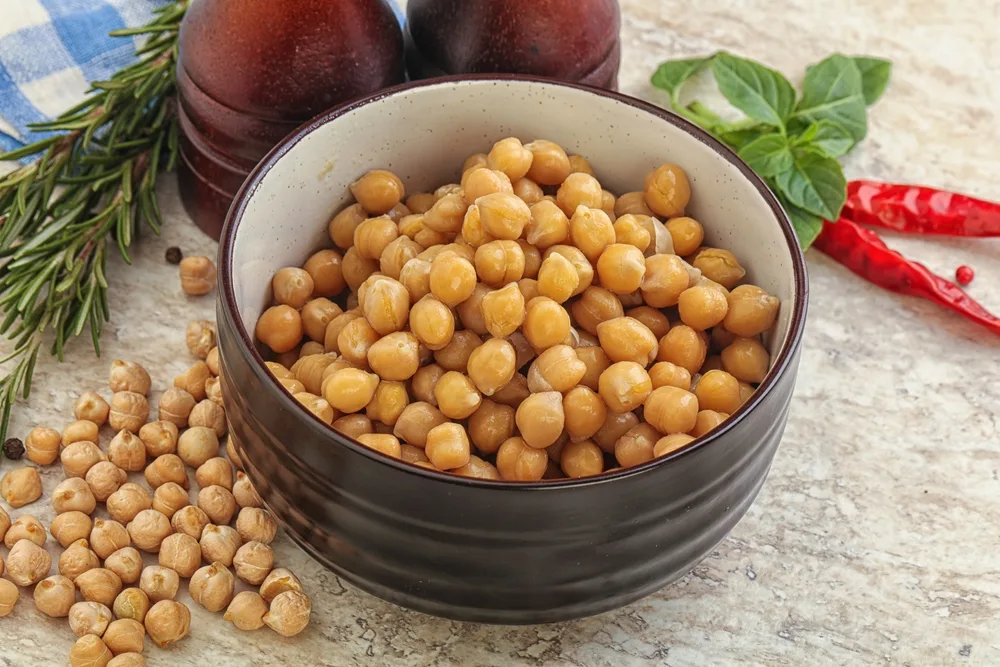
Chickpeas—also called garbanzo beans—have been a staple food across the Mediterranean, Middle East, and South Asia for thousands of years, and they’ve earned their place on modern plates too. Whether you know them as the base of your favorite hummus, a satisfying addition to a grain bowl, or that crispy roasted snack you can’t stop eating, chickpeas have a lot going for them.
What makes them stand out is the combination of fiber and protein they deliver for a moderate amount of calories. Half a cup gives you about 7.6 grams of fiber and nearly 9 grams of protein—both of which work together to slow digestion, keep you full, and help stabilize blood sugar. That’s meaningful nutrition for a food that costs next to nothing and fits into almost any meal.
That said, how you prepare and portion chickpeas matters. Deep-fried falafel and oil-heavy hummus have a different nutrient profile than boiled chickpeas in a salad. This guide breaks down the nutrients, the research, and the real-world context so you can see exactly how chickpeas fit into your weight loss goals.
✅ Quick answer
Yes—chickpeas are a good choice for weight loss. Their combination of fiber, plant-based protein, and a low glycemic index helps you feel full longer, keeps blood sugar steady, and reduces appetite.
🚀 Weight-loss benefits
- The fiber can keep you full – A half-cup serving delivers a little over grams of fiber—about 27% of what most people need in a day. Fiber slows digestion, adds bulk to meals, and delays hunger. Most people fall well short of the recommended 25–30 grams of daily fiber, and chickpeas are one of the simplest ways to close that gap..
- Their plant-based protein helps control appetite – At about 9 grams of protein per half cup, chickpeas are one of the more protein-rich plant foods available. Protein raises appetite-suppressing hormones and takes more energy to digest than carbs or fat, giving your metabolism a small but real boost. They’re not a complete protein on their own, but pairing them with a whole grain fills that gap easily.
- Their low glycemic index means stable blood sugar – With a GI of 28–36, chickpeas digest slowly and produce a gradual rise in blood sugar rather than a spike. Research has shown that chickpea-based meals can reduce blood glucose by 29–36% compared to equivalent refined-carb meals—and the effect even carries over to the next meal you eat.
⚠️ Things to be mindful of:
- They are moderately calorie-dense – Cooked chickpeas have about 164 calories per half cup, which can add up if not measured.
- They can cause digestive discomfort – Chickpeas contain fermentable carbohydrates that feed beneficial gut bacteria, but can also produce gas and bloating if you’re not used to eating them. Start with a small portion, rinse canned chickpeas thoroughly, and build up gradually.
- Processed chickpea products are less satiating – Chickpea chips, flavored hummus, and chickpea crackers can carry significantly more calories, sodium, and fat than plain cooked chickpeas. The whole-food version is best for weight loss.
🥗 Nutrients in chickpeas (per ½ cup / 100g cooked)
| Nutrient | Amount | % RDA* |
|---|---|---|
| Calories | 164 calories | 8% |
| Protein | 8.9 g | 18% |
| Total carbs | 27.4 g | 10% |
| Fiber | 7.6 g | 27% |
| Sugars | 4.8 g | — |
| Total fat | 2.6 g | 3% |
| – Saturated fat | 0.27 g | 1% |
| – Monounsaturated fat | 0.58 g | — |
| – Polyunsaturated fat | 1.16 g | — |
| Omega-3 | 0.05 g | — |
| Omega-6 | 1.10 g | — |
*Recommended dietary allowance (RDA) is defined as the average daily amount of nutrients needed to meet the requirements of nearly all healthy people in a specific group.
Chickpeas have a naturally balanced mix of carbs, protein, and fat. While 27 grams of carbs might sound high, a good portion comes from fiber and resistant starch—types of carbs your body doesn’t fully digest. That’s part of why chickpeas tend to have a steadier effect on blood sugar compared to more refined carb sources.
They also stand out when it comes to staying power. For about 164 calories, you get nearly 9 grams of protein and over 7 grams of fiber—a combination that helps you feel full and satisfied. For comparison, a similar-calorie serving of white rice provides less than 3 grams of protein and very little fiber, which can make it easier to overeat later.
💊 Vitamins & minerals in chickpeas (per ½ cup / 100g cooked)
| Vitamin/Mineral | Amount | % RDA* |
|---|---|---|
| Manganese | 1.03 mg | 45% |
| Folate (B9) | 172 µg | 43% |
| Copper | 0.35 mg | 39% |
| Iron | 2.9 mg | 16% |
| Zinc | 1.5 mg | 14% |
| Phosphorus | 168 mg | 13% |
| Magnesium | 48 mg | 11% |
| Thiamin (B1) | 0.12 mg | 10% |
| Vitamin B6 | 0.14 mg | 8% |
| Selenium | 3.7 µg | 7% |
| Pantothenic acid (B5) | 0.29 mg | 6% |
| Riboflavin (B2) | 0.06 mg | 5% |
| Calcium | 49 mg | 4% |
| Niacin (B3) | 0.53 mg | 3% |
| Vitamin K | 4.0 µg | 3% |
| Vitamin E | 0.35 mg | 2% |
| Vitamin C | 1.3 mg | 1% |
Two nutrients stand out right away: folate and manganese, both providing over 40% of your daily needs in just a half-cup. Folate plays a key role in DNA production and cell repair, while manganese supports bone health and helps your body manage oxidative stress.
Beyond that, chickpeas offer a solid mix of minerals like iron, zinc, copper, and magnesium, which can be especially helpful if you’re eating less meat. Since the iron in chickpeas is plant-based, pairing them with vitamin C-rich foods—like lemon juice, tomatoes, or bell peppers—can help your body absorb more of it.
🔍 Nutrient breakdown
Glycemic index (GI) of chickpeas
Glycemic index: 28–36 (Low)
💡 Tip: Foods with a low GI digest slowly and cause a gradual rise in blood sugar rather than a spike, which helps you avoid energy crashes and the cravings that come with them. Chickpeas’ GI is lower than most whole-grain breads and significantly lower than white rice or pasta.
Are chickpeas high in protein?
✔️ Yes – chickpeas contain 8.9g of protein per half-cup serving, which is solid for a plant food.
Better protein alternatives: Edamame | Lentils | Tofu
Are chickpeas high in fiber?
✔️ Yes – chickpeas have 7.6g of fiber per half-cup serving—about 27% of your daily value.
💡 Tip: Adding chickpeas to soups, salads, or grain bowls is an easy way to hit your daily fiber targets. Their fiber is a mix of soluble and insoluble types, so it supports both fullness and regular digestion.
Are chickpeas low in carbs?
❌ No – chickpeas have 27.4g of carbs per half cup, which is too high for a strict keto framework.
💡 Tip: If you’re watching carbs but not going full keto, chickpeas are still a smarter swap than white rice or pasta—their fiber and resistant starch mean the actual impact on blood sugar is much gentler than the total carb count suggests.
Are chickpeas gluten-free?
✔️ Yes – chickpeas are a legume, not a grain, so they’re naturally gluten-free. If you have celiac disease or gluten sensitivity, just check labels on processed chickpea products like pasta or flour blends, which may be produced in facilities that handle wheat.
Are chickpeas good for fat loss?
✔️ Yes – thanks to their high fiber and protein, chickpeas make it significantly easier to maintain a calorie deficit without feeling hungry. They won’t burn fat on their own, but they’re a practical tool for eating less overall—which is what actually drives fat loss.
🍽️ Diet compatibility: Which diets include chickpeas?
| Diet | ✅/❌ | Why |
|---|---|---|
| Keto | ❌ | At 27.4g of carbs per half cup, chickpeas are too high for a standard ketogenic diet. Small amounts may work for more liberal low-carb approaches, but chickpeas aren’t a keto staple. |
| Paleo | ❌ | Strict paleo frameworks exclude legumes due to their lectin and phytate content. Cooking reduces these compounds, but paleo followers typically avoid all beans and pulses. |
| Mediterranean | ✅ | Legumes are a cornerstone of the Mediterranean diet, and chickpeas are among the most celebrated—appearing in everything from Greek stews to Lebanese hummus. |
| Vegan | ✅ | Chickpeas are entirely plant-based and one of the most reliable protein sources in vegan diets, providing iron, zinc, folate, and manganese that can be harder to get without animal products. |
| Gluten-free | ✅ | Chickpeas are naturally gluten-free and can even be substituted for wheat flour in baking. A safe, whole-food option for anyone managing celiac disease or gluten sensitivity. |
Chickpeas fit Mediterranean, vegan, vegetarian, and gluten-free eating patterns easily. Their double status in USDA guidelines—counting as both a vegetable serving and a protein serving—makes them uniquely efficient for anyone trying to eat more plants. The main exception is keto and very strict low-carb diets, where edamame, black soybeans, or lupini beans are better swaps.
🌟 Are chickpeas healthy? What are the health benefits?
Metabolic health: Are chickpeas good for your metabolism?
- Boosts metabolism? ✔️ Modest effect – Chickpeas won’t dramatically speed up your metabolism, but their protein content requires more energy to digest than carbs or fat. More importantly, protein helps maintain lean muscle mass over time—the primary driver of a healthy resting metabolic rate.
- Improves insulin sensitivity? ✔️ Yes – The resistant starch and soluble fiber in chickpeas slow glucose absorption and reduce post-meal insulin spikes. Regular chickpea consumption has been linked to improved insulin sensitivity and better blood sugar control.
- Effect on fat storage? Positive – By keeping blood sugar and insulin levels steady, chickpeas reduce the hormonal signals that promote fat storage, particularly around the abdomen. A lower-glycemic diet built around foods like chickpeas is consistently associated with less fat accumulation over time.
Cholesterol impact: Do chickpeas affect cholesterol levels?
- Do they lower LDL (bad) cholesterol? ✔️ Yes – The soluble fiber in chickpeas binds to cholesterol in the digestive tract and helps clear it before it’s absorbed. Reviews of multiple studies link regular legume intake to meaningful reductions in LDL cholesterol.
- Do they raise HDL (good) cholesterol? Limited evidence – Chickpeas improve the overall lipid profile and reduce triglycerides, but the specific effect on HDL isn’t well-established. The LDL reduction is the stronger, better-supported finding.
- Overall heart health impact? Favorable – Chickpeas contribute to cardiovascular health through fiber, potassium, magnesium, and folate—all of which support healthy blood pressure and reduced cardiovascular risk.
💡 Tip: Replacing red meat with a chickpea-based meal two or three times per week is a practical, sustainable way to improve your heart health over time.
Can I eat chickpeas in a calorie deficit?
✔️ Yes, with confidence: At 164 calories per half cup, chickpeas offer substantial fiber, protein, and micronutrients for a moderate caloric investment. The protein and fiber mean you’ll feel genuinely full from a reasonable portion—exactly what you need when eating in a calorie deficit.
💡 Tip: Build chickpeas as the base of a meal rather than a side—a chickpea bowl with leafy greens, roasted vegetables, and tahini dressing can be a satisfying, complete dinner under 500 calories.
Are chickpeas rich in antioxidants?
✔️ Yes: Chickpeas contain polyphenols, flavonoids, carotenoids, and saponins that protect cells from oxidative damage. Their saponin content in particular has been studied for anti-inflammatory properties. Selenium, copper, and manganese also support your body’s built-in antioxidant systems.
Do chickpeas support gut health?
✔️ Yes: Chickpeas contain raffinose, a soluble fiber that functions as a prebiotic—feeding beneficial gut bacteria in the colon. A well-supported gut microbiome is increasingly linked to healthier body weight, better immune function, and improved mood.
Do chickpeas support digestion?
✔️ Positive: The fiber in chickpeas promotes regular bowel movements and adds bulk to stool. When gut bacteria ferment chickpea fiber, they produce short-chain fatty acids that help maintain the health of the colon lining. People new to high-fiber foods may initially experience some bloating—this typically settles as the gut adapts.
Do chickpeas help you feel satiated and less hungry?
✔️ Yes: The combination of protein, fiber, and resistant starch delays gastric emptying, keeping food in your stomach longer and holding off hunger signals. Research has shown that chickpea-based meals produce a significant reduction in appetite and calorie intake at subsequent meals compared to refined-carb alternatives.
Satiety level: High
💡 Tip: Adding chickpeas to lunch is one of the most effective ways to get through the afternoon without reaching for a snack—their fiber and protein carry you well past the 3pm slump.
Do chickpeas help with nighttime cravings?
✔️ Possibly: Chickpeas contain magnesium, which supports relaxation and sleep quality, and their protein content helps keep blood sugar stable through the evening. A light chickpea-based dinner is a solid option for curbing late-night hunger without loading up on calories before bed.
💡 Tip: A warm chickpea soup or stew in the evening is filling, low in calories, and easy to digest—a much better choice than reaching for something processed when cravings hit.
Do chickpeas help reduce inflammation?
✔️ Yes: Chickpeas contain anti-inflammatory polyphenols and saponins, and they’re central to the Mediterranean dietary pattern, which is consistently associated with lower levels of inflammatory markers. They’re a meaningful contributor to an overall anti-inflammatory eating pattern.
Are chickpeas beneficial for brain health?
✔️ Yes: Chickpeas provide choline, B vitamins—especially folate and B6—and zinc, all of which support neurotransmitter function, memory, and cognitive health. Folate is particularly important for brain development and has been studied in relation to reduced risk of cognitive decline with age.
Can chickpeas improve skin and hair health?
✔️ Yes, modest benefits: Zinc in chickpeas supports skin cell turnover, wound healing, and reduced hair loss, while vitamin E contributes to protection from oxidative damage. These effects are real but subtle—chickpeas are a helpful addition to a diet that supports skin health from the inside.
Can chickpeas help balance hormones?
✔️ Limited evidence: Chickpeas contain isoflavones—mild plant-based estrogen-like compounds. For people in perimenopause or postmenopause, these phytoestrogens may offer modest support for hormonal balance and bone health. The effect is subtle rather than dramatic, and the research is still developing.
Access GLP-1 Weight Loss with Noom
Explore a wide range of prescription medications supported by Noom’s program.Microdose GLP-1rx
Noom GLP-1rx
Noom GLP-1rx Plus
Wegovy®
Ozempic®
Metformin
Zepbound®
Mounjaro®
Liraglutide
💡 Tip: Chickpeas are one piece of a larger hormonal health picture that includes sleep, stress management, and overall dietary variety. They’re a helpful addition, not a standalone fix.
🍽️ Best ways to eat chickpeas for weight loss
- Add them to salads and grain bowls – Tossing a half cup of cooked chickpeas into a salad or bowl raises the protein and fiber content without adding many calories. They absorb dressings well, add satisfying texture, and are substantial enough to keep you from reaching for seconds.
- Roast them as a crunchy snack – Spread chickpeas on a baking sheet, toss with a little olive oil and your favorite spices, and roast at 400°F until crispy. You get a snack with real staying power—far more protein and fiber than chips or crackers—and a quarter cup is usually enough to take the edge off hunger between meals.
- Use them as the base for plant-forward meals – Chickpea curries, soups, and stews are deeply filling, flavorful, and easy to build from pantry staples. These preparations let you eat a large, satisfying portion while keeping the calorie count reasonable, especially when loaded with vegetables.
National Chickpea Day is April 21. Try these healthy recipes:
🍏 Best alternatives & comparisons (per ½ cup / 100g cooked)
| Food | Calories | Carbs | Fiber | Protein | Fat |
|---|---|---|---|---|---|
| Chickpeas | 164 | 27.4 g | 7.6 g | 8.9 g | 2.6 g |
| Lentils | 116 | 20.1 g | 7.9 g | 9.0 g | 0.4 g |
| Black beans | 132 | 23.7 g | 8.7 g | 8.9 g | 0.5 g |
| Edamame | 121 | 8.9 g | 5.2 g | 11.9 g | 5.2 g |
| White beans | 139 | 25.1 g | 6.3 g | 9.7 g | 0.4 g |
| Firm tofu | 76 | 1.9 g | 0.3 g | 8.1 g | 4.8 g |
Each of these foods brings something a little different to the table. Lentils and black beans are slightly higher in fiber, while edamame and tofu offer more protein with fewer carbs. Chickpeas land somewhere in the middle, with a balanced mix of fiber, protein, and carbs that can work well in a variety of meals.
What tends to stand out with chickpeas is how flexible they are. You can eat them whole, roast them for a crunchy snack, blend them into hummus, or add them to salads, soups, and grain-free bowls. That kind of versatility can make it easier to use them regularly, which matters more than any single nutrient when it comes to building consistent habits.
Frequently asked questions about chickpeas and weight loss
How many chickpeas should I eat per day for weight loss?
A half cup to one cup of cooked chickpeas per day is the practical portion for most people. That range gives you a meaningful dose of fiber and protein without pushing your calorie budget too far.
Are canned chickpeas as healthy as dried and cooked?
Yes, canned chickpeas retain most of their nutritional value and are comparable to home-cooked dried chickpeas. The main difference is sodium. Rinsing them thoroughly under cold water removes up to 40% of the sodium and eliminates most of the starchy liquid that can cause bloating.
Can chickpeas make you gain weight?
Chickpeas are unlikely to cause weight gain when eaten in reasonable portions. Research actually points the other way—people who eat legumes regularly tend to have lower body weight over time. Where chickpeas can contribute to weight gain is in high-calorie preparations: deep-fried falafel, creamy hummus loaded with olive oil, or chickpea snack foods eaten in large amounts.
Do chickpeas cause bloating?
They can, especially when you’re first adding them to your diet. The fermentable carbohydrates in chickpeas produce gas as a byproduct. The good news: this typically improves as your gut bacteria adapt. In the meantime, rinsing canned chickpeas, starting with smaller portions, and pairing them with digestive-friendly herbs like cumin or fennel can all help.
Are chickpeas better than rice for weight loss?
For weight loss purposes, yes. A half cup of white rice has about 130 calories but delivers less than 0.5 grams of fiber and under 3 grams of protein. The same amount of chickpeas has 164 calories but gives you 7.6 grams of fiber and nearly 9 grams of protein—a much better deal for keeping you full.
Are roasted chickpeas a good weight-loss snack?
Yes, when prepared simply with just olive oil and spices, roasted chickpeas are one of the better snack options. They’re higher in protein and fiber than most crackers, chips, or pretzels. Just watch for store-bought versions that add sugar, excessive oil, or flavored coatings that significantly increase the calorie count.
Can I eat chickpeas every day?
Yes, eating chickpeas daily is safe and, for most people, beneficial. Variety in your overall diet still matters, but daily chickpea consumption is supported by both nutritional research and the eating patterns of some of the world’s healthiest populations, including those following Mediterranean and traditional Middle Eastern diets.
🧠 The bottom line: Chickpeas are an excellent choice for weight loss
Chickpeas are one of the most consistently useful foods for weight management—not because of any single dramatic property, but because they check nearly every box that matters. They keep you full, stabilize blood sugar, deliver meaningful nutrients, and fit into a huge variety of eating patterns. They’re also inexpensive, easy to prepare, and available canned for when cooking from scratch isn’t happening.
The fiber and protein combination drives most of the benefit. For a half-cup serving at 164 calories, you’re getting 7.6 grams of fiber and 8.9 grams of protein—a combination that actively reduces appetite at subsequent meals, not just while you’re eating them. People who eat legumes regularly are also more likely to maintain a healthier body weight over time, even without deliberate calorie restriction.
The practical approach is simple: use chickpeas to replace less nutritious foods, not pile them on top of everything you’re already eating. Swap white rice or a bag of pretzels for chickpeas at one meal, start with half a cup a few times a week, let your gut adjust, and build from there. Keep portions realistic, choose the whole-food version over processed products whenever possible, and pair them with vegetables and healthy fats to get the most from every meal. If you’re looking for a sustainable way to build eating habits that stick, Noom’s program is built around exactly that kind of practical, evidence-based approach.

See if your insurance
covers GLP-1s.
The form only takes 2 minutes to answer. We’ll handle the rest.
GET STARTED📖 Scientific evidence
- Chickpeas may help steady blood sugar and reduce how much you eat later. (Journal of Food Science, 2016) In this study, people were given chickpeas or white bread as a “preload” (a small meal eaten before another meal). When participants ate chickpeas, their blood sugar rose more slowly—about 29–36% lower than after white bread—and they ended up eating less at their next meal.
- Chickpeas may make you less hungry at your next meal. (Nutrients, 2023) This review found that chickpeas can help keep blood sugar more stable not just during the meal they’re eaten, but into the next one—a “second-meal effect.” That steadier response may help reduce hunger and lead to eating less later.
- Eating chickpeas and hummus is linked to better weight and heart health. (Nutrients, 2016) This review found that people who regularly eat chickpeas tend to consume more fiber, plant protein, and key nutrients—and are more likely to have lower body weight and improved cardiovascular markers.
- Eating legumes like chickpeas may support modest weight loss. (American Journal of Clinical Nutrition, 2016) In a review of 21 trials, people who added pulses (like chickpeas, lentils, and beans) to their diets lost a small amount of weight—even without intentionally cutting calories. The effect was modest, but consistent across studies.
Editorial standards
At Noom, we’re committed to providing health information that’s grounded in reliable science and expert review. Our content is created with the support of qualified professionals and based on well-established research from trusted medical and scientific organizations. Learn more about the experts behind our content on our Health Expert Team page.