
What you’ll learn:
- Protein popcorn is a boosted version of the classic whole grain snack.
- Khloud protein popcorn is a popular brand that uses whey protein powder.
- Protein popcorn is one way to add protein to your diet, but it’s still important to eat balanced meals.
Protein has become one of the most sought-after nutrients, and food brands everywhere seem to be racing to deliver it. You’ll find protein-packed lattes at Dunkin’ and Starbucks, high-protein meals at Subway and Chipotle, and even protein water. The premise behind all of it is the same: people want more protein, and they want it wherever they can get it.
Now that trend has reached the snack aisle in the form of protein popcorn. The big name in protein popcorn is by Khloud, a brand founded by Khloé Kardashian. Khloud protein popcorn was first sold at Target and is now featured at different grocery stores and Starbucks locations nationwide.
But popcorn is already a naturally healthy whole grain snack—so does adding protein actually make it more nutritious? And when you stack it up against air-popped popcorn and other flavored popcorns, does the extra protein really set it apart?
In this article, we break down what protein popcorn and Khloud popcorn are, what’s in them, and whether more protein makes them healthier. We’ll compare the new snack to other popcorns and get some nutrition insights from Maggie Hudspeth, RDN, Noom’s Senior Manager of Coaching.
What is protein popcorn?
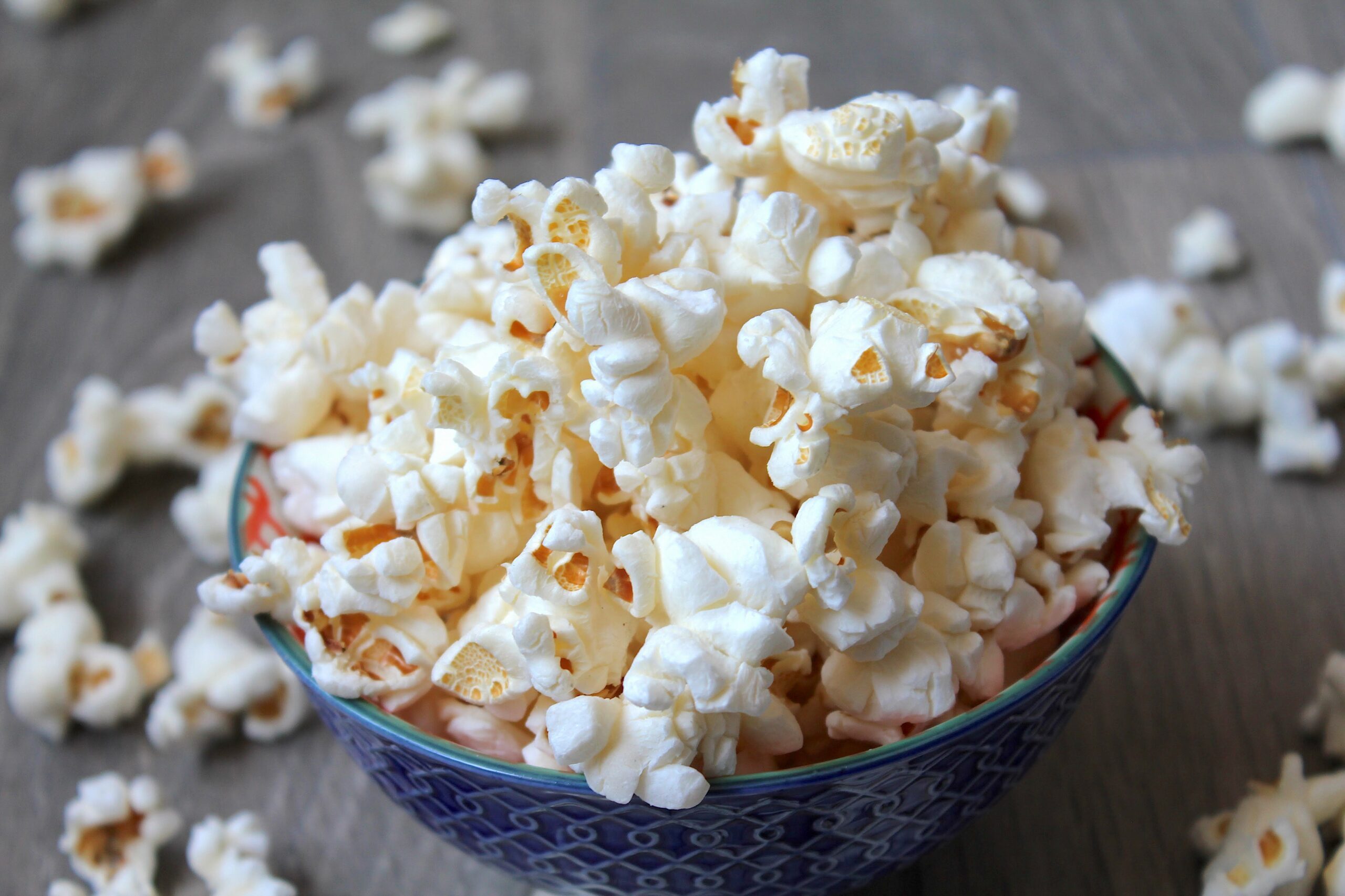
Most protein popcorn on the market is regular popped corn coated with a powdered protein source—usually something dairy-based like milk protein isolate or whey. There’s nothing protein-enhanced about the corn itself; the extra protein comes entirely from what’s added to it.
That’s worth knowing because plain air-popped popcorn is already a solid snack on its own—it’s a whole grain, a good source of fiber, and low in calories for the volume, at about 31 calories per cup, and one cup has roughly 1 gram of protein. Most protein popcorn brands aim to land in the 7 to 10 grams of protein per serving—about 2 to 3 grams per cup—which is a meaningful jump from plain popcorn, but one that comes from a supplemental ingredient rather than anything inherent to the corn.
What is Khloud protein popcorn?
Khloud popcorn is made with a proprietary milk protein isolate-based coating they call Khloud Dust. Milk protein isolate is a concentrated form of dairy protein that contains both casein and whey. It has been linked in research to supporting muscle growth and appetite regulation, which is why you’ll see it in a lot of protein powders and shakes.
The 7 flavors are Olive Oil & Sea Salt, Sweet & Salty Kettle Corn, White Cheddar, Truffle & White Cheddar, Cinnamon Roll, Dill Pickle, and Birthday Cake. All have 7 grams of protein per serving, with calories ranging from 150 to 160. The fat content is consistent across flavors at 9 to 10 grams per serving, coming from olive and coconut oil rather than seed oils.
Where the flavors differ most is in added sugar and fiber. The savory flavors—White Cheddar, Olive Oil & Sea Salt, Dill Pickle, and Truffle & White Cheddar—have no added sugar and 2 grams of fiber per serving. The sweeter flavors—Sweet & Salty Kettle Corn, Cinnamon Roll, and Birthday Cake—drop to 1 gram of fiber and add 5 to 6 grams of sugar per serving. That’s not a dealbreaker, but it’s worth noting if you’re keeping an eye on added sugar intake
Here’s a look at the nutritional information for all 7 varieties:
| Flavor | Calories | Fiber (g) | Fiber (g) | Fiber (g) | Added sugar (g) |
|---|---|---|---|---|---|
| White Cheddar | 160 | 7 | 10 | 2 | 0 |
| Olive Oil & Sea Salt | 150 | 7 | 9 | 2 | 0 |
| Dill Pickle | 150 | 7 | 10 | 2 | 0 |
| Truffle & White Cheddar | 150 | 7 | 10 | 2 | 0 |
| Sweet & Salty Kettle Corn | 150 | 7 | 9 | 1 | 5 |
| Cinnamon Roll | 150 | 7 | 9 | 1 | 6 |
| Birthday Cake | 150 | 7 | 9 | 1 | 6 |
What’s in Khloud popcorn? A closer look at the ingredients
The ingredient list for most Khloud flavors is pretty short. The base is air-popped popcorn, coated in the Khloud Dust and popped in olive oil, coconut oil, or both, depending on the flavor.
The ingredients beyond popcorn, oil, and Khloud Dust reflect whatever flavor you’re eating: cheddar cheese powder for the White Cheddar and Truffle & White Cheddar, cane sugar and cinnamon for Cinnamon Roll, dill and vinegar powder for Dill Pickle, and natural color ingredients like spirulina and turmeric extract for Birthday Cake.
Notably, none of the flavors use seed oils like canola or sunflower; olive and coconut oil are the fat sources across the board.
Is protein popcorn healthy?
The honest answer: it depends on what you’re looking for. Protein is a cornerstone of good nutrition—it’s essential for building and maintaining muscle, supporting immune function, and keeping you full between meals. Most adults need at least 0.8 grams per kilogram of body weight per day, and that number goes up if you’re older or actively trying to lose weight.
Research also shows that higher protein intake is associated with greater fullness and reduced calorie intake at subsequent meals, partly because of how it influences satiety hormones.
So the protein boost in Khloud isn’t just a marketing claim—it has a functional basis. 7 grams of protein per serving is meaningful but not high by protein-food standards—it contributes to your daily target without coming close to meeting it on its own.
It’s also worth thinking about where that protein is coming from. A large egg, an ounce of grilled chicken, or a cup of low-fat Greek yogurt delivers just as much protein alongside a broader range of naturally occurring nutrients—and you’re likely to pair them with vegetables, fruit, or other whole foods.
Also, Khloud popcorn protein comes from milk protein isolate, a dairy powder, and several of the popcorns have multiple ingredients, which puts them in the category of ultra-processed foods. A landmark study found that people consumed more calories and gained weight on an ultra-processed diet compared to an unprocessed one, even when both diets were matched for calories, sugar, fat, fiber, and macronutrients. That doesn’t make Khloud off-limits, but it’s a useful reminder that a favorable protein number on a label doesn’t tell the whole story.
It also helps to recognize what Khloud is: a snack, not a meal. The savory flavors offer 2 grams of fiber per serving, consistent with regular popcorn, while the sweeter flavors drop to 1 gram and add 5 to 6 grams of sugar. “The benefits of higher protein intake are strongest when it’s part of a balanced diet that also includes fiber, healthy fats, and a variety of whole foods. A protein-enriched snack is a useful addition to that pattern, not a substitute for it,” reminds Hudspeth.
Khloud protein popcorn vs. air-popped popcorn
Plain air-popped popcorn is already a pretty solid snack: high in volume, relatively low in calories, and naturally rich in whole grains and fiber. Khloud changes the formula by adding protein, but it also changes the calories, fat, and overall nutrition profile in the process.
Here’s how the two compare per 30g serving:
| Nutrient | Khloud Olive Oil & Sea Salt (30g) | Air-popped popcorn (30g) |
|---|---|---|
| Calories | 150 | 110 |
| Protein | 7g | 3.5g |
| Total fat | 8g | 1.3g |
| Saturated fat | 1.5g | 0g |
| Sodium | 180mg | 0mg |
| Added sugar | 0g | 0g |
A few things stand out:
- Khloud has about double the protein – With 7 grams per serving, it might be more filling than plain popcorn and may work better as a standalone snack. “If protein is your goal, the upgrade is meaningful,” says Hudspeth. “But you’re still going to need other protein sources throughout the day.”
- It’s also more calorie-dense – The added oil and protein coating bring the calories and fat up compared to plain air-popped popcorn. That’s not automatically a bad thing, but it does change the snack from a very light, high-volume option to something a little richer and more substantial.
- The sweet flavors are a different nutritional category – Olive Oil & Sea Salt, and the savory flavors contain no added sugar, while flavors like Cinnamon Roll and Birthday Cake contain about 5 to 6g of added sugar and a bit more saturated fat from coconut oil.
- Plain popcorn still wins on volume – “If you love a huge bowl of popcorn for very few calories, plain air-popped popcorn still gives you the most volume,” Hudspeth notes.
- Khloud is significantly more expensive – A bag typically costs around $5 to $6, while regular popcorn is often well under $2 per serving, depending on the brand and preparation method. You’re paying for the added protein and convenience factor.
“Khloud is a better-than-average packaged snack—the protein boost is real, and the ingredient list is relatively clean. But plain popcorn is genuinely fine too. Most people who eat a balanced diet are getting protein from other sources throughout the day, so the upgrade isn’t necessary. It really comes down to personal preference and what works for your routine,” says Hudspeth.
Is protein popcorn safe? Allergens and who should be cautious
For most people, Khloud protein popcorn is a safe snack. But a few groups should take a closer look before eating it.
- People with dairy allergies or lactose intolerance: Every Khloud flavor contains milk protein isolate, which is a dairy ingredient. Anyone with a milk allergy should avoid the entire lineup. People with lactose intolerance may tolerate it better because milk protein isolate is highly filtered and contains very little lactose, but individual tolerance varies, and it’s worth starting with a small amount to see how your body responds.
- People with coconut and tree nut allergies: The Sweet & Salty Kettle Corn, Cinnamon Roll, and Birthday Cake flavors all contain coconut oil. Coconut can sometimes cause cross-reactions for people with tree nut allergies. The savory flavors (White Cheddar, Olive Oil & Sea Salt, Dill Pickle, Truffle & White Cheddar) use olive oil instead of coconut oil and do not carry a coconut allergen notice.
- Kids under 4 years old: The brand notes that Khloud popcorn is best for children over 4 years old, as popcorn can be a choking hazard for younger children. As always, supervise snack time and be vigilant about choking concerns.
Frequently asked questions about protein popcorn
Does popcorn have protein?
Yes—regular popcorn contains some protein, but not much. A 1-ounce serving of air-popped popcorn has roughly 3 to 4 grams. Protein popcorn brands like Khloud boost that number by adding dairy-based protein ingredients like milk protein isolate, bringing the total to 7 grams per serving.
How does Khloud popcorn have protein?
Khloud popcorn gets its protein from an added ingredient called milk protein isolate — not from the corn itself. The brand calls their proprietary blend Khloud Dust™. It contains milk protein isolate, which is a highly filtered dairy protein similar to what’s in protein bars and shakes, just delivered in popcorn form.
Who makes Khloud protein popcorn?
Khloud Foods was founded by Khloé Kardashian and launched in April 2025.
Where can I buy Khloud popcorn?
Khloud popcorn is available at Target. Two flavors—Sweet & Salty Kettle Corn and White Cheddar—are also available at Starbucks. You can also order directly from khloudfoods.com.

The Easy Way
to lose weight and get healthy.
See if you qualify
The bottom line: Protein popcorn adds to an already nutritious snack
Khloud protein popcorn is a reasonably well-made snack with a real protein boost and a relatively clean ingredient list, particularly in the savory flavors. Whether it’s worth it really depends on your diet and what you’re looking for in a snack.
If you’re already getting enough protein from meals, plain popcorn is genuinely fine and cheaper. If you’re someone who tends to under-eat protein and snacks frequently, Khloud is a reasonable option—just don’t expect it to replace other sources of protein. Seven grams per serving adds up, but it works best as part of a diet that’s getting protein from whole food sources too.
The sweet flavors are worth a closer look before buying—they carry more added sugar and potentially saturated fat than the savory lineup, which changes the nutritional picture somewhat. As snacks go, it’s not a bad choice. But it’s also not a health food.
Want more guidance on building healthy habits that stick? The Noom app makes it easier to track your goals, discover new snack ideas, and connect with nutrition coaches who can help you find an approach that fits your life. Download the Noom app today on iOS and Android to explore personalized nutrition guidance and find snacks that fit your goals.
Editorial standards
At Noom, we’re committed to providing health information that’s grounded in reliable science and expert review. Our content is created with the support of qualified professionals and based on well-established research from trusted medical and scientific organizations. Learn more about the experts behind our content on our Health Expert Team page.