
What you’ll learn:
- A maintenance dose of Mounjaro® is a lower, personalized amount of medication designed to help you keep weight off after reaching your goal.
- Working closely with your healthcare provider is essential to find the right maintenance dose and adjust your plan as needed for long-term success.
- Combining your maintenance dose with healthy habits gives you the best chance of sustaining weight loss and feeling your best.
Let’s talk about something that doesn’t come up nearly enough: how to know when it’s time to shift from active weight loss to a maintenance dose of Mounjaro®. While Mounjaro is approved for type 2 diabetes, a lot of people are prescribed it off-label for weight loss. It has the same medication (tirzepatide) in the same doses as Zepbound®.
Reaching your ideal weight is a real accomplishment—but it’s also an important transition point. Once the focus moves from losing weight to keeping it off, a new conversation begins with your provider. And one of the first questions on the table is usually: Should you stay at your current dose, taper down, or try something else?
It’s worth knowing that stopping GLP-1 medications without a plan often leads to weight regain. Research on tirzepatide—the active ingredient in Mounjaro®—backs this up. In a major clinical trial, people who stopped taking tirzepatide regained a significant portion of the weight they had lost, while those who continued treatment were far more likely to hold onto their results.
There’s no officially designated “maintenance dose” of Mounjaro®, but the evidence points clearly toward continued treatment as a key part of sustaining weight loss. For many people, that means staying on therapy long-term—potentially at a lower dose—as part of a plan built with their provider.
So how do you actually know when the timing is right? Below, we’ll walk through the signals that suggest you may be ready to transition, how providers typically approach maintenance dosing, and what to expect during this next phase.

The Easy Way
to lose weight and get healthy.
See if you qualify

Learn more about Mounjaro:
What is a maintenance dose of Mounjaro®?
A maintenance dose of Mounjaro® is the dose you use after weight loss to help keep your weight stable, rather than continuing to lose. This phase typically begins once you and your provider decide you’re at a healthy, sustainable range and no longer need further weight loss.
From there, your Mounjaro® dosage may be adjusted to better match your body’s current needs. The amount that worked during weight loss isn’t always what’s needed long term, and there isn’t a single standard maintenance dose for everyone. Instead, your provider helps determine the right level based on how your appetite, weight, and overall progress respond over time.
How do you know you’ve reached your goal weight?
“Goal weight” is a useful concept, but it’s worth zooming out a little. There’s no single number that works for everyone—what matters more is landing in a range that supports your health and feels realistic to sustain over time. That range is something you and your provider define together, based on where you started, how your body has responded, and what your long-term goals actually are.
A few factors that often come into play for determining your healthy weight: your BMI, your waist-to-hip ratio (a measure of how your weight is distributed, which can signal metabolic risk even when the scale looks fine), and your frame size.
Providers are typically looking at the full picture: how your key health markers have shifted, whether your weight has leveled off and stayed there, and how you feel day to day.
Some of the other signals that often come up include:
- Blood pressure coming down into a healthier range
- Cholesterol levels improving
- A stable weight trend over several weeks or months
That last one matters more than people realize. A weight that holds steady—not just hits a number once—is usually what tips the conversation toward maintenance.
It’s also worth tracking more than the scale. Body composition (how much of your weight is fat versus muscle mass) can tell you a lot about how your body is actually changing, and it often shifts even when the number stays the same.
Noom’s Body Scan is a good way to get a clearer read on what’s happening beyond your weight, which can be especially useful as you start thinking about this transition.
Access GLP-1 Weight Loss with Noom
Explore a wide range of prescription medications supported by Noom’s program.Microdose GLP-1rx

Noom GLP-1rx

Noom GLP-1rx Plus

Wegovy®

Ozempic®

Metformin

Zepbound®

Mounjaro®
Liraglutide
Why might I need a maintenance dose of Mounjaro® after weight loss?
You may need a maintenance dose of Mounjaro® because maintaining weight loss often requires continued support, even after you’ve reached your goal. In the SURMOUNT-4 trial, participants who stopped tirzepatide after an initial 36-week treatment period regained about 14% of their body weight, while those who continued the medication lost an additional 5.5%. By the end of the study, nearly 90% of people who stayed on tirzepatide maintained at least 80% of their initial weight loss, compared to just 17% of those who switched to a placebo.
This pattern has also been seen across GLP-1 medications more broadly. In studies on semaglutide, many participants regained a significant portion of lost weight after stopping treatment, in some cases within months.
This happens because Mounjaro® helps reduce appetite, keeps you full longer, and regulates blood sugar. Without that support, your body can gradually shift back to its previous patterns, making it harder to maintain your results.
Using a maintenance dose can help smooth that transition instead of stopping abruptly. It may:
- Continue supporting appetite control
- Help your body stay aligned with your new weight
- Lower the chances of rapid regain
- Give you and your provider the flexibility to adjust your long-term plan
This approach allows for a more gradual, personalized path to maintaining your progress.
Who can prescribe a maintenance dose of Mounjaro®?
A maintenance dose of Mounjaro® can only be prescribed by a licensed healthcare provider, such as a doctor, nurse practitioner, or physician assistant. They’re responsible for evaluating your progress, adjusting your dose, and making sure the medication continues to be safe and effective for you over time.
This approach is typically recommended for people who have reached their goal weight and want to maintain it, especially if there’s a higher risk of weight regain or a need for ongoing appetite support. Your provider will consider your weight history, overall health, and how your body responded to treatment before deciding if maintenance dosing is appropriate.
How much is a maintenance dose of Mounjaro®?
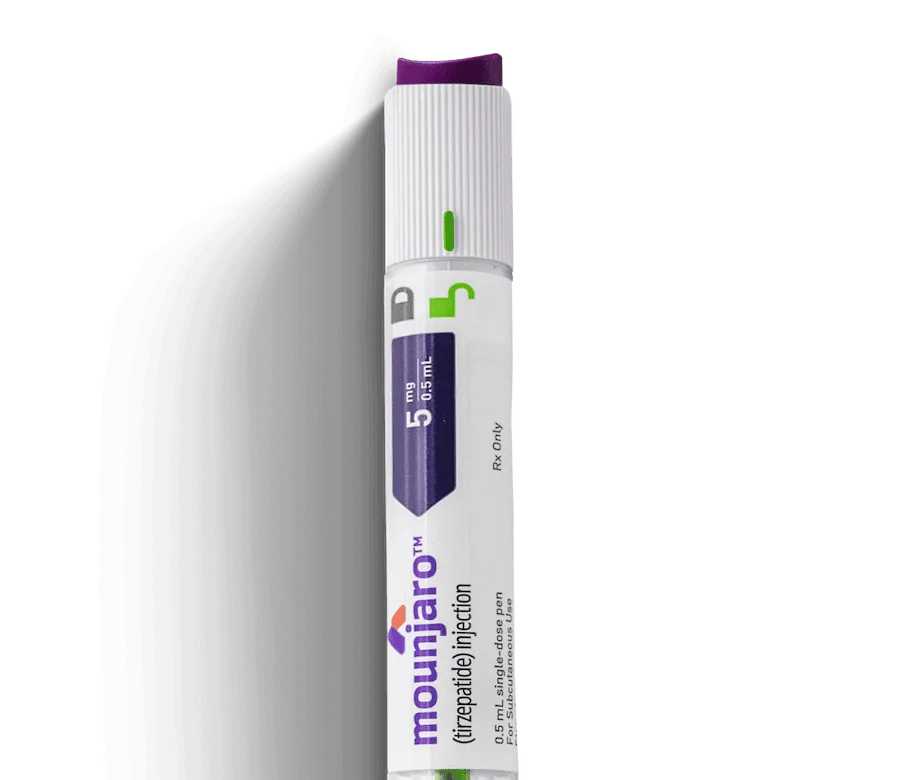
Mounjaro® is available in several dose strengths: 2.5 mg, 5 mg, 7.5 mg, 10 mg, 12.5 mg, and 15 mg. There isn’t one universally studied “maintenance dose”—the right amount varies by person.
In the SURMOUNT-4 trial, those who maintained their weight loss continued on their maximum tolerated dose of 10 mg or 15 mg weekly—the same doses used during active weight loss. The study didn’t evaluate whether lower doses could achieve the same effect.
In clinical practice, some providers work with people to gradually reduce to a lower dose once weight is stable, with the goal of finding the lowest effective amount. But this approach isn’t yet well-supported by large clinical trials, so what works will depend on how your body responds.
Your provider will help you find the dose that keeps your weight steady while minimizing side effects—whether that turns out to be a lower dose or continuing where you are.
Learn more: Mounjaro dosage guide
How do I know my maintenance dose of Mounjaro® is working?
Your maintenance dose of Mounjaro® is likely working if your weight holds steady without ongoing loss or regain. Small fluctuations are normal, but the overall trend should feel stable rather than continuing to drop or starting to climb.
Other signs to look for include:
- Your appetite feels controlled and hasn’t noticeably increased
- You’re able to stick to the habits that helped you lose weight
- Cravings feel manageable instead of overwhelming
- Your health markers, like blood pressure or cholesterol, remain improved
When things feel steady—your weight, hunger, and overall routine—that’s usually a good sign your dose is doing what it’s supposed to.


Signs your maintenance dose may need adjusting
Your maintenance dose may need adjusting if your weight, appetite, or side effects start to change. Even after reaching your goal, it’s normal for your needs to shift over time.
Most adjustments fall into two general directions:
- You may need more support. If your weight starts increasing or your appetite feels harder to manage, your provider may recommend a higher dose.
- You may need less medication. If you’re still losing weight beyond your goal or dealing with ongoing side effects, lowering your dose may make more sense.
Checking in regularly with your provider helps make sure your dose stays aligned with your body and your long-term goals.
When should I get on a maintenance dose?
You should consider a maintenance dose of Mounjaro® when your goal shifts from losing weight to keeping it off long term. This decision is personal, but there are a few common situations where maintenance dosing may be helpful.
Some of the most common signs include:
- You’ve reached your goal weight and want support to stay there, especially if your weight has been stable for a few months
- You’ve struggled with weight regain in the past and want to avoid falling back into that cycle
- Your appetite or cravings start to return when you lower your dose or consider stopping treatment
- You want continued support in managing hunger and staying consistent with your habits
- You feel unsure about stopping medication and want a more gradual, supported transition
For many people, this phase is less about pushing for more progress and more about protecting what they’ve already achieved. Research on tirzepatide (Mounjaro®) shows that stopping treatment can lead to weight regain over time, which is why some providers recommend continuing at a lower, personalized dose. Talking through your options with your provider can help you decide whether maintenance dosing fits your long-term plan.
Best tips for maintaining weight loss on a maintenance dose
Your Mounjaro® maintenance dose helps support appetite and stability, but long-term weight maintenance depends on the habits you build alongside it. Research shows that when GLP-1 medications are reduced or stopped, weight regain is common—so what you do day to day plays a major role in keeping your results.
Build meals that feel consistent and satisfying
Meals that keep you full and steady throughout the day make it easier to maintain your weight without constantly thinking about food.
- Choose meals that keep you satisfied. Eating more protein has been studied for weight-loss maintenance and may help with appetite regulation and help you preserve muscle mass.
- Think chicken, fish, eggs, low-fat Greek yogurt, or legumes—all options that tend to keep you fuller for longer compared to lower-protein meals.
- Keep your eating routine consistent from day to day. Research from the National Weight Control Registry suggests that long-term weight-loss maintainers often rely on consistent, structured habits rather than extremes.
- Eating breakfast, lunch, and dinner at roughly the same times each day—even on weekends—can reduce decision fatigue and help your body settle into a predictable rhythm.
- Pay attention to how different foods affect you. Fiber, especially soluble fiber, may help support fullness by slowing digestion and influencing appetite-related signals.
- Oats, beans, lentils, and apples are all good sources you can work into meals and snacks.
- Avoid long gaps without eating. Skipping meals may reduce calories in the moment, but research found that it was associated with lower daily diet quality and higher energy intake at subsequent meals.
- If mornings are rushed, keeping something simple on hand—a hard-boiled egg, a handful of nuts, or a yogurt—makes it easier to eat without skipping.
- Choose doable. Create a structure that feels repeatable, not restrictive.
- Rotating a small set of go-to meals you genuinely enjoy—rather than following a strict plan—makes it easier to stay consistent.
Stay active in ways you can maintain long-term
Research shows that people who combine exercise with GLP-1 treatment are more likely to maintain their weight—even after stopping medication—compared to those who rely on medication alone.
- Aim for consistent weekly activity rather than short bursts of intense exercise. For general health, people are encouraged to get at least 150 to 300 minutes of moderate-intensity aerobic activity each week.
- Five 30-minute walks get you there—it doesn’t have to mean gym sessions or structured workouts.
- Include strength-based movement to support muscle and metabolic health. Strength training is especially important during weight maintenance because it helps preserve lean muscle, which supports strength, function, and metabolic health.
- Two sessions per week of bodyweight exercises—like squats, lunges, and push-ups—or resistance band work can make a meaningful difference.
- Stay active throughout the day, not just during workouts.
- Taking the stairs, walking during phone calls, or a short walk after meals all add up and help keep your overall movement level higher.
- Choose activities you can realistically stick with week after week.
- If you dread the gym but enjoy dancing, pickleball, or hiking, those are far better choices—consistency matters more than intensity.
Support your body with good sleep and stress habits
Weight maintenance isn’t just about food and exercise—what happens when you’re not eating or moving matters too. Sleep and stress both influence the hormones and behaviors that shape how hungry you feel, what you reach for, and how easy it is to stay on track.
Sleep matters because not getting enough sleep has been linked with changes in appetite-related hormones, including lower leptin and higher ghrelin, which may increase hunger and make weight maintenance harder.
Stress can also affect weight maintenance because it may increase cravings, emotional eating, and less intentional food choices. Research has linked stress, cortisol responses, and eating behavior in people with obesity, suggesting that stress can influence how much and what people eat.
- Keep a regular sleep schedule to help regulate appetite signals
- Notice patterns between stress and eating habits so you can plan ahead
- Build small daily habits that help you reset, even during busy periods
- Avoid relying on food as your only way to cope with stress
Read more: Stopping Mounjaro®
Mounjaro® maintenance dose: Side effects and safety
Side effects on the maintenance dose of tirzepatide medication like Mounjaro® and Zepbound® are usually the same types you may have experienced earlier—but often milder and easier to manage.
By the time you reach maintenance, your body has typically adjusted to the medication, which is why many people notice fewer or less intense symptoms compared to when they were increasing their dose.
Common side effects
You may still notice nausea, diarrhea, constipation, vomiting, or stomach discomfort while taking a maintenance dose of Mounjaro®.
These symptoms should generally be more tolerable and not keep you from getting enough food or fluids.
If you are regularly skipping meals because you feel too full, struggling to stay hydrated, or having digestive symptoms that do not improve, your provider may want to review your dose, eating routine, or other medications.
Severe side effects
Even after you have been on Mounjaro® for a while, it is still important to watch for symptoms that could point to a more serious reaction. Seek medical care right away if you notice signs of any of the following:
- Pancreatitis: Be alert for severe or persistent stomach pain, especially pain that moves toward your back or comes with vomiting.
- Gallbladder problems: Pain in the upper right abdomen, fever, yellowing of the skin or eyes, or pain after meals may be signs of gallbladder disease.
- Allergic reactions: Swelling of the face, lips, tongue, or throat; trouble breathing; severe rash; or faintness should be treated as an emergency.
- Low blood sugar: Shakiness, sweating, dizziness, confusion, hunger, weakness, or a fast heartbeat can signal hypoglycemia, especially if Mounjaro® is used with insulin or an insulin-releasing medication.
- Kidney problems or dehydration: Ongoing vomiting or diarrhea, very little urination, dizziness, or unusual fatigue may be signs that fluid loss is affecting your kidneys.
- Vision changes: New or worsening vision symptoms should be evaluated immediately.
- Thyroid tumor symptoms: A lump or swelling in the neck, hoarseness, trouble swallowing, or shortness of breath should be checked. Mounjaro® carries a boxed warning about thyroid C-cell tumors based on animal studies, though it’s not known whether this risk applies to humans.
Read more: Mounjaro® side effects
Frequently asked questions about Mounjaro® maintenance dosing
Why do people gain weight after stopping Mounjaro®?
The short answer is that it’s not entirely clear—and researchers are still working on it. What we do know is that tirzepatide works by mimicking hormones that reduce hunger and slow digestion, so when you stop taking it, those effects wear off. For many people, appetite returns, food feels less filling, and the eating patterns that supported weight loss become harder to sustain.
Whether that’s the whole story is less certain. Some research suggests the body may also respond to significant weight loss by dialing back metabolism in ways that make regain more likely—but how much this varies from person to person is still being studied.
What’s well-documented is the outcome: a large review found that people who stopped taking medications like tirzepatide regained weight at roughly 1.75 pounds per month on average—and were projected to return to their pre-treatment weight within about 1.5 years.
Are there any side effects of stopping Mounjaro®?
Most people don’t experience withdrawal symptoms when stopping Mounjaro®. The bigger concern isn’t physical side effects from stopping—it’s what tends to happen in the weeks and months that follow. Many people notice they feel hungrier or less satisfied after meals as the medication’s effects wear off, which can make it harder to maintain the eating patterns that supported their weight loss.
The health gains tied to that weight loss may also fade over time. The same large review that tracked weight regain found that blood pressure, cholesterol, and blood sugar levels also trended back toward pre-treatment levels within about 1.4 years of stopping—another reason why the decision to stop, taper, or continue is worth a real conversation with your provider.
Has anyone stopped Mounjaro® and kept the weight off?
Some people do maintain their weight loss after stopping tirzepatide—and a published real-world study offers some encouraging data. Among more than 4,000 people tracked for six months after their last tirzepatide or semaglutide prescription, roughly two-thirds showed stable weight or continued losing weight. Among those confirmed to have stopped treatment, 72% didn’t regain weight. Exercise counseling appeared to make a real difference—it was documented nearly twice as often among those who maintained their results compared to those who regained.
The study’s authors note that further research is needed to understand what’s driving these patterns. But the takeaway is meaningful: regain isn’t inevitable, and the habits you build—especially around movement—are important.
Do you have to taper off Mounjaro®?
There’s no official protocol requiring you to taper off Mounjaro®, and there are no withdrawal symptoms in the traditional sense. But the emerging evidence suggests that how you stop may matter.
A study found that people who gradually reduced their dose over about nine weeks—while focusing on lifestyle changes like diet and exercise—were able to maintain a stable weight in the months that followed. A review also recommended gradual tapering as part of a structured transition plan, alongside lifestyle support and monitoring—though it noted that formal clinical guidelines on tapering don’t yet exist.
The bottom line: tapering isn’t required, but it may be worth discussing with your provider as part of a broader plan for what comes next.
Can I stop taking Mounjaro® when I reach my goal weight?
You can stop Mounjaro® when you reach your goal, but the evidence suggests that for most people, continuing treatment plays an important role in keeping weight off. The largest tirzepatide maintenance study to date found that people who stopped after reaching their initial weight loss regained a significant portion of it within a year, while those who continued treatment maintained their results—and kept losing.
That doesn’t mean stopping is the wrong choice. It depends on your goals, your health, and what’s realistic for you long-term. But it does mean the conversation with your provider is worth having before you make that call. Programs like Noom Med can help you think through your options and build a plan that fits your life beyond the medication.
Can I take Mounjaro® every 10 days?
Mounjaro® is designed to be taken once a week—that’s the interval its active ingredient is built around, based on how long it stays active in your body. Stretching that to every 10 days can affect how well it works and may make side effects harder to predict.
If weekly dosing feels like a lot to manage, that’s worth bringing up with your provider. There may be options around timing or dose that work better for your routine—and your dosing schedule is something they can help you think through.
Reviews from real Noom users
Desirea N. — Real Noom user

“My favorite parts of Noom are the care team and other Noomers. Sharing and getting help made me feel like I wasn’t doing it alone. That support made all the difference.”
Desirea N. — Real Noom user
Matthew M. — Real Noom user

“Noom has taught me that every day is a new chance to make better, healthier choices. It's taught me how to stop overeating.’’
Matthew M. — Real Noom user
Lila M. — Real Noom user

“Clinicians who understand how supportive medication can be is one of the best parts of Noom! I was convinced I wouldn’t have success but I’m down 11 pounds in two months.’’
Lila M. — Real Noom user
Steve M. — Real Noom user

“Noom provided me with the medication which I could not get through Medicare. I have learned the tricks to better eating and life in general.”
Steve M. – Real Noom user
Daisy R. — Real Noom user
‘’Noom has changed my life and I’m so thankful, I feel great, have more energy and am no longer prediabetic.”
Daisy R. – Real Noom user
Sarah R. — Real Noom user
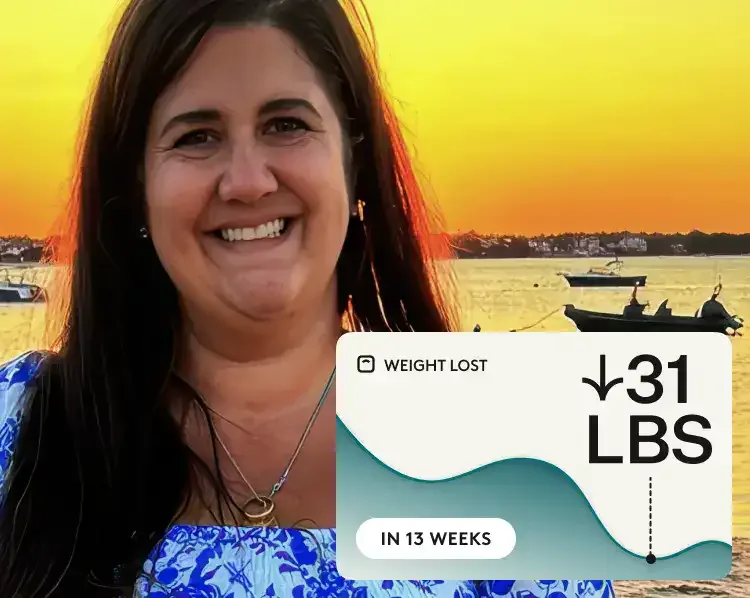
“All of the Noom providers that I’ve met with have been exceptional and prescribed medications that are appropriate for my situation and health.”
Sarah R. – Real Noom user
Madison S. — Real Noom user
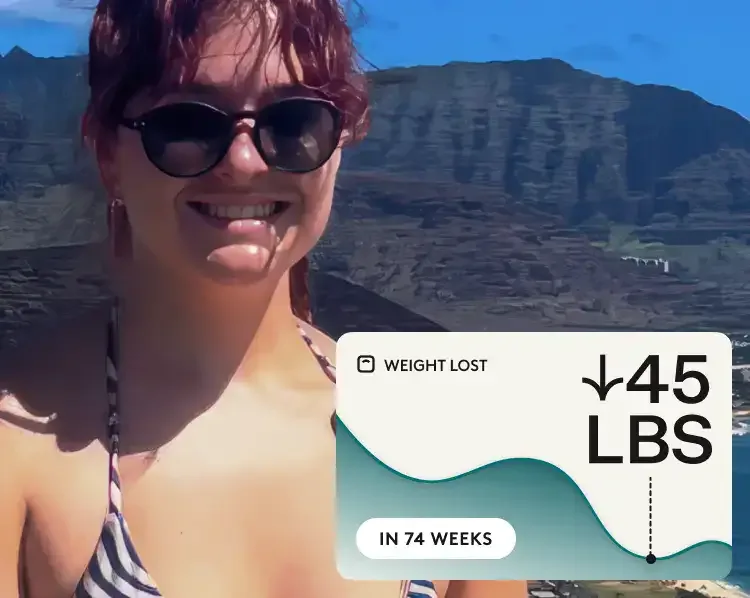
“Noom made the process so simple and now I feel full, free from diet obsession, and at ease in my body again.”
Madison S. – Real Noom user
Sonday K. — Real Noom user
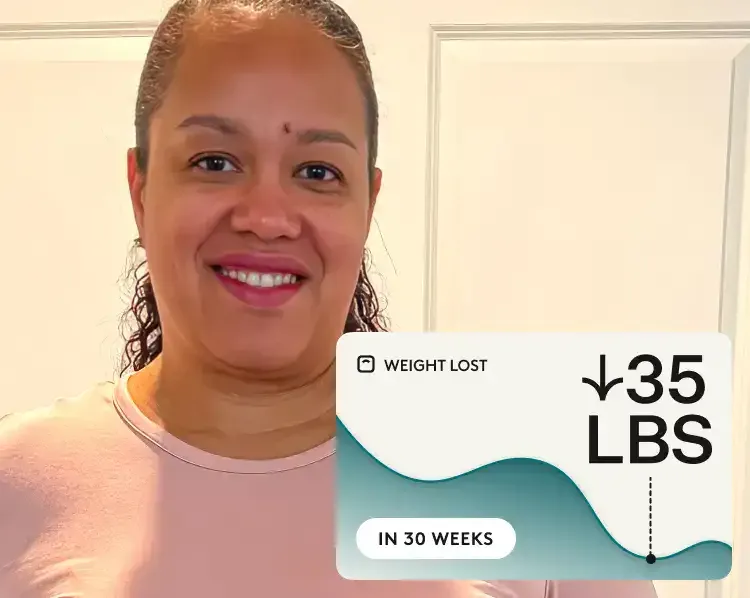
“My doctor recommended Noom after I was frustrated trying to lose weight. The lessons helped change my relationship with food. My body feels lighter & energized.”
Sonday K. – Real Noom user
Cam K. — Real Noom user
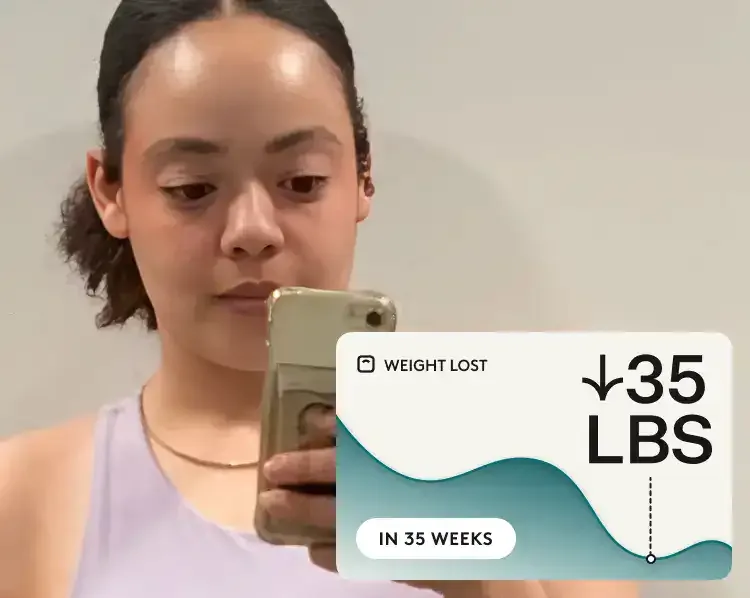
“I built healthy habits with coaching and lessons that make me confident I can maintain my weight loss long term.”
Cam K. – Real Noom user
Laura TR. — Real Noom user
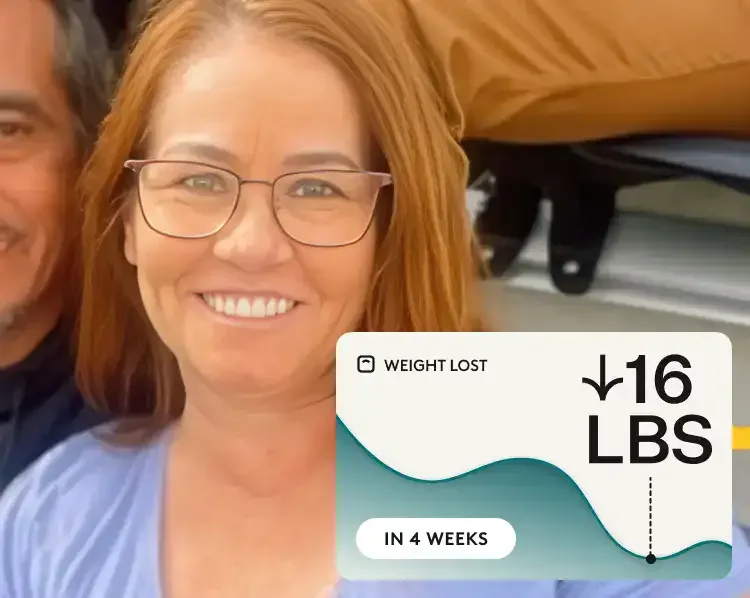
“With the right medication through Noom, hunger and sugar cravings finally quieted and I have the tools to break the cycle.”
Laura TR. – Real Noom user
Jessica S. — Real Noom user
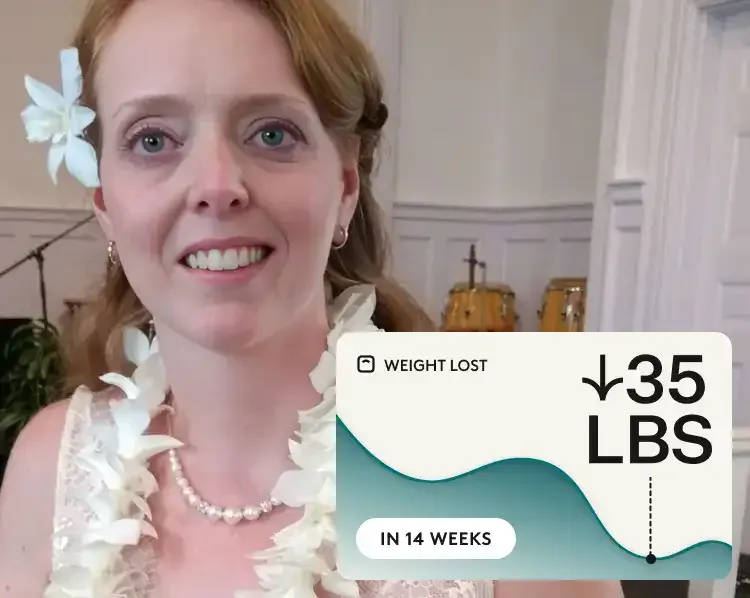
“Cravings and food noise are gone, I finally feel confident in the healthy habits I’ve built to last with Noom.”
Jessica S. – Real Noom user
The bottom line: A Mounjaro maintenance dose can help people keep weight off
Maintaining your weight after reaching your goal often looks different from the weight loss phase, and a Mounjaro® maintenance dose can help support that transition. For most people, this means finding a lower, personalized dose that keeps weight stable without unnecessary side effects. There isn’t a one-size-fits-all approach—the right dose depends on how your body responds, how your appetite feels, and what helps you stay consistent over time.
It’s also important to remember that medication works best alongside your everyday habits. Staying active, building routines around meals, and managing things like sleep and stress all play a role in keeping your results steady—especially since research shows weight regain can happen if treatment is stopped without those foundations in place. Because of this, long-term success usually comes from combining the right dose with habits you can realistically maintain.
Having the right support can make that process easier and more sustainable. Noom can help guide you through this phase with personalized coaching, medication support, and behavior tools designed to help you maintain your progress long-term.
Editorial standards
At Noom, we’re committed to providing health information that’s grounded in reliable science and expert review. Our content is created with the support of qualified professionals and based on well-established research from trusted medical and scientific organizations. Learn more about the experts behind our content on our Health Expert Team page.