
What you’ll learn:
- Cucumber water is essentially flavored water that can make it easier to stay hydrated, but it contains very few nutrients compared to whole cucumbers.
- Most health claims—like detoxing, reducing belly fat, or improving blood sugar—aren’t supported for cucumber water.
- Its main benefit is practical: if it helps replace higher-calorie drinks, it can support weight loss and overall health through better hydration habits.
You’ve probably seen it at spas, in hotel lobbies, or on social media DIY drink videos: cucumber water. It’s exactly what it sounds like—water mixed with cucumbers. And it’s part of a bigger trend of wellness waters.
At Noom, we’ve covered a range of simple water “hacks” that promise big results—like lemon water, okra water, and rice water. Just like cucumber water, they involve soaking ingredients in water to enhance flavor and add potential health benefits. They trend online as wellness drinks that promise to help you lose weight, feel better, and improve your overall health.
Part of cucumber water’s appeal is how effortless it feels. There’s no strict recipe, no special ingredients, and no need to overhaul your routine. It’s just water with a little something extra to make it more enjoyable to drink. And for many people, that small shift can make a real difference in how consistently they stay hydrated.
But beyond the aesthetic and hydration benefits, some people claim that cucumber water has real health benefits. You might see it promoted on social media as a way to flush out toxins, reduce bloating in your belly, or improve chronic health conditions. But can drinking this water actually make a difference on the scale, for your heart, and decrease your diabetes risk?
Let’s take a closer look at what cucumber water is, how it’s made, and what the science actually says about its potential benefits. We’ll talk to Maggie Hudspeth, Registered Dietitian Nutritionist, to hear an expert’s take on the trend and whether it’s worth a sip.
What is cucumber water?
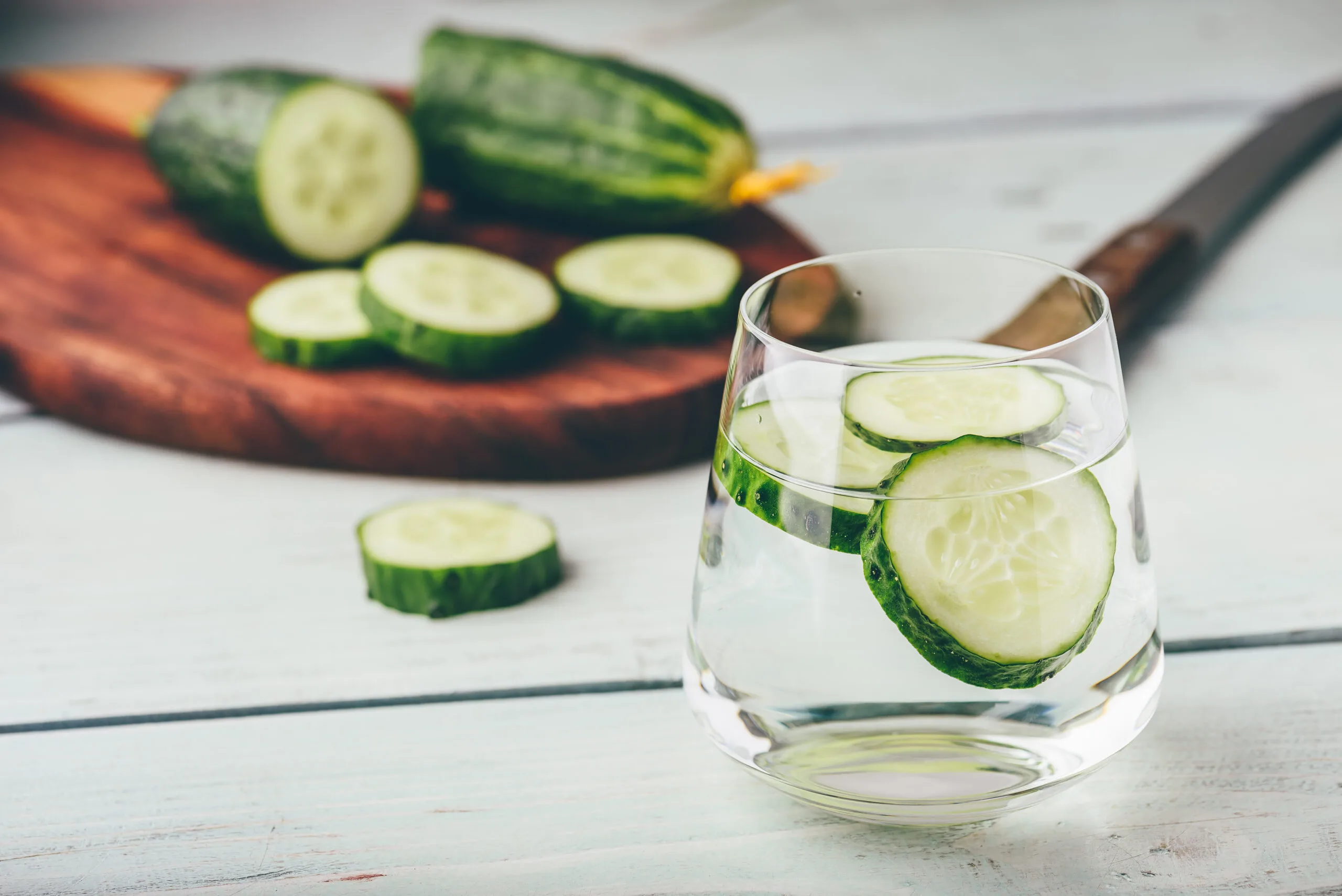
Cucumber water is really just water that has been infused with slices of fresh cucumber. Unlike cucumber juice—which involves blending the whole cucumber and straining it—infused water is much more diluted. The cucumber sits in water over time, gently releasing flavor and small amounts of nutrients.
For some people, the goal isn’t to create a nutrient-dense beverage, but rather to make water more enjoyable to drink. For others, it seems like a shortcut to better health.

The Easy Way
to lose weight and get healthy.
See if you qualify
Despite being commonly treated as a vegetable, cucumber is technically a fruit, specifically a melon. It belongs to the Cucurbitaceae family, which also includes fruits like watermelon, cantaloupe, pumpkins, and squash. That shared family explains why cucumbers have a mild sweetness and high water content similar to many fruits.
What do people think cucumber water can do?
Cucumber water is often framed on social media as a simple habit with big health payoffs. From “melting belly fat” to “detoxing your body,” the claims can sound convincing—but they don’t always line up with how your body actually works.
Here are some of the most common ones:
- Reduce belly fat: You might see claims that cucumber water can target bloating in your stomach area. Staying hydrated can help with digestion and temporary bloating, but that benefit comes from fluids in general—not anything unique to cucumber.
- Help with detoxing: Cucumber water is often described as a “detox drink.” But your body already has built-in detox systems—your liver and kidneys—and there’s no evidence that infused water boosts that process.
- Support blood sugar, blood pressure, and cholesterol: You may also see claims that it helps regulate blood sugar or cholesterol. While whole cucumbers have been studied for these effects, there’s little evidence that cucumber-infused water provides the same benefits.
The benefits of cucumber water: What it can and can’t do
Cucumber water is often described as a “wellness drink,” but the research behind it is more limited than it might seem. Most studies on cucumbers look at concentrated forms—like juices, seeds, or extracts—not cucumber-infused water.
That’s an important distinction. When cucumber slices are simply soaked in water, far fewer of those compounds make it into your drink. So while cucumbers themselves contain beneficial nutrients, those effects don’t always translate directly to cucumber water.
Cucumber water and weight loss
One of the most meaningful benefits of cucumber water isn’t what it adds—it’s what it can replace. Research shows that increasing water intake—especially when it replaces calorie-containing drinks—can support weight loss.
In that study, participants who drank more water, particularly before meals, lost more weight than those who didn’t.
“Cucumber water works as a substitute because it adds flavor without adding calories,” says Hudspeth.
If it helps you swap soda, juice, or sweetened coffee drinks for something lighter, that small shift can reduce daily calorie intake over time. And those small, consistent changes are what tend to support lasting weight loss.
Cucumber and blood pressure
Some research suggests cucumbers may support heart health—but again, the form matters. A small study found that cucumber juice—not cucumber water—helped lower both systolic and diastolic blood pressure in people with hypertension.
Participants saw modest reductions (about 4 points systolic and 7 points diastolic), which may be linked to the potassium content in cucumbers. Potassium plays a well-established role in blood pressure regulation.
Here’s the limitation: cucumber juice is far more concentrated than infused water, and much of the potassium is found in the peel—something that doesn’t fully transfer during infusion. So while the findings are promising, they likely don’t apply to cucumber water.
Cucumber and blood sugar and diabetes
There’s also some early research suggesting cucumbers may influence blood sugar—but it’s not directly applicable to cucumber water. A study found that cucumber-family extracts lowered blood glucose levels in animal models.
These results point to a potential role in blood sugar regulation. But context matters. These studies were conducted in animals—not humans—and used concentrated extracts. That’s very different from cucumber-infused water, which contains only trace amounts of these compounds.
Cucumber and cholesterol
More recent research has looked at cucumber seeds specifically. A study in the journal Foods found that cucumber seed extract may improve cholesterol markers—lowering total cholesterol, LDL, and triglycerides while increasing HDL.
But again, this comes down to concentration and form. These effects were observed using a targeted extract under controlled conditions—not from cucumber water.
The nutrients in cucumber seeds aren’t meaningfully present in infused water, and even the study notes that practical applications of these extracts are still being explored.
Is cucumber water healthy?
Cucumbers contain beneficial compounds, but most of the research looks at forms that are far more concentrated than cucumber water. The main benefit of cucumber water is likely behavioral—it can help you drink more water and replace higher-calorie beverages, not that it delivers significant nutrients on its own.
How to make cucumber water
There are a few different approaches, depending on how strong you want the flavor:
- Soaking: Slice a cucumber and add it to a pitcher of water. Let it sit for at least 1–2 hours, or overnight in the refrigerator for a stronger infusion.
- Muddling: Lightly crush or press the cucumber slices before adding them to water. This releases more of the cucumber’s flavor.
- Blending and straining (for cucumber juice): Blend a whole cucumber with water, then strain out the pulp. This creates a more concentrated drink, but it’s technically cucumber juice—not infused water.
Cucumber water recipes
One of the biggest advantages of cucumber water is how easy it is to customize. Small additions can completely change the flavor profile:
- Cucumber and mint water: Mint adds a cooling, slightly sweet flavor that pairs naturally with cucumber.
Directions: Add a handful of fresh mint leaves and lightly crush them (using a spoon or muddler) before adding to a pitcher with sliced cucumber and water. Let it infuse for at least 1–2 hours in the fridge. - Cucumber lime water: Lime adds a bright, slightly tart flavor that contrasts nicely with cucumber’s mild, cooling taste. This combination tends to feel especially refreshing, and the acidity can make the drink taste more vibrant and less flat.
Directions: Slice half to one lime and add it to a pitcher with cucumber slices and water. Let it sit for a few hours to allow the citrus oils and juice to infuse. - Lemon cucumber water: Similar to lemon water, adding lemons to cucumber water provides a tart flavor. Two tablespoons provides about 11 to 12 mg of vitamin C, which is roughly 12 to 16% of the recommended daily amount for adults.
Directions: Add several lemon slices (or about 2 tablespoons of lemon juice) to cucumber water and refrigerate for at least 1–2 hours. - Ginger cucumber water: Fresh ginger introduces a subtle spice. It can add complexity to the drink and is often associated with digestive support, though the amount infused into water is relatively small.
Directions: Slice or grate a small piece of peeled ginger and add it to cucumber water. Let it infuse for a few hours or overnight for a stronger taste. - Raspberry cucumber water: Raspberries add a hint of sweetness and a light fruity flavor, along with a slight pink tint. They can make cucumber water more appealing if you prefer a sweeter taste without adding sugar.
Directions: Add a handful of fresh raspberries along with cucumber slices, and gently press a few of the berries to release their juices before chilling. - Sparkling water (instead of still water): Using sparkling water creates a fizzy version of cucumber water that can feel more like a soda alternative. This can be especially helpful if you’re trying to cut back on carbonated sugary drinks but still want that bubbly texture.
Directions: Prepare cucumber slices as usual but add them to sparkling water instead of still water. For best results, infuse the cucumber in still water first, then add sparkling water just before serving to keep the carbonation.
Cucumbers vs. cucumber water: Nutrition comparison
Cucumbers are made up of about 96% water, which explains why they’re so hydrating and low in calories. They also contain small amounts of nutrients like vitamin C, potassium, and fiber—along with plant compounds like flavonoids.
For example, about ⅔ of a cucumber contains:
- About 45 calories
- 2 grams of fiber
- small amounts of vitamin C and potassium
That’s helpful when you’re eating cucumbers. But here’s where things shift with cucumber water.
When cucumber slices are simply soaked in water, only a small fraction of those nutrients actually make it into the liquid. Fiber stays in the vegetable, and most vitamins and minerals don’t transfer in meaningful amounts.
So while cucumber water may taste refreshing, nutritionally, it’s much closer to plain water than to eating cucumbers themselves.
As Hudspeth explains, “Soaking fruits or vegetables in water may add some flavor, but it’s unlikely to transfer nutrients in a meaningful way. You’ll get far more nutritional benefit from eating the whole food than from drinking infused water.”
Is cucumber water safe?
For most people, drinking cucumber water is completely safe and can help keep you hydrated.
The main exception would be for people with allergies to the cucurbitaceae family, which includes melons and pumpkins. If you have known allergies to these foods, you may want to avoid cucumber water or proceed with caution.
It’s also important to keep expectations realistic. While cucumbers have been studied for potential effects on blood pressure, blood sugar, and cholesterol, cucumber water should not be used as a treatment for any medical condition.
“If you’ve been prescribed medication for conditions like hypertension, diabetes, or high cholesterol, it’s important to continue following your healthcare provider’s recommendations rather than relying on dietary changes alone,” warns Hudspeth.
Access GLP-1 Weight Loss with Noom
Explore a wide range of prescription medications supported by Noom’s program.Microdose GLP-1rx
Noom GLP-1rx
Noom GLP-1rx Plus
Wegovy®

Ozempic®

Metformin
Zepbound®
Mounjaro®
Liraglutide
Frequently asked questions about cucumber water
Is cucumber water good for you?
Cucumber water can be a healthy choice, especially if it helps you drink more water and replace sugary beverages. While it contains only small amounts of nutrients, the hydration benefits can support overall health.
What does cucumber water do?
Cucumber water primarily helps keep you hydrated with a little flavor. It can make drinking water more enjoyable, which may help you cut back on high-calorie drinks.
What are the benefits of cucumber water?
The main benefits are hydration, low calorie content, and improved water intake. While cucumbers contain nutrients, only small amounts transfer into the water.
The bottom line: Eating cucumbers has more benefits than drinking the water
Cucumber water is refreshing, simple, and can make it easier to stay hydrated. That’s especially true if it helps you cut back on sugary drinks. That said, it’s not a magic health drink and not a replacement for medicine.
When it comes to nutrition, eating whole cucumbers provides far more benefits than drinking cucumber-infused water. The infusion process only pulls in small amounts of nutrients, while the whole fruit delivers fiber, vitamins, and plant compounds more effectively.
What cucumber water can do well is support healthy habits. It’s hydrating, very low in calories, and a simple way to replace higher-calorie beverages. Swapping soda or juice for cucumber water can reduce your daily calorie intake without feeling restrictive—which is exactly the kind of small, sustainable change that adds up over time.
If you’re looking for more structured support with weight loss, small changes like these are just one piece of the puzzle. Programs at Noom combine behavior change strategies with medical support, helping you build habits that last while also addressing the biological side of weight loss. Learn more now.
Editorial standards
At Noom, we’re committed to providing health information that’s grounded in reliable science and expert review. Our content is created with the support of qualified professionals and based on well-established research from trusted medical and scientific organizations. Learn more about the experts behind our content on our Health Expert Team page.