
What you’ll learn:
- Basil seed drinks are the latest viral weight-loss trend on social media.
- They’re high in fiber, but there’s little research showing basil seed drinks themselves cause weight loss.
- Enjoy them as a simple way to add more fiber to your diet—not as a shortcut to losing weight.
The internet never seems to run out of viral weight-loss drinks. One week it’s “Natural Mounjaro,” the next it’s “Oatzempic,” and now a basil seed drink is having a moment. Like many social media wellness trends, it promises that one inexpensive pantry ingredient can help curb appetite, burn fat, or speed weight loss.
Basil seeds (also called sabja or tukmaria seeds) aren’t new. They’ve been used for centuries in South and Southeast Asian drinks and desserts, where they’re valued for the way they rapidly absorb water and develop a slippery, gel-like coating.
That same ability to soak up water is exactly what’s fueling the latest weight-loss claims. The idea is simple: because the seeds expand in your stomach, they’ll help you feel fuller and naturally eat less. While that theory is biologically plausible thanks to their soluble fiber, there are very few human studies testing basil seeds specifically for weight loss. Most of the claims circulating are based on how fiber works in general—not on clinical trials of basil seed drinks.
If the trend sounds familiar, that’s because it’s essentially the next version of chia seed water. Both drinks rely on tiny seeds that swell in water to form a gel, but they aren’t identical. Basil seeds hydrate in just 5 to 10 minutes, creating a lighter, more delicate gel, while chia seeds typically need at least 30 minutes—and often several hours—to become fully hydrated. Nutritionally, basil seeds tend to provide more fiber and calcium per serving, while chia seeds contain substantially more heart-healthy omega-3 fats.
So does drinking basil seed water actually help with weight loss, or is it another wellness trend that’s outrunning the science?
New from Noom
Microdose GLP-1Rx Plus
An affordable way to start your GLP-1 journey with Compounded Tirzepatide.

*Initial 3 week subscription and 4 weeks of medication from $79 plus tax and $199 per month plus tax for 12 week subscription thereafter. Final pricing depends on program selection. Noom GLP-1Rx Plus Microdose Program involves medication (when appropriate), healthy diet, exercise and support. Individual results vary. Meds & personalization based on need as determined by a third-party clinician. Medications are not reviewed by FDA for safety, efficacy, or quality. No affiliation with Eli Lilly and Company, the only US source of FDA-approved tirzepatide. Not available in all 50 US states.
Here’s what researchers know so far, what they don’t, and whether adding basil seeds to your diet is likely to make a meaningful difference. Maggie Hudspeth, RDN, Senior Manager of Coaching at Noom, also weighs in on what’s scientifically accurate—and what’s social media hype.
What is a basil seed drink?
Basil seeds come from the sweet basil plant, the same herb you’d use in pesto or a caprese salad, just harvested for its seeds instead of its leaves.
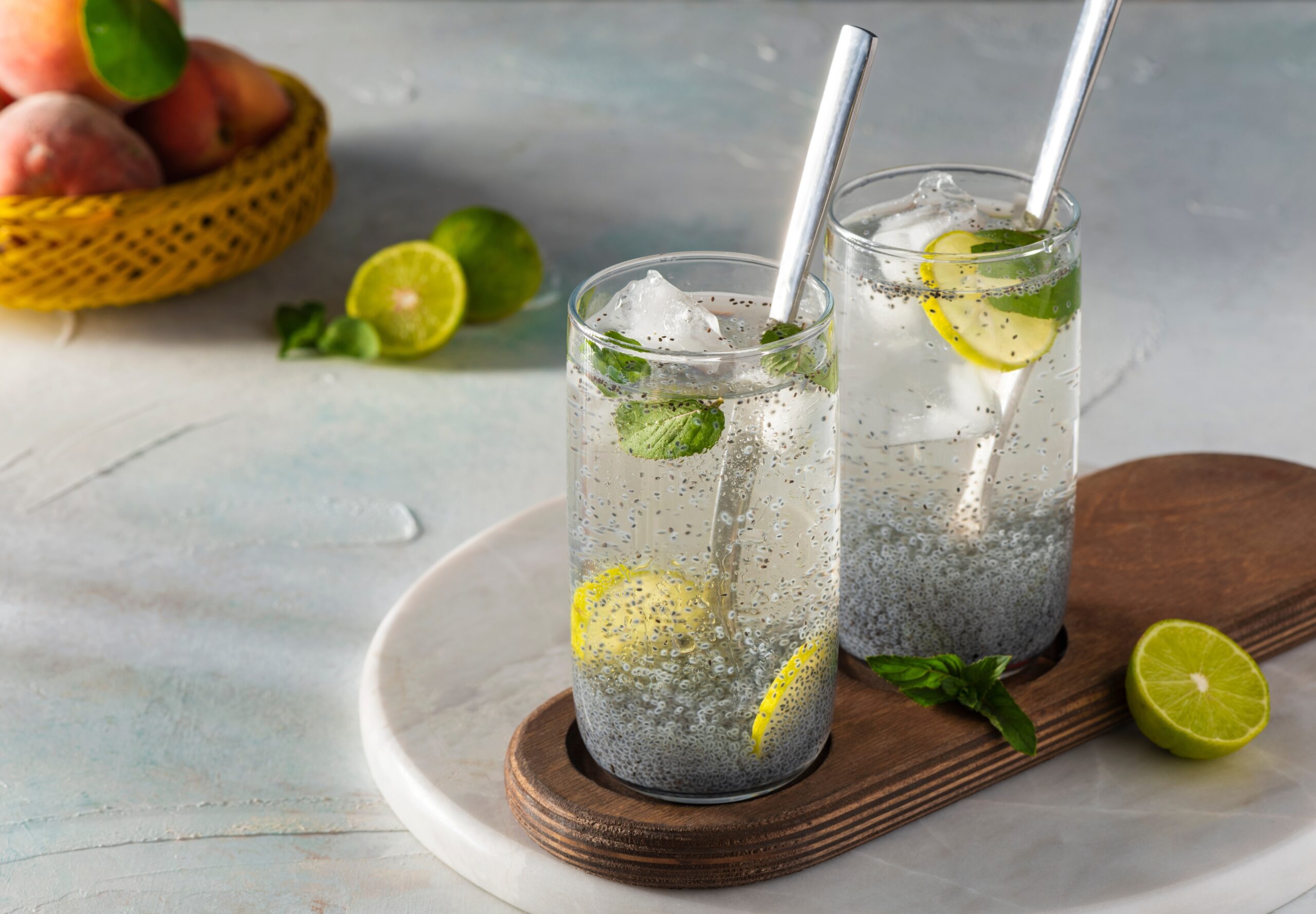
A basil seed drink is water or another liquid mixed with these seeds, which swell into a light, gel-coated texture within minutes. It’s also known as sabja water or tukmaria water in South Asian cooking, where the seeds have been used in cooling drinks and desserts for generations, long before it became a wellness trend online.
Researchers have taken a close look at basil seeds’ nutritional and functional properties, and found they pack a surprising amount of value into something so small. They’re a good source of fiber, protein, minerals, and plant compounds. Basil seeds are notably high in fiber and protein compared to many other seeds. One tablespoon of basil seeds contains about 7 grams of fiber—roughly a quarter of the daily recommended amount in a single spoonful.
Most of that fiber sits in the seed’s outer coating, which is what makes these drinks possible in the first place. The moment a dry basil seed touches water, that outer layer absorbs liquid and forms a translucent gel around a slightly firm center. Unlike chia seed water, that happens within minutes of hydration.
Fans of this drink say it can help with weight loss, appetite control, blood sugar, cholesterol, and digestion—sometimes all from one glass sipped first thing in the morning. So is basil seed water backed by research, or is it riding the same hype cycle as everything before it?
“Trends like this tend to get treated as a shortcut, when really they’re just one small piece of a bigger pattern,” adds Maggie Hudspeth. “A basil seed drink can absolutely fit into a healthy routine—the question I’d ask is whether it’s replacing an actual habit change, or just adding one more thing to keep track of.”
Basil seed water benefits: What the evidence actually shows
People on social media make a lot of claims about basil seeds. They believe these little seeds can help with weight loss, appetite suppression, stabilized blood sugar, improved digestion, and even lower cholesterol. Which of these claims actually hold up once you look past the hype?
Does basil seed water help with weight loss?
There are no studies on whether drinking or eating basil seeds leads to weight loss, but getting more fiber has been connected to weight loss over time.
A six-month study split 345 people into four groups based on how much their fiber intake changed on a weight loss plan. The group that increased their fiber the most lost about 23 pounds on average, compared to about 13 pounds among the group whose fiber intake dropped. Fiber turned out to be the single strongest predictor of weight loss in the study, ahead of calories or any specific macronutrient.

See if your insurance
covers GLP-1s.
The form only takes 2 minutes to answer. We’ll handle the rest.
GET STARTEDA 2-tablespoon serving of basil seeds has about 130 calories and 15 grams of fiber.
“The fiber is why this drink gets so much attention—15 grams in two tablespoons is a substantial amount,” Hudspeth notes. “Most people aren’t getting close to their daily fiber target from food alone, so adding that much in one glass is likely what’s responsible for the big claims.”
But the study looked at fiber intake broadly, not basil seeds specifically. And it doesn’t mean adding a basil seed drink on top of your normal eating will produce the same result. But it does help explain why fiber-forward foods and drinks keep showing up in weight-loss conversations.
“Fiber isn’t a substitute for a calorie deficit, but it makes staying in one a lot easier,” Hudspeth says. “That’s the real story here—not that basil seeds burn fat, but that a high-fiber drink can help the rest of your eating plan actually work.”
Can basil seed water help with cravings?
Cravings can come from a few different places—habits, actual hunger, blood sugar swings, or hormones—so no single fix works for everyone. Of those, the “satiety hormone” leptin comes up often when talking about cravings. It’s one of the hormones your body uses to signal fullness to your brain, and healthy leptin signaling is linked to feeling satisfied with less.
One study followed 60 people over 8 weeks, splitting them into two groups: one drank 10 grams of soaked basil seeds daily, the other did supervised endurance exercise five days a week. Neither group was compared against people who made no change at all, so the results show how basil seeds stack up against exercise, not against doing nothing.
The basil seed group saw leptin drop, along with drops in two markers of inflammation. The exercise group saw one of those markers rise instead of fall, but exercise also boosted a different hormone tied to fat metabolism that basil seeds had no effect on.
None of that confirms an effect on cravings. Researchers measured blood biomarkers, not hunger, food intake, or cravings directly, so there’s no data here on whether participants actually felt less inclined to snack. A drop in leptin is also more complicated than it sounds: leptin’s job is to signal fullness, so a lower level doesn’t automatically mean your body is craving less—it could just as easily mean the opposite, depending on what’s driving the change.
Can basil seed water reduce appetite?
When basil seeds hydrate, the gel that forms slows down how fast your stomach empties and how quickly sugar hits your bloodstream. Chia and basil seeds work in a similar way: fibers in the seed coat swell on contact with water and trap moisture, which is what creates that slow-release effect.
Drinking basil seed water before a meal can help you eat less at the table—but that’s from fullness, not any special fat-burning property in the seeds.
“What’s happening in your body is the same basic mechanism as a bowl of oatmeal,” Hudspeth says. “Soluble fiber dissolves and gels, like with oats or chia seeds. That gel takes up space in your stomach and slows digestion, which is what makes you feel full on fewer calories. It’s not unique to basil seeds—it’s soluble fiber doing its job.”
Can basil seed water reduce cholesterol?
The strongest evidence here comes from animal research, not people drinking a glass of basil seed water. One study gave mice a concentrated basil seed extract after inducing high cholesterol through diet. After 45 days, cholesterol and triglyceride levels dropped, coming close to what a standard cholesterol medication produced in the same study.
But there’s a big gap between a concentrated extract dosed to lab animals and a teaspoon of soaked seeds in a glass of water. The likely mechanism is the seeds’ alpha-linolenic acid (ALA), a plant-based omega-3 fat independently linked to healthier cholesterol levels in human research. Basil seed water almost certainly isn’t delivering that same concentrated dose, so this is an early finding worth watching, not a proven benefit for people.
How to make a basil seed drink: A basic recipe
Making a basil seed drink takes just a few minutes. The seeds are soaked in water until they develop a soft, gel-like coating, then the entire mixture is stirred and consumed. If you’ve ever made chia seed water, it’s essentially the same process, except basil seeds hydrate in about 5 to 10 minutes instead of 30 minutes or longer.
- Add 1 to 2 teaspoons of basil seeds to a glass of water (about 8 ounces).
- Stir well so the seeds don’t clump together.
- Let the seeds soak for 5 to 10 minutes, until they develop a clear, jelly-like coating.
- Give it one more stir, then drink—seeds and all.
Popular variations of basil seed drinks
Plain basil seed water is the simplest way to try the trend, but it’s also neutral in flavor. Not surprisingly, people have started adding different ingredients to make it more refreshing or to tie it to other wellness trends. Here are some of the most common versions you’ll see:
- Lemon basil seed water: Fresh lemon juice is the most popular addition, turning the drink into a lightly flavored refresher. Some recipes also add a small amount of honey or sugar to balance the tartness. Kitchen Treaty’s version is a good example, served lightly sweetened and over ice.
- Sabja lemonade (basil seed cooler): A traditional South Asian drink made with soaked basil seeds, lemon juice, sugar, and chilled water. While it’s now appearing in viral videos, this isn’t a new creation—it’s been enjoyed for generations as a cooling summer beverage.
- Coconut water basil drink: Swapping plain water for coconut water gives the drink a naturally sweeter flavor and adds electrolytes like potassium, though it also increases the sugar and calorie content.
- Basil seed water with apple cider vinegar: Some people combine basil seeds with apple cider vinegar and lemon juice, hoping for extra weight-loss or blood sugar benefits. There’s little evidence that combining the two provides additional effects beyond what you’d expect from the fiber in the seeds themselves.
Basil seed drink: Side effects and safety
Basil seeds are generally considered safe for most people and don’t cause many side effects when soaked properly. Most of the risk comes down to how they’re prepared and how quickly you add them to your diet—think fiber pacing and a few groups who should check with a doctor first—rather than anything inherently risky about the seeds themselves.
- Always soak the seeds first. Dry basil seeds absorb many times their weight in water and can keep expanding after you swallow them, raising the risk of choking or blockage. This risk has been documented with chia, a similar gel-forming seed—soak basil seeds 5 to 10 minutes until fully hydrated before drinking.
- Ease into the fiber. Basil seeds are rich in soluble fiber, which supports fullness, but too much too fast can cause bloating, gas, or cramping. Start with 1 teaspoon in a full glass of water and build up gradually, the same way you would with chia seed water.
- Check in if you’re on certain medications. Basil extract has shown measurable effects on blood clotting and blood pressure in animal studies, so it may amplify the effects of blood thinners, blood pressure medication, or diabetes medication. This research is in concentrated extracts, not diluted seed water, but if you take any of these medications, it’s worth talking to your doctor before making basil seed water a regular habit.
- Allergic reactions are rare but possible. Like other seeds, basil seeds can trigger reactions—itching, hives, swelling, nausea, or digestive upset. If you have a seed allergy, check with your doctor first, and seek immediate care for trouble breathing or swelling.
FAQs about basil seed drinks
Can a basil seed drink help me lose weight?
They may help support weight loss by increasing fullness thanks to their soluble fiber, which could make it easier to eat less at meals. But there’s little research showing that basil seed drinks themselves lead to weight loss. They’re best viewed as one tool that may support a calorie-controlled eating pattern—not a shortcut to losing weight.
What happens if you drink basil seed water every day?
Most people can enjoy basil seed water daily as part of a balanced diet. The extra fiber may help you feel fuller and support regular digestion. If you’re new to high-fiber foods, start with a small amount and drink plenty of water to reduce the chance of bloating or gas.
Is basil seed water good for you?
Yes, in moderation. Basil seeds provide fiber along with small amounts of minerals like calcium, magnesium, and iron. Swapping a sugary drink for basil seed water can also reduce added sugar and calories, but the drink is most beneficial as part of an overall healthy diet.
How long can you keep basil seeds in water?
Basil seeds fully hydrate in about 5 to 10 minutes, much faster than chia. Once prepared, they’re best consumed the same day. If you make extra, refrigerate it and drink it within 1 to 2 days, as the texture and flavor gradually deteriorate.
Access GLP-1 Weight Loss with Noom
Explore a wide range of prescription medications supported by Noom’s program.Microdose GLP-1rx
Noom GLP-1rx
Noom GLP-1rx Plus
Wegovy®
Ozempic®
Metformin
Zepbound®
Mounjaro®
Liraglutide
Do basil seeds reduce triglycerides?
Some animal studies suggest basil seed extracts may help lower triglycerides and improve cholesterol levels. However, these findings haven’t been confirmed in human studies of basil seed water, so there’s not enough evidence to recommend it as a way to lower triglycerides.
The bottom line: Basil seed drinks are helpful for fiber, not fat loss
Basil seed water is one of the few viral wellness drinks with at least a plausible scientific explanation behind it. The seeds are rich in soluble fiber, which absorbs water, forms a gel, and may help you feel fuller. But that’s also where the claims can get ahead of the evidence. While fiber has well-established health benefits, there isn’t much research showing that drinking basil seed water leads to meaningful weight loss on its own.
“People sometimes look for one food that will change everything, but that’s rarely how nutrition works,” says Hudspeth. “If basil seed water helps you eat a little more fiber or choose it instead of a sugary drink, that’s a win. You don’t have to expect anything more from it than that.”
If you enjoy the texture, basil seed water is an easy way to add fiber to your day, and it can be a refreshing alternative to sweeter beverages. Just remember what you’re getting: a glass of water with fiber-rich seeds—not a natural version of a weight-loss medication. The trend may be new, but the advice isn’t. Eating more fiber is one of the simplest, most consistently supported habits in nutrition, whether it comes from basil seeds, beans, berries, vegetables, or whole grains.
If you’re looking for practical strategies that go beyond the latest wellness trend, start your free trial of Noom and build habits that support long-term weight loss.
Editorial standards
At Noom, we’re committed to providing health information that’s grounded in reliable science and expert review. Our content is created with the support of qualified professionals and based on well-established research from trusted medical and scientific organizations. Learn more about the experts behind our content on our Health Expert Team page.