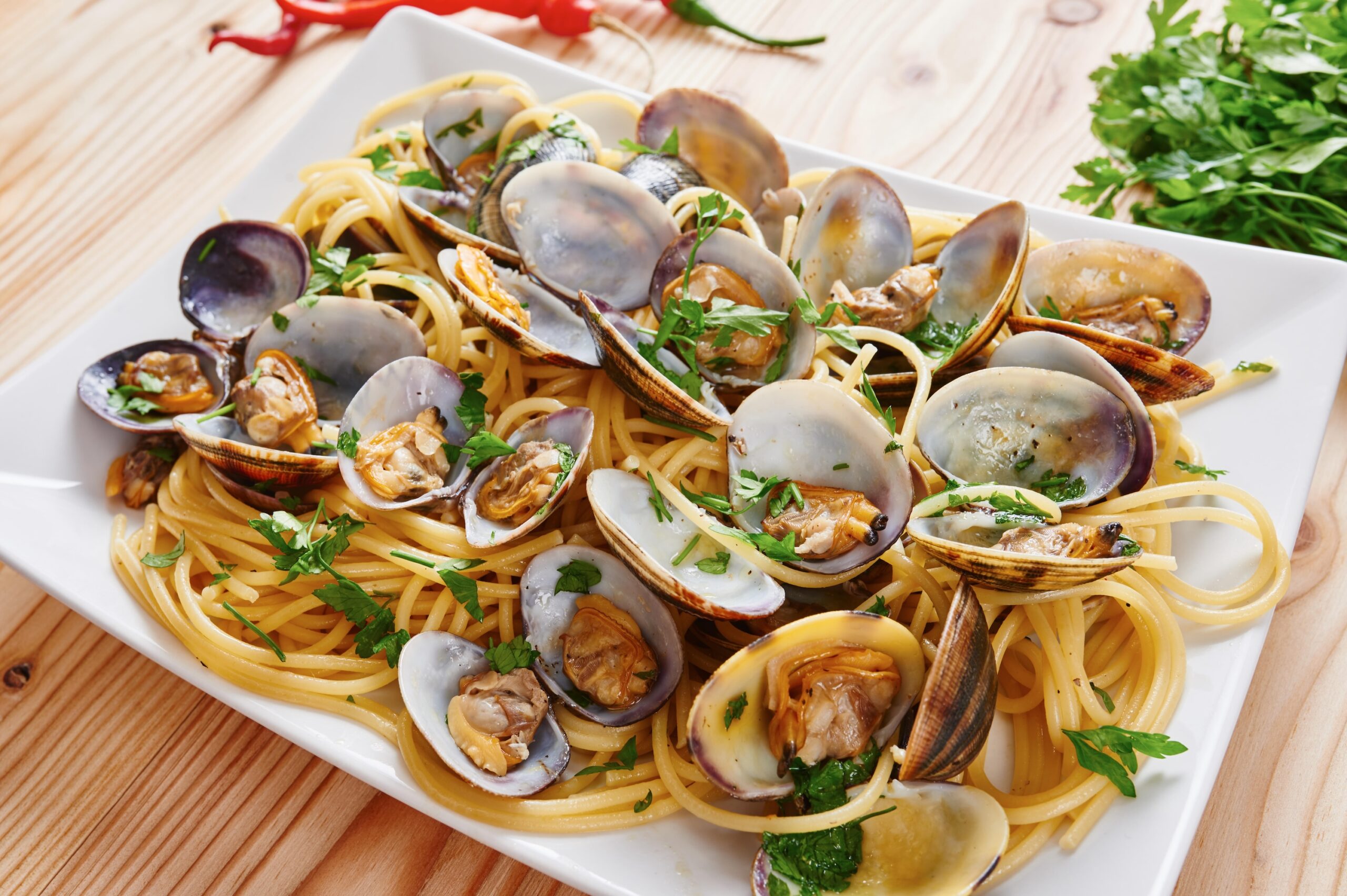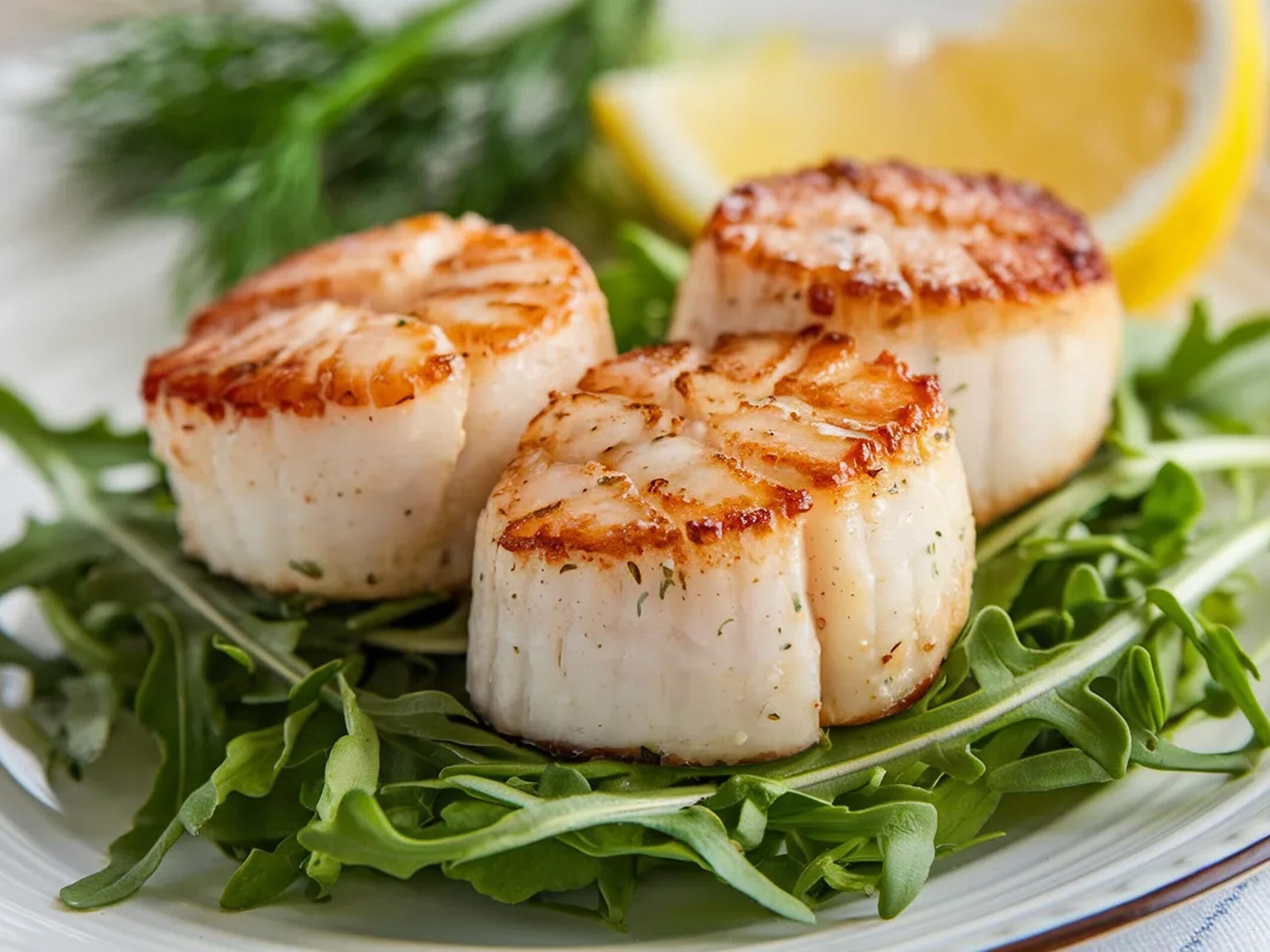
Scallops are a popular seafood choice: mild, sweet, quick to cook, high in protein, and low in calories. That combination also makes them a strong choice for weight loss. A 3-ounce serving—about four to five large sea scallops—provides plenty of protein for relatively few calories, along with nutrients like vitamin B12, selenium, and phosphorus.
But scallops aren’t as commonly cooked at home as shrimp. Plenty of people order them at restaurants, but they have a reputation for being tricky to make yourself. In reality, scallops are one of the simpler proteins to cook—you just need to adjust the method depending on which type you buy.
Sea scallops are large, firm, and mildly sweet. Pat them dry, get the pan hot, and cook them for about two to three minutes per side for a golden crust. Bay scallops are smaller, more delicate, and slightly sweeter, so they work better with a quick sauté; trying to sear them like sea scallops can easily overcook them. Nutritionally, the two are similar enough that your preference and the dish you’re making matter more than any small differences between them.
For weight loss, preparation can make a bigger difference. Scallops themselves are naturally lean, but restaurant versions are often cooked in plenty of butter, served with a cream sauce, or breaded and fried. Those additions can substantially increase the calories of an otherwise light source of protein.
Here’s a closer look at scallop calories, protein, and nutrition—plus how to prepare them if weight loss is your goal.
Noom’s Most Powerful Program
A dual-pathway GLP-1 and behavior change for lasting results.
✅ Quick answer: Are scallops good for weight loss?
Yes. Scallops are lean, protein-dense, and a solid choice for weight loss. A 3-ounce serving delivers about 17 grams of protein for under 100 calories, with very little fat or carbs. How you prepare them matters, though. Butter, cream sauces, breading, and frying can add significant calories to an otherwise lean protein. Keep it simple—a hot pan, a little oil, and a squeeze of lemon—and scallops are one of the more calorie-efficient ways to add protein to a meal.
🚀 Weight-loss benefits of scallops
- They pack a lot of protein into relatively few calories. A 3-ounce serving of scallops has about 17 grams of protein for just 94 calories. Protein also tends to be more filling than carbohydrates or fat and takes more energy for your body to digest. Research suggests that higher-protein meals can help increase fullness and reduce hunger, which may make it easier to stick with a calorie deficit over time.
- They’re naturally low in fat. A 3-ounce serving has only about 1 gram of fat, along with about 5 grams of carbohydrates. That gives you plenty of flexibility to build a balanced meal around them with vegetables, whole grains or another fiber-rich carbohydrate, and a source of healthy fat.
- They provide important nutrients for relatively few calories. Scallops are a good source of vitamin B12, selenium, and phosphorus. Nutrient-dense foods can be especially useful during weight loss because you’re getting vitamins, minerals, and protein without adding a lot of calories.
⚠️ Things to be mindful of
- Scallops can be relatively high in sodium. A 3-ounce serving can contain around 567 milligrams of sodium, depending on the type and how it was processed. “Wet” scallops treated with a phosphate solution may contain more sodium than untreated “dry” scallops. If you’re watching your sodium intake, check the label when possible and go easy on added salt.
- Preparation can add calories quickly. Scallops themselves are lean, but restaurant preparations often include generous amounts of butter, creamy sauces, breading, or frying. You don’t have to avoid those preparations entirely, but if weight loss is your goal, grilled, broiled, baked, or pan-seared scallops with a modest amount of oil can keep the meal lighter.
- They’re a common food allergen. Scallops are mollusks, a type of shellfish. Having an allergy to one type of shellfish doesn’t necessarily mean you’ll react to every type, but cross-reactivity can occur. If you have a known shellfish allergy, talk with an allergist before trying scallops.
🥗 Scallops: Nutrition info (per 3 oz, cooked)
| Nutrient | Amount | % RDA* |
|---|---|---|
| Calories | 94 calories | 5% |
| Protein | 17 g | 34% |
| Total carbs | 5 g | 2% |
| Fiber | 0 g | 0% |
| Sugars | 0 g | — |
| Total fat | 1 g | 1% |
| – Saturated fat | 0.2 g | 1% |
| – Monounsaturated fat | 0.1 g | — |
| – Polyunsaturated fat | 0.2 g | — |
| Omega-3 | 0.1 g | — |
*Recommended dietary allowance (RDA) is defined as the average daily amount of nutrients needed to meet the requirements of nearly all healthy people in a specific group.
Protein is the standout number here. A 3-ounce serving provides 17 grams for just 94 calories, giving scallops a high protein-to-calorie ratio. That can be particularly useful for weight loss because protein helps you feel full after eating and may help control hunger between meals. Your body also uses more energy digesting protein than it does carbohydrates or fat.
Getting enough protein becomes especially important when you’re losing weight because it helps preserve lean muscle as you lose body fat. Maintaining muscle is important for strength, mobility, and overall health, and resistance exercise combined with adequate protein can help minimize the loss of lean mass that can occur during a calorie deficit.
Scallops also pack several important micronutrients into those 94 calories. They’re particularly rich in vitamin B12, which your body needs for healthy red blood cells and normal nervous-system function, as well as selenium, an antioxidant mineral involved in thyroid function, and phosphorus, which supports bones and energy production.
That combination—plenty of protein, useful micronutrients, and relatively few calories—is what makes scallops especially appealing for weight loss. They leave plenty of room to round out your plate with fiber-rich vegetables, whole grains or other carbohydrates, and healthy fats for a more filling, balanced meal.
💊 Vitamins & minerals in scallops (per 3 oz, cooked)
| Vitamin/Mineral | Amount | % RDA* |
|---|---|---|
| Vitamin B12 | 1.9 mcg | 78% |
| Selenium | 19 mcg | 34% |
| Phosphorus | 362 mg | 29% |
| Choline | 94 mg | 17% |
| Zinc | 1.4 mg | 12% |
| Magnesium | 32 mg | 8% |
| Niacin (B3) | 0.9 mg | 6% |
| Vitamin B6 | 0.1 mg | 6% |
| Potassium | 267 mg | 6% |
| Folate | 17 mcg | 4% |
Vitamin B12 is the standout micronutrient in scallops. A 3-ounce serving provides about 78% of the daily value. B12 is essential for making red blood cells, supporting your nervous system, and helping your body convert food into usable energy. Because B12 occurs naturally primarily in animal foods, seafood like scallops can be an especially valuable source for people who eat little meat.
Scallops are also a good source of selenium and phosphorus. Selenium helps protect cells from oxidative damage and supports normal thyroid and immune function, while phosphorus works with calcium to support healthy bones and teeth and plays a role in how your body produces and stores energy.
Choline is another notable nutrient, with about 17% of the daily value per serving. Your body uses choline for cell membranes, brain and nervous-system function, and liver health, and many people don’t get the recommended amount from food.
You’ll also get smaller amounts of zinc, magnesium, potassium, niacin, vitamin B6, and folate. Taken together, that makes scallops a nutrient-dense choice: they provide a meaningful amount of several essential nutrients for fewer than 100 calories per serving.
🔍 Nutrient breakdown
Glycemic index (GI) of scallops
Glycemic index: Not applicable (essentially zero)

The Easy Way
to lose weight and get healthy.
💡 Scallops contain only about 5 grams of carbohydrates per 3-ounce serving, so they aren’t typically assigned a glycemic index. On their own, they’re unlikely to have a large effect on blood sugar. What you serve with them matters more—especially breading, sugary glazes, pasta, rice, or other carbohydrate-rich sides.
Are scallops high in protein?
✔️ Yes. A 3-ounce serving of scallops provides about 17 grams of protein for fewer than 100 calories. That high protein-to-calorie ratio can be particularly useful for weight loss because protein helps with fullness and supports muscle maintenance while you lose weight.
Are scallops high in fiber?
❌ No. Scallops contain no fiber. Since fiber can also help with fullness and digestive health, pair scallops with fiber-rich foods such as roasted vegetables, beans, lentils, or a whole grain to make the meal more balanced and satisfying.
Are scallops low in carbs?
✔️ Yes. A 3-ounce serving contains about 5 grams of carbohydrates, so scallops can fit easily into lower-carb eating patterns. You can also pair them with a carbohydrate-rich food if you want one—the best choice depends on your preferences, goals, and the rest of your meal.
Are scallops gluten-free?
✔️ Yes. Plain scallops are naturally gluten-free. Preparation is where gluten can enter the picture: breading, frying batter, sauces thickened with flour, or cross-contact during cooking may make a scallop dish unsuitable for someone who needs to avoid gluten.
Are scallops good for fat loss?
✔️ Yes, they can be. Scallops provide a substantial amount of protein for relatively few calories, which can help you feel satisfied while maintaining the calorie deficit needed for fat loss. Preparation still matters: pan-searing, grilling, broiling, or baking with a modest amount of oil will generally keep calories lower than breading, frying, or serving scallops in a rich sauce.
🍽️ Diet compatibility: Which diets include scallops?
| Diet | ✅ / ❌ | Why |
|---|---|---|
| Keto | ✅ | With about 5 grams of carbs per 3-ounce serving, scallops can fit into a keto or lower-carb eating pattern. Pair them with non-starchy vegetables and a source of healthy fat for a more satisfying meal. |
| Paleo | ✅ | Plain scallops are a whole, minimally processed seafood, so they generally fit within a paleo eating pattern. |
| Mediterranean | ✅ | Seafood is an important part of the Mediterranean diet, which emphasizes fish and shellfish along with vegetables, whole grains, legumes, nuts, and olive oil. Scallops can help you work more seafood into your week. |
| Vegan | ❌ | Scallops are shellfish, so they aren’t included in a vegan diet. |
| Gluten-free | ✅ | Plain scallops are naturally gluten-free. Breading, frying batter, flour-thickened sauces, and cross-contact during preparation can introduce gluten. |
Scallops can fit into many eating patterns, but you don’t need to follow a specific diet to benefit from them. Their combination of protein, nutrients, and relatively few calories makes them easy to build into a balanced meal.
Preparation can change that nutritional profile considerably. A simple pan-seared, grilled, baked, or broiled scallop dish will generally be lighter than scallops that are breaded, fried, or served with a rich cream or butter sauce. For weight loss, think beyond the scallops themselves and consider the entire plate—vegetables, fiber-rich carbohydrates, healthy fats, and sauces all contribute to how filling and calorie-dense the meal ultimately is.
🌟 Are scallops healthy? What are the health benefits?
Metabolic health: Are scallops good for your metabolism?
- Boosts metabolism? Slightly—Scallops are high in protein, and your body uses more energy to digest and process protein than it does carbohydrates or fat. This is known as the thermic effect of food. It doesn’t mean scallops dramatically speed up your metabolism, but choosing protein-rich foods can modestly increase the calories your body uses after a meal.
- Improves insulin sensitivity? Unclear—There’s no good evidence that scallops themselves improve insulin sensitivity. Their high protein and relatively low carbohydrate content can make them easy to incorporate into meals designed to support blood sugar management, but your overall eating pattern, activity level, sleep, and body weight have a much greater influence on insulin sensitivity.
- Effect on fat storage? Indirect—Scallops don’t directly prevent your body from storing fat. Their advantage for weight management is much simpler: 17 grams of protein for fewer than 100 calories can help make meals filling without adding many calories. Over time, that may make it easier to maintain the calorie deficit needed for fat loss.
💡 Try this: Pair scallops with vegetables and another fiber-rich food, such as beans or a whole grain. Protein and fiber together can make the meal more satisfying and help you stay full longer.
Cholesterol impact: Do scallops affect cholesterol levels?
- Do they lower LDL (“bad”) cholesterol? Possibly, indirectly—There’s no evidence that scallops themselves lower LDL cholesterol. But they’re low in saturated fat, and replacing foods higher in saturated fat—such as fatty or processed meats—with lean seafood can help reduce saturated fat intake. That’s important because eating less saturated fat and replacing it with unsaturated fats can help lower LDL cholesterol.
- Do they raise HDL (“good”) cholesterol? Unknown—There isn’t enough research to say that eating scallops increases HDL cholesterol. Their main advantage for cholesterol management is what they don’t contain much of: saturated fat.
- Overall impact on heart health? Generally favorable—Scallops can fit well into a heart-healthy eating pattern because they provide protein with very little saturated fat. They’re also a low-mercury seafood choice. However, scallops contain much less omega-3 fat than fatty fish such as salmon, sardines, and trout, so they shouldn’t necessarily replace those foods if you’re eating seafood specifically for its heart-health benefits.
💡 Keep preparation in mind: Grilling, broiling, baking, or pan-searing scallops with a small amount of unsaturated oil keeps saturated fat relatively low. Cooking them in lots of butter or serving them with a heavy cream sauce changes the equation.
Can you eat scallops in a calorie deficit?
✔️ Yes. With fewer than 100 calories and about 17 grams of protein per 3-ounce serving, scallops are an easy way to get substantial protein while keeping calories relatively low. Protein can also help with fullness and preserving muscle during weight loss.
💡 Try this: Build your meal around scallops and plenty of vegetables, then add a fiber-rich carbohydrate and healthy fat based on your hunger, preferences, and calorie needs.
Are scallops rich in antioxidants?
❌ Not directly. Scallops aren’t a significant source of antioxidant vitamins or plant compounds such as polyphenols. They do provide selenium, which your body needs to make antioxidant enzymes that help protect cells from oxidative damage.
Do scallops support gut health?
Neutral. Scallops don’t contain fiber, prebiotics, or probiotics, so they don’t directly feed beneficial gut bacteria. For a more gut-friendly meal, pair them with fiber-rich plant foods such as vegetables, beans, lentils, or whole grains.
Do scallops support digestion?
It depends. There’s nothing about scallops that specifically improves digestion. However, plain scallops are a relatively simple, lean protein that some people may find easier to tolerate than a rich or heavily fried meal. Individual tolerance matters, and preparation can make a difference.
Do scallops help you feel satiated and less hungry?
✔️ Yes. Protein is generally more satiating than carbohydrates or fat, and scallops provide about 17 grams for fewer than 100 calories. That makes them a useful protein choice when you’re trying to build filling meals without adding a lot of calories.
Satiety level: High
💡 Pair scallops with vegetables and another fiber-rich food to make the meal even more satisfying.
Do scallops help with nighttime cravings?
Not specifically. There’s no evidence that scallops themselves reduce nighttime cravings. However, eating enough protein throughout the day can support fullness, so including a protein source like scallops at dinner may help you feel satisfied after your meal.
Do scallops help reduce inflammation?
Probably not significantly. Scallops contain some omega-3 fatty acids, but much less than fatty fish such as salmon, sardines, and mackerel. If increasing omega-3 intake is your goal, fatty fish are a better choice.
Access GLP-1 Weight Loss with Noom
Explore a wide range of prescription medications supported by Noom’s program.
Microdose GLP-1rx
Noom GLP-1rx
Noom GLP-1rx Plus
Wegovy®
Ozempic®
Metformin
Zepbound®
Mounjaro®
Liraglutide
Are scallops beneficial for brain health?
✔️ They provide brain-supporting nutrients. Scallops are rich in vitamin B12 and also provide choline, both of which are important for normal brain and nervous-system function. That doesn’t mean eating scallops will improve cognition, but they can contribute useful nutrients as part of a balanced diet.
Can scallops improve skin and hair health?
They provide supportive nutrients. The protein and zinc in scallops are nutrients your body uses to maintain healthy skin and hair. But scallops haven’t been shown to improve hair growth or skin appearance on their own, and getting enough protein, vitamins, minerals, and healthy fats across your overall diet matters more.
Can scallops help balance hormones?
Not directly. There’s no evidence that eating scallops “balances” hormones. They do provide selenium, which is required for normal thyroid hormone metabolism, as well as zinc and other nutrients involved in normal body functions. Unless you have a nutrient deficiency, however, eating more scallops isn’t likely to noticeably change your hormone levels.
🍽️ Best ways to eat scallops for weight loss
- Use cooking methods that don’t require much added fat. Scallops only need a small amount of oil to develop a golden crust. Pat them dry, heat the pan well, and sear sea scallops for about two to three minutes per side. Grilling, broiling, and baking are other easy options that keep calories relatively low.
- Add flavor before reaching for a heavy sauce. Lemon or lime juice, garlic, fresh herbs, chili flakes, capers, tomatoes, and spices can add plenty of flavor for relatively few calories. Butter and creamy sauces can fit, too—just keep portions in mind if you’re trying to maintain a calorie deficit.
- Know what you’re ordering at restaurants. Seared, grilled, broiled, or steamed scallops are generally lighter choices than breaded or fried versions. Look at the whole dish, too: creamy sauces, buttery sides, and rich risottos can add considerably more calories than the scallops themselves.
🍏 Scallops vs. other seafood: Nutrition comparison (per 3 oz)
| Seafood | Calories | Carbs | Fiber | Protein | Fat |
|---|---|---|---|---|---|
| Scallops | 94 | 5 g | 0 g | 17 g | 1 g |
| Shrimp | 84 | 0 g | 0 g | 20 g | 1 g |
| Cod | 89 | 0 g | 0 g | 20 g | 1 g |
| Crab | 97 | 0 g | 0 g | 20 g | 1 g |
| Tuna | 109 | 0 g | 0 g | 24 g | 1 g |
| Salmon | 175 | 0 g | 0 g | 19 g | 10 g |
Scallops are one of the lower-calorie seafood choices, although shrimp and cod come in slightly lower and provide a little more protein per serving. Crab and tuna are also lean, protein-rich options that stay relatively close in calories.
Salmon is higher in calories and fat, but it brings something the leaner choices don’t provide in significant amounts: omega-3 fatty acids. That makes it worth including alongside leaner seafood rather than choosing one or the other.
There’s no single best seafood for weight loss. Rotating scallops with shrimp, cod, crab, tuna, and salmon gives you a mix of lean protein and beneficial fats while keeping meals varied.
Frequently asked questions about scallops and weight loss
How many scallops should you eat for weight loss?
A 3-ounce serving—about four to five large sea scallops—provides around 17 grams of protein for fewer than 100 calories. That can be a good starting portion, but there’s no single serving size that’s best for weight loss. How much you need depends on your calorie needs, appetite, activity level, and what else is in the meal.
Are scallops safe to eat every day?
Scallops are a low-mercury seafood choice, but there’s no need to eat them every day to get their benefits. Eating a variety of seafood gives you a broader mix of nutrients, including more omega-3 fats than scallops provide. Current dietary guidance generally recommends eating seafood regularly and choosing a variety of types.
Is it better to eat scallops raw or cooked for weight loss?
Neither has a meaningful weight-loss advantage. Cooking can change the weight and nutrient concentration of scallops as they lose water, but preparation matters more for the final calorie count. Raw or undercooked shellfish can also carry foodborne-illness risks, so properly cooking scallops is the safer choice, particularly for people at higher risk of serious foodborne illness.
Do scallops help preserve muscle while losing weight?
They can help. Scallops provide about 17 grams of protein per 3-ounce serving, and getting adequate protein can help preserve lean mass during weight loss. For the biggest benefit, combine adequate protein intake with resistance training.
Are bay scallops or sea scallops better for weight loss?
There’s no meaningful winner. Bay and sea scallops have similar nutritional profiles, so the type you choose matters much less than portion size and preparation. Sea scallops are larger and well suited to searing, while smaller bay scallops work well in quick sautés, soups, and other dishes.
Can people with shellfish allergies eat scallops?
It depends on the allergy. Scallops are mollusks, while shrimp, crab, and lobster are crustaceans. Some people are allergic to one group but not the other, although cross-reactivity can occur. If you have a diagnosed or suspected shellfish allergy, talk with an allergist before trying scallops rather than assuming they’re safe.
Are frozen scallops as nutritious as fresh?
Yes. Frozen scallops can be just as nutritious as fresh scallops, providing similar amounts of protein, vitamins, and minerals. Check the ingredient list, though: some scallops are treated with phosphate solutions that can increase their sodium and water content. Frozen untreated or “dry” scallops can be a convenient option that’s available year-round.
🧠 The bottom line: Scallops are a solid choice for weight loss
Scallops have a lot going for them when weight loss is the goal. A 3-ounce serving provides about 17 grams of protein for fewer than 100 calories, making them a particularly calorie-efficient protein choice. You’ll also get substantial amounts of vitamin B12, selenium, phosphorus, and other essential nutrients.
How you prepare them can make a big difference. Seared, grilled, broiled, or baked scallops can keep the meal relatively light, while breading, frying, and rich butter or cream sauces can add calories quickly. Pair them with vegetables and another fiber-rich food for a balanced meal that combines protein and fiber to help you stay satisfied.
Scallops won’t cause weight loss on their own—no individual food will. But their combination of protein, nutrients, and relatively few calories can make it easier to build satisfying meals while maintaining a calorie deficit. If you enjoy them, they’re an excellent seafood option to work into your weight-loss plan
The Easy Way
to lose weight and get healthy.
📖 Scientific evidence
- Scallops are relatively low in cholesterol compared with other shellfish. (Food & Nutrition Research, 2012) Researchers analyzed commonly eaten shellfish from supermarkets across the U.S. and found that scallops and clams had the lowest cholesterol concentrations of the species tested. That supports scallops as a lean seafood choice for people who are also thinking about heart health. (
- Eating scallops doesn’t necessarily raise blood cholesterol. (Metabolism, 1982) In a small controlled study, researchers compared diets containing different types of shellfish and found that eating scallops, clams, and oysters did not significantly increase participants’ blood cholesterol. The study was small and older, but it provides direct evidence that the cholesterol naturally present in shellfish doesn’t necessarily translate into higher blood cholesterol.
- Adding fish to a calorie-restricted diet may support weight loss. (International Journal of Obesity, 2007) In a randomized trial of 324 adults, men who included either lean fish or fatty fish in a calorie-restricted diet lost about one kilogram more after four weeks than those following a similar diet without seafood. The additional benefit wasn’t seen in women, so the findings don’t show that seafood automatically increases weight loss for everyone.
- Lean seafood may have a place in a weight-loss diet. (Nutrition, Metabolism & Cardiovascular Diseases, 2009) In an eight-week study, people following a calorie-restricted diet who ate cod regularly lost more weight than those following a similar diet without seafood. Scallops weren’t studied, but as another lean, protein-rich seafood, they can play a similar role in a balanced calorie-restricted eating plan.
- Lean seafood may help with fullness and calorie intake. (Nutrition Research Reviews, 2019) A review of research on seafood, obesity, insulin resistance, and type 2 diabetes found some evidence that lean seafood may reduce calorie intake compared with some meat-based meals and may support weight loss when combined with calorie restriction. The evidence isn’t specific to scallops, but it supports using lean seafood as part of a weight-management diet.
- Fish can support weight loss, but the effect is likely small. (Obesity Reviews, 2022) A large systematic review and network meta-analysis found that increasing fish intake was associated with a small amount of additional weight loss, but the evidence was considered low certainty. The takeaway: seafood such as scallops can fit well into a weight-loss diet, but no individual food is likely to produce meaningful weight loss on its own.
Editorial standards
At Noom, we’re committed to providing health information that’s grounded in reliable science and expert review. Our content is created with the support of qualified professionals and based on well-established research from trusted medical and scientific organizations. Learn more about the experts behind our content on our Health Expert Team page.