What you’ll learn:
- Kiwi berries are grape-sized relatives of regular kiwi with smooth, edible skin and a sweet-tart flavor.
- They’re rich in vitamin C and provide fiber, potassium, and antioxidant plant compounds for relatively few calories.
- Their season is short, so fall is the best time to look for them at stores like Costco, Trader Joe’s, and Sprouts.
Kiwi berries are about to show up on shelves, and they’re worth trying while you can. These tiny fruits have an unusually short season, typically lasting just a few weeks beginning in September. So if you spot a bag at the grocery store or farmers market, don’t wait too long—once they’re gone, you may not see them again until next fall.
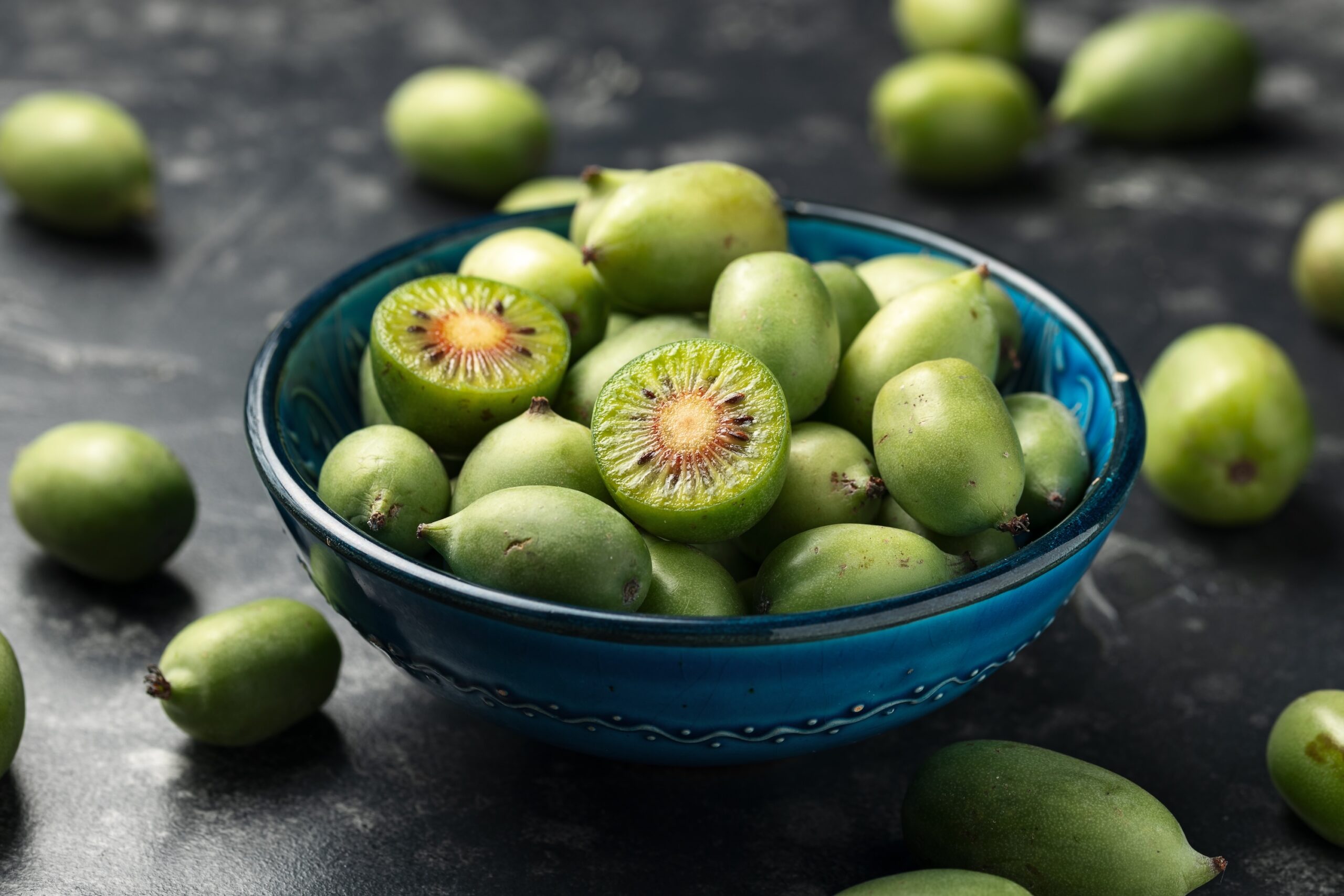
So what are kiwi berries, exactly? Picture a regular kiwi shrunk down to the size of a grape, minus the fuzzy skin. Kiwi berries have smooth, edible skin, so you can pop the whole fruit straight into your mouth—no peeling or slicing required. That makes them an easy snack, but it also means you’re eating the entire fruit, including the fiber and nutrients found in the skin.
They’re sweet, tart, surprisingly nutrient-dense, and different enough from regular kiwi to be worth seeking out during their brief fall run. Here’s what to know about kiwi berries, including their nutrition, potential health and weight-loss benefits, and how to eat them.
What are kiwi berries—and why do you need to get them now?
Picture a kiwi that got shrunk down to grape size and lost its fuzzy skin—that’s a kiwi berry. They have the same bright green flesh and tiny black seeds as the kiwi you already know, with a sweet-tart, sometimes tropical flavor. But unlike fuzzy kiwifruit, kiwi berries have thin, smooth, edible skin, so you can pop the whole fruit straight into your mouth.
Are they related to regular green kiwi? Yes. Kiwi berries belong to the same plant family as fuzzy kiwifruit, but they’re a different species. You may also see them called mini kiwis, baby kiwis, or hardy kiwis. That last name comes from the plant’s ability to tolerate much colder winters than fuzzy kiwifruit. Some hardy kiwi vines can withstand very low temperatures.
Noom’s Most Powerful Program
A dual-pathway GLP-1 and behavior change for lasting results.

One other question that comes up a lot: Are kiwi berries genetically modified? Nope. Actinidia arguta isn’t a genetically modified fruit, and it certainly isn’t something engineered in a lab to look like a mini kiwi. The plant is native to parts of eastern Asia, including China, Korea, Japan, and eastern Russia, where it grows naturally in the wild.
Growers have developed different cultivars over time, but kiwi berries themselves aren’t new. What makes them feel fleeting is their short harvest and ripening window. Commercial production is limited in part by the fruit’s relatively short storage and shelf life compared with fuzzy kiwifruit. That helps explain why they seem to appear all at once each fall—and then disappear almost as quickly.
What do kiwi berries taste like?
Think of a more concentrated version of regular kiwi: sweet, a little tart, with the same tropical tang. Flavor varies by variety, but ripe kiwi berries can have an especially sweet, intense, highly aromatic flavor.
The texture is soft and juicy, with smooth, edible skin instead of the fuzzy exterior of a regular kiwi. Ripeness makes a big difference in both texture and flavor. As kiwi berries ripen, starches break down and sugar levels rise, while the fruit becomes softer and its flavor continues to develop.
A ripe kiwi berry should give a little when you press it—think ripe grape or soft plum. If it’s still firm, it’s probably not ready yet. Firm kiwi berries can continue ripening on the counter, so give them a little more time before eating them.
Are kiwi berries good for you? The health benefits
Yes. A serving of about five to six kiwi berries—roughly 125 grams—has about 96 calories, 4 grams of fiber, and 360 milligrams of potassium. That’s more potassium than you’d get from a small banana.
Vitamin C is the real standout. Research suggests kiwi berries contain an average of about 150 milligrams of vitamin C per 100 grams, which is well over the recommended daily amount for most adults. For comparison, green kiwifruit averages about 103 milligrams per 100 grams and gold kiwifruit about 65 milligrams, though the exact amount can vary considerably by variety.
Kiwi berries also provide other plant compounds, including lutein, carotenoids, and polyphenols. For a fruit that needs no peeling or prep, that’s a pretty impressive nutritional profile.
Kiwi berry nutrition, per 125-gram serving (about 5–6 berries):
| Nutrient | Amount |
|---|---|
| Calories | 96 |
| Carbohydrates | 22 g |
| Sugar | 9.5 g |
| Fiber | 4 g |
| Protein | 1.5 g |
| Potassium | 360 mg |
| Vitamin C | About 90% of the RDA |
They provide vitamin C and antioxidants
Vitamin C is the nutritional standout in kiwi berries, with some varieties containing especially high amounts. They’re also a source of lutein, a carotenoid associated with eye health, as well as phenolic compounds with antioxidant activity.
Vitamin C supports normal immune function and helps your body make collagen. It also acts as an antioxidant, helping protect cells from damage caused by free radicals.

The Easy Way
to lose weight and get healthy.

They can help you get more fiber
Kiwi berries are an easy way to add a little more fiber to your day, especially because you eat the entire fruit—smooth skin and all.
Getting enough fiber supports digestive health and some types of fiber may also help you feel fuller after eating. That combination can make fiber-rich fruit a useful choice when you’re trying to manage your weight.
They may support digestive health
Regular kiwifruit has real research behind its reputation as a gut-friendly food. Studies have found that eating kiwifruit can and improve some symptoms of constipation. Fiber likely plays a role, and green kiwifruit also contains actinidin, an enzyme that helps break down protein.
The catch: Most of that research has been done on conventional kiwifruit, not kiwi berries. Since kiwi berries are close relatives and provide fiber, they may offer similar benefits—but we don’t yet have human studies showing that they improve constipation or bowel regularity.
How to eat kiwi berries
Wash them, eat them whole. That’s really it—no peeling, cutting, or spoon required.
- Eat them plain: Grab a handful straight out of the container for an easy snack.
- Add them to Greek yogurt or oatmeal: They add a sweet, juicy pop against something creamy.
- Slice them into salads: Their sweetness pairs especially well with slightly bitter greens like arugula.
- Pair them with protein or fat: Have a few with almonds, Greek yogurt, or cheese to make your snack more filling.
- Freeze them: Kiwi berries freeze well, and you can partially thaw them before eating for a cold, sorbet-like bite.
A serving is about five to six kiwi berries, or roughly 125 grams, though there’s no reason you need to measure them precisely. A small handful makes an easy starting point.
Do you eat the skin of kiwi berries?
Yes. The skin is thin, smooth, and completely edible—that’s one of the main things that sets kiwi berries apart from the fuzzy-skinned kiwi you’re used to peeling. Just wash them and eat them whole.
When are kiwi berries in season?
Kiwi berries have a remarkably short season. In the Pacific Northwest, where many of the kiwi berries sold in the U.S. are grown, they’re available from September into November, depending on the variety. Each variety is ready for only a short stretch of that time, which is why kiwi berries can seem to suddenly appear at the grocery store—and disappear again within weeks.
You may also spot kiwi berries at other times of year. In New Zealand, where the seasons are flipped, kiwi berries are picked around February and March, when it’s late summer and early fall there. That means New Zealand-grown kiwi berries can sometimes show up in U.S. stores during our spring.
For U.S.-grown kiwi berries, though, fall is the time to look. If you see them, don’t wait too long—they may not be there on your next grocery run.
Where can you get kiwi berries?
Kiwi berries aren’t something you’ll find year-round. When they’re in season, look for them at stores with a good seasonal produce selection, as well as co-ops and farmers markets.
Costco, Trader Joe’s, and Sprouts have all carried them, although availability varies by store and season. One name you might see is Little Pranksters, a brand of kiwi berries that built a following on social media last fall and is back in stores for fall 2026.
When you do find kiwi berries, here’s how to pick the good ones:
- Give them a gentle squeeze. Ripe kiwi berries should have a little give rather than feeling rock-hard.
- Let firm ones ripen at home. Kiwi berries can soften at room temperature, so give them a little time on the counter if they’re still firm.
- Refrigerate them once they’re ripe. Keeping them cold slows further ripening and helps them last longer.
Because their time in stores can be brief, kiwi berries are one of those fruits worth grabbing when you happen to see them.
FAQs about kiwi berries
Are kiwi berries the same as kiwis?
Not exactly, but they’re close relatives. Kiwi berries and standard kiwifruit belong to the same plant family but are different species. Kiwi berries are smaller, have smooth edible skin, and can have a sweeter, more concentrated flavor.
What are Little Pranksters kiwi berries?
Little Pranksters is a brand of kiwi berries grown in Oregon. They’re the same type of small, smooth-skinned kiwi berry covered in this article, not a separate fruit. You may spot them at stores including Costco, Trader Joe’s, and Sprouts when they’re in season.
How do you know when kiwi berries are ripe?
Give them a gentle squeeze. A ripe kiwi berry should have a little give, similar to a ripe grape. If yours are still firm, leave them at room temperature to soften before eating them.
How long do kiwi berries last?
Kiwi berries are fairly perishable, especially once they’re ripe. Keep firm berries at room temperature until they soften, then move them to the refrigerator to slow further ripening. For the best flavor and texture, eat ripe berries sooner rather than later.
Can you freeze kiwi berries?
Yes. Freezing is an easy way to enjoy kiwi berries after their short season ends. You can freeze ripe kiwi berries whole and partially thaw them before eating. They’ll become quite soft if you let them thaw completely.
Noom’s Most Powerful Program
A dual-pathway GLP-1 and behavior change for lasting results.
The bottom line: Kiwi berries are worth grabbing while they’re in season
Kiwi berries are one of those foods that are worth trying simply because you don’t get many chances. They’re sweet, juicy, easy to eat, and only show up for a short stretch each fall.
They also have plenty going for them nutritionally. You get fiber, vitamin C, potassium, and antioxidants in a small fruit you can eat whole—no peeling or prep required. And if you’re trying to lose weight, they’re an easy way to add something sweet and satisfying without a lot of calories.
So if you spot kiwi berries at Costco, Trader Joe’s, Sprouts, or your local grocery store this fall, grab a bag. Worst case, you tried something new. Best case, you found a new favorite fruit—you’ll just have to wait until next season to get it again.
Want to make nutritious foods like kiwi berries part of your everyday routine? Download Noom on iOS or Android for tools and support that can help you build healthy eating habits that work for you.
Editorial standards
At Noom, we’re committed to providing health information that’s grounded in reliable science and expert review. Our content is created with the support of qualified professionals and based on well-established research from trusted medical and scientific organizations. Learn more about the experts behind our content on our Health Expert Team page.