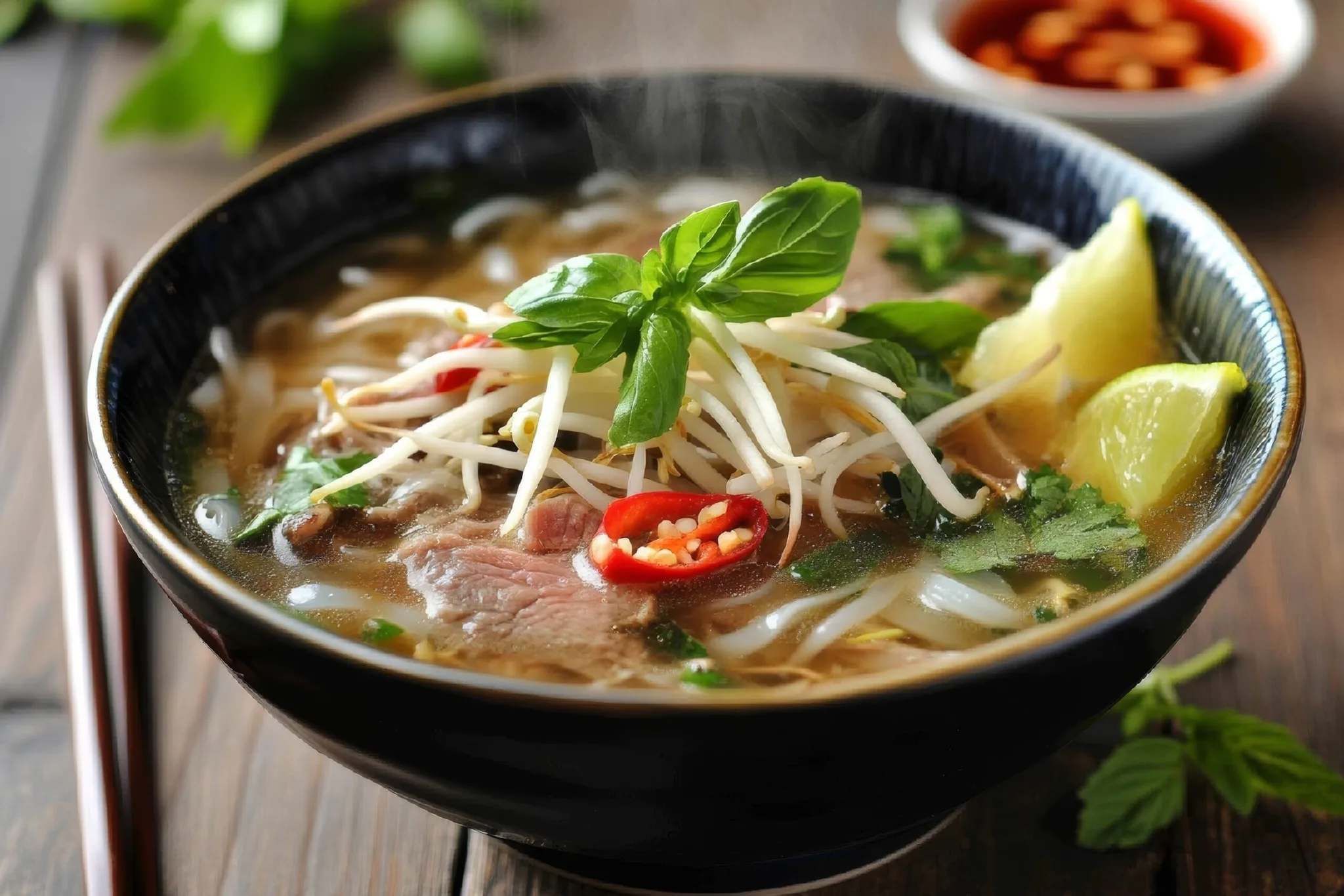
Pho is a Vietnamese noodle soup made with a flavorful broth, rice noodles, protein, and fresh herbs. It has a reputation as one of the healthier choices on a restaurant menu—and for good reason. Unlike many takeout meals that rely on heavy sauces, fried ingredients, or oversized portions, pho is built around relatively simple ingredients. The result is a meal that can feel hearty and satisfying without being especially calorie-dense.
That doesn’t automatically make pho a weight-loss food, but it does check several boxes that can support weight-management goals. A typical bowl provides a combination of protein, fluid, and volume, three factors that are linked to feeling fuller after a meal. The fresh garnishes, including bean sprouts, herbs, and lime, add flavor and texture with very few calories, helping create a meal that feels substantial.
The exact nutrition depends on how it’s prepared. Chicken pho (pho ga) is often lower in calories and saturated fat, while beef pho (pho bo) generally provides more iron, zinc, and vitamin B12. The biggest nutritional consideration is usually sodium, since much of pho’s signature flavor comes from a long-simmered broth.
So, is pho actually good for weight loss? In many cases, it can be a satisfying, protein-rich choice that fits into a calorie-conscious eating pattern. Here’s what the research says.
✅ Quick answer
Yes, pho can be a weight-loss-friendly meal. It combines filling protein, a flavorful broth, and plenty of volume for a relatively moderate number of calories. The main things to watch are noodle portions and sodium, which can contribute to temporary water retention. For a lighter bowl, prioritize protein, add extra herbs and bean sprouts, and go easy on calorie-dense additions and sauces like hoisin.
🚀 Weight-loss benefits
- Pho provides plenty of protein, which supports fullness and muscle maintenance. A standard bowl typically contains about 25 to 35 grams of protein—roughly half the daily protein target for many adults. Protein is generally more satiating than carbohydrates or fat, helping you stay satisfied after a meal. During weight loss, adequate protein also helps preserve lean muscle mass.
- Pho’s broth base may help you feel full on fewer calories. The combination of liquid and solid ingredients adds volume to the meal, helping fill the stomach and promote satiety. Research has found that broth-based soups can be particularly effective for managing hunger and reducing overall calorie intake compared with calorie-matched solid foods.
- Pho is relatively moderate in calories compared with many restaurant meals. A typical bowl contains about 350 to 500 calories, depending on the ingredients and portion size. Because it combines protein, noodles, broth, and vegetables in a single meal, pho can be satisfying without the calorie load often found in richer soups, fried dishes, or heavily sauced entrees.
⚠️ Things to be mindful of
- Pho can be high in sodium, which may temporarily increase water retention. Restaurant pho often contains 1,000 to 1,500 milligrams of sodium per bowl. While sodium doesn’t cause fat gain, it can lead to short-term fluid retention that may mask weight loss progress on the scale.
- Pho’s rice noodles provide carbohydrates but relatively little fiber. Made from refined rice flour, the noodles can contribute 40 to 60 grams of carbohydrates per serving, depending on portion size. Because they aren’t a significant source of fiber, some people may find that larger noodle portions are less filling than the same calories from higher-fiber foods.
- Pho portion sizes can vary dramatically from one restaurant to another. A modest bowl may contain around 350 calories, while larger portions with extra noodles, richer cuts of meat, and added sauces can contain substantially more. Paying attention to noodle portions, protein choices, and toppings can help keep the meal aligned with your goals.
Nutrients in chicken pho (per 1 bowl / approximately 2 cups, 488 g)
| Nutrient | Amount | % RDA* |
|---|---|---|
| Calories | 400 cal | 20% |
| Protein | 30 g | 60% |
| Total carbs | 45 g | 16% |
| Fiber | 3 g | 11% |
| Sugars | 2 g | — |
| Total fat | 8 g | 10% |
| – Saturated fat | 2 g | 10% |
| Omega-3 | 0.1 g | — |
| Omega-6 | 0.7 g | — |
| Sodium | 1,200 mg | 52% |
*Recommended dietary allowance (RDA) is defined as the average daily amount of nutrients needed to meet the requirements of nearly all healthy people in a specific group.
Note: Values are estimates for a typical restaurant-style chicken pho prepared with rice noodles, chicken, broth, and standard garnishes. Actual nutrition can vary substantially depending on portion size, broth recipe, protein choice, and toppings.
Pho stands out for its protein-to-calorie ratio. Thirty grams of protein for around 400 calories is a substantial amount for a complete restaurant meal. The chicken provides most of the protein, while the rice noodles account for the majority of the carbohydrates.
Fat content is relatively moderate, especially when the soup is made with lean chicken. Fiber is relatively low at about 3 grams per bowl, though loading up on bean sprouts, fresh herbs, and vegetables can boost both fiber and micronutrient content without adding many calories.
One nutritional consideration is sodium. Because pho gets much of its flavor from a slow-simmered broth, a typical restaurant bowl can contain a significant amount. While sodium doesn’t affect fat loss, it can contribute to temporary water retention that may show up on the scale.
💊 Vitamins & minerals in pho (per 1 bowl / approximately 2 cups, 488 g)
| Vitamin / Mineral | Amount | % RDA* |
|---|---|---|
| Sodium | 1,200 mg | 52% |
| Niacin (B3) | 8 mg | 50% |
| Selenium | 18 µg | 33% |
| Phosphorus | 230 mg | 18% |
| Vitamin B6 | 0.3 mg | 18% |
| Zinc | 1.8 mg | 16% |
| Potassium | 478 mg | 10% |
| Magnesium | 49 mg | 12% |
| Iron | 1.4 mg | 8% |
| Vitamin K | 15.4 µg | 13% |
| Vitamin E | 0.8 mg | 5% |
| Vitamin A | 29 µg | 3% |
| Vitamin B12 | 0.4 µg | 17% |
Vitamin and mineral content varies depending on the protein used, but chicken pho provides a mix of B vitamins, selenium, phosphorus, and other essential nutrients. Niacin (vitamin B3) is one of the standout nutrients, supporting energy metabolism and cellular function. Selenium can provide about a third of daily needs and plays an important role in thyroid health and antioxidant defenses.
The broth contributes minerals such as potassium and magnesium, which are involved in muscle function, fluid balance, and blood pressure regulation. Chicken pho also provides smaller amounts of zinc, iron, and vitamin B6, along with trace amounts of vitamins A and K from the herbs and vegetables typically served alongside the soup.
While pho isn’t usually considered a major source of vegetables, toppings like bean sprouts, cilantro, Thai basil, scallions, and lime add flavor, volume, and additional micronutrients with very few calories.
🔍 Nutrient breakdown
Glycemic index (GI) of pho
Glycemic index: approximately 53–65 (Moderate)
💡 Rice noodles have a moderate GI on their own, but the combination of protein, fat, and broth in a full bowl slows gastric emptying and moderates the blood sugar response. Choosing lean protein and loading up on vegetables helps keep the overall GI impact lower.
Is pho high in protein?
✔️ Yes: Pho contains about 30 grams of protein per serving. The broth contributes additional collagen-derived amino acids like glycine and proline.
Is pho high in fiber?
❌ No: Pho has about 3 grams of fiber per serving. The rice noodles are refined and contribute almost no fiber.
💡 Ask for extra vegetables and pile on the bean sprouts, bok choy, and herbs—it’s the easiest way to meaningfully boost the fiber content of your bowl.
Is pho low in carbs?
❌ No: Pho has about 51 grams of carbs per serving, primarily from the rice noodles. For standard or weight-loss eating patterns, this is manageable within a balanced day. For keto or very low-carb diets, it’s a significant chunk of the daily carb limit.
💡 Asking for half the noodles is the single most effective adjustment you can make—it trims roughly 20 to 25 grams of carbs and about 200 calories in one simple swap.
Is pho gluten-free?
✔️ Yes: traditional pho is naturally gluten-free. The noodles are made from rice flour and the broth from bones, spices, and aromatics—none of which contain gluten. The caution is condiments: some hoisin and fish sauces may contain gluten, so confirm with the restaurant if you have celiac disease or a serious sensitivity.
Is pho good for fat loss?
✔️ Yes: Due to its high-protein and moderate-calorie count, pho is helpful for fat loss when ordered with lean protein and controlled noodle portions. Keep condiments on the side and flavor your bowl with lime juice and fresh herbs rather than hoisin or sriracha to keep sugar and sodium down.
🍽️ Diet compatibility: Which diets include pho?
| Diet | ✅ / ❌ | Why |
|---|---|---|
| Keto | ❌ | Traditional pho contains 40 to 60 g of carbs per bowl from rice noodles, far exceeding the typical keto daily limit of 20 to 50 g. A keto-friendly version is possible by substituting zucchini or shirataki noodles while keeping the bone broth and protein intact. |
| Paleo | ✅ | Pho’s core components—bone broth, meat, herbs, and vegetables—align well with paleo principles. The rice noodles are technically excluded from strict paleo, but can be omitted or replaced. |
| Mediterranean | ✅ | While not a Mediterranean dish, pho shares key characteristics: lean protein, aromatic herbs, vegetable toppings, and a broth-based format that fits the broader spirit of the diet. |
| Vegan | ❌ | Traditional pho is made with bone broth and animal protein. Plant-based versions made with vegetable broth, tofu or tempeh, and mushrooms are increasingly available, though lower in protein and certain micronutrients like B12 and iron. |
| Gluten-free | ✅ | Traditional pho is naturally gluten-free, using rice noodles and a bone-based broth. The main caution is condiments—hoisin sauce and some fish sauces may contain gluten. |
Pho can fit into a variety of eating patterns because it’s easy to customize. The type of protein, amount of noodles, and toppings can all be adjusted based on your preferences and goals.
For weight loss, pho checks several boxes: it’s rich in protein, served in a filling broth, and can be relatively moderate in calories compared with many restaurant meals. The main thing to keep in mind is sodium, which can be high in restaurant versions and may lead to temporary water retention. If pho is a regular part of your routine, balancing it with lower-sodium meals throughout the day can help.
🌟 Is pho healthy? What are the health benefits?
Metabolic health: Is pho good for your metabolism?
- Boosts metabolism? ✔️ Potentially, to a small degree. Pho is typically high in protein, and protein has a higher thermic effect than carbohydrates or fat. That means your body uses more energy to digest and process protein than it does other macronutrients.
- Supports steadier blood sugar? ✔️ Potentially. The protein and fat in pho can slow digestion and help moderate the blood sugar response compared with eating rice noodles on their own. The overall effect will depend on the amount of noodles, protein, and other ingredients in the bowl.
- Supports metabolic health during weight loss? ✔️ Yes. Pho’s relatively high protein content may help preserve lean muscle mass during a calorie deficit. Maintaining muscle is important because it supports strength, physical function, and overall energy expenditure.
Cholesterol impact: Does pho affect cholesterol levels?
- Does it lower LDL (bad) cholesterol? ❌ Not directly. There is no evidence that pho specifically lowers LDL cholesterol. However, versions made with lean proteins and lower-fat broths tend to be lower in saturated fat than many restaurant meals, which may support heart-healthy eating patterns.
- Does it raise HDL (good) cholesterol? ❌ No clear evidence. There is no research showing that pho specifically increases HDL cholesterol levels.
- Overall impact on heart health? ✔️ Potentially positive. Pho can fit into a heart-healthy diet because it provides protein, herbs, and a relatively moderate calorie count. The main nutritional consideration is sodium, which can be high in restaurant versions. Choosing lower-sodium preparations, limiting extra salty sauces, or enjoying the broth in moderation can help reduce overall sodium intake.
💡 Squeeze lime over your bowl and flavor with fresh chili rather than hoisin or soy sauce to keep sodium and sugar lower without sacrificing the aromatic complexity that makes pho worth eating.
Can you eat pho in a calorie deficit?
✔️ Yes. Pho can fit well into a calorie deficit because it combines protein, broth, and high-volume ingredients for a relatively moderate number of calories. A typical bowl contains about 350 to 500 calories and 25 to 35 grams of protein, making it more filling than many restaurant meals with a similar calorie count.
As with any restaurant dish, portions and ingredients matter. Larger bowls, extra noodles, richer cuts of meat, and added sauces can increase calories quickly. But when prepared with a reasonable portion of noodles and a protein-rich broth, pho can be a satisfying option for people trying to lose weight.
💡 Ask for half the noodles and extra vegetables when ordering—this single adjustment reduces the calorie count by roughly 150 to 200 calories while actually increasing the volume and fiber of your bowl.
Is pho rich in antioxidants?
✔️ Yes: Pho’s spice blend and fresh herb toppings are meaningful sources of antioxidants. Star anise, cinnamon, and cloves contain polyphenols with anti-inflammatory properties, while fresh cilantro, Thai basil, and mint contribute flavonoids. Don’t skip the herbs—they’re the highest-antioxidant component of pho by concentration.
Does pho support gut health?
✔️ Potentially. Pho contains several ingredients that may support digestive health, including broth, herbs, vegetables, and bean sprouts. The broth can be soothing and contributes to hydration, while toppings like bean sprouts and fresh herbs provide small amounts of fiber that help support a healthy gut microbiome.
Some pho broths are made with bones, which can contribute collagen- and gelatin-derived amino acids. While these compounds are often discussed in relation to gut health, more human research is needed to determine their specific effects on the gut lining.
Overall, pho can be part of a gut-friendly eating pattern, though it isn’t a particularly high-fiber meal unless it’s paired with additional vegetables.
Does pho support digestion?
✔️ Potentially. Pho contains several ingredients traditionally associated with digestive comfort, including ginger and aromatic spices. Ginger has been studied for its ability to help reduce nausea and support normal digestion, while the warm broth may be soothing for some people.
Pho is also relatively simple compared with many restaurant meals, relying on broth, noodles, protein, and fresh herbs rather than heavy sauces or fried ingredients. That combination may make it easier to digest for many people, though individual tolerance will vary.
For those with digestive sensitivities, ingredients such as onions, garlic, certain spices, or large portions of noodles may still trigger symptoms, so the best choice depends on your personal tolerance.
Access GLP-1 Weight Loss with Noom
Explore a wide range of prescription medications supported by Noom’s program.Microdose GLP-1rx
Noom GLP-1rx
Noom GLP-1rx Plus
Wegovy®
Ozempic®

Metformin
Zepbound®
Mounjaro®
Liraglutide
Does pho help you feel satiated and less hungry?
✔️ Yes. Pho is generally filling relative to its calorie content. The combination of protein, broth, and high-volume ingredients can help promote fullness, while the warm liquid adds volume that may increase satiety during and after the meal.
The protein in pho is particularly important, since protein is one of the most satiating nutrients and tends to keep people feeling satisfied longer than carbohydrates alone. The broth, noodles, and fresh toppings work together to create a meal that feels substantial without necessarily being high in calories.
Satiety level: High
💡 Eat pho slowly and work through the protein and broth before reaching for more noodles—the protein and liquid volume together create a strong, sustained fullness.
Does pho help with nighttime cravings?
✔️ Potentially. Pho’s combination of protein, broth, and volume can make it a satisfying dinner choice. Higher-protein meals are generally associated with greater fullness and may help reduce hunger later in the evening, which could make nighttime snacking less tempting.
The exact effect depends on the portion size and ingredients. A protein-rich bowl with a reasonable amount of noodles is likely to be more satisfying than a lighter meal that leaves you hungry an hour later.
💡 If you’re watching calories or added sugar, use hoisin sauce sparingly. Hoisin is a popular pho condiment, but it can add sugar and calories quickly. A squeeze of lime, fresh herbs, or a small amount of sriracha can add flavor with fewer calories.
Does pho help reduce inflammation?
✔️ Potentially, but the effect is likely modest. Pho broth is often made with spices such as ginger, cinnamon, and star anise, all of which contain compounds with anti-inflammatory properties. Ginger, in particular, has been studied for its potential role in reducing inflammation and supporting recovery from exercise-related muscle soreness.
That said, a single bowl of pho isn’t likely to have a meaningful effect on inflammation on its own. The overall pattern of your diet matters far more than any individual meal. Pho can fit into an anti-inflammatory eating pattern because it provides protein, herbs, and aromatic spices while typically being lower in added sugar than many restaurant meals.
Is pho beneficial for brain health?
✔️ Potentially. Pho provides several nutrients involved in normal brain function, including protein and B vitamins. Depending on the ingredients used, it may also provide vitamin B12, vitamin B6, and other nutrients that support the nervous system and energy metabolism.
Some pho broths made from bones contain amino acids such as glycine, which has been studied for its potential role in sleep and cognitive function. However, more research is needed to determine whether the amounts typically consumed in foods have meaningful effects.
Overall, pho can be part of a brain-healthy eating pattern, but its greatest benefit is likely that it provides a balanced combination of protein, carbohydrates, and micronutrients rather than any single “brain-boosting” ingredient.
Can pho improve skin and hair health?
✔️ Potentially, as part of a balanced diet. Pho provides several nutrients involved in maintaining healthy skin and hair, including protein, zinc, and B vitamins. Protein is particularly important because hair and skin are constantly being repaired and renewed.
Some pho broths made from simmered bones contain collagen-derived amino acids. While collagen supplements have been studied for potential skin benefits, it’s less clear whether the amounts naturally present in foods like broth have the same effects.
Fresh herbs and lime can also contribute small amounts of vitamin C, a nutrient involved in collagen production and wound healing. Overall, pho is best viewed as a nutrient-rich meal that supports overall health rather than a targeted treatment for skin or hair concerns.
Can pho help balance hormones?
✔️ Potentially, as part of a nutritious diet. Pho provides protein and several micronutrients that play important roles in hormone production and regulation. Adequate protein intake supports the body’s ability to produce peptide hormones, while minerals such as selenium and zinc are involved in normal endocrine function.
Selenium is particularly important for thyroid hormone metabolism, and zinc contributes to numerous processes involved in hormone signaling and cellular function. However, eating pho is unlikely to have a noticeable effect on hormone levels by itself.
Overall, pho can contribute nutrients that support hormonal health, but hormone balance is influenced by many factors, including overall diet, sleep, stress, physical activity, age, and underlying medical conditions.
🍽️ Best ways to eat pho for weight loss
- Prioritize protein and be mindful of noodle portions. Pho is already a relatively balanced meal, but small modifications can make it even more weight-loss-friendly. Consider asking for extra protein, extra bean sprouts and herbs, or a smaller portion of noodles. Many restaurants are happy to customize your bowl.
- Build flavor with herbs, lime, and chili. Fresh garnishes like Thai basil, cilantro, bean sprouts, lime, and sliced chili add flavor, texture, and volume with very few calories. While hoisin sauce is a popular pho condiment, it can add sugar and calories quickly, so use it sparingly if you’re watching your intake.
- Don’t worry about finishing the meal—especially the broth. Pho broth is rich in flavor but can also be a significant source of sodium. If sodium intake is a concern, there’s no need to finish every last drop. Enjoy the broth as part of the meal and stop when you’re comfortably satisfied.
- Pay attention to portion size. Pho can range from a moderate meal to a very large restaurant portion, depending on the bowl size and ingredients. Choosing a regular-size bowl and eating until you’re satisfied—not stuffed—can help keep calories in check while still enjoying the meal.
International Pho Day is December 12 – Try these recipes
- Chicken pho (phở gà) The Kitchn
- Quick beef pho Food Network
- Vegan pho Love & Lemons
🍏 Best alternatives & comparisons (per standard serving)
| Food | Calories | Carbs | Fiber | Protein | Fat |
|---|---|---|---|---|---|
| Pho (beef, 2 cups) | 430 | 51 g | 3 g | 30 g | 11 g |
| Chicken pho (2 cups) | 380 | 48 g | 3 g | 26 g | 7 g |
| Tofu pho (2 cups) | 340 | 47 g | 4 g | 18 g | 9 g |
| Ramen (1 bowl) | 550 | 65 g | 3 g | 24 g | 22 g |
| Tom yum soup (2 cups) | 280 | 14 g | 2 g | 20 g | 12 g |
| Chicken noodle soup (2 cups) | 310 | 36 g | 2 g | 24 g | 7 g |
| Laksa (1 bowl) | 640 | 55 g | 4 g | 28 g | 32 g |
One reason pho stands out among noodle soups is its balance of protein and calories. Compared with options like ramen or laksa, pho typically provides more protein for fewer calories, which can help support fullness and satisfaction after a meal. Ramen is often higher in fat, while laksa’s rich coconut-based broth can add substantially more calories.
Pho also compares favorably with many restaurant meals because it combines protein, broth, noodles, and fresh herbs in a single bowl. The result is a meal that feels substantial without being especially calorie-dense. While the exact nutrition varies depending on the protein, portion size, and preparation, pho is generally one of the more balanced choices among restaurant soups and noodle dishes.
For those focused on weight loss, choosing a protein-rich bowl and being mindful of noodle portions can help maximize satiety while keeping calories in check.
Frequently asked questions about pho and weight loss
How many calories are in a bowl of pho?
A typical restaurant bowl of pho contains about 350 to 550 calories, depending on the protein, noodle portion, and broth. Chicken pho is often on the lower end of that range, while larger bowls or richer preparations can contain more. The noodle portion is usually the biggest contributor to calories, so reducing the noodles is one of the easiest ways to lighten the meal.
How often can you eat pho on a weight-loss diet?
There’s no specific limit. Pho can fit into a weight-loss plan as often as it fits within your overall calorie and nutrition goals. If you eat it frequently, keep an eye on sodium, which can be high in restaurant versions.
Is chicken pho or beef pho better for weight loss?
Both can fit into a weight-loss plan. Chicken pho is often slightly lower in calories and saturated fat, while beef pho may provide more iron, zinc, and vitamin B12. Portion size and noodle quantity are likely to have a bigger impact on calories than the choice between chicken and beef.
Is pho good for women trying to lose weight?
Pho can be a satisfying option for anyone trying to lose weight because it combines protein, broth, and relatively moderate calories in a single meal. Depending on the ingredients used, it may also provide nutrients such as iron, zinc, and B vitamins that support overall health.
Can you eat pho every day?
You can, but it’s worth paying attention to the overall balance of your diet. Restaurant pho can be high in sodium, so eating it daily may make it more difficult to stay within recommended sodium intake levels. Homemade versions offer more control over ingredients and sodium content.
Is pho good for weight loss if you have diabetes?
Pho can fit into a diabetes-friendly eating pattern, but the rice noodles can contribute a significant amount of carbohydrates. Choosing a protein-rich bowl, being mindful of noodle portions, adding extra vegetables, and limiting sugary sauces such as hoisin may help support blood sugar management.
What’s the healthiest way to order pho at a restaurant?
Look for a protein-rich bowl with plenty of herbs and vegetables, and consider asking for a smaller portion of noodles if available. Using lime, fresh herbs, and chili for flavor instead of large amounts of hoisin sauce can help keep added sugar and calories lower. If sodium is a concern, you may also choose not to finish all of the broth.
🧠 The bottom line: Pho can be part of most weight loss plans
Pho is one of those restaurant meals that checks a lot of boxes for weight loss. It combines protein, broth, and high-volume ingredients in a meal that’s often relatively moderate in calories compared with many other restaurant options. The result is a bowl that feels satisfying and substantial without necessarily being calorie-dense.
A few simple adjustments can make pho even more weight-loss-friendly. Being mindful of noodle portions, loading up on herbs and bean sprouts, and using hoisin sauce sparingly can help keep calories in check while preserving the flavors that make pho so appealing.
The main nutritional consideration is sodium. Restaurant pho can be high in sodium, which may lead to temporary water retention and short-term fluctuations on the scale. That’s not the same as fat gain, but it’s something to keep in mind if you’re tracking your weight closely.
Overall, pho is a flavorful, filling meal that can fit comfortably into a balanced eating pattern. If you’re looking for a restaurant option that delivers protein, satisfaction, and reasonable calories in a single bowl, pho is a solid choice.

The Easy Way
to lose weight and get healthy.
See if you qualify
📖 Scientific evidence
- Eating soup is linked to a lower-calorie, higher-quality diet overall. (British Journal of Nutrition, 2014) An analysis of more than 10,000 U.S. adults found that people who ate soup consumed fewer calories and had a higher overall diet quality than those who didn’t eat soup. While the study didn’t examine pho specifically, pho’s combination of broth, protein, and vegetables fits the broader pattern of nutrient-dense soups associated with better diet quality.
- Starting a meal with soup may help reduce overall calorie intake. (Appetite, 2007) In a study people who ate a low-calorie soup before lunch consumed about 20% fewer calories at the meal than when they skipped the soup. While the study didn’t examine pho specifically, pho’s broth-rich format may provide some of the same satiety benefits associated with soup consumption.
- Protein helps promote fullness and supports weight management. (American Journal of Clinical Nutrition, 2008) A review found that protein is generally more satiating than carbohydrates or fat and may help reduce overall calorie intake. Higher-protein diets may also help preserve lean muscle mass during weight loss. These findings help explain why a protein-rich bowl of pho can feel more filling and satisfying than its calorie count alone might suggest.
- Higher protein intake is associated with greater weight loss. (Nutrients, 2021) A review of 37 studies found that people who increased their protein intake lost 3.5 pounds more weight on average than those consuming lower-protein diets. Pho’s relatively high protein content may support weight-loss efforts by helping increase protein intake while also promoting fullness.
Editorial standards
At Noom, we’re committed to providing health information that’s grounded in reliable science and expert review. Our content is created with the support of qualified professionals and based on well-established research from trusted medical and scientific organizations. Learn more about the experts behind our content on our Health Expert Team page.