What you’ll learn:
- Both avocado oil and olive oil are rich in monounsaturated fats and have similar calories.
- Extra virgin olive oil has more polyphenols and evidence for heart health; refined avocado oil has a higher smoke point.
- Neither oil is universally “better”; the right choice comes down to how you cook and what matters most to you.
If you’ve ever wondered whether you should reach for avocado oil over olive oil, the answer isn’t straightforward. They both get marketed as “healthy,” they share a nearly identical fat profile, and while the flavor and cooking differences are real, they’re rarely explained clearly.
Both oils are versatile, containing mainly heart-healthy monounsaturated fats, and are considered better choices nutritionally than most saturated cooking fats or heavily refined seed oils. Swap either one for butter or coconut oil in your everyday cooking, and most nutritionists would consider that a meaningful upgrade.
But each oil has its own strengths. Avocado oil is rich in heart-healthy fats and has one of the highest smoke points of any cooking oil, making it exceptionally stable at high heat—though the body of research behind it is still developing. Extra virgin olive oil, on the other hand, brings a unique set of plant compounds called polyphenols that are strongly tied to cardiovascular health, but its polyphenols are vulnerable to high heat, and its lower smoke point makes it less ideal for searing or roasting at high temperatures.
The real choice comes down to how you’re using them and what health outcomes you’re looking for.
Below, we break down how they compare on nutrition, what the research shows about their use, and when to use each one. Plus, Maggie Hudspeth, RDN, Senior Manager of Coaching at Noom, will share more about the health benefits and how to incorporate these healthy fats into your diet.
Noom’s Most Powerful Program
A dual-pathway GLP-1 and behavior change for lasting results.
Avocado oil vs. olive oil: Understanding the differences
Avocado oil and olive oil look almost identical in the bottle and share a lot of the same qualities—but understanding what sets them apart starts with knowing how each oil is made and what types are available. Those details shape everything from flavor to how you should cook with them.
Olive oil
Olive oil is pressed from whole olives. The way it’s processed determines its grade, flavor, and how many of its health-giving compounds survive to reach your plate. Not all olive oil is the same, and the type you buy matters more than most people realize.
How it’s made: The highest-quality olive oil is cold-pressed: fresh olives are mechanically crushed without added heat or chemicals, and the oil is separated from the olive paste. Lower grades are made with heat or chemical solvents to extract more oil from lower-quality or already-processed olives, which strips away flavor and most of the bioactive compounds.
Types of olive oil:
- Extra virgin olive oil (EVOO) is the highest grade and the one most associated with health benefits. It’s cold-pressed from fresh olives, has no more than 0.8% acidity, and retains its full complement of polyphenols, antioxidants, and flavor. It has a fruity, sometimes peppery taste and a smoke point of around 375 to 405°F. This is the olive oil worth seeking out if health is your primary reason for buying it.
- Virgin olive oil is one step down—still cold-pressed and unrefined, but with slightly higher acidity (up to 2%) and minor flavor flaws. It retains most of the polyphenols and is a reasonable middle-ground option, though it’s harder to find in most U.S. grocery stores.
- Pure or classic olive oil is a blend of refined olive oil and a small percentage of virgin or extra virgin oil added back in for flavor. The refining process uses heat, steam, and sometimes chemical solvents to neutralize defects in lower-quality oil. Despite what the word “pure” implies, this is a lower-quality product—most of the polyphenols and antioxidants have been removed. It has a milder flavor and a slightly higher smoke point than EVOO, making it more suitable for moderate-heat cooking.
- Light or extra light olive oil is the most refined grade. Despite the name, “light” refers entirely to flavor intensity—not calories or fat content. Both contain about 120 calories per tablespoon. Light olive oil has essentially no polyphenols and very little olive character. It works as a neutral cooking oil but offers none of the health advantages that make EVOO worth using.
What makes EVOO nutritionally important: As the American Heart Association explains, it’s the lack of refinement that preserves both the sensory and health properties of extra virgin olive oil. The polyphenols it retains—particularly oleocanthal and hydroxytyrosol—are the compounds most strongly linked to its cardiovascular benefits. Refined olive oils lose most of these.
Best uses: EVOO for dressings, finishing, and low- to medium-heat cooking. Virgin and pure olive oil for general cooking where you want a mild olive flavor, and light olive oil as a neutral cooking fat.
Avocado oil
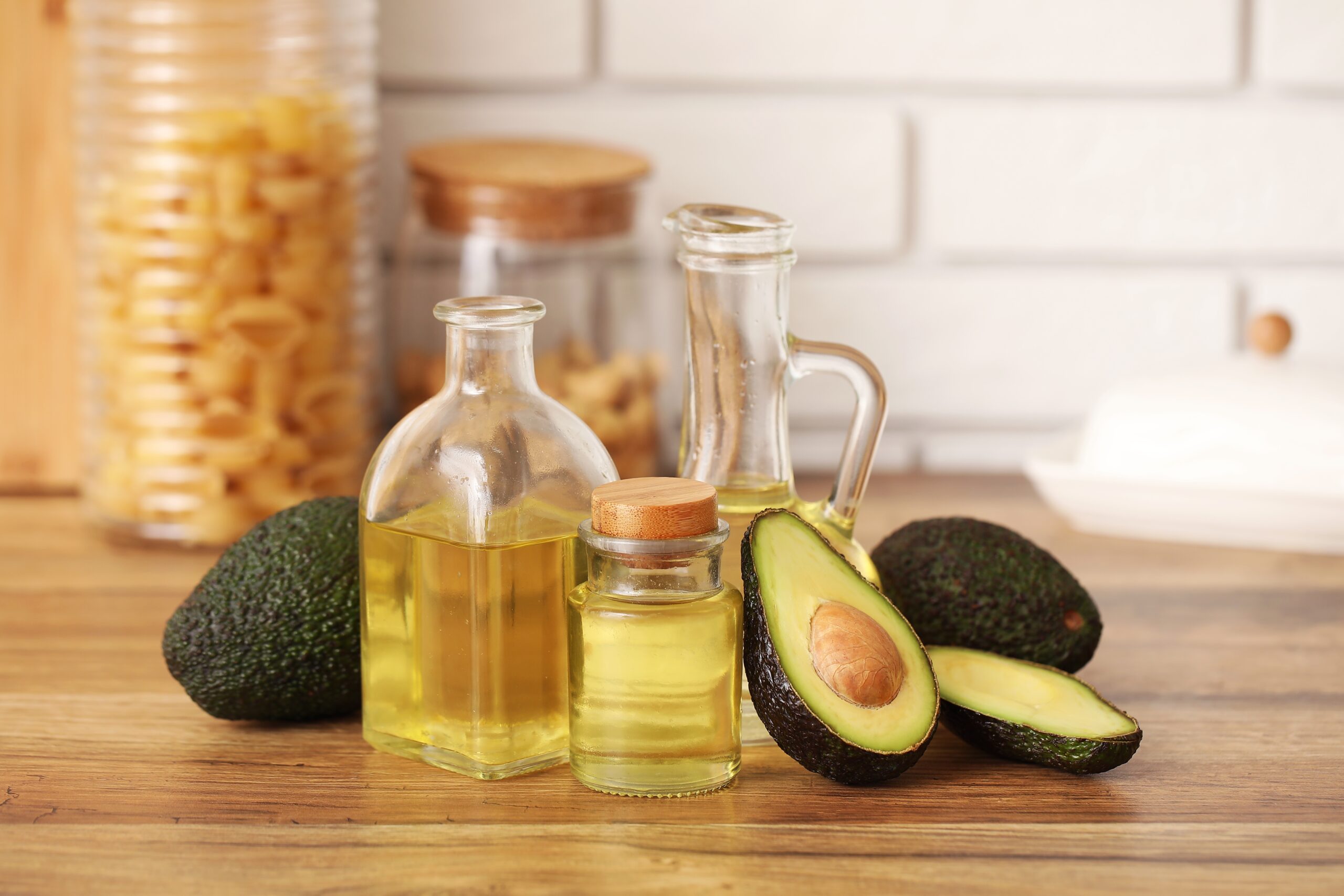
Avocado oil is pressed from the insides of ripe avocados—not the seed or skin. It’s one of the few cooking oils derived from the fruit itself rather than a seed, which gives it a fat profile closer to olive oil than most seed-based oils.
How it’s made: Like olive oil, avocado oil comes in refined and unrefined versions, and the distinction matters for how you use it.
Types of avocado oil:
- Extra virgin or unrefined avocado oil is cold-pressed from fresh avocado pulp without heat or chemicals. It retains its natural green color (from chlorophyll), a mild, buttery, slightly grassy flavor, and a higher concentration of nutrients, including lutein, vitamin E, and other antioxidants. Its smoke point is around 375 to 400°F—similar to EVOO—which means it’s well-suited for dressings, light sautéing, and finishing, but not ideal for very high-heat cooking.
- Refined avocado oil undergoes bleaching and deodorizing to remove impurities and strong flavors. The result is a clear, neutral-tasting oil with a significantly higher smoke point of around 480 to 520°F—one of the highest of any cooking oil. Some refined avocado oils use chemical solvents; others use a “naturally refined” mechanical process without harsh chemicals, which tends to preserve more of the oil’s nutritional value. This is the version most commonly sold in grocery stores and the one best suited for high-heat cooking.
What to look for: The UC Davis adulteration study found that the vast majority of retail avocado oils were either rancid or adulterated with other oils. Buying from a reputable brand, looking for a harvest or production date, and choosing refined oils from well-reviewed sources reduces this risk considerably.
Noom’s Most Powerful Program
A dual-pathway GLP-1 and behavior change for lasting results.
Best uses: Refined avocado oil for high-heat cooking—searing, stir-frying, roasting above 425°F, and grilling. Extra virgin avocado oil for dressings, finishing, and lower-heat applications where you want more flavor and nutrients.
Avocado oil vs. olive oil: Nutrition comparison
Both oils are comprised almost entirely of heart-healthy fats with no protein, fiber, or carbohydrates, which is true of any cooking oil. Per tablespoon, the numbers look nearly identical, which means neither is a nutritionally “better” oil purely on the basis of macros.
Avocado oil vs. olive oil: Nutrition per 1 tablespoon
| Nutrient | Avocado oil | Olive oil |
|---|---|---|
| Calories | 124 | 120 |
| Total fat | 14g | 13.5g |
| – Saturated fat | 1.6g | 1.9g |
| – Monounsaturated fat | 9.9g | 9.9g |
| – Polyunsaturated fat | 1.9g | 1.4g |
| Omega-3 | 0.13g | 0.1g |
| Omega-6 | 1.75g | 1.3g |
| Vitamin E | 1.7mg (11% DV) | 1.9mg (13% DV) |
| Vitamin K | 3.5µg (3% DV) | 8.1µg (7% DV) |
DV = Daily Value, based on a 2,000-calorie diet.
Here are a few things worth noting when comparing the two:
- Saturated fat is low in both—at 1.6 grams and 1.9 grams per tablespoon, respectively, both compare favorably to butter (7g) or coconut oil (11g). Both the Harvard T.H. Chan School of Public Health and the American Heart Association recommend replacing saturated fats with unsaturated fats, which is exactly what both of these oils deliver.
- Polyunsaturated fats are fats that remain liquid at room temperature and include two essential types your body can’t make on its own: omega-3s and omega-6s. Both oils contain modest amounts of each.
- Omega-3s are low in both—around 0.1–0.13g per tablespoon—so neither is a meaningful omega-3 source compared to fatty fish or flaxseed.
- Omega-6s are similarly modest at 1.3 to 1.75g, well below the amounts found in seed oils like soybean (7g) or corn (8g), so omega-6 imbalance isn’t a meaningful concern with either oil.
- Vitamin K is notably higher in olive oil—8.1µg vs. 3.5µg per tablespoon, roughly double. For most people, this is a non-issue, but it’s worth noting for anyone on warfarin or other anticoagulant medications, since consistent vitamin K intake affects how those drugs work.
“What actually separates these two oils from a health standpoint is the polyphenol content. Extra virgin olive oil contains significantly more bioactive plant compounds than avocado oil, and that’s where most of EVOO’s cardiovascular advantage comes from,” says Hudspeth.
Avocado oil vs. olive oil: Is one healthier than the other?
Both oils earn their healthy reputation through the same mechanism: They’re rich in monounsaturated fats, which are beneficial fats that are associated with improved blood cholesterol levels, lower inflammation, and healthier cardiovascular function when they replace saturated fat in the diet. That shared foundation is why both are recommended by organizations like the American Heart Association as better choices than butter, lard, or highly refined seed oils.
Beyond the shared fat profile, both oils also help your body absorb fat-soluble vitamins—A, D, E, and K—and carotenoids from vegetables. “Adding either oil to a meal with colorful produce meaningfully increases how much nutrition your body actually takes in,” explains Hudspeth.
Where olive oil has an edge
The most significant difference between these two oils isn’t in their fat profiles—it’s in what comes along with the fat in extra virgin olive oil.
EVOO is uniquely rich in polyphenols—natural plant compounds with antioxidant and anti-inflammatory properties that have no real equivalent in avocado oil. The two most studied in EVOO are oleocanthal and hydroxytyrosol.
- Oleocanthal is what gives good olive oil that peppery, throat-tingling sensation—and research has shown it works through a similar anti-inflammatory mechanism as ibuprofen.
- Hydroxytyrosol is one of the most potent antioxidants found in any food, and studies link regular intake of these compounds to meaningful reductions in cardiovascular risk.
Avocado oil doesn’t contain these compounds in meaningful amounts—its health benefits come from its fat profile, which it largely shares with olive oil anyway. That’s the real reason EVOO has an edge.
Olive oil has also been linked to lower rates of premature death from cardiovascular disease. One important caveat: This benefit is connected to EVOO. Refined olive oils—including products labeled “pure,” “light,” or simply “olive oil”—are processed in ways that largely remove these polyphenols. If you’re buying olive oil for the health benefits, EVOO is the grade that delivers them.
Where avocado oil has an edge
Avocado oil’s main practical advantage is its smoke point. When an oil is heated past its smoke point, it begins to oxidize and break down, producing compounds that may be harmful with repeated exposure. At 480 to 520°F, refined avocado oil handles temperatures that would begin to degrade extra virgin olive oil. For searing, stir-frying at high heat, or roasting above 425°F, avocado oil is the more stable choice.
Avocado oil also contains lutein, a carotenoid that carries over from avocado pulp into the oil. According to a review in Molecules, avocado oil is notable among edible oils for its lutein content—a compound associated with eye health and reduced risk of age-related macular degeneration that is not present in meaningful amounts in olive oil.
There is a big evidence gap because much of the research on avocado oil’s specific health benefits comes from animal and lab studies. The human clinical picture is still developing, which doesn’t mean the oil is less healthy—it just means there are fewer studies.
Avocado oil vs. olive oil: How to use each
“In general, there aren’t any hard-and-fast rules about when to use each oil. My advice is usually to use avocado oil for high heat and extra virgin olive oil when polyphenols matter. For someone who has a heart health condition, it may make more sense to prioritize EVOO,” says Hudspeth.
Here are a few tips:
Use avocado oil for:
- Searing and stir-frying – Its high smoke point makes it well-suited for high-heat cooking methods.
- High-temperature roasting – A good choice for roasting vegetables or proteins at higher oven temperatures.
- Grilling – Brush it on meats, fish, or vegetables when cooking over intense, direct heat.
- Baking – Its neutral flavor makes it an easy substitute for melted butter or other oils in many recipes.
- Neutral-flavored dressings and marinades – It adds richness without the peppery, fruity flavor of extra virgin olive oil.
Use extra virgin olive oil for:
- Salad dressings and vinaigrettes – Raw applications keep the polyphenols intact, and the flavor shines through.
- Finishing dishes – Use a drizzle over soups, roasted vegetables, pasta, or grain bowls right before serving.
- Sautéing and everyday stovetop cooking – EVOO handles typical home cooking temperatures well.
- Dipping and sauces – Serve with bread, drizzle over hummus, or use as the base for sauces such as pesto or chimichurri.
- Mediterranean-style cooking – Anywhere the peppery, fruity flavor is an asset.
Many people keep both refined avocado oil and EVOO in their kitchens. Refined avocado oil is often reserved for the hottest cooking methods, while EVOO is used for everything from salad dressings and sautéing to finishing dishes.
Are avocado oil and olive oil safe?
Both oils are safe and well-tolerated for most people. But there are a few things worth knowing:
Avocado oil: Quality is the main concern
The biggest issue with avocado oil isn’t the oil itself—it’s what might actually be in the bottle. A UC Davis study found that 82% of retail avocado oils tested were either rancid before the expiration date or adulterated with cheaper oils. In three cases, bottles labeled “pure” or “extra virgin” avocado oil contained near 100% soybean oil. The FDA hasn’t created enforceable quality standards for avocado oil, leaving consumers with little formal protection. Buying from a reputable brand and looking for a harvest or production date on the label are the most practical ways to reduce this risk.
Olive oil: Consider heat stability and vitamin K content
Avocado oil’s higher smoke point gives it an advantage for very high-heat cooking methods such as searing, stir-frying, and high-temperature roasting. For most everyday stovetop cooking, however, the practical difference between avocado oil and extra virgin olive oil is relatively small.
Access GLP-1 Weight Loss with Noom
Explore a wide range of prescription medications supported by Noom’s program.
Microdose GLP-1rx
Noom GLP-1rx
Noom GLP-1rx Plus
Wegovy®
Ozempic®
Metformin
Zepbound®
Mounjaro®
Liraglutide
Olive oil provides about twice as much vitamin K per tablespoon as avocado oil. For most people, this difference isn’t important. But if you take warfarin or another anticoagulant, maintaining a consistent vitamin K intake is important, so it’s worth discussing significant dietary changes with your healthcare provider.
Avocado oil vs. olive oil at a glance
Here’s a quick comparison of how the two oils stack up across the factors that matter most:
| Comparison | Extra virgin olive oil | Avocado oil |
|---|---|---|
| Primary fat | Monounsaturated (oleic acid) | Same |
| Calories/tbsp. | 120 | 124 |
| Smoke point | 375–405°F | 480–520°F |
| Flavor | Fruity, peppery | Neutral, mild |
| Polyphenols | High (oleocanthal, hydroxytyrosol) | Low |
| Best for | Dressings, finishing, low–medium heat | High-heat cooking, baking, neutral applications |
| Evidence base | Extensive human trials | Mostly animal/lab studies |
| Quality risk | Adulteration common in lower-grade products | High adulteration risk across all grades |
| Cost | Moderate | Higher |
FAQs about avocado oil vs. olive oil
When should I use avocado oil vs. olive oil?
Use refined avocado oil when cooking at high heat—searing, stir-frying, grilling, or roasting above 400°F—where its smoke point keeps it stable. Use extra virgin olive oil for dressings, finishing, and lower-heat cooking where its flavor and polyphenols are preserved. Many kitchens keep both.
Does avocado oil or olive oil have more calories?
The difference is minimal—avocado oil has about 124 calories per tablespoon, olive oil about 120. Neither is a lower-calorie option in any meaningful sense; both are calorie-dense fats.
Is there a downside to avocado oil?
The main downside is a quality and adulteration problem, not the oil itself. Because avocado oil commands a higher price and lacks enforceable FDA standards, it’s one of the most frequently adulterated oils on the market. Beyond that, avocado oil doesn’t have the same depth of human clinical research behind it as extra virgin olive oil, so its specific health benefits are less well-established. It’s a genuinely good oil, but the marketing often outruns the evidence.
What is the controversy with avocado oil?
The main concern is that a lot of what’s sold as avocado oil isn’t what the label says. UC Davis researchers found that at least 82% of samples tested were either stale before the expiration date or mixed with other oils, and in three cases, bottles labeled “pure” or “extra virgin” contained near 100% soybean oil. The FDA hasn’t yet adopted basic quality standards for avocado oil, which makes it difficult for consumers to know what they’re actually buying. Until standards are established, buying from reputable brands with transparent sourcing and production dates is the best protection.
Noom’s Most Powerful Program
A dual-pathway GLP-1 and behavior change for lasting results.
The bottom line: Avocado and olive oils are heart-healthy additions to your diet
Avocado oil and olive oil are two of the better cooking fats you can keep in your kitchen, both are mostly monounsaturated fat, which is consistently linked to better heart health, reduced inflammation, and improved cholesterol levels when they replace saturated fat in the diet.
If you’re choosing between them for health reasons, extra virgin olive oil has the stronger case—its polyphenols are unique, and its cardiovascular benefits are backed by large, well-designed human trials. If you cook frequently at high heat, refined avocado oil is the more stable and practical choice.
It’s the replacement of less-healthy fats—not any single oil—that drives the benefit. Both avocado oil and EVOO are good choices in that regard. Use whichever one you’ll actually use consistently, in amounts that make sense for your overall diet, in place of butter or heavily refined oils.
If you want support building eating habits that actually stick, Noom combines personalized nutrition guidance with behavior-change tools that help you make those shifts feel sustainable.
Editorial standards
At Noom, we’re committed to providing health information that’s grounded in reliable science and expert review. Our content is created with the support of qualified professionals and based on well-established research from trusted medical and scientific organizations. Learn more about the experts behind our content on our Health Expert Team page.