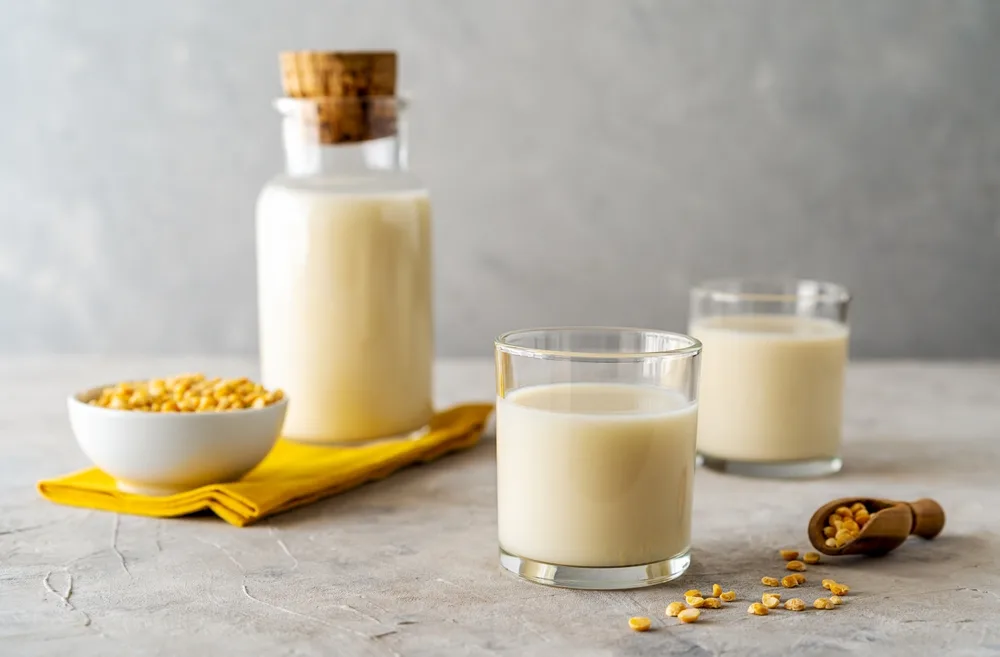
Plant-based milk has expanded as a category, and pea milk is one of the newer popular options as protein becomes one of the biggest things shoppers look for in a milk alternative. Pea milk stands out by offering about the same amount of protein as dairy milk.
It isn’t the only plant-based milk that can make that claim—soy milk lands in a similar range at about 7 grams per cup—but pea milk has an edge for anyone avoiding soy, since it’s naturally free of the allergen and has a milder flavor. Nut milks tend to contain very little protein, oat milk can be higher in carbs and calories, coconut milk is a bit heavier on saturated fat, and rice milk is mostly carbs with very little protein.
Pea milk has a good balance of protein, calories, and carbs. So what exactly is it? It’s made by extracting protein from yellow split peas, then blending it with water, plant oils, and added vitamins and minerals to create a milk-like texture.
Like other plant-based milks, you’ll find flavored varieties, but if weight loss is your goal, unsweetened plain is usually the better choice. Flavored versions often contain added sugar, and some products combine pea protein with oat or almond milk, which lowers the protein per serving.
One of pea milk’s biggest nutritional advantages is its protein content. At about 8 grams per cup, it’s similar to dairy milk and soy milk while providing much more protein than almond or oat milk. That protein may help you stay satisfied between meals and support muscle maintenance during weight loss. Here’s what the research says about protein and weight loss.

The Easy Way
to lose weight and get healthy.
See if you qualify
Quick answer:
Unsweetened pea milk may be a good choice for people looking to lose weight because it provides about as much protein as dairy milk for roughly half the calories, with no added sugar in unsweetened varieties and naturally very little carbohydrate. That protein might help keep you satisfied between meals, and replacing a higher-calorie beverage with pea milk may reduce your overall calorie intake without giving up much nutritionally. Just keep in mind that flavored and sweetened versions often add sugar, and it doesn’t contain the fiber found in whole peas.
🚀 Weight-loss benefits
- Pea milk matches dairy’s protein with fewer calories. A cup of unsweetened pea milk has about 8 grams of protein for roughly 70 calories, compared with about 122 calories in a cup of 2% dairy milk for a similar amount of protein. If you regularly drink a glass or two of milk each day, making the switch could save around 50 to 100 calories a day without sacrificing protein.
- Pea milk’s protein can help you stay fuller between meals. Protein is the most satisfying macronutrient, and studies suggest pea protein performs similarly to casein—one of the slowest-digesting dairy proteins—when it comes to reducing appetite before a meal. Protein slows stomach emptying and stimulates hormones that signal fullness to your brain. While a cup of pea milk contains less protein than the amounts used in many studies, it can still be more satisfying than a beverage with little or no protein.
- Unsweetened pea milk is naturally very low in carbohydrates. Unlike oat milk (about 15 grams per cup) or dairy milk (about 12 grams), unsweetened pea milk contains little to no carbohydrate, depending on the brand. That can make it easier to fit into a calorie-controlled or lower-carb eating pattern.
⚠️ Things to be mindful of
- Pea milk doesn’t contain the fiber found in whole peas. Whole peas are naturally rich in fiber, but the process of making pea milk removes most of it, leaving a protein-rich beverage with little to no fiber. That means pea milk can be a good source of protein, but it won’t provide the same fullness or digestive benefits as whole or split peas.
- Sweetened varieties can add more calories and sugar. Vanilla and chocolate pea milks often contain 6 to 9 grams of added sugar per cup, raising the calorie count and reducing some of the advantages of unsweetened pea milk. If weight loss is your goal, check the Nutrition Facts label and choose an unsweetened variety when possible.
- Pea milk may not be a good fit for everyone. Although pea allergy is uncommon, pea proteins are similar to proteins found in other legumes, and some people with legume allergies may also react to pea protein. If you have a history of food allergies—especially to legumes—talk with your healthcare provider before trying pea milk.
🥗 Nutrients in pea milk (per 1 cup / 8 fl oz, unsweetened)
| Nutrient | Amount | % RDA* |
|---|---|---|
| Calories | 70 calories | 4% |
| Protein | 8 g | 16% |
| Total carbs | 0 g | 0% |
| Fiber | 0 g | 0% |
| Sugars | 0 g | — |
| Total fat | 4.5 g | 6% |
| – Saturated fat | 0.5 g | 3% |
| – Monounsaturated fat | 1 g | — |
| – Polyunsaturated fat | 2.5 g | — |
| Omega-3 | 0.3 g | — |
| Omega-6 | 2 g | — |
*Recommended dietary allowance (RDA) is defined as the average daily amount of nutrients needed to meet the requirements of nearly all healthy people in a specific group.
The standout nutrient in pea milk is its protein. One cup provides 8 grams for just 70 calories, making it one of the highest-protein plant-based milks available. It’s comparable to dairy milk and soy milk for protein while containing fewer calories than 2% dairy milk.
It’s also worth noticing what’s not in the glass. Unsweetened pea milk contains little to no carbohydrate or fiber because most of the starch and fiber are removed during processing. That means it’s a convenient source of protein, but it won’t help you reach your daily fiber goal the way whole or split peas can.
💊 Vitamins & minerals in pea milk (per 1 cup / 8 fl oz, unsweetened)
| Vitamin/Mineral | Amount | % RDA* |
|---|---|---|
| Vitamin B12 | ~3 mcg | 125% |
| Calcium | ~450 mg | 35% |
| Vitamin D | ~5 mcg | 25% |
| Vitamin A | ~115 mcg | 13% |
| Potassium | ~480 mg | 10% |
| Sodium | ~115 mg | 5% |
*Percentages based on FDA Daily Values for a 2,000-calorie diet. Fortification levels vary by brand—check your specific label.
Vitamin B12 is one of pea milk’s biggest nutritional advantages. Most pea milks are fortified with vitamin B12 because it’s one of the nutrients that’s hardest to get from plant foods alone. That’s especially helpful if you’re cutting back on dairy or following a mostly plant-based eating pattern. Calcium and vitamin D are also typically added during fortification, and many brands provide as much—or even more—calcium than a glass of dairy milk.
These nutrients support overall health, even if they don’t directly affect weight loss. Vitamin B12 helps your body make red blood cells and supports nerve function, while calcium and vitamin D work together to maintain strong bones. During weight loss, getting enough essential vitamins and minerals can help prevent nutrient gaps, especially if you’re eating fewer calories.
🔍 Nutrient breakdown
Glycemic index (GI) of pea milk
Glycemic index: 0–15 (Low)
💡 Unsweetened pea milk has very little effect on blood sugar. Because it contains little to no carbohydrate, it has a very low glycemic index and can help add protein to higher-carbohydrate meals like cereal or oatmeal without contributing many additional carbs.
Is pea milk high in protein?
✔️ Yes. Pea milk contains about 8 grams of protein per cup, putting it on par with dairy milk and ahead of most other plant-based milks. While pea protein is slightly lower in the essential amino acid methionine, it still provides high-quality protein. If you eat a varied diet, it’s easy to get methionine from other foods, making pea milk a practical protein source whether you’re cutting back on dairy or simply looking for a more filling plant-based milk.

See if your insurance
covers GLP-1s.
The form only takes 2 minutes to answer. We’ll handle the rest.
GET STARTEDIs pea milk high in fiber?
❌ No: pea milk has 0 grams of fiber per cup. The milling process that isolates pea protein removes the fibrous hull and starch entirely.
Is pea milk low in carbs?
✔️ Yes. Unsweetened pea milk contains little to no carbohydrate—some brands have 0 grams per cup—making it one of the lowest-carb milk options available.
💡 Check the label before you buy. Flavored and sweetened varieties often contain added sugar, which increases the carbohydrate content. If you’re trying to keep carbs low, choose an unsweetened version.
Is pea milk gluten-free?
✔️ Yes. Peas are naturally gluten-free, and most commercial pea milks are made with water, pea protein, and plant oils. If you have celiac disease or severe gluten sensitivity, look for a certified gluten-free label to reduce the risk of cross-contact during manufacturing.
Is pea milk good for fat loss?
✔️ It can be. Unsweetened pea milk is relatively low in calories and high in protein, making it a satisfying alternative to higher-calorie dairy or sweetened plant-based milks. It won’t cause fat loss on its own, but using it in place of a higher-calorie beverage may help you reduce calories while keeping your protein intake up.
🍽️ Diet compatibility: Which diets include pea milk?
| Diet | ✅ / ❌ | Why |
|---|---|---|
| Keto | ✅ | Unsweetened pea milk is very low in carbohydrates, making it compatible with most ketogenic eating patterns. Just choose an unsweetened variety, since flavored versions often contain added sugar and more carbs. |
| Paleo | ❌ | Paleo excludes legumes, and peas fall into that category regardless of how processed the final product is. |
| Mediterranean | ✅ | The Mediterranean diet emphasizes legumes as a source of plant protein. While pea milk is more processed than whole legumes, it can fit as part of an overall balanced eating pattern. |
| Vegan | ✅ | Pea milk contains no animal products and is one of the highest-protein plant-based milk options. |
| Gluten-free | ✅ | Peas and pea protein are naturally gluten-free, and most commercial pea milks don’t contain gluten-containing ingredients. Check the label if you have celiac disease or severe gluten sensitivity. |
🌟 Is pea milk healthy? What are the health benefits?
Metabolic health: Is pea milk good for your metabolism?
- Boosts metabolism? Not directly. Pea milk doesn’t appear to increase metabolic rate on its own. Any effect on metabolism is more likely to come from the protein it provides, since digesting protein requires more energy than digesting carbohydrates or fat.
- Improves insulin sensitivity? Maybe. Some studies suggest pea protein consumed before a high-carbohydrate meal may reduce the rise in blood sugar and insulin afterward, although findings are mixed and depend on the amount and timing. It’s not clear whether a typical serving of pea milk provides the same benefit.
- Effect on fat storage? Neutral. There’s no evidence that pea milk directly affects fat storage. Its main advantage is that it can replace higher-calorie beverages while providing protein, which may support an overall calorie deficit.
Cholesterol impact: Does pea milk affect cholesterol levels?
- Does it lower LDL (“bad”) cholesterol? Probably not on its own. Some studies have found that pea protein combined with soluble fiber can lower LDL cholesterol, but pea milk contains little to no fiber. That means those benefits are unlikely to apply to pea milk by itself.
- Does it raise HDL (“good”) cholesterol? There’s no strong evidence. Current research doesn’t show that pea milk or pea protein consistently increases HDL cholesterol.
- Overall impact on heart health? Potentially favorable. Unsweetened pea milk is low in saturated fat, so using it in place of higher-saturated-fat dairy products may support heart health. Just don’t expect it to lower cholesterol the way fiber-rich foods like oats, beans, or whole peas can.
Can you drink pea milk in a calorie deficit?
✔️ Yes. At about 70 calories per cup, unsweetened pea milk fits easily into most calorie-deficit eating plans. It can be a good alternative to higher-calorie dairy or sweetened plant-based milks while still providing protein.
💡 Try it in coffee, smoothies, or cereal instead of whole milk or sweetened oat milk if you’re looking to cut calories without giving up protein.
Is pea milk rich in antioxidants?
Not really. Whole peas contain antioxidant compounds, but most are removed during the process of making pea milk. If you’re looking to boost antioxidants, fruits, vegetables, beans, and whole peas are better choices.
Does pea milk support gut health?
Not directly. Because pea milk contains little to no fiber, it doesn’t nourish beneficial gut bacteria the way whole peas and other legumes do.
Does pea milk support digestion?
Generally, yes. Many people find pea milk easy to digest, especially compared with whole legumes, since most of the fiber and resistant starch are removed during processing.
Does pea milk help you feel fuller?
✔️ Yes. The 8 grams of protein in a cup of pea milk can help increase fullness, especially compared with beverages that contain little or no protein.
Satiety level: Moderate
💡 Pair it with a meal or snack rather than drinking it alone to make the most of its filling effect.
Does pea milk help with nighttime cravings?
Maybe. A protein-rich drink may be more satisfying than a sugary beverage, but pea milk hasn’t been studied specifically for nighttime cravings.
💡 If you’re hungry in the evening, pair unsweetened pea milk with a protein- or fiber-rich snack for a more satisfying option.
Does pea milk help reduce inflammation?
There’s no strong evidence. Whole peas contain plant compounds with anti-inflammatory properties, but those compounds are largely removed during processing, and pea milk hasn’t been shown to reduce inflammation on its own.
Is pea milk beneficial for brain health?
It depends on the brand. Some pea milks are fortified with algal omega-3s, which support brain health, while others are not. Check the label if omega-3s are important to you.
Can pea milk improve skin and hair health?
Indirectly. The protein in pea milk can help you meet your daily protein needs, which supports healthy skin and hair. It doesn’t appear to provide benefits beyond those of other high-quality protein sources.
Can pea milk help balance hormones?
There’s no evidence that it does. Pea milk hasn’t been shown to affect hormone levels.
💡 If you’re concerned about hormone health, focus on your overall eating pattern and talk with a healthcare provider rather than relying on any single food or drink.
Access GLP-1 Weight Loss with Noom
Explore a wide range of prescription medications supported by Noom’s program.Microdose GLP-1rx
Noom GLP-1rx
Noom GLP-1rx Plus
Wegovy®

Ozempic®

Metformin
Zepbound®
Mounjaro®
Liraglutide
🍽️ Best ways to use pea milk for weight loss
- Use it to add protein to breakfast. Pour unsweetened pea milk over cereal, stir it into oatmeal, or add it to your morning coffee. Compared with whole or 2% dairy milk, it provides similar protein with fewer calories.
- Blend it into a more filling smoothie. Pea milk’s mild flavor makes it a good smoothie base. Pair it with fruit and a source of fiber, like berries, spinach, or chia seeds, for a snack that’s more satisfying than pea milk alone.
- Choose unsweetened over flavored. Chocolate and vanilla varieties often contain added sugar and extra calories. If weight loss is your goal, unsweetened pea milk gives you the same protein without the added sugar.
🍏 Best alternatives & comparisons (per 1 cup / 8 fl oz, unsweetened)
All plant milks below are unsweetened, plain versions. Coconut milk refers to the refrigerated carton beverage, not canned coconut milk, which is far richer and meant for cooking.
| Milk | Calories | Carbs | Fiber | Protein | Fat |
|---|---|---|---|---|---|
| Pea milk | 70 | 0 g | 0 g | 8 g | 4.5 g |
| 2% cow’s milk | 122 | 12 g | 0 g | 8 g | 4.8 g |
| Skim milk | 90 | 12 g | 0 g | 8.4 g | 0.2 g |
| Soy milk | 80 | 4 g | 1.5 g | 7 g | 4 g |
| Almond milk | 35 | 1.5 g | 0.5 g | 1 g | 2.5 g |
| Oat milk | 100 | 15 g | 2 g | 2.5 g | 5 g |
| Hemp milk | 60 | 0 g | 0 g | 3 g | 4.5 g |
| Coconut milk (carton) | 50 | 1 g | 0 g | 0 g | 5 g |
Pea milk and soy milk are the standouts if protein is your priority. Both provide about the same protein as dairy milk while keeping calories relatively low, and pea milk may be especially appealing if you’re avoiding soy or want an option with very little carbohydrate.
But every milk has its own strengths. Almond milk is the lowest in calories but contains very little protein, while oat milk offers a creamier texture and a small amount of fiber in exchange for more carbohydrates and calories. Hemp milk provides healthy unsaturated fats, and refrigerated coconut milk is low in calories but contributes little protein or fiber.
There’s no single “healthiest” milk—the best choice depends on your goals, preferences, and how you plan to use it.
❓ Frequently asked questions about pea milk and weight loss
How much pea milk should I drink per day for weight loss?
For most people, one to two cups a day can fit comfortably into a weight-loss plan, especially if you’re using it in place of higher-calorie dairy or plant-based milks. The key is how it fits into your overall calorie intake rather than hitting a specific amount.
Is pea milk better than almond milk for weight loss?
It depends on your goal. Pea milk provides much more protein—about 8 grams per cup compared with about 1 gram in almond milk—which may help keep you fuller. Almond milk is lower in calories, so it may be a better fit if you’re simply looking to reduce calories.
Can pea milk cause weight gain?
Not on its own. Like any food or drink, pea milk can contribute to weight gain if it consistently pushes you above your calorie needs. Unsweetened pea milk is relatively low in calories, while flavored varieties often contain added sugar and more calories.
Is pea milk safe for people with a soy or nut allergy?
Usually, yes. Pea milk is naturally free of soy, tree nuts, and dairy, making it a common alternative for people avoiding those foods. However, people with pea or other legume allergies should talk with their healthcare provider before trying it.
Is pea milk good for women trying to lose weight?
It can be. Pea milk offers the same potential benefits for women as it does for anyone else: it’s a relatively low-calorie, high-protein alternative to many other milks. If you’re pregnant or breastfeeding, choose a fortified variety and talk with your healthcare provider about meeting your calcium and vitamin D needs.
Can you drink pea milk every day?
Yes. For most people, unsweetened pea milk can be part of a healthy daily eating pattern. If you have a pea or legume allergy, though, it’s best to avoid it unless your healthcare provider recommends otherwise.
🧠 The bottom line: Pea milk can be a good choice for weight loss
Unsweetened pea milk can be a smart choice if you’re trying to lose weight. It provides about as much protein as dairy milk for fewer calories, making it one of the highest-protein plant-based milk options available. That protein may help you stay fuller than lower-protein alternatives, especially when you use pea milk in place of a higher-calorie beverage.
To get the most benefit, choose an unsweetened variety and pair it with foods that contain fiber, since pea milk contains little to no fiber on its own. Flavored versions often add sugar and calories, so they’re less of an advantage if weight loss is your goal.
If you have a pea or legume allergy, pea milk may not be the right choice. Otherwise, it can be a convenient, protein-rich addition to a balanced eating pattern.
📖 Scientific evidence
1. Pea protein may help you stay fuller than some other protein sources. (Nutrition Journal, 2011) In two studies, people who drank a pea protein or casein shake before a meal ate less at their next meal than those who had whey protein, egg white protein, or a carbohydrate drink. A cup of pea milk contains less protein than the amount used in the studies, but the findings suggest pea protein can be a satisfying choice.
2. Pea protein may help you feel fuller by triggering your body’s natural fullness signals. (PLoS ONE, 2011) In this study, pea protein increased hormones linked to fullness and reduced how much people ate—even when researchers delivered it directly to the small intestine. The findings suggest pea protein’s filling effect isn’t just from taking up space in the stomach.
3. Higher-protein diets led to more weight loss than standard-protein diets. (Nutrients, 2021) When researchers looked across 37 studies, people who ate more protein lost about 3.5 pounds more, on average, than those eating standard-protein diets. While the research wasn’t specific to pea milk, it suggests that choosing higher-protein foods and drinks may support weight loss, especially when they replace lower-protein options without adding many calories.
4. Pea protein may help lower cholesterol—but it seems to work best with fiber. (British Journal of Nutrition, 2011) In this study, people who consumed pea protein along with soluble fiber from oat fiber or apple pectin saw reductions in total and LDL (“bad”) cholesterol. Pea protein on its own didn’t have the same effect, suggesting the fiber plays an important role. That’s worth keeping in mind because pea milk contains little to no fiber.
Editorial standards
At Noom, we’re committed to providing health information that’s grounded in reliable science and expert review. Our content is created with the support of qualified professionals and based on well-established research from trusted medical and scientific organizations. Learn more about the experts behind our content on our Health Expert Team page.