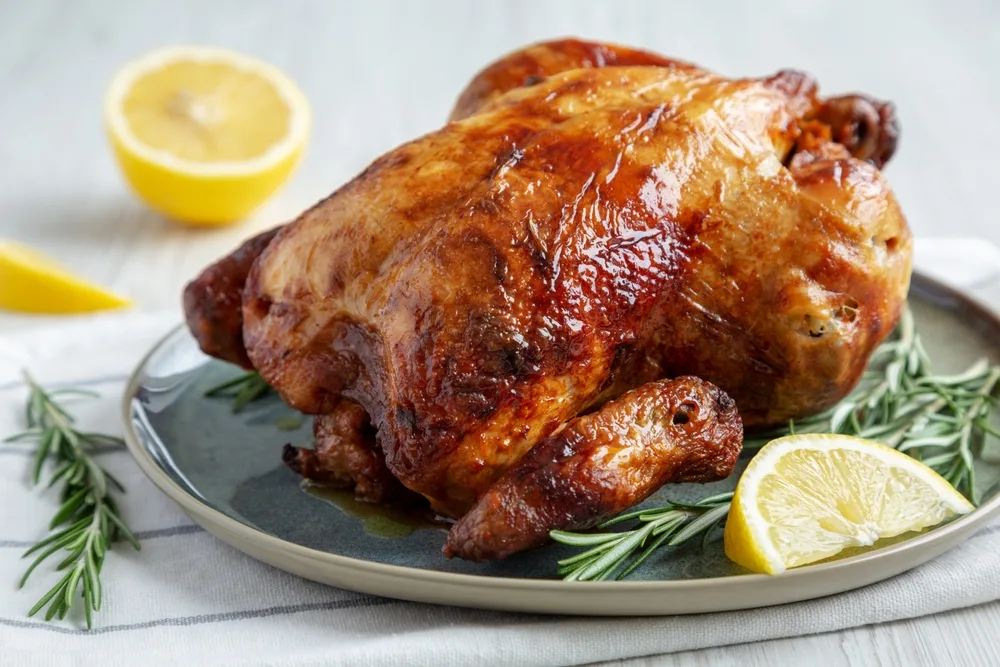
Rotisserie chicken has earned its permanent spot near the checkout at grocery stores and big-box retailers for a reason: it’s hot, ready to eat, and an easy way to add protein to a meal without much effort. People use it in everything from soups and salads to tacos and sandwiches, or simply serve it alongside a couple of side dishes for a quick dinner.
But not all rotisserie chickens are nutritionally identical. Calories can vary depending on the size of the bird and whether you eat the skin, while seasonings and flavorings can range from a light dusting of spices to marinades and injected solutions that significantly bump up the sodium content.
That said, a lightly seasoned rotisserie chicken—especially when you remove the skin—can be a convenient source of high-quality protein. It’s also typically budget-friendly, particularly at retailers like Costco and Sam’s Club, where birds are often sold at a low price point.
So, is rotisserie chicken good for weight loss? The answer depends on how it’s prepared, which parts you eat, and how it fits into your overall eating pattern. Here’s what to know.
✅ Quick answer
In most cases, rotisserie chicken can be a good choice for weight loss. When you remove the skin, it’s a high-protein, relatively low-calorie food that can help keep you full and support lean muscle while you’re losing weight. Eating the skin adds extra calories and saturated fat, which may or may not fit your goals depending on portion size and the rest of your diet.

The Easy Way
to lose weight and get healthy.
See if you qualify
One thing to keep in mind: most store-bought rotisserie chickens are brined or seasoned before cooking, which means they’re typically much higher in sodium than homemade roasted chicken. For most people, that’s not a reason to avoid them—it just means sodium is worth keeping an eye on, especially if you’re watching your intake. Overall, rotisserie chicken can be a convenient, affordable, and weight-loss-friendly source of protein.
🚀 Weight-loss benefits
- High in protein, which may help you feel fuller – Rotisserie chicken is naturally rich in protein, with roughly 21 grams per 3-ounce serving. Eating more protein can help you stay full and reduce hunger compared with equal-calorie portions of carbs or fat. That can make it easier to stick to a calorie deficit without feeling as hungry.
- Helps preserve muscle during weight loss – When you’re losing weight, getting enough protein can help minimize the loss of lean muscle mass. Because rotisserie chicken is a strong protein source, it can be an easy way to support muscle maintenance while your body is burning stored fat. Preserving muscle matters for strength, function, and overall metabolic health.
- Convenience can support consistency – One of the biggest advantages of rotisserie chicken has nothing to do with nutrition. Having a ready-to-eat protein source on hand can make it easier to put together a balanced meal and less tempting to rely on takeout or other higher-calorie convenience foods when you’re short on time.
⚠️ Things to be mindful of
- High sodium – Store-bought rotisserie chickens are almost always brined or injected with a saline solution before cooking. A 3 oz serving can contain 300 to 510mg of sodium—up to 22% of the daily recommended limit—compared to the naturally low sodium of home-roasted chicken. If you’re managing blood pressure or monitoring sodium intake, this is the main thing to watch.
- The skin adds up – Keeping the skin on adds roughly 50 to 80 extra calories per serving, and meaningfully increases saturated fat. That’s not necessarily a problem, but it changes the math for people eating in a calorie deficit.
- Some brands use additives – Commercial rotisserie chickens often contain phosphates, modified starches, or sugar-based rubs to enhance flavor and moisture. These aren’t dangerous, but if you’re eating a strict Paleo or clean-eating plan, it’s worth checking the ingredient list.
🥗 Nutrients in rotisserie chicken (per 3 oz / 85g, skin on)
| Nutrient | Amount | % RDA* |
|---|---|---|
| Calories | 140 calories | 7% |
| Protein | 26 g | 52% |
| Total carbs | 0 g | 0% |
| Dietary fiber | 0 g | 0% |
| Sugars | 0 g | — |
| Total fat | 3 g | 4% |
| – Saturated fat | 1 g | 5% |
| – Monounsaturated fat | 1.2 g | — |
| – Polyunsaturated fat | 0.7 g | — |
| Omega-3 | 0.05 g | — |
| Omega-6 | 0.5 g | — |
Source: USDA FoodData Central
*Recommended dietary allowance (RDA) is defined as the average daily amount of nutrients needed to meet the requirements of nearly all healthy people in a specific group.
The standout is protein: nearly 21g per 3 oz serving covers over 40% of the daily recommended intake. The carbohydrates are negligible—this is about as carb-free as a whole food gets. Fat is the variable. With skin, total fat sits around 12.5g per serving; without skin, that drops significantly while protein stays essentially the same.
For most people eating rotisserie chicken as part of a balanced plate, the calorie-per-serving count is reasonable at around 200 calories. The main thing to watch is portion size—a 3 oz serving is roughly the size of a deck of cards, and it’s easy to eat two or three times that, especially when eating straight off the bird.
💊 Vitamins & minerals in rotisserie chicken (per 3 oz / 85g)
| Vitamin/Mineral | Amount | % RDA* |
|---|---|---|
| Niacin (B3) | 8.5 mg | 53% |
| Selenium | 22 µg | 40% |
| Vitamin B6 | 0.4 mg | 24% |
| Phosphorus | 200 mg | 16% |
| Zinc | 1.0 mg | 9% |
| Vitamin B12 | 0.3 µg | 13% |
| Iron | 0.6 mg | 3% |
| Potassium | 240 mg | 5% |
| Magnesium | 22 mg | 5% |
| Sodium | 300–550 mg | 13–24% |
| Vitamin A | 10 µg | 1% |
| Vitamin C | 0 mg | 0% |
*Recommended dietary allowance (RDA) is defined as the average daily amount of nutrients needed to meet the requirements of nearly all healthy people in a specific group.
Niacin is the standout nutrient here. A 3-ounce serving of skinless rotisserie chicken provides roughly 53% of the daily value, making it one of the richest food sources of vitamin B3. Niacin helps your body convert food into energy and supports healthy nervous system function. Selenium is another notable nutrient, providing about 40% of the daily value. This trace mineral acts as an antioxidant and plays important roles in thyroid function and immune health.
The B vitamins more broadly—including niacin (B3), vitamin B6, and vitamin B12—are meaningful contributors. These nutrients help support energy metabolism, red blood cell production, and overall cellular function. While they won’t directly cause weight loss, they can help you meet your nutrient needs while eating fewer calories.
The sodium content is the main nutritional tradeoff. Most store-bought rotisserie chickens are brined or injected with seasoning solutions before cooking, which can push sodium levels into the 300 to 550 mg range per 3-ounce serving. By comparison, plain home-roasted chicken is typically much lower in sodium unless additional salt is added during preparation.
🔍 Nutrient breakdown
Glycemic index (GI) of rotisserie chicken
Glycemic index: 0 (Low)

See if your insurance
covers GLP-1s.
The form only takes 2 minutes to answer. We’ll handle the rest.
GET STARTED💡 Tip: Chicken has no effect on blood sugar on its own. Adding it to higher-carb meals like rice or pasta helps blunt the overall glycemic response of the meal—useful if you’re managing insulin sensitivity or blood sugar.
Is rotisserie chicken high in protein?
✔️ Yes – A 3 oz serving delivers about 21g of protein, making rotisserie chicken one of the most protein-dense whole foods you can buy ready-made. It’s a complete protein, meaning it contains all nine essential amino acids.
Better lean protein alternatives: Grilled skinless chicken breast (26g/3 oz) | Canned tuna in water (21g/3 oz) | Boiled eggs
Is rotisserie chicken high in fiber?
❌ No – 0g of fiber per serving. Like all animal proteins, chicken contains no dietary fiber.
💡 Tip: Pair rotisserie chicken with fiber-rich vegetables, legumes, or whole grains to build a more complete, satisfying meal.
Is rotisserie chicken low in carbs?
✔️ Yes – Less than 1g of carbs per 3 oz serving, making it one of the most carb-friendly protein options available. Unless the skin is coated in a sugary rub or glaze, the meat itself is virtually carb-free. Check the ingredient label if you’re on strict keto.
Is rotisserie chicken gluten-free?
⚠️ Usually – Chicken itself is naturally gluten-free, but some commercial rotisserie chickens use wheat-based thickeners or seasoning blends in the marinade. If you have celiac disease or a sensitivity, check the label before buying.
Is rotisserie chicken good for fat loss?
✔️ Yes, with portion awareness – Its high protein content supports satiety and muscle maintenance during a calorie deficit, both of which make fat loss more sustainable. Removing the skin and monitoring sodium are the two main levers for optimizing it.
🍽️ Diet compatibility: Which diets include rotisserie chicken?
| Diet | ✅/❌ | Why |
|---|---|---|
| Keto | ✅ | Rotisserie chicken contains virtually no carbohydrates and provides plenty of protein. Skin-on versions are higher in fat, while skinless versions can be paired with higher-fat sides if desired. |
| Paleo | ⚠️ | Chicken itself is Paleo-friendly, but some store-bought rotisserie chickens contain additives, preservatives, sugar, or other ingredients that strict Paleo followers avoid. Check the ingredient list if you’re following Paleo closely. |
| Mediterranean | ✅ | Poultry is a staple protein in the Mediterranean diet. The main consideration is sodium, since many commercial rotisserie chickens are heavily seasoned or brined. |
| Vegan | ❌ | Rotisserie chicken is an animal product and is not compatible with a vegan diet. |
Rotisserie chicken is one of the most versatile protein options available. For most eating patterns, it fits in easily thanks to its high protein content and minimal carbohydrates. The main caveats are the sodium content and, for stricter diets like Paleo, the ingredient list. If those aren’t concerns, rotisserie chicken can be a convenient way to add protein to meals throughout the week
🌟 Is rotisserie chicken healthy? What are the health benefits?
Metabolic health: Is rotisserie chicken good for your metabolism?
- Boosts metabolism? ⚠️ Modestly – Protein has a higher thermic effect than fat or carbohydrates, meaning your body uses more energy to digest and process it. This is a real physiological effect, but it’s relatively small and unlikely to meaningfully increase daily calorie burn on its own.
- Supports blood sugar management? ⚠️ Potentially – Rotisserie chicken contains virtually no carbohydrates, so it doesn’t directly raise blood sugar. When paired with vegetables, whole grains, or other high-fiber foods, it may help create a more balanced meal and reduce blood sugar spikes compared with meals built around refined carbohydrates. However, chicken itself isn’t a treatment for insulin resistance or poor blood sugar control.
- Effect on fat storage? ✅ Generally favorable – No single food determines whether fat is stored or burned. That said, rotisserie chicken’s high protein content and relatively low calorie count—especially when the skin is removed—can make it easier to stay full while managing overall calorie intake
Cholesterol impact: Does rotisserie chicken affect cholesterol levels?
- Does it lower LDL (bad) cholesterol? ❌ Not directly – Rotisserie chicken isn’t known to lower LDL cholesterol. However, skinless chicken is relatively low in saturated fat compared with many cuts of red meat and processed meats. Choosing skinless chicken in place of higher-saturated-fat proteins may support heart-healthy eating patterns that help manage LDL levels.
- Overall impact on heart health? ✅ Generally favorable – Poultry is generally associated with a lower cardiovascular risk profile than processed meats and some higher-fat cuts of red meat. The main nutritional drawback of store-bought rotisserie chicken is sodium, which can contribute to elevated blood pressure when consumed in excess. Removing the skin can further reduce saturated fat and calories.
💡 Tip: For the most heart-health-friendly version, stick to skinless breast meat and choose low-sodium brands when available.
Can I eat rotisserie chicken in a calorie deficit?
✔️ Yes – Rotisserie chicken is a high-protein, relatively low-calorie food, especially when the skin is removed. Protein can help support fullness and muscle maintenance during weight loss, making rotisserie chicken a practical option for many calorie-conscious eating plans. The main thing to watch is portion size, since it’s easy to eat more than a standard serving when eating directly from the chicken.
Is rotisserie chicken rich in antioxidants?
⚠️ Not particularly – Rotisserie chicken contains selenium, an essential mineral that functions as an antioxidant in the body. However, it isn’t considered a high-antioxidant food in the way fruits, vegetables, nuts, and legumes are.
Does rotisserie chicken support gut health?
⚠️ Neutral – Chicken contains no fiber, so it doesn’t directly nourish beneficial gut bacteria. However, it’s generally easy to digest and can be part of a gut-friendly meal when paired with fiber-rich foods such as vegetables, beans, or whole grains.
Does rotisserie chicken help you feel satiated and less hungry?
✔️ Yes – Protein is generally the most filling macronutrient, and rotisserie chicken provides a substantial amount per serving. Meals that include protein are associated with greater fullness and may help reduce hunger between meals.
Satiety level: High
💡 Tip: Pair rotisserie chicken with vegetables, fruit, beans, or whole grains to combine protein with fiber, a combination that tends to support fullness better than either nutrient alone.
Does rotisserie chicken help with nighttime cravings?
⚠️ Possibly – A protein-rich meal may help some people stay fuller for longer, which could reduce late-night hunger. However, nighttime cravings are influenced by many factors, including sleep, stress, habits, and overall calorie intake throughout the day.
💡 Tip: If late-night hunger is a recurring issue, try including a source of protein at lunch and dinner. Rotisserie chicken can be an easy way to increase protein intake without adding many extra calories.
Does rotisserie chicken help reduce inflammation?
⚠️ Generally neutral – Skinless chicken is not considered a major source of inflammatory compounds. While chicken contains more omega-6 than omega-3 fats, current evidence does not suggest that moderate chicken consumption is inherently inflammatory when eaten as part of a balanced diet.
Is rotisserie chicken beneficial for brain health?
⚠️ Indirectly – Rotisserie chicken provides nutrients involved in normal brain function, including vitamin B12, niacin, vitamin B6, and selenium. However, it isn’t typically considered a standout “brain food” compared with foods rich in omega-3 fats, such as fatty fish.
Access GLP-1 Weight Loss with Noom
Explore a wide range of prescription medications supported by Noom’s program.Microdose GLP-1rx
Noom GLP-1rx
Noom GLP-1rx Plus
Wegovy®

Ozempic®

Metformin

Zepbound®

Mounjaro®
Liraglutide

Can rotisserie chicken improve skin and hair health?
⚠️ Indirectly – Protein provides the amino acids needed to build and maintain tissues throughout the body, including skin and hair. Rotisserie chicken can contribute to overall protein intake, but no evidence suggests it has unique benefits beyond those of other protein-rich foods.
Can rotisserie chicken help balance hormones?
⚠️ Indirectly – Adequate protein is important for overall health and supports many processes involved in hormone production and regulation. Rotisserie chicken can help you meet your protein needs, but it is not known to have specific hormone-balancing effects.
💡 Tip: Hormone health depends on the overall pattern of your diet, sleep, physical activity, and stress management—not any single food. Think of rotisserie chicken as a practical way to meet your protein needs rather than a targeted hormone-support supplement.
🍽️ Best ways to eat rotisserie chicken for weight loss
- Remove the skin – If weight loss is your goal, removing the skin is one of the easiest ways to reduce calories. Depending on the cut, it can save roughly 50 to 80 calories per serving while significantly reducing fat and saturated fat. Most of the protein remains in the meat itself.
- Build a balanced plate around it – Rotisserie chicken works best as the protein anchor of a meal. Pair it with plenty of non-starchy vegetables, such as broccoli, green beans, Brussels sprouts, or a side salad, and add a serving of whole grains, beans, or another fiber-rich carbohydrate if desired. Combining protein and fiber can help support fullness and make meals more satisfying.
- Use it in multiple meals throughout the week – Shredded rotisserie chicken is an easy addition to salads, soups, wraps, grain bowls, tacos, and pasta dishes. Using pre-cooked chicken can make it easier to put together balanced meals at home and may reduce reliance on takeout or convenience foods when you’re short on time.
Try these rotisserie chicken recipes:
- Chicken Tortilla Soup – The Kitchn
- Crispy Wonton Rotisserie Chicken Salad – Half Baked Harvest
- Rotisserie Chicken Lettuce Wraps with Peanut Sauce – The Defined Dish
🏪 How popular rotisserie chickens compare (per 3 oz / 85g, skin on)
| Retailer | Calories | Protein | Fat | Sodium | Key ingredients |
|---|---|---|---|---|---|
| Costco (Kirkland Signature) | 140 | 19 g | 7 g | 460 mg | Chicken, water, salt, sodium phosphate, hydrolyzed casein, carrageenan, modified corn starch, sugar, dextrose |
| Sam’s Club (Member’s Mark) | 160 | 19 g | 9 g | 550 mg | Chicken, water, sodium phosphates, seasoning (yellow corn flour, garlic powder, salt, spices, paprika, sugar, citric acid, onion powder, natural flavors) |
| Walmart (Freshness Guaranteed) | 160 | 19 g | 10 g | 370 mg | Chicken, water, sea salt, dehydrated chicken broth, carrageenan, sugar, natural flavor. Rub: salt, corn starch, dried chicken broth, dried onion, dried garlic, spice |
| Kroger | 160 | 16 g | 12 g | 280 mg | Varies by location; typically chicken, water, salt, seasoning blend. Simple Truth line uses no antibiotics and has lower sodium (~40 mg). |
| Whole Foods (Classic) | 210 | 23 g | 12 g | 450 mg | Chicken, water, sea salt, spices. Organic version: chicken, sea salt only (~95–160 mg sodium). |
| Publix (Original) | 180 | 18 g | 11 g | ~250 mg | Chicken (up to 15% solution of water, seasoning {chicken flavor, salt, sugar, spices}, vegetable oil) |
*Sodium figures sourced from published nutrition labels and Consumer Reports’ retailer comparison. Values may vary by region and are updated periodically by each retailer.
A few patterns emerge from these nutrition labels. Protein content is fairly consistent across retailers, generally falling between 16 and 23 grams per 3-ounce serving. Calories and fat vary somewhat depending on the recipe and whether skin is included, but the largest differences are typically found in sodium content and ingredient lists.
Many grocery store rotisserie chickens are brined or injected with seasoning solutions before cooking, which can significantly increase sodium levels compared with home-roasted chicken. Some brands also include ingredients such as phosphates, starches, sugars, flavorings, or carrageenan to improve texture, moisture, or flavor.
If sodium is a concern, it’s worth checking the nutrition label and ingredient list at your local store, as formulations can vary by retailer and region. For most people, the differences in calories and protein between brands are relatively minor. The bigger decision is often whether you prefer a more simply seasoned chicken with fewer additives or are primarily looking for convenience, taste, and value.
❓ Frequently asked questions about rotisserie chicken and weight loss
How many calories are in rotisserie chicken?
A 3-ounce (85-gram) serving of rotisserie chicken with skin contains about 200 calories. Removing the skin lowers that to roughly 140 calories. The cut also matters: breast meat is typically leaner than thigh or leg meat.
Is rotisserie chicken better with or without the skin for weight loss?
For weight loss, removing the skin is generally the lower-calorie choice. Doing so can save roughly 50 to 60 calories per 3-ounce serving while significantly reducing fat and saturated fat. Most of the protein remains in the meat itself.
Why is store-bought rotisserie chicken so high in sodium?
Many commercial rotisserie chickens are brined or injected with a salt-containing solution before cooking to improve flavor and help retain moisture. As a result, sodium levels are often substantially higher than those of plain home-roasted chicken. If sodium is a concern, compare labels or consider preparing your own.
Can I eat rotisserie chicken every day while trying to lose weight?
Yes, provided it fits within your overall calorie needs and eating pattern. The main considerations are sodium intake and dietary variety. Pairing rotisserie chicken with a range of vegetables, fruits, legumes, whole grains, and other protein sources can help create a more balanced diet.
Is rotisserie chicken good for building muscle while losing weight?
Yes. Rotisserie chicken is a complete protein source, meaning it contains all nine essential amino acids. Adequate protein intake helps support muscle maintenance during weight loss and muscle growth when combined with resistance training.
Is dark meat or white meat better for weight loss?
Skinless breast meat is typically lower in calories and fat than skinless thigh or leg meat. Dark meat contains slightly more fat but also provides nutrients such as iron and zinc. Both can fit into a weight-loss plan, and the difference between eating the skin or removing it is often more significant than the difference between white and dark meat.
Is rotisserie chicken a processed food?
It depends on how it’s prepared. A rotisserie chicken made with only chicken, salt, and seasonings is minimally processed. Many store-bought versions, however, contain added solutions, preservatives, flavorings, or other ingredients to improve texture, moisture, and shelf life. Checking the ingredient list can help you decide which option best fits your preferences.
🧠 The bottom line: Rotisserie chicken can be good for weight loss
Rotisserie chicken is one of the most convenient sources of protein in the grocery store. It’s affordable, ready to eat, and provides a substantial amount of protein in a relatively modest number of calories. That combination can help support fullness and make it easier to build balanced meals while working toward a weight-loss goal.
The two main things to keep in mind are sodium and skin. Many store-bought rotisserie chickens are brined or seasoned before cooking, which can significantly increase their sodium content compared with home-roasted chicken. And while the skin can certainly fit into an overall healthy diet, removing it is an easy way to reduce calories, fat, and saturated fat without sacrificing much protein.
Overall, rotisserie chicken can be a practical addition to a weight-loss plan. Pairing it with vegetables, fruit, beans, or whole grains can help create satisfying, nutrient-dense meals that support long-term healthy eating habits.
See if your insurance
covers GLP-1s.
The form only takes 2 minutes to answer. We’ll handle the rest.
GET STARTED📖 Scientific evidence
- Higher-protein diets may help support weight loss while preserving lean muscle. (American Journal of Clinical Nutrition, 2015) People following higher-protein diets tended to lose more weight and body fat while retaining more lean mass compared with those eating lower-protein diets.
- Choosing poultry in place of some red and processed meats may support weight management and heart health. (Food & Nutrition Research, 2015) Poultry was identified as a nutrient-dense source of protein associated with a lower risk of overweight, obesity, cardiovascular disease, and type 2 diabetes when consumed as part of an overall healthy diet.
- Protein requires more energy to digest than carbohydrates or fat. (Journal of the American College of Nutrition, 2004) Protein has a higher thermic effect than other macronutrients, meaning the body uses more energy to digest, absorb, and process it. While the differences aren’t enough to drive weight loss on their own, it is one reason high-protein foods are often associated with greater satiety.
- Lean, unprocessed chicken appears to have beneficial or neutral effects on weight and cardiometabolic health. (Nutrients, 2023) Using lean, unprocessed chicken as a primary protein source was associated with favorable or neutral outcomes for body weight, body composition, and risk factors for cardiovascular disease and type 2 diabetes.
- Complete protein sources can help support muscle maintenance during weight loss. (Journal of the International Society of Sports Nutrition, 2017) Adequate protein intake is important for preserving lean mass during calorie restriction. Complete proteins, including poultry, provide all essential amino acids needed to support muscle protein synthesis.
Editorial standards
At Noom, we’re committed to providing health information that’s grounded in reliable science and expert review. Our content is created with the support of qualified professionals and based on well-established research from trusted medical and scientific organizations. Learn more about the experts behind our content on our Health Expert Team page.