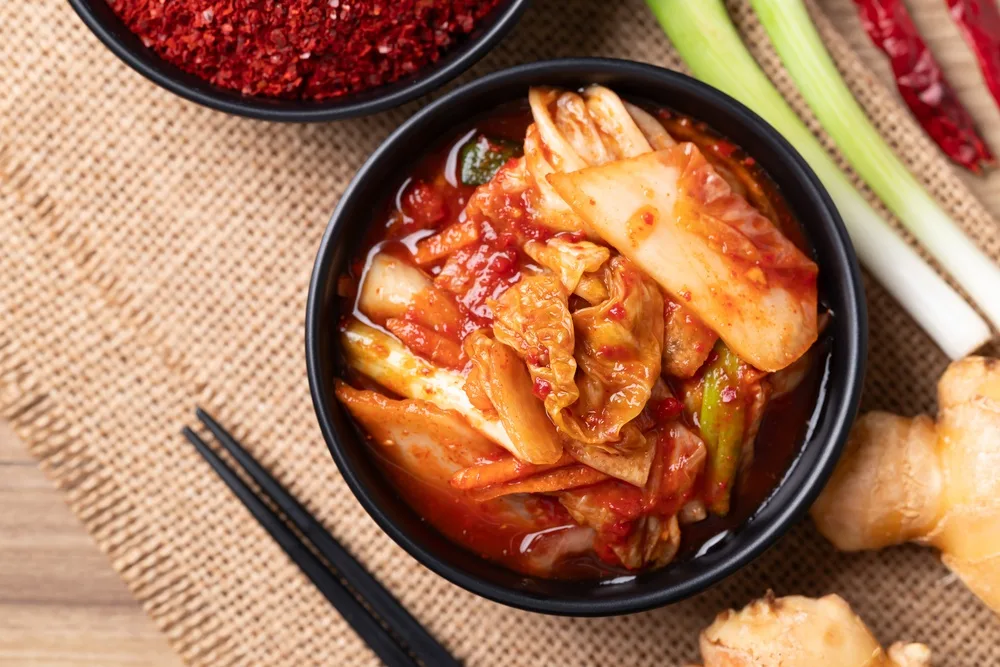
Kimchi has been a staple of Korean cuisine for centuries, but lately it’s been gaining attention for another reason: its potential health benefits. From gut health to inflammation, this spicy fermented vegetable dish has become one of the most talked-about fermented foods around.
So where does weight loss fit in?
First, a quick note: there are hundreds of varieties of kimchi. While recipes can be made with vegetables ranging from radishes to cucumbers, the nutrition information in this article refers to traditional napa cabbage kimchi, the type most people are familiar with.
Kimchi checks a lot of boxes that tend to make nutrition experts take notice. It’s low in calories, packed with flavor, contains some fiber, and provides live cultures that may support a healthy gut microbiome. A full cup has only about 23 calories, making it an easy way to add volume and flavor to meals without adding many calories.
That doesn’t mean kimchi is a weight-loss food on its own. It won’t magically burn fat, and it isn’t especially filling compared with foods rich in protein or fiber. But as part of an overall healthy eating pattern, kimchi may offer some advantages that can support weight-loss efforts. Here’s what the research says.
✅ Quick answer
Yes, kimchi is a good food for weight loss. At about 23 calories per cup (150 g), it’s one of the most calorie-efficient, flavorful foods you can add to a meal. Its live probiotics support a healthy gut microbiome, which emerging research links to better metabolic health and appetite regulation. The main thing to watch: sodium. Kimchi is saltier than it looks, and daily servings can add up fast if you’re managing blood pressure.
🚀 Weight-loss benefits
- Kimchi is very low in calories for the volume – A full cup of kimchi is about 23 calories. That means you can add a generous, flavorful portion to eggs, rice bowls, or tacos without making a large dent in your daily calorie budget—which is exactly what you want when you’re trying to eat satisfying meals for fewer calories.
- Kimchi has probiotics that support gut and metabolic health – Kimchi is loaded with lactic acid bacteria (primarily lactobacillus strains) produced during fermentation. These live cultures support a healthy, diverse gut microbiome, and a growing body of research suggests that gut health and body weight regulation are closely connected.
- Kimchi is rich in micronutrients during a calorie deficit – When you’re eating less overall, getting enough vitamins and minerals matters more, not less. Kimchi delivers meaningful amounts of vitamin K, iron, riboflavin (B2), and B6 for very few calories—making it nutrient-dense.
⚠️ Things to be mindful of
- Kimchi is high in sodium – A 150 g (1-cup) serving contains roughly 750 mg of sodium—about 33% of the recommended daily limit. For most healthy adults, eating it as a side is manageable. If you’re eating multiple servings daily or monitoring sodium for blood pressure reasons, portions matter.
- Kimchi won’t keep you full on its own – A cup of kimchi provides only about 1.7 g of protein and 2.4 g of fiber. While that’s impressive for a food with so few calories, it’s not enough to make kimchi a particularly filling meal or snack by itself. Think of it as a flavorful side dish that can help make protein-rich foods and vegetables more satisfying rather than the main event.
- Kimchi may cause digestive discomfort at first – Because kimchi is both fermented and spicy, some people experience bloating or stomach upset when they first introduce it. Starting with a smaller portion—about 2 to 3 tablespoons—helps your gut adjust before scaling up.
🥗 Nutrients in kimchi (per 1 cup / 150 g)
| Nutrient | Amount | % RDA* |
|---|---|---|
| Calories | 23 calories | 1% |
| Protein | 1.7 g | 3% |
| Total carbs | 3.6 g | 1% |
| Fiber | 2.4 g | 9% |
| Sugars | 1.7 g | — |
| Total fat | 0.8 g | 1% |
| – Saturated fat | 0.1 g | 1% |
| – Monounsaturated fat | 0.2 g | — |
| – Polyunsaturated fat | 0.3 g | — |
| Omega-3 | trace | — |
| Omega-6 | trace | — |
*Recommended dietary allowance (RDA) is defined as the average daily amount of nutrients needed to meet the requirements of nearly all healthy people in a specific group.
A cup of kimchi contains just 23 calories. Most of what you’re eating is water-rich fermented vegetables, which means plenty of volume and bold flavor for very few calories. The carbohydrate content is also low at 3.6 grams per cup, with about 2.4 grams coming from fiber.
Fat and protein are minimal, which helps explain why kimchi isn’t especially filling on its own despite its impressive nutrition profile. One nutrient worth paying attention to is sodium: a cup contains roughly 750 milligrams, or about one-third of the recommended daily limit for most adults.
Think of kimchi as a flavorful, nutrient-dense side dish rather than a meal. Its biggest strengths are its low calorie density, fiber, vitamins, and live cultures—not its ability to provide lasting fullness on its own.
💊 Vitamins & minerals in kimchi (per 1 cup / 150 g)
| Vitamin/Mineral | Amount | % RDA* |
|---|---|---|
| Vitamin K | 66 µg | 55% |
| Iron | 3.8 mg | 21% |
| Riboflavin (B2) | 0.32 mg | 25% |
| Vitamin B6 | 0.32 mg | 19% |
| Folate (B9) | 78 µg | 20% |
| Niacin (B3) | 1.7 mg | 11% |
| Calcium | 50 mg | 4% |
| Potassium | 227 mg | 5% |
| Magnesium | 21 mg | 5% |
| Phosphorus | 36 mg | 3% |
| Zinc | 0.33 mg | 3% |
| Vitamin A | 8 µg | 1% |
| Vitamin E | 0.17 mg | 1% |
| Selenium | 0.8 µg | 1% |
*Recommended dietary allowance (RDA) is defined as the average daily amount of nutrients needed to meet the requirements of nearly all healthy people in a specific group.
For a food with just 23 calories per cup, kimchi packs in a surprising amount of nutrition. The standout is vitamin K—one cup provides more than half the recommended daily intake, making kimchi an excellent source of this nutrient, which plays important roles in blood clotting and bone health.
Kimchi also contributes meaningful amounts of iron, folate, and several B vitamins, including riboflavin (B2) and vitamin B6. While it’s not a major source of any single nutrient besides vitamin K, those contributions can add up when kimchi is eaten regularly as part of an overall healthy diet.
That said, kimchi is best thought of as a nutrient-dense complement to a meal rather than a nutritional powerhouse on its own. Most people eat it in relatively small portions, so its greatest value comes from the combination of low calories, micronutrients, fiber, and fermented-food benefits.
🔍 Nutrient breakdown
Glycemic index (GI) of kimchi
Glycemic index: ~15 (Low)
💡 Tip: Kimchi’s low GI means it has almost no effect on blood sugar on its own. Adding it as a side dish alongside higher-carb foods like rice or noodles may help moderate the meal’s overall glycemic impact—useful if you’re managing blood sugar or insulin sensitivity.
Is kimchi high in protein?
❌ No – kimchi contains 1.7 g of protein per cup (150 g). That’s not enough to drive satiety or support muscle maintenance on its own. Pair it with higher-protein foods to build a meal that actually keeps you full.
Better protein pairings: Eggs | Tofu | Grilled chicken
Is kimchi high in fiber?
❌ No – kimchi has 2.4 g of fiber per cup. That’s a modest amount—useful, but not enough to have a major impact on fullness by itself.
💡 Tip: To get more fiber at your meal, serve kimchi alongside brown rice, lentils, or roasted vegetables.
Is kimchi low in carbs?
✔️ Yes – kimchi has just 3.6 g of carbs per cup, with most of that coming from fiber. Net carbs are around 1.2 g per serving, making it one of the most keto-friendly fermented foods available.
Is kimchi gluten-free?
✔️ Yes, usually – traditional kimchi made from napa cabbage, chili paste, garlic, and ginger is naturally gluten-free. Some commercial brands use soy sauce or other ingredients that may contain gluten. If you have celiac disease or a sensitivity, check the label.
Is kimchi good for fat loss?
✔️ Yes – kimchi’s near-zero calorie count and probiotic content make it a practical tool for fat loss. It adds flavor to low-calorie meals, making it easier to sustain a calorie deficit. Its potential effects on gut microbiome composition may also offer a modest metabolic benefit, though the human evidence is still developing.
🍽️ Diet compatibility: Which diets include kimchi?
| Diet | ✅/❌ | Why |
|---|---|---|
| Keto | ✅ | Under 1.5 g of net carbs per cup. Fits comfortably within keto’s daily carb limit. |
| Paleo | ⚠️ | Many Paleo followers include fermented foods for probiotic benefits. Strict Paleo followers should check labels, as some commercial kimchi contains added sugar. |
| Mediterranean | ✅ | Encourages plant-based, minimally processed foods. Sodium content is worth watching given the diet’s heart-health emphasis. |
| Vegan | ⚠️ | Traditional kimchi typically contains fish sauce or salted shrimp. Vegan versions made with seaweed-based brine are widely available—check the label. |
| Gluten-free | ✅ | Traditional kimchi is naturally gluten-free. Commercial versions may vary; people with celiac disease should confirm ingredients. |
Kimchi’s flexibility across eating styles is one of its practical strengths. For most people, eating a balanced, whole-foods diet with no specific restrictions, it fits naturally alongside grains, eggs, legumes, tofu, and roasted vegetables.
🌟 Is kimchi healthy? What are the health benefits?
Metabolic health: Is kimchi good for your metabolism?
- Boosts metabolism? ⚠️ Possibly – The lactic acid bacteria in kimchi may support metabolic function by improving gut microbiome composition. Specific strains—including Lactobacillus plantarum—have shown the ability to influence fat cell development and lipid accumulation in lab and animal studies, though the human evidence is still limited.
- Improves insulin sensitivity? ⚠️ Possibly – A small clinical crossover study found that participants who ate fermented kimchi experienced greater reductions in fasting blood glucose compared to those eating fresh kimchi—along with improvements in blood pressure and body fat percentage. The study was small and short-term, so these results are promising but not yet definitive.
- Effect on fat storage? Mixed – The short-chain fatty acids produced during kimchi fermentation may help regulate blood sugar and fat metabolism. Animal studies support this direction; human evidence is less conclusive. Kimchi may offer a modest metabolic benefit as part of a balanced diet, without overstating what the research currently shows.
Cholesterol impact: Does kimchi affect cholesterol levels?
- Does it lower LDL (bad) cholesterol? ⚠️ Possibly – A 7-day randomized study in 100 people found that both low and high daily kimchi intake significantly reduced total cholesterol and LDL levels, with greater effects at higher doses. The study was short and conducted under controlled conditions, so real-world translation needs more research.
- Does it raise HDL (good) cholesterol? ❌ No strong evidence – The same study found no meaningful effect on HDL levels. The most consistent finding across kimchi research is the potential LDL benefit, not HDL improvement.
- Overall impact on heart health? Likely favorable on balance – Kimchi’s antioxidants, B vitamins, and fermented plant compounds support a heart-health-friendly profile. The sodium content cuts the other way. Net effect depends largely on how much you’re eating and what the rest of your diet looks like.
💡 Tip: Aim for about ¼ to ½ cup per meal if you’re incorporating kimchi regularly and watching your sodium intake for heart health reasons.
Can I eat kimchi in a calorie deficit?
✔️ Yes, with confidence – At 23 calories per cup, kimchi adds a complex, fermented flavor that makes eating at a calorie deficit feel more sustainable. Sodium is the one thing to manage if you’re eating it multiple times a day.
💡 Tip: Use kimchi as a topping or condiment in place of higher-calorie options like sauces, dressings, or cheese.
Is kimchi rich in antioxidants?
✔️ Yes – Kimchi contains a meaningful array of antioxidants, including beta-carotene from chili peppers, polyphenols from garlic and ginger, and fermentation-derived compounds with documented antioxidant and anti-inflammatory properties.
Does kimchi support gut health?
✔️ Yes – This is where kimchi’s case is strongest. It’s a rich source of live lactic acid bacteria that act as probiotics in the gut, supporting a diverse and healthy microbiome. A healthier gut microbiome is associated with better immune function, reduced inflammation, and more efficient metabolism. Kimchi’s specific bacterial strains—particularly Lactobacillus plantarum—may support gut health in ways that go beyond simpler fermented foods.
Does kimchi support digestion?
✔️ Yes – The combination of probiotics and fiber in kimchi promotes regularity and supports a healthy digestive environment. The fermentation process also partially pre-digests some of the harder-to-break-down compounds in raw cabbage, which can make kimchi easier on the stomach than fresh cabbage for many people.
Does kimchi help you feel satiated and less hungry?
Low to moderate – Kimchi alone won’t keep you full—the protein and fiber are too low for that. But as part of a well-built meal, its bold flavor makes simpler, lower-calorie foods more satisfying. Build your plate around high-protein, high-fiber foods and use kimchi as the flavor layer.
Satiety level: Low (standalone) / Moderate (as part of a balanced meal)
Does kimchi help with nighttime cravings?
✔️ Possibly – If late-night eating is driven by wanting something bold and salty, a small serving of kimchi can hit that without much calorie damage. A few tablespoons over a rice cake or alongside a small protein source is a filling, low-calorie option.
Does kimchi help reduce inflammation?
✔️ Yes – Multiple studies have found anti-inflammatory effects in kimchi and its isolated bacterial strains. The antioxidants from chili pepper, garlic, and ginger—combined with fermentation-derived compounds—collectively contribute to reducing inflammatory markers. Chronic low-grade inflammation is associated with weight gain and metabolic dysfunction, so kimchi’s anti-inflammatory profile is relevant to weight management.
Is kimchi beneficial for brain health?
⚠️ Possibly – The gut-brain axis is an active area of research, and a healthy gut microbiome is increasingly linked to better mood and cognitive function—kimchi’s probiotic content may contribute here, though direct human evidence is limited.
Access GLP-1 Weight Loss with Noom
Explore a wide range of prescription medications supported by Noom’s program.Microdose GLP-1rx
Noom GLP-1rx
Noom GLP-1rx Plus
Wegovy®

Ozempic®

Metformin
Zepbound®
Mounjaro®
Liraglutide

Can kimchi improve skin and hair health?
Minor benefits – The antioxidants in kimchi help combat oxidative stress, and the B vitamins support cell turnover. These aren’t dramatic effects, but they’re real contributors in the context of a nutrient-dense, anti-inflammatory diet.
Can kimchi help balance hormones?
❌ Limited evidence – There’s no meaningful direct evidence that kimchi influences hormone balance. Its broader effects on gut health and inflammation may have downstream effects, but claims about kimchi “balancing hormones” aren’t supported by current research.
💡 Tip: If hormonal health is a priority, focus on the bigger picture: consistent sleep, managing stress, adequate protein, and healthy fats.
🍽️ Best ways to eat kimchi for weight loss
- Use it as a condiment or topping – Treat kimchi the way you’d treat salsa or hot sauce: spoon it over scrambled eggs, grain bowls, avocado toast, or tacos. A ¼-cup portion adds almost nothing to your calorie count but makes a plain dish something you’ll actually want to eat.
- Add it to soups and stir-fries – A quick kimchi stir-fry with tofu, bok choy, and a drizzle of sesame oil is a high-flavor, high-nutrition meal that comes together fast. Adding kimchi to broth-based soups gives you probiotic benefits alongside the satiety of a warm dish.
- Pair it with protein and fiber – Kimchi works best as one part of a well-balanced plate. The formula that delivers on both satisfaction and weight loss: a solid protein source (eggs, tofu, chicken, shrimp), a fiber-rich vegetable or grain, and kimchi as the flavor anchor. See Noom’s guide to high-protein eating for weight loss for more on building that foundation.
Try these kimchi recipes:
- Cauliflower Rice Kimchi Bowls – Love & Lemons
- Kimchi Pancake (Kimchi Jeon) – The Kitchn
- Kimchi Chicken and Bacon Fried Rice – Half Baked Harvest
🍏 Best alternatives & comparisons (per 1 cup / 150 g)
| Food | Calories | Carbs | Fiber | Protein | Fat |
|---|---|---|---|---|---|
| Kimchi | 23 | 3.6 g | 2.4 g | 1.7 g | 0.8 g |
| Sauerkraut | 29 | 6.5 g | 4.4 g | 1.4 g | 0.2 g |
| Miso (2 tbsp) | 67 | 9 g | 1 g | 4 g | 2 g |
| Low-fat plain Greek yogurt (about ⅔ cup) | 120 | 6 g | 0 g | 16 g | 3 g |
| Pickled cucumbers | 17 | 3.5 g | 0.8 g | 0.5 g | 0.3 g |
| Tempeh (½ cup) | 160 | 8 g | 4.5 g | 16 g | 9 g |
Kimchi stands out because it gives you a lot of flavor and probiotic benefits for very few calories. Sauerkraut is the closest comparison: it’s also fermented, low in calories, and rich in beneficial bacteria, though it has a milder flavor and a bit more fiber.
Low-fat Greek yogurt and tempeh provide much more protein, making them better choices if your goal is staying full or supporting muscle maintenance. Kimchi works differently. Think of it as a flavorful side dish that adds variety, texture, and fermented foods to your meals without adding many calories.
If you’re looking for an easy way to incorporate fermented foods into a weight-loss plan, kimchi is one of the simplest options to add to meals you already enjoy.
❓ Frequently asked questions about kimchi and weight loss
How much kimchi should I eat per day for weight loss?
There isn’t a specific amount of kimchi that’s been proven to cause weight loss, so think of it as a supporting food rather than a prescription. A realistic daily serving is about ¼ to ½ cup (roughly 40 to 75 grams). That’s enough to add flavor, fiber, and fermented foods to your diet without contributing too many calories or too much sodium.
You can certainly eat more if you enjoy it, but sodium is the main factor to keep in mind. A full cup of kimchi contains roughly 750 mg of sodium, so multiple large servings can add up quickly, especially if you’re also eating other salty foods.
The bigger opportunity for weight loss isn’t the kimchi itself—it’s how you use it. Kimchi can make simple, nutrient-dense meals feel more satisfying, whether that’s eggs and vegetables, a grain bowl, tofu, fish, or chicken. If it helps you enjoy healthy foods more and rely less on calorie-dense sauces and toppings, it may indirectly support your weight-loss efforts.
Does kimchi help with belly fat specifically?
No single food targets belly fat, and kimchi is no exception. Your body decides where it loses fat based on factors like genetics, hormones, age, and overall weight loss—not on specific foods.
That said, some research has found that people who regularly consume fermented kimchi as part of a healthy diet may experience improvements in body weight, body fat percentage, and waist circumference. Researchers believe changes in the gut microbiome, appetite regulation, and overall diet quality could play a role, but the exact mechanisms are still being studied.
The key point is that kimchi isn’t a belly-fat-burning food. If it helps you eat more vegetables, enjoy lower-calorie meals, and maintain a calorie deficit over time, it may indirectly support fat loss—including the fat stored around your midsection. But the effect comes from the overall eating pattern, not the kimchi itself.
Is kimchi better for weight loss than sauerkraut?
Not by much. Both kimchi and sauerkraut are fermented vegetables that are low in calories, provide some fiber, and contain beneficial bacteria. From a weight-loss perspective, they have more similarities than differences.
Kimchi tends to be more complex in flavor and often contains additional ingredients such as garlic, ginger, scallions, and chili peppers. It may also contain a wider variety of bacterial strains because of the fermentation process and ingredient mix. Sauerkraut, on the other hand, is typically made from just cabbage and salt and provides slightly more fiber per serving.
The nutritional differences between the two are relatively small. The more practical question is which one you enjoy enough to eat consistently. If kimchi helps you make vegetables, rice bowls, eggs, tofu, or lean proteins more satisfying, it’s likely to be just as helpful for weight management as sauerkraut.
Can I eat kimchi every day?
Yes. For most healthy adults, kimchi can be part of a daily eating pattern. In fact, in Korea it’s commonly eaten with multiple meals throughout the day.
The main consideration is sodium. Depending on the recipe and brand, kimchi can contain a significant amount of salt. A serving of about ¼ to ½ cup is a reasonable amount for most people and provides plenty of flavor and fermented vegetables without contributing excessive sodium.
It’s also worth paying attention to how your body responds. Because kimchi is fermented, some people with digestive conditions such as IBS or sensitivities to high-histamine foods may find that large portions trigger bloating or discomfort.
For most people, though, enjoying kimchi regularly is a simple way to add more vegetables and fermented foods to their diet. If you have high blood pressure, kidney disease, or another condition that requires sodium restriction, check with your healthcare provider about what amount makes sense for you.
Does cooking kimchi kill its probiotics?
Yes. Heating kimchi kills the live bacteria that develop during fermentation, so dishes like kimchi fried rice, kimchi pancakes, and kimchi jjigae won’t provide the same probiotic benefits as fresh kimchi.
That doesn’t mean cooked kimchi loses all of its nutritional value. It still contains fiber, vitamins, minerals, and compounds produced during fermentation. Some researchers believe these fermentation byproducts—sometimes called postbiotics—may have health benefits of their own, although the science is still evolving.
If your goal is specifically to consume live probiotics, eat at least some kimchi fresh, either cold or at room temperature. But if you simply enjoy cooked kimchi dishes, there’s no reason to avoid them—they can still be part of a healthy diet.
Is store-bought kimchi as healthy as homemade?
Often, yes. Many refrigerated store-bought kimchis are nutritionally very similar to homemade versions and can provide the same mix of vegetables, fiber, and fermented-food benefits.
If you’re buying kimchi primarily for its probiotic content, look for products sold in the refrigerated section that are labeled as naturally fermented or unpasteurized. Pasteurization kills the live bacteria created during fermentation, so shelf-stable products may not provide the same probiotic benefits.
It’s also worth checking the ingredient list. Traditional kimchi is typically made from vegetables, salt, garlic, ginger, and seasonings. Some commercial brands may contain added sugar or other ingredients, though the amounts are usually small.
The bottom line: a refrigerated, naturally fermented kimchi is generally the closest match to homemade and is a great option if you don’t make your own.
Is kimchi good for weight loss if I have IBS?
It depends on the individual. Some people with IBS tolerate fermented foods well and find that they fit comfortably into their eating pattern. Others find that ingredients commonly found in kimchi—particularly garlic, onions, spicy peppers, or compounds produced during fermentation—can trigger bloating, gas, or digestive discomfort.
From a weight-loss perspective, kimchi doesn’t offer any special advantage for people with IBS. The question is really whether it agrees with your digestive system. If it does, it can be a flavorful, low-calorie way to add vegetables and fermented foods to meals. If it doesn’t, there are plenty of other nutrient-dense foods that can play a similar role.
If you’re unsure how you’ll respond, start with a small amount—about one tablespoon—and gradually increase as tolerated. Keeping a food and symptom journal can also help you identify whether kimchi is working for you or against you.
🧠 The bottom line: Kimchi can be part of a weight-loss diet.
Its biggest strength isn’t that it burns fat or speeds up metabolism. It’s that it adds bold, complex flavor to meals for very few calories. At just 23 calories per cup, kimchi can make eggs, grain bowls, proteins, and vegetables more satisfying without adding much to your calorie intake. That may not sound exciting, but making healthy meals more enjoyable is one of the most underrated factors in sustainable weight loss.
The gut health story adds another potential benefit. Kimchi contains live cultures that may support a healthy microbiome, and researchers continue to explore how gut health influences appetite, metabolism, and body weight. The evidence is still evolving, but it’s one more reason fermented foods have attracted so much attention.
The main thing to keep in mind is sodium. For most people, a daily serving of about ¼ to ½ cup strikes a good balance between getting the flavor and fermented-food benefits without overdoing the salt. If possible, choose refrigerated, naturally fermented kimchi to maximize probiotic content.
Think of kimchi as a supporting player, not a miracle food. On its own, it won’t cause weight loss. But if it helps you enjoy healthy meals more and stick with them longer, that’s a meaningful advantage.

The Easy Way
to lose weight and get healthy.
See if you qualify
📖 Scientific evidence
- Fermented kimchi may support improvements in body weight and metabolic health. (Nutrition Research, 2011) In a small study, both fresh and fermented kimchi were associated with reductions in body weight, BMI, and body fat over four weeks. The fermented variety produced greater improvements in blood pressure, fasting blood glucose, and total cholesterol compared to fresh kimchi. The study included only 22 people; more research is needed to confirm these results.
- Regular kimchi consumption was linked to reduced total cholesterol and LDL levels. (Journal of Medicinal Food, 2013) In a small study, both low (15 g/day) and high (210 g/day) daily kimchi intake were associated with decreases in fasting blood glucose, total cholesterol, and LDL cholesterol after just one week, with more pronounced effects at the higher dose and in people who started with elevated cholesterol. That said, the study ran only 7 days and included only healthy young men, so it’s hard to know how well these findings apply more broadly.
- Kimchi powder was associated with changes in gut microbiota linked to metabolic health. (Journal of Functional Foods, 2024) In a 12-week study of 90 adults with elevated BMIs, kimchi powder supplementation increased levels of Akkermansia muciniphila—a bacterium linked to healthier metabolism and body weight. Overall gut microbiota diversity didn’t change significantly, but specific bacterial shifts were observed alongside reductions in body fat.
- A review of studies found consistent cardiometabolic trends associated with kimchi consumption. (Nutrition Reviews, 2024) A review of existing research found that people who regularly ate fermented kimchi tended to have lower blood sugar, triglycerides, and blood pressure, and were more likely to maintain a healthy weight. Researchers say the evidence is promising, but more studies are still needed.
Editorial standards
At Noom, we’re committed to providing health information that’s grounded in reliable science and expert review. Our content is created with the support of qualified professionals and based on well-established research from trusted medical and scientific organizations. Learn more about the experts behind our content on our Health Expert Team page.