
What you’ll learn:
- Allulose and stevia are both naturally derived, virtually zero-calorie sweeteners that can help reduce added sugar intake and calories.
- Allulose and stevia work differently when it comes to taste, baking performance, digestion, and blood sugar response.
- Allulose and stevia can be helpful tools, but they don’t need to replace sugar in every situation.
Sugar alternatives have become big business. Where there used to be just a handful, there are now entire aisles dedicated to sweeteners. Two of the most talked-about right now are allulose and stevia.
They’re often compared because both have nearly zero calories and are naturally derived sweeteners—but that doesn’t mean your body treats them like table sugar.
Allulose is a sugar your body absorbs but can’t actually use for energy, while stevia is made from compounds your body doesn’t meaningfully absorb at all. Same end result on the calorie count, but very different paths to get there. And even though both carry the “natural” label, both go through significant refinement before they reach your kitchen.
Those different pathways also mean different experiences for some people. Like many low-calorie sweeteners, both can cause digestive issues—bloating, gas—for some people. With allulose, it’s a direct effect of how the sugar moves through your gut and depends on how much you use. With stevia, it’s often less about the stevia itself and more about what’s in the product—many commercial blends include erythritol or other sugar alcohols that can cause issues. Whether this is an issue depends on the individual and how much you’re consuming.
So which one should you actually use? With input from Maggie Hudspeth, RDN, Noom’s Senior Manager of Coaching, we’ll go through the pros and cons so you can make the right choice for you—whether that’s allulose, stevia, something else, or even real sugar. Let’s get into the facts.

The Easy Way
to lose weight and get healthy.
See if you qualify
What is allulose?
Allulose is a simple sugar, the same category as table sugar, but it behaves very differently once it’s in your body.
It occurs naturally in small amounts in foods like figs, raisins, and jackfruit, but the version you find at the store isn’t harvested from those sources. Commercially, manufacturers use an enzymatic process to convert fructose—usually from corn—into allulose. Think of it less like harvesting something from nature and more like using natural starting materials to build something new. The result is still chemically identical to the allulose found in food, but it gets there through a lab process, not a field.
How your body handles allulose
Here’s what makes allulose unusual: your small intestine absorbs it like a regular sugar, but your body can’t actually use it for energy. Instead, it gets excreted through urine before it’s metabolized. That’s why it contributes almost no calories and has a glycemic index of zero, meaning it doesn’t raise blood glucose or trigger an insulin response.
That also means it doesn’t feed gut bacteria the way some other sweeteners do, which is part of why it tends to be better tolerated digestively than options like erythritol or xylitol—though at high amounts, some people still experience bloating or loose stools.
What allulose tastes like
Allulose tastes remarkably close to sugar. It has about 70% of sugar’s sweetness, without the bitter or cooling aftertaste that trips up a lot of other sweeteners. It also browns and caramelizes similarly to sugar, which makes it one of the more versatile options for baking and cooking.
How you use allulose
Because it’s slightly less sweet than sugar, you’ll need a bit more—but it measures close enough that most recipes work as a near cup-for-cup swap. It dissolves well, behaves well under heat, and doesn’t crystallize the way sugar does when it cools, which gives baked goods a softer texture. That can be a plus or a minus depending on what you’re making.
What is stevia?
Stevia is a zero-calorie sweetener that starts with the leaves of a plant native to Paraguay and Brazil called Stevia rebaudiana. People in South America have used the leaves to sweeten food and drinks for centuries—so in that sense, it has a longer history as a sweetener than most of what’s on store shelves today.
But the stevia in your grocery store is a long way from a dried leaf. The sweetness comes from naturally occurring compounds in the leaves called steviol glycosides, and extracting them is an involved process: the leaves are harvested, steeped in water, and then put through multiple rounds of filtration and purification to isolate the glycosides. The finished extract is then typically blended with a bulking agent—erythritol is the most common—to give it a texture and volume that’s easier to measure and use. “Natural” here describes the origin, not the process.
How your body handles stevia
Unlike allulose, stevia isn’t absorbed in any meaningful way. The steviol glycosides pass through the small intestine largely intact, get partially broken down by gut bacteria in the colon, and are then excreted. Because your body never actually metabolizes them for energy, stevia is truly calorie-free—not just close to zero, but zero. It also has no effect on blood glucose, making it one of the most studied options for people managing blood sugar.
The gut bacteria interaction is worth noting: for some people, that fermentation in the colon is what causes gas or bloating. It’s not universal, and the amounts in a typical serving are small, but it’s why some people tolerate stevia well, and others don’t.
The Easy Way
to lose weight and get healthy.
See if you qualifyWhat stevia tastes like
Stevia is somewhere between 200 and 400 times sweeter than sugar, which means a tiny amount goes a very long way—but that concentration comes with a catch. Many people notice a bitter or licorice-like aftertaste, particularly at higher amounts. How noticeable that is varies a lot by brand, because different products use different glycoside ratios and different fillers. Rebaudioside A (Reb A) is the most common glycoside used in commercial stevia and tends to have the most pronounced aftertaste; newer formulations using Reb M are generally considered cleaner-tasting.
How you use stevia
Because stevia is so concentrated, just a small amount sweetens a full serving, which makes it convenient but also easy to overdo. It’s widely available in liquid drops, granulated packets, and baking blends. The baking blends are formulated to measure more like sugar, but stevia doesn’t caramelize or brown the way sugar does, and it won’t add bulk or structure to a recipe on its own. For simple sweetening—coffee, tea, yogurt, smoothies—it works well. For baking, it usually needs to be combined with other ingredients to compensate for what sugar would otherwise contribute.
Allulose vs. stevia: Nutrition comparison
Both are as close to zero-calorie as a sweetener gets—but they get there in different ways. Neither one will spike your blood sugar or add meaningful calories to your day. The real differences show up in how each one tastes, behaves in your body, and works in the kitchen.
- Allulose is technically a carbohydrate. Your body absorbs it, but then excretes it without using it for energy—which is why it has about 2 calories per teaspoon instead of the 16 you’d get from regular sugar.
- Stevia works differently: it’s made from compounds that your body doesn’t absorb in any meaningful way, so it contributes essentially nothing calorically. The catch is that stevia is dramatically more concentrated, so you only need a tiny fraction of the amount to get the same sweetness.
| Nutrient | Allulose (1 tsp / 4g) | Stevia (1 packet / 1g) |
|---|---|---|
| Calories | 2 | 0 |
| Total carbs | 4g (not metabolized) | 1g (mostly filler) |
| Net carbs | 0g | 0g |
| Sweetness vs. sugar | 70% as sweet | 200–400 times sweeter |
| Glycemic index | 0 | 0 |
Health benefits: Allulose vs. stevia
Why people choose to use either sweetener is likely the same: to help reduce added sugar and total calories without having to give up sweet foods. But the ways that they affect your body are different. Here’s what the evidence shows.
Allulose vs. stevia: Glycemic impact and blood sugar
Neither allulose nor stevia raises blood sugar—but they work differently, and the distinction matters if you’re actively managing glucose.
Allulose
- Goes beyond just “not raising” blood sugar—it may actively help lower it. A meta-analysis of six randomized controlled trials found that allulose significantly reduced post-meal glucose levels in people with type 2 diabetes, with reductions in both fasting blood sugar and peak glucose after eating.
- Mixing allulose with other carbs may help keep your blood sugar steadier. A separate study found that adding even a small amount (5 to 10 grams) to a sugary meal meaningfully reduced the resulting spike.
Stevia
- Is metabolically neutral—it simply doesn’t affect blood sugar. A review of 26 studies found no significant effect on blood glucose or HbA1c.
- Some earlier research hints at potential insulin-sensitizing effects, but that evidence is less consistent and mostly preclinical—not something to count on yet.
For people managing diabetes, prediabetes, or metabolic health more broadly, both are safe choices. But if you’re looking for a sweetener that does a little extra work on blood sugar—especially alongside a higher-carb meal—allulose has the more active profile.
Allulose vs. stevia: Weight loss
If you drink a lot of sweetened beverages or bake regularly, swapping in allulose or stevia can meaningfully lower your calorie intake—and that’s what actually moves the needle on weight. You don’t have to give up sweet foods to make progress; finding alternatives that feel satisfying can make a real difference.
“One ingredient rarely makes or breaks your progress,” says Hudspeth. “What matters more for weight loss is finding habits that feel satisfying enough to repeat consistently.”
Allulose
- Allulose has an additional angle worth knowing about: a review found that across multiple studies, allulose was associated with modest reductions in body weight, BMI, and abdominal fat—effects researchers attributed partly to how it may influence fat metabolism and hunger-regulating hormones.
Stevia
- The weight loss benefits of stevia are similar—it’s useful for reducing sugar and calories, not a metabolic intervention in itself. One thing worth keeping in mind with any sweetener swap: the benefit only holds if you don’t end up eating more overall to compensate—something research on low-calorie sweeteners consistently highlights.
Allulose vs. stevia: Digestive and gut health
A common concern with low- and no-calorie sweeteners is how they affect digestion—and it’s a fair one, since many sweeteners in this category are associated with bloating, gas, and GI discomfort for some people.
Allulose
- Is mostly absorbed in the small intestine and excreted in urine, so most of it never reaches the colon. That makes it less likely to cause the fermentation-related side effects common with sugar alcohols.
- At normal serving sizes, most people tolerate it well. A GI tolerance study found no significant symptoms at doses up to about 27 grams at once for a 150-pound person—roughly 7 teaspoons. At higher doses, bloating, loose stools, and abdominal discomfort became more common in about a third of participants. For occasional baking use, you’re almost certainly well below that threshold.
Stevia
- Is generally well-tolerated at typical dietary amounts, though its gut effects are still being studied. A small body of research suggests it may alter gut bacteria in ways not yet fully understood—though most large human studies haven’t found significant negative effects.
- One thing to watch: Many commercial stevia products include added sugar alcohols like erythritol, which are a more common source of GI complaints than the stevia itself. If you experience bloating with a stevia product, the label is worth a second look.
“Everyone’s digestive system is different,” Hudspeth says. “If you’re trying a new sweetener, start with smaller amounts and pay attention to how your body responds. What works well for one person may not work the same way for another.”
Allulose vs. stevia: Side effects
Both sweeteners are well-tolerated by most people—but “well-tolerated by most” doesn’t mean everyone. How your body responds depends on which sweetener you’re using, how much, and what else is in the product.
Allulose
- The most common side effects are digestive: gas, bloating, loose stools, and abdominal discomfort. These are dose-dependent, which means they’re unlikely at small amounts and more common as intake climbs.
- Research has identified a practical threshold: Again, in the study mentioned above, symptoms become more likely above roughly 27 grams (7 teaspoons) in a single sitting. At doses above 35 grams, about a third of the people had some digestive issues.
- For most people using allulose to sweeten coffee, you’ll stay well under that limit. Where it can add up is in heavily allulose-sweetened packaged foods, or if used in large amounts in baking.
- People with IBS or other digestive conditions haven’t been specifically studied, so if that applies to you, starting small and seeing how you respond is the safer approach.
Stevia
- Pure stevia extract is generally well-tolerated. At normal dietary amounts, most people don’t experience side effects.
- The more common source of GI complaints with stevia products isn’t the stevia itself—it’s the added sugar alcohols (like erythritol) that many commercial products include as bulking agents. Research suggests that stevia combined with sugar alcohols might increase the likelihood of digestive distress, including gas, bloating, or diarrhea. If you’ve had issues with a stevia product, check the ingredient list.
- A small number of people report sensitivity to stevia itself—nausea, bloating, or general GI discomfort—though this appears to be uncommon. If you notice consistent symptoms, it’s worth trying a different brand or formulation before writing stevia off entirely.
At normal serving sizes, neither sweetener is likely to cause problems for most people. If you do experience digestive issues, it’s usually dose-related for allulose or additive-related for stevia—both of which are adjustable. And if you find that any sweetener consistently doesn’t agree with you, regular sugar in a smaller amount is always an option.
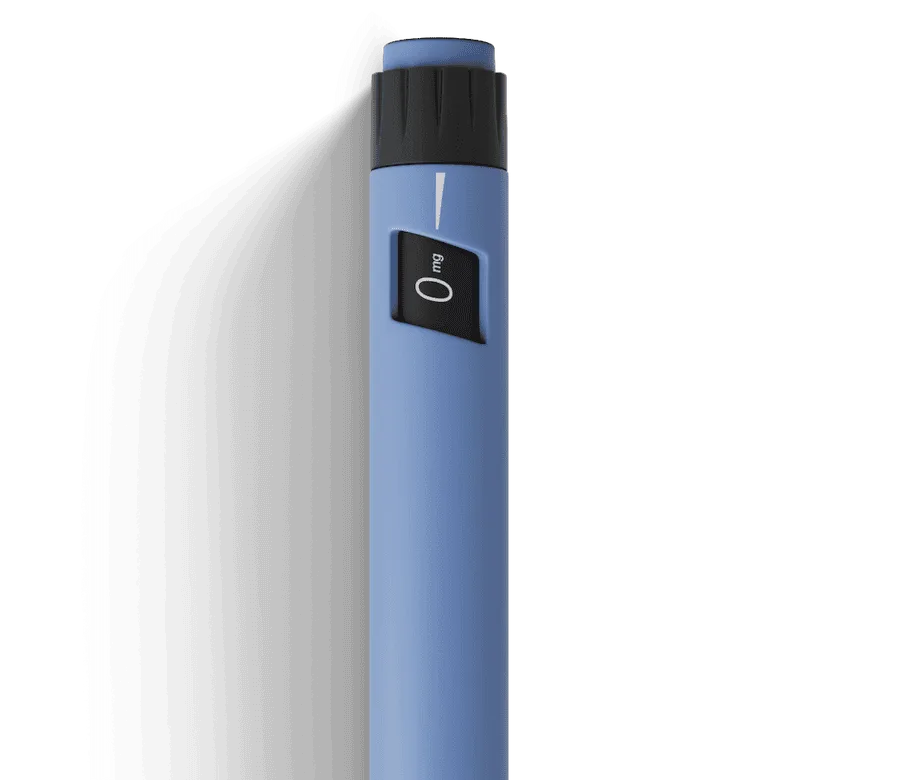
Access GLP-1 Weight Loss with Noom
Explore a wide range of prescription medications supported by Noom’s program.Microdose GLP-1rx
Noom GLP-1rx
Noom GLP-1rx Plus
Wegovy®
Ozempic®

Metformin
Zepbound®
Mounjaro®
Liraglutide
Allulose vs. stevia: Are they safe?
Both allulose and stevia have received FDA GRAS (generally recognized as safe) status. This means qualified experts have determined the ingredient poses no known health risk at typical dietary amounts. It’s not the same as a formal drug approval, but it’s a meaningful safety bar—not just self-certification.
For stevia specifically, GRAS status applies only to high-purity steviol glycosides—the refined form used in commercial products. Whole-leaf stevia and crude extracts aren’t approved as sweeteners in the US. Most store products use the approved form, but it’s worth checking labels on supplements or imported products.
For most healthy adults using either sweetener in normal amounts, there’s no meaningful safety concern to weigh.
Allulose vs. stevia: When and how to use them
When it comes to choosing between allulose and stevia, there usually isn’t one universally “better” option—it depends on how you plan to use it. Allulose tends to work more like real sugar in baking and cooking, while stevia is often easier and more affordable for sweetening drinks or yogurt. Taste, texture, cost, and even how satisfied you feel afterward can all influence which one works better for you in real life.
The best for baking: Allulose behaves almost exactly like regular sugar in the kitchen. It measures roughly cup-for-cup, dissolves well in liquids, caramelizes when heated, and browns in the oven. For baking, it’s the closer swap. Stevia works in baking, but because it’s so concentrated, it usually needs to be paired with other ingredients to provide the bulk and structure sugar normally contributes.
The best for flavor: Try allulose if you want the closest thing to sugar with minimal aftertaste. Stevia has a more distinctive flavor that varies a lot by brand.
“Stevia’s aftertaste can really depend on the brand and the product,” says Hudspeth. “Some people love it in coffee or smoothies, while others prefer something that tastes closer to sugar. It’s worth trying a few before writing it off.”
The most cost-effective: Stevia is generally the less expensive option for everyday use. A box of 80 to 100 stevia packets or a small container for baking often costs around $4 to $8 and can last quite a while because only tiny amounts are needed. Allulose is usually sold in larger sugar-style bags and typically costs around $10 to $20 for a 1- to 3-pound bag. Since allulose is less sweet than sugar, recipes often require larger amounts, which can make it noticeably more expensive for regular baking or coffee sweetening.
Here’s a quick breakdown of when each tends to work best:
| Goal | Better choice | Why |
|---|---|---|
| Baking | Allulose | Measures like sugar, browns and caramelizes |
| Daily beverages | Stevia | Convenient, affordable, widely available |
| Closest taste to sugar | Allulose | Minimal aftertaste, similar mouthfeel |
| Blood sugar management | Allulose | May also blunt glucose spikes from other foods |
| Calorie reduction | Either | Both near-zero |
| Budget-conscious | Stevia | Significantly less expensive |
| Frozen desserts | Allulose | Doesn’t recrystallize when cold |
Remember: You don’t have to pick just one. A lot of people keep stevia on hand for daily coffee and allulose for baking—and that’s a perfectly reasonable setup.
Allulose vs. stevia: When is real sugar a better choice?
Sugar substitutes aren’t automatically the better choice in every situation. For some people, certain sweeteners can leave them feeling unsatisfied, intensify cravings, or create a taste gap that keeps them searching for something else to eat afterward.
Some of that comes down to how the brain processes sweetness. When you taste something sweet, your brain anticipates calories and energy to follow. With zero- or near-zero-calorie sweeteners, that expectation doesn’t always get met. A study found that sucralose—the sweetener in Splenda—confused the brain by delivering sweetness without the expected caloric payoff, and that the mismatch could trigger changes in hunger and cravings.
A separate trial found similar results with sucralose, with people showing increased brain activity in appetite and reward regions after eating it. And some people ate more at their next meal, potentially to compensate. It’s worth noting, however, that both of these findings are specific to sucralose, not allulose or stevia.
On the other side of the debate, a trial that tested stevia specifically found no increase in hunger or appetite compared to regular sugar. The science here is still developing, and individual responses vary, but it’s worth paying attention to how you actually feel after using any substitute versus the real thing.
There’s also a practical argument for sugar in cooking and baking. Both allulose and stevia have limitations—stevia can’t caramelize or add structure, and allulose, while more versatile, still behaves differently than sugar in certain recipes. If a small amount of real sugar means the dish actually comes out right and leaves you more satisfied, that’s a better outcome than a larger portion of something that doesn’t quite hit the mark.
“Sometimes using a small amount of regular sugar is genuinely the better option,” says Hudspeth. “Sugar isn’t the enemy—it’s about how much and how often. If a bit of the real thing means you’re more satisfied and less likely to overeat later, that’s worth factoring in.”
The goal isn’t to avoid sugar at all costs—it’s to be intentional about how you’re using sweetness in your diet. Allulose and stevia are useful tools, but they work best when they’re actually solving a problem for you, not just checking a “healthier” box.
Frequently asked questions about allulose vs. stevia
Is allulose healthier than stevia?
Neither is universally healthier—it depends on what you mean by healthy. Allulose has more clinical research behind its blood sugar-blunting effects and behaves more like real sugar in cooking, which can make it easier to stay on track with eating habits. Stevia is simpler, zero-calorie, and more widely available.
What is the downside of allulose?
The main drawbacks are cost (it’s more expensive than most sweeteners) and limited availability compared to stevia. At high doses—generally above 25 to 30g (7 teaspoons) at once—it can cause GI issues like bloating or loose stools. And while it’s growing in availability, you still won’t find it at every grocery store. Most people using it in small amounts won’t experience issues.
Which is better for baking—allulose or stevia?
Allulose tends to work better for baking because it behaves more like regular sugar. It measures close to cup-for-cup with sugar, provides bulk, browns, and caramelizes—giving baked goods the structure, color, and texture people expect. Stevia alone provides none of that; it only adds sweetness. If you want to bake low-sugar cookies, cakes, or brownies that actually taste like the real thing, allulose is the better tool. Stevia-based baking blends (like Truvia) get partway there by adding erythritol for bulk, but they still don’t perform as consistently as allulose. And some people experience GI issues with sugar alcohols like erythritol.
Can I use allulose instead of stevia?
In some cases, yes—but they’re not direct swaps. Allulose and sugar can be exchanged roughly cup-for-cup. Stevia is so much sweeter that you’d use a fraction of the amount—typically about 1 teaspoon of stevia for every cup of sugar. If you’re switching from stevia to allulose in a recipe, you’d need significantly more allulose; going the other direction means using far less stevia. In beverages, either can work—you’ll just need to adjust amounts to taste.
The bottom line: Choosing allulose vs. stevia depends on use and individual preference
Allulose and stevia are both near zero-calories sweeteners, but they have their pluses and minuses. The most important thing is finding an approach that works for you.
If you bake, allulose is the more versatile swap. If you primarily sweeten drinks and want something cheap and convenient, stevia is hard to beat. And if you’re not sure, either is worth the effort. A smaller amount of sugar in something you actually love is a perfectly reasonable place to land.
“These sweeteners can be useful, but they’re not magic solutions,” says Hudspeth. “For some people, using a small amount of regular sugar in something they truly enjoy is the more sustainable choice. There’s no single right answer—the goal is to find what helps you eat in a way that feels good and is realistic long-term.”
Finding options that feel satisfying and sustainable can make a difference, and that’s where Noom can be particularly helpful. Download the Noom app today on iOS and Android to explore personalized nutrition guidance and find sweets that fit your goals.
Editorial standards
At Noom, we’re committed to providing health information that’s grounded in reliable science and expert review. Our content is created with the support of qualified professionals and based on well-established research from trusted medical and scientific organizations. Learn more about the experts behind our content on our Health Expert Team page.