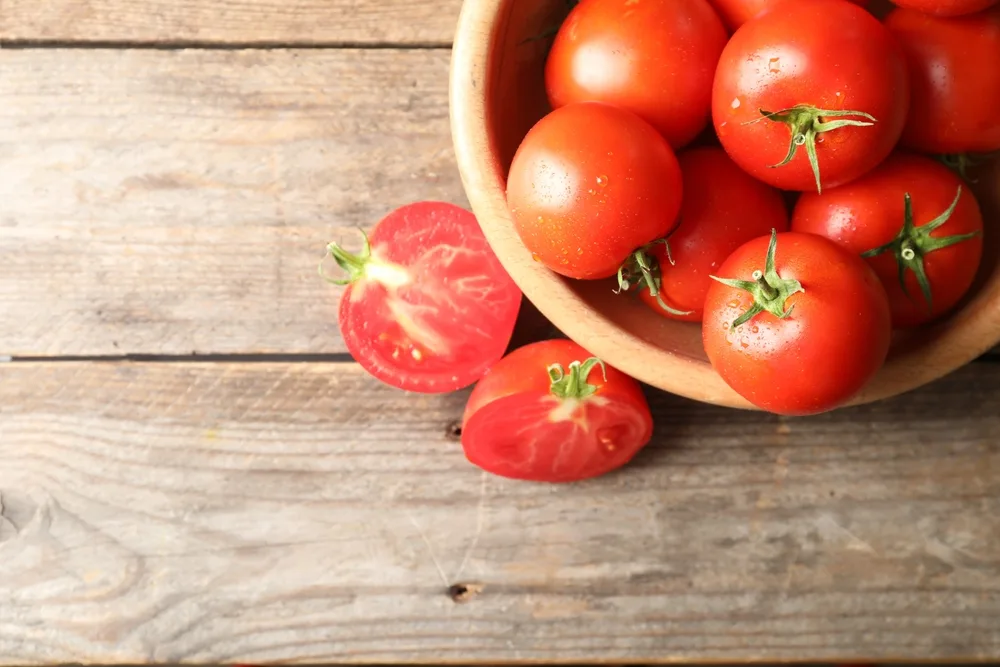
Tomatoes are a versatile, nutrient-dense ingredient that adds flavor and freshness to a wide range of meals. They work in everything from salads and sandwiches to soups and sauces, which makes them easy to use regularly. If you’re trying to eat in a way that supports weight loss, tomatoes are one of the best ingredients to keep on hand.
From a nutrition standpoint, tomatoes are mostly water and low in calories, so they can add satisfying volume and flavor to meals, like a rustic tomato soup, without contributing much to your overall calorie intake. One medium tomato has about 22 calories, along with vitamin C and potassium. They also contain lycopene—a plant compound with antioxidant properties linked to heart health.
Canned tomatoes offer similar nutrients and may even provide more bioavailable lycopene due to the cooking process. Both fresh and canned tomatoes are strong options, especially when you choose canned varieties without added sugar or excess sodium.
Tomatoes aren’t very high in protein or fat, so they won’t keep you full on their own for long. Pairing them with foods that add staying power—like protein and healthy fats—can help make meals more satisfying. They’re can also be used in a wide range of dishes, adding flavor, volume, and nutrients to meals that support your goals.
So what does that actually look like in practice? Let’s break down how tomatoes support weight loss—and the best ways to include them in your diet.
New from Noom
Microdose GLP-1Rx Plus
An affordable way to start your GLP-1 journey with Compounded Tirzepatide.

*Initial 3 week subscription and 4 weeks of medication from $79 plus tax and $199 per month plus tax for 12 week subscription thereafter. Final pricing depends on program selection. Noom GLP-1Rx Plus Microdose Program involves medication (when appropriate), healthy diet, exercise and support. Individual results vary. Meds & personalization based on need as determined by a third-party clinician. Medications are not reviewed by FDA for safety, efficacy, or quality. No affiliation with Eli Lilly and Company, the only US source of FDA-approved tirzepatide. Not available in all 50 US states.
✅ Quick answer
Yes, tomatoes are excellent for weight loss. They’re low in calories and high in water, which helps you feel full and hydrated. They also provide key nutrients and antioxidants that support overall health.
🚀 Weight-loss benefits
- Tomatoes are low in calories – With just 22 calories per 1 medium tomato, tomatoes let you eat a genuinely satisfying volume of food without packing on the calories.
- Tomatoes have lots of water – Tomatoes are about 95% water, which means they physically fill up your stomach and send fullness signals to your brain sooner.
- Tomatoes are rich in nutrients and antioxidants – Beyond being low in calories, tomatoes provide key nutrients like vitamin C and potassium. They also contain lycopene, a plant compound with antioxidant properties linked to reduced inflammation and improved metabolic health.
⚠️ Things to be mindful of:
- They’re low in protein and fat – Tomatoes are great for adding volume and nutrients, but on their own, they may not be very filling for long. Pairing them with a source of protein and healthy fats can help make meals more satisfying.
- The acidity can affect some people – Tomatoes are naturally acidic, which may cause discomfort for people with acid reflux or sensitivity.
- Some tomato products are more processed – Fresh tomatoes are very different from some condiments, jarred sauces, or canned soups, which can include added sugar, sodium, or preservatives. Checking labels and choosing simpler options can help you spot a healthier product.
🥗 Nutrients in tomatoes (per 1 medium tomato / 123g)
| Nutrient | Amount | % RDA* |
|---|---|---|
| Calories | 22 calories | 1% |
| Protein | 1.1 g | 2% |
| Total carbs | 4.8 g | 2% |
| Fiber | 1.5 g | 5% |
| Sugars | 3.2 g | — |
| Total fat | 0.2 g | <1% |
| – Saturated fat | 0.03 g | <1% |
| – Monounsaturated fat | 0.04 g | — |
| – Polyunsaturated fat | 0.1 g | — |
| Omega-3 | 0.004 g | — |
| Omega-6 | 0.097 g | — |
*Recommended dietary allowance (RDA) is defined as the average daily amount of nutrients needed to meet the requirements of nearly all healthy people in a specific group.
Tomatoes add volume, flavor, water, nutrients, and antioxidants to meals for very few calories. Because they’re mostly water and relatively low in carbs, they tend to have a gentle impact on blood sugar and are easy to fit into a wide range of eating styles.
They’re not especially high in protein or fat, so pairing them with more filling ingredients—like protein, healthy fats, or fiber-rich foods—can help make meals more satisfying and keep you full longer.
💊 Vitamins & minerals in tomatoes (per 1 medium tomato / 123g)
| Vitamin/Mineral | Amount | % RDA* |
|---|---|---|
| Vitamin C | 16.9 mg | 19% |
| Vitamin K | 9.7 mcg | 8% |
| Copper | 0.07 mg | 8% |
| Potassium | 292 mg | 6% |
| Vitamin A | 51 mcg | 6% |
| Vitamin B6 | 0.1 mg | 6% |
| Manganese | 0.14 mg | 6% |
| Folate (B9) | 18 mcg | 5% |
| Niacin (B3) | 0.73 mg | 5% |
| Vitamin E | 0.66 mg | 4% |
| Magnesium | 13.5 mg | 3% |
| Phosphorus | 29.5 mg | 2% |
One of the standout nutrients in tomatoes is vitamin C. A single medium tomato provides a meaningful amount, which can help support immune health and collagen production—the protein that plays a role in skin, joints, and connective tissue. Vitamin C also helps your body absorb plant-based iron more effectively, which can be especially useful if you eat a more plant-forward diet.
Tomatoes also provide potassium, a mineral that supports healthy blood pressure and fluid balance, along with smaller amounts of vitamin K, folate, and vitamin B6. These nutrients all play different roles in things like bone health, energy metabolism, and cell function. In other words, tomatoes may be light in calories, but they still bring a lot of nutritional value to the table.
🔍 Nutrient breakdown
Glycemic index (GI) of tomatoes
Glycemic index: <15 (Low)
💡 Tip: Tomatoes have one of the lowest glycemic index scores of any food, meaning they digest slowly and cause only a minimal rise in blood sugar. This makes them a smart choice for keeping energy levels stable and preventing the blood sugar crashes that often drive cravings and snacking.
Are tomatoes high in protein?
❌ No — tomatoes contain only 1 g of protein per medium tomato.
This is a very modest amount and won’t contribute significantly to your daily protein needs on its own. To turn a tomato-based meal into something that keeps you full, you’ll need to bring in a protein source.

See if your insurance
covers GLP-1s.
The form only takes 2 minutes to answer. We’ll handle the rest.
GET STARTEDBetter protein alternatives: Grilled chicken breast | Lentils | Tofu
Are tomatoes high in fiber?
❌ No — tomatoes have 2 g of fiber per medium tomato.
💡 Tip: While tomatoes do contribute to your daily fiber intake and support digestion, it’s a modest amount. Boost the fiber content of tomato-based meals by pairing them with beans, vegetables, or a handful of leafy greens.
Are tomatoes low in carbs?
✔️ Yes — tomatoes have 4.8 g of total carbs per medium tomato.
💡 Tip: Tomatoes are a low-carb food, making them compatible with ketogenic and low-carb diets in regular portions. Their minimal carb count has very little impact on blood sugar, so they can fit into almost any carb-conscious eating plan.
Are tomatoes gluten-free?
✔️ Yes — tomatoes are a fruit and are naturally 100% gluten-free. They’re a safe and reliable choice for people with celiac disease or gluten sensitivity. The one thing to watch is processed tomato products like sauces and soups, which sometimes contain gluten-based thickeners — always check the label if you need certified gluten-free.
Are tomatoes good for fat loss?
✔️ Yes — tomatoes can be a helpful food for fat loss because they’re low in calories and high in water, which means they add volume to meals without adding much to the calorie total.
🍽️ Diet compatibility: Which diets include tomatoes?
| Diet | ✅/❌ | Why |
|---|---|---|
| Keto | ✅ | Tomatoes are low in net carbs, making them suitable for keto in moderate portions. A medium tomato has about 3-4 grams of net carbs. Portion control is key to staying within your daily carb limit. |
| Paleo | ✅ | As a whole, natural fruit, tomatoes are fully paleo-compliant. They fit perfectly within the framework of eating whole, unprocessed foods. |
| Mediterranean | ✅ | Tomatoes are a cornerstone of the Mediterranean diet, used fresh in salads, roasted with olive oil, and cooked into sauces. Their inclusion is central to the diet’s heart-healthy reputation. |
| Vegan | ✅ | Tomatoes are a plant food and a staple in vegan and plant-based cooking, adding flavor, nutrients, and versatility to countless animal-free dishes. |
| Gluten-free | ✅ | Fresh tomatoes are naturally gluten-free and completely safe for those with celiac disease or gluten intolerance. Always verify that processed tomato products are certified gluten-free. |
Tomatoes are one of those foods that fit easily into a lot of different eating styles. They work well in Mediterranean, plant-based, gluten-free, paleo, and even lower-carb patterns, which makes them a pretty flexible ingredient to keep around.
They’re also easy to build meals around because they add flavor, freshness, and volume without requiring much effort. The only time you may want to be a little more mindful is if you’re following a very strict low-carb or keto plan, since tomato products can add up depending on the portion and form. But for most people, tomatoes are a simple, nutritious food that can fit into a balanced eating pattern without much overthinking.
🌟 Are tomatoes healthy? What are the health benefits?
Metabolic health: Are tomatoes good for your metabolism?
- Boosts metabolism? ❌ Neutral — No single food meaningfully speeds up metabolic rate, and tomatoes are no exception. However, their high water content supports hydration, which is essential for optimal metabolic function, and their low calorie density makes it easier to maintain the energy balance a healthy metabolism depends on.
- Improves insulin sensitivity? ✔️ Yes — Research suggests that lycopene, the primary antioxidant in tomatoes, may help improve insulin sensitivity by reducing oxidative stress at the cellular level. Better insulin sensitivity supports more efficient blood sugar regulation over time.
- Effect on fat storage? Positive — Tomatoes help prevent fat storage primarily by displacing higher-calorie foods from your diet. Their high water and fiber content promotes fullness, reducing the likelihood of reaching for energy-dense foods and supporting the calorie deficit needed to prevent fat accumulation.
💡 Tip: Pair tomatoes with a source of healthy fat like olive oil — this not only adds flavor but significantly increases the absorption of fat-soluble lycopene.
Cholesterol impact: Do tomatoes affect cholesterol levels?
- Does it lower LDL (bad) cholesterol? ✔️ Yes — The lycopene in tomatoes has been shown to help lower LDL cholesterol levels by inhibiting LDL production and enhancing its breakdown. Regular consumption appears to have a meaningful impact on the lipid profile over time.
- Does it raise HDL (good) cholesterol? ❌ Data limited — There’s currently insufficient evidence to suggest that tomatoes directly raise HDL cholesterol. Research has focused primarily on their LDL-lowering effects, and the specific impact on HDL isn’t well established.
- Overall impact on heart health? Favorable — Tomatoes bring together lycopene to lower LDL, potassium to help manage blood pressure, and vitamin C to support blood vessel function — a combination that makes them heart-protective as part of a regular diet.
💡 Tip: Cooking tomatoes — in a sauce, soup, or roasted — breaks down cell walls and makes the heart-healthy lycopene significantly more bioavailable than it is in raw tomatoes.
Can I eat tomatoes for a calorie deficit?
✔️ Yes, with confidence: At just 22 calories per medium tomato, tomatoes add real volume and flavor to meals for almost no caloric cost. They’re one of the best foods for maintaining a calorie deficit while still feeling like you’re eating well.
💡 Tip: Use cherry tomatoes as a low-calorie snack between meals instead of reaching for chips or crackers. A whole cup of cherry tomatoes is around 27 calories and takes real time to eat, which gives your fullness signals time to kick in.
Are tomatoes rich in antioxidants?
✔️ Yes: Tomatoes are packed with antioxidants, most notably lycopene — the compound responsible for their red color. Lycopene is one of the most potent antioxidants in the food supply, helping neutralize harmful free radicals and protect cells from damage. Tomatoes also contain vitamin C, beta-carotene, and naringenin, giving them a broad antioxidant profile beyond just lycopene.
Do tomatoes support gut health?
✔️ Yes: The soluble and insoluble fiber in tomatoes acts as a prebiotic, feeding beneficial gut bacteria and supporting a balanced microbiome. A healthy gut is increasingly linked to improved immunity, mood, and metabolic regulation — making the modest fiber in tomatoes more meaningful than its small quantity might suggest.
Do tomatoes support digestion?
Positive: The combination of water and fiber in tomatoes helps soften stool and adds bulk, promoting regular bowel movements and a healthy digestive tract. One thing to be aware of: for people with acid reflux or GERD, tomatoes’ natural acidity can trigger symptoms. If that’s you, lower-acid varieties or cooking tomatoes before eating them may help.
Do tomatoes help you feel satiated and less hungry?
Moderate: The high water content and modest fiber in tomatoes do contribute meaningfully to meal volume, sending fullness signals to the brain sooner. That said, tomatoes aren’t a high-protein or high-fat food, so they won’t keep hunger at bay for hours on their own.
Satiety level: Moderate
💡 Tip: Add a lean protein like grilled chicken or a healthy fat like sliced avocado to your tomato dishes to significantly increase their satiety power. The combination creates a much more complete and lasting feeling of fullness.
Do tomatoes help with nighttime cravings?
✔️ Yes, possibly: A handful of cherry tomatoes makes a smart, low-calorie option for nighttime snacking. Their low sugar content won’t spike blood sugar before bed, and their crunch and mild savory flavor can satisfy the urge to snack without derailing your calorie goals for the day.
Access GLP-1 Weight Loss with Noom
Explore a wide range of prescription medications supported by Noom’s program.Microdose GLP-1rx
Noom GLP-1rx
Noom GLP-1rx Plus
Wegovy®

Ozempic®

Metformin

Zepbound®

Mounjaro®

Liraglutide

💡 Tip: Keep a bowl of washed cherry tomatoes at eye level in the fridge so they’re the first thing you reach for when an evening craving hits.
Do tomatoes help reduce inflammation?
✔️ Yes: The lycopene and vitamin C concentrated in tomatoes both have well-documented anti-inflammatory properties. Chronic low-grade inflammation is associated with obesity, heart disease, and metabolic syndrome, making anti-inflammatory foods a meaningful part of a long-term health-focused diet. Research has specifically linked higher lycopene intake to reduced inflammatory markers.
Are tomatoes beneficial for brain health?
✔️ Yes, limited benefits: The antioxidants in tomatoes — particularly lycopene — help protect the brain from oxidative stress, which is implicated in neurodegenerative diseases. Some research suggests lycopene may help slow the progression of conditions like Alzheimer’s disease. These benefits are real but should be understood as part of a broader pattern of healthy eating, not a targeted brain intervention.
Can tomatoes improve skin and hair health?
✔️ Yes, minor benefits: Lycopene offers meaningful protection against UV-induced skin damage by neutralizing harmful free radicals in the skin. Vitamin C is essential for collagen synthesis, the protein that gives skin its structure and elasticity. Together, these make tomatoes a genuinely useful food for skin health, even if the effects are gradual and indirect.
Can tomatoes help balance hormones?
❌ Limited evidence: There’s no strong scientific evidence that tomatoes have a direct or significant impact on hormonal regulation. Their main benefits lie in their antioxidant, anti-inflammatory, and cardiovascular properties rather than any hormonal mechanism.
💡 Tip: For hormonal health, the bigger picture of dietary variety and overall eating patterns matters more than any single food. Tomatoes can be a useful part of a plant-rich diet that supports overall hormonal balance, but they’re not a targeted treatment for hormonal conditions.
🍽️ Best ways to eat tomatoes for weight loss
- Raw in salads and as snacks: Eating tomatoes raw preserves vitamin C, which degrades with heat. Slice them into salads, add to sandwiches, or enjoy cherry tomatoes straight as a snack.
- Lightly cooked or roasted: Cooking tomatoes actually increases the bioavailability of lycopene, making this powerful antioxidant easier for your body to absorb. Roasting with a small amount of olive oil or simmering into a no-sugar-added sauce enhances both flavor and nutrition—the fat in the olive oil further boosts lycopene absorption.
- Used in simple sauces: Cooking tomatoes into a basic sauce—using canned or fresh tomatoes, garlic, and olive oil—creates a versatile base you can use throughout the week. It’s an easy way to add flavor and nutrients to meals without relying on store-bought versions with added sugar or excess sodium.
🍏 Best alternatives & comparisons (per 100g)
| Food | Calories | Carbs | Fiber | Protein | Fat |
|---|---|---|---|---|---|
| Tomatoes | 18 | 3.9 g | 1.2 g | 0.9 g | 0.2 g |
| Cucumber | 15 | 3.6 g | 0.5 g | 0.7 g | 0.1 g |
| Bell pepper (red) | 26 | 6.0 g | 2.1 g | 1.0 g | 0.3 g |
| Spinach | 23 | 3.6 g | 2.2 g | 2.9 g | 0.4 g |
| Zucchini | 17 | 3.1 g | 1.0 g | 1.2 g | 0.3 g |
| Carrots | 41 | 9.6 g | 2.8 g | 0.9 g | 0.2 g |
Like cucumbers and zucchini, tomatoes are low in calories and high in water, which makes them great for adding volume to meals. Where tomatoes stand out a bit more is their lycopene content, the antioxidant that gives them their red color and contributes to their antioxidant profile.
Other vegetables bring different strengths. Spinach and red bell peppers offer a little more fiber and a broader mix of nutrients, while carrots are slightly higher in natural sugars but still a very nutritious choice. In practice, it’s less about picking the single “best” vegetable and more about building variety into your meals.
A mix tends to work best. Tomatoes can add freshness and flavor, while pairing them with other vegetables—especially ones that bring more fiber or bulk—can help create meals that feel more satisfying and balanced overall.
Frequently asked questions about tomatoes and weight loss
Are tomatoes good for weight loss?
Yes. Tomatoes are extremely low in calories, high in water content, and provide key nutrients and antioxidants. Their high volume-to-calorie ratio makes them ideal for adding bulk and satisfaction to meals without meaningfully increasing your calorie intake. They work best as part of a balanced meal that also includes protein and healthy fat.
How many tomatoes can I eat per day for weight loss?
There’s no strict limit, given how few calories tomatoes contain. Most people can comfortably eat two to three medium tomatoes per day as part of a balanced diet without any issue. If you have acid reflux or GERD, you may want to keep portions moderate and see how your body responds.
Are tomatoes keto-friendly?
Yes, in moderate portions. A medium tomato contains around 3 to 4 grams of net carbs, which fits within most keto daily carb budgets when portions are managed.
Is it better to eat tomatoes raw or cooked?
Both are good, but for different reasons. Raw tomatoes have more vitamin C, which is heat-sensitive. Cooked tomatoes have more bioavailable lycopene, since heat breaks down the cell walls that trap it. Including both raw and cooked tomatoes in your diet is the most nutritionally well-rounded approach.
Do tomatoes cause bloating?
For most people, no. Tomatoes are well-tolerated and unlikely to cause bloating. However, their natural acidity can cause digestive discomfort in people with acid reflux, IBS, or sensitive stomachs. If you notice discomfort after eating tomatoes, trying cooked preparations or lower-acid varieties—like yellow or orange tomatoes—may help.
Are canned tomatoes as healthy as fresh?
In many ways, yes—and in some ways, even more so. Canned tomatoes are often processed at peak ripeness, which can mean higher lycopene content than out-of-season fresh tomatoes. The main thing to watch is added sodium, which can be significant in some canned varieties. Look for no-salt-added options or drain and rinse before use.
What’s the best way to use tomatoes to feel fuller longer?
Pair them with protein and fat. Tomatoes on their own are filling in terms of volume, but they digest quickly and won’t sustain fullness for hours. Adding eggs, chicken, mozzarella, avocado, olive oil, or legumes to tomato-based dishes creates the combination of macronutrients that genuinely delays hunger and keeps you satisfied between meals.
🧠 The bottom line: Tomatoes can be good for weight loss.
Tomatoes are one of the simplest ways to make meals more filling without adding many calories. With about 22 calories per medium tomato and a high water content, they help add volume, flavor, and freshness in a way that makes it easier to stay in a calorie deficit. They also bring real nutritional value—vitamin C, potassium, and lycopene, a plant compound linked to heart and metabolic health. Whether you’re using fresh or canned, tomatoes are easy to work into a wide range of eating patterns, from lower-carb to Mediterranean-style diets.
Tomatoes won’t keep you full for long when eaten alone, but they work well as a base for balanced meals. Pair them with protein, healthy fats, or fiber-rich foods to build something more satisfying, and keep preparation simple—fresh, roasted, or cooked into a basic sauce without added sugar or excess sodium. Used this way, tomatoes aren’t anything special on their own—they’re just a reliable, flexible ingredient that can help make your overall approach to eating easier to stick with.
See if your insurance
covers GLP-1s.
The form only takes 2 minutes to answer. We’ll handle the rest.
GET STARTED📖 Scientific evidence
- Lycopene is linked to lower LDL cholesterol and blood pressure. (Maturitas, 2011) Lycopene—the primary antioxidant in tomatoes—has been linked to reductions in LDL (“bad”) cholesterol and systolic blood pressure, supporting its role in heart health.
- Tomato and lycopene are associated with changes in inflammatory markers in people with higher BMIs. (BMC Nutrition, 2026) In some studies, tomato products and lycopene supplementation have been linked to reductions in inflammatory markers in people with higher BMIs.
- Higher lycopene intake is tied to a lower risk of type 2 diabetes in some studies. (Nutrients, 2022) Some research suggests that higher dietary intake and blood levels of lycopene are linked to a reduced risk of developing type 2 diabetes.
- Regular tomato consumption has been shown in some studies to increase antioxidant levels in the body and reduce oxidative stress. (European Journal of Nutrition, 2013) Some research suggests that tomato products may increase serum lycopene levels and improve markers of oxidative stress.
Editorial standards
At Noom, we’re committed to providing health information that’s grounded in reliable science and expert review. Our content is created with the support of qualified professionals and based on well-established research from trusted medical and scientific organizations. Learn more about the experts behind our content on our Health Expert Team page.