
What you’ll learn:
- Social media trends claim that soaking okra pods in water and drinking the liquid can lead to weight loss and other health benefits.
- Okra’s slippery mucilage does have some real health benefits, but you get most of them from eating okra, not drinking okra water.
- Eating whole okra provides far more fiber and fullness than drinking okra water, making it the better choice for health and weight loss.
Scroll through social media videos long enough, and you’ll see all different kinds of simple wellness drinks that promise effortless health benefits with minimal effort. You’ll be told to drink chia seed water, pink Himalayan salt water, and even cinnamon water for everything from weight loss to blood sugar control and gut health.
It probably doesn’t surprise you that the claims are typically overhyped for many of these. We’ve looked closely at many of these trends. While none can solve all your health issues, some can support healthier habits when expectations stay grounded in reality.
Rx weight loss, the right way, with Noom
Get access to prescription weight loss medication with Noom.Microdose GLP-1s
Wegovy®
Ozempic®

Metformin
Zepbound®
Mounjaro®
Liraglutide
Now, okra water has become a popular drink, and the claims are similarly far-reaching. Fans say it supports gut health, helps with weight loss, steadies blood sugar, and more. It’s framed as a simple daily morning ritual that anyone can use.
Does it really do all these things? Does it do any? Maybe!
Let’s break down what okra water is, how it’s made, what nutrients okra actually contains, and what research does (and doesn’t) suggest about its potential benefits in water form. We’ll also hear from Dr. Karen Mann, MD, Noom’s Medical Director, on whether this trend is worth trying or better left in the scroll.
What is okra water?
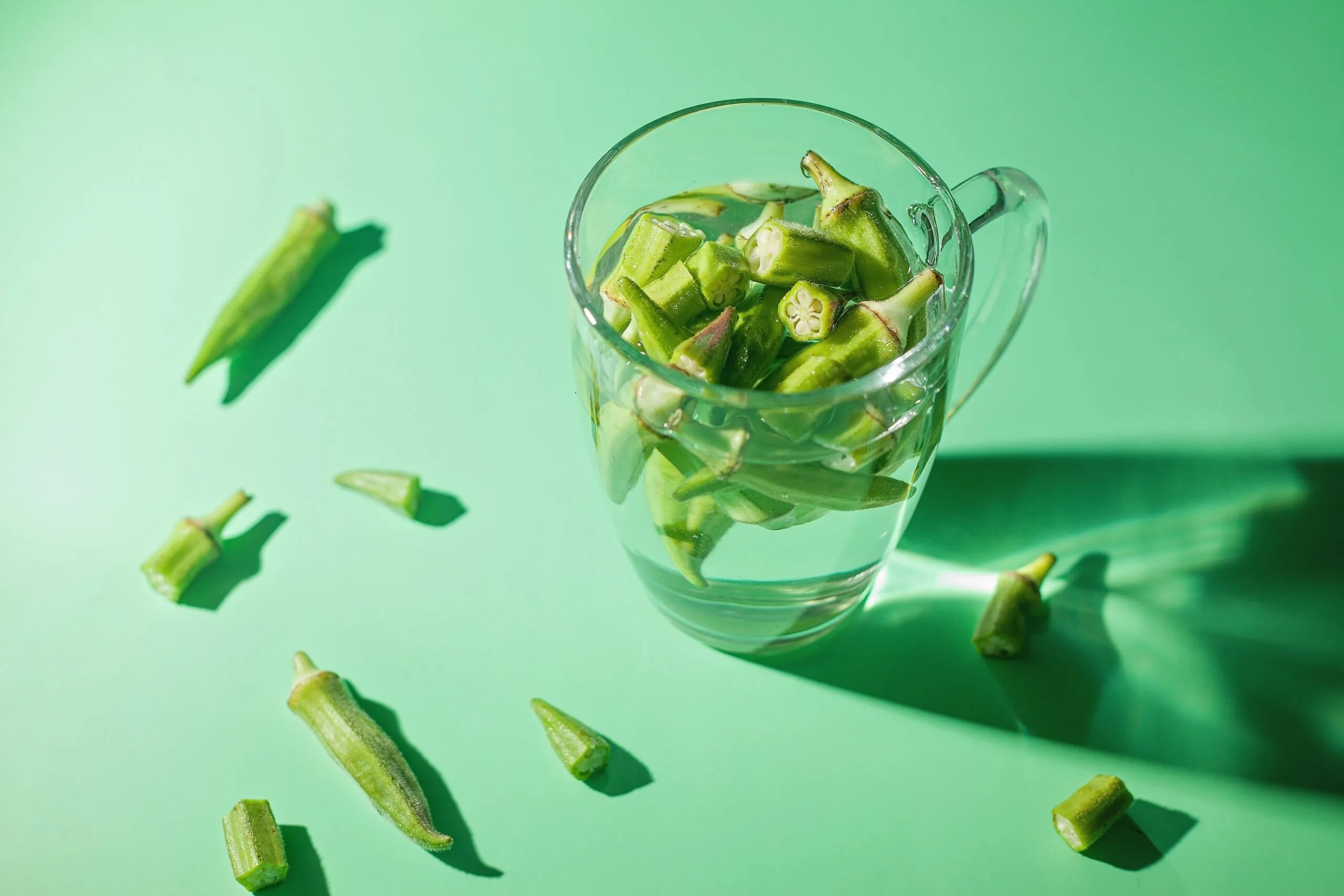
Okra water is a drink made by soaking sliced okra pods in water—usually overnight—and drinking the liquid. As the okra sits in the water, it releases its classic gel-like substance called mucilage.
But how does this happen? Okra, a vegetable commonly eaten roasted, fried, or added to soups and stews, is prized for its fiber content and its ability to thicken dishes. Those short, ridged green pods are low in calories and rich in soluble fiber—but they’re also famously slimy from the mucilage.
When okra is soaked in water, some of that mucilage leaches out, creating a thicker, slightly viscous drink. Supporters believe this gel-like quality can slow digestion, support gut health, improve satiety, and help blunt blood sugar spikes—mechanisms that could, in theory, influence appetite and weight over time. Others take the logic a step further, suggesting those same compounds might even support vaginal lubrication.
But does the science actually back any of this up?
There are studies on okra—particularly around its fiber, antioxidants, and potential effects on blood sugar and digestion—but drinking okra-infused water isn’t the same thing as eating the vegetable. The real question is whether enough of those beneficial compounds make it into the water to meaningfully affect weight loss, gut health, or anything else people are hoping for.
What is okra mucilage made up of?
When people talk about okra’s ability to thicken soups or stews, they’re referring to mucilage—the gel-like substance released when okra comes into contact with water. It’s also the reason okra frequently shows up in digestion and weight-loss conversations online.
When okra is sliced or cooked, research shows its soluble fibers and plant polysaccharides absorb water and swell, forming a viscous gel. This same water-binding behavior is what makes mucilage interesting to researchers studying how fiber behaves in the digestive tract.
From a scientific standpoint, okra mucilage is made primarily of soluble fiber and complex polysaccharides. Soluble fiber dissolves in water and forms gels in the gut, where it can slow digestion and is partially fermented by gut bacteria. Polysaccharides are long chains of sugar molecules that plants use for structure and water retention. Together, these compounds explain okra’s thick, slippery texture.
While this gel-like quality helps clarify how mucilage behaves physically, it doesn’t automatically translate to weight loss. Most research looks at whole okra, okra powders, or okra extracts, rather than isolated mucilage. Still, scientists frequently point to mucilage as a major source of okra’s soluble fiber—helping explain many of the digestive effects observed in those studies.
Does okra mucilage have any benefits?
Okra mucilage appears to offer gentle, supportive benefits, not dramatic or instant results. Drinking okra water on its own isn’t a shortcut to weight loss—but regularly eating okra may support digestion and metabolic health as part of a balanced, fiber-rich diet.
Most of what we know about okra mucilage comes from research on okra as a whole, with mucilage identified as one of the main drivers of its soluble fiber-related effects. In other words, the benefits aren’t about mucilage acting like a magic ingredient—it’s about how the fiber in it works in your body.
Research on okra and its mucilage-rich soluble fiber suggests it may:
- Support comfortable digestion by increasing water retention and viscosity in the digestive tract, which can help keep stool hydrated and moving more easily
- Moderate blood sugar response by slowing the absorption of carbohydrates
- Improve blood lipid levels by binding bile acids and cholesterol in the gut, which may help lower total and LDL (“bad”) cholesterol.
It’s important to keep these findings in perspective. Many studies are conducted in animals or use concentrated okra extracts—not the vegetable as it’s typically eaten. Any benefits appear to be tied to eating okra or using okra-derived products, not simply drinking okra water in isolation.
How to make okra water: Simple recipe
One reason okra water has gained so much attention is how simple it is to make—and how visually striking it looks in videos. There’s no blender, no cooking, and no special equipment involved. Just okra, water, and a little time.
Most okra water recipes follow the same basic steps:
- Wash and slice two to four fresh or frozen okra pods
- Place them in about eight ounces of water
- Let the mixture sit in the refrigerator overnight.
By morning, some of the okra’s soluble fiber will have seeped into the water. You then strain out the pods and drink the liquid.
The result is a slightly thick, slippery drink with a jelly-like texture. For many people, the texture is the biggest adjustment—but the flavor itself is fairly mild. Adding lemon or lime slices, fresh mint, berries, ginger, cucumber, pineapple, or a small amount of sweetener like agave can make the drink more pleasant and easier to sip.
Okra water for weight loss: The claims and true benefits
Are there any benefits of drinking okra water? Possibly, but they’re smaller than social media makes them seem. To see where okra water may help (and where it falls short), let’s break down the most common claims one by one.
Claim 1: Okra water can help you lose weight
Verdict: False. It doesn’t affect belly fat, and it doesn’t cause weight loss on its own.
“There’s no scientific evidence that okra water targets belly fat or directly leads to weight loss,” says Dr. Mann. “No single food or beverage can move the scale without support from overall eating patterns, physical activity, and other lifestyle habits.”
That said, okra water does have one thing going for it: it’s very low in calories. If you’re drinking it instead of higher-calorie options like sodas or juices, that swap can support weight-loss efforts over time. But being low-calorie isn’t the same as being filling or nutritionally complete.
When it comes to nutrition and fullness, eating vegetables beats drinking them. Whole okra provides more fiber and nutrients than okra water, which makes it a stronger choice for supporting weight loss. And if okra isn’t a vegetable you enjoy, there are plenty of other vegetables that are higher in fiber and low in calories.
Claim 2: Okra water helps you feel full
Verdict: Unlikely from the water, more likely from the vegetable.
Okra itself can be filling—but okra water is a different story.
When you soak okra in water, a small amount of that mucilage does end up in the drink, so it’s possible that okra water contains trace amounts of soluble fiber. In theory, that could help a little with fullness.
But here’s the reality check: most of the fiber stays in the vegetable. The part that actually fills you up—the fiber, the chewing, the volume of food—is what you get when you eat okra, not when you drink the leftover water. If feeling satisfied is the goal, you’re much better off eating the whole vegetable.
One cup of whole okra contains both soluble and insoluble fiber, and those two types together can help you feel fuller longer. Soluble fiber dissolves in water and forms a gel during digestion, which can slow things down and help you feel satisfied longer. Insoluble fiber adds bulk and helps food move through your digestive system, which also contributes to fullness.
Claim 3: Okra water helps manage blood sugar
Verdict: No—not in a meaningful way.
You may have seen claims that okra water can help control blood sugar, but the science doesn’t really back that up. There is some research suggesting that okra itself may have a modest effect on blood sugar levels. For example, one study found lower blood sugar levels in people with pre-diabetes and type 2 diabetes after consuming powdered okra. But that research looked at okra powder mixed with other ingredients—not okra water, and not the vegetable prepared at home.
“Okra water doesn’t contain meaningful amounts of the compounds studied, so it’s unlikely to have a meaningful impact on blood sugar,” notes Dr. Mann. “While it can fit into a low-calorie hydration routine, it’s not a treatment for diabetes and shouldn’t replace medical care, prescribed medications, or evidence-based lifestyle changes.”
If your goal is to maintain healthy blood sugar levels, the basics still matter most: eating a balanced diet rich in vegetables, fiber, lean protein, and healthy fats; limiting added sugars and refined carbs; staying physically active; and working with a healthcare provider to find a plan that works for you.
Is okra water safe?
For most people, okra water is safe to try in moderation, but here are a few things to keep in mind:
- Start slow if you’re new to it: Okra water contains small amounts of fiber. Drinking a lot right away may cause bloating or digestive discomfort, especially if your diet is usually low in fiber. Starting with a small serving can help your body adjust.
- It’s not a treatment for diabetes: “If you have diabetes, okra water is fine as a drink—but it’s not a treatment,” says Dr. Mann. “It shouldn’t replace prescribed medications or other evidence-based lifestyle changes.”
- Be mindful if you take metformin: Some research suggests that okra may interfere with the absorption of metformin, a common diabetes medication. If you take metformin, it’s best to avoid consuming okra or okra-based products at the same time and to check with your healthcare provider about timing.
- It doesn’t replace whole foods: While okra water can support hydration and provides tiny amounts of soluble fiber, most of okra’s nutrients stay in the vegetable itself. Eating a variety of vegetables—including whole okra if you enjoy it—will always offer more nutritional benefit than drinking infused water alone.
Frequently asked questions about okra water and weight loss
What is okra water good for?
Okra water may keep you hydrated and add variety without adding many calories. Because it contains small amounts of soluble fiber from okra’s mucilage, it may also gently support digestion. But it’s not a treatment or cure for anything.
What does okra water do?
Okra water provides very tiny amounts of soluble fiber and plant compounds from the mucilage created when okra is soaked in water. Soluble fiber forms a gel during digestion, which is why it’s often linked to slower digestion and steadier energy. However, because okra water contains only a small fraction of okra’s fiber, these effects are likely mild compared to eating the vegetable itself.
What are the benefits of okra water?
Possible benefits of okra water include hydration, a feeling of mild fullness, and a low-calorie alternative to sugary drinks. Some people also like it as part of a morning routine. The results will vary from person to person, and most of the studied benefits come from eating okra, not drinking the water it’s soaked in.
Does okra water do anything for women?
There’s no strong evidence that okra water has unique benefits for women. Some claims online suggest it helps with hormones or vaginal lubrication, but these ideas are not well supported by research.
Can you drink okra water while pregnant?
For most people, drinking okra water occasionally during pregnancy is likely safe, especially since it’s low in calories and doesn’t contain stimulants. However, Dr. Mann warns, “pregnancy is a time when digestion, blood sugar, and nutrient needs can change. Everyone’s pregnancy is different, so it’s best to check with a healthcare provider before making it a regular habit during pregnancy.”
What should you mix with okra water to make it taste better?
Okra water has a mild flavor but a slippery, slimy texture, which not everyone enjoys. Many people add ingredients like lemon or lime slices, fresh mint, berries, ginger, turmeric, cucumber, pineapple, or a small amount of honey or agave to improve the taste.
Reviews from real Noom users
Desirea N. — Real Noom user

“My favorite parts of Noom are the care team and other Noomers. Sharing and getting help made me feel like I wasn’t doing it alone. That support made all the difference.”
Desirea N. — Real Noom user
Matthew M. — Real Noom user

“Noom has taught me that every day is a new chance to make better, healthier choices. It's taught me how to stop overeating.’’
Matthew M. — Real Noom user
Lila M. — Real Noom user

“Clinicians who understand how supportive medication can be is one of the best parts of Noom! I was convinced I wouldn’t have success but I’m down 11 pounds in two months.’’
Lila M. — Real Noom user
Steve M. — Real Noom user

“Noom provided me with the medication which I could not get through Medicare. I have learned the tricks to better eating and life in general.”
Steve M. – Real Noom user
Daisy R. — Real Noom user

‘’Noom has changed my life and I’m so thankful, I feel great, have more energy and am no longer prediabetic.”
Daisy R. – Real Noom user
Sarah R. — Real Noom user

“All of the Noom providers that I’ve met with have been exceptional and prescribed medications that are appropriate for my situation and health.”
Sarah R. – Real Noom user
Madison S. — Real Noom user

“Noom made the process so simple and now I feel full, free from diet obsession, and at ease in my body again.”
Madison S. – Real Noom user
Sonday K. — Real Noom user

“My doctor recommended Noom after I was frustrated trying to lose weight. The lessons helped change my relationship with food. My body feels lighter & energized.”
Sonday K. – Real Noom user
Cam K. — Real Noom user

“I built healthy habits with coaching and lessons that make me confident I can maintain my weight loss long term.”
Cam K. – Real Noom user
Laura TR. — Real Noom user

“With the right medication through Noom, hunger and sugar cravings finally quieted and I have the tools to break the cycle.”
Laura TR. – Real Noom user
Jessica S. — Real Noom user

“Cravings and food noise are gone, I finally feel confident in the healthy habits I’ve built to last with Noom.”
Jessica S. – Real Noom user
What does drinking okra water do for weight loss?
Drinking okra water doesn’t cause weight loss on its own. However, it may support weight-loss efforts indirectly by encouraging hydration and acting as a low- or zero-calorie substitute for sugary drinks like soda or juice. Over time, those small swaps can help with calorie control. Still, sustainable weight loss comes from consistent eating patterns, physical activity, and habits you can maintain—not from one specific drink.
The bottom line: Okra water doesn’t cause weight loss or replace healthy habits
Okra water isn’t a shortcut to weight loss. Okra’s mucilage may contain small amounts of soluble fiber when dissolved in water, but you get more of it when you eat the vegetable itself.
But okra water can still be part of a healthy morning routine if you enjoy it. It’s very low in calories, can help you hydrate, and may encourage more mindful habits if it replaces sugary drinks. For some people, that’s enough to make it a simple habit they can build on as part of a healthier routine.
Sustainable weight loss isn’t about finding the perfect trend—it’s about finding habits you can repeat. At Noom, we focus on long-term habit change because that’s what creates real, lasting results. If you want personalized guidance, daily articles, and expert-backed tips, download Noom today on iOS & Android.
Editorial standards
At Noom, we’re committed to providing health information that’s grounded in reliable science and expert review. Our content is created with the support of qualified professionals and based on well-established research from trusted medical and scientific organizations. Learn more about the experts behind our content on our Health Expert Team page.