
What you’ll learn:
- Konjac noodles are a low carbohydrate alternative made from plant fiber
- Even though konjac noodles are low in calories, they don’t prove other nutrients
- A balanced diet with all food groups is important for weight loss and overall wellness
If you’ve looked into pasta and rice substitutes, explored a gluten-free diet, or tried a keto diet, you’ve probably come across konjac noodles. Known traditionally as shirataki noodles, they’ve gained a strong following among people focused on weight loss, high-fiber, and low-carb eating.
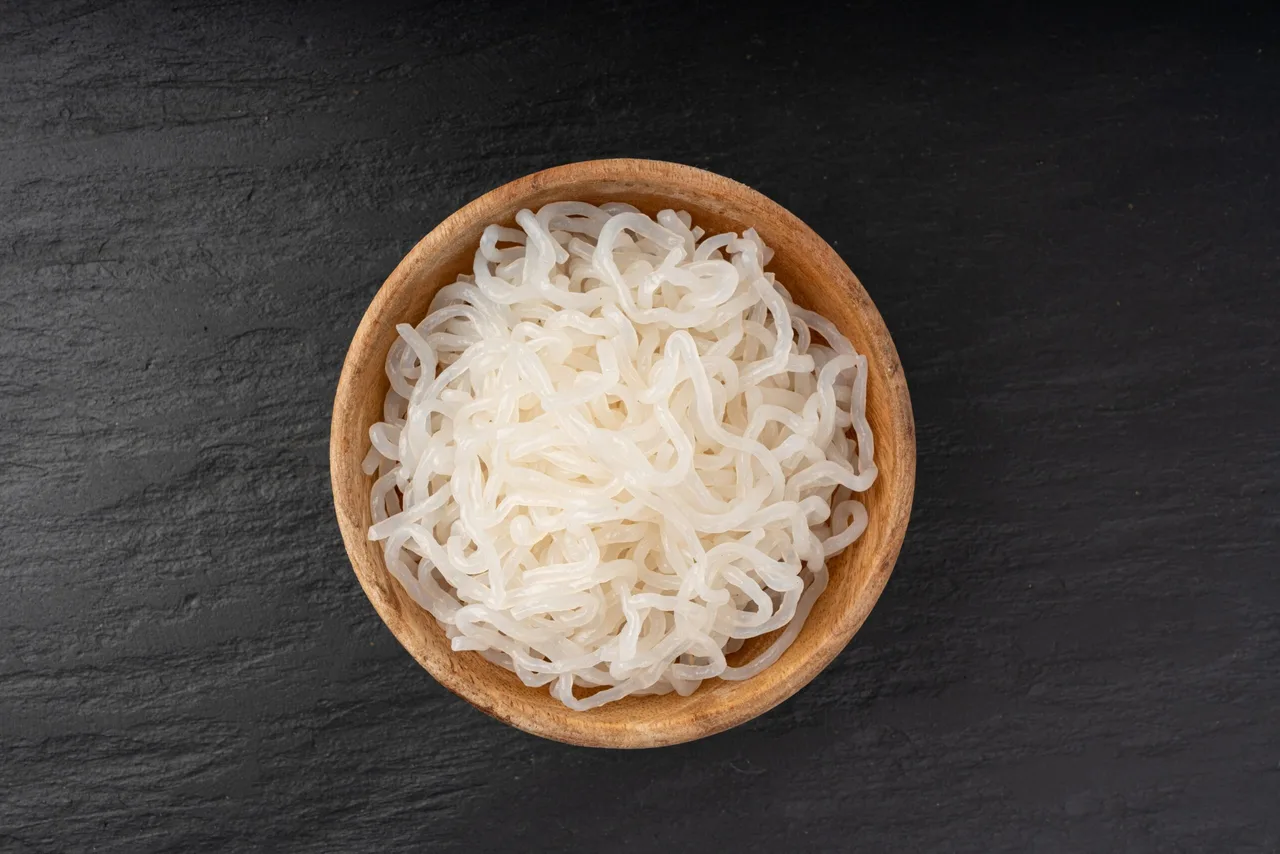
Unlike zoodles and other vegetable-based pasta substitutes, konjac noodles resemble traditional wheat pasta at first glance. But once you open the package, you’ll notice they’re glossy, slightly rubbery, and almost completely transparent. And when you take a sniff, people sometimes say they smell a bit fishy. Once you wash them off and cook them, you might find that their texture is chewy and somewhat slimy, but they don’t taste like much.
These noodles are mainly made from glucomannan, a soluble fiber extracted from the root of the konjac plant. Konjac noodles contain almost no digestible carbohydrates, which is why people often refer to them as zero-calorie noodles. Instead, they are mostly water and fiber, which is what gives them their unusually low calorie count.
This combination of low calories and high volume is exactly why konjac noodles have become so popular for weight loss and overall health. People believe that konjac noodles can help them feel full on very few calories.
But are they good for you? And are there any side effects from eating a product that’s almost pure fiber?
We’ll go through what konjac noodles are and what happens when you eat them. Plus, we’ll talk about nutrition facts, whether they have any calories, and potential health benefits and risks from eating konjac noodles with guidance from Maggie Hudspeth, Registered Dietitian Nutritionist.


What are konjac noodles made of?
Konjac noodles are made from a surprisingly simple combination of ingredients. The main one is glucomannan flour, which comes from the konjac root—a type of fiber that can absorb a lot of water and form a gel-like texture. That flour is mixed with water and a small amount of calcium hydroxide, which helps the mixture hold its shape and turn into noodles.
That’s basically it. And that simplicity is a big part of the appeal.
Unlike traditional pasta or rice, konjac noodles don’t contain refined grains or added sugars. They’re also extremely low in digestible carbohydrates. Instead of providing much energy (calories), they mostly provide bulk and fiber.
That fiber—glucomannan—is doing most of the work here. It can absorb many times its weight in water, which is why konjac noodles feel filling despite being very low in calories. Research on glucomannan has also linked it to slower digestion and improved feelings of fullness, which can make it easier to eat less overall without feeling deprived.
So while they don’t bring much in terms of protein or nutrients, they can be a useful tool—especially if you’re looking to replace higher-calorie starches with something lighter that still feels like a полноцен meal.
Konjac noodles: Nutrition facts
If you’ve heard of konjac noodles, it was probably because of how close they come to zero calories. That reputation isn’t totally off.
You can eat a pretty large portion—something that actually fills your bowl and takes up real space on your plate—for what ends up being just 10 to 20 calories. That’s why they’re often described as “volume without the calories.”
Here’s what a typical serving looks like:
Konjac noodles: Nutrition information (1 cup serving/ about 100–120g)
| Nutrient | Amount |
|---|---|
| Calories | 10–20 kcal |
| Carbohydrates | 2–3 g |
| Fiber | 2–5 g |
| Net Carbs | 0 g |
| Protein | 0–1 g |
| Fat | 0 g |
What’s interesting is why the calories are so low. Most of the carbohydrates in konjac noodles come from glucomannan fiber, which your body doesn’t fully digest. So instead of being used for energy, it mostly passes through your system—adding bulk and helping you feel full, but not contributing much in the way of calories.
That said, they’re not literally zero-calorie, and they’re not nutritionally complete either. “You’re not getting much protein, fat, or micronutrients here. But as a base—something to pair with protein, vegetables, and sauce—they can be a useful way to build a more filling meal without stacking on calories,” noted Hudspeth.

The Easy Way
to lose weight and get healthy.
See if you qualify

Nutrition can vary a bit depending on the brand (especially if tofu is added), but the overall pattern stays the same: very low calories, very high fiber, and almost no net carbs.
Health benefits of konjac noodles
Most of the potential benefits of konjac noodles come down to one ingredient: glucomannan, a type of soluble fiber found in the konjac root.
Because konjac noodles are made almost entirely from this fiber, they don’t just act like a low-calorie food—they also interact with digestion in ways that can affect fullness, appetite, and even cholesterol.
Konjac noodles don’t bring much in terms of protein or vitamins, but they can play a specific role: adding volume, slowing digestion, and helping with fullness.
That’s why they tend to show up in weight-loss conversations—not because they’re a superfood, but because they make it easier to eat less without feeling like you’re eating less.
They may keep you full by slowing digestion
One of the most noticeable effects of konjac noodles is how filling they are relative to their calories. That comes from glucomannan’s ability to absorb water and form a gel-like substance in the stomach.
This gel slows gastric emptying—basically, how quickly food leaves your stomach. When digestion moves more slowly, you tend to feel full for longer after eating.
Research on glucomannan suggests this thicker, gel-like texture can delay absorption and extend satiety signals, which helps explain why a low-calorie food like konjac noodles can still feel satisfying.
They may help keep blood sugar more stable
Because glucomannan slows digestion, it also slows how quickly carbohydrates are broken down and absorbed.
That can lead to a more gradual rise in blood sugar instead of sharp spikes and crashes. While konjac noodles themselves are extremely low in digestible carbs, this effect can still matter when they’re part of a mixed meal—helping smooth out the overall glucose response.
They may help you eat less without trying as hard
That same “gel effect” doesn’t just change how full you feel—it can also influence how much you eat overall.
In a study, researchers found that glucomannan increased feelings of fullness and, in some cases, reduced how much people ate afterward.
This research wasn’t done specifically on konjac noodles, but since they’re made from the same fiber, it helps explain why people often use them as a tool to reduce overall calorie intake without feeling deprived.
They may support heart health over time
Glucomannan has also been studied for its effects on cholesterol levels. A study found that it significantly reduced total cholesterol and LDL (“bad”) cholesterol in adults.
This isn’t unique to konjac—it’s a broader effect seen with soluble fiber. These fibers can bind to bile acids in the digestive tract, which leads the body to excrete them. To replace those bile acids, the body pulls cholesterol from the bloodstream, which can gradually lower LDL levels over time.
Are there any side effects from eating konjac noodles?
Konjac noodles are generally safe, but eating large amounts—especially if you’re not used to high-fiber foods—can lead to digestive issues like bloating, gas, or constipation.
Another consideration is balance. Since konjac noodles are very low in calories, carbs, and protein, relying on them too heavily could mean missing out on important nutrients. They’re best used as part of a varied diet rather than a full replacement for foods like whole grains, fruits, and other nutrient-dense carbs.
Hudspeth says, “I would not recommend eating konjac noodles without incorporating other food groups. Your body needs carbohydrates for energy, along with healthy fats and protein to support overall function and satiety. Even if you are trying to lose weight, you still need to eat a variety of foods, not just low-calorie ones.”
Are konjac noodles safe?
For most people, konjac noodles are safe and can be a good addition to a balanced diet. That said, their high fiber content means they should be introduced gradually, especially if your current diet is low in fiber.
Although it doesn’t apply to konjac noodles, some konjac products are banned in other countries. Konjac-based candies and jellies are restricted in Australia to reduce the risk of choking. That’s because it doesn’t dissolve easily in the mouth, so it can get stuck when people try to swallow it. But noodles aren’t considered a choking hazard and aren’t banned.
How to prepare konjac noodles
The biggest mistake people make with konjac noodles is treating them like regular pasta. If you skip the preparation steps, the texture and smell can be off-putting. Here’s how to make their texture and taste more appealing:
- Drain the noodles from the package and rinse them thoroughly under cold water for at least one to two minutes. This step removes the natural smell.
- Bring a pot of water to a boil and cook the noodles for two to three minutes. While optional, this helps improve their texture.
- Transfer the noodles to a dry pan and cook them without oil for several minutes. This step removes excess moisture and makes their texture less mushy and slimy.
- Once the noodles are dry, add your sauce, seasoning, or other ingredients. Because they absorb flavors well and taste bland on their own, they work best with bold, well-seasoned dishes.
Easy recipes for preparing Konjac noodles
Konjac noodles are healthiest when they’re part of balanced meals. Because they’re low in calories and protein, pairing them with vegetables, healthy fats, and lean proteins helps make dishes more satisfying and nutritionally complete.
Access GLP-1 Weight Loss with Noom
Explore a wide range of prescription medications supported by Noom’s program.Microdose GLP-1rx
Noom GLP-1rx
Noom GLP-1rx Plus
Wegovy®
Ozempic®

Metformin

Zepbound®

Mounjaro®
Liraglutide
Before using them in any recipe, start with the same base prep: rinse thoroughly, optionally boil for 2–3 minutes, then dry-fry in a pan for a few minutes until excess moisture is gone. From there, you can add them directly into your dish.
Tip: Konjac noodles don’t need long cooking times—they’re already cooked. Focus on removing moisture first, then letting them absorb flavor at the end.
Here are some simple ways to use them:
- Stir Fry Shirataki Noodles: In this quick stir-fry, konjac noodles are dry-fried first, then tossed with baby bok choy, garlic, and a soy-sesame sauce. The noodles are added at the end and cooked briefly so they absorb flavor without becoming watery.
- Low Carb Spaghetti Bolognese: This recipe uses konjac (shirataki) noodles as a low-carb substitute for traditional spaghetti, paired with a ground turkey bolognese sauce. The noodles are first dry-fried for several minutes to remove excess moisture, then added to the cooked sauce and simmered briefly so they absorb flavor and take on a more pasta-like texture.
- Chicken Soup with Konjac Noodles: In this light, broth-based soup, konjac noodles are added near the end of cooking so they heat through without becoming overcooked. They absorb the flavors of the chicken broth, garlic, and ginger while maintaining their firm texture, making them a low-carb substitute for traditional noodles.
Konjac noodles vs. other sources of carbohydrates
Konjac noodles are often compared to foods like pasta and rice—but they’re really doing something completely different nutritionally. Instead of acting as a primary source of energy (like most carbohydrates do), they’re mostly made up of fiber and water.
That’s why the differences can feel so extreme. A bowl of pasta or rice is designed to fuel you, with a meaningful amount of carbs, calories, and some protein. Konjac noodles, on the other hand, are closer to a “volume food”—they take up space, help you feel full, but contribute very little in terms of calories or macronutrients.
At the same time, this isn’t about one being “better” than the others. As Hudspeth emphasizes, you don’t need to replace foods like pasta or rice to eat healthfully. Whole foods like whole wheat pasta actually provide more fiber and nutrients, while konjac noodles can be a helpful option when you’re specifically trying to lower calories or increase fullness. It’s about using each food where it fits, not swapping everything out.
Seeing the numbers side by side makes that contrast a lot clearer:
Nutrition comparison (per about 1 cup cooked or prepared)
| Food | Calories | Carbohydrates | Fiber | Net Carbs | Protein | Fat |
|---|---|---|---|---|---|---|
| Konjac noodles | 10–20 | 2–3 g | 2–5 g | 0 g | 0–1 g | 0 g |
| Traditional pasta | 200 | 40–45 g | 2–3 g | 38–42 g | 7–8 g | 1–2 g |
| Whole wheat pasta | 175–200 | 35–40 g | 5–7 g | 30–35 g | 7–8 g | 1.5–2 g |
| White rice | 200 | 45 g | 0.5–1 g | 44 g | 4 g | 0.5 g |
| Brown rice | 215 | 45 g | 3–4 g | 41–42 g | 5 g | 1.5–2 g |
What this actually means (in real life):
- Carbohydrates: Konjac noodles are the outlier—they have almost no net carbs because most of their carbs come from fiber. Pasta and rice, on the other hand, are built to provide energy, which is why they land closer to 40–45 grams per cup.
- Fiber: Konjac noodles and whole wheat pasta are the standouts, but in different ways. Konjac is almost entirely soluble fiber (glucomannan), which helps with fullness. Whole wheat pasta offers a mix of fiber plus more nutrients overall. Brown rice sits in the middle, while white rice is lower due to processing.
- Protein: This is where konjac noodles fall short. Pasta and grains bring at least some protein to the table, while konjac noodles contribute almost none—so they work better as a base than a full meal.
FAQ about konjac noodles
What are konjac noodles?
Konjac noodles are low-calorie, high-fiber noodles made from the root of the konjac plant. They’re primarily composed of glucomannan, a soluble fiber that absorbs water and helps promote fullness. They’re often used as a low-carb alternative to pasta or rice.
How are konjac noodles so low in calories?
Konjac noodles are made mostly of water and glucomannan fiber, which provides bulk without significant calories. Because fiber isn’t fully digested by the body, it contributes very little energy, making these noodles extremely low in calories compared to traditional pasta.
Are konjac noodles keto?
Yes, konjac noodles are generally considered keto-friendly. They contain very few digestible carbohydrates (net carbs), making them a popular choice for people following low-carb or diets.
What’s the best way to cook konjac noodles?
Konjac noodles should be rinsed thoroughly to remove their packaging liquid, then optionally boiled for a few minutes. For best results, dry-fry them in a pan before adding sauce, which improves both texture and flavor. Once prepared, they can be added to stir-fries, soups, or pasta-style dishes where they absorb surrounding flavors.
Are konjac noodles safe to eat?
Yes, konjac noodles are safe for most people when eaten properly. Because they’re very high in fiber, it’s important to drink enough water and introduce them gradually to avoid digestive discomfort.
Can I eat konjac noodles every day?
As long as you tolerate them, you can eat konjac noodles regularly, but it’s best to include them as part of a balanced diet. Because they’re low in protein and nutrients, pair them with vegetables, healthy fats, and protein to make your meals more complete.
Can a person with diverticulitis have konjac?
Konjac has fiber that could make diverticulitis more painful. Some people may tolerate fiber well, but it’s best to check with a healthcare provider.
Is konjac banned in some countries?
Konjac noodles themselves are not banned. However, certain konjac-based jelly products have been restricted in countries like Australia due to choking risks. The noodles are not considered a choking risk.
The bottom line: Konjac noodles are low in calories but not nutritionally complete
Konjac noodles are a low-calorie, high-fiber option that can help you feel full and reduce overall calorie intake. They work best as part of a balanced diet—not as a complete replacement for more nutrient-dense foods like whole grains. Konjac noodles don’t provide much protein, healthy fats, carbs, or many micronutrients.
It’s more helpful to think of them as a strategic swap. They can replace higher-calorie, lower-fiber foods in certain meals, helping you feel full while reducing overall calorie intake.
Used this way—as part of a balanced plate that includes protein, healthy fats, and other nutrient-dense foods—they can be a practical and sustainable addition to your routine, rather than a short-term diet fix.
That’s the bigger picture: lasting results don’t come from one low-calorie food, but from building habits that work for you over time. Programs like Noom focus on that behavior change—helping you understand hunger, make more balanced choices, and create routines you can actually stick with.
Realistically, you don’t need to swap all your carbohydrates for konjac noodles. Download the Noom app for free wellness tips and help building changes that last.
Editorial standards
At Noom, we’re committed to providing health information that’s grounded in reliable science and expert review. Our content is created with the support of qualified professionals and based on well-established research from trusted medical and scientific organizations. Learn more about the experts behind our content on our Health Expert Team page.