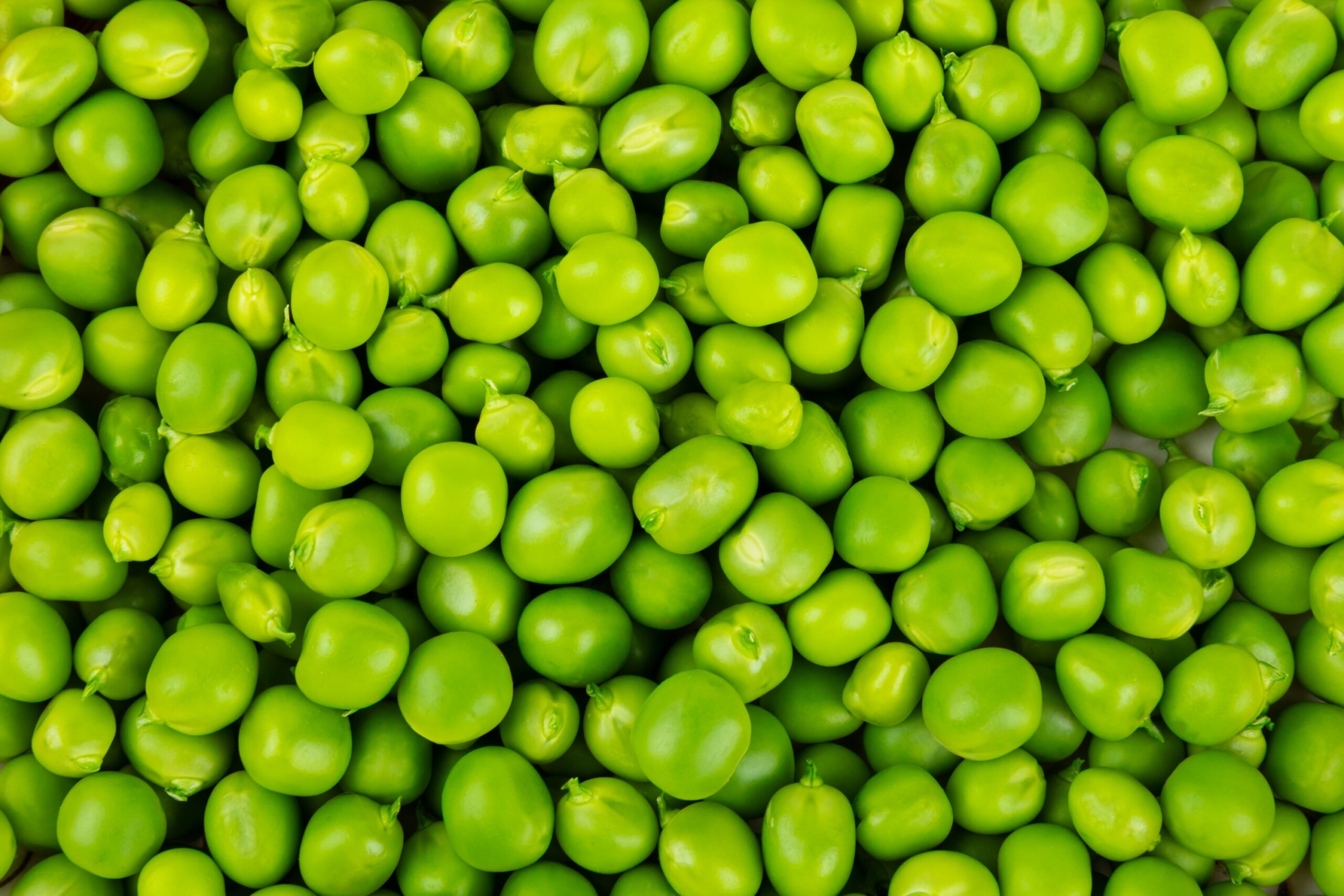
Green peas are a freezer-aisle staple for good reason. They’re sweet, quick to cook, and easy to add to fried rice, soups, pasta, and salads. Plus, they add color and volume to a plate without adding many calories.
Their nutrition is impressive, too. A half cup of cooked green peas has about 67 calories, 4 grams of fiber, and 4 grams of protein—an unusual combination for a vegetable. Peas also supply vitamin K, manganese, and thiamin. And while they’re a starchy vegetable, with more carbs and calories than broccoli or green beans, they can also help make meals more satisfying.
That fiber-and-protein combination is also why peas have taken off on social media. So-called “pea propaganda” videos are making the case for reconsidering the humble pea, taking it from boring staple to wellness superstar. People are using peas as the base of salads, tossing them into bowls, and warming them with Parmesan for a quick snack. They’ve even become a popular way to practice “fibermaxxing,” the trend of adding more fiber to everyday meals.
But do peas deserve their newfound stardom? And are they actually good for weight loss? Here’s what the research says.
✅ Quick answer: Are green peas good for weight loss?
Yes. Green peas are a relatively low-calorie starchy vegetable with about 4 grams of fiber and 4 grams of protein per half-cup serving. That combination can help you feel fuller for longer, all for about 67 calories. Peas have more carbs than many other vegetables (about 12 grams per half cup), but their fiber helps slow digestion and supports steadier blood sugar levels. That makes them a satisfying addition to most weight loss plans.

The Easy Way
to lose weight and get healthy.
🚀 Weight-loss benefits of green peas
- Fiber helps you stay full longer. A half cup of green peas has about 4 grams of fiber, or roughly 16% of the recommended daily intake of 25 grams. Fiber adds bulk to meals and can slow digestion, helping you feel satisfied longer. That may make it easier to manage portions and avoid getting hungry between meals.
- Protein makes meals more satisfying. A half cup of peas has about 4 grams of protein, roughly twice as much as the same amount of cooked broccoli. Protein helps you feel full and plays an important role in preserving muscle during weight loss. While peas aren’t a major protein source on their own, they’re an easy way to add a little extra to your meals.
- Water content adds volume without many calories. Cooked green peas are about 78% water, which helps keep their calorie density relatively low. A half cup has about 67 calories, compared with roughly 110 calories in a half cup of cooked pasta. Mixing peas into pasta or rice dishes can make portions feel more substantial while adding fiber and keeping calories in check.
⚠️ Things to know about eating green peas
- Peas have more carbs than some vegetables. A half cup has about 12 grams of carbohydrates, including 4 grams of fiber and about 5 grams of natural sugar. As a starchy vegetable, peas have more carbs than broccoli or green beans, but they also provide fiber, protein, and important nutrients. There’s no reason to avoid them for weight loss, though you may want to keep portions in mind if you’re tracking carbs.
- Eating a lot at once may cause bloating. Peas contain fermentable carbohydrates called FODMAPs, which can cause gas and bloating in some people. Eating a whole bag of peas in one sitting, as some viral pea salad recipes suggest, might leave you feeling uncomfortable. If you’re not used to eating much fiber, start with smaller portions and gradually increase your intake. People with irritable bowel syndrome (IBS) may be especially sensitive.
- How you prepare them matters. Fresh, frozen, and canned peas are all nutritious options, though canned varieties may contain added sodium. Look for no-salt-added versions or rinse canned peas before eating. Butter, creamy sauces, and fried coatings can also add calories, but there’s nothing wrong with a little Parmesan or olive oil to make your peas more delicious.
🥗 Green peas: Nutrition information (per ½ cup, cooked)
| Nutrient | Amount | % RDA* |
|---|---|---|
| Calories | 67 calories | 3% |
| Protein | 4.3 g | 9% |
| Total carbs | 12.5 g | 5% |
| Fiber | 4.4 g | 16% |
| Sugars | 4.7 g | — |
| Total fat | 0.2 g | <1% |
| – Saturated fat | 0.03 g | <1% |
| – Monounsaturated fat | 0.03 g | — |
| – Polyunsaturated fat | 0.09 g | — |
| Omega-3 | 0.03 g | — |
| Omega-6 | 0.06 g | — |
*Recommended dietary allowance (RDA) is defined as the average daily amount of nutrients needed to meet the requirements of nearly all healthy people in a specific group. Percentages for calories and macronutrients are based on a 2,000-calorie diet. One cup of peas has double these amounts.
Green peas pack a surprising amount of nutrition into a small serving. A half cup provides about 16% of your daily fiber needs and more than 4 grams of protein, all for just 67 calories. That’s an impressive combination for a vegetable. For comparison, a half cup of cooked green beans has about 2 grams of fiber and 1 gram of protein.
Peas also provide carbohydrates for energy and are naturally low in fat. Their combination of fiber and protein can help make meals more satisfying, whether you’re adding them to pasta, tossing them into salads, or enjoying them as a side dish.
💊 Vitamins & minerals in green peas (per ½ cup, cooked)
| Vitamin/Mineral | Amount | % RDA* |
|---|---|---|
| Manganese | 0.43 mg | 18% |
| Vitamin K | 21 µg | 17% |
| Thiamin (B1) | 0.2 mg | 17% |
| Copper | 0.14 mg | 16% |
| Folate | 50 µg DFE | 13% |
| Vitamin C | 12 mg | 13% |
| Niacin (B3) | 1.6 mg | 10% |
| Riboflavin (B2) | 0.1 mg | 9% |
| Zinc | 1.0 mg | 9% |
| Vitamin B6 | 0.14 mg | 8% |
| Magnesium | 31 mg | 7% |
| Phosphorus | 94 mg | 7% |
| Iron | 1.2 mg | 7% |
| Potassium | 215 mg | 5% |
| Choline | 22 mg | 4% |
| Vitamin A | 30 µg RAE | 3% |
| Selenium | 1.4 µg | 3% |
Green peas offer more than fiber and protein. They’re also a good source of several vitamins and minerals that support everything from energy production to bone health.
- Manganese: Helps your body process carbohydrates and protein and supports healthy bones.
- Vitamin K: Plays an important role in blood clotting and bone health.
- Thiamin (vitamin B1): Helps your body turn food into energy and supports normal nerve function.
- Folate: Supports cell growth and the production of healthy red blood cells.
- Vitamin C: Supports immune health and helps your body absorb the plant-based iron found in peas.
Peas also provide smaller amounts of magnesium, potassium, zinc, and other B vitamins, making them an easy way to add a variety of nutrients to your meals.
🔍 Green peas nutrient breakdown
Glycemic index (GI) of green peas
Glycemic index: Low
💡 What this means: The glycemic index ranks foods from 0 to 100 based on how quickly they raise blood sugar. Foods with a GI of 55 or lower are considered low-GI. Green peas generally fall into this category, and their fiber and protein can help slow digestion and support a more gradual rise in blood sugar. GI values can vary depending on the variety and how peas are prepared.
Are green peas high in protein?
✔️ Yes, for a vegetable. Green peas provide about 4 grams of protein per half cup, more than many other vegetables. While peas aren’t as protein-rich as foods like beans or soy, they’re an easy way to add more plant-based protein to meals.
Higher-protein alternatives: Edamame | Lentils | Tofu
Are green peas high in fiber?
✔️ Yes. A half cup of green peas provides about 4 grams of fiber, or roughly 16% of the recommended daily intake. Peas contain both soluble fiber, which helps slow digestion, and insoluble fiber, which supports regular bowel movements.
The Easy Way
to lose weight and get healthy.
💡 Tip: If you’re increasing your fiber intake, start with smaller portions and drink plenty of water to help prevent digestive discomfort.
How many carbs are in green peas?
About 12 grams per half cup. Green peas are a starchy vegetable, so they naturally contain more carbohydrates than broccoli, leafy greens, or green beans. But those carbs provide energy, and peas also deliver fiber and protein, making them a nutritious, satisfying addition to meals.
💡 Tip: Toss peas into pasta, rice, or grain bowls to add color, texture, and extra fiber.
Are green peas gluten-free?
✔️ Yes. Plain green peas are naturally gluten-free. If you avoid gluten, check the labels on seasoned peas, frozen blends with sauces, and pea-based snacks, which may contain gluten-containing ingredients.
Are green peas good for fat loss?
✔️ Yes, they can support it. No single food burns body fat, but green peas can be part of an eating pattern that supports fat loss. They’re relatively low in calories, versatile, and easy to incorporate into balanced meals. Ultimately, fat loss depends on your overall eating habits and maintaining a calorie deficit over time.
🍽️ Diet compatibility: Which diets include green peas?
| Diet | Compatible? | Why |
|---|---|---|
| Keto | ⚠️ Limited | A half cup has about 8 grams of net carbs, which may be a significant portion of a strict keto diet’s daily carb allowance. Smaller portions can fit depending on your goals. |
| Paleo | ⚠️ Depends | Peas are technically legumes, which traditional Paleo diets generally exclude. However, some less restrictive versions allow fresh green peas and snap peas. |
| Mediterranean | ✅ Yes | Peas fit naturally into Mediterranean eating, which emphasizes vegetables, legumes, whole grains, and other plant-based foods. |
| Vegan | ✅ Yes | Peas are entirely plant-based and provide fiber, protein, iron, and other nutrients that support a balanced vegan diet. |
| Gluten-free | ✅ Yes | Plain green peas are naturally gluten-free. Check labels on seasoned or processed products for gluten-containing ingredients. |
Green peas fit easily into most eating patterns, from Mediterranean and plant-based diets to gluten-free eating. Even if you’re following a lower-carb plan, you don’t necessarily have to skip them. It’s all about finding a portion that works for you.
And because frozen peas are just as nutritious as fresh ones, they’re an easy, affordable ingredient to keep on hand for quick meals.
🌟 Are green peas healthy? What are the health benefits?
Metabolic health: Are green peas good for your metabolism?
- Do green peas boost metabolism? ⚖️ Not directly. Peas contain protein, which takes slightly more energy to digest than carbohydrates or fat. But the amount of protein in a serving of peas isn’t enough to noticeably increase how many calories your body burns. Their biggest benefit for weight management comes from their fiber and protein, which can help you feel satisfied after eating.
- Can green peas improve insulin sensitivity? 🔍 Possibly. Some research suggests peas may support healthy blood sugar regulation. In one 28-day study, adults with overweight who ate foods made with whole yellow pea flour had improvements in fasting insulin and insulin resistance compared with those eating wheat flour. However, the study didn’t test whole green peas, so more research is needed.
- Do green peas affect fat storage? ⚖️ Not directly. No food can prevent your body from storing fat on its own. But the fiber in peas can help slow digestion and support more gradual blood sugar changes after meals. Combined with their relatively low calorie content, this makes peas a nutritious choice for a weight-loss eating plan.
Cholesterol impact: Do green peas affect cholesterol levels?
- Can green peas lower LDL (bad) cholesterol? ✔️ Possibly. A meta-analysis of 26 trials found that eating about one serving of pulses (beans, lentils, chickpeas, and dried peas) daily lowered LDL cholesterol by approximately 5%. While green peas weren’t studied extensively on their own, their fiber content makes them a heart-healthy addition to meals.
- Do green peas raise HDL (good) cholesterol? ⚖️ Not significantly. Research on pulses hasn’t found consistent improvements in HDL cholesterol. However, HDL is just one measure of heart health, and foods don’t need to raise it to be beneficial.
- Are green peas good for heart health? ✔️ Yes. Green peas provide fiber and potassium and contain very little saturated fat. These qualities make them a nutritious addition to a heart-healthy eating pattern.
💡 Tip: Try tossing peas with olive oil, lemon, and herbs for a simple side dish. Frozen peas are a convenient option, and if you prefer canned, look for no-salt-added varieties.
Can you eat green peas in a calorie deficit?
✔️ Absolutely. A calorie deficit means eating fewer calories than your body burns, and green peas fit right in. A half cup has just 67 calories, along with fiber and protein that can help keep you satisfied.
💡 Tip: Add peas to meals you already enjoy, like pasta, eggs, soups, and salads, for extra fiber and volume.
Are green peas rich in antioxidants?
✔️ Yes. Green peas contain antioxidants, including vitamin C, lutein, zeaxanthin, and polyphenols. These compounds help protect your cells from damage caused by free radicals, unstable molecules that can contribute to oxidative stress.
Are green peas good for gut health and digestion?
✔️ Yes. With about 4 grams of fiber per half cup, peas can help support regular bowel movements and feed beneficial bacteria in your gut. As these bacteria break down certain fibers, they produce short-chain fatty acids that help nourish the cells lining your colon.
💡 Tip: Peas contain fermentable carbohydrates that can cause gas or bloating in some people. If you’re not used to eating much fiber, start with smaller portions and gradually increase your intake.
Do green peas help you feel full and less hungry?
✔️ Yes. The combination of fiber, protein, and water in peas can help make meals more satisfying. A review of nine trials found that meals containing pulses, such as dried peas, increased feelings of fullness by about 31% compared with control meals. While the research didn’t focus specifically on green peas, their fiber and protein may offer similar benefits.
💡 Tip: Toss peas into meals with eggs, chicken, or fish for an extra boost of fiber and protein.
Do green peas help reduce inflammation?
🔍 Possibly. Peas contain antioxidants and plant compounds that help protect cells from oxidative stress. Higher-fiber diets have also been linked to lower levels of inflammation, but there’s not enough research to say whether eating green peas directly reduces inflammation.
Are green peas good for brain health?
🔍 They provide helpful nutrients. Green peas contain folate and thiamin, which support normal brain and nervous system function. However, there’s no direct evidence that eating peas improves memory or prevents cognitive decline.
Can green peas improve skin and hair health?
✔️ They can contribute. Peas provide vitamin C, which helps your body make collagen, along with protein, iron, and zinc, which support healthy hair. While peas won’t transform your skin or hair on their own, they’re a nutritious addition to a balanced diet.
🍽️ Best ways to eat green peas for weight loss
- Try a viral pea salad. Give the “pea propaganda” trend a try by tossing warm or chilled peas with shredded chicken, salmon, or tofu, plus olive oil, lemon, and a sprinkle of Parmesan. Add a handful of arugula or other leafy greens for extra volume and variety. For an even quicker option, stir frozen peas into scrambled eggs, soups, or stir-fries during the last few minutes of cooking.
- Mix peas into pasta or rice dishes. Try replacing a third to half of your usual pasta or rice with peas. A half cup of cooked pasta has about 110 calories and 1 gram of fiber, compared with 67 calories and 4 grams of fiber in peas. You’ll still get a satisfying bowl of pasta or rice, with a little more fiber and protein.
- Experiment with simple seasonings. Peas are naturally sweet, so they don’t need much to taste delicious. Try tossing them with fresh mint, garlic, lemon juice, a drizzle of olive oil, or a sprinkle of Parmesan. Butter and creamy sauces can work, too—just keep portions in mind if you’re watching calories.
🍏 Best alternatives & comparisons (per ½ cup, cooked)
How do green peas stack up against other vegetables and plant-based proteins? It depends on what you’re looking for. Some vegetables have fewer calories, while others offer more protein or fiber.
Green peas are also a little unusual. Botanically, they’re legumes, but nutritionally, they’re classified as starchy vegetables. That’s because we typically eat them fresh or frozen, while foods like lentils, chickpeas, and dried peas are generally classified as pulses, the dried seeds of legumes.
Access GLP-1 Weight Loss with Noom
Explore a wide range of prescription medications supported by Noom’s program.
Microdose GLP-1rx
Noom GLP-1rx
Noom GLP-1rx Plus
Wegovy®
Ozempic®
Metformin
Zepbound®
Mounjaro®
Liraglutide
The tables below compare a half-cup serving of each food, cooked without added oil or butter.
Green peas vs. other legumes
| Food | Calories | Carbs | Fiber | Protein | Fat |
|---|---|---|---|---|---|
| Green peas | 67 | 12.5 g | 4.4 g | 4.3 g | 0.2 g |
| Edamame (shelled) | 94 | 6.9 g | 4.0 g | 9.2 g | 4.1 g |
| Lentils | 115 | 19.9 g | 7.8 g | 8.9 g | 0.4 g |
| Chickpeas | 134 | 22.5 g | 6.2 g | 7.3 g | 2.1 g |
| Black beans | 114 | 20.4 g | 7.5 g | 7.6 g | 0.5 g |
| Kidney beans | 112 | 20.1 g | 6.5 g | 7.7 g | 0.4 g |
Green peas have the fewest calories of the group, but they still pack an impressive amount of fiber and protein into a half-cup serving. Here’s how the others compare:
- Edamame: Has more than twice the protein of green peas, making it a great option when you want to boost the plant-based protein in a meal.
- Lentils: Provide nearly twice the fiber and protein of peas, making them especially satisfying in soups, salads, and grain bowls.
- Chickpeas: Offer more protein and fiber, along with a hearty texture that works well in salads, roasted snacks, and hummus.
- Black beans: Have nearly twice the protein and fiber of green peas. They’re a great addition to burrito bowls, soups, and salads.
- Kidney beans: Provide more protein and fiber than peas, plus iron and folate. Their firm texture makes them ideal for chili, stews, and grain bowls.
The takeaway: Green peas are a nutritious choice when you want to add fiber, protein, and volume to a meal without many calories. Beans, lentils, and edamame offer more protein per serving, making them useful when you want a more substantial plant-based protein source. There’s room for all of them in a healthy eating plan.
Green peas vs. non-starchy vegetables
| Food | Calories | Carbs | Fiber | Protein | Fat |
|---|---|---|---|---|---|
| Green peas | 67 | 12.5 g | 4.4 g | 4.3 g | 0.2 g |
| Broccoli (chopped) | 28 | 5.6 g | 2.6 g | 1.9 g | 0.3 g |
| Green beans | 22 | 5.0 g | 2.0 g | 1.2 g | 0.2 g |
| Spinach | 21 | 3.4 g | 2.2 g | 2.7 g | 0.2 g |
| Zucchini | 14 | 2.5 g | 0.9 g | 1.0 g | 0.2 g |
| Asparagus | 20 | 3.7 g | 1.8 g | 2.2 g | 0.2 g |
Nonstarchy vegetables generally have fewer calories than green peas, but that doesn’t necessarily make them better for weight loss. Peas provide more fiber and protein per serving than many vegetables, which can help make meals more satisfying.
Here’s how they compare:
- Broccoli: Provides fiber and vitamin C with fewer calories than peas. It’s a great choice for adding volume to meals.
- Green beans: Have a similar mild flavor and work well in many of the same dishes as peas, but provide less protein and fiber.
- Spinach: Offers folate, vitamin K, and iron with very few calories. It also cooks down considerably, so a half cup of cooked spinach is more substantial than it might sound.
- Zucchini: Has a high water content and mild flavor, making it easy to add to pasta, soups, and stir-fries.
- Asparagus: Provides fiber, folate, and other nutrients and makes a satisfying side dish.
Frequently asked questions about green peas and weight loss
How many calories are in 100 grams of green peas?
There are about 84 calories in 100 grams of cooked green peas. For comparison, a half cup has about 67 calories, and a full cup has about 134. Peas provide carbohydrates for energy, along with fiber and protein that can help make meals more satisfying.
Are green peas a pulse or a bean?
Green peas are legumes, the same plant family as beans, lentils, and chickpeas. But unlike pulses, which are harvested as dried seeds, green peas are picked while still young and tender. That’s why they’re classified as starchy vegetables in U.S. dietary guidelines. Dried peas and split peas are considered pulses, while fresh and frozen green peas are not.
Are green peas keto-friendly?
Green peas can fit into some lower-carb diets, but portions may be limited on strict keto plans. A half cup has about 8 grams of net carbs, while a quarter cup has about 4 grams. Snow peas and sugar snap peas contain fewer carbs and may be easier to incorporate into a keto eating plan.
Are frozen green peas as healthy as fresh?
Yes! Frozen peas are typically frozen shortly after harvest, helping preserve their nutrients. They’re nutritionally comparable to fresh peas, with similar amounts of fiber, protein, and vitamins. Plus, they keep for months, making them an affordable and convenient option.
Can you eat green peas every day?
Absolutely. For most people, eating green peas daily is a healthy way to get more fiber, protein, and nutrients. As with any food, variety matters, so enjoy them alongside other vegetables and plant-based foods. If you’re sensitive to fiber, start with smaller portions. People taking warfarin should keep their vitamin K intake consistent.
Do green peas cause gas and bloating?
They can, especially if you eat a lot at once. Peas contain fermentable carbohydrates that gut bacteria break down, producing gas. If you’re not used to eating much fiber, start with a quarter- to half-cup serving and gradually increase your intake. Cooking peas until tender may also make them easier to digest.
Is the viral pea salad good for weight loss?
It can be! The viral “pea propaganda” salad combines fiber-rich peas with ingredients like chicken, salmon, olive oil, lemon, and Parmesan. Adding protein and healthy fats can make it a satisfying meal, while mixing in leafy greens or other vegetables adds volume and variety. Just keep portions in mind, especially with calorie-dense additions like oil and cheese.
🧠 The bottom line: Green peas are excellent for weight loss
Green peas deserve their moment in the spotlight. With just 67 calories and about 4 grams each of fiber and protein per half cup, they’re a nutritious, satisfying addition to almost any meal. They also provide important vitamins and minerals, and their combination of fiber and protein can help you feel fuller for longer.
Whether you’re trying the viral pea salad, tossing peas into pasta, or enjoying them as a simple side dish, they’re an easy, affordable way to add more nutrition to your plate. No single food guarantees weight loss, but green peas can absolutely be part of a healthy, sustainable approach.
The Easy Way
to lose weight and get healthy.
📖 Scientific evidence
- Green peas may support healthy blood sugar levels. (Frontiers in Nutrition, 2024) In a study comparing green peas with kale, researchers found that women with obesity who consumed freeze-dried green peas experienced improvements in HbA1c, a measure of long-term blood sugar control. While the findings are promising, the study was small and used freeze-dried peas rather than typical servings of cooked peas. More research is needed to understand whether eating green peas regularly offers similar benefits.
- Green peas may help with weight loss. (American Journal of Clinical Nutrition, 2016) In a review of 21 studies, researchers found that people who ate about one serving of pulses (dried peas, beans, lentils, or chickpeas) daily lost about ¾ of a pound more over six weeks than those who didn’t. Interestingly, the benefit was seen even when participants weren’t intentionally cutting calories. While the research didn’t focus specifically on green peas, it suggests that adding more fiber- and protein-rich legumes to your meals may help support weight management.
- Green peas may help you feel fuller. (Obesity, 2014) In a review of nine studies, researchers found that people felt 31% fuller after eating meals containing pulses (dried peas, beans, and lentils) compared with meals without them. While participants didn’t eat less at their next meal, feeling more satisfied after eating may make it easier to stick with a weight loss plan. The research didn’t focus specifically on green peas, but their combination of fiber and protein may offer similar benefits.
- Green peas may support heart health. (CMAJ, 2014) In a review of 26 studies involving more than 1,000 people, researchers found that eating about one serving of pulses (dried peas, beans, lentils, or chickpeas) daily lowered LDL (“bad”) cholesterol by about 5%. While the studies were relatively small and short, the findings suggest that regularly eating legumes may help support healthy cholesterol levels. The research included dried peas rather than specifically studying green peas, but green peas also provide fiber and other heart-healthy nutrients.
- Green peas can help you get more fiber. (The Lancet, 2019) In a large review of 185 observational studies and 58 clinical trials, researchers found that eating more fiber was associated with lower body weight, blood pressure, and cholesterol levels. The greatest benefits were seen when people consumed about 25 to 29 grams of fiber daily. With about 4 grams of fiber per half cup, green peas are an easy way to work toward that goal while supporting weight management and overall health.
Editorial standards
At Noom, we’re committed to providing health information that’s grounded in reliable science and expert review. Our content is created with the support of qualified professionals and based on well-established research from trusted medical and scientific organizations. Learn more about the experts behind our content on our Health Expert Team page.