For much of my career, I practiced medicine the way I was trained: identify the disease, follow the guideline, prescribe the treatment. We were good at telling patients what they should do. We were not nearly as good at helping them figure out how. So I moved deeper into lifestyle and behavioral medicine and came to believe that we should build habits first and add medication when that was not enough.
GLP-1s have complicated that view for me. In some patients, the medication itself seems to make behavior change more possible. That may mean the best time to build habits is not when treatment is failing, but when it is working. The moment patients appear to need behavioral support least may be when it can do the most good.
That paradox just became urgent. On July 1, Medicare launched its GLP-1 Bridge, giving eligible beneficiaries access to certain weight-loss medications for about $50 a month. But the Bridge is what its name implies: temporary. It is scheduled to end on December 31, 2027.
Medicine therefore has an unusual experiment underway: more patients will gain access to powerful medications through a program with a built-in endpoint. We should be asking now what we want patients to have at the other end of it. Weight regain after discontinuation is common, which makes that question especially important.
We usually describe these drugs in metabolic terms: lower glucose, less appetite, weight loss. But listen to patients and another story emerges.
Noom’s Most Powerful Program
A dual-pathway GLP-1 and behavior change for lasting results.
Many do not simply say, “I am less hungry.” They say the background negotiation with food has gone quiet. They can pass a bakery without mentally arguing with themselves. The cookies are still in the kitchen; they just do not command the same share of attention.
This experience, often called reduced “food noise,” suggests that GLP-1s may be changing more than appetite. They may be changing the conditions in which behavior occurs.
Neuroscience is starting to describe how. In a Nature paper this spring, researchers found that small-molecule GLP-1 drugs acted partly through central amygdala neurons that reduced palatable-food intake by suppressing dopamine release in the nucleus accumbens, a reward circuit distinct from homeostatic hunger pathways. It is a mouse study, and the human relevance is unproven. But it aligns with a randomized human tirzepatide trial reporting fewer cravings and less responsiveness to food cues: food becoming less compelling, not merely less urgent.
When food noise quiets, some patients seem to regain cognitive bandwidth consumed by cravings and self-negotiation. I think of this as lowering the “activation energy” required for change.
For someone who has spent years negotiating with hunger and food cues, a GLP-1 may lower that activation energy dramatically. But a quieter reward signal does not teach someone how to eat enough protein, preserve muscle, strength-train, sleep better or handle stress differently. Medication can change the conditions in which decisions are made; it cannot turn decisions into routines.
That creates a paradox for obesity care: the moment when a patient seems to need the least behavioral help may be the moment when new behaviors are easiest to practice.
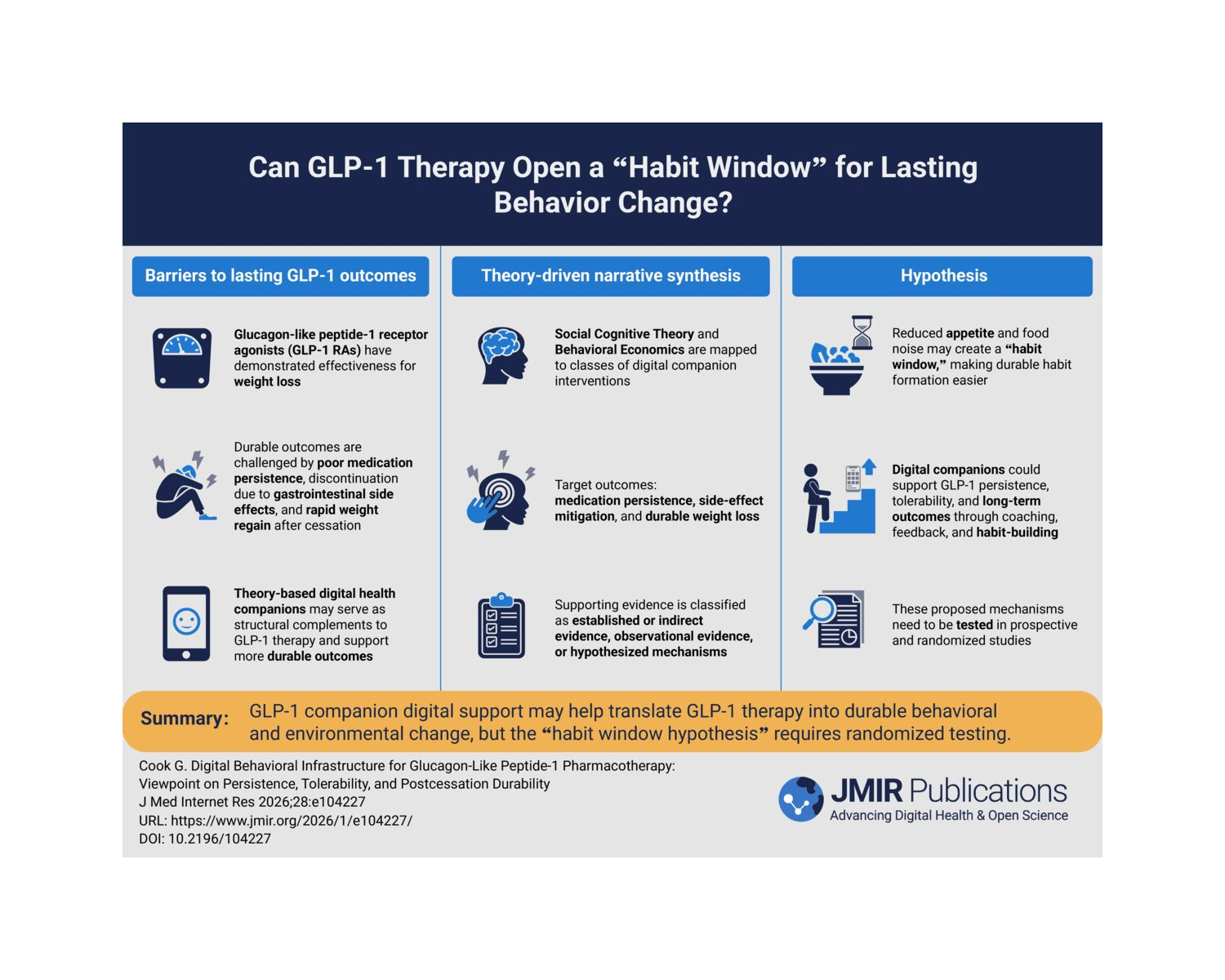
I think of this as a “habit window.” It is a hypothesis, not an established mechanism. The idea is that when hunger, cravings, and food cues create less friction, the same effort may go further.
Motivation comes and goes. What matters is whether the environment makes the healthier action easier to repeat.
Willpower is not the mechanism. Structure is.
For decades, patients were told their weight was a discipline problem, and obesity medicine has spent years dismantling that idea. A habit window does not return us to it. The point is not to try harder while the drug works. It is to build scaffolding around a period when learning and repetition may be easier.
The scaffolding is usually unglamorous: protein at breakfast, a walk after lunch, resistance training, a more consistent bedtime. The key is making each behavior small enough to repeat until something that required a decision becomes closer to a default.
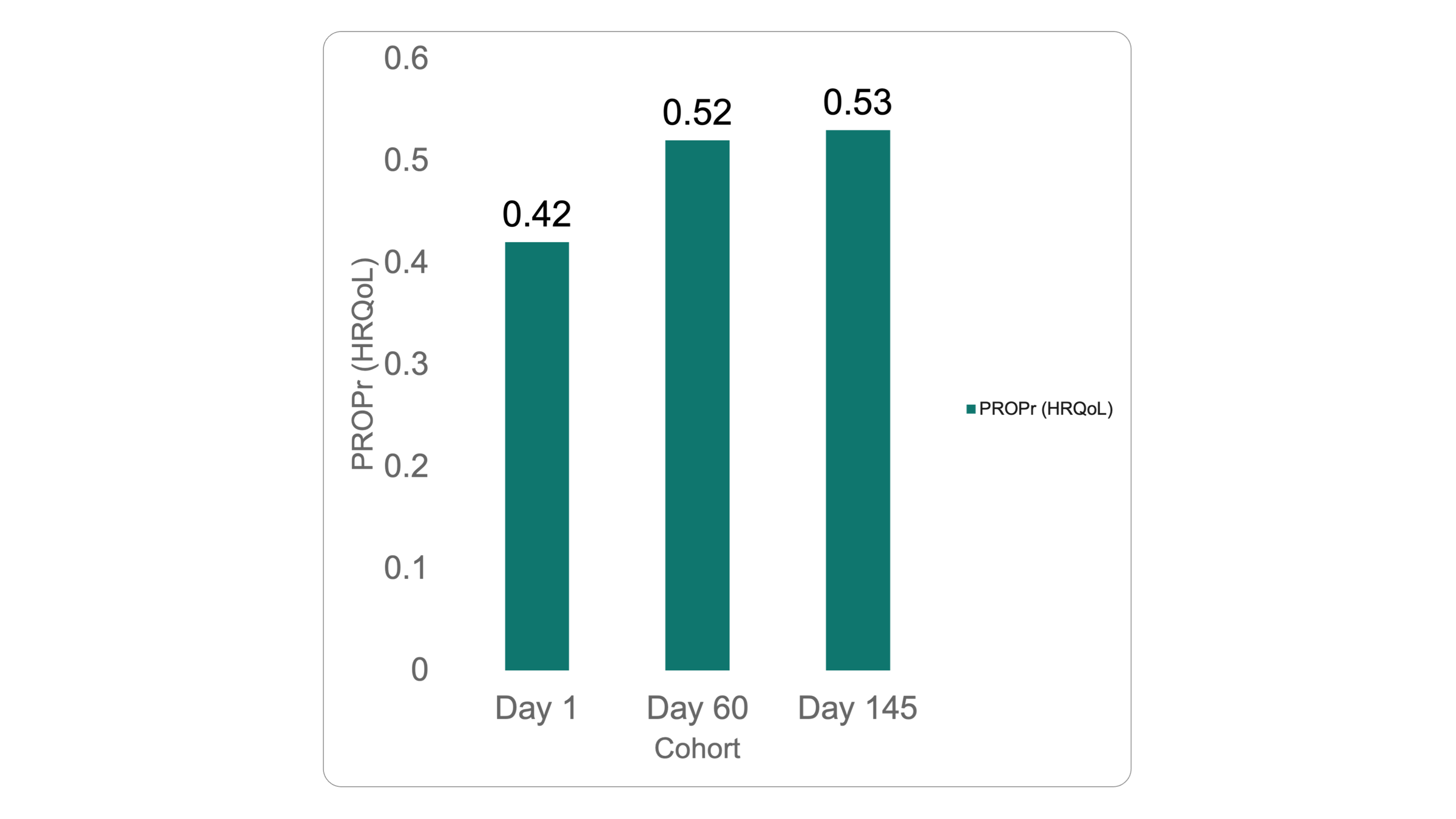
The published maintenance data show what is at stake. A 2026 review of 37 studies involving more than 9,000 participants found that after weight-management medications were stopped, participants regained an average of 0.4 kilograms (about 0.9 pounds) per month. Our early Noom analyses point the same way: continued practice of healthy habits was associated with about half the rate of monthly weight regain after medication discontinuation.
That does not establish cause. It is a hypothesis the field should test directly.
We have an opportunity to learn whether a temporary pharmacological advantage can produce durable behavioral gains. We should not waste it.
In a recent peer-reviewed viewpoint in the Journal of Medical Internet Research, my colleague Geoff Cook describes the habit window as a testable hypothesis: can the lower-friction period created by GLP-1 treatment help establish routines that persist as treatment changes? Medicare’s Bridge gives us an unusual chance to test that prospectively.
This should change how GLP-1 care is delivered, and what we measure. Nutrition, resistance training, sleep, stress management, and behavioral support should begin with treatment, not appear later after weight loss stalls or coverage disappears. CMS should use the Bridge not merely to measure utilization and weight loss, but to test what helps patients build capability while change is easier. Are they preserving muscle? Eating adequately? Are healthier behaviors becoming more automatic? When treatment changes, which of those behaviors persist?
None of this means every patient should come off medication. Obesity is a chronic disease, and long-term treatment may be medically appropriate.
It should also change what we count as success. Weight, glucose, and cardiovascular risk still matter. But so do nutrition, physical function, sleep, mood, self-efficacy, and the ability to manage one’s health. The best outcome is not only a smaller number on the scale. It is greater agency.
Sometimes biology has to change before behavior becomes easier to change. Sometimes medication opens the door. But an open door and a changed life are not the same thing.
The next breakthrough in GLP-1 treatment will not be a drug that turns the volume down further. It will be helping patients decide what to build in the quiet.
Jeffrey Egler, M.D., is chief medical officer of Noom, a company that sells behavioral weight-management programs and prescribes GLP-1 medications.
AI Disclosure: No AI tools were used to write any part of this piece.
Editorial standards
At Noom, we’re committed to providing health information that’s grounded in reliable science and expert review. Our content is created with the support of qualified professionals and based on well-established research from trusted medical and scientific organizations. Learn more about the experts behind our content on our Health Expert Team page.