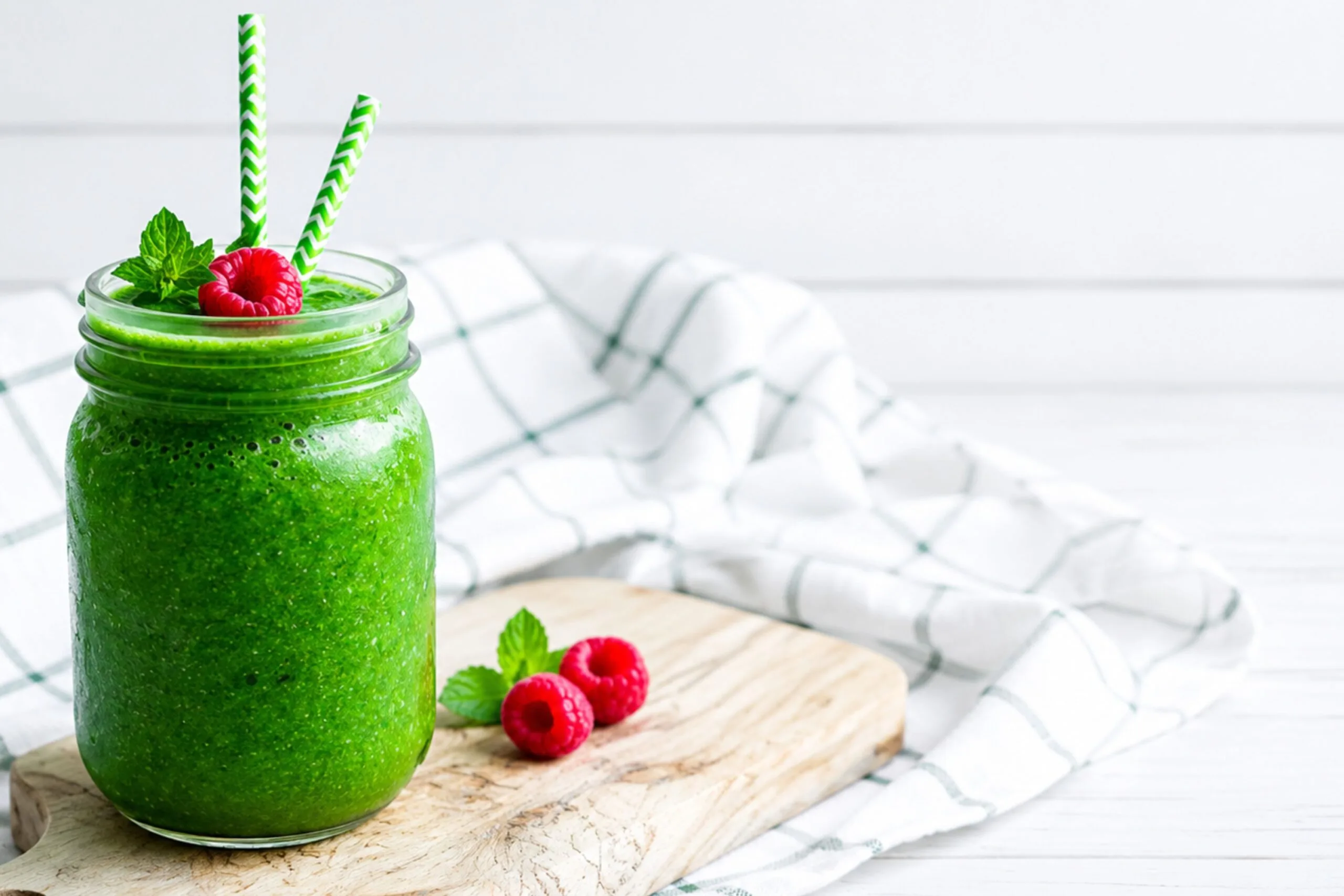
Spinach might be the easier green to blend into a smoothie—it’s mild, it disappears, nobody thinks twice about it. Kale takes a little more convincing. But once you get over the fear that you’ll end up drinking something bitter (you won’t), it’s just as easy to build into your routine.
Kale brings vitamin A, vitamin C, vitamin K, and calcium to your smoothie, but on its own it can taste bitter and grassy. The trick to making the best kale smoothie is balance. Flavorful, naturally sweet ingredients like banana, mango, blueberries, and raspberries can tame that bitterness almost entirely, so what you’re left with is just a delicious smoothie that happens to be full of greens.
With the recipes below, we take the guesswork out of it for you. They balance that natural bitterness with fruit, and many also get in protein to keep things filling using kefir, yogurt, chia seeds, or pea protein powder. You’ll also see spices like ginger, turmeric, and cinnamon thrown in for a little flair, whether you’re blending up a green smoothie bowl like the Antioxidant Power Smoothie Bowl or something heartier like the Superfood Green Smoothie.
Curious what else kale brings to the table? Here’s a closer look at the health benefits of kale.
The benefits of adding kale to smoothies
Kale is one of the lowest-calorie ways to bulk up a smoothie, and the benefits go well beyond volume. A cup adds vitamin A, vitamin C, vitamin K, calcium, and potassium for about 33 calories—which matters if you’re trying to make a smoothie more filling without also making it more caloric. Swap a cup of juice or an extra half-banana for a cup of kale, and you get more to actually drink for the same calorie cost.
- Fiber that supports fullness: A cup of chopped kale has about 2 grams of fiber, which helps slow digestion and may support steady blood sugar and keep you satisfied between meals.
- Antioxidants for overall health: Kale is rich in plant compounds like quercetin and kaempferol, which act as antioxidants in the body, helping combat oxidative stress.
- Bitterness that fades into the background: On its own, raw kale can taste bitter or grassy. But blended with sweet fruits like banana, mango, or berries, that bitterness fades into the background—you get the nutritional benefits without the flavor getting in the way.
Together, these qualities make kale one of the more efficient add-ins for a smoothie: high in nutrients, low in calories, and easy to disguise once it’s blended with the right flavors.
How to make the best kale smoothie
Making a great green smoothie with kale is about balancing flavor and texture so it tastes good and doesn’t turn out stringy or bitter. Here are some tips:
- Remove the stems. Kale stems are tough and fibrous, and they don’t break down as easily as the leaves. Stripping them out before blending gives you a smoother result.
- Pair kale with naturally sweet ingredients. Bananas, apples, pears, mango, and berries all help mellow out kale’s bitterness so the greens are barely noticeable.
- Add liquid first. Pouring your milk, juice, or water into the blender before the kale helps the blades catch the leaves more easily, so you don’t end up with green flecks stuck to the sides.
- Blend longer than you think you need to. Kale is sturdier than spinach, so give it an extra 20–30 seconds on high speed to break down completely and avoid a stringy texture.
- Freeze your kale. Pre-washing and freezing kale in portioned bags not only makes smoothies colder and thicker without diluting them with ice, it also means the greens are always ready to go.
- Boost the protein. Kale brings fiber and micronutrients, but not much protein or fat. Adding Greek yogurt, kefir, nut butter, chia seeds, or a scoop of protein powder helps turn your smoothie into a more balanced, filling meal or snack.
Kale pairs well with fruits, other leafy greens, kefir, yogurt, nut butters, oats, and protein powders. These combinations help balance fiber, protein, and healthy fats—key for staying full and satisfied.
10 easy kale smoothie recipes
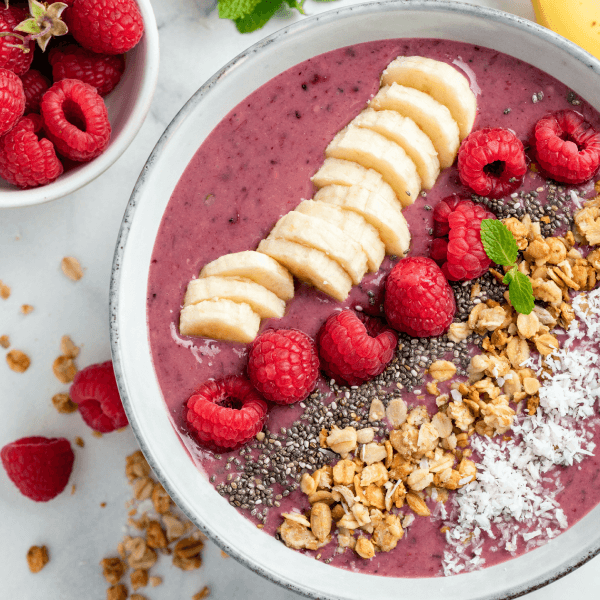
1. Antioxidant Power Smoothie Bowl
5 minutes | 200 calories | 2 servings | 7g protein | 58g carbs
Matcha and açaí do a lot of heavy lifting here—this is less a “quick smoothie” and more a spoon-and-bowl breakfast, thick enough to hold toppings. If you only make one recipe on this list to eat rather than drink, make it this one.
Ingredients:
- ½ cup grape juice
- 1 ½ cups frozen blueberries (or berry blend)
- 1 frozen Sambazon açaí bar, broken into pieces (can sub more berries)
- 1–2 frozen bananas
- 3 cups kale
- ¼ tsp matcha powder
Directions:
- Place all ingredients in a blender. Blend starting at the lowest setting, gradually increasing to the highest. Blend for one minute.
- Use a spatula to portion into bowls. Garnish as desired.
2. Blueberry-Kefir Smoothie with Kale
10 minutes | 589 calories | 1 serving | 39g protein | 69g carbs
At 589 calories for a single serving, this one is built to replace a meal, not sit next to one. Kefir and pea protein are doing the filling work; blueberries and chia seeds are along for fiber and flavor.
Ingredients:
- 1 cup kefir
- 1 cup blueberries
- 1 banana, sliced
- 1 tsp chia seeds
- 1 cup kale
- 1 oz unflavored pea protein powder (or other)
Directions:
- Place all of the ingredients in a blender and blend at high speed for 1 minute.
- Serve immediately.
3. Kale and Ginger Smoothie
15 minutes | 466 calories | 2 servings | 31g protein | 62g carbs
Twelve ingredients is a lot for a smoothie, but this one earns the extra prep time—parsley and ginger cut through the kale’s bitterness in a way fruit alone can’t, and turmeric and cinnamon add warmth without added sugar.
Ingredients:
- 2 cups almond milk
- 2 tsp chia seeds
- 2 bananas, sliced
- 1 cup blueberries
- 1 fresh apple, sliced
- 1 cup kale
- 1 tbsp fresh ginger, grated
- 1 cup parsley
- 1 tsp turmeric
- 1 tsp cinnamon
- 1 tsp flax seeds
- 2 tsp flax seed oil
- 2 oz unflavored pea protein powder (or other)
Directions:
- Pour the almond or coconut milk into a blender and add the chia seeds, letting them soak for 5 minutes.
- Add all remaining ingredients and blend until the chunks are liquified and the smoothie reaches your desired consistency.
- Pour into large glasses and enjoy.
4. Kale Smoothie with Orange and Pear
10 minutes | 125 calories | 2 servings | 6g protein | 25g carbs
The lightest green smoothie on this list by far—no nut butter, no protein powder, just fruit, greens, and water. Good option if you’re adding this on top of a meal rather than in place of one.
Ingredients:
- 4 oz orange, peeled
- 4 oz pear, cored and cut into chunks
- 4 oz kale
- 4 oz baby spinach
- 3 tsp ground flax seed
- ½ cup water
Directions:
- Mix all ingredients together in a high-speed blender until smooth.
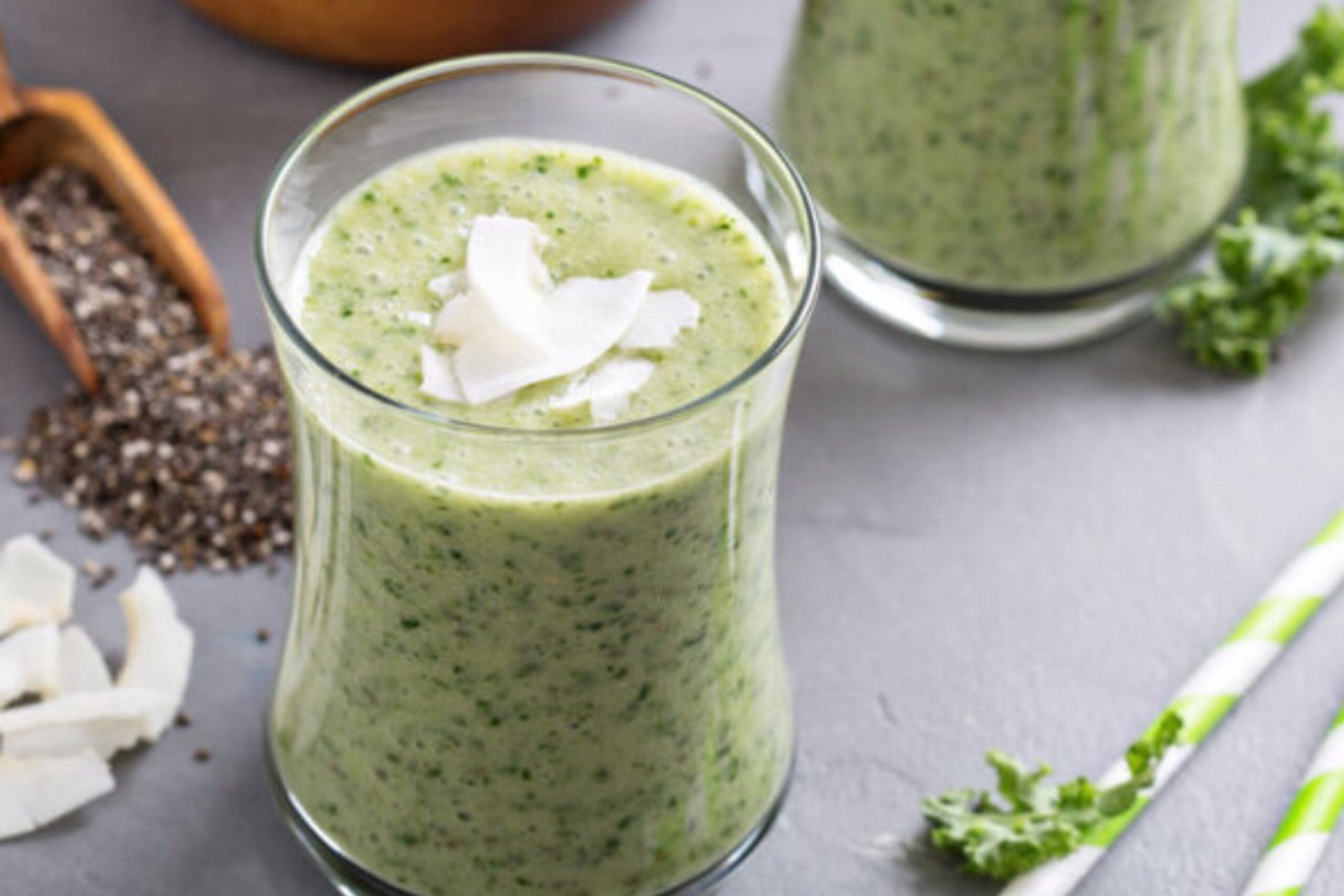
5. Kale-Banana Smoothie with Chia Seeds
10 minutes | 440 calories | 1 serving | 14g protein | 86g carbs
Beet and grapefruit give this green smoothie a vibrant color and tangy edge, while oats and chia seeds add enough staying power to work as a light meal.
Ingredients:
- 1 cup almond milk
- ¼ cup oats
- 1 small beet, sliced
- 1 banana, sliced
- 1 grapefruit, sliced
- 4 oz kale
- 2 tsp chia seeds
- 1 tsp grated ginger
- 1 tsp turmeric
Directions:
- Add all ingredients to a high-powered blender and blend until combined and smooth, about 1 minute.
- Serve immediately.
6. Mango, Raspberry and Kale Smoothie
10 minutes | 661 calories | 1 serving | 22g protein | 94g carbs
Tastes closer to a dessert than a typical green smoothie—mango and raspberry dominate, and a hint of lime keeps it from turning cloying. At 661 calories, it’s the richest recipe on this list, hearty enough to hold its own as a full meal.
Ingredients:
- 2 cups almond milk
- 1 cup frozen mango chunks
- 1 cup raspberries
- 1 cup yogurt
- 1 cup kale
- 1 tbsp lime juice
- 1 banana, sliced
Directions:
- Add all ingredients to a high-powered blender and blend until combined and smooth.
- Serve immediately.
7. Pineapple Raspberry-Kale Smoothie
10 minutes | 580 calories | 1 serving | 38g protein | 95g carbs
Pineapple takes the lead here alongside raspberry, protein powder, and a full two tablespoons of chia seeds, making this one of the more filling options on the list. Coconut water keeps it from feeling heavy despite the higher calorie count.
Ingredients:
Access GLP-1 Weight Loss with Noom
Explore a wide range of prescription medications supported by Noom’s program.Microdose GLP-1rx
Noom GLP-1rx
Noom GLP-1rx Plus
Wegovy®

Ozempic®

Metformin
Zepbound®
Mounjaro®
Liraglutide
- 1 cup coconut water
- 1 cup raspberries
- 1 banana
- 1 cup pineapple chunks
- 4 oz kale, chopped
- 1 oz unflavored pea protein powder (or other)
- 2 tbsp chia seeds
Directions:
- Put the coconut water in the blender.
- Add the berries, banana, pineapple, kale, protein powder, and chia seeds.
- Puree until very smooth.
- Serve immediately.
8. Spinach and Kale Smoothie
10 minutes | 608 calories | 2 servings | 22g protein | 51g carbs
Six tablespoons of peanut butter is the star of this one, not the greens—spinach and kale mostly disappear into the nutty flavor. Worth trying if you’ve struggled to get past kale’s taste in other recipes.
Ingredients:
- 4 cups spinach
- 3 cups almond milk
- 6 tbsp peanut butter
- 2 tbsp chia seeds
- 2 cups kale
- 2 bananas, sliced
Directions:
- Blend the spinach, almond milk, peanut butter, chia seeds, and kale together until smooth.
- Add the banana and blend until smooth.
9. Superfood Green Smoothie
10 minutes | 622 calories | 2 servings | 19g protein | 79g carbs
Two greens, three fruits, protein powder, and coconut oil—this is the “throw the whole produce drawer in” recipe of the list, and it lands at a reasonable 622 calories split across two servings.
Ingredients:
- 1 cup spinach leaves
- 1 cup shredded kale
- 2 pears, chopped
- 2 bananas, sliced
- 1 cup blueberries
- 1 cup dairy-free yogurt
- 2 tbsp ground chia seeds
- 2 tbsp coconut oil
- 1 oz protein powder
Directions:
- Combine the spinach, kale, pear, banana, blueberries, and yogurt in a blender (add ice cubes if a colder texture is desired).
- Blend on high until the mixture is smooth.
- Stir with a wooden spoon to redistribute ingredients if needed.
10. Winter Greens Smoothie
5 minutes | 222 calories | 2 servings | 4g protein | 41g carbs
The only recipe here that skips fruit juice as an afterthought and uses it as the base—carrot and orange juice replace milk or water entirely, and frozen broccoli sneaks in alongside the kale. Also the fastest to make, at just 5 minutes.
Ingredients:
- ¼ cup carrot juice
- ½ cup orange juice
- 1 cup spinach
- 1 cup roughly chopped kale, ribs removed
- 4 small broccoli florets, sliced and frozen
- 1 banana, peeled, sliced, and frozen
- 1 apple, cored and roughly chopped
Directions:
- Combine all ingredients in a blender and blend until smooth.
FAQs about making the best kale smoothie
Can you freeze kale for smoothies?
Yes. Wash the leaves, remove the stems, and chop or tear the kale into smoothie-sized pieces. Pack it into freezer bags in single-recipe portions and lay them flat so they freeze quickly. Frozen kale blends just as easily as fresh, and it doubles as a way to chill and thicken your smoothie without watering it down with ice.
How do you freeze kale for smoothies without it getting soggy?
Dry the leaves thoroughly after washing—excess water is what leads to clumping and freezer burn. A salad spinner works well, or pat the leaves dry with a towel. Once fully dry, freeze in a single layer on a baking sheet for an hour before transferring to bags; this keeps the pieces from sticking together in one large block.
How much kale should you put in a smoothie?
Most of the recipes above use 1 to 4 cups of kale per batch. If you’re new to kale smoothies, start on the lower end—around 1 cup—and work up from there as you get used to the flavor and texture.
What pairs well with kale in a smoothie?
Naturally sweet fruits like banana, mango, pineapple, and berries balance out kale’s bitterness, while pairing it with spinach makes for a milder, more neutral-tasting green smoothie. For staying power, kale also blends well with kefir, yogurt, nut butter, chia seeds, and protein powder.
Does kale change the texture of a smoothie?
It can. Kale is sturdier than spinach, so it needs a little extra blend time to break down completely—otherwise you may notice small fibrous flecks. Blending on high for an extra 20 to 30 seconds usually solves this.
The bottom line: Kale adds fiber and antioxidants to your smoothies
Adding more kale to your smoothies is a healthy move. It’s a quick, low-calorie way to work more vegetables into your day, and once you find the right balance of fruit, spices, and protein, you probably won’t even notice it’s there. Start with whichever recipe fits how you’re using it today—light and refreshing, or filling enough to double as a meal—and don’t be afraid to swap ingredients as you figure out what works for you. Small, sustainable changes like this one add up, and that’s really what building healthier habits is all about.
Start your free trial of Noom for hundreds of recipes like these, plus personalized guidance, habit-building tools, and more to help you understand what fits your goals.
Protein and carb counts are estimates based on standard ingredient values, not lab-verified nutrition analysis—actual values will vary by brand and exact measurements.
Editorial standards
At Noom, we’re committed to providing health information that’s grounded in reliable science and expert review. Our content is created with the support of qualified professionals and based on well-established research from trusted medical and scientific organizations. Learn more about the experts behind our content on our Health Expert Team page.