
What you’ll learn:
- Media personality Coleen Rooney has said she does 60 squats followed by 60 squat pulses every morning in the shower.
- Pairing movement with an established daily cue can make a new habit easier to remember and repeat.
- You don’t need to exercise in the shower to get the benefits—doing squats or another exercise on a stable surface before or after showering keeps the habit-building strategy.
A regular fitness routine can do a lot for your health, from building strength and supporting heart health to improving mood and helping you maintain a healthy weight. But finding time to exercise isn’t always easy. What if you could sneak a little extra movement into something you’re already doing every day?
That’s the idea behind a routine shared by Coleen Rooney, the British media personality and entrepreneur. Rooney has said she starts every morning with a set of squats—but it’s where she does them that’s getting attention on social media: in the shower.
Her routine is simple: Pair something you want to do—squats—with something you already do automatically—take a shower. There’s actually a name for this strategy: habit stacking, a behavior-change technique that uses an established habit as a cue for a new one. And that may be the most interesting part of the trend.
But what about the squats themselves? Bodyweight squats can help strengthen your legs, glutes, and core, but doing them in the shower doesn’t necessarily make them more effective. It may also introduce one pretty obvious downside: a slippery floor.
We asked Maggie Hudspeth, RDN, Senior Manager of Coaching at Noom, to break down both sides of the trend. Ahead, we’ll look at what squats can do for your body, why habit stacking can make movement easier to stick with, and whether the shower is actually a safe place to exercise. Plus, we’ll share a few ways to borrow Rooney’s habit-stacking strategy without the slip risk.


What is the Coleen Rooney shower squats routine
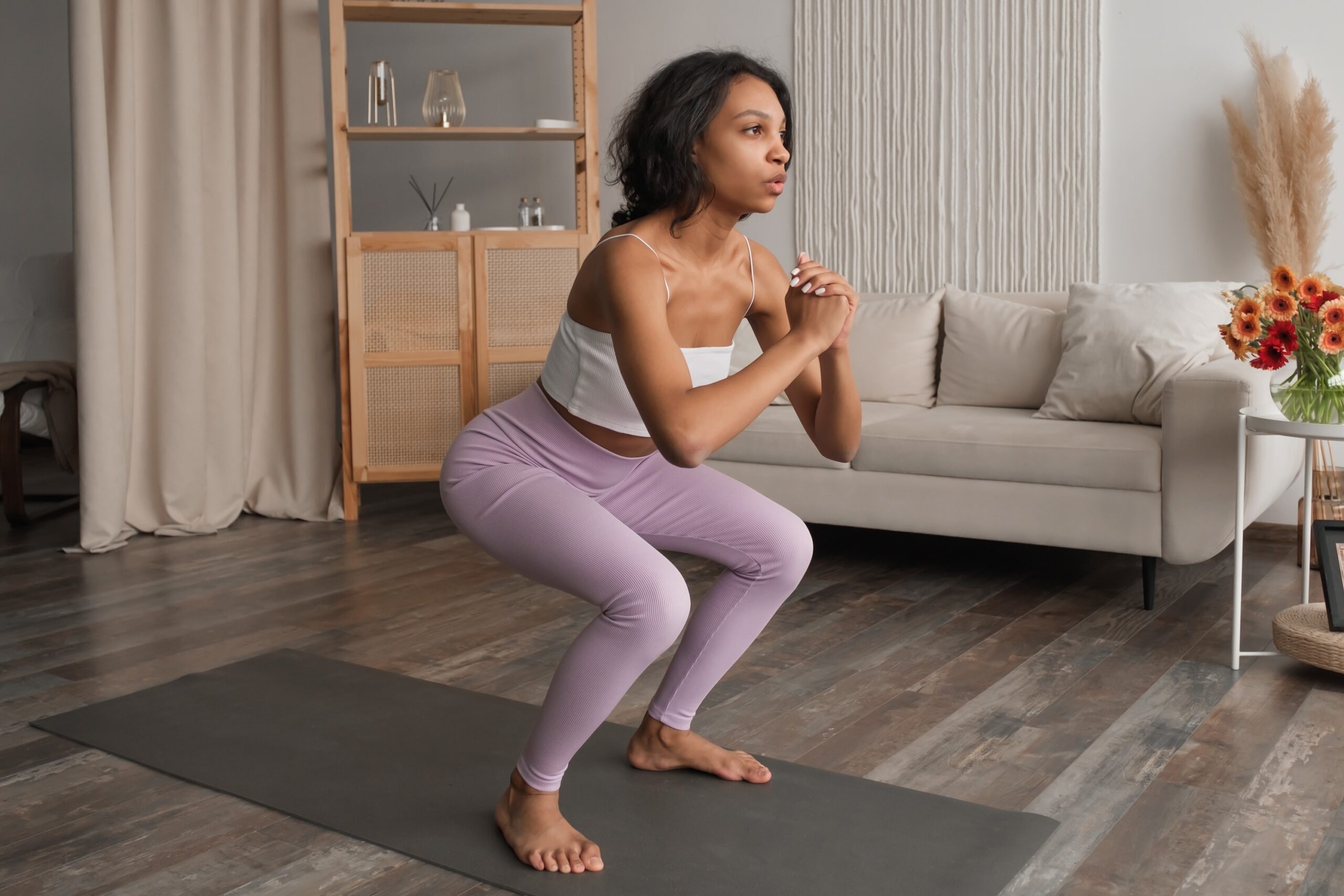
In an interview, Rooney described a daily routine: 60 squats followed by 60 pulses, done every morning in the shower. If you’re not familiar with squat pulses, they’re small, controlled up-and-down movements at the bottom of a squat rather than standing all the way back up between reps. This keeps your muscles working without returning to a full standing position.
It’s worth pointing out that this isn’t a formal workout plan, and Rooney hasn’t presented it as one. It’s simply a personal habit she’s mentioned in interviews. But the way she’s worked those squats into something she already does every morning is what makes the routine interesting from a behavior-change perspective.
What did Coleen Rooney actually say about her shower squats?
Rooney has explained that doing the squats gives her a sense of accomplishment early in the day—and when she skips them, she notices. She’s also said she kept up the routine during a period when she didn’t have access to a gym or equipment, finding a quiet place to get her squats in rather than abandoning the habit altogether.
And there’s a practical reason she chose the shower: Rooney, who has four children, has said it’s one of the few times she gets to herself. That detail may be more important than it sounds. There’s nothing special about doing squats under running water. Instead, she’s found a private moment that’s already built into her day and attached a little movement to it—which is essentially habit stacking in action.
Are Coleen Rooney shower squats an effective fitness plan?
Not on their own—but that doesn’t mean they don’t have benefits. Squats are an effective lower-body exercise, and doing 60 squats plus 60 pulses every day can challenge your muscles and build muscular endurance, particularly if you’re new to strength training.
What the routine isn’t is a complete fitness plan. It focuses primarily on the lower body, leaves out other major muscle groups, and doesn’t include a way to progressively increase resistance as you get stronger.
Where it may be most useful is as an entry point. Pairing a little movement with something you already do every day can make exercise feel easier to fit in—and once that habit is established, you can build on it over time.
What bodyweight squats do for your body
- Build lower-body strength and endurance. Squats primarily work your quads, hamstrings, and glutes, while your core helps stabilize your body throughout the movement. If you’re new to squats, your body weight alone can provide enough resistance to challenge those muscles.
- Support everyday movement and mobility. Squatting mirrors movements you use throughout the day, including sitting down and standing back up. Practicing the movement can help maintain the lower-body strength, balance, and mobility you need for everyday activities as you age.
- Have limits without added resistance. Research comparing bodyweight and barbell squat training has found that both can improve strength and muscle size. But as your body adapts, the same bodyweight exercise becomes less challenging. To continue building strength, you may eventually need to progress the exercise by adding resistance or trying a more challenging variation.
“Bodyweight squats absolutely count as real exercise,” says Hudspeth. “The volume Coleen describes is enough to feel it in your legs. It’s just not a replacement for a full-body strength routine over the long run.”
Why did Coleen Rooney shower squats go viral? The science behind the habit
There’s no way to know exactly why one fitness trend catches on while another doesn’t. But part of the appeal of Coleen Rooney’s shower squats may be how relatable they are. Not having enough time to exercise is a common barrier, and finding a way to fit movement into time you’re already spending is a genuinely useful idea—regardless of who came up with it.
More interesting is why a routine like this can be easier to stick with. Rooney’s approach closely resembles a model Noom uses for building habits: a three-ingredient microhabit recipe made up of a cue, a small action, and a celebration.
- The cue is something you already do regularly without much thought, like brushing your teeth, making coffee, or taking a shower.
- The microhabit is the small new behavior you attach to it.
- The celebration is a quick moment of positive acknowledgment afterward that helps reinforce the behavior and make you more likely to repeat it.
Rooney’s routine fits that framework surprisingly well. The shower provides a consistent cue, the squats are the behavior she’s attached to it, and the sense of accomplishment she says she gets from finishing them resembles that final celebration step—even if she didn’t intentionally design the routine that way.
“The reason this works is that she’s using a cue she doesn’t skip,” Hudspeth says. “A shower typically happens whether you’re motivated or not. That’s a much more reliable anchor than saying, ‘I’ll work out later,’ which depends on willpower holding up.”
Do Coleen Rooney shower squats work better than regular squats?
No. There’s nothing about doing squats in the shower that makes the exercise itself more effective. You’re still working the same major muscle groups and performing the same basic movement whether you’re in the shower, your bedroom, or the gym.
“There’s no physiological advantage to doing squats in the shower specifically,” Hudspeth says. “The advantage is entirely behavioral. People don’t stick with exercise because it’s the most effective version—they stick with it because it’s the version they’ll actually repeat.”
And that’s really the takeaway from this trend: The benefit isn’t the shower. It’s finding a time and place that makes movement easier to repeat consistently. If pairing squats with an existing part of your routine helps you actually do them, that’s where the advantage comes in.
Is it actually safe to copy Coleen Rooney shower squats?
This is where the trend gets a little tricky. Squats themselves aren’t the main concern—the wet, slippery surface is. Showers combine several fall risks at once, including water, soap, hard surfaces, and limited space to catch yourself if you lose your balance. Add a movement that repeatedly shifts your center of gravity, and it’s easy to see why doing squats there may not be the safest choice.
There’s data to back up that concern. A CDC analysis of bathroom-related injuries found that bathing or showering was the most common activity associated with bathroom injuries treated in U.S. emergency departments. Slips were also one of the leading causes of injury.
That doesn’t mean you have to give up the idea behind Rooney’s routine. You can get the same exercise—and the same habit-stacking benefit—by doing your squats on a dry, stable surface immediately before or after your shower.
“I wouldn’t recommend doing squats mid-shower, on wet ground, with no support,” Hudspeth says. “It’s not that squats are risky—it’s that most bathroom surfaces are not designed for a shifting-weight movement while wet.”
How to try the Coleen Rooney squat routine more safely
You don’t have to do squats on a wet shower floor to borrow the best part of Rooney’s routine. Instead, keep the habit-stacking strategy and move the exercise to a dry, stable surface.
Build your own shower-habit stack
- Move it to dry ground. Do your squats on a dry, stable floor right before you get into the shower or after you’ve dried off. You still get the benefit of using your shower as a consistent cue, without exercising on a slippery surface.
- Pick your movement. Squats aren’t your only option. Lunges, wall push-ups, calf raises, or another simple bodyweight movement can all become part of a stacked habit.
- Start small. You don’t need to jump straight to 60 squats. Try 10 to 15 reps—or whatever feels manageable—and build from there. Starting with a small action can make a new habit easier to repeat consistently.
- Choose a specific cue. “After I turn off the shower” gives your brain a clearer prompt than “sometime in the morning.” The more closely you tie the new behavior to something that already happens, the easier it can be to remember.
“Once a stacked habit feels automatic, that’s the moment to add a second one,” Hudspeth says. “Don’t try to build the whole routine at once. Let the first piece stick, then build from there.”
FAQs: Coleen Rooney shower squats and habit stacking
How many squats does Coleen Rooney do in the shower?
Rooney has said she does 60 squats followed by 60 squat pulses every morning in the shower. Squat pulses are small up-and-down movements performed at the bottom of a squat rather than returning all the way to standing between reps. That makes her routine a fairly high-volume lower-body challenge, especially for someone who’s new to squats.
Is it safe to do squats in the shower?
It’s safer to do them on dry, stable ground. Wet, soapy shower floors can increase your risk of slipping, and squats repeatedly shift your center of gravity as you move up and down. If you like the idea of pairing exercise with your shower, try doing your squats immediately before getting in or after you’ve dried off. You keep the same habit cue without exercising on a slippery surface.
Do shower squats build muscle faster than regular squats?
No. There’s nothing about doing squats in the shower that makes them more effective for building muscle. Bodyweight squats can help build lower-body strength and muscular endurance, particularly when you’re starting out, but your muscles will eventually adapt to the same movement. The real potential advantage of Rooney’s routine is consistency: Pairing squats with something you already do every day may make you more likely to keep doing them.
What is habit stacking?
Habit stacking is a behavior-change strategy that pairs a new habit with something you already do consistently. The existing behavior becomes a cue that reminds you to take the new action. For example, “After I brush my teeth, I’ll do 10 squats,” or “After I turn off the shower, I’ll do five wall push-ups.” Starting with a small, specific action can make the new behavior easier to repeat until it starts to feel automatic.
New from Noom
Microdose GLP-1Rx Plus
An affordable way to start your GLP-1 journey with Compounded Tirzepatide.

*Initial 3 week subscription and 4 weeks of medication from $79 plus tax and $199 per month plus tax for 12 week subscription thereafter. Final pricing depends on program selection. Noom GLP-1Rx Plus Microdose Program involves medication (when appropriate), healthy diet, exercise and support. Individual results vary. Meds & personalization based on need as determined by a third-party clinician. Medications are not reviewed by FDA for safety, efficacy, or quality. No affiliation with Eli Lilly and Company, the only US source of FDA-approved tirzepatide. Not available in all 50 US states.
Can I do a different exercise instead of squats?
Yes. The habit-stacking strategy isn’t specific to squats. You could pair your daily cue with lunges, wall push-ups, calf raises, or another simple movement that works for your fitness level. The goal is to choose something small and manageable enough to repeat consistently. Once that habit feels automatic, you can add reps, increase the challenge, or stack another movement onto your routine.
Reviews from real Noom users
Desirea N. — Real Noom user
“My favorite parts of Noom are the care team and other Noomers. Sharing and getting help made me feel like I wasn’t doing it alone. That support made all the difference.”
Desirea N. — Real Noom user
Matthew M. — Real Noom user
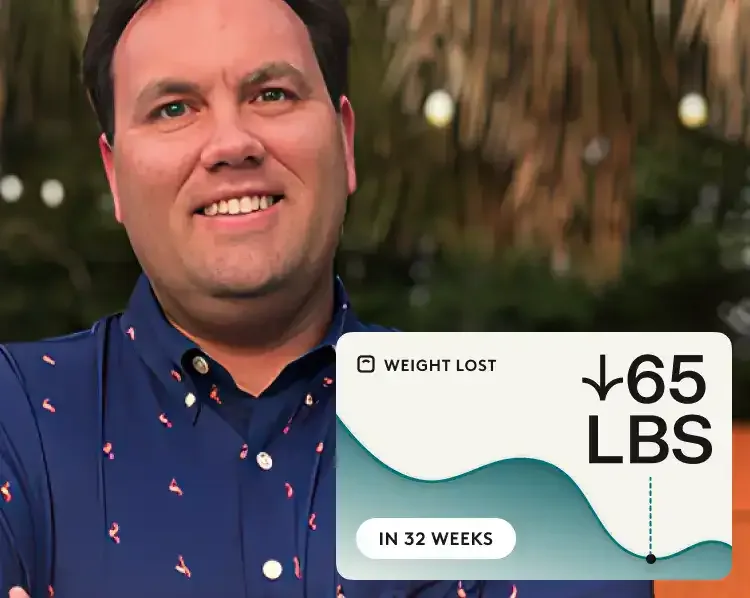
“Noom has taught me that every day is a new chance to make better, healthier choices. It's taught me how to stop overeating.’’
Matthew M. — Real Noom user
Lila M. — Real Noom user
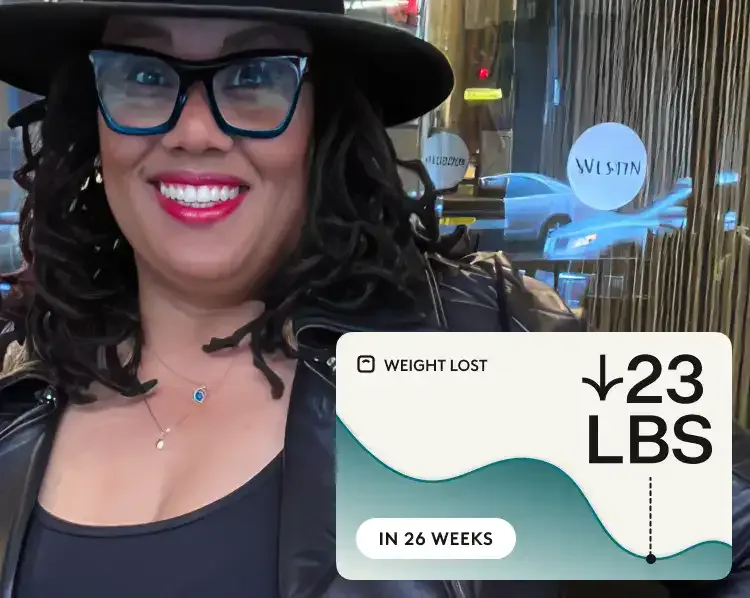
“Clinicians who understand how supportive medication can be is one of the best parts of Noom! I was convinced I wouldn’t have success but I’m down 11 pounds in two months.’’
Lila M. — Real Noom user
Steve M. — Real Noom user
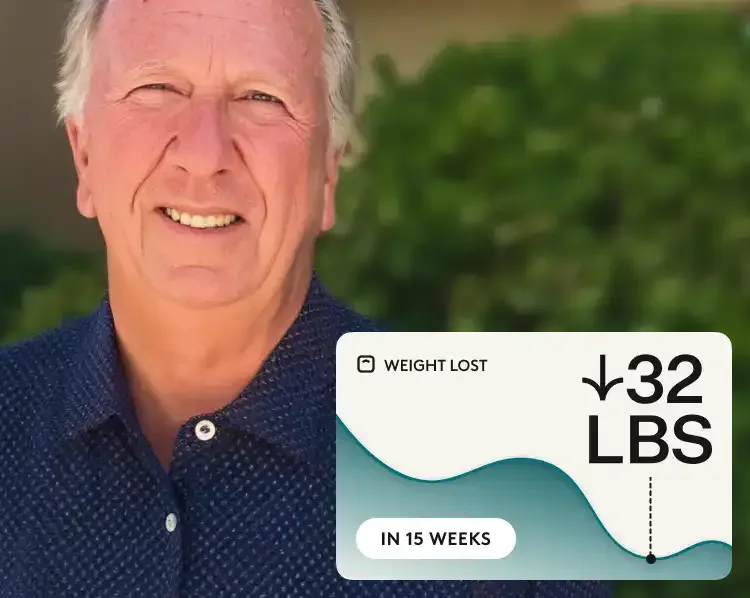
“Noom provided me with the medication which I could not get through Medicare. I have learned the tricks to better eating and life in general.”
Steve M. – Real Noom user
Daisy R. — Real Noom user
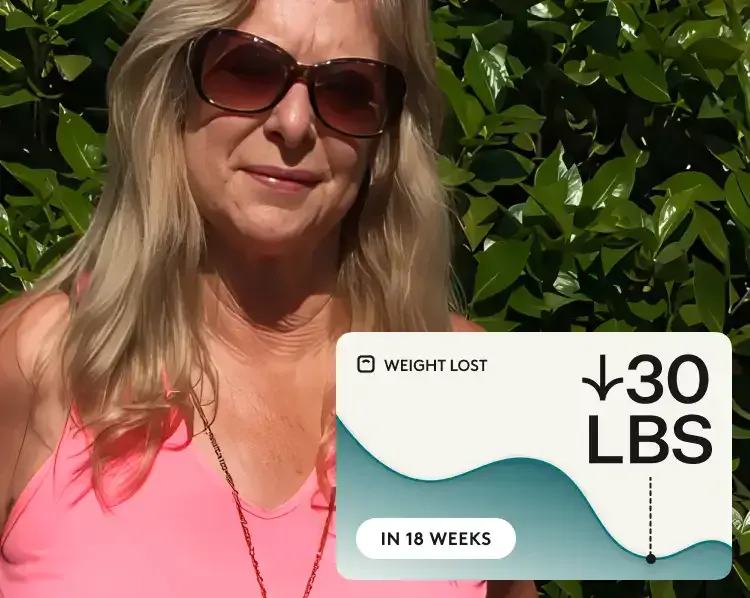
‘’Noom has changed my life and I’m so thankful, I feel great, have more energy and am no longer prediabetic.”
Daisy R. – Real Noom user
Sarah R. — Real Noom user
“All of the Noom providers that I’ve met with have been exceptional and prescribed medications that are appropriate for my situation and health.”
Sarah R. – Real Noom user
Madison S. — Real Noom user
“Noom made the process so simple and now I feel full, free from diet obsession, and at ease in my body again.”
Madison S. – Real Noom user
Sonday K. — Real Noom user
“My doctor recommended Noom after I was frustrated trying to lose weight. The lessons helped change my relationship with food. My body feels lighter & energized.”
Sonday K. – Real Noom user
Cam K. — Real Noom user
“I built healthy habits with coaching and lessons that make me confident I can maintain my weight loss long term.”
Cam K. – Real Noom user
Laura TR. — Real Noom user
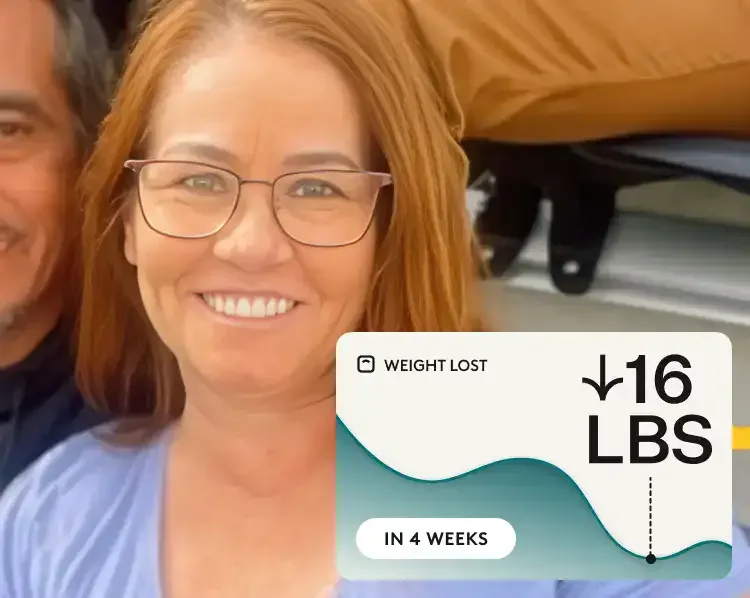
“With the right medication through Noom, hunger and sugar cravings finally quieted and I have the tools to break the cycle.”
Laura TR. – Real Noom user
Jessica S. — Real Noom user
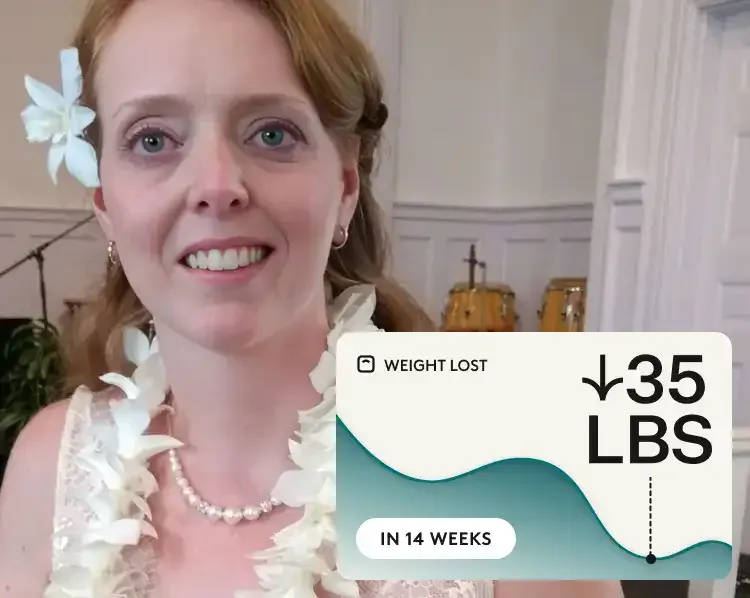
“Cravings and food noise are gone, I finally feel confident in the healthy habits I’ve built to last with Noom.”
Jessica S. – Real Noom user
The bottom line: Coleen Rooney shower squats aren’t the goal; regular movement is
Coleen Rooney’s shower squats are a simple bodyweight exercise, and doing them consistently can help build lower-body strength and endurance. But the most useful part of her routine isn’t the specific number of squats—or the fact that she does them in the shower. It’s the structure underneath it: She took something that already happens every day and used it as a cue to move.
That’s an approach you can use with almost any habit. Pick something you already do consistently, attach a small, manageable action to it, and give it time to become part of your routine. In this case, we’d just recommend keeping the cue and moving the squats to dry ground.
And you don’t have to start with 60 squats. Ten squats after your morning shower, a short walk after lunch, or a few wall push-ups while your coffee brews all follow the same basic principle. The goal isn’t to copy Rooney’s routine exactly—it’s to find small opportunities for movement that you can realistically repeat.
If you want more structure and support for turning small changes into lasting habits, download Noom on iOS or Android for step-by-step guidance rooted in behavior change to help you build routines that fit into your life.
Editorial standards
At Noom, we’re committed to providing health information that’s grounded in reliable science and expert review. Our content is created with the support of qualified professionals and based on well-established research from trusted medical and scientific organizations. Learn more about the experts behind our content on our Health Expert Team page.