What you’ll learn:
- Cagrilintide is an investigational medication that mimics amylin, a hormone that helps regulate appetite and fullness.
- On its own, it led to an average of about 12% weight loss. When paired with semaglutide (as CagriSema), results climbed above 20%.
- Ongoing phase 3 trials are in progress, and CagriSema is currently under FDA review, with a decision expected in late 2026.
Recent breakthroughs in injectable medications are changing how we think about medically assisted weight loss. Treatments like Wegovy® and Zepbound® (known as GLP-1 medications) are helping many people lose an average of 15% to 21% of their body weight, especially when combined with healthy eating, regular movement, and sustainable lifestyle changes. But as research continues, it’s clear that not all new medications work the same way.
One newer option being studied is cagrilintide, an investigational injectable developed by Novo Nordisk, the same company behind Ozempic® and Wegovy®. What makes cagrilintide different is that it doesn’t work like GLP-1 medications. Instead, it mimics a hormone called amylin, which helps you feel full and satisfied after eating. This is among the first long-acting amylin-based medications to reach late-stage clinical trials for weight management.
You may have also seen cagrilintide mentioned alongside CagriSema, a combination therapy that pairs cagrilintide with semaglutide in a single weekly injection. CagriSema is further along in the approval process—Novo Nordisk submitted it to the FDA in December 2025—but cagrilintide itself has its own clinical program. Researchers are studying it both as a standalone treatment and as part of the combination therapy.
So what is cagrilintide being studied for? Primarily, weight management and blood sugar regulation, with additional research exploring cardiovascular outcomes through the CagriSema combination.
None of these treatments is approved yet, and cagrilintide is not currently available to prescribe or purchase. Even so, early clinical data have drawn significant attention from researchers and clinicians.
Noom’s Most Powerful Program
A dual-pathway GLP-1 and behavior change for lasting results.
Below, we’ll break down how cagrilintide works, what clinical trials show so far, how it compares with existing options like Wegovy® and Zepbound®, and what the road ahead may look like for approval and availability.
What is cagrilintide?
Cagrilintide is a newer type of medication designed to help with weight management. It’s a long-acting version of something called amylin, which is a hormone your body already makes naturally. Every time you eat, your pancreas releases amylin alongside insulin.
So what does amylin actually do? Think of it as one of your body’s “I’m full” signals. It helps tell your brain that you’ve had enough to eat, slows down how quickly food leaves your stomach (so you stay full longer), and helps keep your blood sugar from spiking after meals.
Cagrilintide basically amplifies those natural effects, making them stronger and longer-lasting. Instead of your body doing this for a short time after eating, this medication helps you feel fuller for longer periods, with just a once-a-week injection.
What sets it apart from the weight-loss medications already on the market is the pathway it targets. Wegovy® and Zepbound® work through the GLP-1 system (and in Zepbound®’s case, GIP as well). Cagrilintide doesn’t touch GLP-1 at all—it works through amylin and calcitonin receptors, which is a fundamentally different hormonal route.
What is cagrilintide being studied for?
Researchers are mainly studying cagrilintide for its potential to support weight management and improve blood sugar control. When used as a monotherapy—meaning it’s taken on its own, without being combined with other medications—it’s currently being tested in a large phase 3 clinical trial program called RENEW.
Phase 3 trials are one of the final steps before a medication can be approved. At this stage, researchers study how well the treatment works and how safe it is in a much larger group of people over a longer period.
Cagrilintide is also being studied in combination with another medication (in a treatment known as CagriSema).
Where does cagrilintide stand right now?
Cagrilintide hasn’t been approved by the FDA. It’s still in clinical trials. CagriSema (the combination) was submitted for FDA approval in December 2025, but cagrilintide on its own is earlier in the process. A dedicated phase 3 program—RENEW—was announced in late 2025 to investigate cagrilintide monotherapy specifically.
How does cagrilintide work?
Most of the weight-loss medications right now—Wegovy®, Zepbound®, and others—work by targeting the GLP-1 pathway. That system affects appetite, blood sugar, and how quickly your stomach empties.
Access GLP-1 Weight Loss with Noom
Explore a wide range of prescription medications supported by Noom’s program.
Microdose GLP-1rx
Noom GLP-1rx
Noom GLP-1rx Plus
Wegovy®
Ozempic®
Metformin
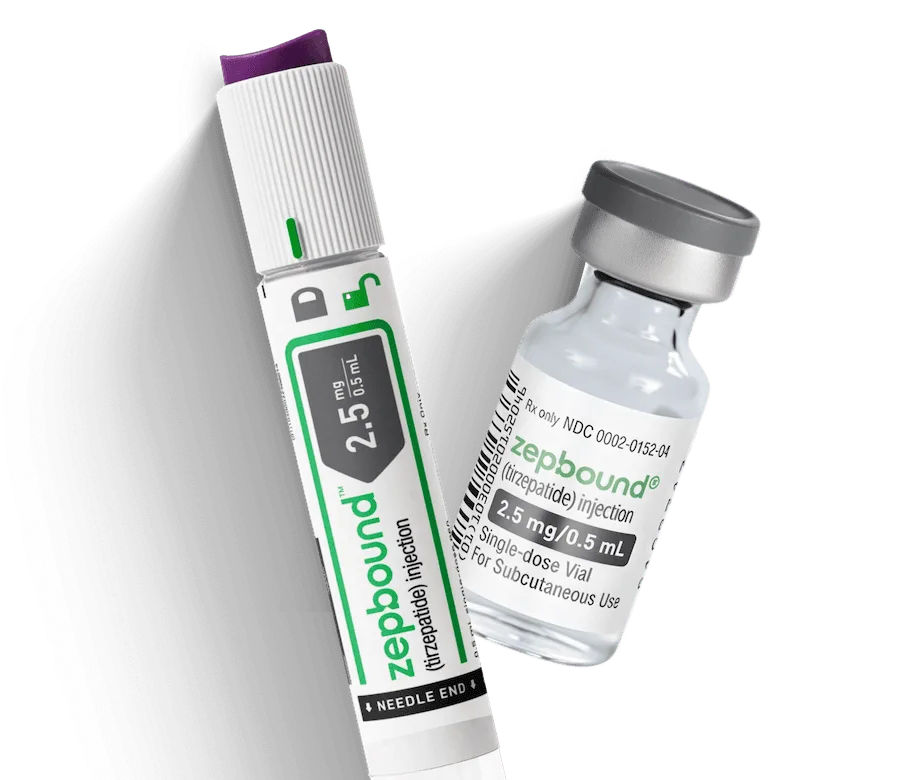
Zepbound®
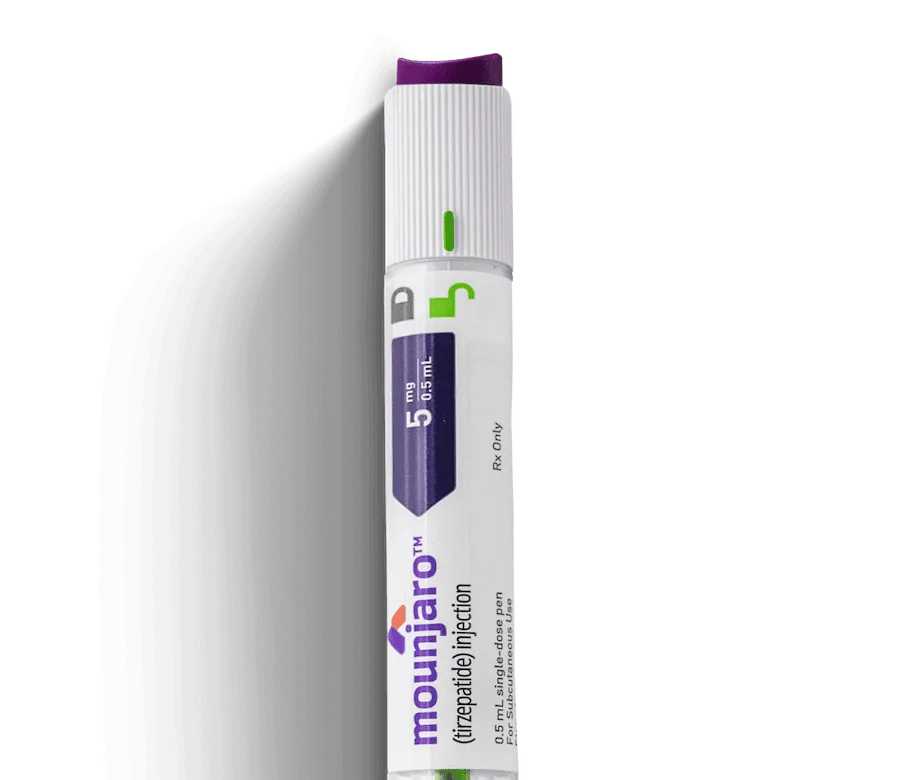
Mounjaro®
Liraglutide
Cagrilintide takes a completely different route. As an amylin analog, it targets amylin and calcitonin receptors, which are part of a separate hormone family. Amylin acts primarily on the brainstem and hypothalamus—areas of the brain that regulate hunger, satiety, and energy balance. When cagrilintide activates those receptors, a few things happen:
- Your brain gets stronger fullness signals after eating, which may help you feel satisfied with less food.
- Gastric emptying slows down, meaning food stays in your stomach longer and you stay full for a longer stretch.
- Blood sugar spikes after meals are blunted, supporting better glycemic control.
This mechanism is distinct from how semaglutide (Wegovy®) or tirzepatide (Zepbound®) work. That’s exactly why Novo Nordisk combined cagrilintide with semaglutide in CagriSema—the idea is that hitting both the amylin and GLP-1 pathways together could produce greater effects than either one alone. And the early data support that logic.
It also means cagrilintide could potentially be an option for people who don’t respond well to GLP-1-based medications, or who experience side effects that make GLP-1 drugs hard to tolerate. That’s a meaningful distinction, because right now, most available medications operate within the same general family, so they have similar side effects.
How is cagrilintide different from GLP-1s like Wegovy® and Zepbound®?
The simplest way to think about it: Wegovy® and Zepbound® work by targeting specific receptors in your body—Wegovy® focuses on GLP-1, while Zepbound® activates both GLP-1 and GIP receptors. Cagrilintide speaks to a completely different set—amylin and calcitonin receptors.
The practical takeaway here is that cagrilintide represents a genuinely new approach, not just a variation on existing GLP-1 medications. It targets different brain regions and hormonal systems, which is why it’s generating excitement both on its own and as part of the CagriSema combination.
Researchers have also described the interaction between amylin and GLP-1 pathways as complementary—they influence overlapping but distinct brain circuits involved in appetite regulation.
Some evidence suggests that the two systems together affect both pleasure-driven eating and energy-driven hunger, which is part of why the CagriSema combination has shown such strong results in trials.
It’s also worth noting that Novo Nordisk isn’t the only company interested in amylin-based approaches—Roche and Zealand Pharma are developing a separate amylin analog called petrelintide, underscoring the broader industry interest in this pathway.
| Feature | Cagrilintide | CagriSema | Wegovy® (semaglutide) | Zepbound® (tirzepatide) |
|---|---|---|---|---|
| Hormone pathway | Amylin analog | Amylin and GLP-1 | GLP-1 | GLP-1 and GIP dual agonist |
| How it’s taken | Weekly injection | Weekly injection | Weekly injection or daily pill | Weekly injection |
| FDA status (2026) | In clinical trials | In clinical trials | FDA-approved | FDA-approved |
| Average weight loss in trials | 11.8% (alone) | 23% | 14–15% | 20–21% |
How is cagrilintide taken?
Cagrilintide is administered as a once-weekly subcutaneous injection—meaning it goes just under the skin, typically in the abdomen, thigh, or upper arm. There is no pill version of cagrilintide available or currently in development.
Dosing and titration schedule
Because cagrilintide is still investigational, there are no official prescribing guidelines yet. What we know about dosing comes from clinical trials. In one study, the target dose was 2.4 mg once weekly. In earlier trials, researchers tested a range of doses from 0.3 mg up to 4.5 mg.
Like other injectable weight-loss medications, cagrilintide follows a gradual dose-increase approach. Trials have typically used titration periods of about 6 weeks, starting at a lower dose and stepping up to the full maintenance dose. This slow ramp-up helps the body adjust and reduces the chance of digestive side effects—a strategy you’d recognize if you’re familiar with how Wegovy® or Zepbound® are dosed.
When used as part of CagriSema, the dosing schedule looked like this in trials:
- Weeks 0–4: 0.25 mg cagrilintide + 0.25 mg semaglutide
- Weeks 4–8: 0.5 mg + 0.5 mg
- Weeks 8–12: 1 mg + 1 mg
- Weeks 12–16: 1.7 mg + 1.7 mg
- Week 16 onward: 2.4 mg + 2.4 mg (full maintenance dose)
Until the medication is approved and prescribing information is finalized, any dosing decisions would only happen through participation in a clinical trial or, eventually, under the guidance of a healthcare provider.
Cagrilintide: How much weight can you lose?
This is the question everyone’s asking—and the answer depends on whether we’re talking about cagrilintide alone or cagrilintide combined with semaglutide as CagriSema.
It also depends on how the numbers are measured—clinical trials report weight loss using different estimands (essentially, different ways of calculating average results), which is why you’ll sometimes see slightly different percentages for the same study.
Noom’s Most Powerful Program
A dual-pathway GLP-1 and behavior change for lasting results.
Weight loss with cagrilintide on its own
The best data we have comes from a deeper analysis of a large phase 3 study called REDEFINE 1. Researchers took a closer look at the results after the main study was completed, and these findings were shared at a major medical conference (the EASD congress) in September 2025.
The trial included over 3,400 people with a BMI of 30 or above (or 27+ with at least one weight-related health condition) and without type 2 diabetes. Everyone also followed diet and exercise recommendations alongside their medication, which reflects how these drugs are designed to work in practice.
Among those who stayed on treatment for the full 68 weeks, cagrilintide 2.4 mg delivered an average of about 12% body weight reduction, compared to 2.3% for placebo.
When researchers looked at all participants regardless of whether they stuck with the medication, the numbers were similar: 11.5% versus 3%. About a third of people on cagrilintide (31.6%) achieved 15% weight loss or more, compared to roughly 1 in 20 (4.7%) on placebo.
In real terms, the average participant lost about 27.5 pounds from a trial-wide average starting weight of about 236 pounds.
Weight loss with cagrilintide as part of CagriSema
The numbers jump substantially when semaglutide is added. In the same trial, people on CagriSema lost an average of about 23% of their body weight over 68 weeks when measuring the effect assuming full adherence, or about 21% when accounting for all participants regardless of whether they completed treatment. For context, about 60% of CagriSema participants hit the 20% weight-loss mark, and nearly 1 in 4 lost 30% or more.
Then there’s the head-to-head comparison. In another study, an 84-week open-label trial with about 800 participants, people taking CagriSema had an average of 23% weight loss versus about 25 to 26% for tirzepatide (Zepbound®) at the highest dose. CagriSema didn’t meet the trial’s primary goal of proving that it could help people lose more weight than tirzepatide, which made headlines.
But 23% is still a meaningful step up from what semaglutide (Wegovy®) achieves on its own, where the average tends to land around 14 to 15%.
How cagrilintide performs as a standalone treatment
The 12% average weight-loss result when cagrilintide is used on its own is lower than the headline figures reported for Wegovy and Zepbound. But cagrilintide works through a completely different hormonal system, and its tolerability profile—which we’ll cover next—is one of its strongest advantages. The dedicated RENEW program should provide a much clearer picture of its potential as a standalone treatment.
It’s also worth noting that in people with type 2 diabetes, the combination kept performing well. In one study, CagriSema achieved an average of about 16% weight loss over 68 weeks—the highest figure reported for this population with any weight-management medication to date—and nearly three-quarters of participants (73.5%) reached a healthy HbA1c target. So the combination appears to deliver benefits well beyond body weight alone.
Cagrilintide: Side effects and safety
Like other weight-loss medications, Cagrilintide comes with side effects—most of which are digestive in nature. This pattern is consistent with what researchers see across the category, whether the medication targets the GLP-1 pathway or works as an amylin analog.
The most commonly reported side effects in clinical trials include:
- Nausea
- Vomiting
- Diarrhea
- Constipation
Most of these symptoms were mild to moderate and tended to improve over time as the body adjusted to the medication, especially when doses were increased gradually.
One side effect more specific to cagrilintide is injection-site reactions. In one study, about 17% of participants receiving cagrilintide alone reported redness, swelling, or discomfort at the injection site—compared with about 3% of those receiving semaglutide. This suggests the reaction may be more closely associated with the cagrilintide component.
Does cagrilintide have any potential for severe side effects?
More serious digestive complications, including pancreatitis, are considered possible but appear to be uncommon based on current research. People with a history of pancreatitis or certain gastrointestinal conditions would have to decide with their clinician whether cagrilintide is right for them.
As with other medications that affect appetite-regulating hormones, ongoing clinical trials continue to monitor long-term safety and identify any rare risks. Overall, discontinuation due to side effects has been relatively uncommon, suggesting that people have tolerated cagrilintide well.
Cagrilintide: Clinical trials and FDA status
Let’s break down where cagrilintide actually stands in the approval pipeline—because it’s a more layered story than most headlines suggest. There are two separate tracks to keep in mind here—one for the CagriSema combination and one for cagrilintide as a standalone drug. They’re at very different stages.
Cagrilintide as a standalone treatment
This track is earlier in development. The data we currently have on cagrilintide alone come from a deeper follow-up analysis of a larger study called REDEFINE 1. This wasn’t a separate, head-to-head trial focused only on cagrilintide, but rather a closer look at specific results from an existing study. These findings were shared at a major medical conference (EASD) in September 2025.
To get more complete and reliable data, Novo Nordisk has since launched a new phase 3 program called RENEW. This study is specifically designed to test cagrilintide by itself in people with a BMI of 30 or higher, or 27 and above with related health conditions. The trial was expected to start enrolling participants in late 2025.
Until results from this dedicated study are available, it’s unlikely that cagrilintide will move forward for approval on its own just yet.
CagriSema (cagrilintide + semaglutide)
This is the one closest to reaching approval and pharmacy shelves. Novo Nordisk submitted an NDA (new drug application) to the FDA on December 18, 2025, which is the formal step companies take when seeking approval for a medication to be marketed for public use.
That application is based on results from large, late-stage studies designed to show how well the treatment works and how safe it is. People without diabetes lost an average of 20% of their body weight on average over about 16 months, which is a significant amount for a medication.
In people with type 2 diabetes, the results were also promising. People lost about 15% of their body weight, and many were able to bring their blood sugar levels down to a healthier range.
Both were published in the New England Journal of Medicine in mid-2025. The FDA is expected to issue a decision by late 2026, which means CagriSema could potentially reach the market by late 2026 or early 2027.
CagriSema vs. Zepbound (tirzepatide)
On February 23, 2026, Novo Nordisk shared results from a study that directly compared CagriSema to Zepbound®. Over about 84 weeks, people taking CagriSema lost around 23% of their body weight, while those on Zepbound® lost about 25.5% at its highest dose.
Because of this, the new treatment didn’t quite meet the study’s goal of proving it works just as well as (or better than) Zepbound®. The news raised concerns about how competitive it might be, especially since Zepbound® is already performing very strongly in the market.
The thing is, the company had already submitted its application for approval before these results were released, and that application is based on earlier studies showing strong weight loss and blood sugar improvements on their own.
So while this comparison raised questions about how the treatment stacks up against competitors, it doesn’t necessarily affect its chances of approval. It’s more about how it will compete in the market once it becomes available.
Novo Nordisk is also continuing to run additional studies, including testing higher doses, to better understand the treatment’s full potential.
Additional trials underway
Ongoing trials are now focused on bigger, long-term questions, like how it performs over time across different groups of people and whether it offers additional health benefits.
One major study is looking at heart health, specifically whether CagriSema can reduce the risk of heart attacks and strokes in people with existing heart disease. Because participants are followed for several years, results aren’t expected anytime soon.
Another study is testing how CagriSema works over longer periods and in people with higher body weights, with results expected around the first half of 2027. There are also plans to test higher doses starting in the second half of 2026 to see if they can deliver even greater results.
Together, these studies will help clarify CagriSema’s long-term effectiveness and how it may evolve in the future.
Cagrilintide: Price, accessibility, and brand information
Since cagrilintide isn’t approved yet—either as a monotherapy or as part of CagriSema—there is no official price and no brand name for the standalone medication.
What might pricing look like?
We can make educated guesses by looking at existing Novo Nordisk medications.
- Wegovy®, both the pill and injection, currently carries a list price of around $1,350 per month
- Ozempic® is listed at about $1,028 per month.
Novo Nordisk recently reduced list prices for both brands for people without insurance who are paying cash. Through their NovoCare Pharmacy program, the cost can range from $149 to $499 per month, depending on the medication and form.
If cagrilintide is approved, it would likely be priced in a similar range to other premium injectable weight-loss medications—though the exact number could go in either direction depending on insurance negotiations, patient assistance programs, and competitive dynamics with Zepbound® and other competing medications.
Does cagrilintide have a brand name?
Not yet as a standalone product. The combination with semaglutide is being referred to as CagriSema in trials and regulatory filings, but a final commercial brand name hasn’t been confirmed.
How to get cagrilintide
Right now, the only legitimate way to access cagrilintide is through enrollment in an active clinical trial. ClinicalTrials.gov lists ongoing studies; look for the RENEW program and various REDEFINE trials. If you’re interested, talk to your healthcare provider about whether you might qualify for a trial near you.
Learn more about semaglutide costs:
- What does Wegovy® cost? How to navigate pricing in 2026
- Ozempic® cost without insurance: What to expect in 2026
Cagrilintide vs. other weight-loss drugs
Cagrilintide occupies a unique spot in the weight-loss landscape. It’s the only long-acting amylin analog in late-stage trials, which means it doesn’t compete on the same biological turf as GLP-1 drugs. That context matters when you’re looking at the numbers below.
| Medication | Mechanism | Administration | Average weight loss |
|---|---|---|---|
| Cagrilintide (2.4 mg) (in trials) | Amylin analog | Weekly injection | 11-12% |
| CagriSema (cagrilintide + semaglutide) (in trials) | Amylin + GLP-1 | Weekly injection | 20–23% |
| Wegovy® (semaglutide 2.4 mg) | GLP-1 agonist | Weekly injection or daily pill | 14–15% |
| Zepbound® (tirzepatide 15 mg) | GLP-1 + GIP dual agonist | Weekly injection | 20–21% |
Cagrilintide vs. Wegovy® (semaglutide)
Wegovy® produces more weight loss on average (14–15% vs. 11-12%). But here’s why the comparison isn’t straightforward: these two drugs target completely different hormonal systems. Cagrilintide acts on amylin receptors; Wegovy® acts on GLP-1.
That makes cagrilintide less of a direct competitor and more of a potential alternative for people whose bodies don’t respond well to GLP-1 therapy, or who struggle with its side effects. It’s also why the two were combined in CagriSema—the idea being that together, they cover more ground than either one alone.
Cagrilintide vs. Zepbound® (tirzepatide)
On raw weight-loss numbers, tirzepatide is ahead of cagrilintide when used on its own. Zepbound® consistently delivers an average of 20-21% weight loss. When cagrilintide is paired with semaglutide as CagriSema, the gap narrows—23% for CagriSema versus 25.5% for Zepbound® in a direct head-to-head trial—but Zepbound® still holds a modest edge. The real question for cagrilintide isn’t whether it beats tirzepatide solo, but whether its mechanism earns it a complementary role: either as part of a combination like CagriSema or as a standalone option for people who need something outside the GLP-1 family.
Other weight loss medications in trials
Cagrilintide’s potential value isn’t about having the highest weight-loss percentage in the field. It’s the first medication targeting the amylin pathway to reach phase 3 trials, and that pathway is generating real industry momentum. Several other next-generation medications are also in development, each approaching weight management from different angles:
- Retatrutide is a new medication from Eli Lilly in trials that targets three hormones that control appetite and metabolism. Because it acts on multiple pathways, it may lead to stronger weight loss effects. In a study, people have lost an average of nearly 29% of their body weight over about 16 months—the highest result seen for any weight-loss medication to date. More study results are expected in 2026, and it could potentially be approved as early as 2027.
- Orforglipron is a daily pill just approved as Foundayo® from Eli Lilly that works similarly to GLP-1 medications. In studies, people lost around 11 to 13% of their body weight.
- Amycretin is another option being developed by Novo Nordisk that targets amylin and GLP-1 receptors in one medication. Early results show up to 15% weight loss, and larger studies are expected to start soon.
- Eloralintide is a medication in testing from Eli Lilly that targets amylin. In early studies, people lost around 20% of their body weight. It has already moved into larger, late-stage trials.
The weight-loss medication pipeline is more diverse than it’s ever been. For cagrilintide specifically, the coming years will determine whether its distinct mechanism can carve out a meaningful role—either as a standalone therapy through the RENEW program or as part of combination approaches like CagriSema and potentially future pairings
Other questions about cagrilintide
Because cagrilintide is still in clinical development, many common questions relate to its availability, safety, and how it compares with existing medications. The answers below summarize what researchers and regulators know so far based on current clinical trials and public data.
Is cagrilintide available in the U.S.?
No. As of 2026, cagrilintide isn’t available in the United States, and it isn’t part of any FDA-approved medication.
When will cagrilintide be available?
There isn’t a confirmed date. CagriSema (which includes cagrilintide) could potentially be approved by late 2026, with availability following shortly after. Cagrilintide as a standalone medication is earlier in development, so an individual approval is likely further out, possibly 2028 or beyond.
Is cagrilintide more effective than Zepbound® or Wegovy®?
As a standalone medication, current data suggest cagrilintide produces less weight loss than both Wegovy® and Zepbound®. When combined with semaglutide in CagriSema, results are comparable to Zepbound®, though slightly lower in a head-to-head trial. More studies are needed to fully understand cagrilintide’s potential on its own.
What long-term safety data do we have?
Limited data so far. The longest published trial data covers up to 84 weeks. The most common adverse events were gastrointestinal, and most were mild to moderate. A large cardiovascular outcomes trial is ongoing and expected to provide important long-term safety insights, with results anticipated around 2027.
Could cagrilintide be used for conditions beyond weight loss and diabetes?
The current research focus is squarely on weight management and blood sugar regulation. Because amylin affects appetite, digestion, and metabolic signaling, future research could explore additional uses—but nothing beyond weight loss and diabetes is being actively studied at this point.
Can you take cagrilintide alone?
Yes, cagrilintide is being studied both as a standalone medication and in combination with semaglutide. Studies show that people taking cagrilintide on its own have lost an average of 11 to 12% of their body weight over about 16 months. While that’s promising, more detailed research is still underway to better understand how well it works as a standalone treatment.
Reviews from real Noom users
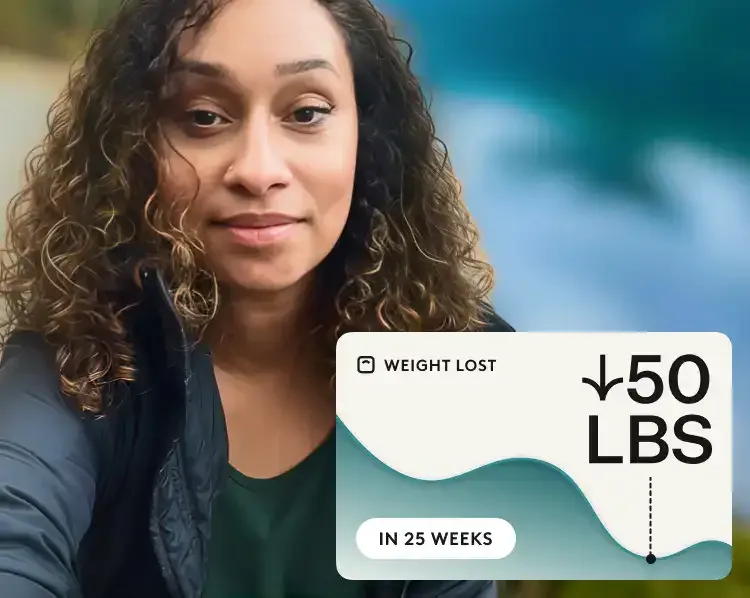
“My favorite parts of Noom are the care team and other Noomers. Sharing and getting help made me feel like I wasn’t doing it alone. That support made all the difference.”
Desirea N. — Real Noom user
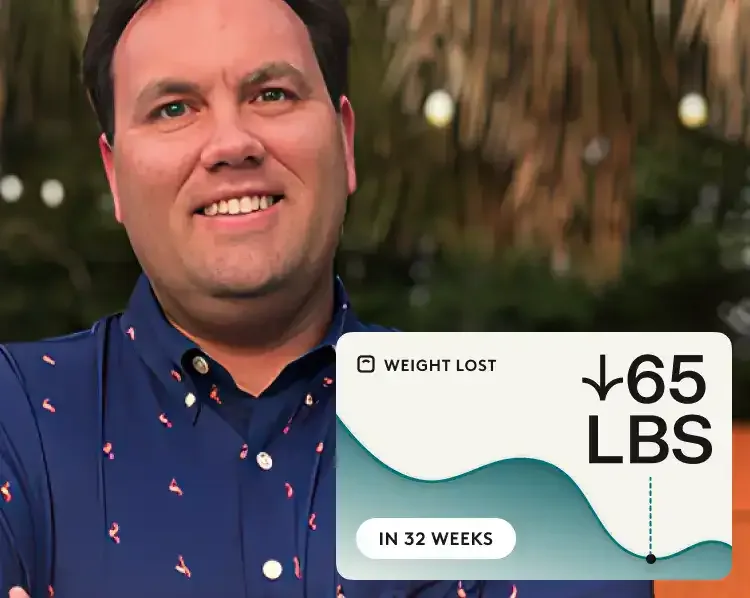
“Noom has taught me that every day is a new chance to make better, healthier choices. It’s taught me how to stop overeating.”
Matthew M. — Real Noom user

“Clinicians who understand how supportive medication can be is one of the best parts of Noom! I was convinced I wouldn’t have success but I’m down 11 pounds in two months.”
Lila M. — Real Noom user
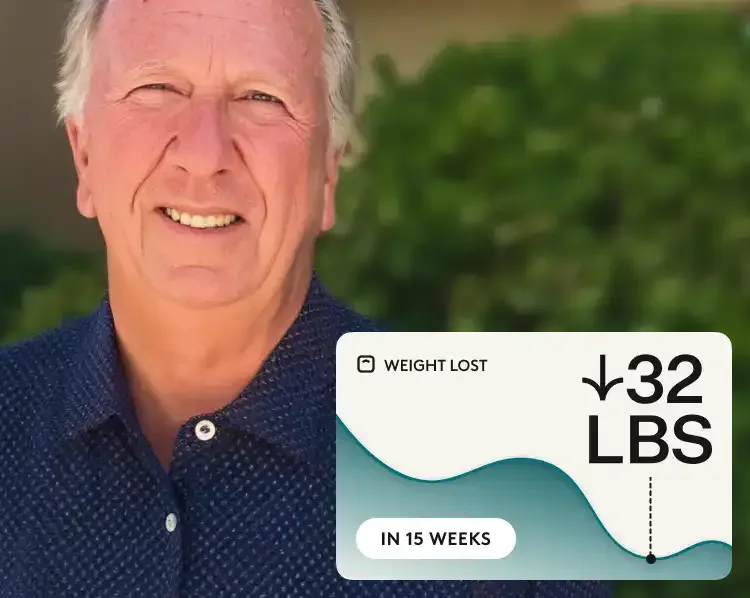
“Noom provided me with the medication which I could not get through Medicare. I have learned the tricks to better eating and life in general.”
Steve M. – Real Noom user
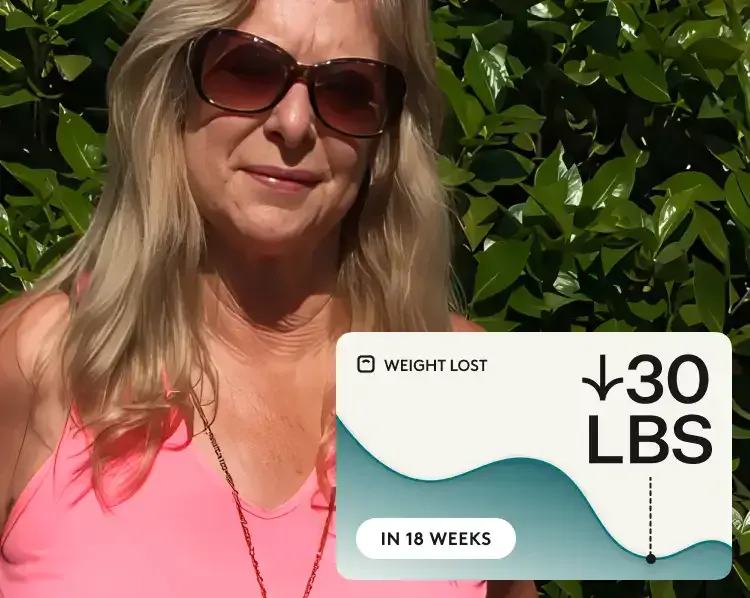
“Noom has changed my life and I’m so thankful, I feel great, have more energy and am no longer prediabetic.”
Daisy R. – Real Noom user
“All of the Noom providers that I’ve met with have been exceptional and prescribed medications that are appropriate for my situation and health.”
Sarah R. – Real Noom user
“Noom made the process so simple and now I feel full, free from diet obsession, and at ease in my body again.”
Madison S. – Real Noom user
“My doctor recommended Noom after I was frustrated trying to lose weight. The lessons helped change my relationship with food. My body feels lighter & energized.”
Sonday K. – Real Noom user
“I built healthy habits with coaching and lessons that make me confident I can maintain my weight loss long term.”
Cam K. – Real Noom user
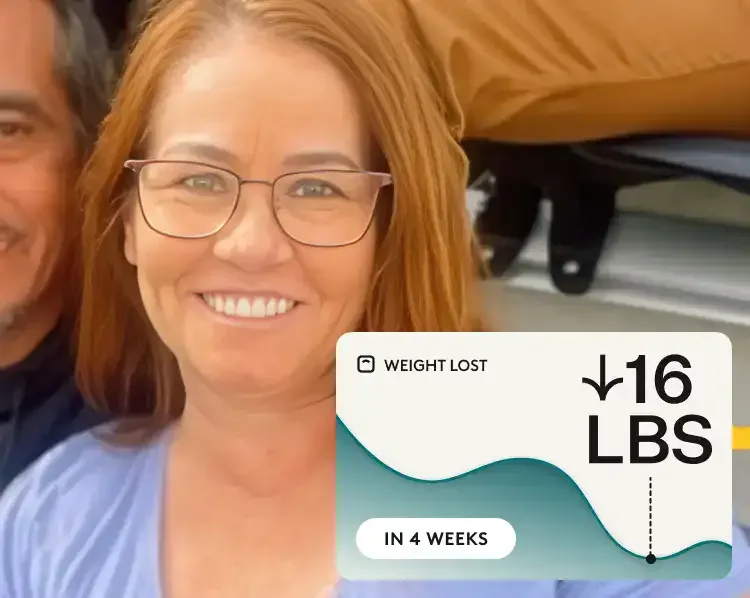
“With the right medication through Noom, hunger and sugar cravings finally quieted and I have the tools to break the cycle.”
Laura TR. – Real Noom user
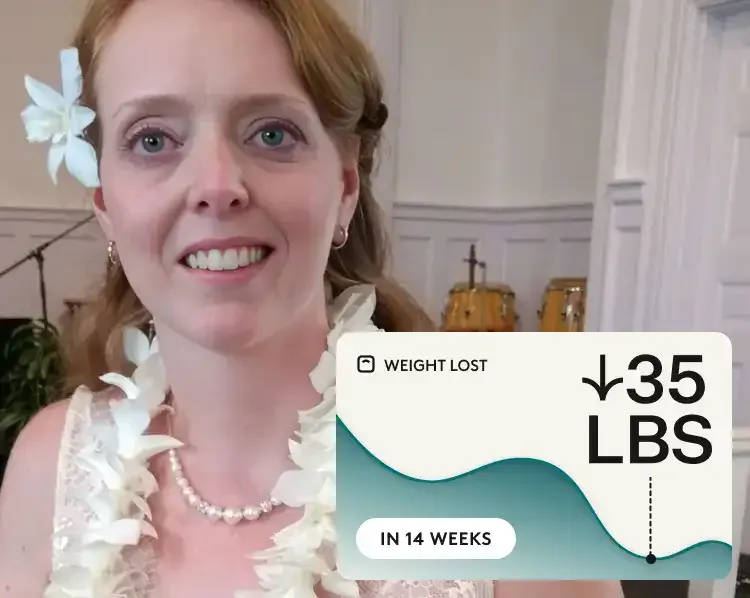
“Cravings and food noise are gone, I finally feel confident in the healthy habits I’ve built to last with Noom.”
Jessica S. – Real Noom user
The bottom line: Cagrilintide research is promising, but it’s still in trials
Cagrilintide represents something genuinely different in the weight-loss medication space. While the GLP-1 class has dominated the conversation, cagrilintide targets the amylin system, a separate hormonal pathway that influences hunger, satiety, and digestion in its own way.
On its own, cagrilintide has shown clinically meaningful weight loss (11 to 12%) with a tolerability profile that analysts have highlighted as one of its key strengths. Combined with semaglutide as CagriSema, it pushes well above 20%.
It’s not a clear-cut winner over tirzepatide in head-to-head data—but it doesn’t need to be. Its value lies in expanding options, reaching people who may respond differently to different pathways, and advancing the science of combination-based approaches.
Cagrilintide isn’t available today, and it won’t be for a while. But it’s firmly on the map. CagriSema is under FDA review with a decision expected by late 2026, and the RENEW program will give us a fuller picture of what cagrilintide can do as a standalone treatment. We’ll continue to update this article as new data and regulatory decisions come in.
If you’re ready to explore medically assisted weight management right now, Noom Med can pair you with a clinician to evaluate your options and build a plan that fits your goals. From personalized prescribing to behavioral coaching, structured workouts, and tools like the GLP-1 Companion for tracking and daily support, it’s designed to make the process more manageable and more sustainable.
Editorial standards
At Noom, we’re committed to providing health information that’s grounded in reliable science and expert review. Our content is created with the support of qualified professionals and based on well-established research from trusted medical and scientific organizations. Learn more about the experts behind our content on our Health Expert Team page.