

What you’ll learn:
- Peptides are technically short chains of amino acids, but the term covers a huge range of products—from collagen powders to prescription medications like semaglutide and tirzepatide.
- What matters most isn’t just that something is called a peptide, but which peptide it is, what it’s designed to do.
- Some peptides have strong clinical research behind them, while others don’t—so knowing how they’re studied and sourced matters.
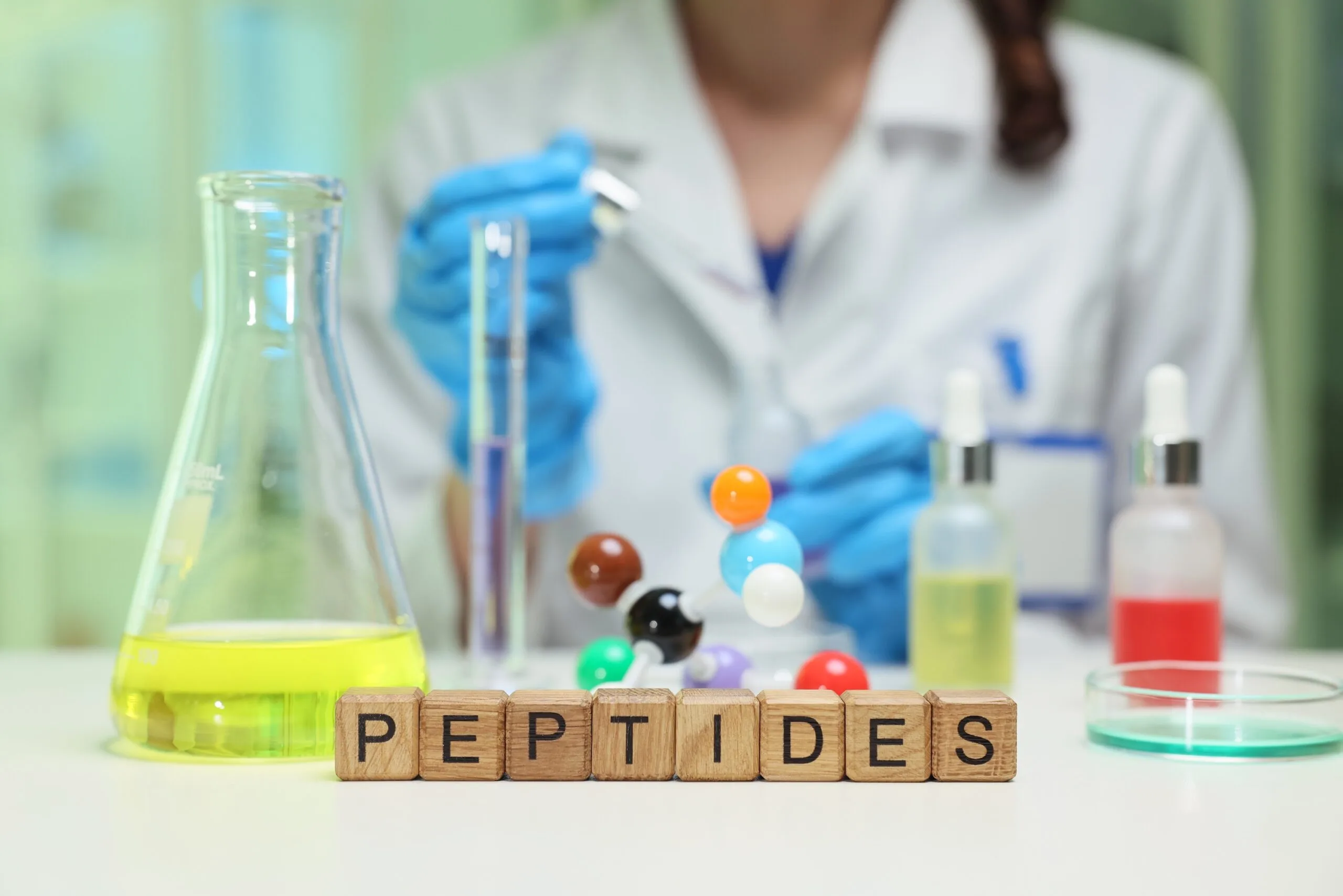
You’ve probably seen peptides mentioned in the context of popular weight loss medications like Wegovy® and Zepbound®. They’re also common in skincare ads for ingredients like Argireline, often marketed as a “non-invasive Botox alternative,” as well as collagen boosters. And fitness and longevity supplements often feature peptides with numbered names like BPC-157, CJC-1295, or something like sermorelin. But despite all the buzz, most explanations skip the basics of what peptides actually are.
At the simplest level, peptides are small building blocks made from amino acids, which are the same tiny units your body uses to make proteins. So when people talk about “peptides,” they are usually talking about a broad scientific category, not one single product or trend.
That’s why peptide-based products can be used for so many different things—from prescription medications like semaglutide and tirzepatide, to injectable cosmetic treatments, to powders and capsules marketed for muscle growth or fat loss.
The entire world of peptides is very large, but there are a few key ones worth knowing if you’re interested in weight loss, longevity, and products marketed for metabolic health. Understanding which peptides are backed by clinical research—and which ones rely mostly on marketing—can help you sort credible options from hype, while maintaining a healthy skepticism around claims that sound too good to be true.
Let’s walk through what peptides are, the main categories, and where you might commonly encounter them, so you can make a more informed decision about when—and whether—they actually make sense to use.
What are peptides?
Peptides are short chains of amino acids—the same building blocks your body uses to make proteins. Your body naturally produces peptides all the time, and they play key roles in processes like digestion, immune function, hormone signaling, and communication between cells.
But in most modern health, fitness, and longevity conversations, peptides usually refer to synthetic, lab-made peptides. These are designed by researchers to mimic or influence specific biological signals in the body.
Synthetic peptides are used in prescription medications, cosmetic treatments, and research settings, and they’re increasingly marketed in supplements and wellness products for things like weight loss, muscle growth, recovery, and anti-aging. Because they’re engineered to target specific pathways, their effects—and the evidence supporting them—can vary widely.
It helps to think of peptides as a broad biological category rather than a single product. What matters most is the specific peptide, how it’s made, and how it’s used.
How peptides work in the body: Signaling and structure
One helpful way to understand peptides—especially synthetic, lab-made peptides—is to picture them as signals moving through the body. Many peptides act as messengers, delivering instructions that tell cells how to respond to what the body needs in the moment.
Synthetic peptides are designed to copy, amplify, or block signals that already exist naturally in the body. That’s why the same basic building blocks can be used to create prescription medications, cosmetic treatments, and wellness products with very different effects.
Because there are many different kinds of peptides, they can be involved in many everyday biological processes. Some of the most common roles include:
- Hormone signaling – Some peptides act as hormones—chemical messengers that travel through the bloodstream to regulate processes like appetite, metabolism, growth, and reproduction. A well-known example is semaglutide, the active ingredient in Ozempic® and Wegovy®, which mimics GLP-1 (a natural peptide) involved in appetite and blood sugar regulation.
- Cell communication – Peptides can help nearby cells share information, especially when tissues need to respond to stress, injury, or changes in their environment. Many peptides marketed for performance or recovery claim to work through these localized signaling pathways.
- Immune function — Some peptides are involved in the body’s natural defenses, particularly in protective barriers like the skin and mucosal surfaces. In medical and cosmetic settings, synthetic peptides may be used to activate or suppress specific immune responses.
- Tissue repair – Certain peptides play a role in the body’s natural repair processes, helping regulate how tissues respond after everyday wear, strain, or injury. This mechanism is often cited for peptides like BPC-157.
- Enzyme regulation – Peptides can also influence enzymes—proteins that speed up chemical reactions in the body, such as those involved in digestion or metabolism. Some peptides work by activating enzymes, while others slow them down or block their action entirely.
What a peptide does ultimately comes down to its structure. The exact order and shape of amino acids determine which receptor the peptide can bind to and what message it sends. That’s why two peptides can look similar on paper but behave very differently in the body.
In other words, peptides aren’t interchangeable. Each synthetic peptide is designed to deliver a specific signal, and understanding that signal is key to evaluating how effective, well-studied, or appropriate it really is.
Dietary peptides vs. bioactive peptides: The important differences
Peptides can come up in both nutrition and medical conversations, which is where the distinction between dietary peptides and bioactive peptides matters. These terms help explain why the word peptides can mean very different things depending on the context.
Access GLP-1 Weight Loss with Noom
Explore a wide range of prescription medications supported by Noom’s program.Microdose GLP-1rx
Noom GLP-1rx
Noom GLP-1rx Plus
Wegovy®

Ozempic®

Metformin
Zepbound®
Mounjaro®
Liraglutide

Dietary peptides
Dietary peptides are small peptide fragments that come from food. When you eat protein, your digestive system breaks it down into amino acids and short peptide chains. In this context, peptides function primarily as nutrients, helping the body absorb and use dietary protein.
Examples of dietary peptides include:
- Peptide fragments produced when whole proteins are digested
- Collagen powders or “collagen peptides” (hydrolyzed collagen) used in supplements
- Protein hydrolysates found in some protein powders or medical nutrition products
- Naturally occurring peptide fragments formed during digestion of foods like dairy, meat, or legumes
Bioactive peptides
Bioactive peptides behave very differently. These peptides can interact with specific receptors, enzymes, or signaling pathways in the body, meaning they act more like signals than nutrients.
Some bioactive peptides are made naturally in the body, while many are synthetic, lab-made peptides designed to produce a specific biological effect. This is the category most people are referring to when peptides are discussed in medications, skincare treatments, or “peptide therapy.”
Examples of bioactive peptides include:
- Semaglutide and tirzepatide: Mimic GLP-1 (glucagon-like peptide-1), a hormone involved in appetite and blood sugar regulation.
- Insulin: a peptide hormone produced naturally by the body and also made synthetically to help regulate blood sugar.
- Peptides like BPC-157 are often discussed in recovery and performance circles.
When we talk about peptides online, it’s generally the synthetic exogenous type found in pharmaceutical or cosmetic products.
Dietary peptides in nutrition: A closer look at collagen peptides
Collagen peptides (sometimes called hydrolyzed collagen) are one of the most talked-about dietary peptides in the nutrition and supplement space. They’re made by breaking down collagen, a structural protein found in connective tissues like skin, cartilage, and bones, into smaller protein fragments through a process called hydrolysis. In supplements, collagen is typically sourced from animal connective tissues, such as bovine (cow), porcine (pig), chicken, or fish skin and bones.
Collagen peptides are common in nutrition supplements for a few reasons:
- They dissolve easily in liquids.
- They provide protein fragments rich in amino acids such as glycine and proline.
- They are linked to muscle, bone, and skin benefits.
After you take collagen peptides, your digestive system breaks them down even further into individual amino acids and very small peptides, such as dipeptides and tripeptides. These are absorbed through the gut and used in the same way the body uses other forms of dietary protein.
Many supplements provide collagen peptides in the range of 2.5 to 15 grams per day, with some studies using amounts up to 20 grams.
How do they differ from regular collagen?
Collagen in its original form is a tightly folded protein found naturally in connective tissues like skin, cartilage, tendons, and bones. In food, it’s present in things like bone broth, meat with connective tissue, skin-on poultry, and gelatin.
Because intact collagen is tightly structured, it can be harder for the body to break down. Collagen peptides are much smaller fragments, which makes them easier to dissolve in foods and easier for the body to digest.
How peptides can get into your body
There are a few different ways peptides, both natural and synthetic, can be introduced into the body, depending on what they’re being used for and how easily they break down.
- Oral (by mouth): Peptides from foods or supplements are usually broken down during digestion into amino acids and very small peptide fragments before being absorbed. As a result, orally consumed peptides generally act as nutrients rather than targeted biological signals.
- Topical (on the skin): Some peptides are included in creams or serums and applied directly to the skin. These peptides primarily act at or near the surface of the skin, since intact peptides have limited ability to penetrate deeply or enter the bloodstream.
- Injectable: Certain prescription peptides, like semaglutide or tirzepatide, are given by injection so they can reach the body more directly. This is also important for peptides because some can be easily destroyed by the digestive system. Newer GLP-1 pills require a special coating and absorption enhancer that helps protect the peptide from stomach acid and allows a small amount to be absorbed through the gut lining.
A quick guide to well-known peptides by category
If you’ve ever searched the word “peptides”, you’ve probably seen a long list of specific names. Some are medications, some are cosmetic ingredients, and others are still limited to research settings. Below is a quick guide to the ones people most commonly hear about.
Weight-related & metabolic peptides
If you’ve looked up peptides for weight loss, these are a few names you’ve probably seen mentioned most often, and perhaps some new ones in testing. Here’s a look and some definitions:
- Semaglutide: A medication that acts on the GLP-1 hormone pathway and is used in type 2 diabetes care as Ozempic® and for weight management as Wegovy®.
- Liraglutide: Another GLP-1–based prescription drug that is also approved for diabetes (Victoza®) and weight-related treatment (Saxenda®).
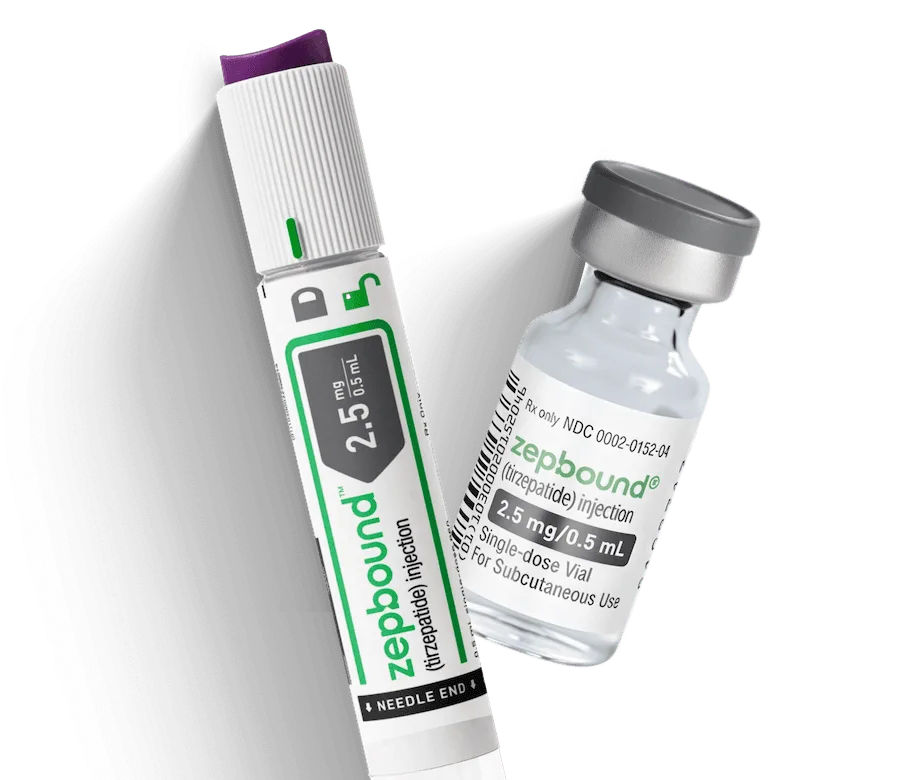
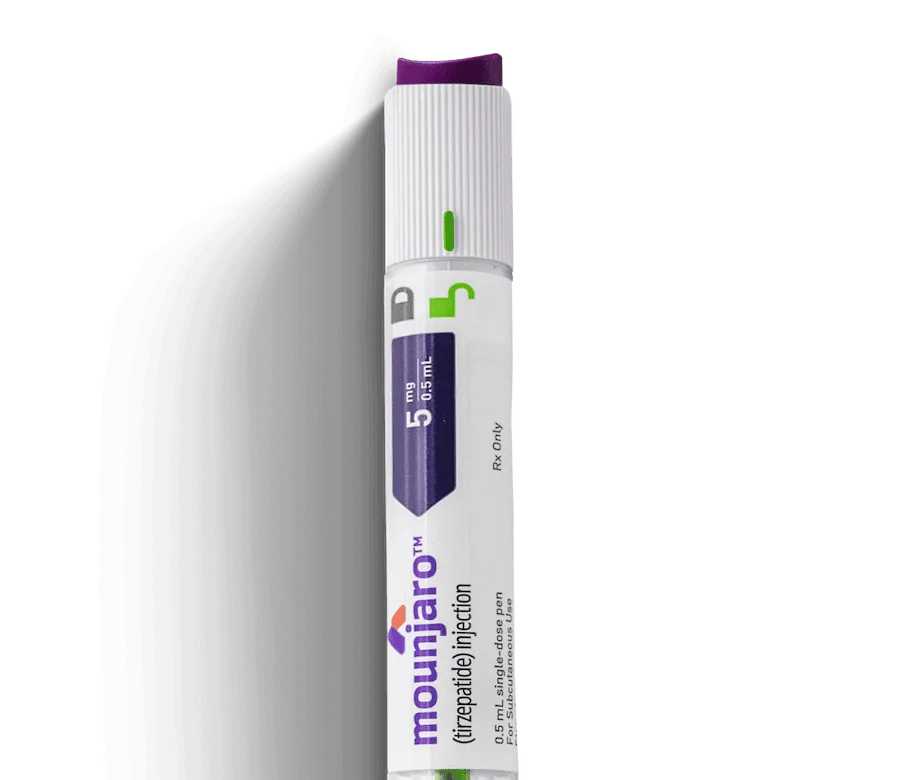
- Tirzepatide: Targets both GLP-1 and GIP pathways and is FDA-approved for type 2 diabetes (Mounjaro®) and weight management (Zepbound®).
- Retatrutide: A popular but still investigational triple-agonist that targets three hormone receptors (GLP-1, GIP, and glucagon) and is still being studied in clinical trials.
- CagriSema: This is an investigational combination of cagrilintide (an amylin-based peptide) and semaglutide, designed to target multiple appetite and satiety pathways at once. It’s currently in late-stage clinical trials, but early results suggest it may lead to greater weight loss than GLP-1 therapy alone.
Peptides in skincare
Skincare is also one of the most common places people first hear about peptides, since many topical products include them as cosmetic ingredients.
- Argireline (Acetyl Hexapeptide-8): A lab-made peptide often used in products focused on skin appearance and expression lines.
- SNAP-8: A related peptide sometimes described as an extended form of Argireline in cosmetic science.
- GHK-Cu: Also called the copper peptide, this one has been researched for its role in skin support and tissue signaling.
- Matrixyl (Palmitoyl Pentapeptide-4): A well-known cosmetic peptide studied for how it relates to collagen and skin structure.
- Signal and carrier peptides: Broader categories used in skincare to describe peptides that interact with skin communication pathways or help deliver trace elements.
These peptides are used in topical cosmetic products and are regulated differently from prescription drugs.
Fitness & performance-related peptides
These names often come up in bodybuilding or recovery forums.
- BPC-157: Often mentioned in injury and tendon recovery forums, though it isn’t an approved medication.
- TB-500: A synthetic version of a fragment related to thymosin, often mentioned in muscle recovery spaces.
- CJC-1295: A lab-made compound designed to affect growth hormone signaling, mainly seen in research and fitness discussions.
- Ipamorelin: A growth hormone–releasing peptide sometimes marketed online, with limited clinical availability.
- Sermorelin: A synthetic form of a natural hormone signal that has been used in some prescription settings tied to growth hormone release.
- GHRP-2 / GHRP-6 / Hexarelin: A group of similar compounds often marketed in bodybuilding spaces because of their role in growth hormone stimulation.
- IGF-1 LR3: A modified lab version of IGF-1, mostly discussed in muscle growth research.
- MK-677 (Ibutamoren): A peptidomimetic (peptide-like compound) that affects growth hormone pathways and is frequently labeled for research use.
Therapeutic & emerging research peptides
This group includes peptides that are usually discussed in early-stage medical research, especially around brain function, immunity, or aging.
- MOTS-C: Studied for its possible role in metabolism, or how the body handles energy.
- Selank: A lab-made peptide researched for how it may influence stress and mood signals in the brain.
- Semax: A synthetic peptide investigated for brain and cognitive-related signaling.
- Epitalon: A compound researched for longevity purposes.
- KPV: A short peptide fragment studied for how it may interact with immune and inflammatory pathways.
Where do people buy peptides?
A quick search for peptides can lead to supplement aisles, pharmacy conversations, and research websites all at once. The key is that these products aren’t all in the same category, so where or how you get them depends on how they’re meant to be used.
- Supplements: Some peptides are sold in nutrition products, like collagen powders or protein blends, that you can pick up without a prescription.
- Prescription drugs: Others are part of medications, including certain treatments for diabetes or weight management, and they’re only available through a healthcare provider and pharmacy.
- Research compounds: You may also see peptides sold online and labeled “research use only.” These products are intended for laboratory testing—not unrestricted human use—and aren’t regulated the same way medications or supplements are. Because of that, their purity, dosing, and safety can be unpredictable, which makes them potentially dangerous if used outside of their intended use.
Not every product labeled “peptide” is tested or regulated in the same way. Taking time to understand the peptides’ uses and verify trusted sourcing can help you understand what you are getting.
Are peptides legal?
People often ask if peptides are legal, but there isn’t one universal answer. Legality depends on the specific peptide and how it’s being sold or used.
What matters most is knowing:
- Which peptide it is
- What it’s being used for
- How it’s classified
Most peptides you’ll hear about fall into these categories:
- Dietary peptides: Found in foods or supplements, treated like nutritional ingredients.
- Skincare peptides: Included in topical cosmetic products, regulated differently from drugs.
- Prescription peptides: Used in medications that require a prescription and medical oversight.
- Research-only peptides: Labeled for lab testing, not approved for personal use.
With so many peptides being talked about online by influencers and wellness brands, it can be hard to tell what’s actually legitimate. That’s why it’s important to check how a product has been studied by regulators, like the FDA, since a clear regulatory pathway signals it’s been reviewed for safety and quality.
Are peptides safe or bad for you?
Safety depends a lot on which peptide you’re talking about and how it’s being used. Some are simply part of everyday nutrition, while others are prescription medications that need medical oversight.
A few things can change the risk level quickly, including:
- Type of peptide: Dietary forms, cosmetic ingredients, and drug-based compounds all fall into very different categories.
- Dose: Higher amounts or unregulated dosing can raise the chance of unwanted effects.
- Purity and sourcing: Products sold online may not always contain what the label claims, especially if they’re marketed as “research use only.”
- How it enters the body: Something taken by mouth is handled very differently from something injected directly into the bloodstream.
If something is being sold online without clear regulation or medical guidance, it’s worth being cautious. Safety comes down to knowing exactly what you’re taking, where it comes from, and how it’s meant to be used.
Frequently asked questions about peptides
Peptides can be confusing at first, especially since the word shows up everywhere from nutrition labels to prescription medications. Here are simple answers to the most common questions people ask.
What are peptides good for?
Peptides play many everyday roles in the body, depending on the specific type. Some act as natural messengers (like hormones), some support immune defense, and others show up in nutrition as protein fragments from food. You’ll also see certain lab-made peptides used in medicine, skincare, and research, which is why the term comes up in so many different settings.
What do peptides do in the body?
Inside the body, peptides often work like small signals that help cells communicate. They can be involved in hormone messaging, immune protection, tissue repair, and enzyme activity during digestion. Since different amino acid sequences create different effects, each peptide has its own job based on its structure.
What are peptides used for?
Synthetic peptides are used in a few major areas of health and science. Some are part of FDA-approved prescription medications, others are studied in weight and diabetes care through gut-hormone pathways, and many are used in cosmetic skincare formulas. Researchers also create peptides in labs to better understand how receptors, immune signals, and new therapies might work.
What are the best peptides for weight loss?
The most established options in this space are FDA-approved medications like semaglutide, tirzepatide, and liraglutide, which act on hormone pathways involved in blood sugar and appetite regulation. Of these three, tirzepatide has generally shown the greatest average weight loss—21% in clinical trials.
Where can you buy peptides?
Where you get them depends on the category. Peptide supplements like collagen are often sold over the counter in pharmacies or wellness stores, while peptide-based medications like GLP-1 medications are only available with a prescription.
Since quality and safety standards can vary a lot outside trusted channels, it’s worth being cautious and sticking with products that have proper medical oversight or established supplement sourcing.
Are peptides the same as proteins?
They’re closely related, but peptides are smaller. Amino acids are single building blocks, peptides are short chains of amino acids, and proteins are much longer, more complex chains. So peptides are basically smaller pieces within the same family of molecules.
How can I get peptides naturally?
Your body makes its own peptides every day, and you also get dietary peptides through protein-rich foods. Foods like eggs, fish, and other animal or plant proteins are broken down during digestion into amino acids and small peptide fragments that your body can absorb and use as part of normal nutrition.
Reviews from real Noom users
Desirea N. — Real Noom user

“My favorite parts of Noom are the care team and other Noomers. Sharing and getting help made me feel like I wasn’t doing it alone. That support made all the difference.”
Desirea N. — Real Noom user
Matthew M. — Real Noom user

“Noom has taught me that every day is a new chance to make better, healthier choices. It's taught me how to stop overeating.’’
Matthew M. — Real Noom user
Lila M. — Real Noom user

“Clinicians who understand how supportive medication can be is one of the best parts of Noom! I was convinced I wouldn’t have success but I’m down 11 pounds in two months.’’
Lila M. — Real Noom user
Steve M. — Real Noom user

“Noom provided me with the medication which I could not get through Medicare. I have learned the tricks to better eating and life in general.”
Steve M. – Real Noom user
Daisy R. — Real Noom user

‘’Noom has changed my life and I’m so thankful, I feel great, have more energy and am no longer prediabetic.”
Daisy R. – Real Noom user
Sarah R. — Real Noom user

“All of the Noom providers that I’ve met with have been exceptional and prescribed medications that are appropriate for my situation and health.”
Sarah R. – Real Noom user
Madison S. — Real Noom user

“Noom made the process so simple and now I feel full, free from diet obsession, and at ease in my body again.”
Madison S. – Real Noom user
Sonday K. — Real Noom user

“My doctor recommended Noom after I was frustrated trying to lose weight. The lessons helped change my relationship with food. My body feels lighter & energized.”
Sonday K. – Real Noom user
Cam K. — Real Noom user

“I built healthy habits with coaching and lessons that make me confident I can maintain my weight loss long term.”
Cam K. – Real Noom user
Laura TR. — Real Noom user

“With the right medication through Noom, hunger and sugar cravings finally quieted and I have the tools to break the cycle.”
Laura TR. – Real Noom user
Jessica S. — Real Noom user

“Cravings and food noise are gone, I finally feel confident in the healthy habits I’ve built to last with Noom.”
Jessica S. – Real Noom user
The bottom line: Peptides are a broad category and can be used for many purposes
Peptides are everywhere right now, but they’re not all doing the same job—or regulated, studied, or used in the same way. At their core, peptides are short chains of amino acids that act as building blocks, signals, or research tools depending on their structure and how they’re used. That’s why the word peptides can apply to substances your body makes naturally, collagen powders sold as supplements, prescription weight-loss medications, and experimental compounds sold online.
The most important distinction isn’t that dietary and bioactive peptides are fundamentally different substances, but how they’re used. Peptides consumed as part of food or supplements—such as collagen—primarily serve a nutritional role. Other peptides are formulated to remain intact and engage specific receptors or pathways, which is why some appear in prescription medications, others in skincare products, and many remain restricted to research settings.
How a peptide enters the body, how well it’s studied, and how tightly it’s regulated all shape its effects and safety profile. Injectable prescription peptides are engineered to deliver precise signals and are held to strict standards. Supplements and research-only products might not be—and that difference matters.
With so many peptides being discussed online, the safest approach is to slow down and look past the label. Knowing which peptide it is, what it’s designed to do, and how it’s regulated makes it much easier to separate clinically supported options from products that rely more on hype than evidence.
If you’re curious about peptide-based weight loss medications like GLP-1s, see if you qualify for Noom Med. You’ll be connected with a qualified clinician who can find the right prescription medication for you and prescribe it, if needed. You’ll get access to a Care Team and Noom’s full program, tools, trackers, workout videos, and more to help you build sustainable habits that last.
Editorial standards
At Noom, we’re committed to providing health information that’s grounded in reliable science and expert review. Our content is created with the support of qualified professionals and based on well-established research from trusted medical and scientific organizations. Learn more about the experts behind our content on our Health Expert Team page.