

What you’ll learn:
- Tirzepatide tablets are marketed as dissolvable or sublingual alternatives to injections, offering a needle-free option for weight loss.
- Tirzepatide tablets haven’t been studied in clinical trials, so it’s unclear how well they’re absorbed or whether they work for weight loss.
- Tirzepatide is available as a weekly injection. If you prefer a pill, oral alternatives include the Wegovy® pill and Foundayo®.
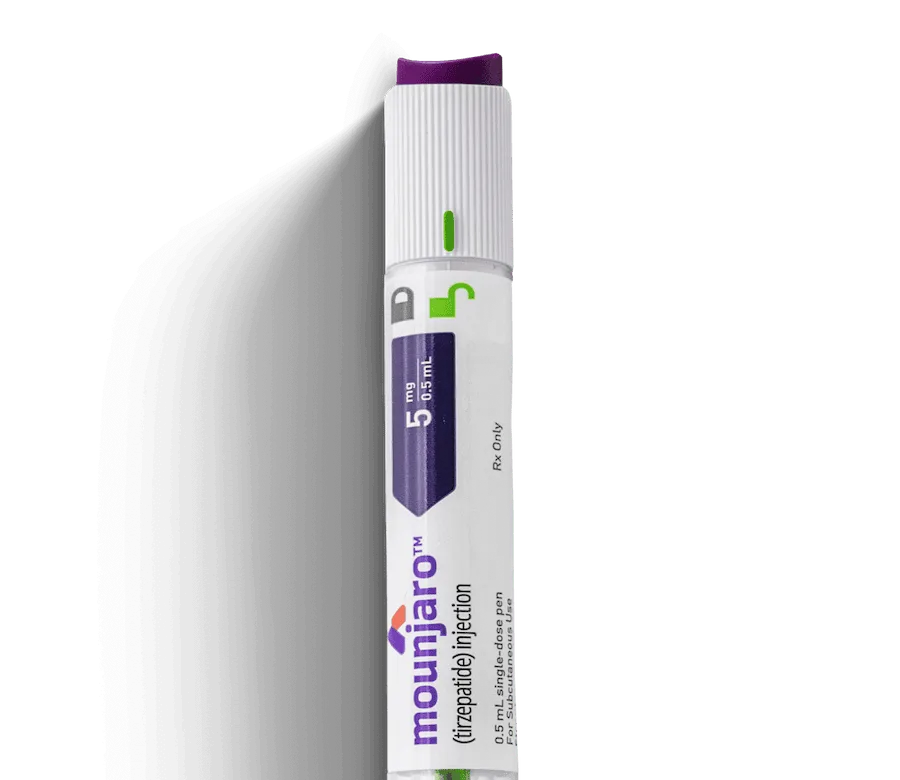
Tirzepatide is one of the most effective weight-loss medications available today. It’s sold as Zepbound® for weight management and as Mounjaro® for type 2 diabetes. In clinical trials, people taking the highest dose lost an average of about 21% of their starting weight over 72 weeks. The catch? Tirzepatide is only available as a weekly injection.
For people who’d rather take a pill than give themselves an injection, there are other GLP-1 options. The Wegovy® pill, which contains semaglutide, became available in early 2026, followed by Foundayo®, which contains orforglipron, in April 2026.
You may have also come across tirzepatide tablets advertised online. These daily dissolving tablets are marketed as offering the convenience of a pill with the weight-loss benefits associated with tirzepatide injections, sometimes at a lower price.
But there’s an important distinction. While injectable tirzepatide has been extensively studied, these oral formulations haven’t undergone the same clinical testing. Researchers haven’t established how well tirzepatide is absorbed from these tablets, whether they produce meaningful weight loss, or how their effects compare with injections.
Here’s what to know about tirzepatide tablets, where the research stands, and how they compare with other GLP-1 pills for weight loss.
Noom’s Most Powerful Program
A dual-pathway GLP-1 and behavior change for lasting results.
What are tirzepatide tablets?
Tirzepatide tablets are oral products marketed as a needle-free alternative to injectable tirzepatide, the medication in Zepbound® and Mounjaro®. They’re now advertised by numerous online weight-loss services, typically through telehealth providers working with specialized pharmacies.
Despite the name, not all oral tirzepatide products are traditional pills. They come in several forms, including:
- Sublingual tablets: Designed to dissolve under the tongue, where the medication is intended to be absorbed through the tissues in your mouth.
- Orally dissolving tablets: Dissolve in the mouth without needing to be swallowed whole. Some are designed to be placed between the cheek and gum.
- Other oral formulations: Some providers also advertise tirzepatide drops, lozenges, and capsules.
Unlike tirzepatide injections, which are taken once a week, these oral products are generally marketed for daily use. They’re promoted as offering similar benefits, including reduced appetite, increased feelings of fullness, and weight loss.
How much do tirzepatide tablets cost?
They’re not necessarily inexpensive. Advertised prices generally range from about $200 to $400 per month, depending on the provider, formulation, and subscription plan.
For comparison, Zepbound® injections are available through the manufacturer’s self-pay program from $299 to $449 per month for those who meet the program’s refill requirements.
That means some oral tirzepatide products cost nearly as much as the injections. And while injectable tirzepatide has been extensively studied, researchers haven’t established how much medication is absorbed from these oral formulations or whether they produce comparable weight-loss results.
How do tirzepatide tablet doses compare to injections?
Tirzepatide tablet doses vary by provider. Some advertise daily tablets containing 3, 5, or 7 mg, while others offer 4 mg or 8 mg. Unlike tablets, which are generally taken daily, Zepbound® and Mounjaro® injections are given once weekly in doses ranging from 2.5 to 15 mg.
But the numbers aren’t directly comparable. A 5 mg tablet doesn’t necessarily deliver the same amount of medication into your bloodstream as a 5 mg injection. Because oral tirzepatide formulations haven’t been studied in clinical trials, researchers haven’t established how much medication is absorbed or what oral dose might produce effects similar to an injection.
Is any oral version of tirzepatide available?
Not yet. Although tirzepatide tablets are being marketed online, they haven’t been studied in clinical trials to determine how well they work or how their effects compare with injectable tirzepatide. Zepbound® and Mounjaro®, the medications containing tirzepatide that have been extensively studied, are both injections.
Turning an injectable medication into a pill isn’t as simple as changing how you take it. Tirzepatide is a peptide-based medication, which makes it difficult to absorb through the digestive system. Dissolving tablets are designed to allow medication to be absorbed through the tissues in your mouth, but researchers haven’t established how well this works for tirzepatide.
Noom’s Most Powerful Program
A dual-pathway GLP-1 and behavior change for lasting results.
That doesn’t mean tirzepatide tablets won’t work. It means more research is needed to understand how much medication is absorbed and whether these tablets can produce results similar to the injections.
Read more: Tirzepatide pill: Why isn’t there an oral version yet?
Do tirzepatide tablets work?
There’s no way of knowing. Tirzepatide tablets haven’t been studied in clinical trials that establish how much medication is absorbed, whether they lead to weight loss, or how their effects compare with Zepbound® or Mounjaro® injections.
What we do know is that injectable tirzepatide can lead to significant weight loss. In a 72-week clinical trial, people taking tirzepatide lost an average of about:
- 15% of their starting weight with a 5 mg weekly injection.
- 19% of their starting weight with a 10 mg weekly injection.
- 21% of their starting weight with a 15 mg weekly injection.
But these results can’t be applied directly to tirzepatide tablets. How a medication is delivered affects how much reaches the bloodstream and how consistently it’s absorbed. Until oral formulations are studied in clinical trials, we won’t know whether they can produce similar results.
Why do some GLP-1 medications work as pills?
If peptides like tirzepatide are difficult to deliver as a pill, how do medications like Wegovy® and Foundayo® work? The answer comes down to how they’re formulated and absorbed by the body.
Both medications have been studied in large clinical trials and shown to help people lose weight, but they take different approaches:
- Wegovy® pill (semaglutide): Like tirzepatide, semaglutide is a peptide, which makes it difficult to absorb through the digestive system. The Wegovy® pill contains an ingredient called SNAC that helps semaglutide pass through the stomach lining. Even with this technology, only a small amount of the medication is absorbed. That’s why the highest dose of the Wegovy® pill is 25 mg daily, compared with 2.4 or 7.2 mg weekly for the injection.
- Foundayo® (orforglipron): This medication is different because it isn’t a peptide. It’s a small-molecule GLP-1 medication designed to be taken by mouth without a special absorption enhancer. It can be taken with or without food.
Tirzepatide tablets take another approach. They’re typically designed to dissolve under the tongue or inside the cheek, allowing the medication to potentially be absorbed through the tissues in the mouth rather than the stomach. This could mean they have different absorption characteristics than swallowed pills. But because these formulations haven’t been studied in clinical trials, there’s no way to know how much medication is absorbed or how much weight people might lose.
A word on the effectiveness of oral GLP-1 medications
Oral GLP-1 medications can produce significant weight loss, but clinical trials have generally shown greater average weight loss with the most effective injectable options.
Here’s how the results compare:
- Wegovy® pill: People taking the 25 mg daily pill lost an average of about 14% of their starting weight over 64 weeks. That’s somewhat less than the roughly 15% to 18% seen in trials of the 2.4 mg weekly Wegovy® injection and the approximately 19% seen with the higher 7.2 mg injection dose.
- Foundayo®: People taking the highest dose lost an average of about 11% of their starting weight over 72 weeks. That’s less than the average weight loss reported in trials of injectable semaglutide and tirzepatide.
These results come from different clinical trials, so they aren’t direct head-to-head comparisons. Differences in study participants, doses, and trial lengths can affect the results, but the numbers offer a general picture of how much weight loss has been observed with each medication.
What does this mean for tirzepatide tablets? People taking the highest approved injection dose of tirzepatide lost an average of about 21% of their starting weight over 72 weeks. But we can’t assume oral tirzepatide will be more or less effective than injections. Sublingual formulations may be absorbed differently than pills that are swallowed, and researchers haven’t established how much tirzepatide reaches the bloodstream through this route. Until these tablets are studied in clinical trials, we won’t know what kind of weight loss they might produce.
Read more: Wegovy® pill vs. Foundayo®.
Are tirzepatide tablets safe? Do they have side effects?
Because tirzepatide tablets haven’t been studied in clinical trials, we don’t know their specific side effect profile or how it compares with injections. But we do know the potential side effects of tirzepatide from studies of Zepbound® and Mounjaro®.
The most common side effects of injectable tirzepatide include:
- Nausea
- Diarrhea
- Vomiting
- Constipation
- Stomach pain
- Indigestion
Injectable tirzepatide also carries warnings about less common but potentially serious problems, including:
- Pancreatitis: Inflammation of the pancreas that can cause severe, persistent abdominal pain.
- Gallbladder problems: Including gallstones and inflammation of the gallbladder.
- Severe gastrointestinal reactions: Including significant nausea, vomiting, and diarrhea that can sometimes lead to dehydration and kidney problems.
- Low blood sugar: Particularly when tirzepatide is used with insulin or certain diabetes medications.
- Serious allergic reactions: Including swelling of the face or throat and difficulty breathing.
- Thyroid C-cell tumors: Tirzepatide carries a boxed warning based on tumors observed in rats. It’s unknown whether tirzepatide causes these tumors in humans.
These warnings come from research on injectable tirzepatide, not oral tablets. We don’t yet know whether the same risks occur with tirzepatide tablets or how frequently they might happen.
If you’re considering tirzepatide tablets, talk with your healthcare provider about your medical history, other medications, and what is known—and still unknown—about these formulations.
Read more: Tirzepatide side effects: What to expect and how to manage them
Frequently asked questions about tirzepatide tablets
Do tirzepatide tablets work?
There isn’t enough clinical evidence to know. Oral tirzepatide products haven’t been studied in trials that establish whether they work for weight loss or how their effects compare with FDA-approved injections.
Access GLP-1 Weight Loss with Noom
Explore a wide range of prescription medications supported by Noom’s program.
Microdose GLP-1rx
Noom GLP-1rx
Noom GLP-1rx Plus
Wegovy®
Ozempic®
Metformin
Zepbound®
Mounjaro®
Liraglutide
Are tirzepatide tablets effective?
Their effectiveness hasn’t been established. Studies showing that injected tirzepatide can support weight loss don’t tell us whether an oral product is absorbed reliably or has the same effects.
Do tirzepatide tablets work as well as injections?
That’s unknown. No clinical trial evidence shows that dissolvable tirzepatide tablets work like Zepbound® or Mounjaro® injections.
Are tirzepatide tablets real?
Products marketed as “tirzepatide tablets” may be sold as medications, but there’s no FDA-approved oral tirzepatide product.
Are tirzepatide tablets the same as the Wegovy® pill or Foundayo®?
No. The Wegovy® and Ozempic® pills contain semaglutide, while Foundayo® contains orforglipron. Each has a different active ingredient, formulation, and approved use. Wegovy® and Foundayo® are approved for chronic weight management. The Ozempic® pill is approved for type 2 diabetes.

The Easy Way
to lose weight and get healthy.
The bottom line: Tirzepatide tablets haven’t been studied or proven to work for weight loss
“Tirzepatide tablets” may sound like a pill version of Zepbound® or Mounjaro®, but there’s no clinical trial evidence showing that they’re absorbed reliably, cause weight loss, or work like the injections. Early research into ways to deliver tirzepatide by mouth is still in progress.
If you’re looking for a needle-free alternative, the Wegovy® pill and Foundayo® are approved medications proven to help with weight loss. Or, if you’re specifically interested in tirzepatide, you can look into Zepbound® and Mounjaro® injections.
If you qualify for Noom, a licensed clinician can review your health history, discuss whether a prescription medication may be appropriate, and find the right medication for you. Plus, your treatment will be managed by a Care Team and include habit-building tools to help support lasting results.
Editorial standards
At Noom, we’re committed to providing health information that’s grounded in reliable science and expert review. Our content is created with the support of qualified professionals and based on well-established research from trusted medical and scientific organizations. Learn more about the experts behind our content on our Health Expert Team page.