

What you’ll learn:
- A DEXA scan offers the most precise, clinically validated way to measure your body composition—revealing your levels of muscle, fat, and bone density.
- Understanding your DEXA results can help predict long-term health risks and guide you toward targeted nutrition and exercise strategies that support muscle and bone strength.
- Small, sustainable changes in movement, nutrition, and daily habits can help you improve your DEXA results and achieve lasting wellness.
Your bathroom scale tells you what you weigh, but it can’t tell you if that weight comes from muscle, fat, water, or everything else that makes up your body. A DEXA scan gives you a clearer picture—showing how much muscle you’re carrying, where body fat is distributed, and how strong your bones are.
What are the benefits? When you understand your body’s actual makeup, you can make more targeted choices about how you eat, move, and recover. That can translate into things you feel day to day—like better energy, strength, and physical confidence—not just changes on the scale.
It also adds a longer view. Muscle mass, bone density, and fat distribution are all closely tied to metabolic health, mobility, and risk for conditions like osteoporosis, type 2 diabetes, and heart disease. Tracking these over time can help you protect not just how you look or weigh, but how well your body functions—and how long you can stay active, independent, and feeling like yourself.
Let’s go through what a DEXA scan is, where to get one, and what it might cost. Plus, we’ll tell you whether one makes sense for you.
What is a DEXA scan?
If you’ve ever felt like the number on the scale doesn’t tell the whole story, you’re right. What really matters is what your body is made of—how much muscle you have to support strength and metabolism, how much fat you’re carrying (and where), and how strong your bones are.
A DEXA scan shows you exactly that.
DEXA stands for dual-energy X-ray absorptiometry. It’s a specialized imaging test that breaks your weight down into muscle, fat, and bone—giving you a clearer picture of your overall health, not just your size.
How DEXA technology works
A DEXA scan uses two low-dose X-ray beams to look beneath the surface of your body. Because bone, muscle, and fat each absorb X-rays differently, the scan can distinguish between them and map out where each is located.
The radiation exposure is very low—roughly comparable to what you’d get during a cross-country flight—making it safe for occasional use.
What a DEXA scan measures
Instead of a single number, a DEXA scan gives you a full breakdown of your body composition, including:
- Body fat percentage
- Lean muscle mass
- Bone density
- Fat distribution (including around organs)
This helps you understand changes a scale can’t show—like building muscle, preserving bone, or shifting fat distribution in ways that support long-term health.
What a DEXA scan feels like
The scan usually takes about 15 to 20 minutes. You’ll lie on a padded table while a scanner moves slowly over your body.
There’s no discomfort, no enclosed space, and nothing you need to do besides lie still. Most people find it easy and comfortable.
How much does a DEXA scan cost?
Most DEXA scans cost $50 to $300 out of pocket, depending on where you go and what you’re measuring.
- Body composition scans (fitness/wellness): $50–$150
- Medical or hospital-based scans: $150–$400+
If a doctor orders the scan to check bone density (like screening for osteoporosis), insurance or Medicare may cover it. But if you’re using it for fitness or weight loss tracking, it’s usually out-of-pocket.
Access GLP-1 Weight Loss with Noom
Explore a wide range of prescription medications supported by Noom’s program.Microdose GLP-1rx

Noom GLP-1rx
Noom GLP-1rx Plus
Wegovy®

Ozempic®

Metformin

Zepbound®
Mounjaro®
Liraglutide

Expect to pay around $100–$200 for most scans, though prices can vary by location and provider.
Why a DEXA scan can predict health & longevity
Your body composition tells a deeper story about your health than the number on the scale ever could. A DEXA scan doesn’t just show how much you weigh—it shows how your body is built, and that structure is closely linked to how you feel now and how your health may change over time.
Rather than acting as a single “prediction,” it gives you early signals—helping you spot patterns that are tied to long-term health, mobility, and independence.
Body composition affects your overall health risks
How fat and muscle are distributed in your body plays a major role in your risk for conditions like heart disease, type 2 diabetes, and stroke.
Visceral fat—the type stored around your organs—is more strongly linked to metabolic issues than overall weight. Research suggests that DEXA-measured visceral fat can help identify risks like blood sugar dysregulation and insulin resistance more clearly than BMI alone.
At the same time, having more lean muscle mass is associated with better glucose control, lower inflammation, and a more resilient metabolism. These shifts often happen gradually, well before symptoms show up—which is what makes them so useful to track.
Muscle and bone loss lead to serious health issues
Losing muscle and bone strength as you age isn’t just about feeling weaker—it’s closely linked to more serious health risks over time. Research tracking older adults found that people with higher muscle mass and density had better long-term health outcomes across multiple years.
As muscle declines and bones become less dense, the risk of falls, fractures, and slower recovery from illness increases. These changes can happen gradually, often without obvious symptoms at first.
A DEXA scan can help detect these shifts early—when building or preserving muscle and protecting bone density can still make a meaningful difference in how you feel now and how well your body holds up over time.
DEXA serves as an early warning system
What makes DEXA useful isn’t that it predicts the future with certainty—it’s that it highlights patterns that are strongly associated with future health.
Some research suggests that combining measures like fat distribution, muscle mass, and bone density can help estimate long-term health risk more effectively than weight or BMI alone. That doesn’t replace traditional screening, but it adds important context.
Think of it less like a diagnosis and more like an early signal. It shows you where your body is today—and where it might be heading—so you can make changes that support not just a longer life, but a longer healthspan: more years feeling strong, mobile, and well.
Who might benefit from a DEXA scan
Anyone curious about their body composition can get a DEXA scan, but it tends to be especially useful in a few situations.
It’s commonly used to assess bone density in:
- Women over 65
- Men over 70
But younger adults may also find it helpful—especially if they’re:
- Tracking muscle gain or fat loss
- Focused on strength or metabolic health
- At higher risk for bone loss (due to family history, medications, or medical conditions)
Ultimately, a DEXA scan is less about a single result and more about understanding trends over time—giving you a clearer sense of how your body is changing and where to focus to support both current health and long-term function.
DEXA scan: Understanding the results
You get your DEXA results and see you’re in the “normal” range—but what does that actually mean for your health?
DEXA reports can feel a little technical at first. They compare your bone density and body composition to population averages, which is useful—but it’s only part of the picture. What matters just as much is how those numbers align with your goals, your lifestyle, and how you want to feel.
Population ranges show what’s common—not what’s optimal
Your results are typically compared to those of people your age and sex using standardized reference ranges set by organizations like the International Society for Clinical Densitometry.
These ranges help identify extremes, like very low bone density. But they reflect what’s typical, not necessarily what supports the best long-term health.
Being in the “average” range doesn’t automatically mean you’re in the strongest position for things like energy, strength, or long-term mobility. Just like with height or weight, average is a midpoint—not a goal.
“Normal” doesn’t always mean optimal for you
Clinical categories like “normal,” “osteopenia,” and “osteoporosis” are useful for diagnosis—but they don’t capture the full picture of your health.
The International Osteoporosis Foundation notes that many fractures occur in people whose bone density isn’t low enough to be classified as osteoporosis. In other words, risk exists on a spectrum.
The same applies to body composition. You can fall within a “normal” body fat or muscle range and still benefit from changes that support better strength, stability, and metabolic health.
Your best range depends on your goals
What’s “optimal” isn’t one fixed number—it depends on your age, genetics, and what you want your body to be able to do.
A younger adult and an older adult will have different baselines. Someone focused on longevity and independence may prioritize preserving muscle and bone. Someone else may be focused on performance, energy, or body composition changes.
If your goal is to stay active, prevent injury, and maintain independence as you age, aiming for higher muscle mass and strong bone density—relative to your age group—may be more meaningful than simply landing in the average range.
The most useful way to look at your DEXA results is as a starting point. They give you a clear snapshot of where you are today—so you can decide where you want to go next, and track how your body changes over time.
DEXA scan: What changes the number?
Your DEXA scan is a snapshot of your body at a specific moment in time. Some factors can shift your results in the short term, while others reflect real, longer-term changes in your body.
Understanding the difference can help you interpret your results more accurately—and avoid overreacting to small fluctuations.
Short-term factors
These can temporarily affect your scan, especially lean mass and body fat readings:
- Recent workouts or illness can shift fluid levels and muscle measurements
- Dehydration—especially after exercise—can change lean tissue readings by several pounds
- Eating a large meal before your scan may slightly affect results
- Time of day and hydration status can introduce small variations
Because of this, it helps to keep conditions consistent each time you test—similar timing, hydration, and activity levels.
Long-term factors
These reflect real changes in your body composition and overall health:
- Medications (like steroids or hormone therapies) can affect bone density and muscle mass over time
- Age, sex, and ethnicity influence what’s typical for your body
- Genetics play a role in how easily you build muscle or maintain bone density
- Lifestyle habits—like strength training, nutrition, sleep, and overall activity—shape long-term trends
How to think about changes over time
As with body composition scales at home, DEXA scans are most useful when you look at trends—not single data points.
A small shift from one scan to the next doesn’t always mean something meaningful has changed. But consistent patterns over time—like increasing muscle, improving bone density, or reducing visceral fat—can give you a clearer picture of how your body is responding to your habits.
The goal isn’t to chase perfect numbers. It’s to understand what’s influencing them—and use that insight to support how you feel now and how your body holds up over time.
How to improve your DEXA scan results
The good news: your DEXA results aren’t fixed. They reflect how your body is responding to your habits—and that means you can influence them.
The biggest drivers are straightforward: building (or preserving) muscle, supporting bone density, and managing body fat in a sustainable way. And it doesn’t require an extreme overhaul—small, consistent changes tend to have the biggest impact over time.
Strength training builds muscle and supports bone
Resistance training is one of the most effective ways to improve what shows up on a DEXA scan.
Research shows that progressive resistance training helps preserve and build muscle mass and can increase bone mineral density—especially when done consistently.
You don’t need a complicated routine. A few sessions per week can be enough to start signaling your body to hold onto (and build) muscle and strengthen bone.
Nutrition supports muscle, bone, and recovery
What you eat directly supports the tissues that a DEXA scan measures.
Protein is key to help maintain and build lean mass. When paired with resistance training, protein intake has been shown to support increases in muscle.
For bone health, nutrients like calcium and vitamin D also play an important role.
Small changes create meaningful shifts
You don’t need perfect habits to see improvement—just consistent ones.
Research suggests that adding even moderate activity can help preserve lean mass during weight loss, while dieting alone often leads to muscle loss.
That might look like 20 to 30 minutes of movement most days, like walking, strength training, or short workouts. Keep intensity manageable so you can stay consistent.
Over time, these patterns are what lead to measurable changes in muscle, fat, and bone.
How Noom supports these changes
These are exactly the kinds of habits Noom is built around—small, repeatable shifts that add up.
Noom’s approach combines:
- Strength and movement guidance
- Nutrition strategies that support muscle and metabolic health
- Coaching and behavior tools to help habits actually stick
It also reinforces the basics that often get overlooked—like sleep and hydration—which support recovery, energy, and overall body composition.
The goal isn’t to chase a perfect DEXA result. It’s to build a body that feels stronger, more energized, and better supported—now and over time.
DEXA scan: How to track progress
Tracking your DEXA results is a lot like tracking your weight—day-to-day changes don’t mean much, but patterns over time do.
Body composition shifts slowly. Muscle builds over weeks and months, bone density changes even more gradually, and fat loss isn’t always linear. The key is pairing occasional scans with consistent, day-to-day habits.
Repeat scans every 6 to 12 months
DEXA scans need time between measurements to show meaningful change—not short-term fluctuations.
Research suggests that longer intervals between scans are more useful, since muscle and bone typically change over months, not weeks. For most people, repeating a scan every 6 to 12 months is enough to see real trends.
Because scans can be expensive, many people space them out and use other markers to track progress in between.
Track the habits that drive results
Your DEXA results are an outcome—not the daily inputs.
To understand what’s actually working, it helps to track:
- Strength or activity levels
- Food patterns (especially protein and overall intake)
- Sleep and recovery
Research suggests that monitoring body composition alongside behaviors gives a more complete picture than focusing on results alone.
This makes it easier to connect what you’re doing each day to how your body changes over time.
Use your results to guide—not judge—progress
DEXA results are most useful when you treat them as feedback, not a score.
Instead of aiming for dramatic changes, focus on small, realistic shifts:
- Maintaining or gradually increasing muscle
- Supporting bone density
- Reducing excess body fat over time
When you review your results, look for patterns. What’s improving? What’s staying the same? What might need a small adjustment?
Over time, those small shifts add up—not just to different numbers on a scan, but to a body that feels stronger, more capable, and easier to maintain.
When to follow up on your DEXA scan results
DEXA scans are usually easy to interpret at a high level—but some results are worth a closer look with a healthcare provider.
Sudden or significant changes in bone or muscle
If a follow-up scan shows a noticeable drop in bone density or muscle mass compared to your previous results, it’s a good idea to check in with a clinician.
According to the International Society for Clinical Densitometry, unexpected changes in bone mineral density should be evaluated to rule out factors like medication effects, hormonal shifts, or underlying conditions.
Body composition can fluctuate—but larger or rapid changes deserve a second look.
Results that don’t match your lifestyle
If your results feel out of sync with how you’re living—whether they’re unexpectedly low or unusually high—it’s worth asking why.
The CDC notes that certain medications, health conditions, or recent changes (like illness or significant weight shifts) can influence scan results.
A clinician can help determine whether the numbers reflect a true change or something temporary—or whether additional testing makes sense.
When the report feels unclear
DEXA reports can include technical terms and reference ranges that aren’t always intuitive.
If you’re unsure what your results mean—or how to act on them—getting guidance from a healthcare provider can help put the numbers into context. Radiologists and clinicians are trained to interpret these results alongside your age, medical history, and overall health goals.
The goal isn’t just to understand your numbers—it’s to know what, if anything, to do next.
Frequently asked questions about DEXA scans
Getting your first DEXA scan can raise questions about what to expect. Understanding the process and preparation can help you feel more confident about this valuable health assessment.
Is a DEXA scan safe?
DEXA scans are completely painless and use very low levels of radiation. The scan is safe for most people.
How long does a DEXA scan take?
A DEXA scan takes about 10 to 30 minutes. You lie still on a table while the machine moves over your body.
Where can I get a DEXA scan?
DEXA scans are widely available across the U.S., and where you go usually depends on your goal—medical screening or body composition tracking.
- Medical imaging centers and hospitals – Most hospitals and radiology clinics offer DEXA scans, especially for bone density testing. These typically require a doctor’s order and may be covered by insurance if there’s a medical reason (like osteoporosis screening).
- Fitness and body composition centers – If your goal is to track muscle, body fat, or visceral fat, many standalone centers offer full-body DEXA scans without a referral. These are often faster to book and are designed for repeat tracking over time.
- Universities and research centers – Some universities, sports performance labs, and research facilities offer DEXA scans to the public, often at a lower cost. Availability varies by location.
- Wellness clinics and preventive health centers – A growing number of wellness clinics include DEXA as part of broader health assessments, sometimes bundled with metabolic testing or coaching.
How often should I get a DEXA scan?
Most people benefit from DEXA scans every 1 to 2 years, though your doctor might recommend more frequent testing based on your health. The timing depends on your age, risk factors, and whether you’re tracking changes from treatments or lifestyle modifications.
Can DEXA help with weight loss or fitness goals?
Yes, DEXA scans show exactly how much muscle and fat you have, which helps track real progress beyond the scale. While DEXA provides detailed snapshots, tools like Noom’s body scan let you monitor changes more frequently between professional scans.
What should I do before my scan?
Avoid taking calcium supplements for 24 hours before your scan, as they can affect bone density readings. Wear comfortable clothes without metal zippers or buttons, and remove jewelry beforehand. Let your technician know if you’re pregnant or have recently had contrast imaging.
How do DEXA results compare to smart scales or other tests?
DEXA scans are much more accurate than home scales for body composition. Body composition scales work best for tracking daily trends, while DEXA provides precise clinical measurements.
Can a DEXA scan show cancer?
No. A DEXA scan is not designed to detect cancer. It measures bone density and body composition, not tumors or disease.
An MRI can sometimes detect cancer, but a full-body MRI is not considered a standard cancer screening test and may still miss some cancers.
Reviews from real Noom users
Desirea N. — Real Noom user
“My favorite parts of Noom are the care team and other Noomers. Sharing and getting help made me feel like I wasn’t doing it alone. That support made all the difference.”
Desirea N. — Real Noom user
Matthew M. — Real Noom user
“Noom has taught me that every day is a new chance to make better, healthier choices. It's taught me how to stop overeating.’’
Matthew M. — Real Noom user
Lila M. — Real Noom user
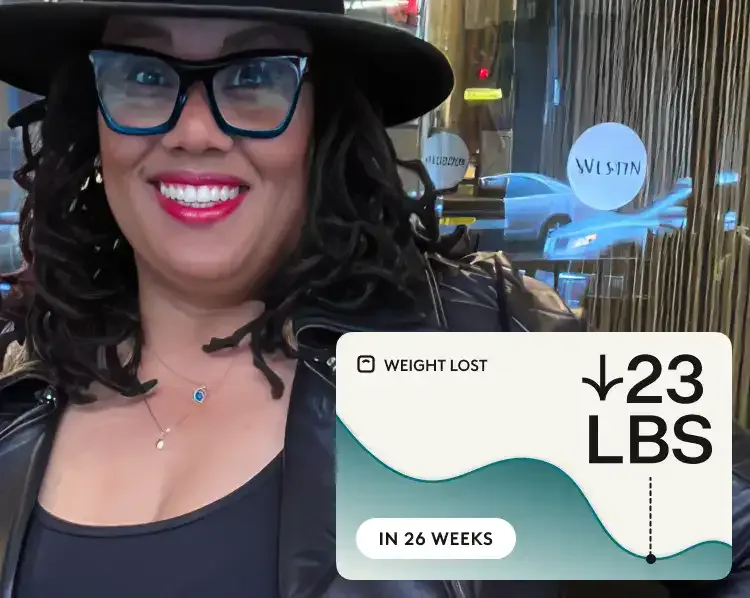
“Clinicians who understand how supportive medication can be is one of the best parts of Noom! I was convinced I wouldn’t have success but I’m down 11 pounds in two months.’’
Lila M. — Real Noom user
Steve M. — Real Noom user
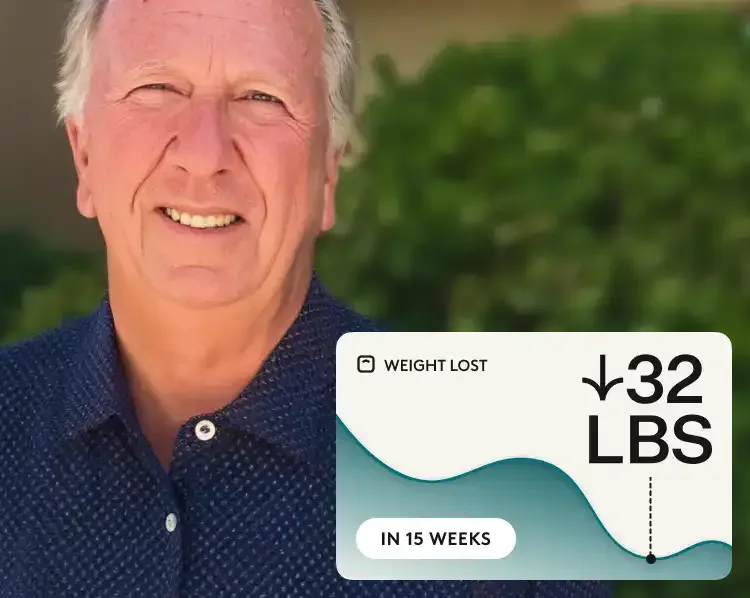
“Noom provided me with the medication which I could not get through Medicare. I have learned the tricks to better eating and life in general.”
Steve M. – Real Noom user
Daisy R. — Real Noom user

‘’Noom has changed my life and I’m so thankful, I feel great, have more energy and am no longer prediabetic.”
Daisy R. – Real Noom user
Sarah R. — Real Noom user
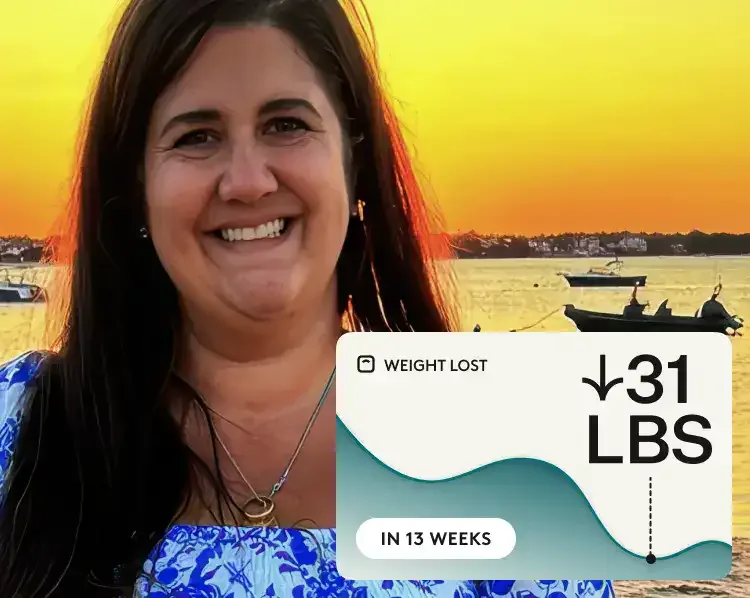
“All of the Noom providers that I’ve met with have been exceptional and prescribed medications that are appropriate for my situation and health.”
Sarah R. – Real Noom user
Madison S. — Real Noom user

“Noom made the process so simple and now I feel full, free from diet obsession, and at ease in my body again.”
Madison S. – Real Noom user
Sonday K. — Real Noom user
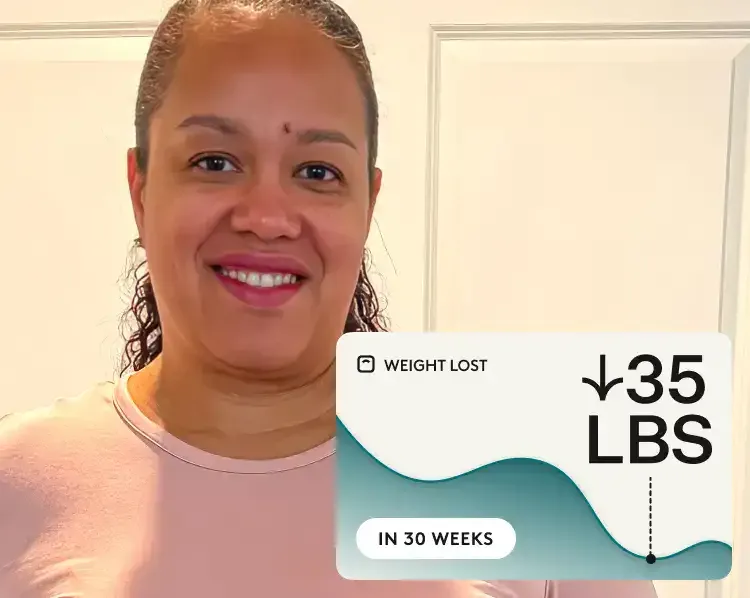
“My doctor recommended Noom after I was frustrated trying to lose weight. The lessons helped change my relationship with food. My body feels lighter & energized.”
Sonday K. – Real Noom user
Cam K. — Real Noom user
“I built healthy habits with coaching and lessons that make me confident I can maintain my weight loss long term.”
Cam K. – Real Noom user
Laura TR. — Real Noom user
“With the right medication through Noom, hunger and sugar cravings finally quieted and I have the tools to break the cycle.”
Laura TR. – Real Noom user
Jessica S. — Real Noom user
“Cravings and food noise are gone, I finally feel confident in the healthy habits I’ve built to last with Noom.”
Jessica S. – Real Noom user
The bottom line: A DEXA scan can help you track strength, energy, and long-term health
A DEXA scan gives you something a scale can’t: context. It shows you what your body is made of—and that clarity can change how you approach your health. Instead of chasing a number, you can focus on what actually moves the needle: building muscle, supporting bone, and creating habits that improve how you feel day to day. More energy, better strength, and a greater sense of control over your body often follow.
At the same time, it gives you a longer view. The same factors that shape your DEXA results—muscle mass, bone density, and fat distribution—are closely tied to how well your body functions as you age. Paying attention to them now can help you stay active, mobile, and independent for longer. The goal isn’t perfection or hitting a specific range—it’s using the information to build a body that feels strong today and continues to support you in the years ahead.
Ready to transform your health insights into lasting habits? Find out which Noom program is best for you to build the sustainable changes that support your wellness goals.
Editorial standards
At Noom, we’re committed to providing health information that’s grounded in reliable science and expert review. Our content is created with the support of qualified professionals and based on well-established research from trusted medical and scientific organizations. Learn more about the experts behind our content on our Health Expert Team page.