Sardines are one of those foods that almost everyone has heard are “good for you,” but actually getting yourself to open a can is another story. There’s something about seeing the little fish laid out inside that can feel more intimidating than, say, a can of tuna. If you didn’t grow up eating them, it’s understandable to wonder: What do you even do with sardines?
But there are real reasons to get past that hesitation. Once you know how to prepare them properly—and which types to buy—they can become one of the easiest, most satisfying staples to keep in your kitchen.
Sardines are packed with protein, loaded with omega-3 fatty acids, and rich in nutrients like vitamin B12, calcium, and vitamin D—all in a convenient, shelf-stable package that’s as easy to use as opening a can. Whether you’re already a fan or you’ve just been curious about adding more nutrient-dense fish to your meals, sardines are one of the most rewarding ingredients to get comfortable with.
The key is knowing how to use them well. The right preparation makes all the difference between a meal you’ll want to repeat and one that misses the mark. That’s where these recipes come in. Some ease you in gently with lots of crunch, herbs, citrus, or toast, while others let the sardines shine more directly.
This guide walks you through exactly that: how to make sardines taste their best, how to choose the right ones at the store, and four sardine recipes that show off what this small, mighty fish can do.


If you want the full nutritional breakdown first, check out our deep dive on the health benefits of sardines.
How to make sardines taste great
Getting the most out of sardines comes down to a few reliable techniques. None of them is complicated—they’re just the moves that bring out what sardines do best: rich, savory flavor that plays beautifully with the right partners.
- Lean on acid. Lemon juice, red wine vinegar, capers, pickled peppers—acidic ingredients cut through the richness of sardines and bring balance to each bite. You’ll notice this pattern in all four recipes below. A squeeze of lemon right before serving can transform a dish.
- Build flavor with aromatics. Garlic, onion, shallots, and fennel seeds are all natural partners for sardines. Cooking them first—even briefly—rounds out the flavor and adds depth that makes sardines taste intentional rather than one-dimensional.
- Choose the right base. Sardines do well on something that can absorb and balance their natural oils. Toasted bread, steamed rice, and hearty greens all work well. These bases also make sardines feel like a proper meal rather than a snack.
- Add something creamy. Mozzarella, tahini, a drizzle of good olive oil—a creamy element softens the intensity of the fish and ties a dish together. The baked sardines recipe below is a perfect example.
- Canned vs. fresh. Fresh sardines have a milder, cleaner flavor and are ideal for grilling. Canned sardines are more convenient and just as nutritious—the omega-3s and protein survive the canning process well. Most of the recipes here use canned, but one uses fresh whole sardines to show you what grilling looks like.
The best sardines to choose for flavor and nutrients
If you’ve never bought sardines before, standing in front of the shelf can feel oddly high stakes. Olive oil or water? Skinless? Boneless? Smoked? Tomato sauce? Suddenly, a tiny can of fish requires a decision tree.
There isn’t one “right” sardine—different types simply work better for different flavors and recipes. Some are rich and buttery, some are milder and easier for beginners, and some are smoky or tangy enough to win over people who think they don’t like sardines at all.
| Type | Flavor profile | Best for |
|---|---|---|
| Sardines packed in olive oil | Rich, full-flavored | Toast, salads, pasta |
| Sardines packed in water | Milder, lighter | Calorie-conscious meals, mixing into dishes |
| Sardines packed in tomato sauce | Tangy, slightly sweet | Over rice, pasta, grain bowls |
| Smoked sardines | Bold, complex | Crackers, snack boards |
- Bone-in or boneless sardines? Bone-in is worth trying. The bones are soft, completely edible, and practically invisible once incorporated into a dish. They also add a meaningful amount of calcium—one small can can deliver around 35% of your daily value. Boneless is fine too; it’s mostly a texture preference.
- Sodium. Canned sardines tend to be higher in sodium. If that’s a consideration for you, look for low-sodium options or give the fish a quick rinse before using—it takes off some of the surface salt without affecting the flavor much.
- Fresh sardines. If your fish counter carries them, fresh sardines are worth picking up for grilling. Look for bright eyes, firm flesh, and a clean ocean smell—no ammonia. Ask the fishmonger to gut them for you if you’d rather skip that step at home.
4 sardine recipes worth making
These four recipes cover a range of approaches—from a bright, vegetable-forward salad where sardines play a supporting role, to a simple French grill where the fish is the whole point. Start wherever feels right for you.
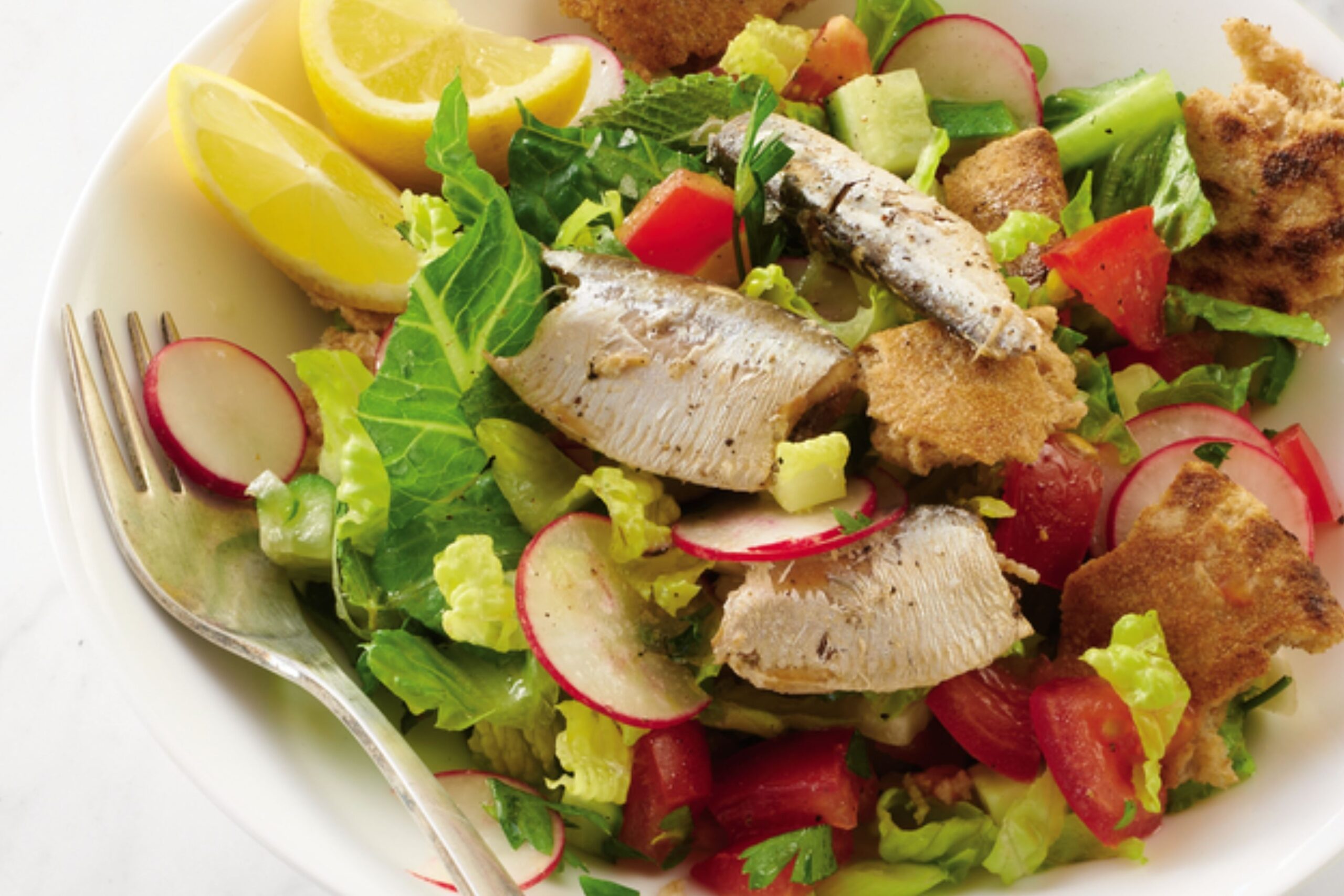
Chopped Vegetable Salad with Sardines and Toasted Pita Croutons
This is the gentlest entry point. The sardines are a topping, not the centerpiece—they sit on top of a punchy Middle Eastern-style salad built around crisp vegetables, fresh herbs, sumac, and crunchy homemade pita croutons. It’s a great first recipe if you’re still finding your footing with sardine flavor.
Time to make: 30 minutes | 288 calories | 4 servings
Ingredients
- 2 whole wheat pitas (6″ each)
- 2 cups chopped green leaf or romaine lettuce
- 2 plum tomatoes, chopped (about 1 cup)
- 1 cup chopped English cucumber
- 8 radishes, thinly sliced (about 1 cup)
- 6 scallions, chopped (about ⅓ cup)
- ¼ cup chopped fresh parsley
- ¼ cup chopped fresh mint
- 2 tablespoons olive oil
- Juice of 1 lemon (about 3 tablespoons)
- 1 tablespoon ground sumac
- 3 cans (3.75 oz each) sardines packed in olive oil, drained
- Lemon wedges, to serve
- Salt and freshly ground black pepper
Instructions
- Heat oven to 400°F. Place pitas on a baking sheet and toast until lightly browned and crisp, about 5 minutes per side. Break into 1″ pieces when cool enough to handle.
- Combine the lettuce, tomatoes, cucumber, radishes, scallions, parsley, and mint in a large bowl. Add the olive oil and lemon juice and toss.
- Add the sumac and pita croutons and toss to combine. Season to taste with salt and pepper.
- Divide among 4 plates, top evenly with sardines, and serve with lemon wedges.
📌 Tip: Make the pita croutons ahead and store at room temperature—they keep well for a day or two. Dress the salad just before serving so the croutons stay crisp.

The Easy Way
to lose weight and get healthy.
See if you qualify

Spicy Sardines Over Rice
This one leans into the sardines more directly, but the spiced tomato-onion base does a lot of heavy lifting. It’s a weeknight meal in the best sense: fast, satisfying, and built on pantry staples. The heat and acidity from the tomatoes and chili soften the fish’s intensity in a way that makes this dish feel familiar and craveable.
Time to make: 15 minutes | 634 calories | 2 servings
Ingredients
- ½ cup rice
- 16 oz sardines
- 1 tablespoon olive oil
- ⅓ onion, sliced
- 1 ripe tomato, diced
- 1 red chili pepper, chopped
- Salt and freshly ground black pepper, to taste
Instructions
- Bring a large pot of lightly salted water to a boil. Cook rice according to package instructions and set aside.
- Heat olive oil in a skillet over medium heat. Sauté the onion until soft, about 4–5 minutes.
- Add the tomato and chili pepper and continue cooking until the tomatoes soften, about 3–4 minutes.
- Add the sardines, being careful not to break them up too much. Season with salt and pepper.
- Bring to a simmer, then turn off the heat. Serve immediately over the cooked rice.
📌 Tip: Use a gentle hand when stirring once the sardines go in—keeping them somewhat intact gives the dish better texture and presentation.
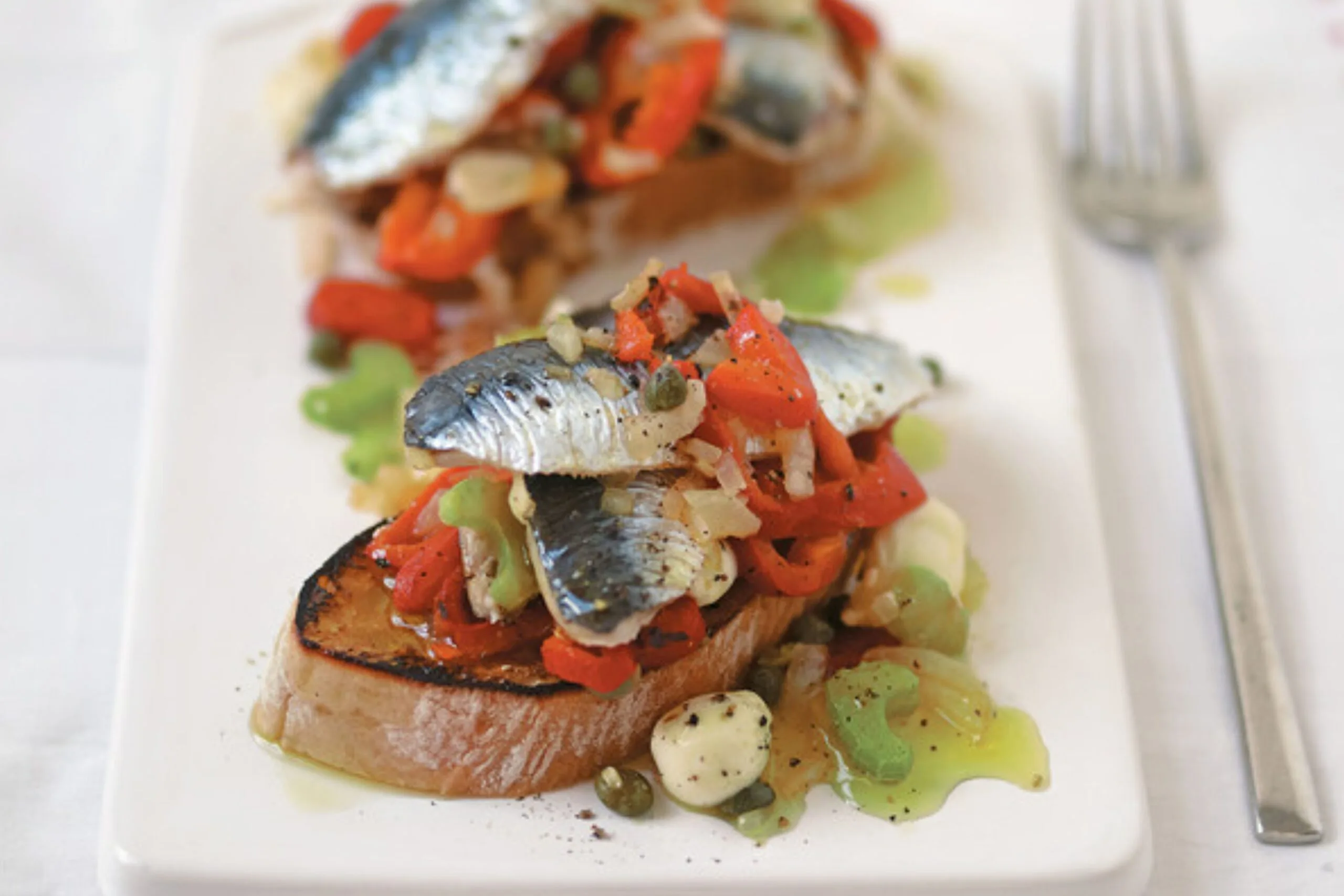
Baked Sardines with Mozzarella
This is the recipe to make when you want sardines to feel like a proper dinner. Piquillo peppers, capers, and softened aromatics create a rich, Mediterranean-style base, and the mozzarella melted over the top ties it all together. Served on toasted ciabatta, it’s somewhere between a tartine and a small plate—and one of the better arguments for keeping sardines in regular rotation.
Time to make: 10 minutes | 562 calories | 2 servings
Ingredients
- 1 small onion, finely chopped
- 2 garlic cloves, thinly sliced
- 1 celery stick, thinly sliced
- 3 tablespoons extra virgin olive oil, divided
- 3½ oz piquillo peppers from a jar or can, drained and thinly sliced
- 1 tablespoon capers in brine, rinsed and drained
- 4 large filleted sardines
- 3½ oz fresh mozzarella balls
- 4 slices ciabatta
- Salt and pepper
Instructions
- Preheat oven to 400°F.
- Place the onion, garlic, and celery in a small roasting pan with 1 tablespoon of the olive oil. Mix well and roast for 10 minutes until softened.
- Add the piquillo peppers and capers, season lightly, and stir to combine.
- Lay the sardines on top and drizzle with another tablespoon of olive oil. Roast for 15 minutes until cooked through.
- Add the mozzarella and return to the oven for a final 2 minutes to melt.
- Toast the ciabatta for 1–2 minutes per side.
- Arrange the toasted ciabatta on plates, pile on the sardines and vegetables, and drizzle with the pan juices and remaining olive oil.
📌 Tip: Piquillo peppers are sold jarred near the olives at most grocery stores. They’re mild, sweet, and do a lot of work in this dish—worth tracking down rather than substituting roasted red peppers.
Les Sardines Grillées
This is the recipe for when you’ve found your footing with sardines and want to experience them at their simplest and best. Fresh whole sardines, fennel seeds, garlic, a brush of olive oil, and a hot grill—that’s it. The flavors are clean, bright, and distinctly Mediterranean. Serve alongside a green salad and crusty bread to make it a full meal.
Time to make: 23 minutes | 76 calories | 4 servings
Ingredients
- 12 fresh sardines, gutted, gills removed, heads on
- 1 garlic clove, finely chopped
- 1 tablespoon dried fennel seeds
- Olive oil, for brushing
- Juice of ½ lemon
- Salt and pepper
Instructions
- Preheat your grill or broiler to high.
- Rub the sardines with paper towels to remove any loose scales.
- Sprinkle the inner cavities with garlic and fennel seeds, then brush both sides with olive oil and season lightly with salt.
- Grill about 2 inches from the heat source for 3–4 minutes per side, handling carefully with a spatula to keep the fish intact.
- Transfer to a warm platter, squeeze over the lemon juice, season with salt and pepper, and serve immediately.
📌 Tip: A fish spatula—long and thin-bladed—makes flipping whole sardines much easier. If you don’t have one, tongs work too; just be gentle.
Frequently asked questions about sardine recipes
Are canned sardines as healthy as fresh sardines?
For the most part, yes. Protein and omega-3 fatty acids are well-preserved through the canning process, and bone-in canned sardines are actually higher in calcium than most fresh preparations because the bones soften and become fully edible. Sodium is the main difference: canned sardines are significantly higher, so if that’s a consideration for you, a quick rinse or a low-sodium option can help. For the full nutritional comparison, see our sardines for weight loss article.
What do you eat sardines with?
Toasted bread or crackers are the classic starting point—the crunch and starch balance the richness of the fish. Beyond that, sardines work well over rice, tossed into pasta, layered into salads, or served alongside roasted vegetables. Anything acidic—tomatoes, capers, pickled onions, citrus—makes a natural partner.
How do you get rid of the fishy smell when cooking sardines?
Acid is the most effective tool—a squeeze of lemon or a splash of vinegar helps significantly. Baking and grilling also produce less ambient odor than pan-frying. If cooking indoors, good ventilation makes a real difference. Canned sardines used at room temperature or in a cold salad skip the smell issue entirely.
Are sardines good for weight loss?
Sardines are high in protein and satisfying healthy fats, both of which support fullness and help with steady energy. The full breakdown—including calories, nutrients, and how they compare to other proteins—is in our sardines for weight loss article.
Access GLP-1 Weight Loss with Noom
Explore a wide range of prescription medications supported by Noom’s program.Microdose GLP-1rx

Noom GLP-1rx

Noom GLP-1rx Plus

Wegovy®

Ozempic®

Metformin

Zepbound®

Mounjaro®
Liraglutide

Can you eat sardine bones?
Yes—and they’re worth eating. In canned sardines, the bones are completely soft after the canning process and essentially dissolve into the fish. They’re a meaningful source of calcium. In fresh sardines, the bones are edible after cooking too, though larger pin bones are usually removed before serving.
The bottom line: Sardines are a nutritious ingredient worth learning how to use
Sardines are one of the most nutritionally complete foods you can keep in your pantry, and they’re far more versatile than their reputation suggests. The four recipes here cover a range—from a light, herb-forward salad to a simple French grill—so there’s a natural place to start no matter where you are on the learning curve. Pick one, try it, and adjust from there. That’s really all it takes.
For more protein-packed recipes, healthy eating tips, and proven ways to build healthier habits, sign up for a free trial of Noom and follow us on YouTube and Instagram.
Editorial standards
At Noom, we’re committed to providing health information that’s grounded in reliable science and expert review. Our content is created with the support of qualified professionals and based on well-established research from trusted medical and scientific organizations. Learn more about the experts behind our content on our Health Expert Team page.