What you’ll learn:
- Both basil and chia seeds are high in fiber and can help you stay full, but they differ in nutrition, texture, and how they’re used.
- Chia seeds work best in meals that need thickness and structure, while basil seeds hydrate quickly and are better suited for drinks and quick snacks.
- Chia seeds are higher in omega-3 fats and have slightly more protein, while basil seeds offer more fiber and more calcium per serving.
Seeds have earned their health halo for a reason. They’re small, but many deliver fiber, healthy fats, and texture that helps meals feel more filling. Beyond the seeds you might sprinkle on salads or smoothies, like pumpkin or sunflower seeds, there’s another category worth knowing about: seeds that absorb liquid and form a gel, like chia seeds and basil seeds. That reaction with water is exactly why these seeds have become the stars of so many quick health hacks on social media.
From chia seed water to basil seed lemonades, you’ll see simple drinks promising everything from belly fat reduction to better digestion and instant fullness. While many of those claims—especially around effortless weight loss—are overstated and oversimplified, seeds themselves can absolutely be part of a healthy pattern when you use them in ways that actually fit your needs.
So what’s the real difference between chia seeds and basil seeds? Below, we’ll break down how they’re similar, how they differ, highlight their nutritional strengths, and share practical ideas for working them into a healthy diet—without the hype.
Basil seeds vs. chia seeds: Similarities and differences
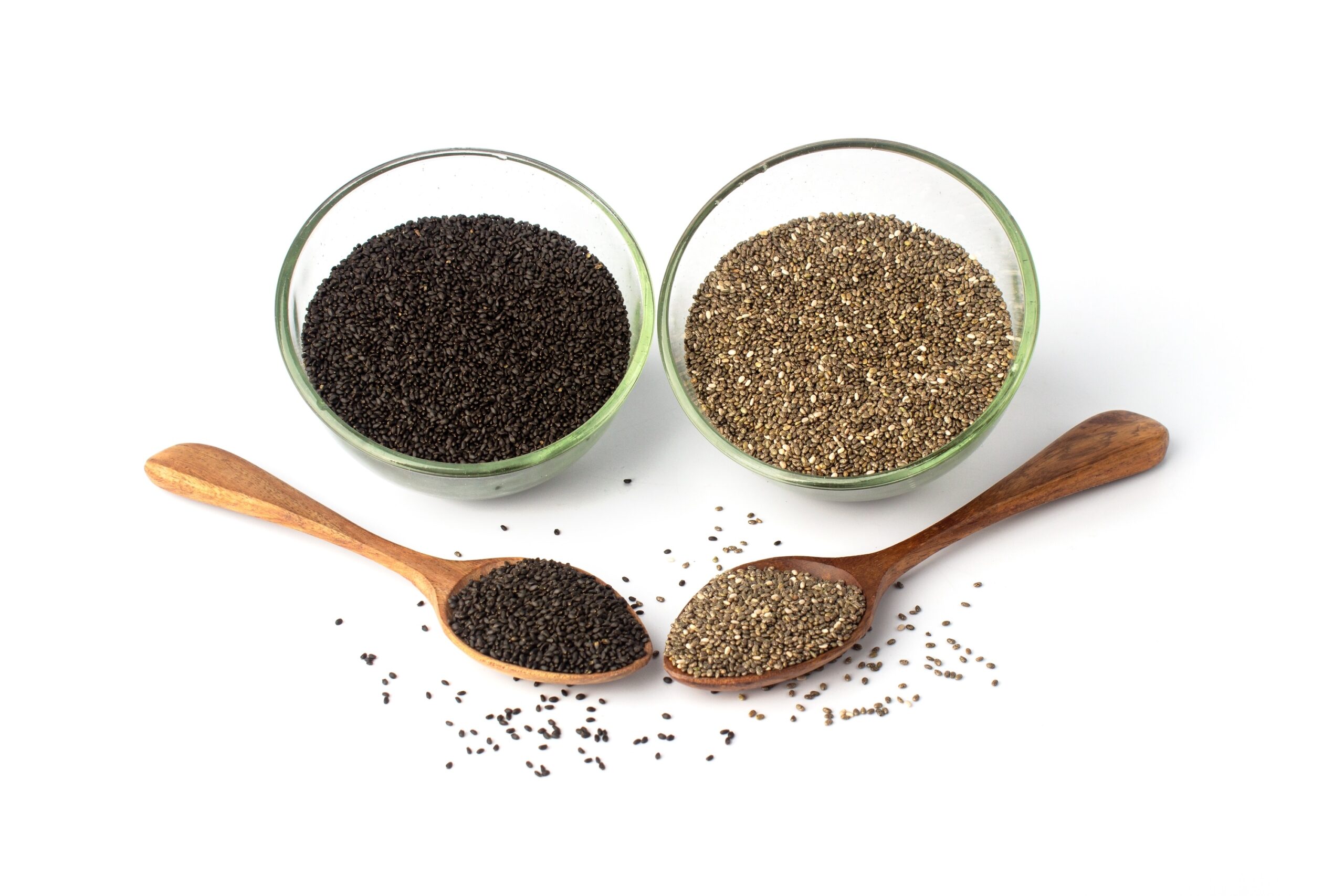
Basil seeds and chia seeds look similar, and both absorb liquid and form gels, which is why they’re commonly added to drinks, puddings, and smoothies. Where they differ is how fast they hydrate, the texture they create, and how they’re typically used. Let’s take a look at how these properties and differences change how you use them and what they’re good for.
- Basil seeds: Sweet basil seeds absorb liquid quickly and form a light gel, which is why they’re commonly added to drinks and desserts. Sweet basil seeds hydrate in about 5 to 10 minutes.
- Chia seed: Chia seeds are known for forming a thick, pudding-like gel when soaked. Chia seeds begin absorbing liquid almost right away, but they need hours—or overnight—to fully swell and reach their thick, pudding-like texture. They can absorb up to 15 times their weight in liquid, making them popular for puddings, smoothies, and baking.
How basil seeds and chia seeds are similar
- Both absorb liquid and form a gel, thanks to their soluble fiber
- Both are commonly used in smoothies, drinks, and puddings
- Both can help slow digestion and increase feelings of fullness
- Both are often used as fiber-boosting add-ins
How basil seeds and chia seeds are different
- Hydration speed: Basil seeds reach a maximum light gel in 5 to 10 minutes, while chia seeds start absorbing liquid quickly but take hours (or overnight) to fully thicken.
- Texture: Basil seeds form a lighter gel with a slightly firm center; chia seeds form a thicker, pudding-like gel.
- Best uses: Basil seeds work well in drinks and quick recipes; chia seeds are better suited for puddings, smoothies, and baking.
- Nutrition focus: Basil seeds are mostly valued for soluble fiber, while chia seeds also provide plant-based omega-3s and other minerals.
Basil seeds vs. chia seeds: Nutrition comparison
When you compare basil seeds and chia seeds, they’re surprisingly similar at first glance. Both pack about the same calories into a small serving, and both are nutrient-dense. Where they start to differ is in what those calories are made of. Chia seeds provide a bit more protein and fat—especially omega-3 fatty acids—which is part of why they’re often highlighted for heart health and satiety. Basil seeds, on the other hand, tend to deliver more fiber and significantly more calcium per serving, depending on the brand.

The Easy Way
to lose weight and get healthy.
In other words, they’re not better or worse—just built a little differently. The table below breaks down how their macronutrients and key fats compare, using label values alongside estimates from peer-reviewed research.
Basil seeds vs chia seeds: Nutrition (per 2 tablespoons)
| Nutrient | Chia (26g) | Basil (30g) |
|---|---|---|
| Calories | 130 | 130 |
| Protein | 6g | 5g |
| Total Fat | 7g | 6g |
| Fiber | 10g | 15g |
| Calcium | 132mg | 370mg |
| Iron | 2mg | 4.7mg |
| Magnesium | — | 90mg |
| Potassium | 198mg | 210mg |
| Omega-3 (ALA) | 4,200mg | 1,300mg |
| Omega-6 (LA) | 1,400mg | 2,900mg |
When you compare 2 tablespoons side by side, the calories are similar—but the nutrient mix differs:
- Calories: Both provide about 130 calories.
- Fiber: Basil seeds provide about 15 grams, while chia provides about 10 grams; both contain gel-forming soluble fiber.
- Healthy fats: Chia delivers roughly 4,200 to 4,500 mg of omega-3 (ALA) per serving, compared to about 1,200 to 1,500 mg in basil
- Notable minerals: Basil provides about 370 mg of calcium and 90 mg of magnesium, compared to 132 mg of calcium in chia; potassium levels are similar (about 198–210 mg per serving).
Health benefits: Basil seeds vs. chia seeds
Both basil seeds and chia seeds are nutrient-dense and fiber-rich, which explains why they’re often grouped together. They share many overlapping benefits, but their fatty acid profiles and mineral content differ in meaningful ways. Here’s how they compare using the label values and current research.
| Feature | Chia seeds | Basil seeds |
|---|---|---|
| Fiber | 8 to 10 g of fiber per 2 tablespoons | Around 7 g of fiber per 2 tablespoons |
| Digestion & satiety | Forms a thick gel that may help with appetite. | Hydrates rapidly to form a thinner gel that slows digestion, supporting regularity more than satiety |
| Heart health | Rich in omega-3 fatty acids (ALA), which are linked to lower LDL cholesterol and reduced inflammation. | Provides plant-based omega-3s (ALA) and a strong antioxidant profile that may help lower cholesterol and triglycerides while supporting inflammation balance. |
| Metabolic support | Linked to improvements in blood lipid profiles and better blood glucose control. | Gel-forming fiber slows glucose absorption, helping to prevent post-meal blood sugar spikes. |
| Gut health | Acts as a prebiotic fiber that helps the gut produce short-chain fatty acids, which are linked in research to appetite-related hormones like GLP-1. | Also acts as a prebiotic fiber that supports healthy gut bacteria and short-chain fatty acids |
| Best used for | Long-term satiety, omega-3 intake, and versatile use in puddings or overnight oats. | Quick beverages and snacks, and a rapid fiber boost for digestive regularity. |
Can basil seeds or chia seeds help you lose weight?
Weight loss isn’t about finding one perfect food. It’s about small habits that help you feel satisfied and stick with your routine. But both chia seeds and basil seeds add fiber to meals, which may keep you fuller longer and help you eat less naturally. Here’s what the studies show:
- Chia seeds might help reduce how much you eat at your next meal. A study found that adding 7 to 14 grams of chia to yogurt helped people eat about 25% less at their next meal. Another analysis found that people who added chia seeds to their diet saw a small decrease in waist size even when the scale didn’t move much. That suggests chia may support subtle changes around the midsection and a reduction in visceral fat, rather than dramatic weight loss on its own.
- Basil seeds may influence appetite hormones that control hunger. Recent research shows that people who drank a mixture of 10 grams of basil seeds soaked in water once daily before breakfast for 8 weeks had significant drops in leptin, a hormone linked to appetite regulation.
While both types of seeds have fiber that can help you feel full, studies show modest effects when combined with other healthy changes. The real benefit comes from including seeds in a healthy, varied, balanced diet.
Basil seeds vs. chia seeds: How to use them
Scroll through wellness trends online, and you’ll see both basil seeds and chia seeds promoted for health and culinary uses. People use them to simply thicken drinks, but also for added fiber and a feeling of fullness between meals.
They’re usually used in different ways because of how fast they gel, how they taste, and how they feel when you eat them.
Best ways to use basil seeds
Basil seeds create a visible coating quickly when they meet water. Basil seeds are most often used in drinks. They hydrate quickly and develop a light gel coating that stays separate and spoonable rather than thick.
What to do: Soak basil seeds in water for about 5 to 10 minutes until they swell and form a clear outer layer. Once soaked, they’re ready to add to drinks or light desserts.
With basil seeds, you can make:
Noom’s Most Powerful Program
A dual-pathway GLP-1 and behavior change for lasting results.
- Drinks: Lemon basil seed water, coconut milk drinks, fruit juices, aguas frescas, and fasting beverages, where they add light crunch, texture, and quick hydration without thickening.
- Desserts & spoonable treats: Falooda, sharbat, agar- or gelatin-based jellies, and simple cooling bowls eaten with a spoon, where basil seeds add a jelly-like bite and visual appeal.
- Fruit and yogurt bowls: Sprinkled over fresh fruit or mixed into yogurt for added fiber and texture without changing the flavor.
Best ways to use chia seeds
Chia seeds are more versatile and show up in both drinks and solid foods. They take longer to gel but create a much thicker, pudding-like texture.
To use chia seeds, soak them for 20–30 minutes or overnight for best results. They absorb a lot of liquid and bind everything together.
People use chia seeds in:
- Puddings & breakfast bowls: Chia pudding, overnight oats, yogurt bowls, and smoothie bowls, where they create a thick, creamy texture after soaking.
- Smoothies: Blended into smoothies to add texture and fiber for satiety.
- Baking: Used as a chia “egg” (chia gel + water) in muffins, quick breads, pancakes, and cookies.
- Savory dishes: Stirred into salad dressings, soups, or veggie burgers to help bind ingredients and add structure.
Because they gel so strongly, chia seeds are better when you want structure.
Chia seeds vs. basil seeds: Are they safe?
Both types of seeds are generally safe for most people, but like any high-fiber food, they’re best introduced slowly. Knowing what to watch for helps you use basil seeds and chia seeds comfortably and confidently.
They can cause digestive discomfort
Both seeds contain high amounts of fiber, which is generally good for gut health, but it can cause gas or bloating if your body isn’t accustomed to it.
The gel-like fiber in both seeds can also lead to digestive discomfort when eaten in large amounts. Start with just 1 teaspoon and gradually increase your intake while drinking plenty of water. This gradual approach aligns with guidance for managing high-fiber foods safely and helps your digestive system adjust comfortably.
The seeds can be a choking hazard if not hydrated
Basil seeds and chia seeds can pose a choking risk if eaten dry or before fully hydrating, especially for children or people with swallowing difficulties. Start with small amounts and always soak seeds before eating, and stop use if any concerning symptoms appear.
Allergic reactions can happen
Seed allergies are rare but possible, and reactions can be serious in sensitive individuals. Signs may include itching, swelling, hives, nausea, vomiting, or digestive discomfort. Any trouble breathing or severe reaction requires immediate medical attention.
Other questions about basil seeds vs. chia seeds
Are basil seeds or chia seeds healthier?
Neither seed is universally “healthier.” It depends on what you want from them. Chia seeds stand out for their omega-3 fats and slightly higher protein, while basil seeds tend to provide more fiber and more calcium per serving. Both can be nutrient-dense additions to a balanced eating pattern.
Are chia seeds high in lectins?
Chia seeds aren’t usually considered a major lectin concern compared with foods like undercooked beans and some legumes. According to an overview of lectins, most people don’t need to avoid lectin-containing foods entirely, especially when those foods are part of a healthy diet.
You may have seen a different take from Dr. Steven Gundry, who has promoted basil seeds over chia seeds due to their lower lectin content, even describing basil seeds as a “lectin-free” alternative. But when you look at the broader evidence, that concern doesn’t really hold up.
More broadly, research doesn’t strongly support eliminating lectins across the board. A review on lectins and human health found that avoiding large categories of plant foods may not be necessary—and could actually reduce intake of beneficial nutrients.
Do basil seeds or chia seeds help with weight loss?
They can support weight loss, but neither is a magic fix. Their biggest advantage is fiber, which can help with fullness and make meals or snacks more satisfying. That may help you naturally eat a little less over time, but the effect is usually modest and works best when seeds are part of a broader pattern of balanced eating habits.
Which is better for digestion: basil seeds or chia seeds?
Both can support digestion because they’re high in fiber and form a gel when mixed with liquid. Basil seeds hydrate quickly and work well in drinks, while chia seeds form a thicker gel that may feel more filling in meals.
Which is better for heart health: basil seeds or chia seeds?
Chia seeds have the clearer edge here because they provide more alpha-linolenic acid (ALA), a plant omega-3 fat linked to heart health. Basil seeds still contribute fiber and healthy fats, but chia is usually the stronger choice if cardiovascular support is your main goal.
Can you eat chia seeds dry?
It’s best to be careful. Chia seeds absorb a lot of liquid and expand significantly, so eating them dry can be uncomfortable and may pose a risk for people with swallowing issues. A safer approach is to soak them or mix them into foods like yogurt, oatmeal, or smoothies.
Are basil seeds safer than chia seeds?
Not necessarily safer—just different. Both are generally safe when introduced gradually and eaten with enough fluid. Like any high-fiber food, eating too much too quickly can lead to bloating or digestive discomfort.
The Easy Way
to lose weight and get healthy.
The bottom line: Both basil and chia seeds are high in fiber and good additions to your diet
Both basil seeds and chia seeds bring real value to your meals. Chia seeds stand out for their omega-3 fats and overall nutrient density, while basil seeds shine for quick hydration and a lighter, drink-friendly texture.
Neither option is “better” across the board. The right choice depends on your taste preferences, how you like to use them, and whether your focus is heart health, digestion, or everyday fullness.
Access GLP-1 Weight Loss with Noom
Explore a wide range of prescription medications supported by Noom’s program.
Microdose GLP-1rx
Noom GLP-1rx
Noom GLP-1rx Plus
Wegovy®
Ozempic®
Metformin
Zepbound®
Mounjaro®
Liraglutide
A smart approach is to try both in small amounts and see which one fits naturally into your routine. Pay attention to what you enjoy using, what keeps you satisfied, and what feels easy to stick with. Small, repeatable choices like these are often what help healthy habits last.
If you’re looking for more healthy habit strategies, explore the Noom app on iOS & Android. Instead of rigid rules or food guilt, Noom focuses on building awareness. When you understand how different foods affect your hunger, satisfaction, and habits, you can make choices that feel balanced—and build changes that last.
Editorial standards
At Noom, we’re committed to providing health information that’s grounded in reliable science and expert review. Our content is created with the support of qualified professionals and based on well-established research from trusted medical and scientific organizations. Learn more about the experts behind our content on our Health Expert Team page.