
What you’ll learn:
- Plain black coffee is generally allowed for fasts but should never replace a meal.
- What you add to your coffee—not the coffee itself—is usually what breaks a fast.
- Black coffee has a few real benefits during a fast, including appetite suppression and a mild metabolic boost, but your individual experience matters most.
Fasting has become increasingly popular, whether that means following a daily intermittent fasting schedule or trying a longer fast that lasts 24, 48, or even 72 hours. Along with it comes one of the most common fasting questions: Can I drink coffee while fasting?
It’s easy to see why people ask. Coffee can help take the edge off hunger, provide a boost of energy, and add a familiar morning ritual when food is off the table. But whether it breaks a fast depends on what’s in your cup and what type of fast you’re trying to follow.
Here’s what the research says about coffee and fasting, when it may help, and which popular coffee add-ins can end a fast sooner than you think.
You’ll also learn when coffee might work against you, why listening to your body matters more than any fasting rule, and when fasting may not be the best choice. Maggie Hudspeth, RDN, Senior Manager of Coaching at Noom, explains the nuances of drinking coffee during a fasting period and when it may make sense to skip it.
Can you drink coffee while fasting?
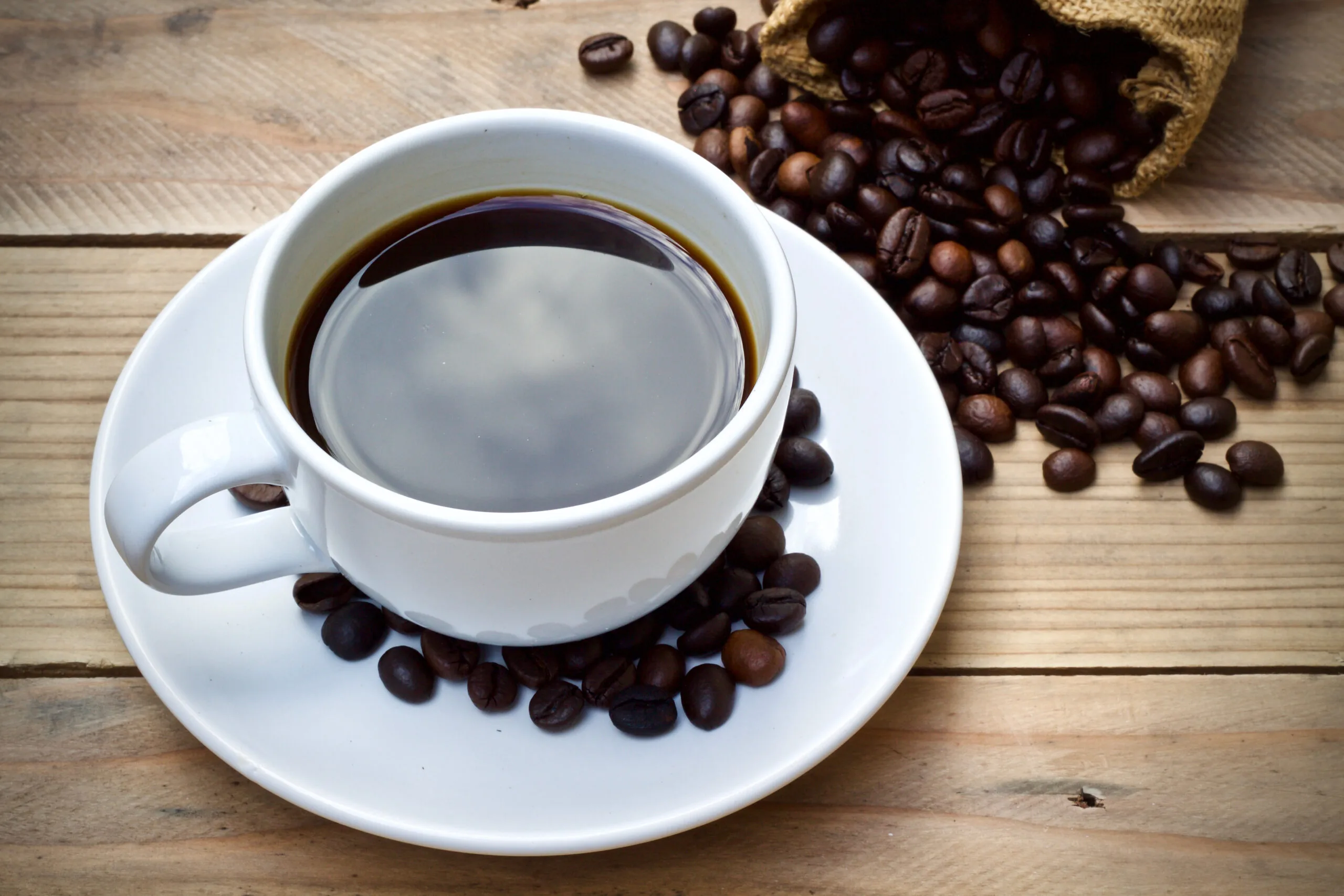
Yes, you can generally drink plain black coffee while fasting. It contains virtually no calories, carbohydrates, protein, or fat—so it doesn’t meaningfully disrupt the fasted state the way anything with calories does.
New from Noom
Microdose GLP-1Rx Plus
An affordable way to start your GLP-1 journey with Compounded Tirzepatide.

*Initial 3 week subscription and 4 weeks of medication from $79 plus tax and $199 per month plus tax for 12 week subscription thereafter. Final pricing depends on program selection. Noom GLP-1Rx Plus Microdose Program involves medication (when appropriate), healthy diet, exercise and support. Individual results vary. Meds & personalization based on need as determined by a third-party clinician. Medications are not reviewed by FDA for safety, efficacy, or quality. No affiliation with Eli Lilly and Company, the only US source of FDA-approved tirzepatide. Not available in all 50 US states.
Some research also suggests coffee may help reduce appetite during a fast. A study found that coffee consumption reduced hunger and influenced satiety hormones in the hours afterward in some people. It’s important to note that this was a small study, the appetite effect varied between people, and the research is still limited.
On the blood sugar side, a study on coffee intake before blood draws found no clinically significant changes in blood glucose levels in healthy people. In other words, plain black coffee doesn’t appear to trigger a meaningful metabolic response that would break a fast.
A lot of people also drink coffee during a fast because doing without caffeine can cause headaches and low energy due to caffeine withdrawal.
That said, there’s an important distinction between using coffee to ease caffeine withdrawal and using it to suppress hunger signals. Delaying eating is one thing—using coffee to override genuine hunger signals is another, and can reinforce unhealthy patterns around food.
How much coffee can I drink while fasting?
Most healthy adults can safely drink up to 400 mg of caffeine per day, which is roughly 3 to 4 standard 8-ounce cups of coffee. That’s the threshold supported by a comprehensive review of caffeine safety research, which found that intake up to 400 mg per day is not associated with adverse health effects in healthy adults across cardiovascular, behavioral, and reproductive outcomes. The same review notes lower limits for specific groups: up to 300mg/day for pregnant women, and lower still for children and adolescents.
During a fast, that ceiling still applies, but individual tolerance matters more than the number. Caffeine on an empty stomach is absorbed faster, which can intensify its effects even at doses you’d normally handle fine. Some people do well with two cups during a fasting window; others find one is plenty. The right amount is the one that doesn’t leave you jittery, anxious, or uncomfortable.
More importantly, coffee shouldn’t be used to push through hunger. If you’re hungry and uncomfortable or experience lightheadedness or dizziness, the right response is to eat—not to pour another cup. Fasting is a structured eating pattern, not a test of willpower fueled by caffeine.
Can I drink decaf coffee while fasting?
Yes—decaf coffee is generally fine during a fast, too. It has the same near-zero calorie profile as regular coffee, so it won’t break a fast on its own. There’s also some evidence that decaf may help with hunger independently of caffeine. One study found decaf coffee increased levels of PYY, a satiety hormone, suggesting the appetite-suppressing effect isn’t purely about the caffeine. If you’re sensitive to caffeine, prone to jitteriness, or fasting later in the day and worried about sleep, decaf is a reasonable swap. Learn more about and whether coffee can help with weight loss.
Read more: Can coffee really help you lose weight?
Can you drink coffee while intermittent fasting?
Most people who fast these days are following some version of intermittent fasting. One of the most popular time frames is the 16:8, which means that people fast for 16 hours, and then eat within an 8-hour window. In that context, black coffee during the fasting window is not just acceptable; for many people, it’s part of what makes the fasting window manageable.
Access GLP-1 Weight Loss with Noom
Explore a wide range of prescription medications supported by Noom’s program.Microdose GLP-1rx
Noom GLP-1rx
Noom GLP-1rx Plus
Wegovy®
Ozempic®
Metformin
Zepbound®
Mounjaro®
Liraglutide
Research on fasting and metabolic health consistently focuses on calorie and carbohydrate restriction as the primary drivers of results—not on eliminating every last calorie from a near-zero-calorie drink. Unlike a strict medical fast, where the goal is complete metabolic rest or preparation for a procedure, intermittent fasting for weight management has more flexibility built in.
That said, individual tolerance to coffee on an empty stomach varies more than most people expect.
“Many people do great with black coffee during their fasting window—it helps them get through without feeling like they’re going without a morning beverage,” says Hudspeth. “But for some people, caffeine on an empty stomach causes jitteriness, acid reflux, or anxiety. If that’s you, starting with a glass of water before your coffee can help, or you may just do better without it.”
Read more: What is intermittent fasting?
When does coffee break a fast? Additions to watch out for
Coffee on its own is about as fasting-neutral as a drink can get—a few calories and no meaningful insulin response. The question of whether coffee breaks a fast almost always comes down to what else ends up in the mug. A splash of milk or cream, a pump of vanilla syrup, and you’ve gone from a calorie-free drink to one that could break a fast. Here’s how the most common add-ins are viewed.
Milk
Typical serving: 2 tbsp. whole milk | Calories: 18 | Fat: 1g | Sugars: 1.4g
Answer: Yes.
Milk contains lactose (a naturally occurring sugar) and protein, both of which stimulate insulin release and activate digestion. Even a small splash contains calories and nutrients that technically break a fast.
Heavy cream
Typical serving: 1 tbsp. heavy cream | Calories: 50–55 | Fat: 5–6g | Sugars: 0.4g
Answer: Yes.
Heavy cream contains far less sugar than milk and may have a smaller effect on insulin and blood glucose. However, it still provides significant calories, primarily from fat, so it technically breaks a fast. That said, small amounts of heavy cream are commonly included in “dirty fasting” approaches because of their low carbohydrate content and minimal impact on blood sugar.
Alternative and artificial sweeteners
Typical serving: Serving sizes vary | Calories: 0-4 | Fat: 0g | Sugars: 0g
Answer: Generally, no, but it depends on your fasting goals.
Most noncaloric sweeteners—including stevia, monk fruit, sucralose, saccharin, and aspartame—contain few or no calories and are unlikely to meaningfully affect blood sugar or insulin levels when used in small amounts. Because of this, many intermittent fasting approaches consider them compatible with a fast.
That said, some people find that sweet tastes increase cravings or make fasting more difficult, regardless of their metabolic effects. If your goal is a strict fast with no calories, flavors, or potential appetite triggers, skipping sweeteners is the simplest approach.
New from Noom
Microdose GLP-1Rx Plus
An affordable way to start your GLP-1 journey with Compounded Tirzepatide.
*Initial 3 week subscription and 4 weeks of medication from $79 plus tax and $199 per month plus tax for 12 week subscription thereafter. Final pricing depends on program selection. Noom GLP-1Rx Plus Microdose Program involves medication (when appropriate), healthy diet, exercise and support. Individual results vary. Meds & personalization based on need as determined by a third-party clinician. Medications are not reviewed by FDA for safety, efficacy, or quality. No affiliation with Eli Lilly and Company, the only US source of FDA-approved tirzepatide. Not available in all 50 US states.
Sugar-free syrups
Typical serving: 1 tbsp. | Calories: 0-15 | Fat: 0g | Sugars: 0g
Answer: Generally, no, but check the ingredients.
Most sugar-free coffee syrups are sweetened with non-caloric sweeteners such as sucralose, stevia, monk fruit, or acesulfame potassium and contain few or no calories. In small amounts, they’re unlikely to meaningfully affect blood sugar or insulin levels, and many intermittent fasting approaches consider them compatible with a fast.
But some sugar-free syrups contain small amounts of carbohydrates, sugar alcohols, or added ingredients that contribute calories. If you’re following a strict fast, check the nutrition label and ingredients list. As with alternative sweeteners, some people find sweet flavors increase cravings or make fasting more difficult, even when calories are minimal.
Sugar or flavored syrups
Typical serving: 1 tsp. sugar | Calories: 16 | Fat: 0g | Sugars: 4g
Answer: Yes.
Sugar triggers insulin release. Flavored syrups—the kind used at coffee shops—typically deliver 20g or more of sugar per pump and calories.
Protein powder
Typical serving: 1 scoop | Calories: 100–120 | Fat: 2g | Sugars: 2g
Answer: Yes.
Protein powder contains calories and amino acids, both of which signal the body that food has arrived. Protein stimulates insulin release, activates digestion, and triggers muscle protein synthesis, making it one of the clearest examples of something that breaks a fast.
While protein powder can be a useful tool for supporting satiety and muscle maintenance, it should be considered a meal or snack. And if that’s what your body needs, take it as a sign to break the fast and fuel your body.
Read more: 11 things that don’t break a fast (and 4 that do)
Benefits of black coffee while fasting
Black coffee during a fast isn’t just about sticking to your usual caffeine routine and hydration. There are a few real reasons it can even help you fast. Here’s how:
- It may help you stick to your fast. The slight appetite-suppressing effects of coffee are one of the most practical reasons people keep it in their fasting window. A small study found coffee reduced hunger and influenced satiety hormones in women with elevated BMIs. The effect varied by individual, and research is limited, but for a lot of people, this matches real-world experience.
- It gives your metabolism a mild nudge. Caffeine has a well-documented thermogenic effect—it slightly increases the rate at which your body burns calories at rest. Studies suggest caffeine can increase resting metabolic rate by 3 to 11%, though the effect isn’t consistent for everyone.
- It keeps you sharp. Fasting can cause mental fog, especially in the early days. Caffeine blocks adenosine, the brain chemical that builds up during waking hours and makes you feel tired. For habitual coffee drinkers, skipping it during a fast can make that fog significantly worse—part of that is caffeine withdrawal, not just the fast itself. That said, caffeine is a stimulant, not a meal. If you’re using it to push through genuine hunger, that’s a different situation.
“Black coffee can make fasting more manageable for some people, but it’s not a requirement,” says Hudspeth. “Fasting isn’t right for everyone, and coffee definitely isn’t a substitute for food. If your goal is weight loss or better health habits, there are a lot of ways to get there that don’t involve fasting at all.”
Side effects of black coffee while fasting
Black coffee during fasting isn’t right for everyone. Here are some factors to be aware of:
- It can irritate your stomach. Coffee stimulates the production of gastrin, a hormone that triggers gastric acid secretion. On a full stomach, most people handle this without issue. On an empty stomach, there’s no food present to buffer that acid. Review of research showed that coffee reliably stimulates gastric acid secretion and can also relax the lower esophagus, which has a valve that keeps acid from traveling back up. For people prone to acid reflux, gastritis, or a sensitive stomach, this is worth taking seriously.
- It can make some people anxious or jittery. Caffeine can raise cortisol. Research found that caffeine doses equivalent to 2 to 3 cups of coffee produced a strong increase in cortisol across the waking hours in healthy adults. Fasting is also connected to increased cortisol as part of the normal metabolic response to not eating. For some people, the two together can amplify jitteriness, anxiety, or a racing feeling—particularly early in a new fasting routine.
“No one needs to fast,” says Hudspeth. “If coffee is making your fasting window miserable—or you’re using it to push through hunger instead of just eating—that’s a sign to stop and eat something. Coffee is not a meal replacement, and a fast isn’t worth it if it means ignoring what your body is telling you. If you feel unwell, eat.”
Read more: The dangers of dry fasting
What drinks don’t break a fast?
If you aren’t a fan of coffee, or you just want to know your options, here’s what’s generally considered acceptable during a fast:
- Water is always fine, and it should be prioritized during any fast. Staying hydrated is more important than most people realize, especially during longer fasts, when electrolyte balance becomes a factor.
- Green, black, white, and most herbal teas are a great option. They’re zero or near-zero calories and cause no meaningful insulin response. Just skip the honey or sugar, and check herbal blends for any additions that have calories.
- Sparkling water. Carbonation has no effect on your fast, so it’s the same as drinking regular water.
- Zero-calorie electrolyte drinks are typically fine for intermittent fasting and can be useful during extended fasting. Always check the label—some electrolyte products include added sugars or calories.
What drinks usually break a fast
Typically, anything with calories breaks a fast. That includes juice, soda, sweetened teas, and sports drinks with sugar. That’s because they deliver enough carbohydrates and calories to interrupt a fast pretty quickly.
Anything with milk, cream, or a dairy alternative adds protein and sugar that trigger an insulin response. Flavored coffees and lattes fall into this category, too.
Bone broth is the one gray area: it has protein and calories, which technically breaks a strict fast, but it can be a useful tool during longer fasts where electrolytes and hunger become bigger factors. More broadly, if something—coffee, bone broth, or anything else—is making you feel better during a fast, it’s usually a sign your body wants food. Breaking the fast is always a valid option.
Again, if you need to break a fast, listen to your body. Your health always comes first.
Reviews from real Noom users
Desirea N. — Real Noom user
“My favorite parts of Noom are the care team and other Noomers. Sharing and getting help made me feel like I wasn’t doing it alone. That support made all the difference.”
Desirea N. — Real Noom user
Matthew M. — Real Noom user
“Noom has taught me that every day is a new chance to make better, healthier choices. It's taught me how to stop overeating.’’
Matthew M. — Real Noom user
Lila M. — Real Noom user
“Clinicians who understand how supportive medication can be is one of the best parts of Noom! I was convinced I wouldn’t have success but I’m down 11 pounds in two months.’’
Lila M. — Real Noom user
Steve M. — Real Noom user
“Noom provided me with the medication which I could not get through Medicare. I have learned the tricks to better eating and life in general.”
Steve M. – Real Noom user
Daisy R. — Real Noom user
‘’Noom has changed my life and I’m so thankful, I feel great, have more energy and am no longer prediabetic.”
Daisy R. – Real Noom user
Sarah R. — Real Noom user
“All of the Noom providers that I’ve met with have been exceptional and prescribed medications that are appropriate for my situation and health.”
Sarah R. – Real Noom user
Madison S. — Real Noom user
“Noom made the process so simple and now I feel full, free from diet obsession, and at ease in my body again.”
Madison S. – Real Noom user
Sonday K. — Real Noom user
“My doctor recommended Noom after I was frustrated trying to lose weight. The lessons helped change my relationship with food. My body feels lighter & energized.”
Sonday K. – Real Noom user
Cam K. — Real Noom user
“I built healthy habits with coaching and lessons that make me confident I can maintain my weight loss long term.”
Cam K. – Real Noom user
Laura TR. — Real Noom user
“With the right medication through Noom, hunger and sugar cravings finally quieted and I have the tools to break the cycle.”
Laura TR. – Real Noom user
Jessica S. — Real Noom user
“Cravings and food noise are gone, I finally feel confident in the healthy habits I’ve built to last with Noom.”
Jessica S. – Real Noom user
The bottom line: Black coffee without any calories or sugar is allowed during fasting
Plain black coffee is one of the most fasting-compatible drinks you can have. It has near-zero calories, doesn’t trigger a meaningful insulin response, and some evidence suggests it may actually make fasting easier by blunting hunger and sharpening focus. What changes the equation is what you add to it—cream, sugar, flavored syrups, and protein powder all break a fast if you’re being strict.
That said, no one needs to fast to lose weight or improve their health. Fasting is one approach among many, and it’s not right for everyone. Coffee is not a substitute for food, and it shouldn’t be used to delay eating when your body is genuinely asking for fuel. If you’re considering fasting—especially an extended fast—it’s worth talking to your doctor first, particularly if you have any underlying health conditions. Nutrition comes first. Everything else, including when you eat and what you drink, is secondary.
If coffee on an empty stomach bothers you—stomach cramps, jitteriness, anxiety—you don’t have to push through it. Plenty of people fast effectively with nothing but water and tea. And whatever you’re drinking, staying hydrated throughout your fasting window matters more than most people give it credit for.
For those who use fasting as part of a weight loss or health journey, there are ways to make your non-fasting days or periods work best for you. The Noom app can help you build habits that actually stick—including figuring out what works for your body, your schedule, and foods to enjoy when you’re focused on fueling your body. Explore the Noom app on iOS & Android.
Editorial standards
At Noom, we’re committed to providing health information that’s grounded in reliable science and expert review. Our content is created with the support of qualified professionals and based on well-established research from trusted medical and scientific organizations. Learn more about the experts behind our content on our Health Expert Team page.