
What you’ll learn:
- Boy kibble is a simple, repeatable high-protein meal (usually beef and rice) that appeals because it’s easy, affordable, and reduces decision fatigue.
- It can support weight loss if portions and overall calorie intake are aligned with your goals—but it’s not a shortcut or inherently “better” than other meals.
- On its own, it can be low in fiber and variety, so adding vegetables, rotating proteins, and mixing in other foods helps make it more balanced long term.
Social media has a way of turning the most basic foods into full-blown trends, like dry yogurt and cinnamon water. The latest recipe to catch on is something called “boy kibble.”
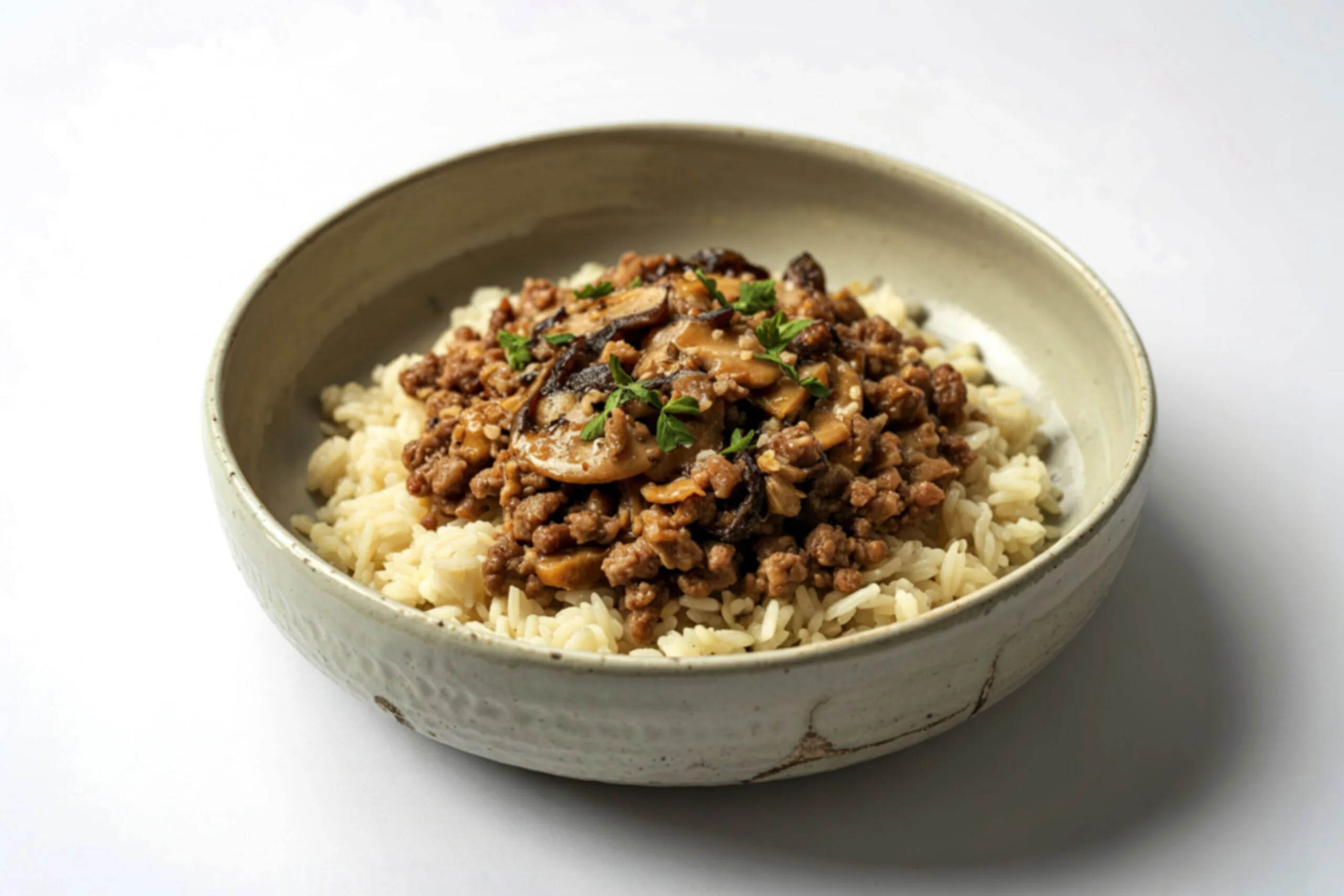
Despite the name, it’s not as strange as it sounds—and it’s for people, not for pets. The meal is usually a bowl of ground beef and rice, sometimes topped with eggs, avocado, or hot sauce. People who follow the trend often eat the same bowl every day—sometimes multiple times a day—because it’s easy, filling, and inexpensive.
The nickname comes from the idea that it’s a simple, repetitive meal—the human equivalent of kibble. It’s not meant to be fancy or exciting. The appeal is that it’s practical. The name also plays off the viral “girl dinner” trend on social media, where people shared low-effort meals made from whatever was on hand. In that sense, boy kibble has become the tongue-in-cheek counterpart: a stripped-down, protein-heavy bowl that’s less about presentation and more about efficiency.
You’ll see the trend popping up across TikTok, especially in gym and meal-prep circles. For some people, it’s the ultimate “set it and forget it” dinner: cook a big batch once, and you’re covered for several meals.
But that raises an interesting question. Is boy kibble actually a healthy habit or just another viral diet moment worth skipping? We consulted with Maggie Hudspeth, RDN, the Senior Manager of Coaching at Noom, to get her take on the boy kibble trend.

The Easy Way
to lose weight and get healthy.
See if you qualify

What is boy kibble?
Boy kibble is a nickname for a minimalist meal built around a few staple ingredients. The name reflects the idea that the trend has caught on, particularly among men in gym and fitness communities who are drawn to its straightforward, no-frills approach to eating. The focus is on foods that are easy to cook in bulk, affordable, and filling enough to become a repeatable daily meal.
Most versions look something like this:
- Ground beef
- White rice
- Eggs (optional)
- Avocado or vegetables (optional)
- Some seasoning or hot sauce
Unlike many meal-prep trends that involve elaborate recipes or strict nutrition rules, boy kibble is intentionally basic. The idea is to have a reliable, protein-forward meal that you can make quickly and eat regularly without thinking too much about it.
On social media, people who follow the trend often talk about eating the same bowl every day because it’s:
- High in protein
- Relatively cheap to make
- Easy to cook in bulk
- One less decision to make during a busy day
It’s less about culinary creativity and more about routine.
Why is boy kibble trending?
Part of the trend’s appeal is how practical it feels. In a world where many food trends are complicated or expensive, this one is refreshingly easy to follow and affordable.
For many people, boy kibble checks a lot of boxes.
- First, it’s easy to prep. Cooking a large batch of ground beef and rice takes very little time and requires only a few ingredients.
- Second, it aligns with the high-protein focus of modern fitness culture. Many gym-goers prioritize meals that support muscle recovery after workouts, and beef provides a solid dose of protein.
- Third, it’s also relatively affordable. With grocery prices rising, affordable ingredients like rice and ground beef can be more accessible than specialty health foods.
And then there’s the psychology behind it. Some people find that eating similar meals every day reduces decision fatigue. When you already know what dinner will be, it removes one more thing to think about.
TikTok tends to amplify habits that are easy to repeat, and boy kibble fits that formula perfectly.
“Simple meals can be appealing because they remove a lot of the mental load around eating,” says Hudspeth. “When people find a routine that’s easy, affordable, and filling, they’re often more likely to stick with it over time.”
Access GLP-1 Weight Loss with Noom
Explore a wide range of prescription medications supported by Noom’s program.Microdose GLP-1rx

Noom GLP-1rx

Noom GLP-1rx Plus
Wegovy®

Ozempic®

Metformin

Zepbound®

Mounjaro®

Liraglutide

What’s in a typical boy kibble recipe?
While everyone has their own variation, the basic recipe is pretty straightforward. The whole point of the trend is simplicity—using just a few staple ingredients that can be cooked in bulk and eaten throughout the week.
A basic version usually includes:
- Ground beef
- White rice
- Eggs or avocado
- Hot sauce or simple seasoning
Portion sizes vary a lot on TikTok, but a common example might look something like 4 to 6 ounces of ground beef paired with about 1 cup of cooked white rice, sometimes topped with one fried egg or a few slices of avocado.
Depending on the portions, a bowl like this might contain roughly:
- Protein: 25–40 grams
- Calories: 400–700
- Carbohydrates: 40–60 grams (mostly from the rice)
- Fat: 15–35 grams, depending on the beef and toppings
That combination of protein, carbohydrates, and fat is one reason the meal appeals to people focused on workouts. Protein supports muscle repair, carbohydrates provide energy for training, and fat helps with overall satiety—making the bowl filling enough to serve as a simple, repeatable meal.
From a nutrition perspective, the meal provides a mix of the three main macronutrients your body uses for energy and daily function:
- Protein from the beef. Protein helps support muscle maintenance, tissue repair, and feelings of fullness after meals. Ground beef is a complete protein source, meaning it contains all the essential amino acids your body needs. The exact fat and protein content can vary depending on the type of beef used—for example, 80/20 ground beef contains more fat, while 90/10 or lean ground beef provides similar protein with less saturated fat. If used, eggs also contribute high-quality protein along with nutrients like vitamin B12 and choline.
- Carbohydrates from the rice. Rice provides carbs that your body uses for energy. This is one reason it’s common in workout-focused meals. Most boy kibble bowls use white rice, which digests quickly and provides fast energy. Some people swap in brown rice or other whole grains, which contain more fiber and are digested more slowly.
- Fat from the beef and avocado. Fat plays a role in hormone production, nutrient absorption, and overall satiety. In a boy kibble bowl, fat can come from the natural fat in ground beef, the yolks in eggs, or additions like avocado. Choosing leaner beef and adding avocado can increase the healthy fats in the meal.
Together, these create a relatively balanced meal that provides protein for muscle repair, carbohydrates for energy, and fat for satiety, which is part of why the combination is popular.
Can boy kibble help with weight loss?
At first glance, eating the same meal every day—aka “boy kibble”—might sound a little bleak. But there’s a reason this idea keeps coming up in weight-loss conversations.
Part of it comes down to decision fatigue—that drained, over-it feeling you get after making choices all day.
A review of studies on decision fatigue and food choices looked at how repeated decision-making might influence eating behavior. Researchers analyzed existing studies across psychology, nutrition, and behavior science to understand patterns.
Here’s what that paper found (and what it didn’t find):
What the research suggests:
- Decision fatigue can lead to mental exhaustion and reduced willpower
- People are more likely to rely on quick, automatic choices instead of thoughtful ones
- In food environments, that can mean choosing convenient, highly visible, or default options
What’s still unclear:
- There’s limited direct evidence linking decision fatigue to real-world eating habits
- Much of the connection to food choices is theoretical or indirect, not proven in large trials
Where “boy kibble” might fit in:
This is where the idea of repeat meals comes in. If fewer choices = less mental load, then eating the same thing regularly might reduce the chance of impulsive or off-plan decisions later in the day.


In other words, the benefit isn’t magic—it’s friction reduction.
There’s also a nutritional angle to why something like a beef-and-rice bowl can feel satisfying:
- Protein helps you stay full longer, which may reduce snacking
- Carbs provide steady energy, especially when paired with fiber
- Fats slow digestion, helping meals feel more lasting
- Fiber, if avocado or brown rice is used, adds volume and fullness, which may support lower calorie intake
So yes—simple, repeatable meals can be filling, easy, and mentally low-effort.
But zoom out for a second.
No single meal drives weight loss.
A “boy kibble” routine can support weight loss if it helps you stay consistent and within your calorie needs. But it can just as easily backfire if portions creep up or calories quietly add up.
A beef-and-rice bowl? Totally workable.
An oversized version that makes it easy to mindlessly grab multiple servings? Different story.
As Hudspeth puts it: “A simple, repeatable meal can make it easier for some people to stay consistent. But it’s important to remember that no single meal drives weight loss on its own.”
If repeating meals helps you cut through decision fatigue and stay consistent, it can be a useful tool. Just make sure the bigger picture—portions, variety, and overall habits—is still working in your favor.
Boy kibble: Potential benefits
Part of the appeal of “boy kibble” is the lack of friction.
When meals are simple, repeatable, and easy to throw together, you’re not standing in the kitchen at 6 p.m. asking, “What should I eat?” for the fifth time that day. That alone can make healthy choices feel a lot more doable—especially when life is busy.
Here’s where this approach can work in your favor:
- High protein → more staying power – Meals built around protein can help you feel fuller for longer, which may make it easier to go a few hours without thinking about snacks. If you’re strength training or staying active, protein also plays a role in muscle maintenance and recovery.
- Easy meal prep → fewer last-minute decisions – Cooking a batch of ground beef and rice once and eating it across a few days removes a lot of daily effort. And when something’s already made, you’re less likely to pivot to takeout or whatever’s quickest in the moment.
- Budget-friendly → easier to stick with – Rice and ground beef aren’t flashy, but they’re reliable. Compared to more trend-driven “health” foods, they’re widely available, relatively affordable, and don’t require a specialty grocery run.
- Less decision fatigue → more consistency – Having a default meal cuts down on the number of choices you have to make. For some people, that frees up mental energy to focus on other habits—like working out, getting enough sleep, or cooking more meals at home.
When a meal is this easy to repeat, it can take healthy habits out of the “effortful” category and move them closer to automatic.
And for a lot of people, that consistency—not perfection—is what actually moves the needle.
Boy kibble: What to watch out for
As helpful as a repeatable meal can be, there are a few trade-offs worth paying attention to.
Nutrition tends to work best when there’s some variety over time—and that’s where “boy kibble” can start to fall short.
Here’s what to keep in mind:
- Low fiber (if it’s just meat + rice) – A basic beef-and-rice bowl doesn’t bring much fiber to the table. And fiber plays a big role in digestion, gut health, and fullness. Most people benefit from adding foods like vegetables, beans, or fruit to help round things out.
- Saturated fat can creep up – Depending on the type of beef you’re using, saturated fat can add up quickly. Higher-fat ground beef will push that number up, while leaner options—like 90% lean beef, chicken, or turkey—can lighten the load.
- Limited nutrient variety – Different foods bring different vitamins, minerals, and plant compounds. When you’re eating the exact same meal every day, it’s harder to cover all your bases nutritionally.
- Food boredom is real – What feels easy and convenient at first can start to feel… repetitive. And when meals get boring, people are more likely to abandon the plan altogether or swing to the opposite extreme.
The good news? You don’t have to overhaul the whole idea to make it work better.
A few small tweaks can go a long way:
- Add vegetables like spinach, peppers, or broccoli
- Rotate your protein (Try ground chicken or turkey. Swap in salmon or shrimp some days)
- Switch up flavors with spices, sauces, or different grains
Same structure, more variety.
That way, you keep the simplicity—but give your body (and your brain) a little more to work with.
Is boy kibble healthy?
It depends on how you build it.
A beef-and-rice bowl does bring some solid nutrition to the table—but if you’re eating it the exact same way every day, a few gaps can show up.
Here’s how it breaks down:
- Protein → a clear win – Ground beef delivers high-quality protein, along with nutrients like iron, zinc, and vitamin B12 that support energy and muscle function. Protein also helps with fullness, which can make it easier to go longer between meals.
- Carbohydrates → steady fuel – Rice provides carbohydrates—your body’s main energy source for movement and brain function. That’s one reason this combo shows up so often in workout-focused meals.
- Saturated fat → depends on your choice– Not all ground beef is the same. Cooking method matters, too. Draining excess fat after cooking can noticeably lower the overall fat content.:
- 80/20 = higher fat and saturated fat
- 90/10 (or leaner) = similar protein, less fat
- Fiber → the missing piece – This is where the classic bowl falls short. Beef and white rice don’t provide much fiber, which is key for digestion, gut health, and staying full. Most fiber comes from foods like vegetables, beans, fruit, and whole grains.
- Vitamins and minerals → variety matters – Beef covers some important bases, but it’s not a complete package. Foods like vegetables and beans bring in vitamin C, potassium, folate, and antioxidants—nutrients that support heart health, digestion, and immune function.
How to make boy kibble healthier
The appeal of “boy kibble” is its simplicity—and you don’t have to lose that to make it more balanced. A few small upgrades can go a long way:
- Add a handful of vegetables – Think: spinach, peppers, broccoli, and tomatoes to boost fiber, vitamins, and antioxidants without adding much effort
- Mix in beans – They add fiber and slow digestion, which can help with fullness
- Swap your protein (sometimes) – Choose lean ground beef (90/10), or try Ground turkey or chicken which is just as easy to cook but has less saturated fat.
- Adjust how you cook it: Draining excess fat after cooking beef is a quick way to lighten the meal without changing the flavor much
The goal isn’t to overhaul the meal—it’s to build on what’s already working.
Even small tweaks—like tossing in a handful of veggies or choosing a leaner protein—can make the bowl more balanced while keeping it just as easy to stick with.
“The base idea behind boy kibble isn’t inherently unhealthy—it just works better when it’s balanced with other foods,” says Hudspeth.
Is boy kibble safe to eat every day?
For most people, eating a meal built around beef and rice is perfectly safe as part of an overall balanced diet. The key question isn’t whether the meal itself is harmful—it’s whether it’s the only thing you’re eating regularly.
Nutrition experts generally recommend variety over time.
“Meals like beef and rice can absolutely fit into a healthy routine,” says Hudspeth. “But relying on the exact same foods every day may limit the variety of nutrients your body needs. Even small additions—like vegetables or beans—can make a simple meal more balanced.”
Different foods provide different nutrients, and rotating protein sources and plant foods helps make sure your body gets the full range it needs. Adding vegetables, beans, or other plant foods to a boy kibble bowl can quickly improve its nutritional balance. These foods provide fiber, vitamins, minerals, and antioxidants that beef and white rice alone may not supply in large amounts.
In other words, the bowl itself isn’t the problem. Over time, adding variety and plant foods is what helps turn a simple meal into a more nutritionally complete one.
Frequently asked questions about boy kibble
Is boy kibble good for you?
It can be—depending on how you build it. A basic beef-and-rice bowl gives you protein for fullness, carbs for energy, and fat for satiety, which is a solid start. But on its own, it’s a little nutritionally narrow. Without vegetables or plant foods, it may fall short on fiber and key vitamins. The fix is simple: add things like beans, leafy greens, or roasted veggies to round it out without making the meal more complicated.
Can boy kibble help build muscle?
It can definitely support it. Meals with enough protein help with muscle repair and growth, especially when paired with strength training, and a typical bowl can land in the 25–40 gram protein range—right where many post-workout recommendations fall. That said, muscle gain depends on the bigger picture: total daily protein, enough calories, and a consistent training routine.
Can you lose weight eating boy kibble?
Possibly—but not because it’s a shortcut. Weight loss comes down to overall calorie balance. Where this kind of meal can help is in its simplicity: repeating meals can reduce decision fatigue, making it easier to stay consistent. But it can swing either way—reasonable portions can support your goals, while larger portions or calorie-dense add-ons can quietly push you out of a deficit.
Is it healthy to eat red meat every day?
Moderation is usually the smarter approach. Beef is a great source of protein, iron, and vitamin B12, but regularly eating large amounts of red or processed meat has been linked to higher health risks in long-term studies. Mixing in other proteins—like poultry, fish, beans, tofu, or lentils—throughout the week can help create a more balanced, flexible routine.
Is eating the same meal every day healthy?
It can actually make healthy habits easier to stick with. Having a few go-to meals cuts down on decision fatigue and simplifies your routine, which can be a big win on busy days. But over time, variety matters—rotating different proteins, grains, fruits, and vegetables helps ensure you’re getting a wider range of nutrients and keeps things from getting stale.
Reviews from real Noom users
Desirea N. — Real Noom user
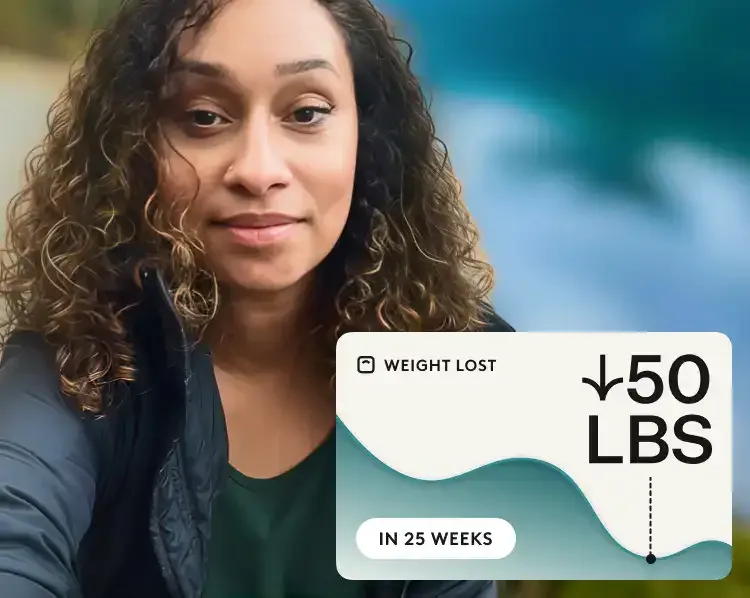
“My favorite parts of Noom are the care team and other Noomers. Sharing and getting help made me feel like I wasn’t doing it alone. That support made all the difference.”
Desirea N. — Real Noom user
Matthew M. — Real Noom user

“Noom has taught me that every day is a new chance to make better, healthier choices. It's taught me how to stop overeating.’’
Matthew M. — Real Noom user
Lila M. — Real Noom user

“Clinicians who understand how supportive medication can be is one of the best parts of Noom! I was convinced I wouldn’t have success but I’m down 11 pounds in two months.’’
Lila M. — Real Noom user
Steve M. — Real Noom user

“Noom provided me with the medication which I could not get through Medicare. I have learned the tricks to better eating and life in general.”
Steve M. – Real Noom user
Daisy R. — Real Noom user

‘’Noom has changed my life and I’m so thankful, I feel great, have more energy and am no longer prediabetic.”
Daisy R. – Real Noom user
Sarah R. — Real Noom user
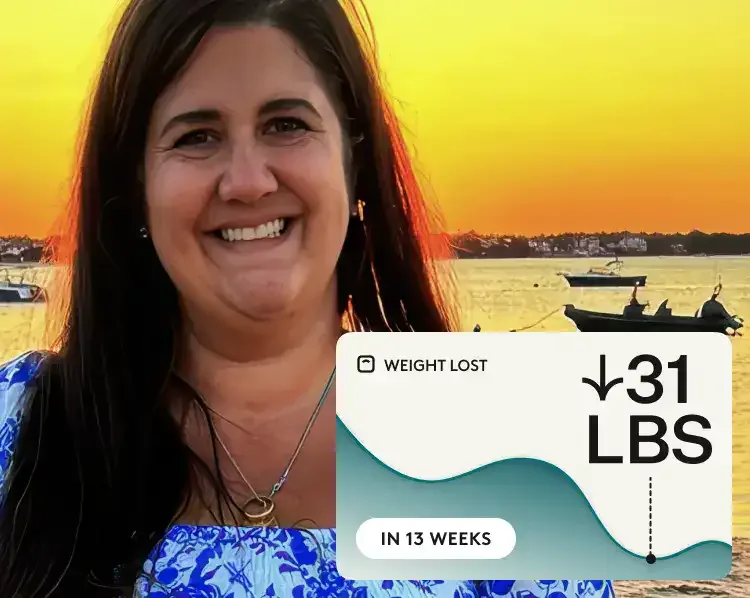
“All of the Noom providers that I’ve met with have been exceptional and prescribed medications that are appropriate for my situation and health.”
Sarah R. – Real Noom user
Madison S. — Real Noom user

“Noom made the process so simple and now I feel full, free from diet obsession, and at ease in my body again.”
Madison S. – Real Noom user
Sonday K. — Real Noom user
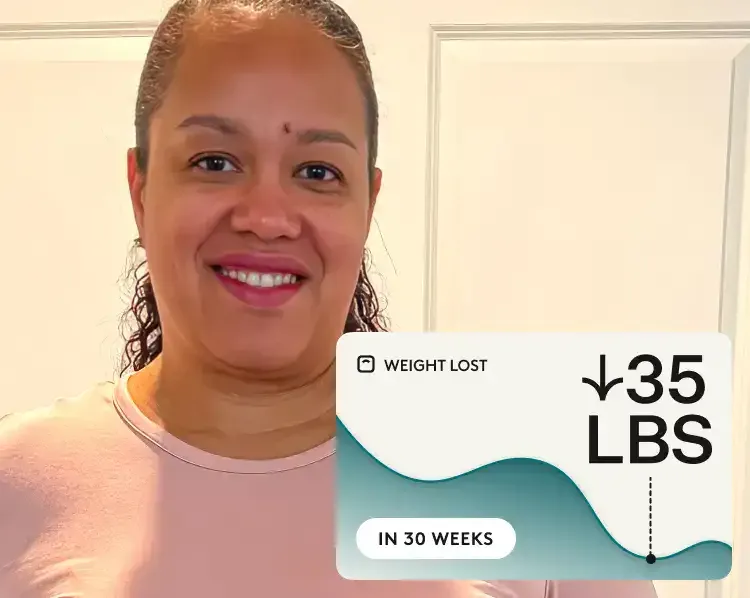
“My doctor recommended Noom after I was frustrated trying to lose weight. The lessons helped change my relationship with food. My body feels lighter & energized.”
Sonday K. – Real Noom user
Cam K. — Real Noom user
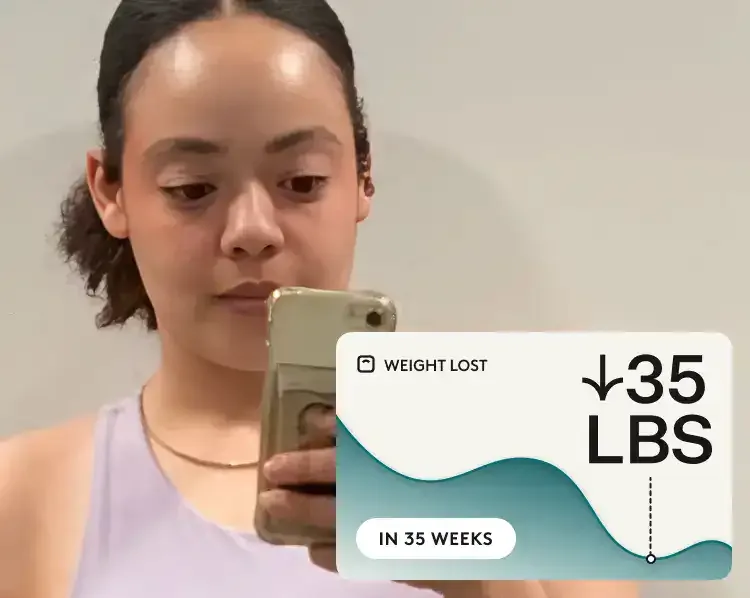
“I built healthy habits with coaching and lessons that make me confident I can maintain my weight loss long term.”
Cam K. – Real Noom user
Laura TR. — Real Noom user

“With the right medication through Noom, hunger and sugar cravings finally quieted and I have the tools to break the cycle.”
Laura TR. – Real Noom user
Jessica S. — Real Noom user

“Cravings and food noise are gone, I finally feel confident in the healthy habits I’ve built to last with Noom.”
Jessica S. – Real Noom user
The bottom line: Boy kibble is healthy in moderation, but it could be more balanced
The boy kibble trend highlights something nutrition experts have known for years: healthy eating doesn’t have to be complicated. A healthy, repeatable meal can make eating feel easier, reduce decision fatigue, and help some people stay consistent with their habits. And that consistency is often what matters most. But the meal itself isn’t doing anything magical. Whether it supports your goals comes down to how it fits into your overall routine—your portions, your total intake, and the balance of foods you’re eating across the day.
The good news is you don’t have to choose between simple and healthy. With a few small tweaks—adding vegetables, rotating proteins, or adjusting portions—you can keep the convenience while making the meal more nutritionally complete. Think of “boy kibble” less as a rigid rule and more as a flexible template. If it helps you stay on track, great. Just zoom out every so often to make sure your habits are still supporting your energy, your health, and your long-term goals.
The real lesson we can get from the boy kibble trend is that finding repeatable routines and habits that make healthy eating easier to stick with is always a good bet.
If you want help building healthy habits that last, download Noom on iOS and Android. You’ll get daily tips, expert guidance, easy and delicious recipes, and so much more. Noom focuses on helping you understand how foods affect your hunger, satisfaction, and daily habits.
Editorial standards
At Noom, we’re committed to providing health information that’s grounded in reliable science and expert review. Our content is created with the support of qualified professionals and based on well-established research from trusted medical and scientific organizations. Learn more about the experts behind our content on our Health Expert Team page.