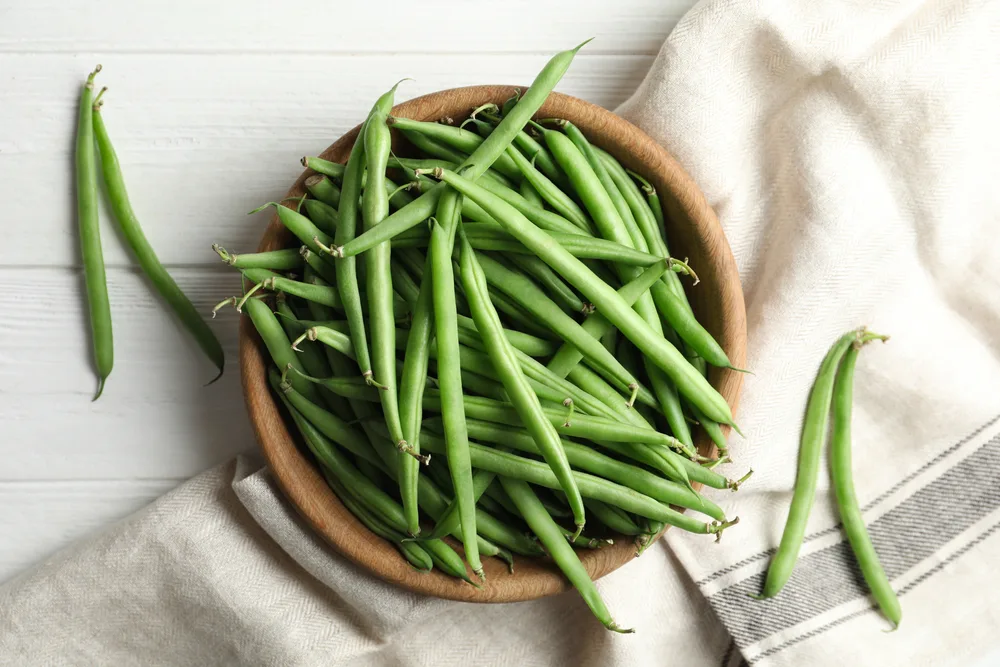
Green beans don’t get the same attention as kale or broccoli, but they’re one of those vegetables that’s easy to like—tender, slightly sweet, and versatile. While leafy greens like kale may pack more nutrients per calorie and broccoli brings more vitamin C and fiber, green beans still offer a good mix of fiber, vitamins, and minerals, like vitamin C, vitamin K, and folate, along with lots of satisfying volume for very few calories. A full cup of cooked green beans has just 44 calories. They’re an approachable way to get more of these nutrients consistently.
What makes them a good veggie to include if weight loss is your goal is that you can eat a good portion without many calories. They’re relatively high in fiber (about 4 grams per cup), which helps slow down digestion and keeps you feel longer. They also have a low glycemic impact, so they won’t cause sharp spikes and dips in blood sugar, which can help keep cravings steadier.
How you prepare them makes a big difference. On their own, green beans are low in calories and easy to add to a meal in generous portions. The trick is keeping them simple—steamed, roasted, or sautéed with a little oil—so you keep the volume and flavor without changing what makes them useful.
Here’s everything you need to know about green beans—and how to fit them into your weekly routine.
✅ Quick answer
Yes, green beans are a great choice for weight loss. They’re low in calories, high in water and fiber, and have one of the lowest glycemic index scores of any vegetable. That combination helps you feel full.
🚀 Weight-loss benefits
- Very low in calories – Green beans are about 90% water, so a large portion fills you up without many calories. A full cup is only about 44 calories.
- Fiber helps keep hunger at bay – One cup of cooked green beans provides 4 grams of fiber, which slows digestion and helps you stay full longer. That steadier feeling between meals makes it a lot easier to stick to your eating goals throughout the day.
- Low glycemic index also means steady energy – With a GI of just 20, green beans cause a gentle rise in blood sugar. That may help avoid an afternoon energy slump that so often leads to snacking on something sweet.
⚠️ Things to be mindful of:
- Preparation can add a lot of calories – Green beans on their own are very low in calories. But if they’re served with butter, creamy sauces, or as part of a casserole, those additions add up fast. A simple preparation keeps them in weight loss territory.
- They can cause bloating for some people – Green beans contain FODMAPs, a type of carbohydrate that some digestive systems don’t handle well. If you have IBS or tend to experience bloating after eating legumes, starting with a smaller portion is a sensible place to begin.
- They’re not a significant protein source – Green beans are low in protein, so they best alongside something protein-rich. On their own, they’ll fill your stomach temporarily, but the fullness won’t last long without protein in the mix.
🥗 Nutrients in green beans (per 1 cup cooked / 125g)
| Nutrient | Amount | % RDA* |
|---|---|---|
| Calories | 44 calories | 2% |
| Protein | 2.4 g | 5% |
| Total carbs | 9.9 g | 4% |
| Fiber | 4.0 g | 14% |
| Sugars | 4.5 g | — |
| Total fat | 0.4 g | <1% |
| – Saturated fat | 0.09 g | <1% |
| – Monounsaturated fat | 0.02 g | — |
| – Polyunsaturated fat | 0.19 g | — |
| Omega-3 | 0.11 g | — |
| Omega-6 | 0.08 g | — |
*Recommended dietary allowance (RDA) is defined as the average daily amount of nutrients needed to meet the requirements of nearly all healthy people in a specific group.
A cup of cooked green beans comes in at about 44 calories, with 10 grams of carbs, 4 grams of fiber, 2.4 grams of protein, and almost no fat.
Most of those carbs come packaged with fiber, so you’re looking at about 5 to 6 grams of net carbs. That’s part of what helps them feel more filling than you’d expect for the calories.
The fiber plays the biggest role here—it helps slow digestion and supports a more steady, satisfied feeling after you eat. Protein is present, but in a smaller amount, which is why green beans work best alongside a more substantial protein source.
💊 Vitamins & minerals in green beans (per 1 cup cooked / 125g)
| Vitamin/Mineral | Amount | % RDA* |
|---|---|---|
| Vitamin K | 53.8 mcg | 45% |
| Vitamin C | 15.3 mg | 17% |
| Manganese | 0.26 mg | 11% |
| Folate (B9) | 41.3 mcg | 10% |
| Vitamin B6 | 0.18 mg | 10% |
| Riboflavin (B2) | 0.13 mg | 10% |
| Thiamin (B1) | 0.10 mg | 8% |
| Magnesium | 31.3 mg | 7% |
| Iron | 1.29 mg | 7% |
| Potassium | 263.8 mg | 6% |
| Vitamin A | 43.8 mcg | 5% |
| Calcium | 46.3 mg | 4% |
Vitamin K is the standout—one cup covers nearly half your daily recommended intake. Most people don’t think much about vitamin K, but it plays an important role in blood clotting and bone health, and green beans are one of the better everyday sources of it.
Vitamin C comes next, covering about 17% of your daily needs per cup. It supports immune function, helps build collagen, and also helps your body absorb the small amount of plant-based iron (7%) that green beans provide.
You’ll also get smaller amounts of B vitamins like folate, B6, riboflavin, and thiamin, along with minerals like manganese, which support energy metabolism.
🔍 Nutrient breakdown
Glycemic index (GI) of green beans
Glycemic index: 20 (Low)
💡 Tip: A GI of 20 is very low—lower than most vegetables and far below most carb-containing foods. That means green beans cause only a slow, gentle rise in blood sugar, which helps keep energy steady and hunger quieter between meals. Pairing them with a protein and a healthy fat brings the glycemic impact of the whole meal down even further.
Are green beans high in protein?
❌ No—green beans contain 2.4 g of protein per cup.
Green beans are a vegetable, not a protein source. They contribute a small amount, but not enough to drive satiety or support muscle maintenance on their own. Pair them with a solid protein at every meal.
Better protein alternatives: Grilled chicken | Tempeh | Lentils
Are green beans high in fiber?
✔️ Yes—green beans have 4.0 g of fiber per cup.
💡 Tip: Four grams of fiber for just 44 calories is a great ratio. Most of that fiber lives in the pod itself, so eating the whole thing matters. Steaming rather than boiling also helps preserve more of it.
Are green beans low in carbs?
✔️ Yes—green beans have 9.9 g of total carbs per cup, with about 5–6 g of net carbs after fiber.
💡 Tip: Green beans are one of the few vegetables in the legume family that fit comfortably into low-carb and keto diets. They make a great substitute for higher-carb sides like rice or pasta when you want to add bulk to a meal without the extra carbs.
Are green beans gluten-free?
✔️ Yes—green beans are naturally gluten-free and safe for people with celiac disease or gluten sensitivity. Plain fresh or frozen varieties are always a safe bet. Just check labels on canned or pre-seasoned products, which can occasionally contain additives.
Are green beans good for fat loss?
✔️ Yes—green beans are one of the more practical foods for fat loss because of their volume-to-calorie ratio. A large portion physically fills your stomach and sends fullness signals to your brain without using up much of your daily calorie budget. That makes it a lot easier to stay in a deficit without feeling like you’re eating less.
🍽️ Diet compatibility: Which diets include green beans?
| Diet | ✅/❌ | Why |
| Keto | ✅ | With only about 5–6 grams of net carbs per cup, green beans are one of the few legume-family vegetables that fit within a keto carb limit. |
| Paleo | ✅/❌ | Strict paleo excludes legumes, but green beans are widely considered a gray area. They’re harvested young before lectins fully develop, and cooking neutralizes most of what’s left. Many paleo eaters include them. |
| Mediterranean | ✅ | Green beans are a natural fit here. They pair well with olive oil, garlic, and the lean proteins that are central to Mediterranean-style eating. |
| Vegan | ✅ | Green beans are entirely plant-based and contribute iron, calcium, and folate—nutrients that can be harder to get enough of on a vegan diet. |
| Gluten-free | ✅ | Green beans are naturally gluten-free. Fresh and plain frozen varieties are reliably safe. Check labels on canned or flavored versions. |
Green beans are about as universally diet-friendly as vegetables get. They work in keto, Mediterranean, vegan, and gluten-free eating patterns with no real adjustment needed. The only nuance is strict paleo, where the legume category creates some debate—but most people eating a paleo-inspired diet include green beans without concern, especially when cooked.
For anyone eating with calorie awareness, green beans are essentially a free pass. They add volume, fiber, and real nutrition to meals without meaningfully affecting any macronutrient targets.
🌟 Are green beans healthy? What are the health benefits?
Metabolic health: Are green beans good for your metabolism?
- Boosts metabolism? ✔️ Modest benefit – Green beans contain manganese and several B vitamins that support the enzymes involved in turning food into energy. They don’t directly speed up metabolic rate, but they support the process that keeps your metabolism running efficiently.
- Improves insulin sensitivity? ✔️ Yes – The fiber in green beans slows how quickly sugar enters the bloodstream, which reduces the demand placed on insulin. Over time, this supports better blood sugar management—one of the key drivers of healthy weight regulation.
- Effect on fat storage? Positive – By keeping blood sugar and insulin levels steady, green beans help reduce the hormonal signal that tells your body to store excess energy as fat. They’re not a fat-burning food in any direct sense, but they help create the conditions that make fat loss easier.
Cholesterol impact: Do green beans affect cholesterol levels?
- Does it lower LDL (bad) cholesterol? ✔️ Yes – The soluble fiber in green beans binds to cholesterol-containing bile acids in the gut and helps remove them from the body before they’re reabsorbed. It’s the same mechanism that makes oats effective at lowering LDL.
- Does it raise HDL (good) cholesterol? ❌ Data limited – There’s no strong evidence that green beans directly raise HDL. That said, consistently eating vegetables is associated with a healthier overall cholesterol profile over time.
- Overall impact on heart health? Favorable – Green beans contain flavonoids and potassium that help support healthy blood pressure and blood vessel function. Their fiber, antioxidant content, and very low sodium make them a genuinely heart-friendly food.
💡 Tip: Cook green beans with a small drizzle of olive oil. The fat helps your body absorb the fat-soluble nutrients—particularly vitamin K—more effectively than eating them plain.
Can I eat green beans for a calorie deficit?
✔️ Yes, with confidence: Green beans are one of the best foods for a calorie deficit. A full pound of green beans contains fewer than 150 calories. You can eat a genuinely generous portion and barely register it in your daily calorie count.
💡 Tip: Add a large handful of green beans to pasta dishes, grain bowls, or stir-fries to bulk up the portion size. You get a bigger, more satisfying meal for almost no additional calories.
Are green beans rich in antioxidants?
✔️ Yes: Green beans contain quercetin, kaempferol, and catechins—plant compounds that help protect cells from damage and reduce inflammation. Steaming rather than boiling preserves more of these, since some are water-soluble and get lost when the beans sit in boiling water.
Do green beans support gut health?
✔️ Yes: The fiber in green beans acts as a prebiotic, feeding beneficial bacteria in the gut. A healthy gut microbiome is linked to better metabolic health, improved immunity, and more consistent appetite regulation—all of which matter when you’re working on your weight.
Do green beans support digestion?
Positive: The insoluble fiber in green beans adds bulk and supports regular bowel movements. One caveat: green beans contain FODMAPs, which can cause gas and bloating in people with IBS or fructose sensitivity. If that’s you, keep portions small and cook them thoroughly to reduce discomfort.
Do green beans help you feel satiated and less hungry?
High: The combination of water and fiber physically fills your stomach and triggers the stretch receptors that send fullness signals to your brain. For such a low-calorie food, green beans are surprisingly filling—a cup takes real time to eat and leaves you feeling like you’ve had a proper portion.
Satiety level: High
💡 Tip: Try eating a cup of steamed green beans before your main course. It takes the edge off hunger and naturally reduces how much you eat at the meal—without adding more than 44 calories.
Do green beans help with nighttime cravings?
✔️ Yes: Raw or lightly air-fried green beans are genuinely crunchy, which gives them a snack-like quality that works well in the evening. The crunch and the act of chewing provide a level of satisfaction that softer snacks don’t—and at around 31 calories per cup raw, you can eat a real portion without it mattering much calorically.
Access GLP-1 Weight Loss with Noom
Explore a wide range of prescription medications supported by Noom’s program.Microdose GLP-1rx
Noom GLP-1rx
Noom GLP-1rx Plus
Wegovy®
Ozempic®
Metformin
Zepbound®
Mounjaro®
Liraglutide
💡 Tip: Keep a container of washed, ready-to-eat green beans at eye level in the fridge. When a late-night craving hits, having something accessible and ready makes it much easier to reach for the right thing.
Do green beans help reduce inflammation?
✔️ Yes: The flavonoids and carotenoids in green beans have anti-inflammatory properties. Chronic low-grade inflammation is associated with weight gain and metabolic issues, so eating anti-inflammatory vegetables regularly contributes to a more favorable environment for weight loss over time.
Are green beans beneficial for brain health?
✔️ Yes, limited benefits: Folate supports DNA synthesis and neurotransmitter production, both of which matter for cognitive function. Green beans provide about 10% of the daily recommended intake per cup—a modest but real contribution as part of a varied diet.
Can green beans improve skin and hair health?
✔️ Yes, minor benefits: Vitamin C is directly involved in collagen production, which gives skin its structure and elasticity. At 17% of your daily vitamin C needs per cup, green beans are a quiet but consistent contributor to skin health over time.
Can green beans help balance hormones?
✔️ Yes, modest evidence: High-fiber diets support the body’s natural excretion of excess estrogen through the digestive tract, which can contribute to more balanced hormone levels over time. Green beans’ fiber content makes them a useful part of that pattern, though they’re not a targeted hormonal treatment.
💡 Tip: For hormonal health, the overall pattern of your diet matters much more than any single vegetable. Green beans are a useful contributor, but variety across plant foods is what really moves the needle.
🍽️ Best ways to eat green beans for weight loss
- Steamed with lemon – Steaming preserves the most nutrients and keeps the crunch that makes green beans satisfying. A squeeze of lemon and a teaspoon of olive oil adds brightness and healthy fats without many extra calories.
- Roasted as a snack – Toss with a light spray of olive oil and a pinch of salt, then roast until the edges blister and crisp. You get a crunchy, satisfying snack for a fraction of the calories.
- Add them to salads – Roasted or steamed green beans add a crisp-tender bite and make salads feel more like a real meal. Pair with a simple dressing and protein to keep it balanced.
🍏 Best alternatives & comparisons (per 1 cup cooked)
| Food | Calories | Carbs | Fiber | Protein | Fat |
|---|---|---|---|---|---|
| Green beans | 44 | 9.9 g | 4.0 g | 2.4 g | 0.4 g |
| Asparagus | 27 | 5.0 g | 2.8 g | 3.0 g | 0.3 g |
| Broccoli | 55 | 11.2 g | 5.1 g | 3.7 g | 0.6 g |
| Zucchini | 27 | 4.9 g | 1.8 g | 2.0 g | 0.5 g |
| Snap peas | 67 | 11.3 g | 4.4 g | 4.5 g | 0.3 g |
| Spinach | 41 | 6.8 g | 4.3 g | 5.4 g | 0.5 g |
Green beans land in a comfortable middle ground here—not the very lowest in calories (asparagus and zucchini edge them out) but offering more fiber and a firmer, more satisfying texture than either. Broccoli is the closest nutritional match—nearly identical in fiber and similar in calories—making it an easy swap depending on what sounds good.
Asparagus is worth keeping in the rotation as a slightly lighter alternative, with a bit more protein per cup. Spinach is impressive nutritionally—more protein than any other vegetable on this list—but it cooks down dramatically, so the volume you end up with is much smaller than what you started with. Rotating between green beans, broccoli, asparagus, and spinach through the week is one of the simplest ways to keep vegetable variety without overthinking it.
Frequently asked questions about green beans and weight loss
Are green beans good for weight loss?
Yes. Green beans are low in calories, high in water and fiber, and have a very low glycemic index. That combination helps you feel full without eating much energy. They work best as part of a balanced meal that also includes a protein source.
How many green beans can I eat per day for weight loss?
There’s no real limit, given how few calories they contain. Most people can comfortably eat two to three cups of cooked green beans per day. If you have IBS or are sensitive to FODMAPs, keeping individual portions smaller is a good starting point.
Are green beans keto-friendly?
Yes. With about 5–6 grams of net carbs per cup, green beans are one of the few legume-family vegetables that fit within a standard keto carb limit. They’re commonly used as a lower-carb substitute for starchy sides like potatoes or rice.
Are canned green beans as healthy as fresh?
Close. Canned green beans retain most of their macronutrients and fiber, but some water-soluble vitamins—particularly vitamin C—are reduced during processing. The bigger issue is sodium. Look for no-salt-added varieties, or drain and rinse before using.
Do green beans cause gas or bloating?
They can for some people. Green beans contain FODMAPs—specifically sorbitol and mannitol—that some digestive systems struggle to break down. Cooking them thoroughly and keeping portions moderate helps. If you’re sensitive to legumes generally, start small and see how you feel.
What’s the best way to cook green beans for weight loss?
Steaming or roasting. Steaming preserves the most nutrients and keeps the texture satisfying without adding any calories. Roasting with a light spray of oil brings out more flavor and creates a crunchier result that works well as a snack. Both are simple and let the vegetable do what it does best.
Are green beans a good snack?
Yes—especially raw or lightly roasted. They’re crunchy, low in calories, and take time to eat. A cup of raw green beans is around 31 calories. That’s a snack you can eat without any concern about how it fits into your day.
🧠 The bottom line: Green beans are a good choice for weight loss
Green beans are one of the more practical vegetables for weight loss. They’re low in calories, often affordable, add volume to your plate, and are easy to include in so many different meals—tossed into salads, added to a stir-fry, served alongside grilled chicken or salmon, or even roasted as a simple side. A cup of cooked green beans goes a long way when you’re trying to make meals feel more satisfying without adding many calories.
They help fill out your plate, bring in some fiber, and make meals feel more complete. You’re also getting nutrients like vitamin K, vitamin C, and folate, which support things like bone health, immune function, and energy metabolism. Keep the prep simple, go easy on heavier sauces, and pair them with a protein to turn them into a balanced, satisfying meal.
📖 Scientific evidence
- Green beans are a good source of fiber, and getting more fiber is linked to better weight management. (Frontiers in Nutrition, 2023) In one study, people who increased their intake of fiber-rich foods—especially vegetables and fruits—tended to lose more weight over time.
- Regularly eating vegetables like green beans is linked to a lower risk of heart disease. (International Journal of Epidemiology, 2017) A study found that people who ate vegetables and legumes four or more times per week had a lower risk of coronary heart disease—likely due to nutrients like fiber, potassium, and antioxidants, all of which green beans provide.
- Green beans contain antioxidants that may help protect your cells and support overall health. (Communications in Free Radical Research, 2013) One analysis found that green beans provide compounds like quercetin, kaempferol, and catechins—plant nutrients that are linked to lower levels of inflammation and play a role in metabolic health over time.
Editorial standards
At Noom, we’re committed to providing health information that’s grounded in reliable science and expert review. Our content is created with the support of qualified professionals and based on well-established research from trusted medical and scientific organizations. Learn more about the experts behind our content on our Health Expert Team page.