While cinnamon has long been associated with blood sugar control, lately it’s been promoted for much bigger weight-loss promises. You’ll find it stirred into glasses of water and promoted as an appetite suppressant, mixed with honey into bedtime drinks that supposedly “boost metabolism” overnight, and featured in the growing trend of warming spices said to support weight loss.
Some of these claims have roots in real research. Others take small, early findings and stretch them much further than the evidence supports.
So, is cinnamon actually good for weight loss? The short answer is: maybe, but not in the way social media suggests. Cinnamon isn’t a fat-burning food, and adding it to your coffee, oatmeal, or smoothie won’t cause the pounds to disappear on its own. But some research suggests it may modestly support weight management by influencing blood sugar regulation, fullness, and appetite—all factors that can make healthy eating a little easier for some people.
At about 20 calories and 4 grams of fiber per tablespoon, cinnamon isn’t going to make or break your calorie budget. Its potential role in weight management has much less to do with its nutrition facts than with naturally occurring compounds that researchers believe may affect how the body responds to food.
Here’s what the research actually shows.
✅ Quick answer: Is cinnamon good for weight loss?
It can be, but not in the way it’s often promoted online. Cinnamon isn’t a weight-loss food, and there’s no strong evidence that simply adding it to your coffee, oatmeal, or water will lead to meaningful weight loss on its own. Some studies have found that cinnamon supplements may produce small reductions in body weight, BMI, and blood sugar, but the average effect is modest. If you enjoy cinnamon, it’s a flavorful, low-calorie way to season foods and may offer some metabolic benefits. Just think of it as one small piece of an overall healthy eating pattern rather than a weight-loss strategy by itself.
🚀 Weight-loss benefits
- It’s an easy way to add flavor without many calories. A teaspoon of cinnamon has only about 6 calories, making it a simple way to add sweetness-like flavor to foods like yogurt, oatmeal, or coffee without relying on added sugar.
- Cinnamon may help blunt blood sugar spikes after meals. One study found that adding about 2 teaspoons of cinnamon to a meal slowed stomach emptying and reduced the rise in blood sugar afterward. Smaller amounts didn’t have the same effect, suggesting a light sprinkle may not be enough.
- Studies link cinnamon supplements to small reductions in body weight. Some research suggests that people taking cinnamon supplements lost a small amount of weight—about 2 pounds on average—especially when they took at least 2 grams daily for 12 weeks or longer. The effect was modest, and not every study found a benefit.
⚠️ Things to be mindful of
- The weight-loss benefits are modest. While some studies have linked cinnamon supplements to small reductions in body weight, others have found little or no benefit. Cinnamon may play a supporting role in a healthy eating pattern, but it isn’t a weight-loss shortcut.
- Cinnamon supplements can interact with some medications. Because cinnamon may affect blood sugar and blood clotting, talk to your healthcare provider before taking cinnamon supplements if you use diabetes medications or blood thinners like warfarin.
- Too much of a certain type of cinnamon isn’t a good idea. The most common type of cinnamon sold in grocery stores is Cassia cinnamon, which contains coumarin, a natural compound that may increase the risk of liver damage when consumed in large amounts over time. If you use cinnamon daily or take cinnamon supplements, Ceylon cinnamon is generally considered the safer choice.
🥗 Nutrients in cinnamon (per 1 teaspoon, ground)
| Nutrient | Amount | % RDA* |
|---|---|---|
| Calories | about 6 calories | <1% |
| Protein | 0 g | 0% |
| Total carbs | about 2 g | <1% |
| Fiber | about 1.3 g | 5% |
| Sugars | 0 g | — |
| Total fat | 0 g | 0% |
*Recommended dietary allowance (RDA) is defined as the average daily amount of nutrients needed to meet the requirements of nearly all healthy people in a specific group.
Even in a teaspoon-sized serving, cinnamon provides about 1 gram of fiber while adding very few calories. That makes it an easy way to add flavor—and a small nutritional boost—to foods like oatmeal, yogurt, or fruit.
Like most spices, cinnamon contributes very little protein or fat. It’s best thought of as a flavorful addition to meals, not a food that meaningfully changes your overall nutrition on its own.
💊 Vitamins & minerals in cinnamon (per 1 teaspoon, ground)
| Vitamin/Mineral | Amount | % RDA* |
|---|---|---|
| Manganese | about 0.5 mg | 20% |
| Calcium | about 27 mg | 2% |
| Iron | about 0.2 mg | 1% |
Manganese is cinnamon’s standout nutrient. Just 1 teaspoon provides about one-fifth of your daily needs, supporting normal metabolism, bone health, and antioxidant defenses.
Calcium and iron are present in much smaller amounts. While they aren’t enough to make cinnamon a major source of either nutrient, they’re a small bonus that comes along with its flavor and fiber.
🔍 Nutrient breakdown
Glycemic index (GI) of cinnamon
Glycemic index: Near 0 (Low)
💡 Cinnamon contains very little digestible carbohydrate, so it has little effect on blood sugar by itself. Most research has focused on whether it changes the blood sugar response to other foods.
Is cinnamon high in protein?
❌ No. Cinnamon contains virtually no protein per serving. It’s used for flavor, not protein.
Is cinnamon high in fiber?
✔️ For a spice, yes. One teaspoon provides about 1 gram of fiber while adding very few calories.
💡 Sprinkle it on naturally fiber-rich foods like oatmeal, yogurt, or fruit for an extra boost.
Is cinnamon low in carbs?
✔️ Yes. A teaspoon contains about 2 grams of carbohydrates, with about half coming from fiber, making it easy to fit into most eating patterns, including lower-carb diets.
💡 Cinnamon can add sweetness-like flavor without added sugar.
Is cinnamon gluten-free?
✔️ Yes. Pure cinnamon is naturally gluten-free. If you have celiac disease, look for products labeled gluten-free to reduce the risk of cross-contamination.
Is cinnamon good for fat loss?
Maybe, but don’t expect much. Cinnamon may modestly support a weight-loss plan by adding flavor with very few calories, and some studies suggest cinnamon supplements may have small metabolic benefits. But there’s little evidence that adding cinnamon to foods leads to meaningful fat loss on its own.
💡 Think of cinnamon as a flavorful addition to an overall healthy eating pattern—not a weight-loss ingredient.
🍽️ Diet compatibility: Which diets include cinnamon?
| Diet | ✅ / ❌ | Why |
|---|---|---|
| Keto | ✅ | At typical culinary doses, cinnamon’s carb content is negligible and won’t disrupt ketosis. |
| Paleo | ✅ | Cinnamon is a whole, minimally processed plant product with no additives, fitting easily into paleo eating patterns. |
| Mediterranean | ✅ | Cinnamon is a traditional Mediterranean and Middle Eastern spice used in both savory and sweet dishes. |
| Vegan | ✅ | Cinnamon is entirely plant-derived with no animal-based processing involved. |
| Gluten-Free | ✅ | Pure ground cinnamon contains no gluten, though blended spice mixes should be checked individually. |
Cinnamon fits into virtually every major eating pattern because it’s typically used in small amounts for flavor rather than as a significant source of calories or nutrients.
The main consideration isn’t the diet itself—it’s how much cinnamon you’re consuming. If you use cinnamon supplements or eat large amounts every day, Ceylon cinnamon is generally a better choice than the more common Cassia variety because it contains much less coumarin.
🌟 Is cinnamon healthy? What are the health benefits?
Metabolic health: Is cinnamon good for your metabolism?
- Boosts metabolism? ❌ No. Cinnamon doesn’t appear to meaningfully increase the number of calories your body burns. While laboratory and animal studies have suggested possible effects, human studies haven’t found a meaningful increase in metabolic rate.
- Improves insulin sensitivity? Possibly. This is where the strongest evidence exists. Some studies suggest cinnamon may modestly improve blood sugar control and insulin response, particularly in people with insulin resistance, prediabetes, or type 2 diabetes, but results have been mixed.
- Changes how your body stores fat? ❌ Not directly. Despite promising laboratory research, there’s no strong evidence that cinnamon meaningfully changes fat storage or directly reduces body fat in people.
Cholesterol impact: Does cinnamon affect cholesterol levels?
- Lowers LDL (“bad”) cholesterol? Possibly. Some studies have found that cinnamon supplements modestly lowered LDL and total cholesterol, particularly in people with type 2 diabetes. Other studies found little or no benefit.
- Raises HDL (“good”) cholesterol? Probably not. Research hasn’t consistently shown that cinnamon raises HDL cholesterol.
- Overall impact on heart health? Potentially modest. If cinnamon has heart-health benefits, they’re likely small and appear to be most noticeable in people with elevated blood sugar or cholesterol. There’s little evidence that adding cinnamon to your diet meaningfully improves heart health if you’re already metabolically healthy.
Can you eat cinnamon in a calorie deficit?
✔️ Yes. A typical teaspoon of cinnamon has only about 6 calories, so it’s easy to fit into a calorie deficit. While it won’t directly cause weight loss, it can add sweetness-like flavor to foods like yogurt, oatmeal, or coffee without relying on added sugar.
Is cinnamon rich in antioxidants?
✔️ Yes. Cinnamon contains polyphenols, including a compound called cinnamic acid, which contribute to its antioxidant properties. Because cinnamon is typically used in small amounts, though, it shouldn’t be thought of as a major source of antioxidants on its own.
💡 Think of cinnamon as an easy way to add a little extra nutrition while boosting flavor—not as a replacement for antioxidant-rich foods like fruits and vegetables.
Does cinnamon support gut health?
Possibly. Cinnamon has antimicrobial and antioxidant properties in laboratory studies, but there’s little evidence that the amounts typically used in cooking meaningfully change the gut microbiome or improve digestive health in people.
Does cinnamon support digestion?
Possibly. Larger amounts of cinnamon have been shown to slow stomach emptying, which may help reduce post-meal blood sugar spikes. Whether the smaller amounts most people use in cooking have the same effect isn’t clear.
Does cinnamon help you feel full?
❌ Not on its own. Although cinnamon may slow stomach emptying, studies haven’t consistently found that it reduces hunger or increases feelings of fullness. Pairing it with naturally filling foods, like yogurt or oatmeal, is more likely to help.
Does cinnamon help with nighttime cravings?
❌ There’s no direct evidence. Cinnamon hasn’t been shown to reduce cravings, but adding it to tea or a healthy evening snack may make those foods feel more satisfying without adding much sugar or calories. Just don’t expect a honey and cinnamon shot to burn fast while you sleep.
Does cinnamon help reduce inflammation?
Possibly. Cinnamon’s polyphenols have antioxidant and anti-inflammatory properties, and some studies have found modest reductions in inflammatory markers. However, the evidence is mixed, and it’s not clear whether typical culinary amounts have a meaningful effect.
Is cinnamon beneficial for brain health?
The evidence is still emerging. Most of the research linking cinnamon to cognitive benefits has been conducted in animals or laboratory models, with only limited evidence in humans.
Can cinnamon improve skin and hair health?
Not based on current evidence. Despite its popularity in beauty products and social media, there’s no strong clinical evidence that eating cinnamon improves skin or hair health.
Can cinnamon help balance hormones?
No. Cinnamon may influence insulin response, but that’s different from “balancing hormones.” While researchers are studying cinnamon for conditions such as PCOS, there’s no evidence that it broadly resets or balances hormone levels.
🍽️ Best ways to eat cinnamon for weight loss
- Add it to naturally filling breakfasts. Stir cinnamon into oatmeal, plain Greek yogurt, chia pudding, or cottage cheese. It adds flavor for very few calories and pairs well with foods that are already rich in protein or fiber.
- Use it to cut back on added sugar. Cinnamon can make coffee, oatmeal, baked apples, or smoothies taste sweeter, helping you use less added sugar without sacrificing flavor.
- Keep the research in perspective. Many of the studies linking cinnamon to weight loss or improved blood sugar used supplements or larger daily amounts than people typically get from food. Enjoying cinnamon as part of a balanced diet is a simple way to add flavor, but there’s no need to treat it like a supplement unless your healthcare provider recommends it.
Cassia vs. Ceylon: Why the type of cinnamon matters
The two main types of cinnamon are Cassia and Ceylon. Cassia cinnamon, native to China and Indonesia, is darker, stronger, and the variety most commonly sold in U.S. grocery stores. Ceylon cinnamon, native to Sri Lanka, has a milder, sweeter flavor and contains much less of a natural compound called coumarin.
That difference matters because consuming large amounts of coumarin over time may increase the risk of liver damage in some people. According to the National Center for Complementary and Integrative Health (NCCIH), the amount of coumarin in Cassia cinnamon is generally not a concern when it’s used as a spice in cooking. But regularly consuming large amounts—especially as supplements or as part of a daily cinnamon routine—may be a concern, particularly for people with liver disease.
Access GLP-1 Weight Loss with Noom
Explore a wide range of prescription medications supported by Noom’s program.Microdose GLP-1rx
Noom GLP-1rx
Noom GLP-1rx Plus
Wegovy®
Ozempic®

Metformin
Zepbound®
Mounjaro®
Liraglutide
If you want to eat cinnamon every day, Ceylon cinnamon is generally considered the better choice because it provides a similar flavor with much lower levels of coumarin.
How can you tell which type of cinnamon you have?
The easiest way is to check the label. If it says “Ceylon cinnamon” or “true cinnamon,” it’s Ceylon. If it simply says “cinnamon,” it’s usually Cassia in the United States.
You may also notice some differences in appearance and taste:
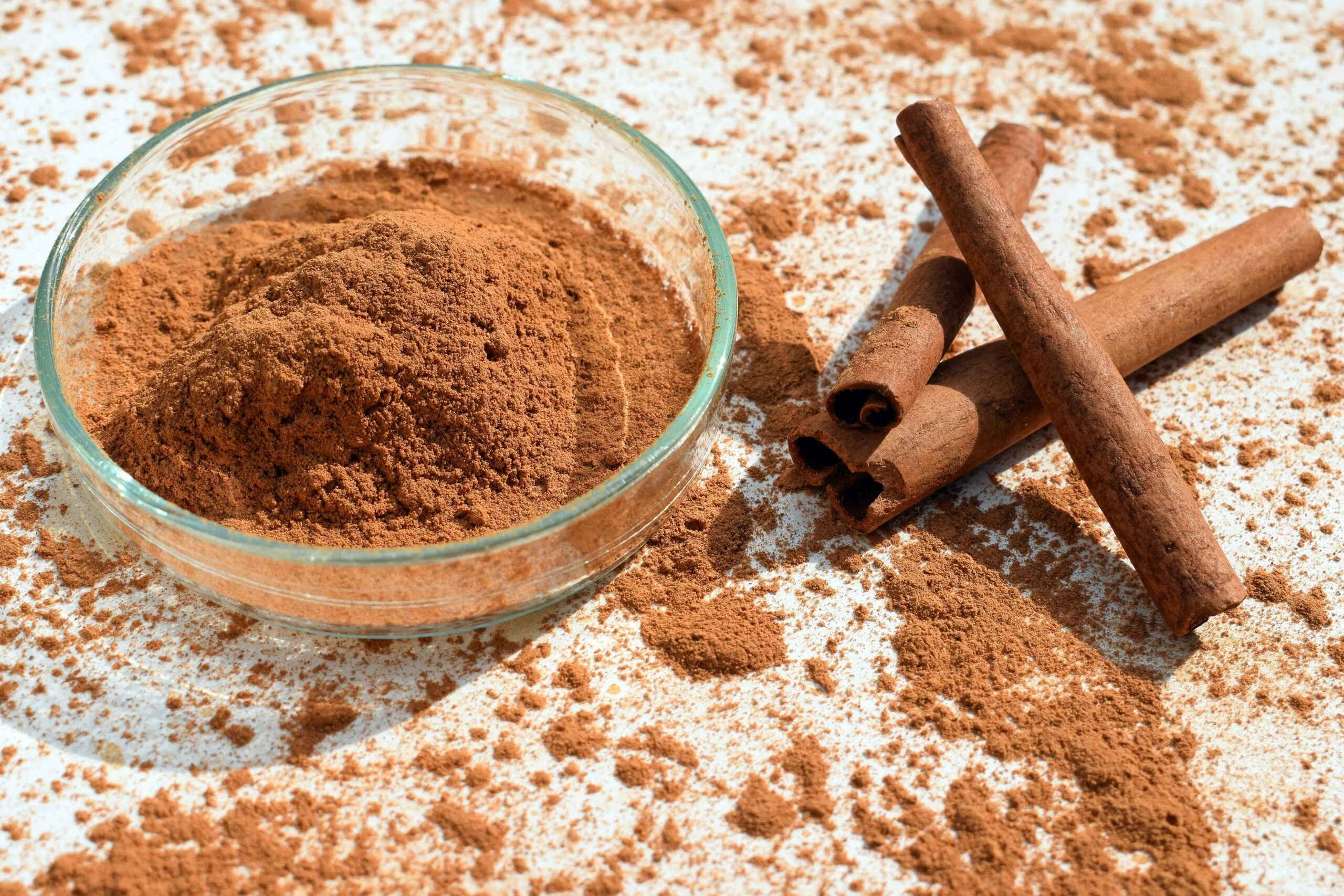
- Cassia cinnamon: Dark reddish-brown, thick, hard sticks, with a stronger, spicier flavor.
- Ceylon cinnamon: Light tan, thin, papery layers that crumble easily, with a milder, sweeter flavor.
If you’re using cinnamon occasionally in cooking or baking, either type is fine. If you use cinnamon every day or take it as a supplement, Ceylon is generally the better choice because it contains much less coumarin.
Frequently asked questions about cinnamon and weight loss
How much cinnamon should you eat per day for weight loss?
There’s no established daily amount of cinnamon for weight loss. Studies reporting modest metabolic benefits have generally used 1 to 6 grams per day, often in supplement form rather than as a seasoning. More isn’t necessarily better, and consuming large amounts of Cassia cinnamon can increase your intake of coumarin, a compound that may affect the liver over time.
Is it better to take cinnamon before or after a meal?
Most studies have added cinnamon with a meal, rather than before or after it. If you enjoy cinnamon, sprinkling it on foods like oatmeal, yogurt, or fruit is the approach that’s most similar to how it’s been studied.
Can you drink cinnamon water to lose weight?
There’s no clinical evidence that cinnamon water promotes weight loss. Studies suggesting metabolic benefits have generally used cinnamon mixed into foods or taken as supplements—not cinnamon-infused water. That said, if cinnamon water helps you choose a calorie-free drink instead of a sugary one, it can still support your overall goals.
Is Ceylon or Cassia cinnamon better for weight loss?
Both types contain compounds that researchers believe may influence blood sugar, and there’s no evidence that one leads to greater weight loss than the other. Ceylon’s main advantage is that it contains much less coumarin, making it the better choice for regular, long-term use.
Does cinnamon tea help you lose weight?
For most healthy adults, the amounts of cinnamon typically used in cooking are considered safe. If you consume cinnamon every day—especially in larger amounts or as a supplement—Ceylon cinnamon is generally the better choice because it contains much less coumarin than Cassia cinnamon.
Is cinnamon safe to eat every day?
For most healthy adults, the amounts of cinnamon typically used in cooking are considered safe. If you consume cinnamon every day—especially in larger amounts or as a supplement—Ceylon cinnamon is generally the better choice because it contains much less coumarin than Cassia cinnamon.
Can pregnant women eat cinnamon?
Yes, culinary amounts of cinnamon used in foods are generally considered safe during pregnancy. Because supplements contain much larger amounts, talk with your healthcare provider before taking cinnamon supplements while pregnant.
🧠 The bottom line: Cinnamon may offer small metabolic benefits, but it isn’t a weight-loss shortcut
Cinnamon isn’t a weight-loss food on its own. While research suggests it may modestly affect blood sugar regulation, and some studies have linked cinnamon supplements to small reductions in body weight and BMI, the overall effect is modest. The strongest evidence has been seen in people with insulin resistance, prediabetes, or type 2 diabetes—not necessarily in otherwise healthy adults trying to lose weight.
The good news is that cinnamon is an easy addition to a healthy eating pattern. It adds flavor for very few calories, which can make foods like yogurt, oatmeal, fruit, and coffee more satisfying without relying on added sugar. Just keep in mind that many of the studies showing metabolic benefits used supplements or larger amounts than people typically consume in food.
If you enjoy cinnamon, there’s little downside to using it regularly in cooking or baking. Just don’t expect it to do the heavy lifting. Sustainable weight loss still comes down to the overall pattern of your diet, physical activity, sleep, and other lifestyle habits—not any single spice.
📖 Scientific evidence
- Cinnamon has been linked to small reductions in body weight in some studies. (Critical Reviews in Food Science and Nutrition, 2020) This review combined results from 21 randomized trials involving nearly 1,500 people and found that those taking cinnamon supplements lost a small amount more weight and had a slightly lower BMI than those taking a placebo. The differences were modest, however, and the researchers didn’t find meaningful improvements in waist circumference or body fat.
- Some studies suggest larger doses and longer use are linked to slightly greater benefits. (Clinical Nutrition, 2020) This review of 12 clinical trials found that people taking at least 2 grams of cinnamon a day for 12 weeks or longer tended to see the greatest improvements in body weight, BMI, and waist circumference. Because these studies mostly used cinnamon supplements, though, it’s not clear that simply eating more cinnamon in foods would produce the same results.
- The evidence appears strongest in people with certain metabolic conditions. (Journal of Food Biochemistry, 2022) This review, which combined findings from several meta-analyses, found that cinnamon supplementation was associated with small reductions in body weight and BMI overall. The largest benefits were seen in people with PMOS ( formerly PCOS) and in studies using daily doses of 3 grams or more.
- Much of the research on cinnamon and gastric emptying comes from one small study. (American Journal of Clinical Nutrition, 2007) In this trial, 14 healthy adults ate rice pudding with and without 6 grams of cinnamon (a little over 2 teaspoons). The cinnamon slowed how quickly the meal left the stomach and reduced the rise in blood sugar afterward. While the findings were encouraging, they came from a small study using a relatively large amount of cinnamon—more than most people typically sprinkle on food.
- Cinnamon’s strongest evidence may be for blood sugar—not weight loss. (Journal of the Academy of Nutrition and Dietetics, 2016) This review of clinical trials in people with type 2 diabetes found that cinnamon supplements were associated with modest improvements in fasting blood sugar, even though the effects on body weight were less consistent. The authors also concluded that the benefits weren’t large enough to replace established diabetes treatments or lifestyle changes.
Editorial standards
At Noom, we’re committed to providing health information that’s grounded in reliable science and expert review. Our content is created with the support of qualified professionals and based on well-established research from trusted medical and scientific organizations. Learn more about the experts behind our content on our Health Expert Team page.