What you’ll learn:
- Walking pads are a popular type of treadmill designed specifically for walking rather than running.
- The machine can make it easier to fit more walking into your day.
- Pair regular walking with healthy eating habits and strength training a few times each week for the best outcomes.
If it seems like everyone is taking Zoom meetings while walking these days, you’re not imagining it. Walking pads have exploded in popularity because they make it easier to fit more movement into a busy day. They’re compact enough to slide under a desk, quiet enough to use during work calls, and they eliminate many of the common barriers to walking, like bad weather, long commutes, or not having time to get to the gym.
But can a walking pad actually help you lose weight, improve your health, or preserve muscle? And are features like “vibration mode” really backed by science?
The answer is a little more nuanced than the marketing suggests. From simple motorized walking pads to manual treadmills designed to last for years, there are several options—and the best choice depends on how you plan to use it.
Here’s what the research says about walking pads, who they’re best for, and how to get the most out of one if weight loss is your goal.
What is a walking pad?
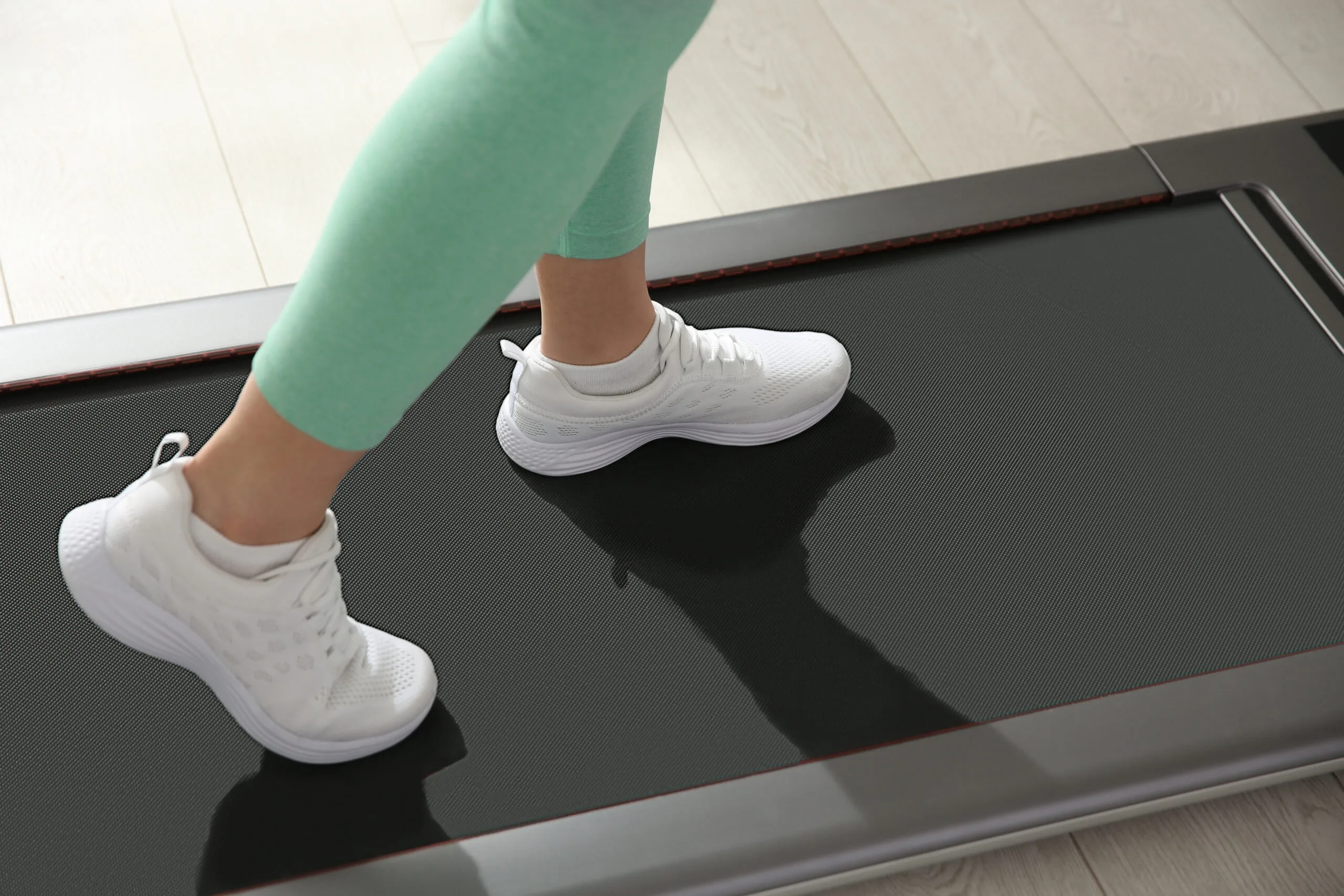
A walking pad—also called an under-desk treadmill—is a slim, low-profile treadmill designed specifically for walking rather than running. Most fold flat for storage or slide under a desk, bed, or couch, making them an easy way to fit more movement into the day, even in small spaces.

The Easy Way
to lose weight and get healthy.
See if you qualify

Unlike a traditional treadmill, most walking pads top out around 3.5 to 4 mph—a brisk walking pace rather than a jogging pace. That’s intentional. Without the larger motors, taller decks, and full safety rails of a standard treadmill, walking pads are designed to be smaller, quieter, and easier to store.
The category was popularized by WalkingPad (Kingsmith) and has since expanded to include brands like UREVO, Sperax, Egofit, Goplus, and DeerRun, which offer similar models across a wide range of prices.
What are the main types of walking pads?
While there are dozens of walking pad brands on the market, most products fall into one of two main categories: motorized and manual. The biggest difference is how the belt moves. Motorized walking pads use an electric motor to keep the belt moving at a set speed, while manual walking pads rely entirely on your own footsteps to power the belt.
Within the motorized category, you’ll also find a few specialized versions—such as incline models, 2-in-1 walk-and-jog designs, and walking pads with vibration modes—but they all work on the same basic principle.
Motorized walking pads (most common)
These use an electric motor to move the belt at a set speed, making them ideal for walking while working, taking calls, reading, or watching TV. This is by far the most common type of walking pad, with most models costing $150 to $600.
Within this category, you’ll find a few variations:
- Incline walking pads: Add a manual or motorized incline (typically 5% to 20%) to increase intensity without increasing speed.
- 2-in-1 walk-and-jog models: Include a foldable handlebar that unlocks higher speeds—some reaching 7 to 10+ mph—so you can jog when you’re not using a standing desk.
- Walking pad + vibration plate combos: Combine a walking belt with a vibration feature that’s marketed for weight loss, circulation, or muscle recovery. However, the evidence supporting these claims is limited (more on that below).
Manual walking pads
Instead of using a motor, these rely on your own steps to move the belt, which generally requires more effort at the same walking speed. Because there are no motors or electronics, they also don’t need electricity and have fewer mechanical parts that can wear out.
This is a much smaller, premium category. Brands like Walkolution sell manual, slat-belt walking pads designed for heavy daily use and long lifespans. Prices typically start around $700 and can exceed $5,000.
Why do manual walking pads cost more?
It might seem like removing the motor would make a walking pad less expensive, but manual models are often the opposite.
Instead of relying on a motor to move a simple belt, manual walking pads use a curved, slatted deck that moves with your own footsteps. Those slats ride on dozens—or even more than 100—precision bearings, making the deck itself a more complex and expensive piece of engineering.

See if your insurance
covers GLP-1s.
The form only takes 2 minutes to answer. We’ll handle the rest.
GET STARTEDThey’re also made in much smaller numbers than mass-market motorized walking pads and are typically marketed as long-term investments designed to last for decades. In other words, you’re paying for a more durable mechanical system rather than an electric motor.
What should you look for in a walking pad?
Walking pads can look nearly identical at first glance, but the differences in size, features, and build quality can have a big impact on how comfortable—and durable—they are. The best walking pad isn’t necessarily the most expensive one. It’s the one that fits your body, your space, and how you actually plan to use it, whether that’s taking a few thousand extra steps during the workday or doing dedicated walking workouts.
Before you buy, pay attention to these key features:
- Storage: Some models fold in half, stand upright, or include wheels for easier moving, while others are designed to slide under a bed, couch, or standing desk when not in use. Think about where you’ll keep it when you’re not walking.
- Speed range: Most walking pads top out around 3.5 to 4 mph, which is plenty for walking. If you’d also like to jog, look for a 2-in-1 model with foldable handlebars and higher top speeds.
- Incline: Some walking pads include a fixed or adjustable incline, which can make your walks more challenging and increase calorie burn without requiring you to walk faster. If hill walking is important to you, make sure the model offers this feature—many don’t.
- Belt length: Taller people generally need a longer walking surface for a comfortable, natural stride. Compact models save space but can feel cramped if you have longer legs or prefer a brisk walking pace.
- Weight capacity: Most walking pads have a maximum user weight of 220 to 400 pounds. Choosing a model with a weight limit comfortably above your body weight may provide better stability and durability.
- Motor power: If you plan to use your walking pad for several hours a day—or occasionally jog—a more powerful motor is generally better equipped for frequent use and less likely to overheat over time. If available, continuous horsepower (CHP) is a more useful measure than advertised peak horsepower.
- Noise level: If you’ll be using your walking pad while working, watching TV, or living in an apartment, look for models marketed as quiet or low-noise. Independent reviews often give a better sense of real-world noise than manufacturer claims.
Walking pad vs. treadmill: What’s the difference?
A traditional treadmill is designed for walking, jogging, and running. It typically has a larger motor, a longer and wider belt, handrails, higher top speeds, and the ability to handle steeper inclines and higher-impact workouts.
A walking pad is designed with a different goal: making it easier to fit more walking into your day. Most are smaller, quieter, and easier to store than a treadmill, but they usually top out around 3.5 to 4 mph and don’t include handrails or steep inclines. Some 2-in-1 models add foldable handlebars and higher speeds for light jogging, while incline models increase intensity without requiring you to walk faster.
The best walking workout is the one you’ll actually stick with. A review of 22 clinical trials found that regular brisk walking helped reduce body weight, BMI, and body fat. Whether you walk on a walking pad, treadmill, or outside matters less than making it part of your routine.
If your goal is training for races, running at higher speeds, or tackling intense incline workouts, a traditional treadmill is the better choice. But if a walking pad makes it easier to move more throughout the day—whether during work meetings, while watching TV, or between tasks—it may have the bigger impact on your health simply because you’re more likely to use it consistently.
Benefits of using a walking pad: Weight loss and fitness
The benefits of a walking pad aren’t really different from the benefits of walking itself. The machine doesn’t change how your body responds to exercise—it simply makes it easier to fit more walking into your day. And for many people, that consistency is what makes the biggest difference.
Breaking up sitting may improve blood sugar
One reason walking pads have become so popular is that they make it easier to interrupt long periods of sitting.
In one study, people who took a 2-minute walk every 20 minutes had significantly lower blood sugar and insulin levels after meals than when they sat continuously throughout the day. Interestingly, an easy stroll worked about as well as a faster walk, suggesting you don’t have to exercise intensely to see metabolic benefits—you just have to move regularly.
Another study compared breaking up sitting with doing one structured workout. Adults with type 2 diabetes who replaced several hours of sitting with standing and light walking had better 24-hour blood sugar control and insulin sensitivity than those who completed a single vigorous exercise session that burned a similar number of calories.
When it comes to blood sugar, spreading movement throughout the day may be even more beneficial than squeezing all of your activity into one workout—and that’s exactly what a walking pad is designed to help you do.
It makes consistency easier
A walking pad won’t magically burn more calories than walking outside or on a treadmill. Its biggest advantage is convenience.
There’s no worrying about the weather, driving to the gym, or carving out a separate workout. If your walking pad is already under your desk or in your living room, it’s much easier to fit in a few extra minutes of movement throughout the day—and those minutes add up.
More steps are linked to better health—but you don’t need exactly 10,000
You’ve probably heard that everyone should aim for 10,000 steps a day, but that number didn’t actually come from scientific research. It originated as part of a 1965 marketing campaign for a Japanese pedometer.
The research tells a more encouraging story.
A study of more than 16,000 older women found that the risk of dying from any cause fell steadily as daily steps increased, with most of the benefit leveling off around 7,500 steps per day.
A later meta-analysis found the optimal range depends on age: about 6,000 to 8,000 daily steps for adults 60 and older, and 8,000 to 10,000 steps for younger adults.
The good news? If you’re currently sedentary, you don’t need to hit an arbitrary number overnight. Simply walking more than you do today is likely to provide meaningful health benefits.
It’s gentle enough to do most days
Because walking is low impact, it’s easier on your joints than running or many high-intensity workouts. That makes it realistic for many people to use a walking pad most days of the week, helping build a habit that’s easier to maintain over time.
Access GLP-1 Weight Loss with Noom
Explore a wide range of prescription medications supported by Noom’s program.Microdose GLP-1rx

Noom GLP-1rx

Noom GLP-1rx Plus
Wegovy®
Ozempic®

Metformin

Zepbound®
Mounjaro®
Liraglutide
Is a walking pad good for weight loss?
Yes—but not because it burns an extraordinary number of calories.
A walking pad can support weight loss by making it easier to move more consistently. Some people use one to replace hours of sitting with light movement, while others use it for dedicated walking workouts. Either way, the extra activity can help increase your daily calorie burn.
Research has found that non-exercise activity thermogenesis (NEAT)—the calories you burn through everyday movement outside of formal exercise—can vary by as much as 2,000 calories per day between people of similar size. That’s one reason replacing sitting with light movement throughout the day can make a meaningful difference over time.
That said, it’s important to have realistic expectations. A walking pad isn’t a quick fix, and the calorie burn from any one session is relatively modest. But those extra minutes—and extra steps—can add up over weeks and months.
Research supports that long-term approach. A review of pedometer-based walking programs found that people who consistently increased their daily steps lost weight over time, with longer programs producing greater results than shorter ones. In other words, a walking pad doesn’t have to transform your workouts to make a difference—it just has to help you walk more often.
It’s also important to remember that you can’t outwalk your diet. Weight loss ultimately comes down to maintaining a calorie deficit, and what you eat is a big factor in that equation. Walking pads work best alongside healthy eating habits, not instead of them.
Can a walking pad help you build muscle?
Not really. A walking pad is a form of cardio, and while walking has plenty of health benefits, it doesn’t provide enough resistance to build significant muscle on its own.
Where muscle becomes especially important is during weight loss. When you’re in a calorie deficit, it’s normal to lose some lean mass along with body fat. One review estimated that 11% to 24% of the weight lost during dieting comes from lean tissue, although the amount depends on factors like protein intake and exercise.
Walking can help you stay active during a calorie deficit, but research consistently shows that resistance training is the most effective way to preserve muscle while losing weight. In a 2025 study, people who combined a calorie deficit with strength training actually gained a small amount of fat-free mass while losing body fat. Those who did only aerobic exercise still lost some lean mass, although less than people who didn’t exercise at all.
The takeaway? A walking pad and strength training complement each other—they’re not competing workouts. Use your walking pad to increase daily movement and support your cardiovascular health, and aim to include two or three strength-training sessions each week if maintaining or building muscle is one of your goals.
What’s the best walking pad speed for weight loss?
There isn’t one “best” walking speed for weight loss. The right pace depends on your fitness level, height, and whether you’re walking while working or doing a dedicated workout.
A simple way to find the right intensity is the talk test. You should be able to carry on a conversation, but you shouldn’t be able to sing comfortably. For many adults, that’s somewhere around 2.5 to 3.5 mph, though what’s considered a brisk pace varies by age and fitness level. One study, for example, found that older adults’ self-selected brisk walking speed averaged closer to 3 mph.
If 3.5 mph leaves you winded after a few minutes, slow down. A pace you can comfortably maintain for 30 or 45 minutes is likely to burn more calories overall than a faster pace that forces you to stop early.
One small study in postmenopausal women found that participants who walked more slowly for longer lost more body fat over 30 weeks than those who walked faster, even though both groups burned about the same number of calories during each session. However, the study included only 16 women who completed the trial, and the slower-walking group started with a higher percentage of body fat, so it’s too early to conclude that slower walking is inherently better for fat loss.
Don’t worry about chasing a specific number on the display. Choose a pace you can maintain consistently, and focus on walking regularly rather than walking as fast as possible.
Does the vibration mode on a walking pad actually help with weight loss?
Probably not.
Some walking pads include a vibration mode, with claims that it boosts calorie burn, tones muscles, or helps you lose fat faster. While these features may sound appealing, the research doesn’t support them as a meaningful weight-loss tool.
The vibration function is similar to a whole-body vibration platform, which has been studied for potential effects on muscle strength, balance, and body composition. While some studies have found small benefits in certain groups, there’s no strong evidence that simply standing on a vibrating platform leads to meaningful weight loss or burns enough extra calories to make a noticeable difference.
It’s also important to know that spot reduction isn’t possible. You can’t lose fat from a specific area of your body by vibrating it—or by exercising that body part. Fat loss happens throughout the body when you consistently burn more calories than you consume.
If you’re comparing walking pads, think of vibration mode as an optional feature—not a reason to spend more money. The walking itself is what provides the proven health and weight-loss benefits.
How to build a walking pad routine for weight loss
When it comes to walking for weight loss, consistency matters more than intensity. Instead of trying to walk for an hour on day one, start with a routine you can realistically stick with and build from there.
Here’s a simple place to start:
- During the workday: Walk at about 1.4 mph while answering emails, taking calls, or doing other light tasks.
- Dedicated walking sessions: Aim for 3 to 3.5 mph for 20 to 30 minutes when you’re not multitasking.
- Strength training: Include two or three sessions per week if maintaining or building muscle is one of your goals.
- Daily movement: Try to accumulate 20 to 30 minutes of walking each day, whether that’s one longer session or several shorter walks.
The good news is that those shorter walks still count. Research shows that shorter periods of movement provide health benefits, too, as long as they add up over the course of the day.
If you’re planning to walk while you work, keep your pace slower than you might think. One study found that about 1.4 mph was the sweet spot for maintaining typing speed and accuracy on a treadmill desk. Even so, another study found that walking can slightly reduce typing speed and memory performance compared with sitting, so it’s best reserved for tasks like emails, meetings, or phone calls rather than work that requires deep concentration.
Remember, a walking pad is a tool—not a weight-loss plan by itself. Pair it with healthy eating habits and regular strength training, and focus on building a routine you can maintain for the long term.
How to choose a good walking pad
There’s no single “best” walking pad for weight loss. The best one is the one you’ll actually use consistently—and that usually comes down to choosing a model that fits your body, your space, and your routine. Prioritize a comfortable walking surface, a sturdy build, and features that match how you plan to use the machine. Those are far more likely to influence your long-term success than flashy marketing claims
Here’s what to look for:
- Belt length and width. Deck size is usually listed in the specs (for example, 34” × 15” on compact under-desk models and up to 44” × 20” on larger models). A longer, wider belt provides a more natural stride and may feel more comfortable if you’re taller or plan to walk briskly.
- Weight capacity. Most walking pads support between 220 and 400 pounds. Choose a model with a weight limit comfortably above your body weight, which may provide better stability and durability over time.
- Noise level. If you’ll be using your walking pad during work meetings or while others are nearby, a quieter model can make a big difference. Some brands list noise levels in decibels, but independent reviews often give a better sense of real-world noise.
- Motor quality. Don’t put too much stock in advertised peak horsepower (HP). That’s often a short-term maximum rather than what the motor can sustain. If a manufacturer lists continuous horsepower (CHP) or motor wattage, those are generally more useful indicators of long-term performance.
- Speed range. Most walking pads top out around 3.5 to 4 mph, which is plenty for walking. If you’d also like to jog, look for a 2-in-1 model with foldable handlebars and higher top speeds.
- Extra features. Incline settings can increase the intensity of your walks without requiring you to move faster. Features like vibration mode, however, have little evidence behind their weight-loss claims, so they shouldn’t be a deciding factor.
Don’t overthink the bells and whistles. The best walking pad isn’t necessarily the most expensive one—it’s the one that fits your space, your budget, and your daily routine well enough that you’ll actually use it several times a week.
Walking pad safety: How to use one safely
Walking pads are generally safe for most healthy adults, but they’re still exercise equipment. Taking a few precautions can help reduce your risk of falls, trips, and overuse injuries.
Here are a few best practices:
- Wear supportive athletic shoes. Skip socks, slippers, sandals, or bare feet unless the manufacturer specifically says otherwise. Athletic shoes provide better grip, cushioning, and stability.
- Start slowly. Begin each session at a comfortable speed before gradually increasing your pace. Give yourself a minute or two to adjust to the moving belt.
- Keep your walking area clear. Make sure there are no power cords, toys, pets, or other obstacles around the walking pad that could become a tripping hazard.
- Use the safety features. If your model includes a safety clip or emergency stop, use it—especially while you’re getting used to the machine.
- Don’t exceed the maximum weight capacity. Walking pads are designed to safely support a maximum user weight. Exceeding that limit can place extra strain on the motor and frame and may increase the risk of equipment failure.
- Hold onto something if you’re new. During your first few sessions, keep a hand near a desk, countertop, or sturdy wall until you’re comfortable with the feel of the moving belt.
- Save multitasking for later. It’s tempting to answer emails or scroll your phone right away, but wait until you’re comfortable walking on the pad before adding distractions. If you’re working while walking, keep your pace slow enough that you can focus on both tasks safely.
- Listen to your body. Stop if you feel dizzy, lightheaded, unusually short of breath, or experience chest pain or any new joint pain. If you have a medical condition or concerns about starting a new exercise routine, check with your healthcare provider first.
The goal isn’t to walk as fast as possible—it’s to create a routine you can safely repeat day after day. That’s what leads to lasting results.
Frequently asked questions about walking pads
Do walking pads use a lot of electricity?
No. Most walking pads use about as much electricity as a desktop computer or small space heater while in use, although the exact amount depends on the motor size and how fast you’re walking. For most people, the impact on their monthly electric bill is relatively small.
Is a walking pad good for seniors?
Generally, yes. Walking pads provide a low-impact way to improve cardiovascular fitness and stay active. In one 12-week study, older women who participated in a brisk walking program improved their cardiovascular fitness, flexibility, strength, and balance.
If you have balance concerns, choose a model with handrails or keep a sturdy surface nearby for support. Start at a comfortable pace, and check with your healthcare provider before beginning if you have heart, joint, or balance conditions.
Can you run or jog on a walking pad?
Usually not. Most walking pads are designed for walking only, with top speeds around 3.5 to 4 mph and no handrails. While some 2-in-1 models are designed for light jogging, a full-size treadmill is the better—and safer—choice if running is one of your goals.
Can a walking pad be used on carpet?
Usually, yes—as long as it’s low-pile carpet. Thick or plush carpeting can block airflow around the motor and increase the risk of overheating. If your carpet is soft, place the walking pad on a firm equipment mat or a sheet of plywood to create a stable surface.
How often should you lubricate a walking pad?
Follow your manufacturer’s recommendations, but most walking pads need lubrication every three to six months or about every 100 miles of use. If you use yours daily, you may need to lubricate it more often.
Only use 100% silicone treadmill lubricant, since household oils and petroleum-based products can damage the belt.
How long does it take to see results from a walking pad?
It depends on how consistently you use it and whether you’re also paying attention to nutrition.
Studies on walking programs have lasted anywhere from a few weeks to two years, with longer programs generally producing greater weight loss than shorter ones. A realistic expectation is to give your routine 8 to 12 weeks before judging your progress. You may notice improvements in energy, endurance, sleep, or how your clothes fit before you see major changes on the scale.
Can you use a walking pad while pregnant or postpartum?
For many people with an uncomplicated pregnancy, walking is considered one of the safest forms of exercise. A walking pad can make it easier to stay active, but it’s important to get clearance from your clinician before starting or continuing any exercise routine during pregnancy or after delivery.
Keep your pace comfortable, stay hydrated, and stop if you experience pain, dizziness, bleeding, or other concerning symptoms.
The bottom line: A walking pad is a consistency tool worth having
If your goal is weight loss, a walking pad can absolutely be worth it—but not because it’s a magic bullet.
Walking pads don’t burn dramatically more calories than walking outdoors; they won’t build muscle on their own, and they can’t make up for an unhealthy diet. What they can do is remove many of the barriers that keep people from moving more in the first place. Whether you’re replacing some of your sitting time with light walking or fitting in a dedicated walk between meetings, those extra minutes of movement can add up over time.
The research is remarkably consistent on one point: regular walking supports weight loss and better health, and consistency matters more than the machine you’re using. A walking pad simply makes that consistency easier for many people.
If sitting all day has been one of your biggest challenges, a walking pad could be a worthwhile investment. If you already have an exercise routine you love, it may be a helpful way to add more movement between workouts. Either way, you’ll get the most out of it by pairing regular walking with healthy eating habits and strength training a few times each week.
Think of a walking pad as a habit-building tool, if it helps you move more consistently than you otherwise would, it’s absolutely worth considering. You don’t need the perfect workout—you need one that fits into your real life, because that’s the one you’re most likely to keep doing.
Need help building the habits that help you lose weight comfortably and sustainably? Download Noom on iOS & Android for food logging, progress tracking, and psychology-based lessons built around healthy changes you can maintain.
Editorial standards
At Noom, we’re committed to providing health information that’s grounded in reliable science and expert review. Our content is created with the support of qualified professionals and based on well-established research from trusted medical and scientific organizations. Learn more about the experts behind our content on our Health Expert Team page.