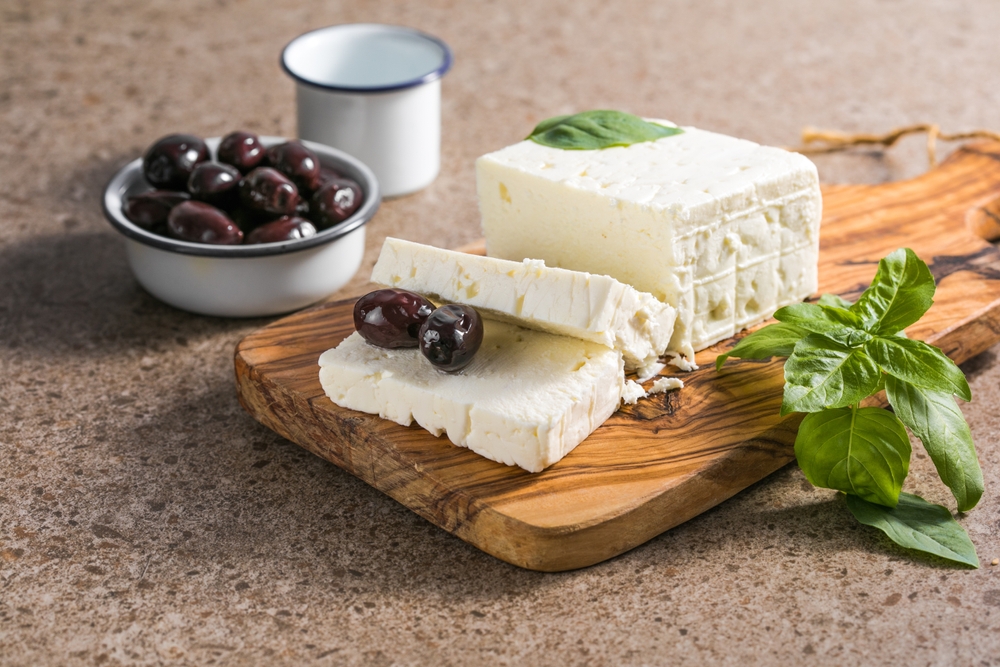
Feta cheese has a reputation for being a rich, full-flavored ingredient—the kind of thing that makes a simple salad or grain bowl taste like a complete meal. But feta is actually one of the lower-calorie cheeses available, coming in at around 75 calories per ounce, with a solid protein contribution and more calcium than most soft cheeses.
What makes feta a good choice when weight loss is your goal is how much flavor it has relative to how little you need. A single ounce transforms a salad or scrambled eggs—and that extra flavor matters when you’re trying to maintain a calorie deficit long-term. Feta also has important nutrients, gut-friendly probiotic bacteria, CLA (a fatty acid linked to modest fat metabolism benefits), and a B vitamin lineup that supports energy production.
Feta is on the saltier side—about 312 milligrams per ounce, which is roughly 14% of the general daily limit or closer to 20% of the lower, heart-health target. Keep servings to 1 to 2 ounces to add flavor to all your favorite dishes.
✅ Quick answer
Yes—feta cheese can support weight loss when eaten in measured portions. At around 75 calories per ounce, it’s lower in calories than most cheeses, and its protein and fat content help keep you full between meals.
🚀 Weight-loss benefits
- It’s lower in calories than most cheeses – At 75 calories per ounce, feta comes in well below cheddar (113 calories), Parmesan (111 calories), and goat cheese (102 calories) for the same serving size. That difference adds up meaningfully over a week of eating, and you’re not giving up flavor to get there—feta is bolder-tasting than most of them.
- It has protein that supports fullness – One ounce of feta delivers about 4 grams of protein, which may keep hunger manageable between meals. Protein slows digestion, stabilizes blood sugar, and supports the lean muscle mass you want to keep while losing fat.
- It may offer a small body composition bonus – Feta contains CLA, a naturally occurring fat found in dairy. Sheep and goat milk versions tend to have a bit more, but either way, the impact is modest. Some early research links CLA to small shifts in body composition over time.
⚠️ Things to be mindful of:
- It’s higher in sodium – One ounce of feta contains around 312 milligrams of sodium—about 13% of the daily recommended limit in a single serving. That adds up fast if you’re eating other salty foods throughout the day.
- It’s higher in saturated fat – A 1-ounce serving has about 4.2 grams of saturated fat. That’s not a reason to avoid feta, but it is a reason to be aware of the rest of your day’s fat intake. Pairing feta with greens and vegetables helps keep your overall fat profile balanced.
- It can be easy to add too much – Feta’s tangy, salty flavor and crumbly nature makes it easy to add too much. Measuring out your serving before eating is the most effective habit for keeping feta portions on track.
🥗 Nutrients in feta cheese (per 1 oz / 28g)
| Nutrient | Amount | % RDA* |
|---|---|---|
| Calories | 75 calories | 4% |
| Protein | 4 g | 8% |
| Total carbs | 1.2 g | 0% |
| Fiber | 0 g | 0% |
| Sugars | 1.2 g | — |
| Total fat | 6 g | 8% |
| – Saturated fat | 4.2 g | 21% |
| – Monounsaturated fat | 1.3 g | — |
| – Polyunsaturated fat | 0.2 g | — |
| Omega-3 | 0.08 g | — |
| Omega-6 | 0.08 g | — |
*Recommended dietary allowance (RDA) is defined as the average daily amount of nutrients needed to meet the requirements of nearly all healthy people in a specific group.
Noom’s Most Powerful Program
A dual-pathway GLP-1 and behavior change for lasting results.
At a glance, feta is mostly a fat and protein food with very few carbs. That mix helps make meals feel more satisfying, even in a small amount.
The 4 grams of protein per ounce isn’t a large amount on its own, but it can help round out a meal and support fullness—especially when paired with other protein sources. The 6 grams of fat also slows digestion, which can help you stay full a bit longer.
The carb count is very low (just over 1 gram), so feta has little impact on blood sugar. That’s part of why it fits easily into a wide range of eating styles.
The main thing to keep an eye on is saturated fat, which comes in at about 20% of your daily value per ounce. That doesn’t mean you need to avoid it, but it’s worth being aware of if you’re using feta alongside other rich foods.
Overall, feta is less about big numbers and more about how a small amount can add flavor and help make a meal feel complete.
💊 Vitamins & minerals in feta cheese (per 1 oz / 28g)
| Vitamin/Mineral | Amount | % RDA* |
|---|---|---|
| Vitamin B12 | 0.48 µg | 20% |
| Vitamin B2 (Riboflavin) | 0.24 mg | 18% |
| Calcium | 138 mg | 14% |
| Sodium | 312 mg | 14% |
| Phosphorus | 94 mg | 9% |
| Selenium | 4.2 µg | 8% |
| Zinc | 0.82 mg | 7% |
| Vitamin B6 | 0.11 mg | 6% |
| Vitamin B5 (Pantothenic acid) | 0.28 mg | 6% |
| Vitamin A | 36 µg RAE | 4% |
| Vitamin B1 (Thiamin) | 0.04 mg | 4% |
| Magnesium | 5.3 mg | 1% |
| Iron | 0.18 mg | 1% |
| Potassium | 17 mg | <1% |
Feta packs a surprising amount of micronutrients into a small serving. Vitamin B12 stands out, delivering about 20% of your daily needs in just one ounce. That’s especially helpful since B12 is one of the nutrients people tend to fall short on, particularly if they don’t eat much meat or seafood. You’re also getting a solid boost of riboflavin (B2), which plays a role in how your body turns food into energy.
On the mineral side, calcium is a key highlight, coming in at about 14% of your daily value per ounce. That’s paired with phosphorus, and together they support bone health—something that can matter more if you’re losing weight and thinking about maintaining strength over time.
One thing that shows up here too: sodium. At 14% of your daily value per ounce, it adds up quickly, especially if feta isn’t the only salty ingredient in your meal.
Overall, feta isn’t just about flavor—it brings a mix of vitamins and minerals that can contribute in small but meaningful ways when you’re building meals.
🔍 Nutrient breakdown
Glycemic index (GI) of feta cheese
Glycemic index: 0–5 (Very Low)

The Easy Way
to lose weight and get healthy.
💡 Tip: Feta’s near-zero GI means it has virtually no effect on blood sugar levels, which supports steady energy and better hunger management throughout the day—two things that make staying in a calorie deficit significantly easier.
Is feta cheese high in protein?
❌ No – feta contains 4g of protein per 1 oz serving. That’s a useful contribution to a meal, but it’s not a high-protein food on its own. Think of it as a protein addition to a dish rather than the protein anchor.
Better protein alternatives: Greek yogurt | Cottage cheese | Eggs
Is feta cheese high in fiber?
❌ No – feta has 0g of fiber per serving. It’s a dairy food, so this isn’t surprising, but it does mean feta works best when paired with fiber-rich vegetables, legumes, or whole grains.
💡 Tip: Build feta into meals that are already fiber-rich—salads with chickpeas, grain bowls with roasted vegetables, omelets loaded with greens—so the overall meal satisfies on multiple levels.
Is feta cheese low in carbs?
✔️ Yes – feta has just 1.2g of carbs per 1 oz serving, with no starch and no added sugar. The small amount present is residual lactose, which is largely broken down during fermentation.
💡 Tip: For anyone following a low-carb or keto eating pattern, feta is one of the most flavor-forward cheese options available without touching your carb budget.
Is feta cheese gluten-free?
✔️ Yes – plain feta is naturally gluten-free, made from milk, salt, and bacterial cultures. If you have celiac disease or significant gluten sensitivity, check labels on pre-crumbled or flavored versions, as additives can occasionally introduce gluten-containing ingredients.
Is feta cheese good for fat loss?
✔️ Yes – due to its low calorie count, moderate protein, and CLA content, feta supports fat loss when used as a flavorful addition to meals rather than a main ingredient. Its bold taste naturally encourages smaller portions, which is one of the more underrated aspects of enjoying feta in a weight loss diet.
🍽️ Diet compatibility: Which diets include feta cheese?
| Diet | ✅/❌ | Why |
|---|---|---|
| Keto | ✅ | At just 1.2g of carbs per ounce and relatively high fat content, feta is a near-ideal keto cheese. It adds bold flavor and fat without using up your daily carb allowance. Watch sodium if you’re doing extended keto, as the diet already tends to increase sodium excretion. |
| Paleo | ❌ | Strict paleo eliminates all dairy. Some modified paleo followers make an exception for sheep and goat milk products like feta, but traditional paleo frameworks exclude them. |
| Mediterranean | ✅ | Feta is essentially the signature cheese of the Mediterranean diet and has been for thousands of years. It’s used crumbled over salads, baked into dishes, and paired with olive oil and vegetables in the way the research-backed diet intends. |
| Vegan | ❌ | Feta is a dairy product made from sheep or goat milk, which makes it off-limits for vegans. Tofu-based and cashew-based feta alternatives exist and can mimic the crumbly texture reasonably well, though the flavor differs. |
| Gluten-free | ✅ | Plain, unflavored feta is naturally gluten-free. Check labels on pre-packaged versions to confirm no gluten-containing additives are present. |
Feta fits well across most eating plans that emphasize whole, minimally processed foods. Its naturally low-carb, moderate-protein profile makes it compatible with keto, Mediterranean, and gluten-free diets without any workarounds. The Mediterranean connection is particularly meaningful—feta has been consumed as part of one of the world’s most researched and heart-healthy diets for centuries.
Where feta doesn’t work—strict paleo and vegan—the exclusions are about framework rather than nutrition. If your eating pattern allows dairy, feta can be a flavor-forward, nutrient-dense option.
🌟 Is feta cheese healthy? What are the health benefits?
Metabolic health: Is feta cheese good for your metabolism?
- Boosts metabolism? ✔️ Neutral to modestly positive – The B vitamins in feta, particularly B2 and B12, are essential cofactors in the metabolic pathways that convert food into usable energy. These aren’t dramatic metabolism-boosters, but they’re the foundational nutrients that keep metabolic function running efficiently.
- Improves insulin sensitivity? ✔️ Possibly – The combination of protein, calcium, and very low GI carbohydrates in feta has been associated with better blood sugar regulation. Dairy protein generally has a favorable effect on insulin secretion patterns, and feta’s CLA may play a small supporting role in insulin sensitivity as well.
- Effect on fat storage? ✔️ Positive – CLA found in feta has shown some ability in research to shift body composition toward less fat mass and more lean mass. The effect is modest but adds to the case for feta as a supportive food in a fat-loss plan.
Cholesterol impact: Does feta cheese affect cholesterol levels?
- Does it lower LDL (bad) cholesterol? ❌ Unclear – Feta contains saturated fat, which can raise LDL in some people. However, growing research suggests dairy saturated fat may not behave the same way as saturated fat from other sources, and its overall effect in the context of a balanced diet appears relatively neutral for most people.
- Does it raise HDL (good) cholesterol? ✔️ Possibly – Some dairy fats from sheep milk have been associated with modest improvements in HDL. The data is limited and inconsistent, so this isn’t a primary reason to eat feta.
- Overall impact on heart health? Broadly neutral to mildly favorable – When eaten in moderate portions as part of a Mediterranean-style diet, feta doesn’t appear to increase cardiovascular risk. Sodium is the more relevant thing to watch for heart health.
💡 Tip: Keep portions to 1–1.5 oz per day and pair feta with potassium-rich foods like leafy greens, tomatoes, and cucumbers to help offset sodium’s potential effect on blood pressure.
Can I eat feta cheese in a calorie deficit?
✔️ Yes, with confidence: At 75 calories per ounce, feta is one of the more calorie-friendly cheese options available. Its intense flavor means you naturally use less of it than a milder cheese, which makes it easier to stay in a calorie deficit while still eating satisfying, flavorful meals.
💡 Tip: Crumble 1 oz of feta over a big salad with chickpeas, cucumber, and olive oil—you’ll get bold flavor, protein, and healthy fat for well under 400 calories total.
Is feta cheese rich in antioxidants?
✔️ Somewhat: Feta contains vitamin A and selenium, both of which function as antioxidants that help neutralize cell-damaging compounds. The probiotic strains in feta also produce compounds in the gut that reduce inflammatory responses—a related mechanism that adds to feta’s overall health profile.
Does feta cheese support gut health?
✔️ Yes: Traditional feta is a fermented food that contains live probiotic bacteria, particularly Lactobacillus plantarum. These strains have been shown to survive stomach acid and reach the lower intestinal tract, where they support a balanced gut microbiome, immune function, and nutrient absorption.
Does feta cheese support digestion?
✔️ Positive: Fermentation partially breaks down lactose during cheesemaking, making feta easier to digest than most fresh or soft cheeses. The probiotic cultures also support gut regularity. People with significant lactose intolerance may still experience some discomfort—start with a small amount and see how your body responds before making it a daily staple.
Does feta cheese help you feel satiated and less hungry?
✔️ Yes: The combination of fat and protein in feta slows gastric emptying, meaning food stays in your stomach longer and hunger signals are delayed. Even a small 1 oz serving contributes meaningfully to meal satisfaction.
Satiety level: Moderate–High
💡 Tip: Add feta to breakfast—in scrambled eggs, an omelet, or a savory yogurt bowl—to build satiety into the first half of your day and reduce the urge to snack before lunch.
Access GLP-1 Weight Loss with Noom
Explore a wide range of prescription medications supported by Noom’s program.
Microdose GLP-1rx
Noom GLP-1rx
Noom GLP-1rx Plus
Wegovy®
Ozempic®

Metformin
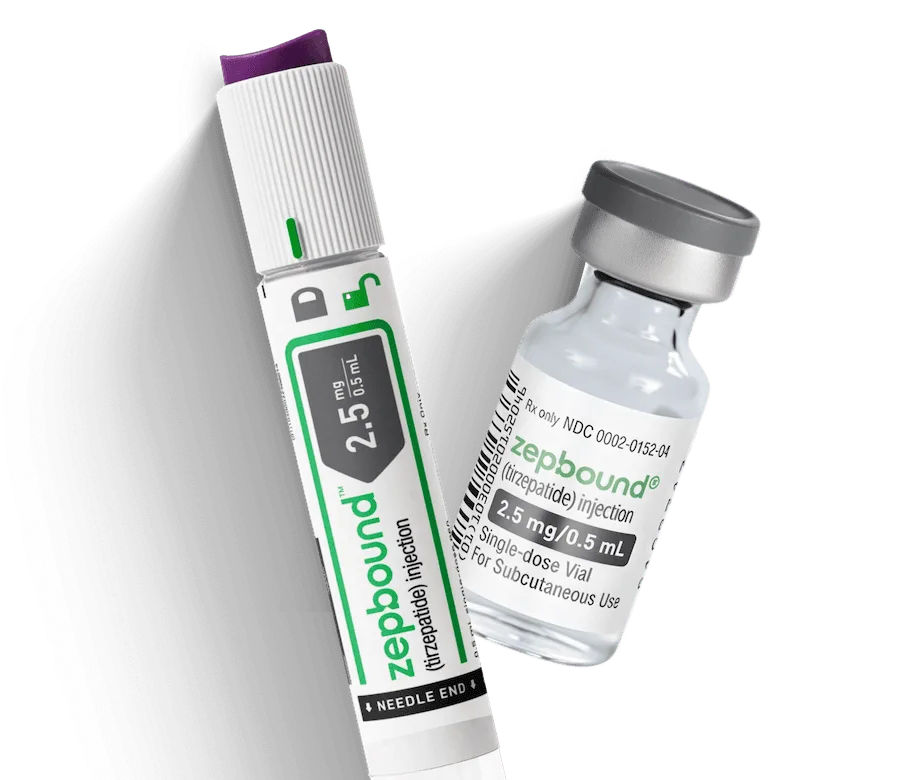
Zepbound®
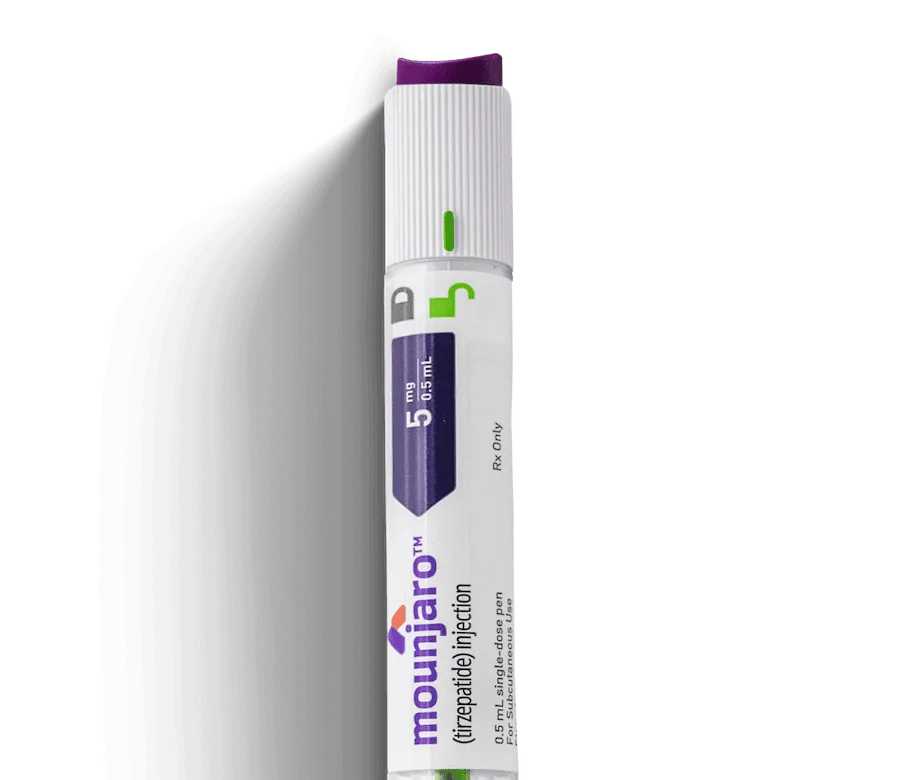
Mounjaro®
Liraglutide

Does feta cheese help with nighttime cravings?
✔️ Possibly: The fat and protein in feta provide slow-burning energy, and the salty, tangy flavor can satisfy savory cravings that might otherwise send you toward processed snacks.
💡 Tip: Pair a small feta crumble with something crunchy—like raw vegetables or whole-grain crackers—for a snack that satisfies both texture and flavor cravings without a lot of calories.
Does feta help reduce inflammation?
✔️ Moderately: Feta made from sheep milk contains A2 casein protein, which is less likely to trigger inflammatory responses than the A1 casein in cow’s milk cheeses. The probiotic bacteria in feta also produce anti-inflammatory compounds in the gut. This doesn’t make feta a therapeutic anti-inflammatory food, but it’s meaningfully less inflammatory than many animal protein sources.
Is feta cheese beneficial for brain health?
✔️ Yes: Feta is a solid source of vitamin B12, which supports nerve function, cognitive health, and the production of myelin—the protective coating around nerve fibers. B12 is one of the nutrients most commonly under-consumed by people who don’t eat a lot of red meat or seafood, making feta a useful contributor for those groups.
Can feta cheese improve skin and hair health?
✔️ Minor benefits: Vitamin A in feta supports cell turnover and skin integrity, while B vitamins contribute to hair follicle health. The amounts per serving aren’t high enough to make feta a standalone beauty food, but it contributes to the broader nutrient density that supports healthy skin and hair as part of a balanced diet.
Can feta cheese help balance hormones?
✔️ Limited evidence: Dairy proteins and fats contain precursors involved in hormone synthesis, and feta’s calcium works in tandem with the hormones that regulate bone metabolism. The more relevant hormonal consideration with feta is its sodium content, which can indirectly affect fluid balance—another reason to keep portions sensible.
💡 Tip: Balanced hormonal health depends more on overall dietary patterns and lifestyle habits than any single food. Think of feta as one small piece of a well-rounded, nutrient-dense diet.
🍽️ Best ways to eat feta cheese for weight loss
- Use it as a flavor addition, not a protein source – The most practical way to eat feta for weight loss is to treat it like a high-flavor seasoning rather than a main ingredient. A 1 oz crumble over a Greek salad, roasted vegetables, or a grain bowl adds richness and saltiness that makes a simple meal genuinely satisfying—without significantly adding to the calorie count.
- Pair it with fiber-rich foods – Feta’s one nutritional gap is fiber, so the smartest move is to pair it with foods that cover that ground: leafy greens, chickpeas, lentils, cucumbers, tomatoes, and roasted peppers. These combinations create more filling meals overall, slow digestion, and help offset feta’s sodium through the potassium naturally present in vegetables.
- Build it into breakfast – Eggs, vegetables, and feta make a protein-fat combination that genuinely holds you through the first half of the day. Whether it’s a veggie scramble, a baked egg dish, or a simple omelet, starting the morning with this trio helps reduce total calorie intake later in the day by keeping hunger well-managed.
International Feta Day is June 14. Try these healthy feta cheese recipes:
- Baked Feta with Chickpeas and Kale—Love & Lemons
- Open-Faced Omelet with Feta, Roasted Tomatoes and Spinach—Skinnytaste
- Mediterranean Grain Bowls with Lentils, Chickpeas and Feta—The Mediterranean Dish
🍏 Best alternatives & comparisons (per 1 oz / 28g)
| Food | Calories | Carbs | Fiber | Protein | Fat |
|---|---|---|---|---|---|
| Feta cheese | 75 | 1.2 g | 0 g | 4 g | 6 g |
| Goat cheese (chèvre) | 102 | 0 g | 0 g | 6.1 g | 8.4 g |
| Cottage cheese (low-fat) | 23 | 1 g | 0 g | 3.1 g | 0.3 g |
| Ricotta (part-skim) | 39 | 1.4 g | 0 g | 2.6 g | 2.2 g |
| Mozzarella (part-skim) | 71 | 0.6 g | 0 g | 6.9 g | 4.5 g |
| Halloumi | 90 | 0 g | 0 g | 6 g | 7 g |
Feta sits in the middle among these options—lower in calories than goat cheese and halloumi, bolder in flavor than cottage cheese or mozzarella, and more nutritionally interesting than ricotta. If you’re purely seeking the lowest calorie count, low-fat cottage cheese wins by a wide margin at 23 calories per ounce. But if you want a satisfying, flavor-forward cheese within a reasonable calorie budget, feta is hard to beat.
Mozzarella is probably the closest comparison nutritionally—it’s in the same calorie range, with a bit more protein and about 100–130 mg less sodium per ounce (roughly 175–200 mg vs. feta’s 312 mg). That can make it a better fit if you’re keeping an eye on salt.
That said, feta brings more intensity, so you may use less of it without feeling like you’re missing anything. The better choice really comes down to the role it’s playing in your meal—and which trade-off matters more in that moment.
Frequently asked questions about feta cheese and weight loss
How much feta cheese can I eat per day for weight loss?
A serving of 1–1.5 oz (28–42g) per day is a reasonable amount for most people focused on weight loss. That’s enough to add meaningful flavor and some protein to one or two meals without significantly impacting your calorie budget or sodium intake.
How many calories are in 100 grams of feta cheese?
Feta has about 75 calories per ounce (28g), which comes out to roughly 265–270 calories per 100 grams (about 3.5 ounces).
Is feta cheese better than other cheeses for weight loss?
It’s one of the better options. Feta comes in lower in calories than cheddar, Parmesan, goat cheese, and halloumi at the same serving size, and it delivers enough flavor that you naturally use less of it. Mozzarella is a legitimate alternative—slightly lower in calories and higher in protein, with less sodium. But for real-world eating where flavor satisfaction matters to long-term consistency, feta is a strong choice.
Does feta cheese cause bloating?
It can for some people. Feta still contains small amounts of lactose, even though fermentation reduces it significantly. People with lactose intolerance may experience bloating or discomfort, especially with larger servings. The high sodium content can also contribute to water retention. Starting with a smaller serving and pairing feta with fiber-rich vegetables can minimize both issues.
Is feta cheese good on a Mediterranean diet?
Absolutely—feta is practically a cornerstone of the Mediterranean diet. It’s traditionally eaten crumbled over salads, baked with vegetables, and paired with olive oil and legumes. The Mediterranean diet is one of the most researched eating patterns in the world, and feta has been part of it for centuries.
Can I eat feta cheese if I’m watching my blood pressure?
With care, yes. Feta is relatively high in sodium at about 312 mg per ounce, which is worth monitoring if you’re managing hypertension. Rinsing feta before eating reduces sodium noticeably, and keeping portions to one ounce helps too. Pairing feta with potassium-rich foods like leafy greens, tomatoes, and cucumbers can help counterbalance sodium’s effect on blood pressure.
What’s the difference between feta and low-fat feta?
Low-fat feta is made with reduced-fat milk and typically comes in at around 50 to 60 calories per ounce, compared to 75 for regular feta. The protein is usually similar, and the sodium tends to stay on the higher side in both.
Where things can differ more is the ingredient list. Because fat plays a role in texture and flavor, low-fat feta sometimes includes stabilizers, thickeners, or anti-caking agents to help mimic the creaminess of full-fat versions—especially in pre-crumbled products. Not all brands use them, but it’s more common than with traditional block feta.
If calories are your main focus, low-fat feta can be an easy swap. But if you’re already using small amounts, regular feta is still a reasonable option—and often has a simpler ingredient list and a more satisfying texture, which can make sticking to a portion feel easier.
🧠 The bottom line: Feta cheese can be part of a weight-loss plan
Yes—feta can absolutely fit into a weight loss plan. It’s lower in calories than many cheeses, and its bold flavor means a small amount can go a long way in making meals feel satisfying. You’re also getting a mix of protein and fat that helps with fullness, plus some useful nutrients packed into a relatively small serving.
The main things to keep in mind are sodium and portion size. Feta is easy to overpour, and the salt adds up quickly. But if you stick to about 1 to 2 ounces and build it into balanced meals with vegetables, it can be a simple way to add flavor and stay consistent—without feeling like you’re cutting things out
The Easy Way
to lose weight and get healthy.
📖 Scientific evidence
1.CLA has been linked to reduced body fat in people with elevated BMIs. (Journal of Nutrition, 2000) A small study found that high-dose CLA supplementation—the fatty acid found naturally in sheep milk feta—was associated with reductions in body fat mass, though amounts used were much higher than what you’d get from food.
2. Higher dairy intake has been linked to reductions in body fat in some studies. (American Journal of Clinical Nutrition, 2004) A review of clinical trials found that diets including three or more daily servings of dairy were associated with greater reductions in body fat mass, though results varied across studies.
3. Feta may provide beneficial probiotic bacteria. (Food Microbiology, 2018) Researchers found that a strain of Lactobacillus plantarum in feta remained viable during storage, suggesting traditional feta can deliver live bacteria, though levels can vary by product and handling.
4. The Mediterranean diet has been linked to lower risk of major cardiovascular events. (New England Journal of Medicine, 2018) In a large randomized trial, participants following a Mediterranean-style diet—where foods like vegetables, olive oil, legumes, and cheeses like feta are commonly included—had fewer heart attacks, strokes, and cardiovascular deaths compared to those on a low-fat diet.
5. Low vitamin B12 levels have been linked to cognitive decline. (Brain Disorders, 2025) A review found that B12 deficiency can impair brain function and increase the risk of cognitive issues, highlighting the importance of getting enough B12 from foods like dairy, including feta—especially for those who eat little meat.
Editorial standards
At Noom, we’re committed to providing health information that’s grounded in reliable science and expert review. Our content is created with the support of qualified professionals and based on well-established research from trusted medical and scientific organizations. Learn more about the experts behind our content on our Health Expert Team page.